As the Years Pass, It's Not the Work but the Responsibility That Becomes Frightening.
July 22, 2026 – Religious Leaders' Meeting, Weekly Dharma Assembly, Research Seminar
Hello. Today is the day of the monthly Religious Leaders' Meeting for National Reconciliation and Peace, as well as the Weekly Dharma Assembly, where members of Jungto Society reflect on their own practice.
Sunim went down to the basement of the Jungto Social and Cultural Center for breakfast, and just then, the pastor, priest, bishop, cardinal, and Won Buddhist teacher also arrived at the basement dining hall. Since this was the first gathering since the Sri Lanka trip, everyone felt especially glad to see one another.
Today, the Sri Lankan Ambassador to Korea joined the Religious Leaders' Meeting. In early July, the group had visited Sri Lanka and engaged with religious leaders there, centered around Dharmashakti. To share the outcomes of that visit, the Religious Leaders' Meeting had invited the Sri Lankan Ambassador.
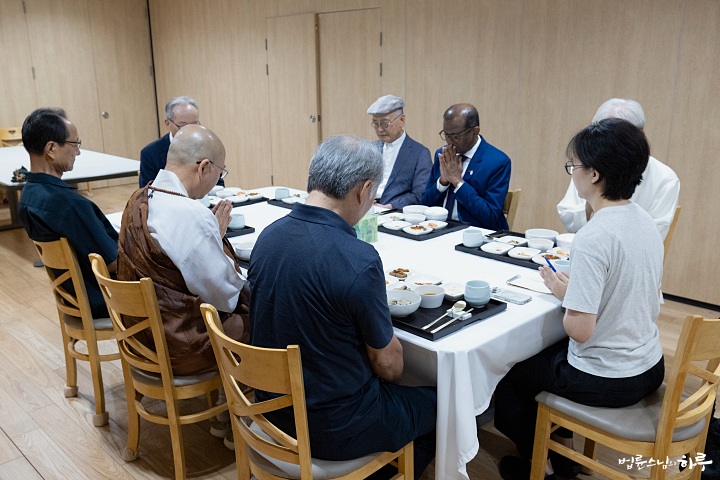

After the Won Buddhist teacher's prayer, the meal began. On the breakfast table, prepared with care by Peace Foundation volunteers, was tofu that Sunim had made himself. After the meal, Sunim, the religious leaders, and the Sri Lankan Ambassador moved to the Peace Foundation conference room to continue the conversation.
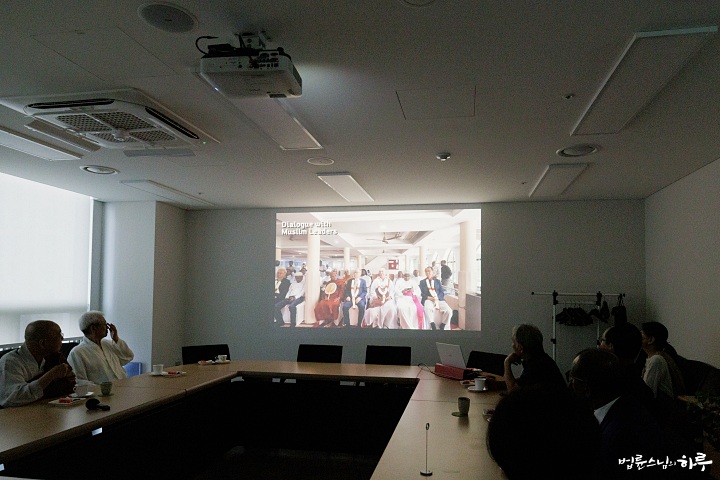
The meeting began with a viewing of the video from the recent visit to Sri Lanka. The Ambassador watched the video together with everyone.
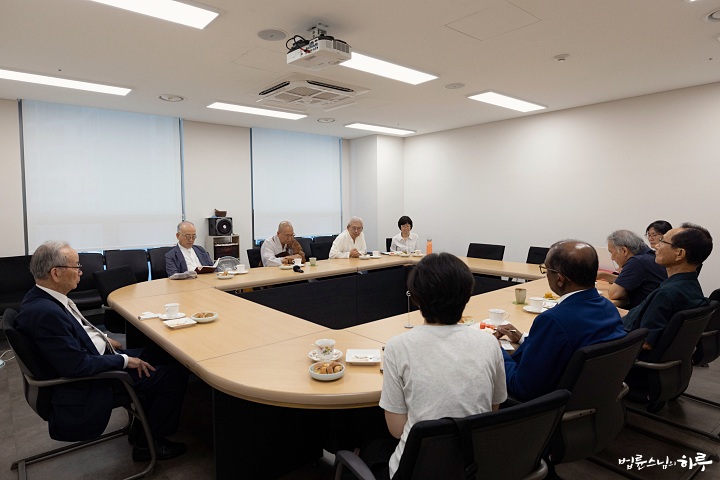
Following the video, the group reflected on the significance of the recent visit to Sri Lanka and exchanged views on ongoing exchanges between the religious communities of both countries, supporting Sri Lankan workers residing in Korea, and cooperation for people-to-people exchanges between Korea and Sri Lanka. They agreed to further develop plans for exchanges with the Sri Lankan religious community within the Religious Leaders' Meeting and meet again for further discussion. The Ambassador then took his leave first.
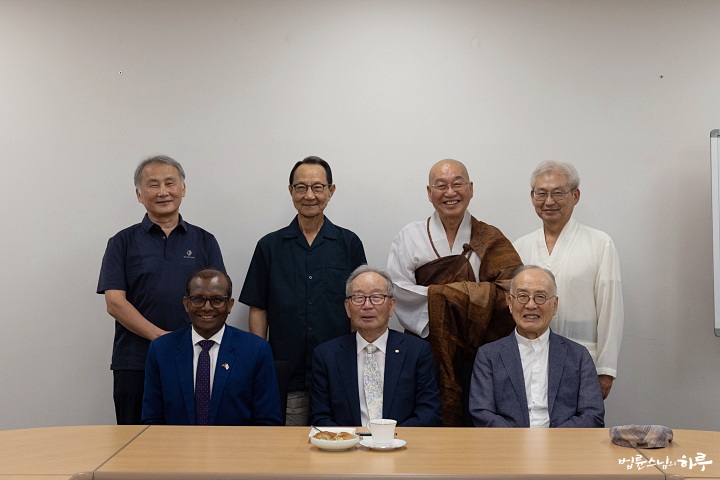
The Religious Leaders' Meeting continued and agreed on plans to expand exchange and cooperation with Sri Lanka's religious community, as well as to collaborate on emergency relief and other on-site projects led by Dharmashakti. In the latter part of the meeting, participants also shared updates on recent developments in inter-Korean and North Korea-U.S. relations, and exchanged views on the current government's AI industry promotion policies and the push for building nuclear power plants and dams.
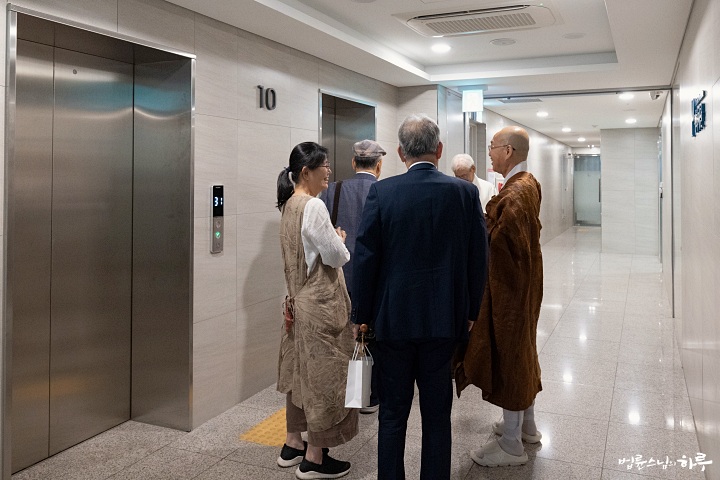
After the meeting, Sunim saw the religious leaders off.
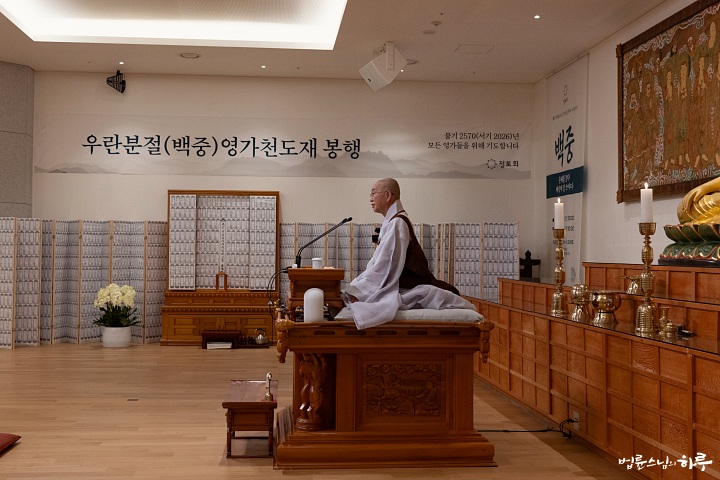
Since the Weekly Dharma Assembly began at 10 a.m., Sunim headed to the Dharma Hall. The Sangha members requested the Dharma teaching from Sunim with the Dharma-Requesting Verse and three bows.
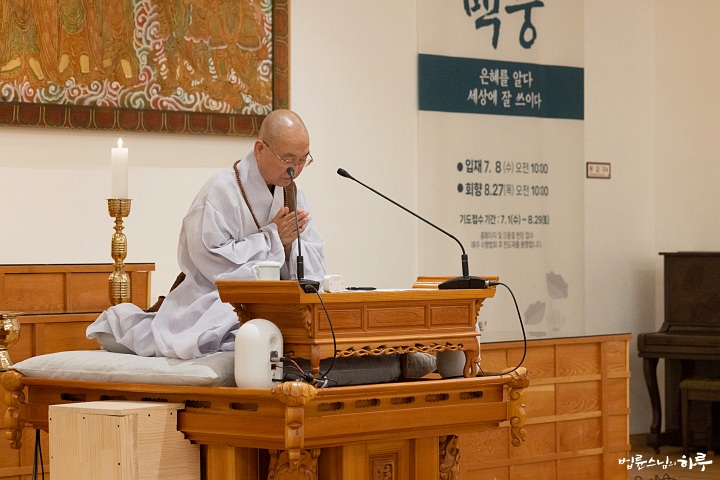
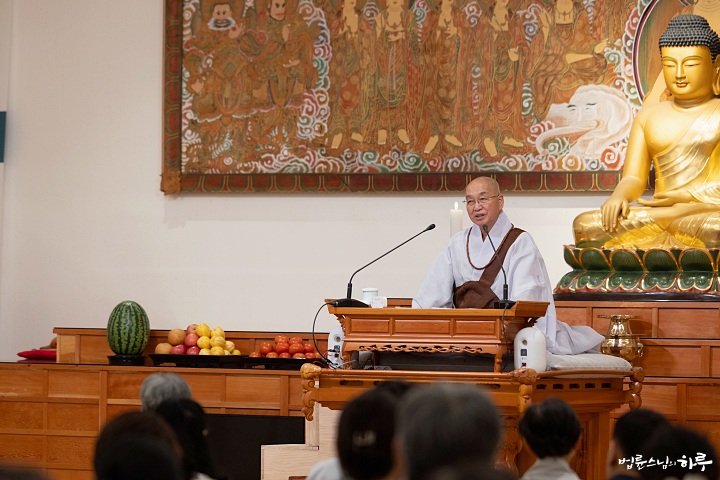
What Matters Most for a Practitioner Is Self-Practice and Self-Reliance
Jungto Society holds a ten-day retreat twice a year, in summer and winter. Though we engage in vigorous outward activity, what matters most for a practitioner is self-practice and self-reliance. All beings in the natural world, except when they are young, live their lives without depending on anything. Yet humans, said to be the highest of all beings, often live dependent on others even as adults. Not content with depending on others, they also assume the existence of some absolute being and try to live by relying on and receiving help from it. A student who doesn't want to study but wants to enter a good school prays to a powerful being, and someone who doesn't want to work but wants to make lots of money prays to a powerful being. However, the attitude of trying to live by receiving help from others does not accord with the principles of the natural ecosystem, and certainly does not accord with the Buddha's path of at least becoming the master of one's own life and, further, becoming the master of the world. All of you must at least be able to stand on your own in your own life. Self-reliance includes not only economic meaning but also mental meaning. It means letting go of the thought of relying on others, being protected, being loved, and receiving help to live. You should not only be self-reliant, but also live a life that is of some help to others—understanding rather than seeking to be understood, loving rather than seeking to be loved, helping rather than seeking to be helped, and being a source of support rather than depending on one. Being someone who contributes even a little to the world in this way is what it means to be a practitioner and a Bodhisattva. Living with this perspective—first becoming self-reliant through practice, then giving rise to a great heart to help others—is the direction of a practitioner's life, and it is the vow of Jungto Society, the community of such practitioners.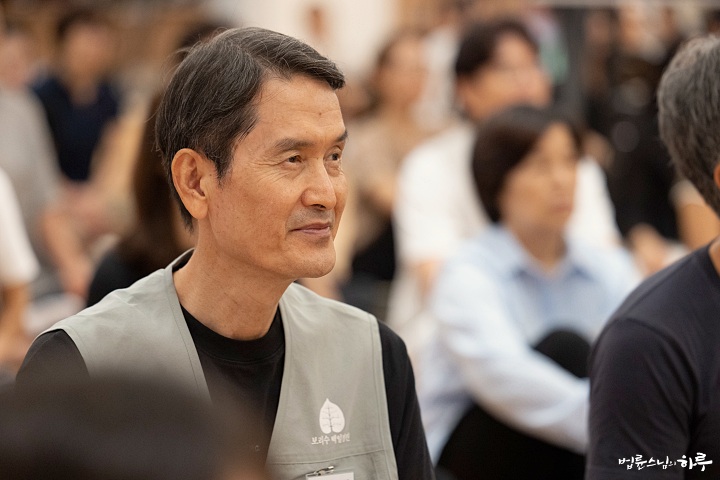
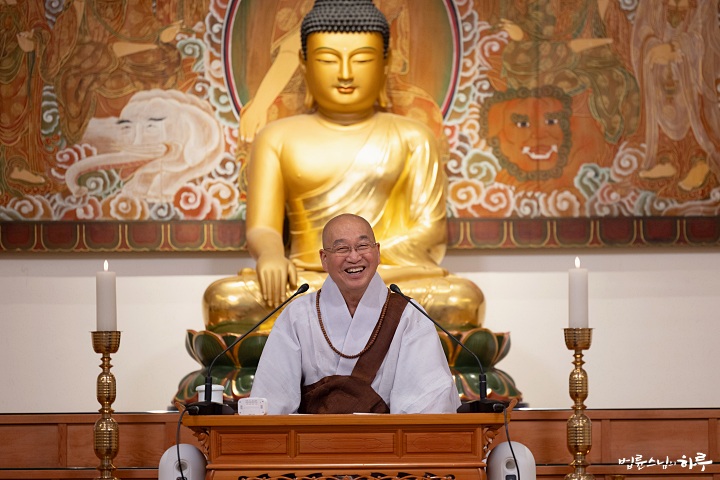
Baekjung Prayer Is a Process of Healing the Knots and Wounds Within Our Own Hearts
We are now in the period of Baekjung Prayer (百中祈禱). As I've mentioned before, the fact that I am living like this today is thanks to someone's help and grace. I exist because my parents existed, and I live each day because I eat food. That food comes from nature, but it is also made possible by the labor of those who cultivated it and the sincerity of those who offered it. The clothes I wear are thanks to the labor of those who made them. Being able to travel like this is thanks to the labor of countless people who built roads, made cars, and drove them. Looking further back, there were our ancestors, and countless patriots, democracy martyrs, and those who died for the nation who worked hard to build today's Republic of Korea. It is because of the sacrifices and labor of countless people that I exist today. Therefore, we should be grateful for being alive now and, with hearts filled with gratitude for our ancestors' grace, give rise to the wish that even a little of their suffering and resentment (han) may be resolved. Looking back at history, there were people who were mercilessly killed by foreign invasions, and there were people who were unjustly sacrificed by kings, aristocrats, and those in power. There was the pain of countless people who had to live discriminated against because of their low status and oppressed because they were women. Baekjung Prayer is about releasing the resentment of such wronged people. On the other hand, prayers for the perpetrators are also needed. Looking at the sins committed, you might think, 'People like that should go to hell and suffer.' But in Buddhism, we see that they too acted that way out of ignorance, so we give rise to the wish that even those who committed sins may be freed from suffering.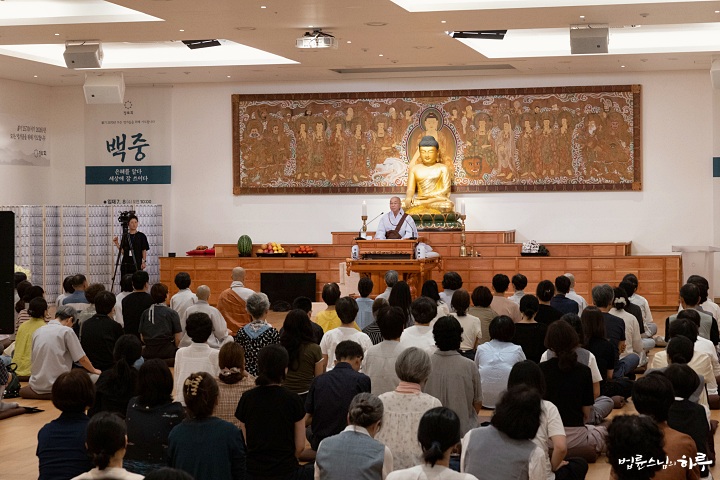
In the morning Dharma assembly, two pre-registered questioners asked Sunim questions. This post introduces one of the Dharma teachings.
As the Years Pass, It's Not the Work but the Responsibility That Becomes Frightening.
"Change jobs. If you've been there for three years, it's time to move on.""I am a working parent in my 40s living in New York. I worked in Korea, then came to study abroad, and after two job changes, I've been at my current job for over four years. That's the longest I've ever stayed at one company in my life. Now, as my years and salary have increased, I've moved beyond simply completing assigned tasks to a position where I have to lead projects and manage the organization. But the pressure and burden of performance is overwhelming. Sometimes I think, 'If I get fired for not doing well, so be it,' but I don't think things would be much different if I changed jobs. Looking back at my past, similar suffering has always come after 3-4 years at any job. I try to examine myself—wondering if it's due to fear of failure, or if I'm too attached to others' recognition—but even brief awareness doesn't easily make the suffering go away. I still have over 20 years left on my apartment mortgage, so I need to keep earning for a long time. How should I manage my mind to be able to continue working steadily?"
"Wouldn't it be better to stay at one place longer?"
"For you, changing jobs would be better. It's because you've stayed at one place for a long time that you got promoted and now have these worries, right? If you move to a new company, you'll be entering as a newcomer, so they won't give you great responsibilities. Work as a junior, and when you reach a position of responsibility, move again. This way, you won't have to bear the burden of work.""Oh, I see..."
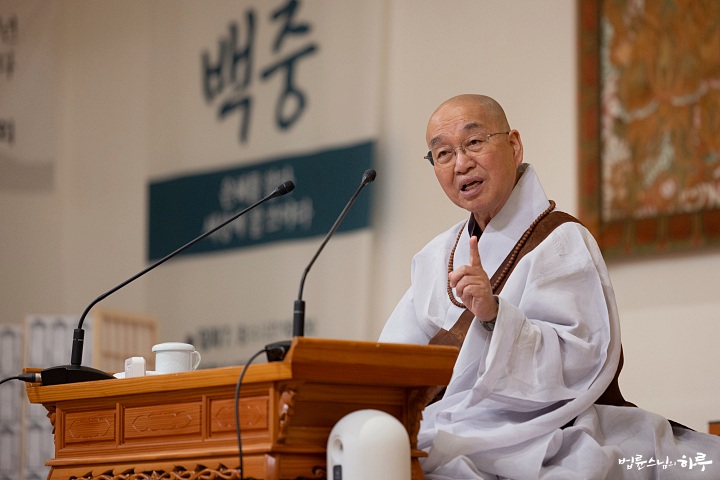
"Yes, that's right." (laughter)
"There are two paths for you. The first is to clearly communicate your position to the company. Try saying it this way: 'I do well as an individual contributor, but I feel I am not good enough at leading many people and producing results. Another employee on our team would do much better, so if you make that person the team leader, I think the company would benefit more. I will support them well from below.' How much more can you really earn by carrying such headaches and burdens? If you get promoted and feel motivated, thinking, 'Let me really make an impact!'—that's fine. But if right after getting promoted, you're anxious about performance, you can pass that opportunity to someone else who wants the promotion. If you say you're yielding the team leader position to someone more capable for the company's benefit, people around you will say, 'That person is really humble, has no greed, is admirable.' There's no need to compete with others and struggle. Securing your own area and living well is also wise. If you say this and the company still promotes you, then say you'll quit. Then join another company as a newcomer, and they won't make you team leader for several years. (laughter)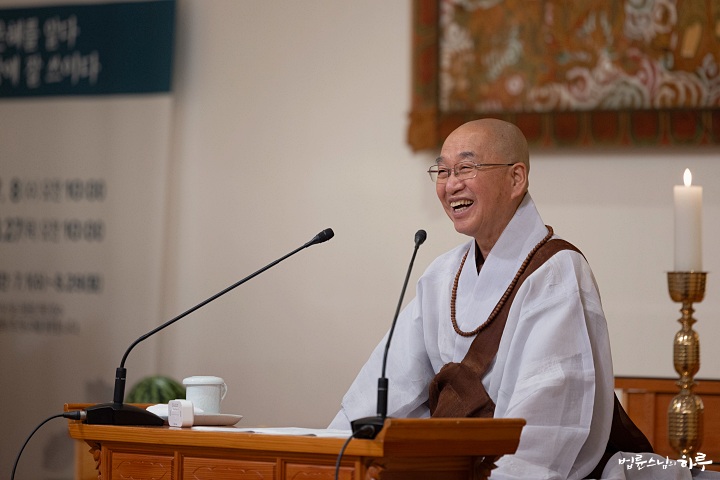
"Among various tasks, I do decline the ones I'm not good at, but this time I'd like to stay at the company for a longer time."
"You don't have to get promoted and become team leader to stay at the company for a long time. If you decline promotion, you can stay in a lower position for a long time. The real problem is grabbing a position you're not capable of.""Right. That's true." (laughter)
"You can just say to yourself, 'Well, let me give it a shot,' and if it doesn't work out, quit at that point. There's no need to worry about being hurt. If you get fired then, you can move to another company. Another way is, even if you decline promotion in advance but the company still promotes you, take it on with the attitude, 'Alright! I'll do it as far as I can.' You're actually in a fortunate position. (laughter) Other people are frantic because they have no job, frantic because they can't get promoted, but you're worried even about being promoted.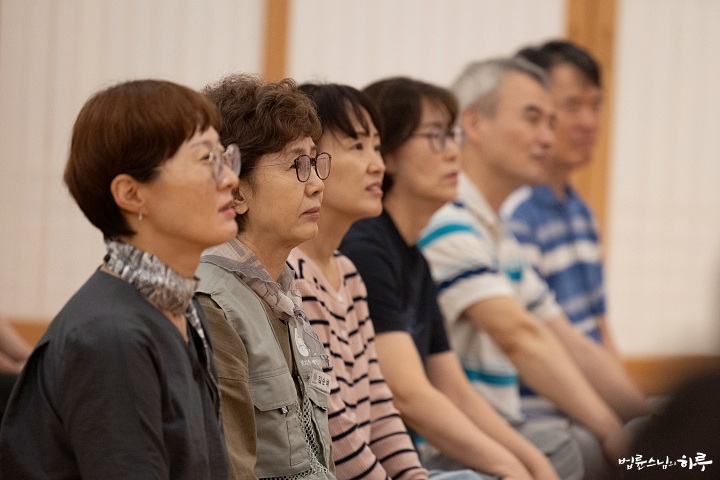
"Yes. I'll know my place." (laughter)
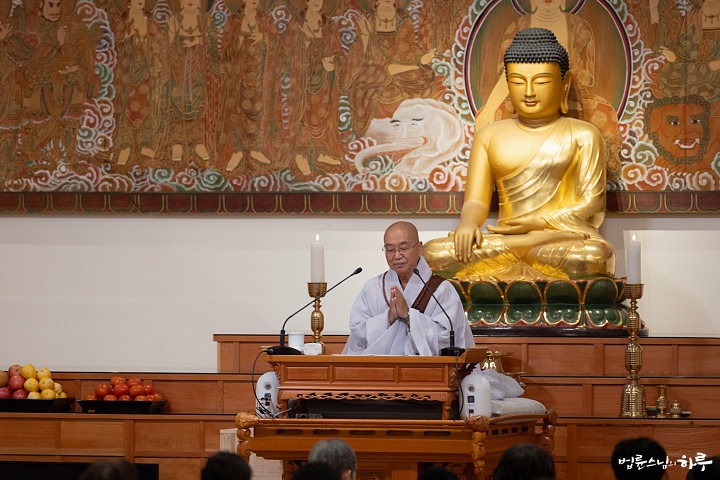
After finishing the Dharma assembly, Sunim had lunch at the basement dining hall. After the meal, he moved to the Peace Foundation, where he wrote a manuscript for the greeting speech commemorating the 20th anniversary of the passing of Reverend Kang Won-yong, and then attended the research seminar.
The research seminar is a monthly learning session for Peace Foundation volunteers. Today's research seminar invited Park Sang-joon (박상준), representative of the Seoul SF Archive, who presented on the theme "AI and Future Scenarios: The New Path of Humanity and Posthuman."
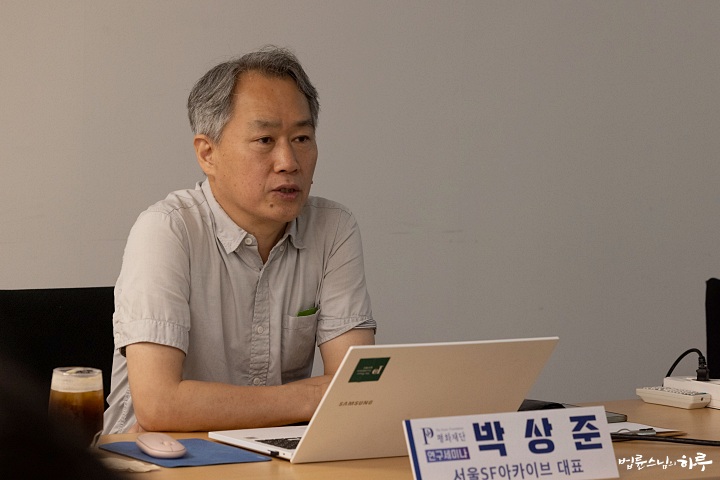
Representative Park Sang-joon emphasized that AI and robot technology are no longer science fiction (SF) but reality, and that going forward, ethical and philosophical discussions about how humans and AI will coexist will become as important as technological development itself. To explain this, he introduced various SF novels and films as examples, illustrating the ethical dilemmas that AI will bring. He also introduced Asimov's Three Laws of Robotics and the supplementary 'Zeroth Law,' saying that we must consider together what standards AI should use to make judgments in human society. In particular, he introduced the Korean SF work , explaining that its setting of an enlightened robot monk prompts new reflection on AI, religion, human enlightenment, and the meaning of existence.
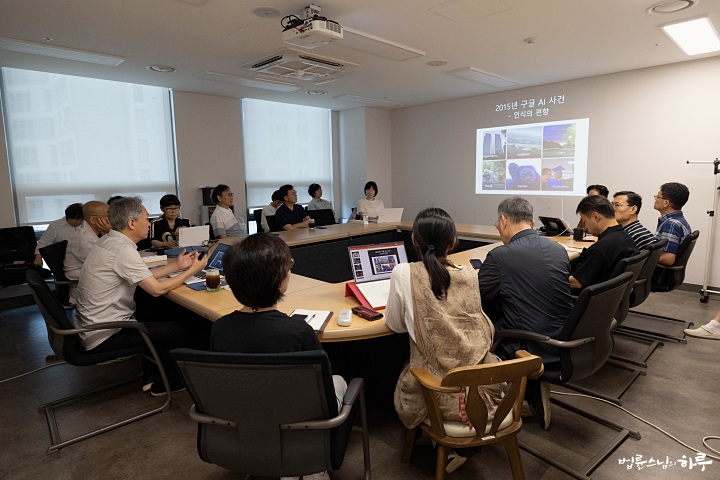
He then discussed the era of cyborgs and posthumans, introducing technologies where humans and machines merge, such as brain-computer interfaces and prosthetic limbs. He said that an era may come when people choose machines to expand human abilities, and in that process, questions like "What is a human being?" and "How should we redefine humanism?" will become even more important. He also introduced Ray Kurzweil's Singularity theory to explain the possibility of AI-human integration, while emphasizing that social consensus and ethical standards on how to use technology are more important than the technological development itself.
During the Q&A after the lecture, questions followed on the climate crisis and AI, religion and AI, AI regulation, and the international community's response. Representative Park Sang-joon emphasized that SF plays an important role in imagining and preparing for the future in advance, and that in the AI era, discussions on protecting human values and community must accompany technological development.
After the lecture, Sunim also shared his thoughts on it.
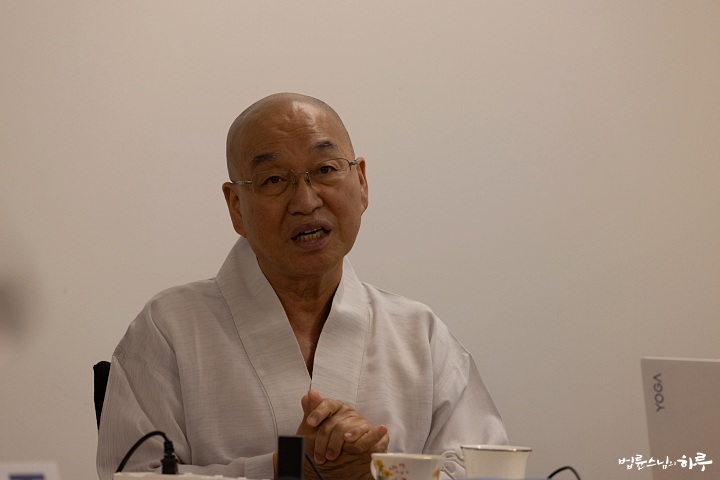
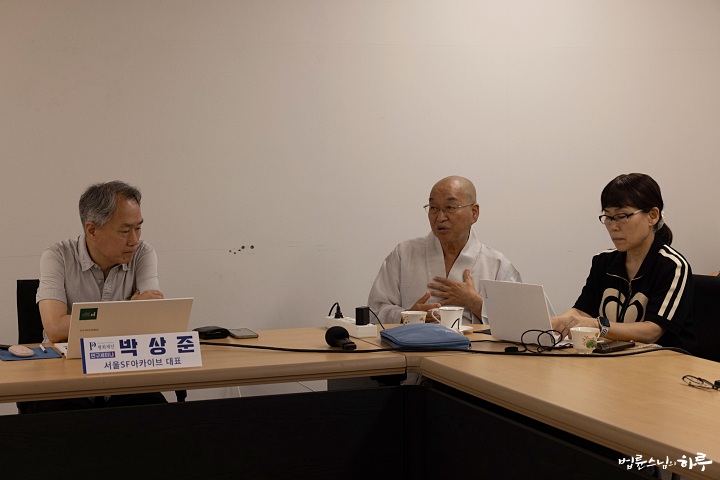
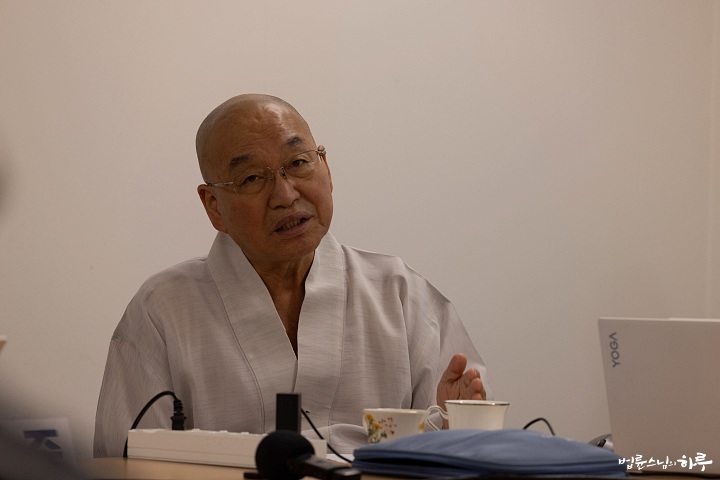
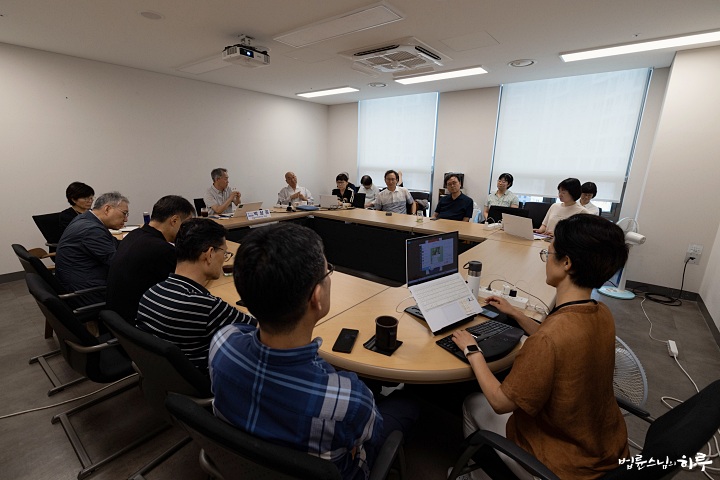
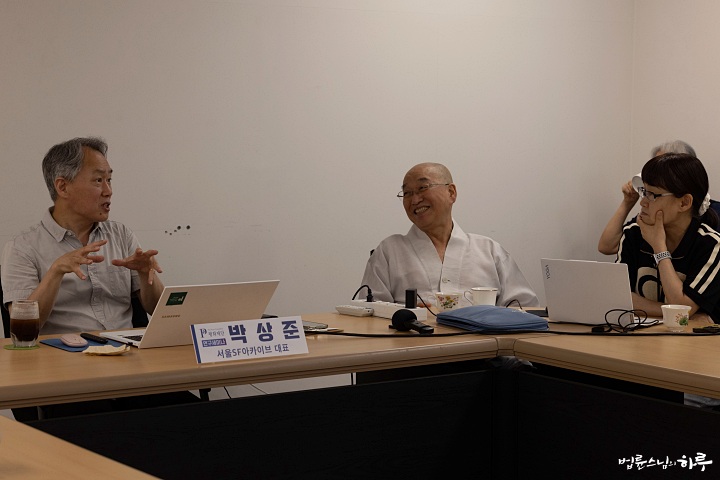
In response to Sunim's question, Representative Park Sang-joon predicted that within the next 10 years, many of the AI technologies seen in SF films will largely become reality. He explained that self-driving cars and humanoid robots will spread throughout daily life and industrial sites, and that the standards by which they make judgments will ultimately be determined by human society. He also said that the interests of economic actors such as corporations and insurance companies are likely to have significant influence on AI decision-making. He concluded the lecture by explaining that rather than completely replacing humans, "adaptive automation" that collaborates with humans to produce greater results is a desirable direction of development, and that AI, robots, cyborgs, and biotechnology are all closely interconnected, so development in one field will affect others.
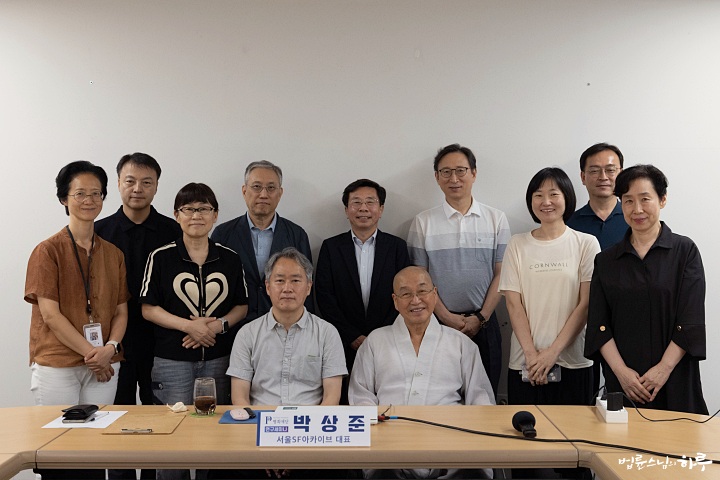
As soon as the research seminar ended, Sunim attended the Peace Foundation Planning Committee meeting starting at 4 p.m. At the Planning Committee meeting, participants reviewed recent domestic political issues and points of contention, and examined the outlook.
The meeting ended near 6 p.m. After revising the manuscript, Sunim moved to the Dharma Hall for the live broadcast of the evening Weekly Dharma Assembly.
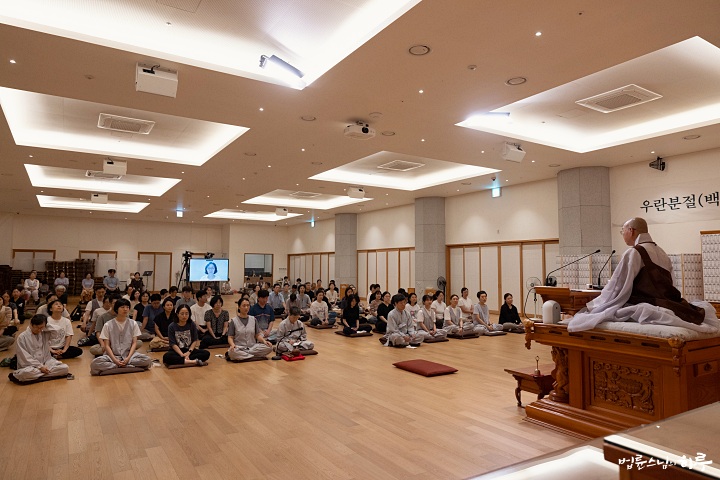
As in the morning, two pre-registered questioners at the evening Dharma assembly sought the Dharma from Sunim.
This post concludes with the first question.
Is It Right to Let My Adult Child Who Is Ill Live Independently?
If you really didn't know, I would tell you, but actually you do know. Isn't it that you want to live with your child under the excuse that he's sick? If you want to live together, you can honestly acknowledge, 'I want to live with my child.' But you shouldn't think, 'I can't let him go because he's sick.' Since your child is a bit ill, telling him to leave right away could seem harsh, so it's okay to wait a little longer. But if he says he's leaving, that's his decision to make. You can ask, 'Your health isn't good—will you be okay?' and if your child says, 'I'll be fine,' you can say, 'Alright. I can't take care of your whole life, so although I want to live together, since you say you want to try living independently, I'll support your wish.' Just say that much.My first child is 26 years old and has been working at a job for about a year. At the end of this month, he plans to quit his job, rest, and look for a new one. He says that once he finds a new job, he wants to move out and live independently. However, a few years ago, my child was diagnosed with Crohn's disease, an inflammatory bowel disease, and has to take medication for life and be very careful about food. I'm worried that if he lives alone, he won't take proper care of his meals. Also, a few months ago, he seemed to have depression, saw a psychiatrist, and took medication for about two months, but then decided on his own that he was okay and stopped taking the medication. In this situation, I can't easily judge whether it's right to let my adult child become independent or whether it's right to live together and care for him since he is ill. I'd appreciate your wise counsel, Sunim.
"Yes, I understand. Thank you."
Since the Dharma teaching for the pre-registered questioners finished early and time was left, Sunim took questions from the audience, but there were no questioners at the venue.
"You never have time and can't ask, so this is a great opportunity. (laughter) Well, we'll finish early today. Alright. Let's wrap up."
After the Dharma assembly, Sunim stopped by the office to finish some work, then returned to his lodging to rest. Tomorrow, Sunim will hold the North Korea Reality Meeting and the Security Meeting, then move to Mungyeong for the meditation retreat that begins on the 24th.