My Daughter Has Fallen into a Cult. What Should I Do?
Jul 12, 2026 - Preparing the Dolmen Site
Hello. Today, Sunim worked on preparing the dolmen site.
Sunim began the day with morning practice and meditation, then started communal work at 6 a.m.
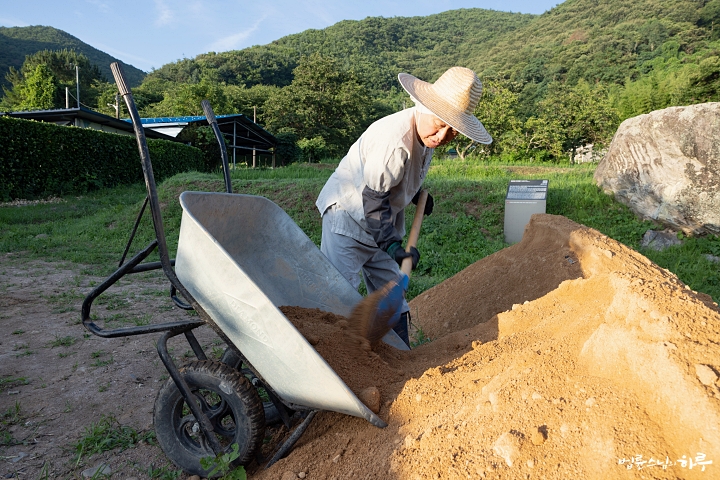
First, Sunim used the sand that had been brought in recently to add a layer of soil to the yard. The uneven ground became noticeably more level after the topsoil was added.
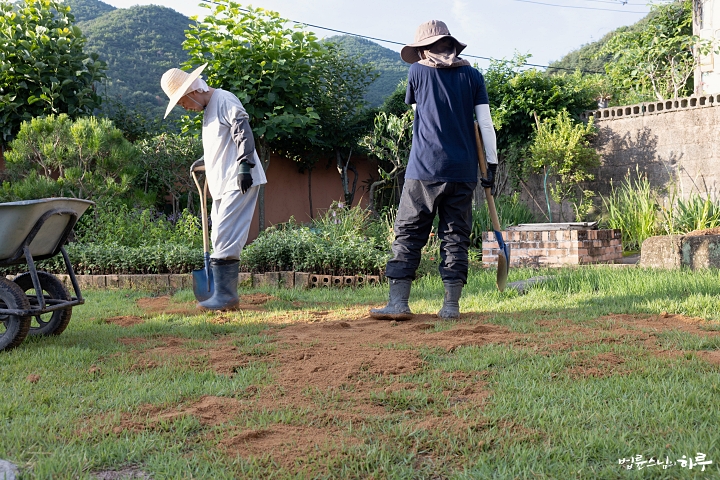

At 6:30 a.m., male lay practitioners from the Pohang(포항) Branch of the Daegu-Gyeongbuk(대구경북) Chapter arrived with a dump truck and an excavator. Sunim explained to them where to build the flower bed, where to place the stone steps, and where to create the path.
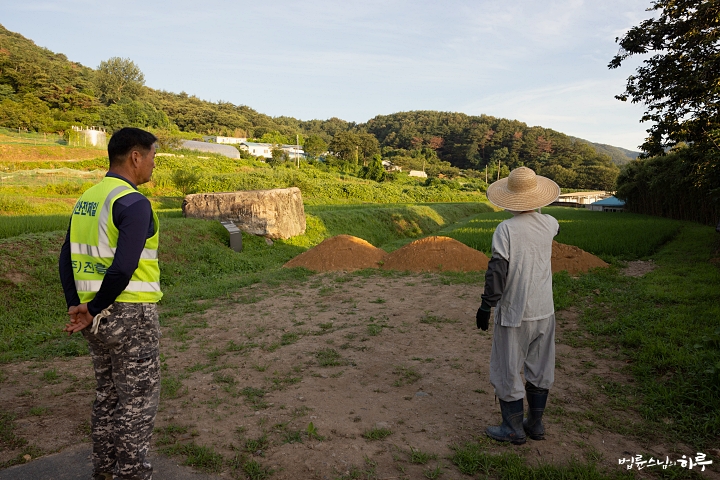
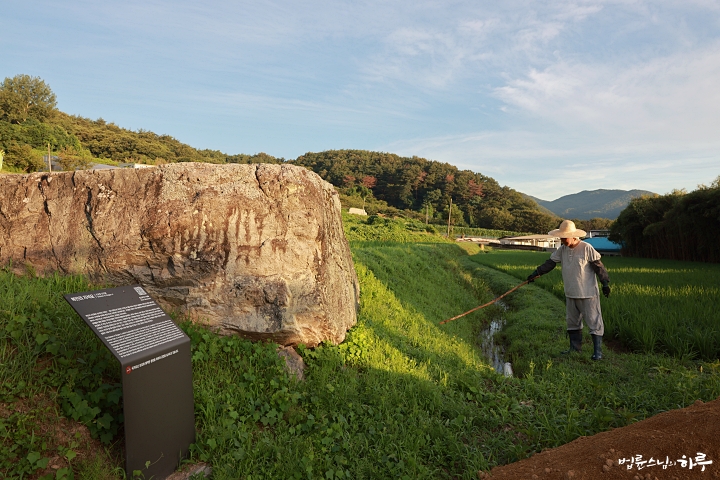
The male lay practitioners scooped soil and sand from a nearby reservoir and poured them onto the dolmen site according to Sunim's instructions. Then they leveled the ground using the excavator.
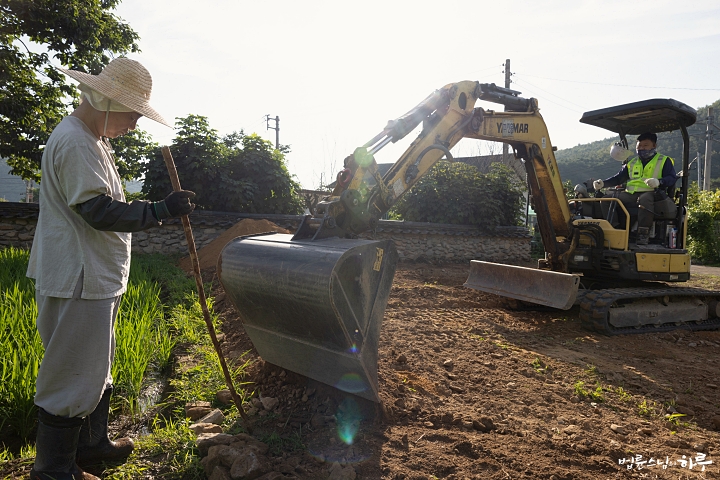
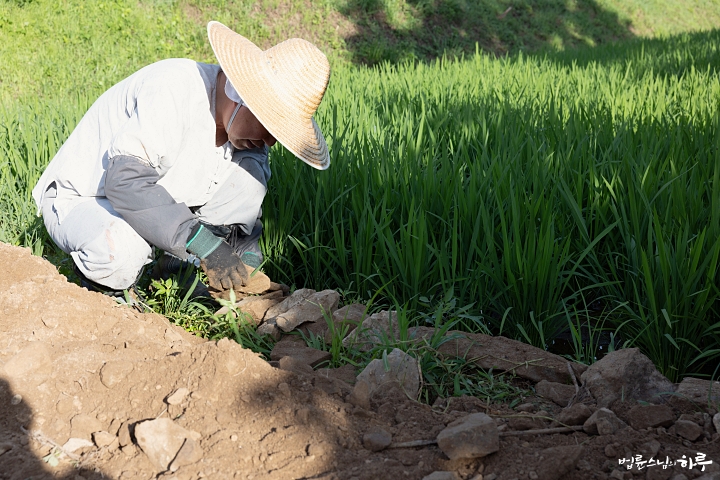
On one side, Sunim worked on building a small retaining wall to mark the boundary between the rice paddy and the site. He gathered large stones and stacked them one by one.
Choi Malsun(최말순) Bosallim prepared noodles as a snack. Sunim took a short break with the male lay practitioners to enjoy the noodles together. Sunim expressed his gratitude to the volunteers by giving each of them a book as a gift.
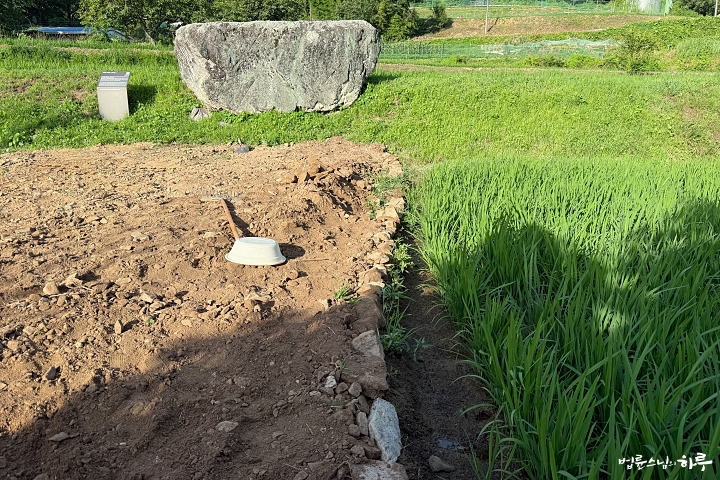
Sunim completed the retaining wall, but since it was built along the curved edge of the rice paddy, the wall turned out curved rather than straight. Sunim suggested to the Haengja that they rebuild it in a straight line. One of the Haengja, trying to avoid the extra work, jokingly said,
"No, Sunim. The curve looks more natural and pretty. (laughter)"
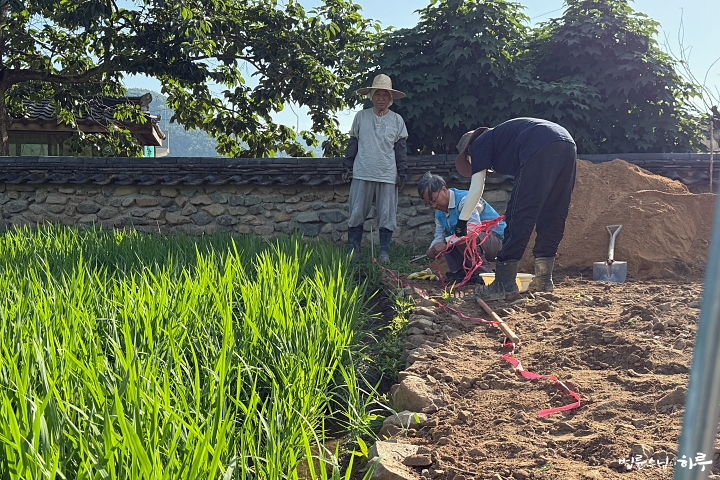
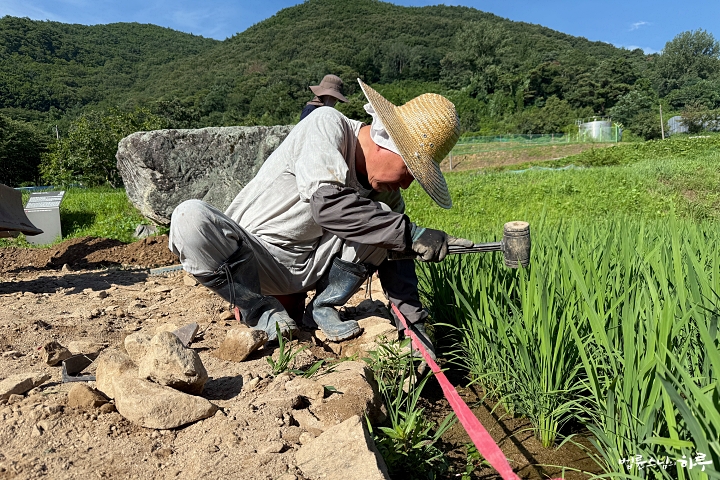
However, Sunim didn't like the look at all. Unlike the first time, he stretched a string tautly and rebuilt the retaining wall along the line. Once the wall was rebuilt, it looked much neater and more pleasing to the eye.
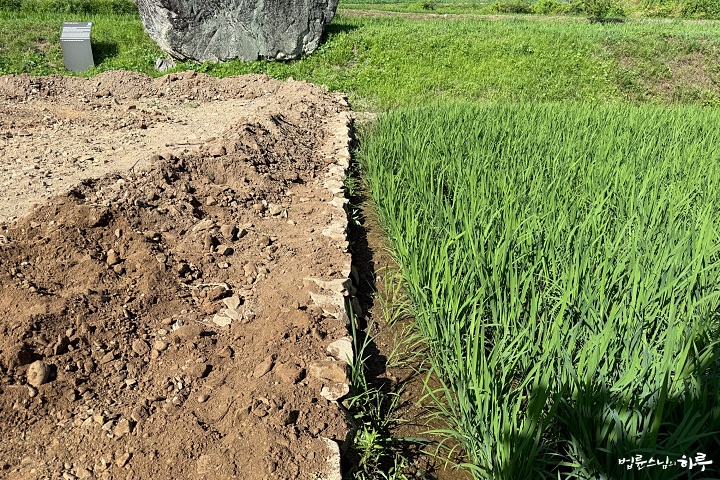
The weather became too hot to continue, so everyone took a break.

In the afternoon, Sunim attended to work at Dubuk Jungto Retreat Center.
Around 6 p.m., as the weather cooled down slightly, Sunim resumed work on the dolmen site. To create a flower bed on the ground that had been well-compacted by the excavator, he decided to use roof tiles to mark the boundary. He stretched the string again and began setting up the tiles.

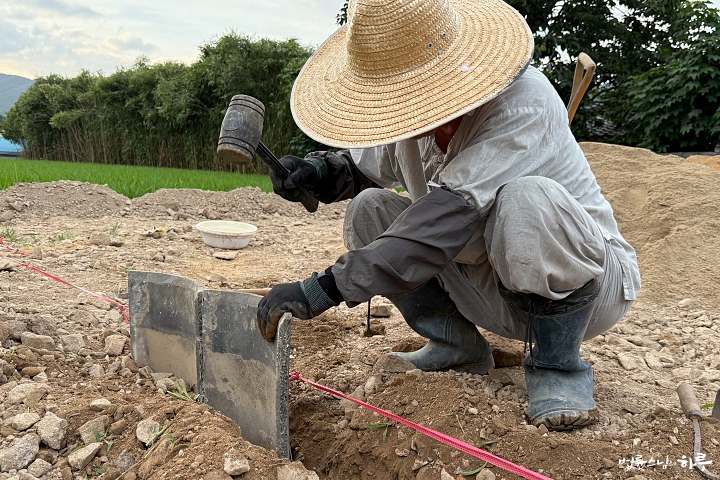
Setting up the tiles one by one, the flower bed was soon complete.
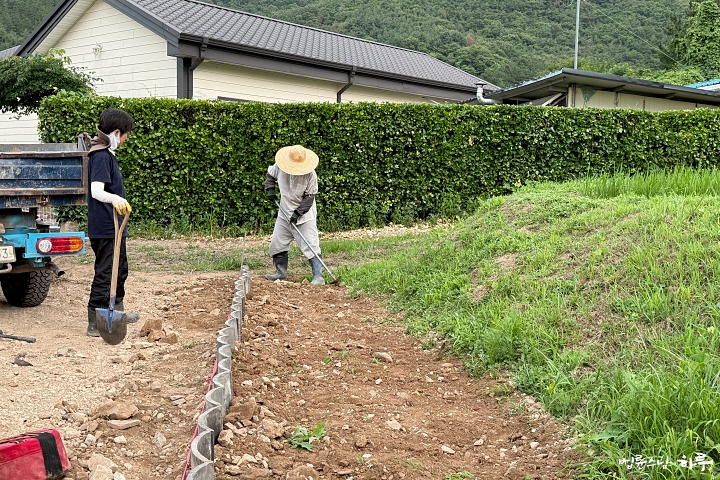
"Let's stop here for today."
At 7:40 p.m., the tools were put away and the communal work came to an end. Work on the dolmen site will continue tomorrow.

Since there was no Dharma talk today, this post introduces a Dharma Q&A from last June.
My Daughter Has Fallen into a Cult. What Should I Do?
"You're using me as an excuse? Why not blame your husband or someone else? Why put the responsibility on Sunim, who has nothing to do with it? (laughter)""My daughter has recently fallen into a cult, and she's happy spending time with peers there. I want to stop her, but she says, 'I'll come out of it someday,' while continuing to attend. Sunim, I recall you once said to leave a child alone if they're happy, and that's making me hesitate."
"My daughter says she's happy. Should I stop her, or not?"
"If your daughter were using drugs and said, 'Mom, I'm happy,' should you stop her or leave her alone?""I should stop her."
"Exactly. The idea that 'if someone is happy, you should or shouldn't stop them' doesn't hold. You need to look at why they feel happy. And going deeper, there's actually no such thing as a cult.""They tell her to believe in the leader, and they demand donations and evangelism."
"Whether they tell her to believe in the leader, demand money, or push her to evangelize, it's not right to label those things as making it a cult.""They distort the Bible and even brainwash people."
"They're interpreting the Bible differently, not distorting it. That way of thinking itself is mistaken.""But society calls that a cult."
"People may say it's a cult, but in religion itself, there's no such thing as a cult. When the mainstream of Religion A sees Group B interpreting the same religion slightly differently, Religion A considers Group B a cult. But to someone who doesn't believe in Religion A, both A and B look the same. They're just slightly different from each other. Fundamentally, there's no such thing as a cult. However, there can be criminal religious groups. If someone extorts money under the guise of religion, is that a cult or a crime? It's a crime. Committing sexual assault or violence under the guise of religion is also a crime. There can be religious groups that commit crimes in society, but calling them 'cults' reflects a mistaken viewpoint. 'Cult' is a very conceptual expression. Some people believe in the sun, and others believe in the moon. Some believe in pine trees or dangsan trees, and in India, some people worship rats. In India, there are monkey gods and rabbit gods. From our perspective, we might think it's all shamanism or superstition, but that's just our view. In reality, it's simply a matter of different beliefs. This is a matter of perspective. The very idea that 'believing in God is fine, but believing in a monkey is a cult' is mistaken. We can only say that beliefs are different. Take Buddhism, for example. Even within Buddhism, there are different sects. Theravada, or Southern Buddhism, considers itself to have directly inherited the Buddha's original teachings. According to this view, there is one Buddha, and we can attain enlightenment and become happy by following his teachings. However, some people interpret the sutras differently, saying, 'A Buddha means an enlightened person, so you can become a Buddha and so can I. Therefore, there isn't just one Buddha.' Hence, there are views that recognize many Buddhas, such as Amitabha Buddha and Bhaisajyaguru Buddha. From the perspective of Southern Buddhism, this is heretical. But from the perspective of Mahayana Buddhism, Southern Buddhism is too rigid. The history of religion is always like this—new sects emerge from one religion, and then even newer sects emerge from those. In the Middle East, there were traditionally Jews who believed in Yahweh. They believed that among all peoples, only the Jews would be saved. Then Jesus came and said, 'Gentiles can also be saved.' The existing Jews wouldn't have liked that. It was difficult for them to accept that other peoples could be saved when they thought only they should be. So, from the Jewish perspective, Jesus's teachings were heretical, and ultimately, Jesus was crucified. Christianity follows Jesus's teachings. Within Christianity, Protestantism newly emerged from Catholicism. Catholicism regarded Protestantism as heresy. However, as the number of Protestant believers grew, Protestants became the mainstream in some countries. In those countries, Protestantism isn't called heresy. In Korea, on the contrary, some Protestants call Catholicism heresy. Like this, whenever anyone thinks differently from the mainstream in any religion, the mainstream labels them a cult. But when their movement grows and becomes the mainstream, they become the orthodoxy. That's why 'cult' isn't a good expression to use.
"So should I just accept it and wait?"
"Later, you'll probably say, 'I accepted it and waited, but my child never came out. I should have stopped her, and it's Sunim's fault.' Listening to you, that's exactly the attitude I sense. (laughter) To summarize, observe your child carefully. If, upon observation, you judge that things are fine as they are, then wait. But if you think there's a problem, raise it wisely so your child becomes aware of it herself. I don't mean to wait passively. Have conversations with your child, listen sufficiently to what she says, and observe. If you approach conversations with the intention of stopping her, no real dialogue will happen. Show interest as if you might join her, and listen carefully. Ask what she likes about it, and if you like what you hear, you could even go with her. (laughter) In other words, now isn't the stage to make a decision—it's the stage to observe carefully. In the old days, there were people who went around neighborhoods spreading their religion. Imagine someone living alone in an apartment, lonely from raising a child by herself. When someone comes to visit, listens to her, and comforts her, is that comforting or not? It is, so she comes to believe in that religion. But from the outside, everyone criticizes it as a cult. Then that group teaches, 'This is a test. You must overcome this test to receive grace.' As a result, communication with family gradually breaks down. Whether it's a parent or a husband, they should first say, 'You must have been very lonely. It must have been hard being alone,' and listen to and understand that pain. When that loneliness is resolved, the problem often resolves itself. If instead you get angry and push, the other person will close off even more. That's why we shouldn't hastily judge what's right or wrong.""Thank you."