At Ninety-One, Waiting for Death Feels Tedious
July 11, 2026. Tending the Dolmen (고인돌) Historic Site, Meeting with Beopmyeong Sunim
Hello. Today, Sunim began the preparation work to create a flower garden in front of the dolmen historic site in the village and had time to meet with Beopmyeong Sunim (법명 스님).
After his morning practice and meditation, Sunim prepared for communal work. Today, he planned to pour sand onto the open area in front of the dolmen historic site with the trainees to level the ground.
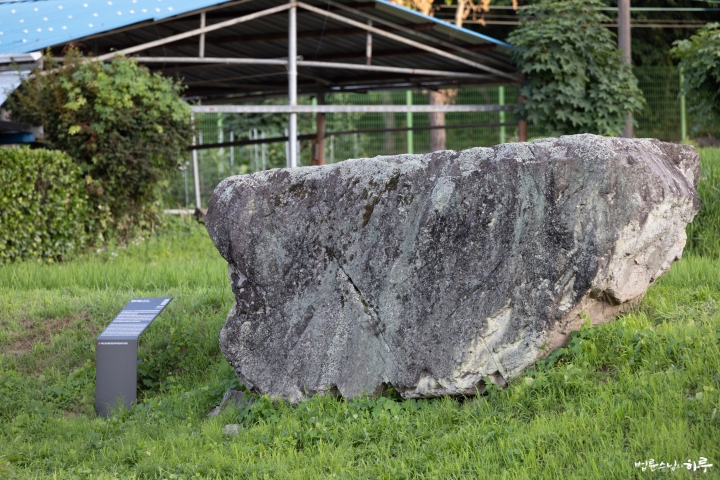
Inside the village where Dubuk Jungto Retreat Center (두북수련원) is located, there is a large dolmen. It is believed to belong to someone who ruled this area during the Bronze Age, and it serves as important material for studying the people who lived in this village during that period. For this reason, it has been designated as a regional monument. However, this dolmen is located right in the middle of a rice paddy embankment, making it inconvenient for visitors to view. As a result, despite its considerable historical value, it appears to be a neglected historic site.
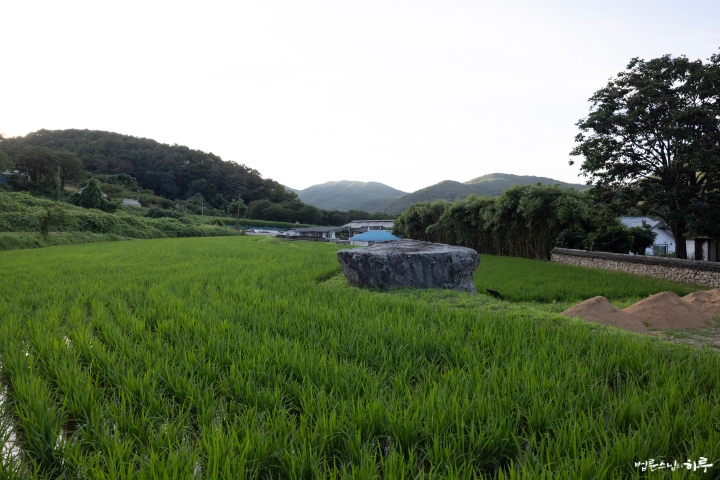
Sunim began the maintenance work here to create a yard in front of the dolmen, build a walking path so visitors can easily look around, and create a small flower garden for them to enjoy.
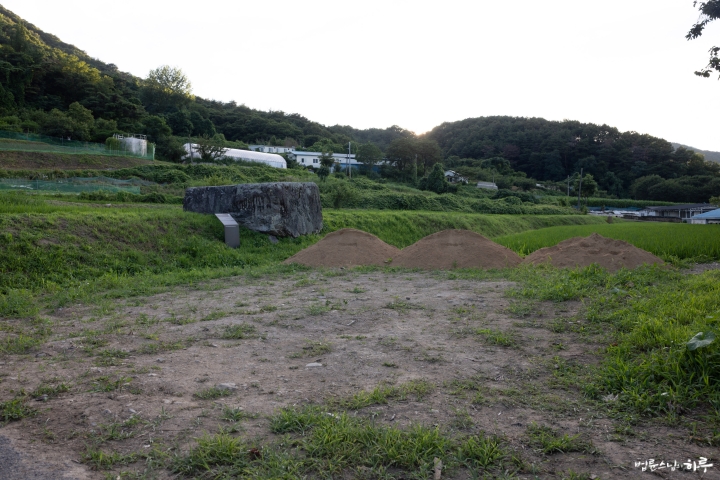
Some time ago, the trainees filled the sunken ground in front of the dolmen with stones and gravel, and yesterday they brought sand from Gyeongju (경주) and placed it there. Continuing the trainees' work, Sunim planned to start laying the sand and leveling the ground today.
Before the trainees arrived, Sunim harvested lettuce and perilla leaves from the vegetable garden. Around 6:30 AM, the trainees arrived.
"Good morning, Sunim."
"Welcome. Let's finish what we're doing, gather the work tools, and head over."Sunim led the trainees to the open area in front of the dolmen. Three piles of sand were stacked in the open area. When they approached to spread the sand, they saw that the ground had not been filled in enough, so it seemed that too much sand would be needed in this condition.
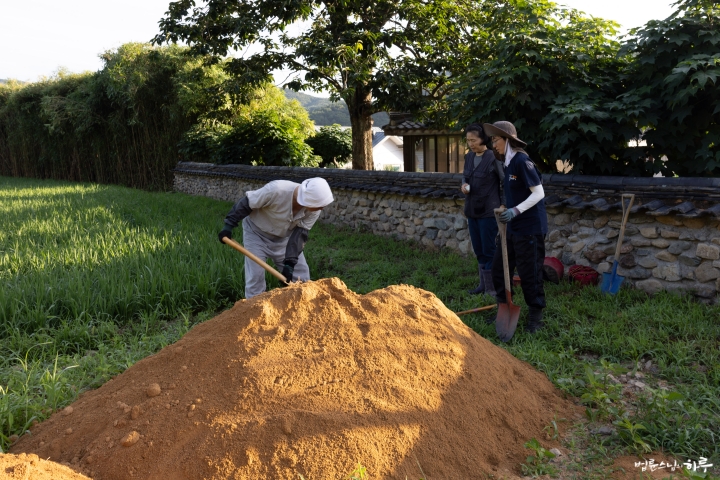
Sunim and the trainees decided to fill the ground with more gravel and moved to the stream.
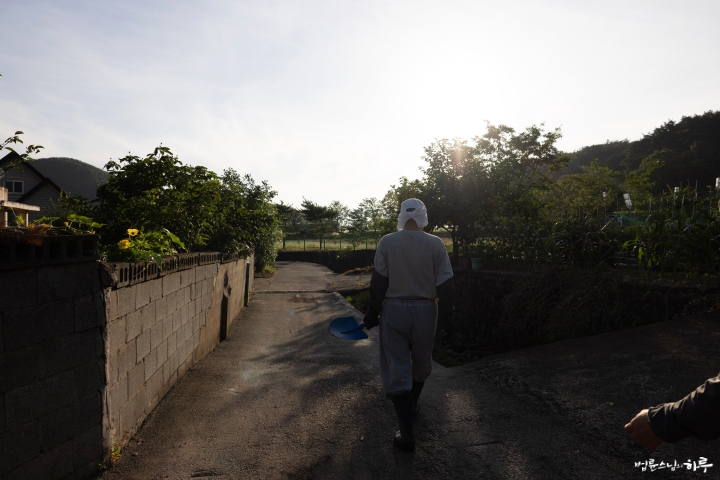
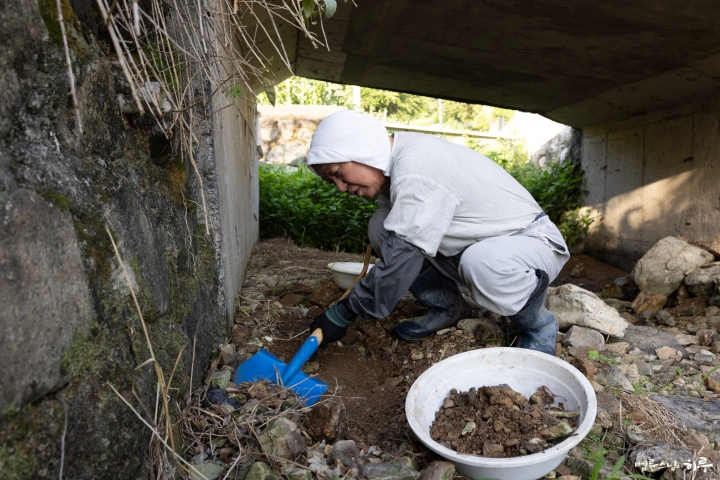
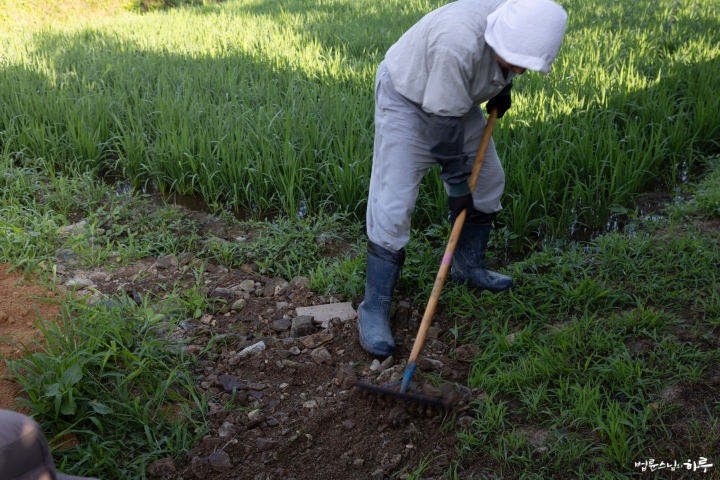
Sunim gathered gravel with a shovel and hoe, loaded it into a wheelbarrow, and moved it to the open area. The sun was already rising, and it was starting to get hot. It seemed possible to do some filling by carrying it by hand a few times, but to spread all the sand, tools and an excavator would be needed.
Sunim returned home and looked at the strawberry field.
"The strawberry field needs fertilizer, and the new shoots need to be trimmed and planted.""Sunim, the weather is too hot now to transplant strawberries. It seems too early for the season."
"Since I won't be in Korea in September, I'll try just a little as an experiment now. (Laughs)"Sunim removed part of the strawberry vines from the field and prepared the ground again.
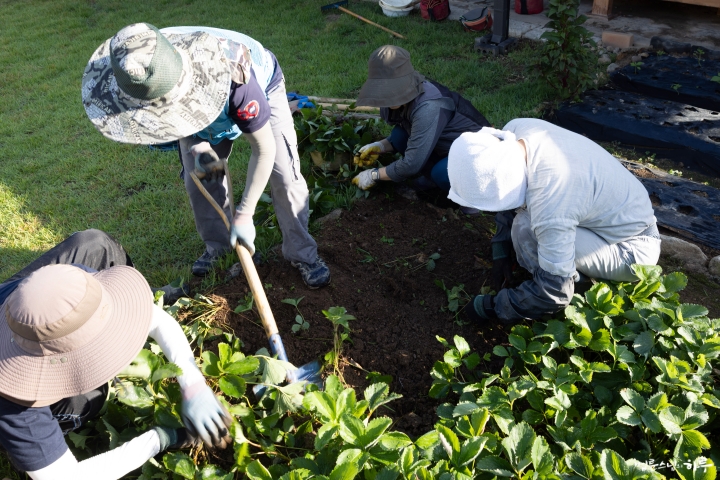
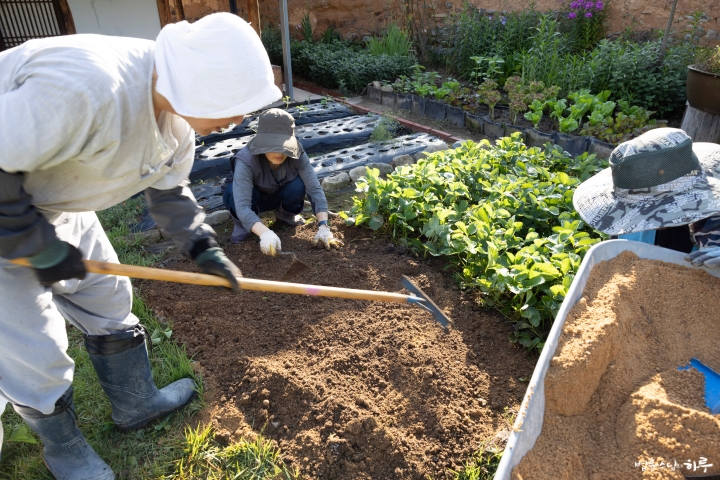
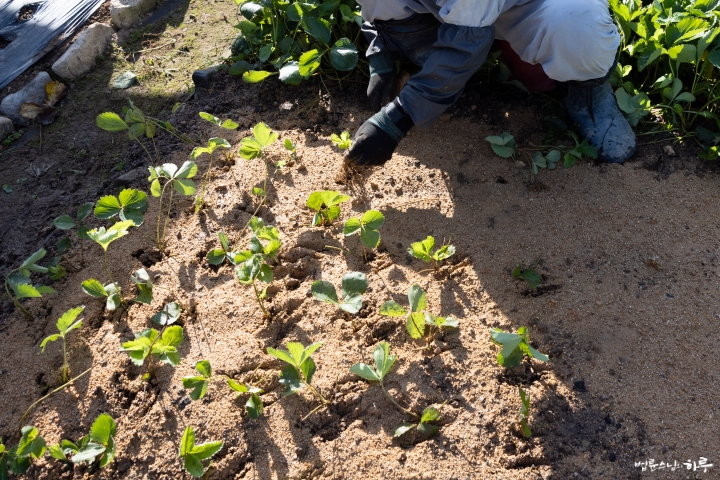
He applied fertilizer, turned the soil to make it loose, covered it with sand, and watered it thoroughly.
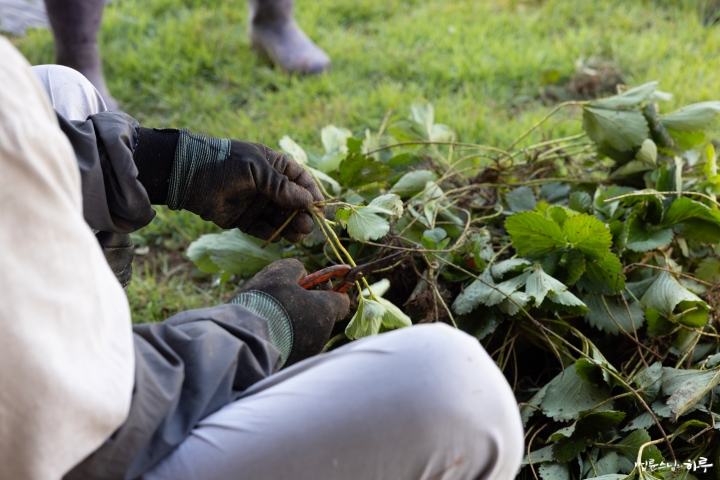
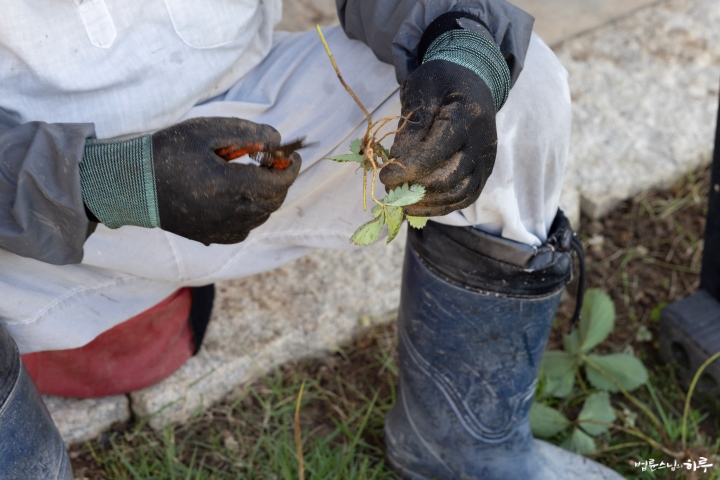
Sunim trimmed each strawberry vine that had been removed from the field one by one with scissors. From the strawberry vine stems extending from the old large roots, new roots were emerging at each node. Sunim trimmed the leaves and stems so the new roots could survive, creating strawberry seedlings.
As the sun rose overhead, it became even hotter.
"I'm not sure how long the strawberries will live even if I plant them. (Laughs) This is probably why they say now isn't the right time. But since we've started, let's do as much as we can."Sunim planted the well-prepared strawberry seedlings in the field.
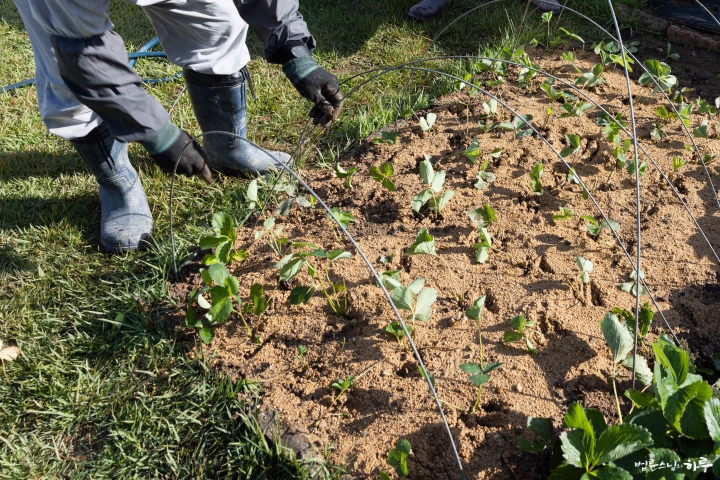
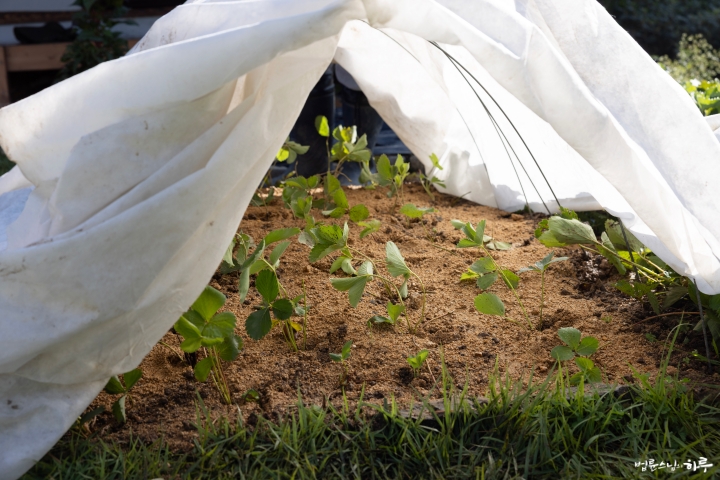
Sunim set up wire, covered the freshly planted strawberry seedlings with thin non-woven fabric so they could survive, and finished the communal work.
Before long, it was nearly 8 AM. Sunim had breakfast, tidied up, and then left to meet Assemblyman Joo Ho-young (주 호영) at Adomorewon (아도모례원).
When Sunim arrived at Adomorewon around 10:45 AM, Yusu Sunim (유수스님) was waiting.
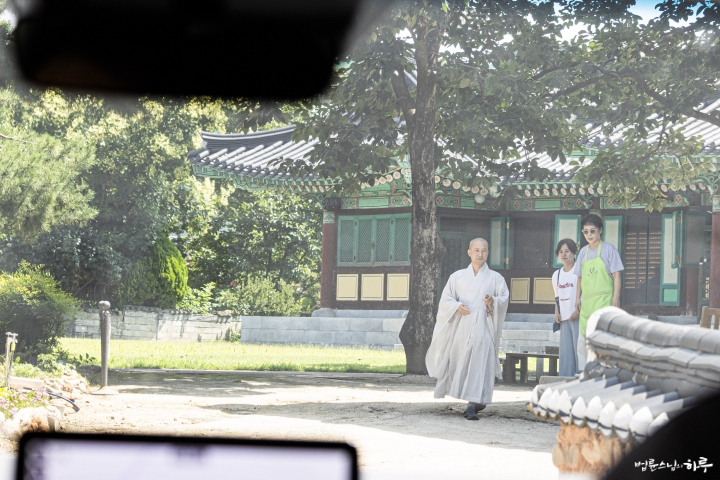
As soon as he arrived, Sunim went to the Dharma hall to pay his respects.
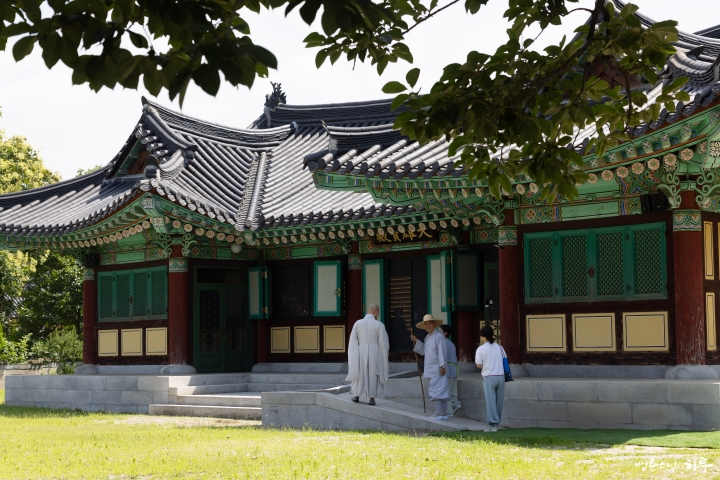
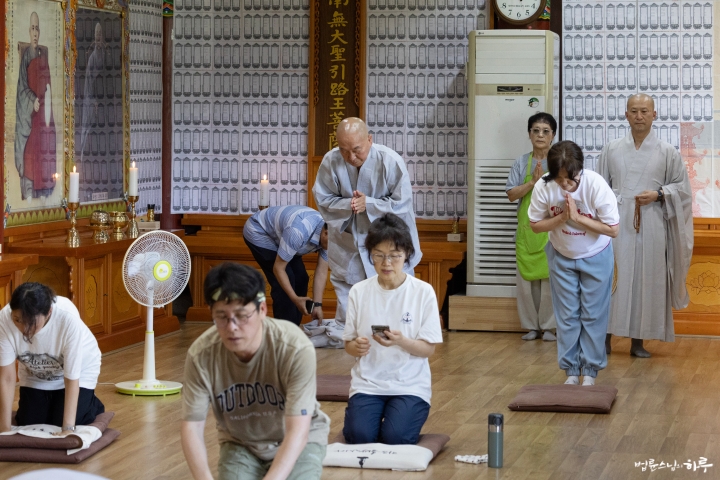
In the Dharma hall, members of the Daegu-Gyeongbuk branch were in the midst of practice for the "Successful Completion of the Daegu-Gyeongbuk Jungto Center Construction (대구경북 정토회관 불사)." Despite the very hot weather, the atmosphere of the members gathered and practicing for the Dharma hall construction was lively and bright.
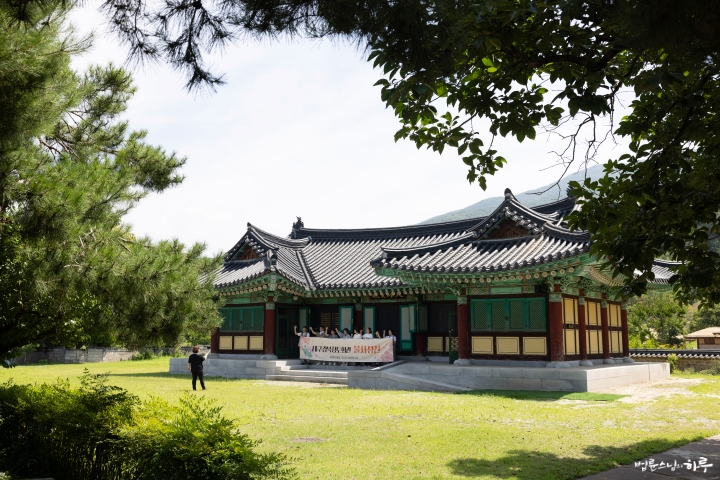
Around 11:20 AM, Assemblyman Joo Ho-young arrived, and they conversed for about an hour.
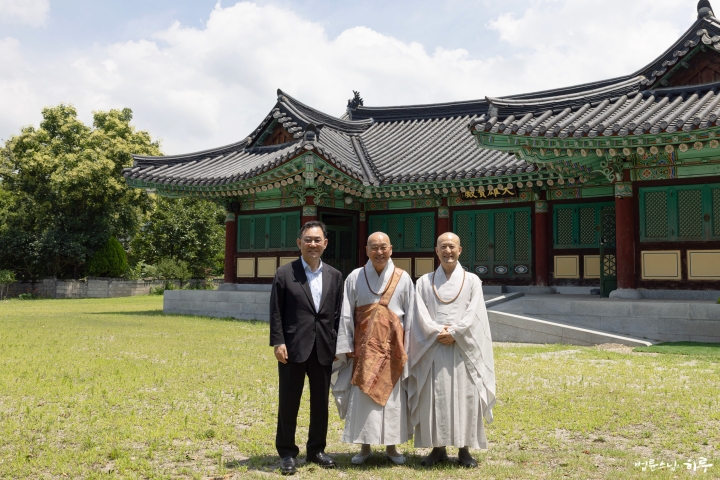
At 12:10 PM, Sunim set off to head back to Dubuk Jungto Retreat Center.
"Sunim, please travel safely."
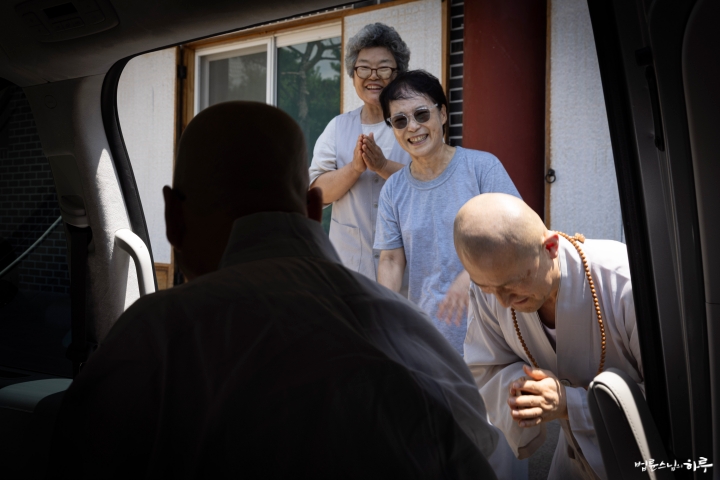
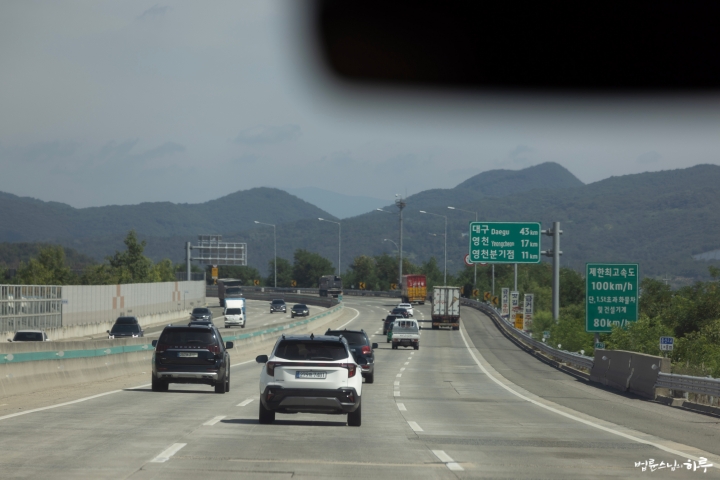
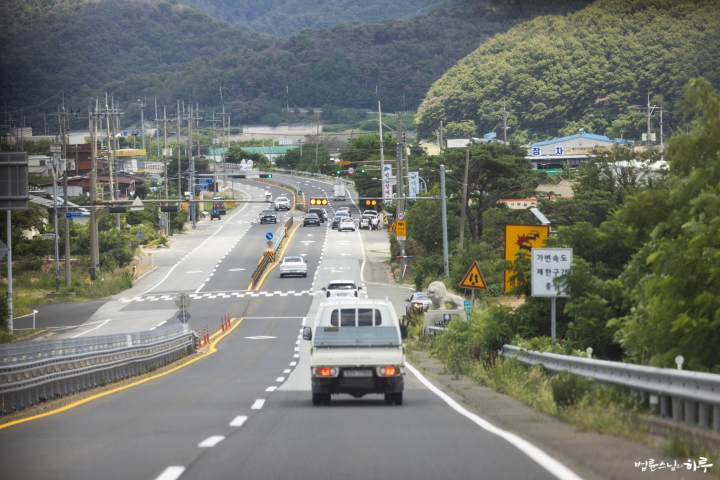
While traveling in the car, as they passed through Yeongcheon (영천), Sunim suddenly thought of Beopmyeong Sunim (법명스님), who lives in Angang (안강). Sunim tried contacting Beopmyeong Sunim.
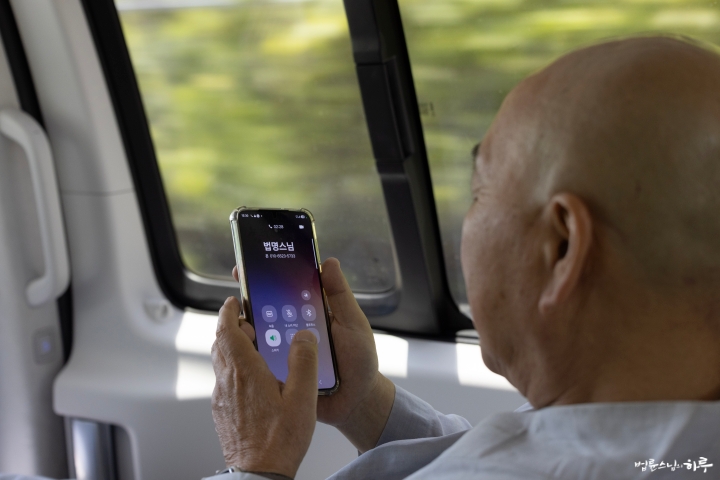
"Venerable Pomnyun Sunim! What a surprise."
"I came out briefly for a schedule, and as I was passing through Yeongcheon, I thought of you, Beopmyeong Sunim, so I contacted you. Have you had lunch by any chance?""Not yet, Sunim."
"Then come out for a moment and let's have lunch together."
After ending the call with Beopmyeong Sunim, Sunim traveled to a countryside restaurant in Angang.
Around 1:20 PM, Beopmyeong Sunim entered the restaurant with his elderly mother.
"Sunim, it's been such a long time."
"Yes, have you been well?"Sunim greeted Beopmyeong Sunim warmly and also exchanged greetings with the elderly female lay practitioner.
"Bosalnim, how old are you this year? How is your health?""I'm 91. I'm still doing okay. I hope you'll always stay healthy too, Sunim."
Throughout the meal, Beopmyeong Sunim placed side dishes on his mother's spoon.
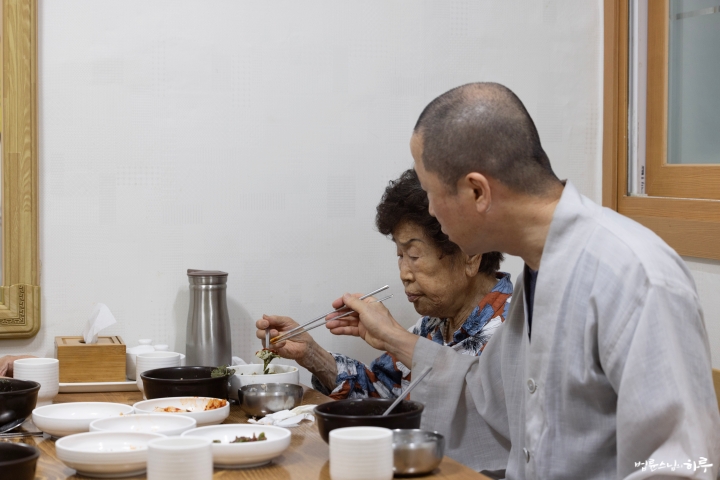
Seeing this, Sunim spoke to the elderly female lay practitioner.
"Bosalnim, a son who became a monk (중 : 僧侶) is the best, isn't he? Married sons are busy taking care of their own families, but a monk has nowhere else to go, so he can stay by his mother's side and take good care of her like this. (Laughs)""Yes, that's right, Sunim. (Laughs)"
They all enjoyed the meal together and had a brief conversation. The elderly female lay practitioner said to Sunim.
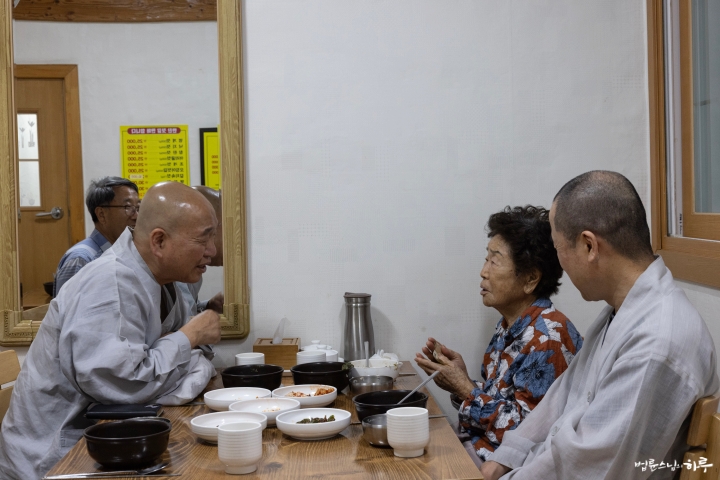
"Sunim, now that I've reached this age, I really have nothing to do all day. I have no desires either. So time feels very long and tedious. When you get old, you should die quickly so the world can be settled, but dying doesn't happen as you wish, so that's really difficult. (Laughs)"
"Don't worry about 'how can I die a little sooner.' Everyone dies eventually just by staying still, so such thoughts only complicate your mind. (Laughs) Death is the natural order that comes with the passage of time. And before that time comes, everyone must go through a tedious and long process of waiting, just as you are. So while you are here, live with a peaceful mind. Your home is a temple too, Bosalnim. (Laughs)"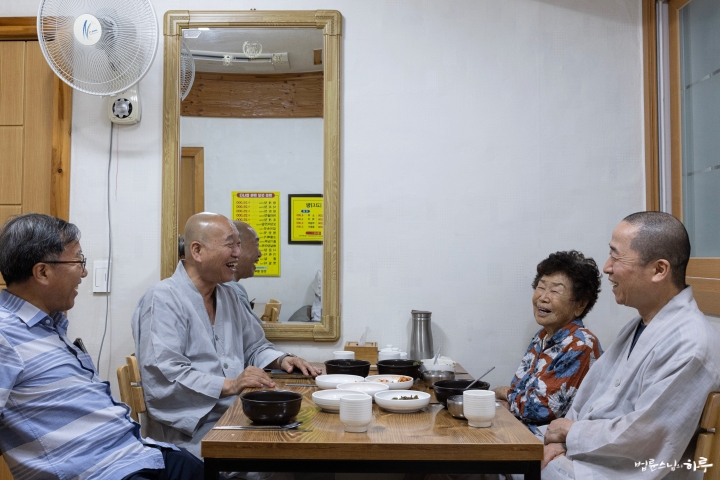
After finishing the conversation, Sunim gave some spending money to the elderly female lay practitioner.
"Bosalnim, when I see elderly female lay practitioners, I save up spending money and give it to them. Don't give this money to anyone else—make sure to buy something delicious for yourself with it.""Sunim, thank you."
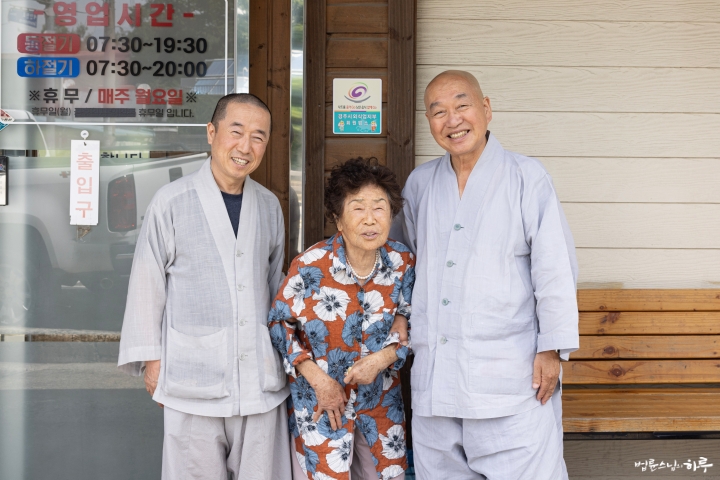
After finishing the meal, Sunim left the restaurant. Beopmyeong Sunim and the elderly female lay practitioner said goodbye to Sunim until the very end. Sunim left the restaurant and arrived at Dubuk Jungto Retreat Center around 3 PM.
Sunim finished the day by proofreading manuscripts and handling work before taking a rest.
Since there was no Dharma talk today, this post concludes with a Dharma Q&A held last May.
I sent my father to a nursing hospital against his wishes, and he passed away just a week later. I feel guilty.
"This past March, my father passed away suddenly just a week after entering a nursing hospital. The truth is, my father didn't want to go to a nursing hospital. However, my mother had been exhausted from caring for him for a long time, and the whole family was worn out, so we ended up placing him in a nursing hospital. But once my father actually passed away, the whole family, including me, feels guilty, thinking, 'Did he die early because we put him in the nursing hospital?' Even though I hold the 49th-day memorial and believe he has gone to a good place, this heavy feeling won't leave me. How can I let go of this feeling?"
"Yes, I understand well. Thank you."