“How Can I Change Myself After Living Only as a ‘Good’ Person?”
Jun 3, 2026 – Day 2 of Bhutan Visit (Inspecting Trongsa Projects and Moving to Zhemgang)
Today’s schedule involves inspecting the progress of nine projects across three Gewogs in Trongsa, then moving to Zhemgang to inspect one more project.
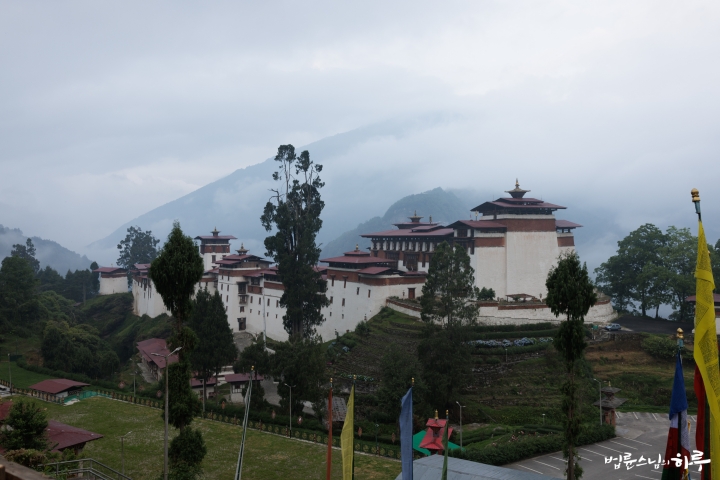
Sunim began the day with early morning practice and meditation. At 6 a.m., he had breakfast with rice and soup prepared by JTS volunteers.
The day before, when parting with the group that was to travel together today (Cabinet staff, the Trongsa Deputy Governor, and the Trongsa Planning Officer), they had agreed to depart at 7 a.m. Perhaps because everyone had become accustomed to punctual departures from previous site visits with Sunim, they had already arrived at the JTS Center 20 minutes before the scheduled time. Not wanting to keep them waiting, Sunim set off 10 minutes earlier than planned.
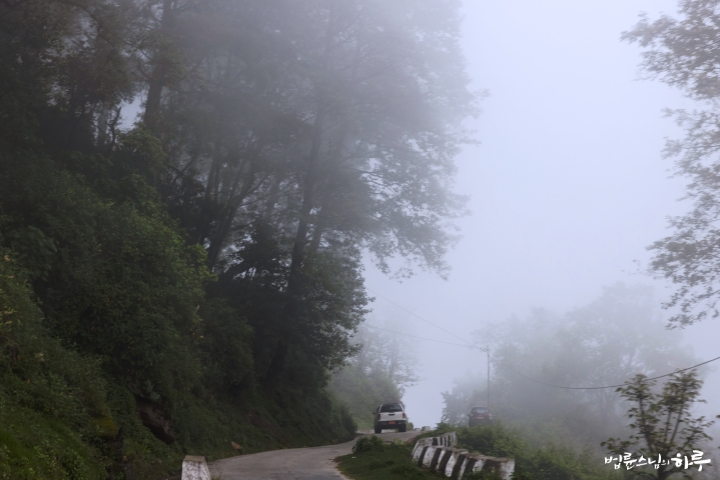
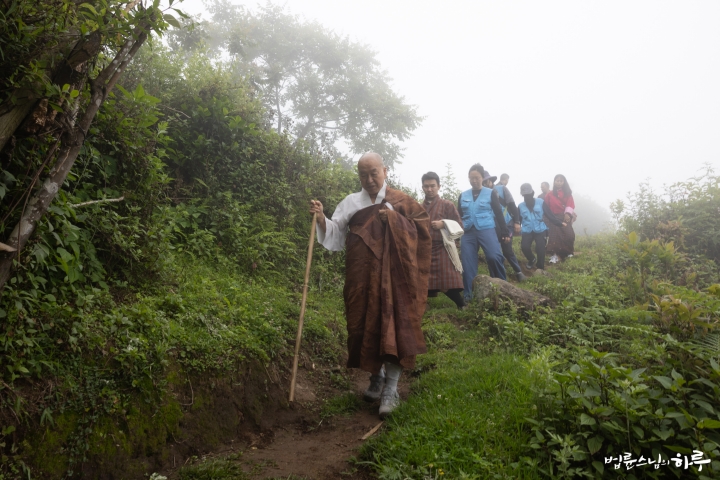
At 7:30 a.m., the group arrived at Tashi Chiwog in Drakteng Gewog. As part of a JTS project, a new house was being built for a family unable to afford one. Sunim visited the family to check on the progress. Since the path to the house was steep, Sunim used a walking stick.
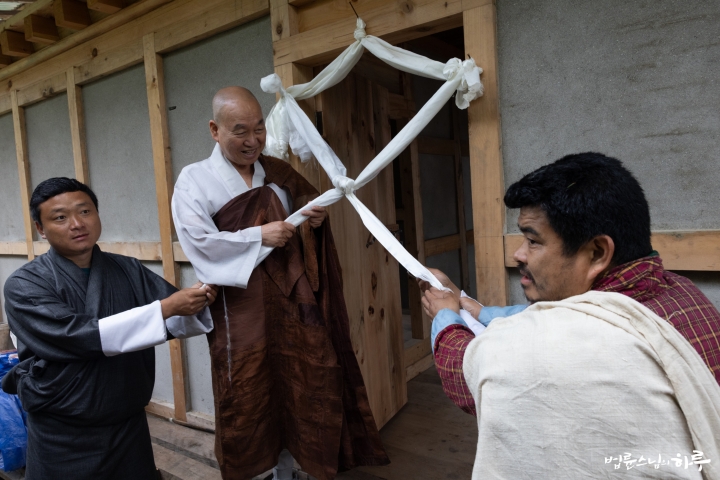
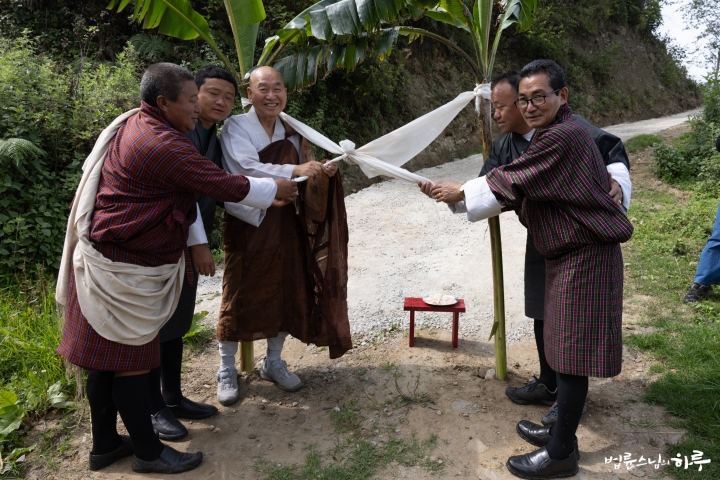
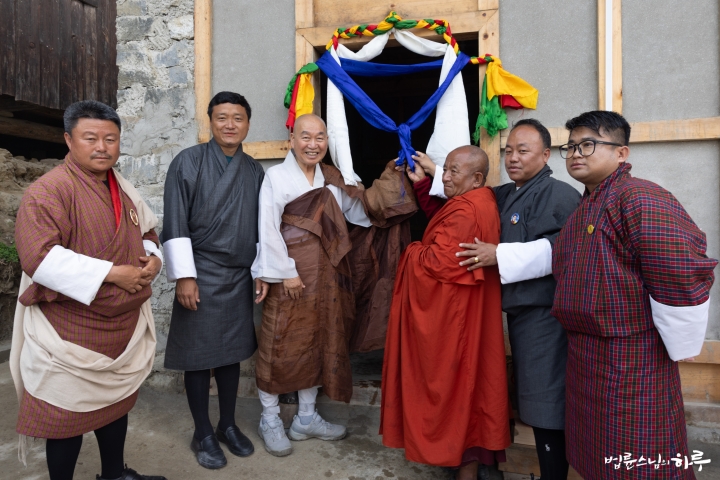
When Sunim arrived at Sonam Choden’s newly built house, he first recited prayers of refuge in the Three Jewels—the Buddha, the Dharma, and the Sangha. Then, together with the Gup (county head) and the Tshogpa (village head), he untied the white cloth wrapped around the house in the traditional Bhutanese manner to mark the completion ceremony.
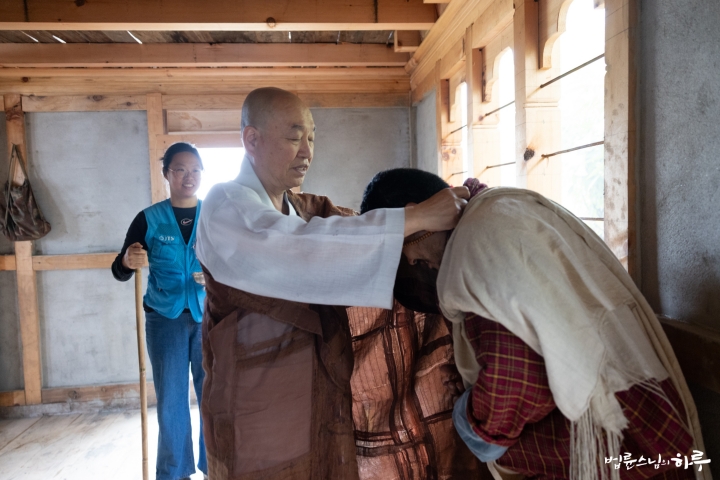
The homeowners, a couple who had raised five children, said they had been unable to build a proper house all these years because of the responsibility of raising their children and caring for their parents. The exterior of the new house was nearly complete, but the kitchen and some interior facilities were still unfinished. Sunim presented the homeowner with a string of prayer beads and offered blessings.
“May the homeowner always live in good health and happiness.”After leaving Tashi Chiwog, the group moved to Kuenga Rabten Chiwog to inspect an irrigation canal. The Changray area of Kuenga Rabten had been drawing water from a source for rice farming, but because the canal was made of earth, there was significant water loss. As a result, there wasn’t enough water for the rice paddies. To address this, the villagers had pooled their efforts to build a 350-meter concrete irrigation canal to bring water to the paddies, and rice seedlings had already been planted in some of the fields.
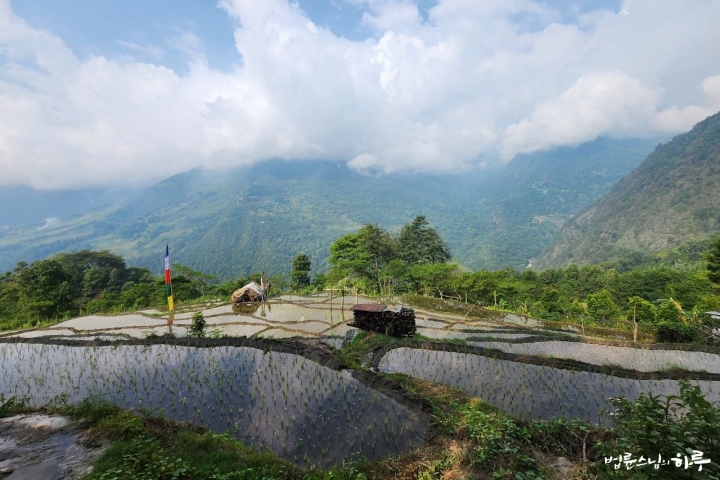
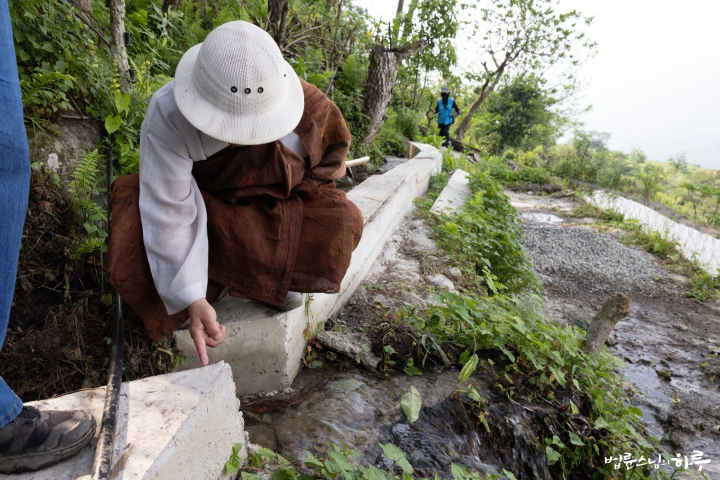
Sunim examined the canal carefully and suggested installing partitions to regulate the water flow.
“I see stones placed at each inlet along the canal where water flows down into the paddies. Instead of using stones, please install wooden gates that can be opened and closed to regulate the water flow.”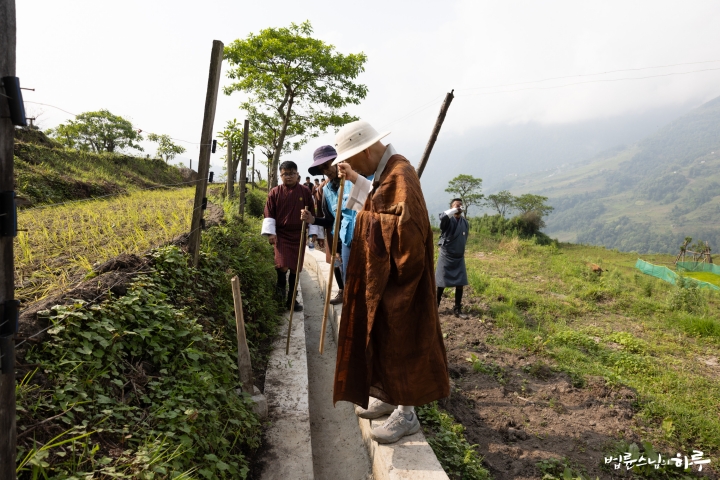
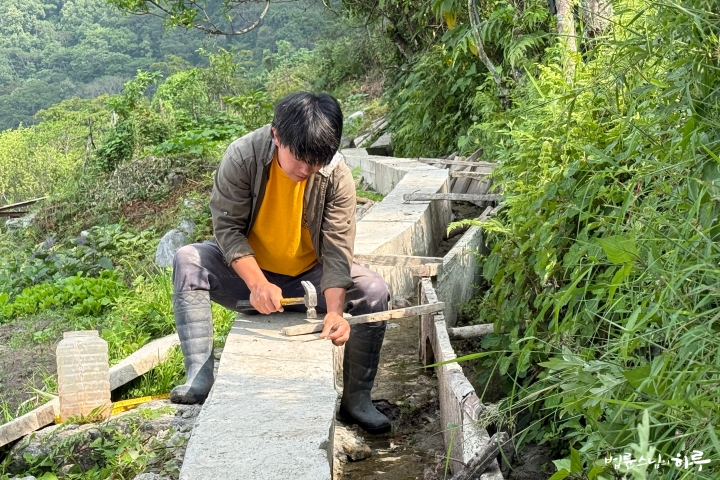
Since the overall construction was not yet finished, villagers were still diligently working on some sections. Sunim asked them to neatly finish the joints of the canal, gave them prayer beads as a gift, and moved on to the next site.
The next destination was a steep unpaved road leading to the elementary school in Samcholing Khatoed Chiwog. A project to pave this road with concrete had been carried out. Through communal labor, villagers had completed the paving of a 50-meter steep dirt road with concrete.
The Tshogpa explained that they had initially planned a width of 2 meters, but since it was too narrow for vehicles, they had changed it to 3 meters before paving.
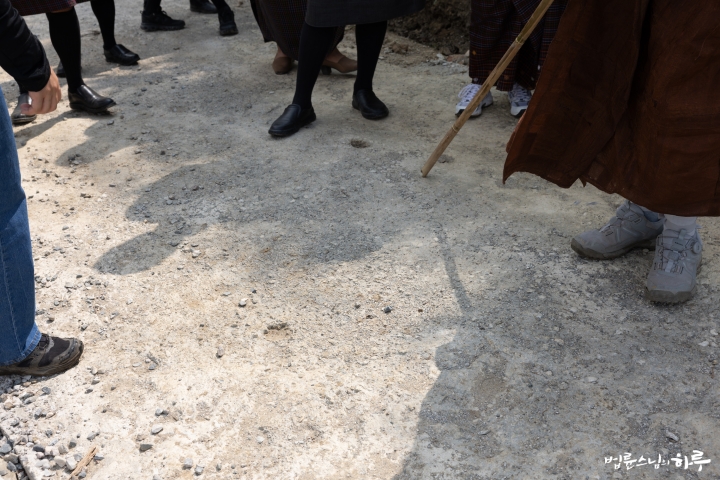
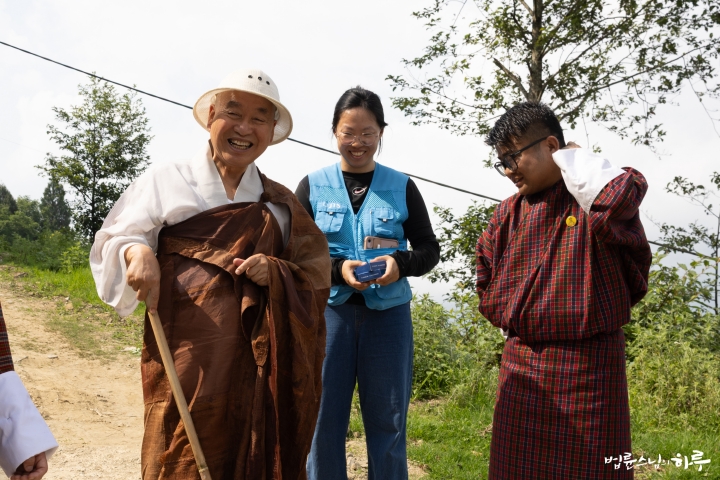
The Dzongkhag engineer (Dzongkhag is roughly equivalent to a Korean province or city/county-level administrative unit) had been too busy to provide technical guidance, so the villagers had carried out the work on their own, leaving the road in less than ideal condition. Sunim asked the engineer to provide proper technical guidance for future projects and then moved on to the next location.
Next, Sunim toured a house in Samcholing Khatoed Chiwog of Drakteng Gewog, where a new kitchen had been built. He then visited Karma’s newly built house and offered blessings. Since a prayer room had been set up inside the house, he lit a candle and made an offering.
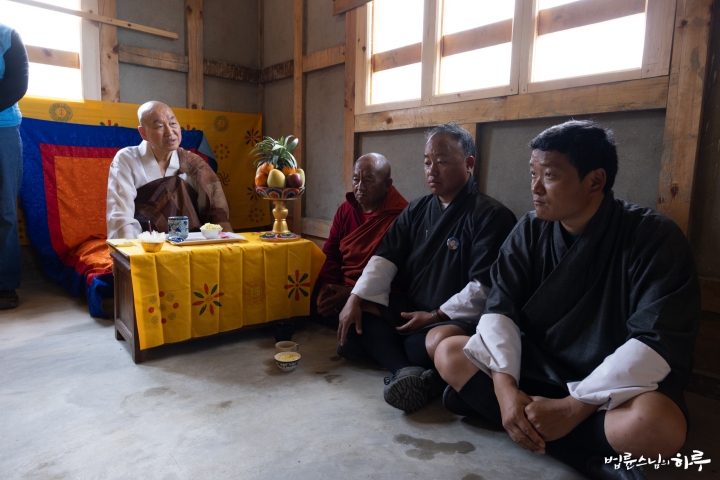
Over a cup of tea, Sunim spoke with the Drakteng Gewog Gup. Bhutan would be holding elections next year for village Tshogpas and Gups. Sunim offered the following suggestions to the Gup regarding the projects:
“Are you planning to run again in the next election? Since this year’s applications were smaller in scale than planned, please expand the projects next year. Residents may find it challenging because they have to do the work themselves, but it would be good to undertake fence and walkway projects together with the villagers. For very poor families who may not be able to build even when materials are provided, please allocate some budget from the Gewog or find another way to support them. Please take this opportunity to fully address the village concerns and eliminate poverty. Also, when residents want to try something but lack the technical skills, the Gewog should provide technical support. JTS doesn’t fail to support projects because we lack funds—we have a principle that the people themselves must do the labor. The basic principle is that people take care of their own work, and we support what’s lacking. We prioritize support for those in difficulty. The top priority of this project is to address the hardships of the residents. We support houses of poorer families first, and we pave the steepest roads first.”Sunim reiterated the principles of the project to the Gup and made suggestions on how JTS’s sustainable development projects could be adapted and developed to fit the village.
As Sunim was leaving the new house to inspect the next site, the owner of the neighboring house approached and asked if he too could have a new house built. Although his house was made of wood, it still looked sturdy.
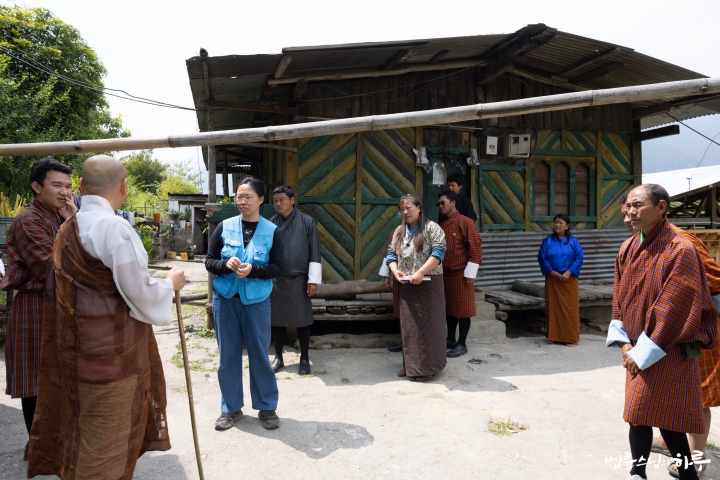
Sunim said to the neighbor:
“Let’s first build houses for those who don’t have one. Once all of them are built, we can talk again.”The neighbor was a bit disappointed but accepted Sunim’s words.
After traveling briskly by car, the group arrived at Langthil Gewog around 11 a.m. The Gup and the administrator greeted Sunim’s group with momos (Bhutanese dumplings) and tea. Over tea, Sunim also asked the Langthil Gewog Gup whether he would run in the next election.
“Sometimes I think about running again, but when the work gets hard, there are times when I no longer want to run.”
The Langthil Gewog Gup answered Sunim’s question honestly.
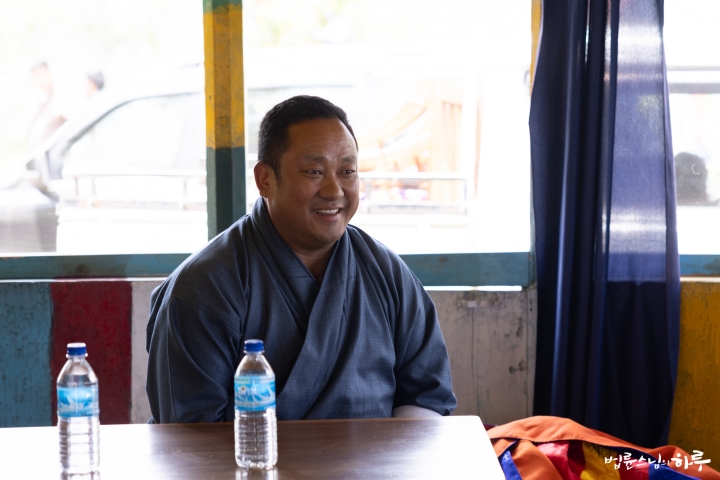
Sunim explained and proposed to the hesitant Langthil Gewog Gup how this project could be put to good use for the village and its residents.
Bhutan JTS is running a project to install barbed wire fences to keep out wild animals. JTS provides the barbed wire and nails, while the residents install the fences themselves. The group visited two households in Baling Chiwog of Langthil Gewog.
The first household had installed the fence well. Sunim commended them on the installation and explained what could be improved.
“You’ve built the fence well. The current fence design is based on flat terrain. For fences installed on a hill, animals find it hard to jump up from below, so to prevent animals that try to dig under, you should place the bottom wire tightly against the ground and install a second wire close to it. The upper wires can have wider spacing. However, when installing on the upper side of a slope, since animals can jump in easily, you should add one more strand of barbed wire higher up on the upper side.”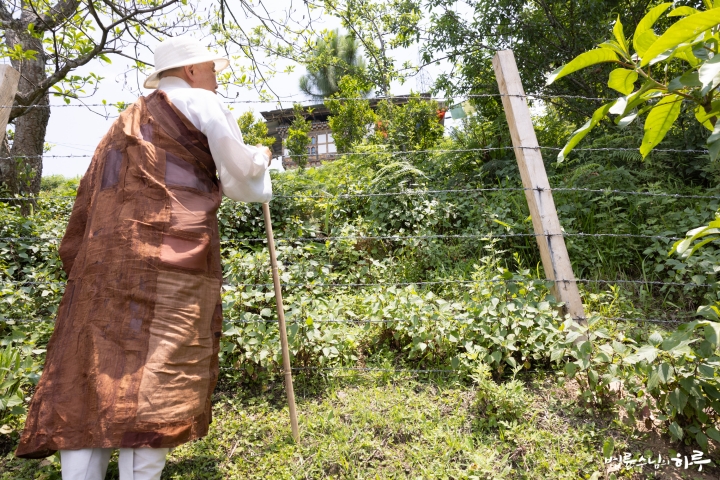
When examining the fence at the second household, the installation was found to be poor. The barbed wire had not been pulled taut, and many parts were already sagging. Sunim asked the owner:
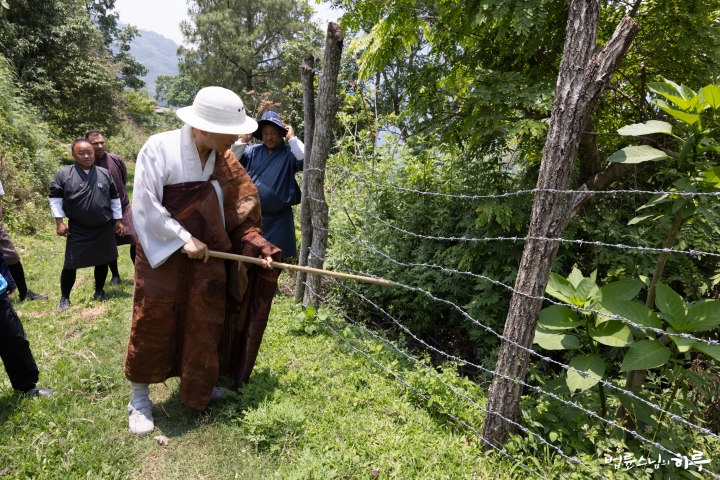
“My husband is sick and can’t apply much force, that’s why. I’ll hire workers and redo it.”
“Don’t go to the trouble of redoing it. There’s a method where you twist the wires in the middle with an iron rod, turning it both ways to tighten them.”After inspecting the fence and on the way out, Sunim said to the volunteers:
“At the end of the year, we need to conduct an overall survey. We need to examine what kinds of animals came in and how, and where they entered. We also need to survey overall whether any fences were installed too high or too low, and look into whether there has been wildlife damage since the fences were installed. This should be reflected in next year’s projects.”Leaving Langthil Gewog, the group moved to the neighboring Korphu Gewog. They arrived at Nabji Chiwog past 1 p.m. Nabji Temple, a sacred Buddhist site in Bhutan, was the venue for today’s meeting with the residents. Sunim paid respects at the altar and received the Gewog’s welcoming ceremony.
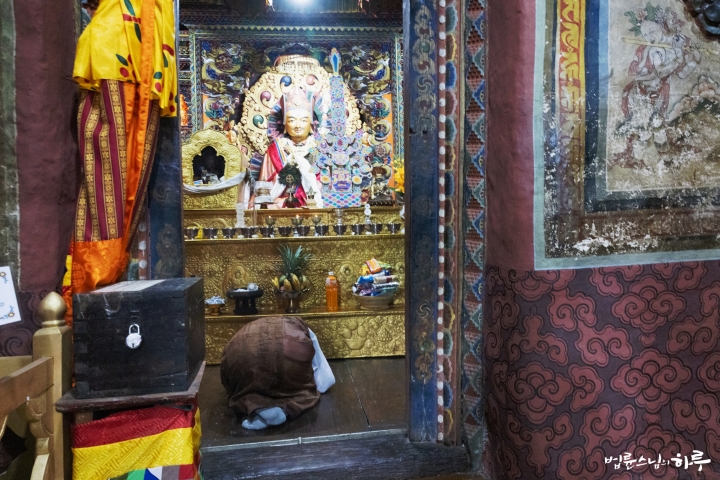
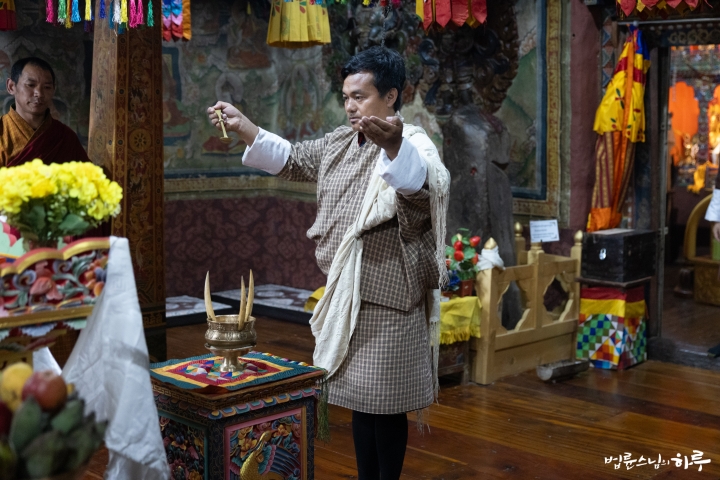
Sunim had a late lunch prepared by the Gewog. After inspecting the newly paved road in front of the temple, he met with the villagers. About 15 residents had gathered, waiting to speak with Sunim.
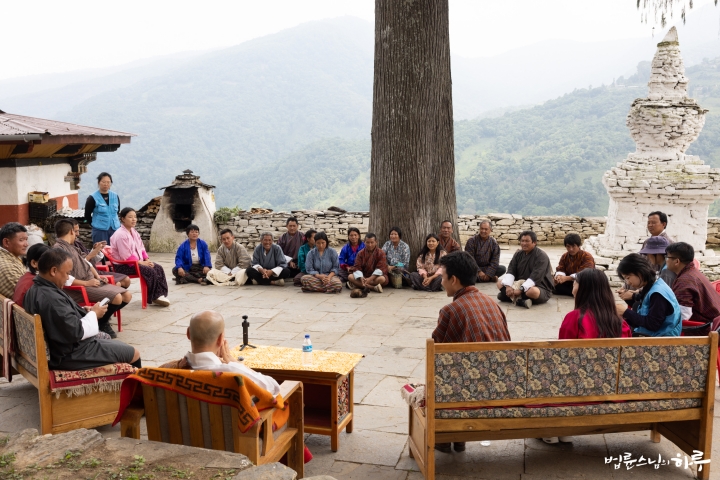
Sunim first asked the villagers about transporting materials for the irrigation canal construction.
“I heard it was difficult to transport materials in Korphu Gewog. How was it?”“We carried them on horses.”
Sunim had suggested building a farm road through the middle of the fields to make material transport easier, but some villagers were said to be opposing it. Curious about the reason, Sunim asked the residents.
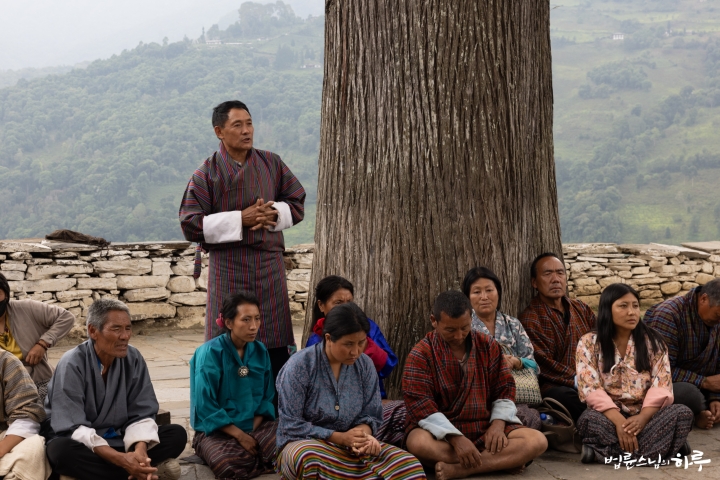
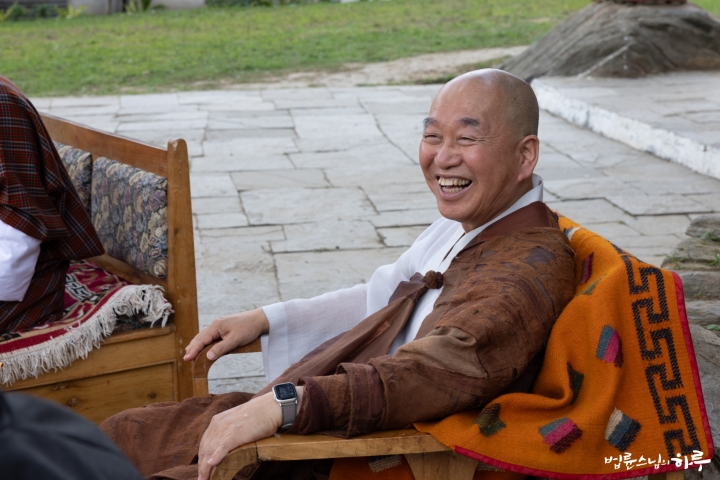
“Most households are in favor, so it should be fine. Only one or two households are opposing it.
“Even if there are some opposing it, you’ll need to build such roads going forward. Until now, labor costs have been low enough that people could plant rice by hand, but now young people are all going abroad, labor costs keep rising, and you are all getting older, making it increasingly difficult to carry materials on your backs. Vehicles need to be able to access the fields. Even if your land is 1 acre and the road takes up 0.2 acres, the remaining 0.8 acres becomes more valuable than the original 1 acre. Building a road costs a lot of money. That’s why the Dzongkhag was going to provide excavators and JTS was going to provide the necessary materials. Once a road is built, the overall value of the land increases. There’s no reason to oppose it. Please discuss it further in the village and decide whether to do it before autumn.”The Nabji Tshogpa said they wanted to build a two-story building within the temple grounds, with the first floor for elderly people to pray and stay, and the second floor for memorial services. Since this is a sacred site, Sunim advised them to first consult with Bhutanese monks who specialize in cultural heritage to check whether the building would meet the standards of a traditional temple and where the Dharma hall should be located in relation to the stupa. He also suggested that the design be done professionally so that the space would preserve tradition while being convenient for people to use during festivals.
Rain suddenly began to fall. After the meeting, the plan had been to inspect the recently constructed irrigation canal, but since the meeting had run long, the canal inspection was postponed to another time.
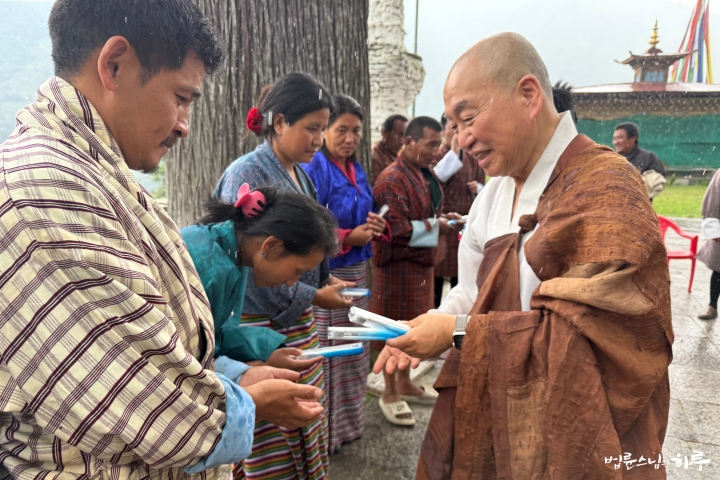
Sunim gave toothbrushes as gifts to the residents who attended the meeting, and also presented gifts to the Tshogpa and the Gup.
The group set off again. At 3:50 p.m., upon arriving at Wangdigang, located on the border between Trongsa and Zhemgang, the Zhemgang Governor and his party greeted Sunim.
They had tea and conversation for a while. Sunim and the Governor discussed health matters, changes in JTS volunteer personnel, and the invitation of Korean experts.
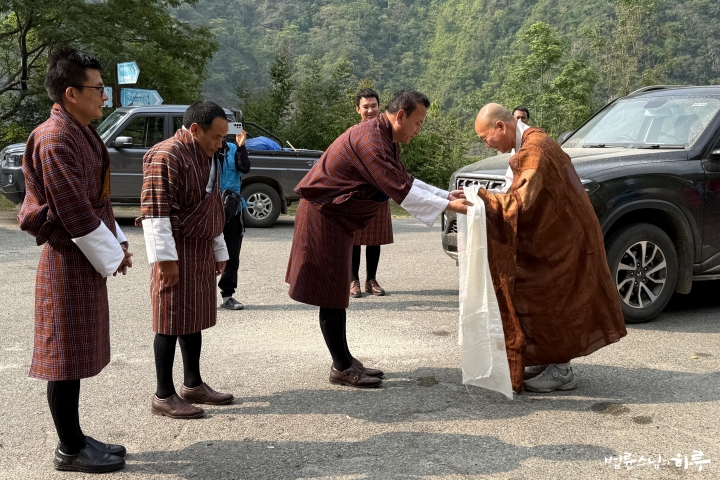
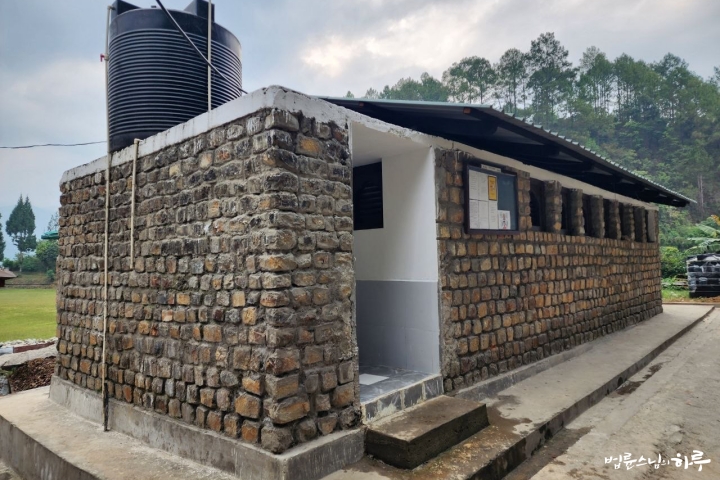
Sunim explained in detail what would be needed when inviting Korean experts. At 4:20 p.m., Sunim moved with the Governor to inspect Yebilaptsa Middle School, where new restrooms had been built as a JTS project.
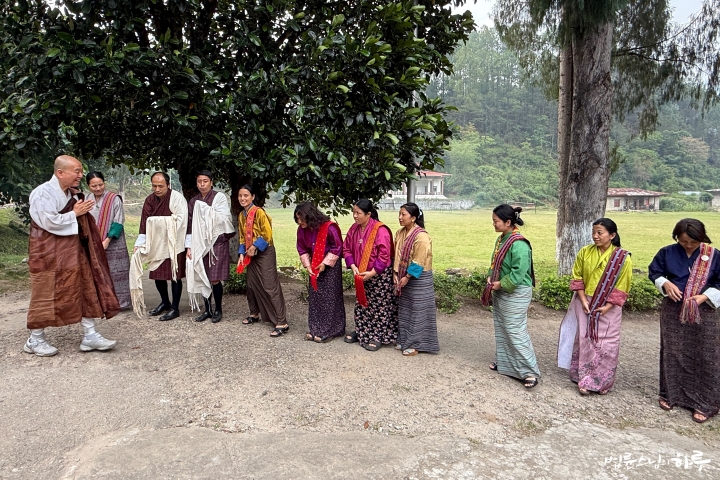
Around 5 p.m., upon arriving at Yebilaptsa Middle School, the school’s teachers were lined up to welcome Sunim. Sunim had a brief tea conversation with the Governor, Deputy Governor, and the Principal. The Principal mentioned the recent decline in student numbers. The number of students was decreasing by 8 percent every year, and elementary schools in Zhemgang were closing down each year. After finishing tea, the Principal guided them on a tour of the newly built restrooms.
“You’ve built them nicely and cleanly.”“We’re building one additional restroom each for boys and girls with the Dzongkhag’s budget.”
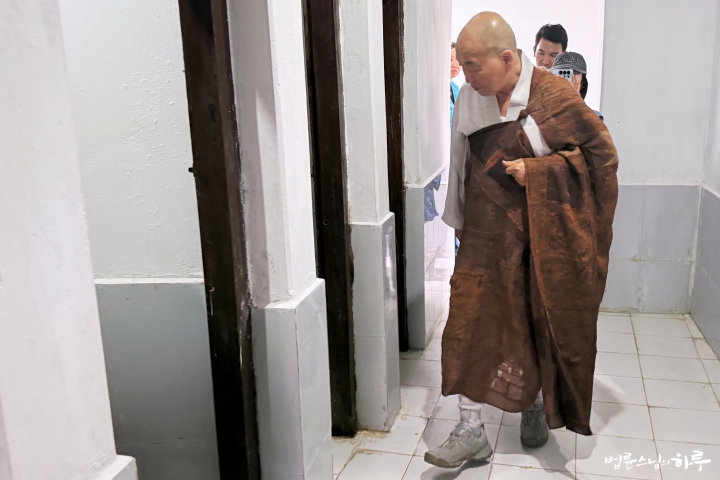
Sunim asked the Principal about the number of male and female students at the school. He explained that when calculating the number of restroom users and required stalls, since women take longer than men to use the restroom, the number of stalls for women should be 1.5 times that of men. As Sunim toured the restrooms, he also spoke about renovating the existing ones.
“If the doors need fixing, it would be good to do the repairs comprehensively. Fix the malfunctioning water supply and broken tiles at the same time. You can just pay the current restroom contractor a little more and ask them to fix a few spots. There isn’t that much to repair.”At 5:40 p.m., Sunim’s group set off for the Panbang JTS Center in Zhemgang, sent off by the Governor and the Principal.
It was already 7 p.m. by the time they arrived at the JTS Center. The Deputy Governor in charge of the southern Zhemgang area and the Chief of Police were waiting to greet Sunim. The Deputy Governor was scheduled to accompany Sunim starting tomorrow morning, but since there was a Queen’s Birthday celebration tomorrow morning, he could only join from the afternoon, so he had come in advance to pay his respects.
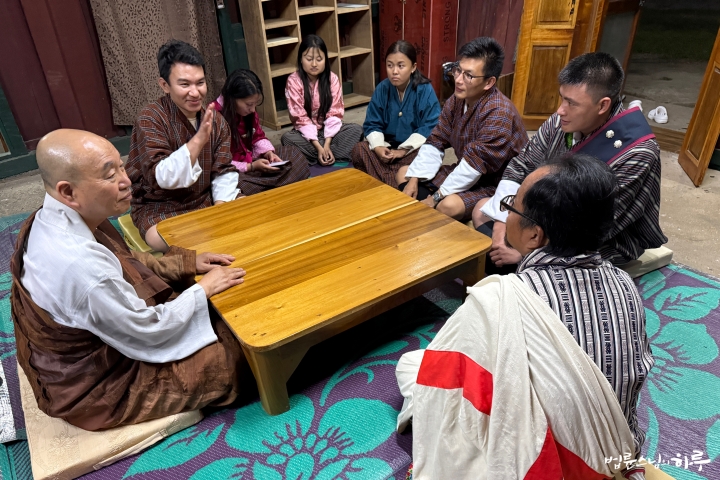
Sunim served refreshments to the Deputy Governor, the Chief of Police, and their party. They discussed major projects underway in the Panbang area, which is part of the Gelephu new city, and in Gelephu itself. After seeing the guests off, Sunim had dinner of warm rice and soup made with dried radish greens that he had sent from Korea for the Bhutan JTS volunteers. Sunim spent the rest of the evening proofreading manuscripts and resting before ending the day.
Tomorrow, Sunim will inspect projects in Phangkhar Gewog and Ngangla Gewog in the Zhemgang region.
Since there was no Dharma talk today, this post concludes with a Dharma Q&A conversation held last April in Tongyeong.
How Can I Change Myself After Living Only as a ‘Good’ Person?
 “When I’m going through hard times, I seek out talks by various lecturers and Sunim’s Dharma talks. These days, I think I’m going through menopause. When I was young, I lived according to my parents’ standards, and after entering society, I lived as an unremarkable, ordinary person. But as I’ve entered menopause, my emotions have become more sensitive, and I feel resentful about the way I’ve lived. When I look around, there’s no one looking after me—only parents and family I need to care for—and I feel overwhelmed by a sense of emptiness. I’m trying in my own way to get through menopause, but it’s not going well. Perhaps because I spent so long trying to live an ordinary life according to others’ standards, changing myself feels extremely difficult. I don’t know what I want to do, and unlike the expectations of the people around me who think well of me and see great potential in me, breaking through who I’ve been until now feels really difficult. Maybe because I lived as a good daughter meeting my parents’ expectations, it’s hard for me to overcome myself. When I try to break through, I find myself worrying about what others might think, and when I try to live as I please, I feel blocked by reality, which is frustrating. How should I live to break through and move beyond myself?”
“I’m often told that I talk too much. But I still haven’t been able to fix it. To summarize, I want to overcome myself and change myself, but when I consider those around me, it’s not easy.”
“What do the people around you say?”“The people around me tell me to do whatever I want. But I….”
“Then just do that. Isn’t it that you’re the one who’s not doing it?”“I make a lot of excuses.”
“Why are you blaming others when you’re the one not doing it?”“My circumstances don’t allow it…”
“What circumstances?”“Financial circumstances, I suppose. And personally, I have a lot of thoughts.”
“If someone has only 100,000 won and tries to buy something that costs 1 million won, and then says they can’t buy it because they don’t have money, would that statement be correct?”“It seems correct. They only have 100,000 won.”
“Why is someone with only 100,000 won trying to buy something that costs 1 million won?”“Ah, greed….”
“It’s not greed—you simply can’t buy a 1-million-won item with 100,000 won.”“Yes.”
“The thinking is wrong. So why is it a money problem?”“You’re saying I should change my thinking….”
“I’m not saying you should change it—I’m asking why someone with only 100,000 won is trying to buy a 1-million-won item in the first place. Isn’t this not a matter of greed but of foolishness? It’s trying to do something that can’t be done. Why is this a money problem? It’s a problem of one’s own foolishness. Suppose I go to the market with 10,000 won to buy squid. I should just buy squid and come back, but when I get there, there’s squid, baby octopus, hairtail, trout, octopus—all sorts of things. I don’t have enough money to buy everything. And when I try to buy just one, I can’t decide which to choose. In this situation, would it be right to say, ‘Why does this shop sell so many things instead of just squid?’ It’s good that the market sells various kinds of seafood. You might go to buy squid and come back with baby octopus or anchovies. So in cases like this, if you blame others and see the situation as bad, that’s wrong thinking. This is called foolishness. The Buddha only spoke about foolishness—nothing else. So what should we do? We simply do as we see fit. If you want to be praised by your mother, you have to listen to her even if you don’t want to. You lived as a good child because you wanted to be praised by your parents. You lived as a good person because you wanted to live that way. So why are you blaming others? Thoughts like ‘I originally had greater talents and a bigger capacity, but I wasn’t able to grow that way’—all of that is delusion. The very thought you mentioned about ‘breaking through yourself’ is a delusion. Who you are right now is exactly who you are. There’s nothing wrong with that. It’s neither good nor bad. This is enough. Just being alive and not dead is already a success. If you want to do a little more from here, you can. But if you try and it doesn’t work out, just stop. Then there’s no problem at all. This is a bit complex, but there’s a story from the Seon (Zen) dialogues of old masters. The ultimate goal of Buddhism is liberation. Liberation means complete freedom. A young novice monk went to his master and said, ‘Master, please liberate me.’ The master looked at the novice silently. Perhaps thinking this small child was being audacious, he asked, ‘Who is holding you?’ Since the novice was asking to be set free, the master asked, ‘Who is holding you?’ Since no one was actually holding him, the novice answered, ‘No one is holding me.’ Then the master said, ‘I have already liberated you.’ The same applies to you. No one is holding you. It’s just that you alone keep saying, ‘I can’t live the way I want.'”“Yes. Thank you”