What Should I Do if My Daughter Is Dating a Man Much Older Than Her?
Jun 1, 2026 – Travel to Seoul, Departure for Bhutan
Hello. Today, Sunim traveled from Dubuk to Seoul with his guests, and in the evening, he departed for Bhutan.
Sunim began the day with morning practice and meditation.

After having breakfast with the guests, Sunim went to Dubuk Farm. At the farm, the farming team was doing their morning communal work. Sunim encouraged the farming team practitioners who had been working since early morning, and they all took a commemorative photo together.
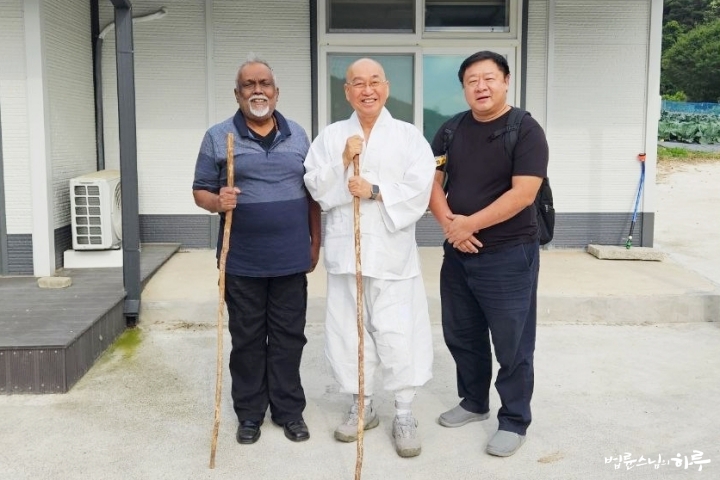
Sunim and the guests packed their belongings and left the lodging. They planned to catch the 11:08 a.m. KTX bound for Seoul.
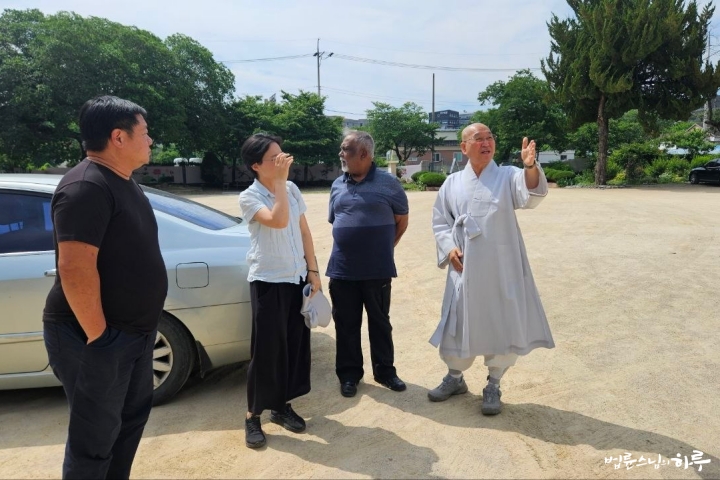
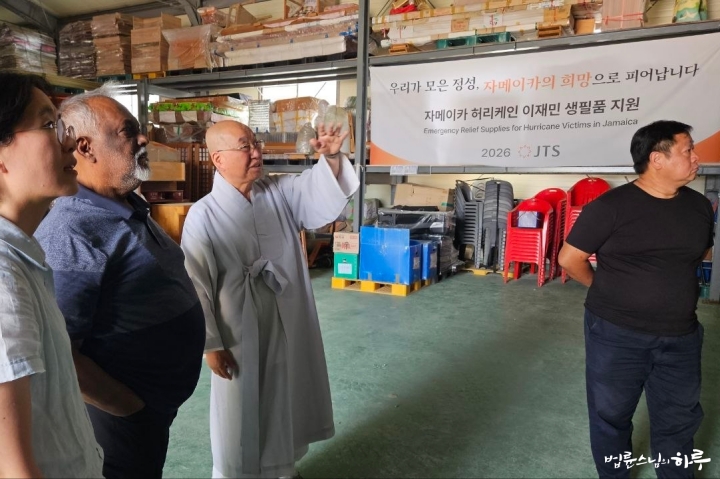
Before heading to Gyeongju Station, Sunim visited Dubuk Jungto Retreat Center and showed the guests around. At the JTS warehouse, Sunim explained how relief supplies are provided, how donated items are stored, and the recent situation where only new items can be sent as relief supplies.
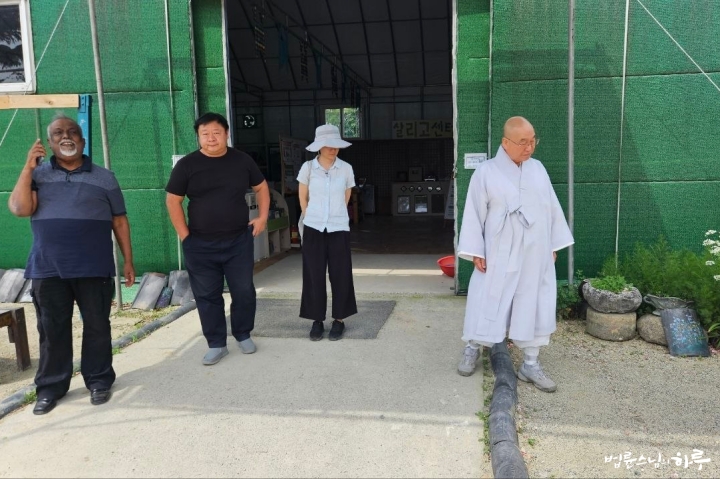
Sunim explained that all items at the Salligo Center are recycled and reused, that woodworking products are also made using recycled wood, that agricultural produce from Dubuk Farm is shared with volunteers, and that the entire operation of this space is managed by volunteers.
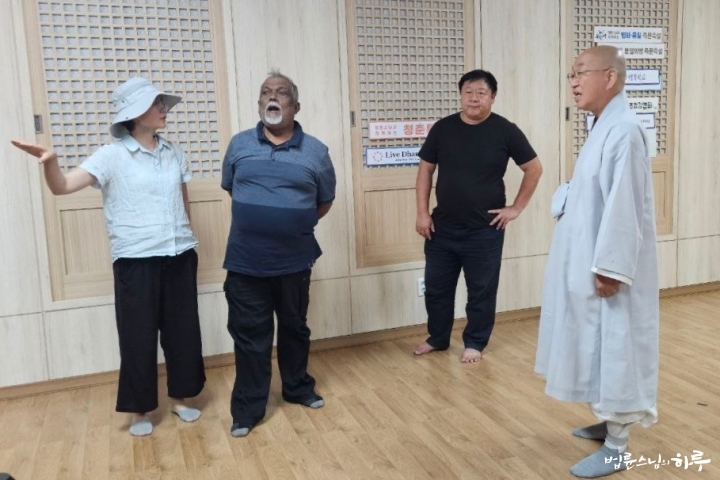
The guests entered the studio broadcasting room at Dubuk Jungto Retreat Center. They toured the facilities through which Sunim’s Dharma talks are broadcast online not only domestically but throughout the world. Harsha was very impressed by the system through which the Dharma is transmitted to the entire world from such a small space. Sunim guided them through various parts of Dubuk Jungto Retreat Center, introducing the vegetable gardens and other farming spaces within the retreat center. As the train time approached, Sunim and the guests boarded the vehicle to head to Gyeongju Station.

After taking the KTX from Gyeongju Station for two hours, they arrived at Suseo Station in Seoul. As they got off the train, citizens recognized Sunim and greeted him. Viewers who had recently watched the entertainment program <Pomnyun Road – Sunim and the Guest> recognized Sunim and warmly greeted him. Young people in particular came up to Sunim to say they were enjoying the program.
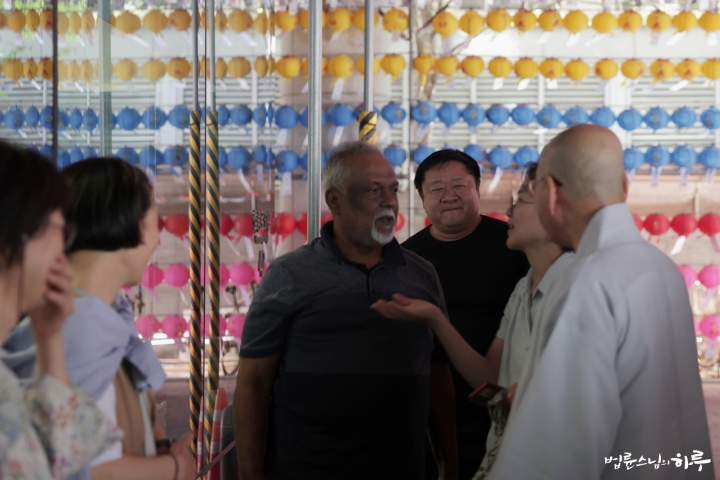
Sunim and the guests headed to the Jungto Social and Cultural Center. When they arrived at the center around 2 p.m., the community staff members who had worked together at the INEB (International Network of Engaged Buddhists) event, having already heard that Harsha and Moo were coming, were waiting in the courtyard to welcome them.
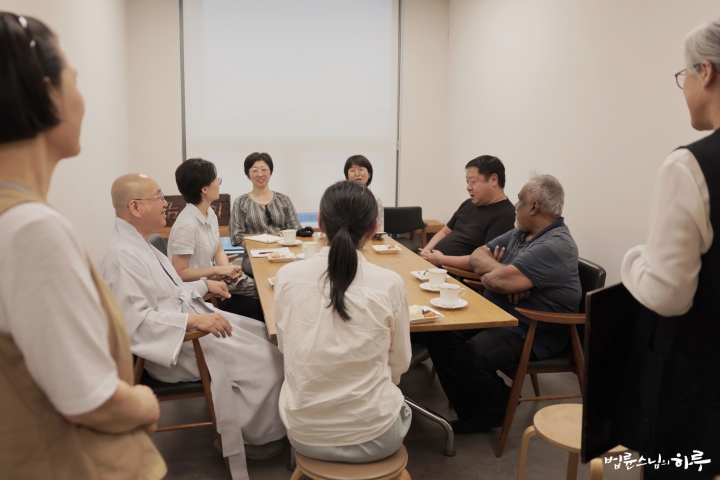
Everyone moved to the 10th-floor reception room and took their seats. Sunim introduced each of the staff members to Harsha and Moo. Although it was a short time, they exchanged various stories, including explanations and advice about the Sri Lanka project being carried out by JTS.
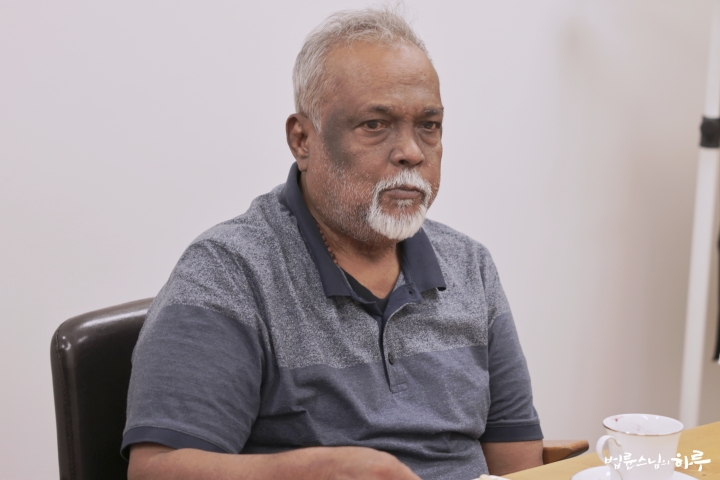
Harsha shared his thoughts on this visit.
“To spread Buddhist practice, the existing ways of thinking must change. The best model we have seen so far, at the individual level, is Venerable Pomnyun Sunim, and at the organizational level, is Jungto Society. INEB and Jungto Society share similar principles and philosophy. We hope that Sunim and Jungto Society will exert a stronger influence within Buddhist countries.
INEB exists in all countries of Southeast Asia and South Asia, and individual activists and organizations are working very hard in many countries. However, there are things that INEB does not have. We lack strong organizational capacity and the ability to train ourselves. INEB has some influence at the individual and organizational level for peace and reconciliation in South Asia and East Asia.
However, we do not have the strong leadership needed to unite people scattered across various countries. On the other hand, I think Jungto Society and The Peace Foundation have such capabilities. Sunim and Jungto Society do a tremendous amount of work at the organizational level when actual work is needed, such as emergency relief, and I think you do it better than any other organization. Right now, many Christian organizations—Protestant and Catholic—say they are helping villages, but they are trying to convert villagers, even using money to entice them to convert. We want to create social enterprises that help villagers escape poverty without being converted, and we would like to receive help from Sunim and Jungto Society in this area.
It has been wonderful to be able to talk with Sunim about various topics during this visit. Thank you for lending Sunim entirely to us. (laughs) We had many sharing sessions as well. We will share what we discussed with more people. We will continue discussing with people and then deliver the results back to Sunim in document form. I hope this opportunity will lead to deeper cooperation between Jungto Society and INEB.”
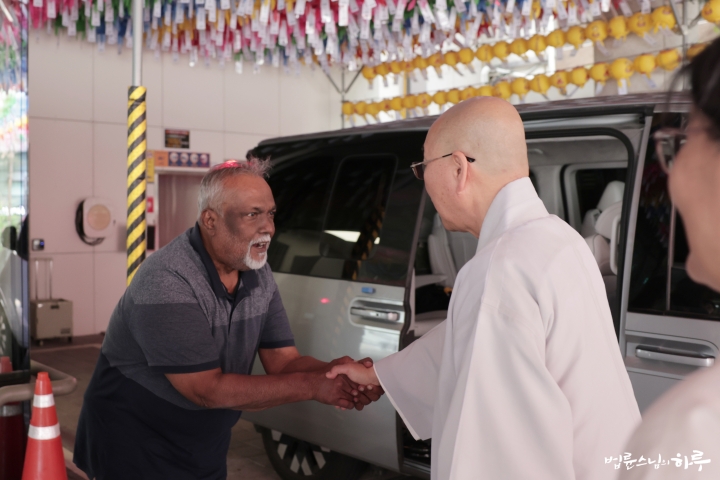
It was time for Harsha and Moo to leave, as they had another meeting in Insadong. Sunim presented the guests with English translations of his books. They took a group photo together and headed to the lobby on the first floor.
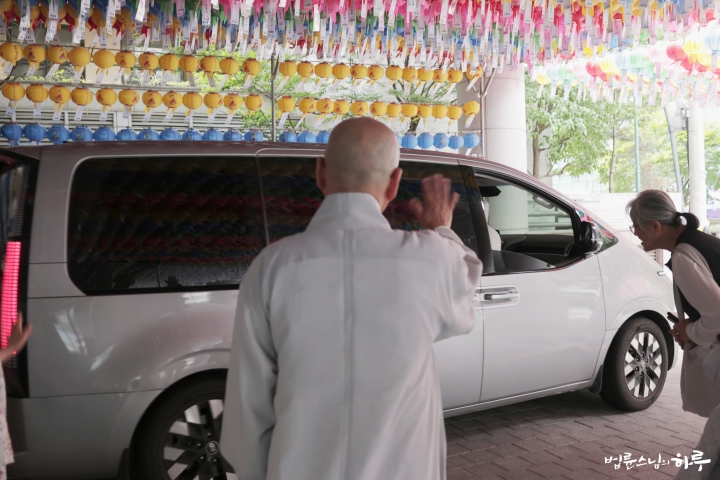
Sunim exchanged farewells with the guests. After seeing the vehicle off until it disappeared from sight, Sunim moved to the Seocho Jungto Center. With a 9:15 p.m. flight to Bhutan scheduled, he packed his bags. Before heading to the airport, he stopped by his office again to handle urgent business and approvals, and gathered the items he needed to bring to Bhutan.

Around 6 p.m., Sunim boarded the vehicle to head to Incheon International Airport. Just as they were nearing the airport, a call came from the office. A material booklet had been prepared in Korea to be distributed to cabinet ministers and officials at the Bhutan completion ceremony, but it had been left behind on the office desk during the packing process. Sunim said he would wait as long as possible before boarding after completing immigration procedures, and asked them to bring the booklet to the airport as quickly as possible. It was an important material booklet to be distributed to cabinet ministers and officials at the completion ceremony for the 100 houses in Bhutan.
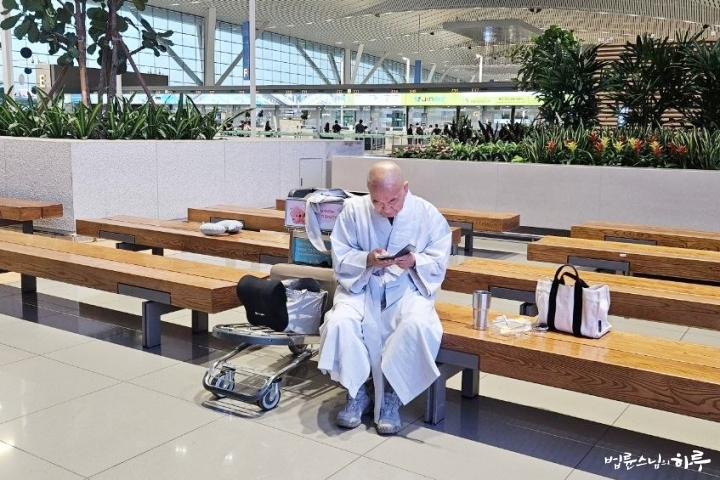
Sunim arrived at Incheon International Airport, checked in, and dropped off his baggage. Since the material booklet had not yet arrived, he waited outside without entering the departure area. Fortunately, the booklet arrived just one hour before the flight—just in the nick of time—so Sunim was able to take it with him to Bhutan. When the booklet was placed in his carry-on bag, the bag became quite heavy.
“Sunim, you are going to Bhutan alone this time, and your shoulders and back are aching. What will you do with such heavy luggage? Please be sure to ask the flight attendant to help you lift it.”
When the practitioner standing next to him expressed concern, Sunim said:
“This much is fine. I’m just glad the booklet arrived in time so I can take it to Bhutan.”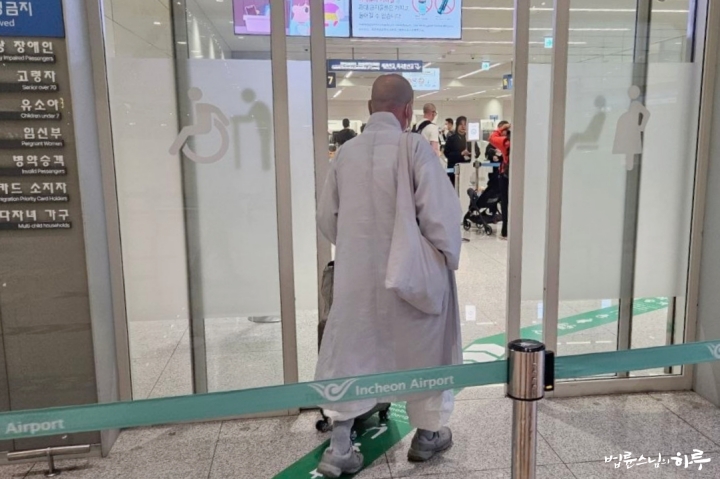
Sunim entered the departure area.
Starting today, Sunim is traveling to Bhutan. He is scheduled to arrive at Bangkok Airport around 1:05 a.m. tomorrow. Then, from Bangkok Airport, he will take a flight departing at 7:30 a.m. local time and arrive at Paro International Airport in Bhutan at 11:30 a.m. local time. From Paro International Airport, he plans to travel to the Trongsa JTS Center.
From June 2 to 13, Sunim plans to visit various villages in Bhutan and participate in site surveys and completion ceremonies. Starting tomorrow, news of Sunim’s daily activities will be reported from Bhutan.
As there was no Dharma talk today, this post concludes with content from last Friday’s online Dharma Q&A.
What Should I Do if My Daughter Is Dating a Man Much Older Than Her?
“I have a 29-year-old daughter, and she likes a man who is considerably older than her. I thought that if I opposed it from the start, she might rebel, so I listened to her and tried to soothe her. But as the two of them seemed to be getting closer, at some point I expressed firmly, ‘I cannot accept this.’ My daughter and I used to be very close, but since then, things have become awkward between us. She is currently living alone in another city and working at a job there. I just want my daughter’s heart to be at ease. But if I contact her too often, she might think I’m interfering, and if I don’t contact her enough, I worry she might feel lonely. In this situation, I’m wondering what kind of attitude I should have toward my daughter, and what I can do to help her feel comfortable.”
“If your daughter is 29 years old, she is already an adult. An adult has the right to make decisions about her own life. That is not a decision a mother can make on her behalf. Yet you keep thinking of your daughter as a child, feeling that you must make decisions for her or continue to take care of her. There’s no need to think that way. You have taken care of her up until now, but once she passed twenty and became independent, you must view her as an adult. So you need to step out of the perspective of seeing her as ‘my daughter’ and view her as an equal individual, younger than you but on equal footing. In simple terms, you need to stand at a perspective where you see her as a young friend you are spending time with. When you see it this way, there’s no need to worry about whether you should call often or call less. If you want to call, call; if you don’t want to, don’t. However, if the other person feels burdened by too frequent contact, you should reduce the frequency, even with a stranger. Society these days is like that. Even if you follow someone because you like them, if the other person doesn’t want it, it becomes stalking. Even if you hug someone because you like them, if the other person doesn’t want it, it becomes sexual harassment. So respecting the other person’s wishes is basic common sense. If you called and the other person felt burdened, reduce the calls; if they felt hurt by too little contact, do it a bit more. It’s not a matter of reading the situation cautiously—just adjust according to the other person’s response. If you can’t call because you’re busy, that’s your situation. If you called often and the other person felt burdened, respect them and reduce the calls. If you didn’t call because you were busy and the other person felt hurt, then even though you’re busy, call a little more often. This isn’t such a big issue to worry about. What’s important is that you stand on an equal perspective—whether you call often or rarely is not the key. Right now, you’re worrying about a secondary issue rather than the main one. First, just do as you wish. Call when you want to, and don’t when you don’t want to. However, if the other person feels burdened, reduce it; if they feel hurt, increase it. There’s no need to call something at this level a worry. Second, whether the person your daughter is dating is older or younger falls within your daughter’s domain of freedom. You don’t have the authority to decide ‘yes’ or ‘no.’ Yet you are worrying as if that decision-making authority belongs to you, asking, ‘Should I let it slide or be firm?’ This perspective itself is wrong. That doesn’t mean you should say nothing at all. Since you are close, you can express your opinion. There are advantages to being older. There’s the aspect of being cared for, and they can serve as a father-like source of support. On the other hand, there are disadvantages too—they may have a domineering side, wanting to make all the decisions alone. Also, as they age, difficulties in the relationship may arise. So instead of judging ‘older is no good’ or ‘younger is no good,’ you can explain the pros and cons of each relationship. However, even that is best done when your daughter asks for advice. If she doesn’t ask, it’s better not to say anything. If you really want to say something, just express it as ‘This is what I think.’ The reason you have this worry now is because you think as if you have the decision-making authority. The wife of U.S. President Trump is twenty-five years younger than her husband. You could say she’s the same age as a daughter. Conversely, the wife of French President Macron is twenty-five years older than her husband. In this case, you could say she’s of his mother’s generation. Looking at it this way, the president of the largest country in the world is married to and living with a woman twenty-five years younger than himself, and the president of France is married to and living with a woman twenty-five years older. Even from a woman’s perspective, there are cases of marrying a man twenty-five years older, and conversely, cases of marrying a man twenty-five years younger. Most cases we encounter in reality don’t deviate much from this range. Of course, there are cases with even greater differences, but those are very rare. So you could think lightly, ‘Well, it’s better than Macron’s case’ or ‘It’s better than Trump’s case.’ From that perspective, there’s no need to view the age issue as overly significant. What’s important is whether your daughter knows the person is good—age is a secondary factor. First, you need to have this perspective. When there is an age difference, it can be both an advantage and a disadvantage in life, and can become a source of conflict. But just because the ages are the same doesn’t mean there’s no conflict. Ultimately, relationships—whatever the conditions—involve conflict, and it’s a matter of how you coordinate and overcome it. In the past, once you got married, you couldn’t undo it, so these factors weighed much more heavily. You had to consider things like problems that would arise in old age in advance. But the situation is different now. We live in an open society where divorce is possible and remarriage is possible. If problems arise as you live together, you can choose again at that point. There’s no need to worry about everything in advance now. Moreover, this isn’t even marriage yet—it’s just the dating stage. The idea that dating must lead to marriage is closer to the older generation’s way of thinking. The younger generation today tends to view dating and marriage as separate issues. Considering these social changes, first, parents should not interfere with the decision-making of an adult over twenty. You can give advice, but you shouldn’t intervene to change the direction. Just being clear about this perspective alone significantly reduces your current worry. Second, age difference is not a major problem in dating. There may be pros and cons in marriage, but even that is not an absolute issue in today’s society. Of course, in a society formed for people to live under similar conditions, differences may bring corresponding side effects. But today, if the person is good, people live together even across different races, different nationalities, and age differences. We live in an era where even same-sex marriage is allowed. In this era, continuing to make an issue of it just because of an age difference may be understandable as a personal stance, but it’s not a matter within the parents’ decision-making authority, nor can it be considered such an important issue.”“Thank you.”