“We Must Find Meaning in the Process of Living, Not in the Results.”
May 28, 2026 – Day 4 of the Community Dharma Teachers' Retreat (Closing Ceremony)
Hello. Today marks the fourth day of the Community Dharma Teachers’ Retreat. The day included farming work and the closing ceremony.
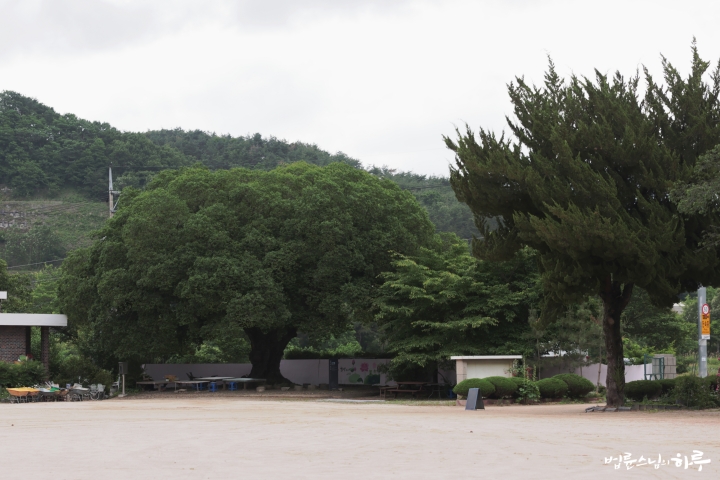
Sunim began the day with early morning practice and meditation. The Dharma Teachers also completed their morning service and prayers, had a quick bite, changed into work clothes, and went out for the morning farming work. The Dharma Teachers were divided into two teams. The rice paddy ridge team worked on repairing the path leading to the dolmen house, while the vegetable garden team moved seedling trays and tidied up the garden.
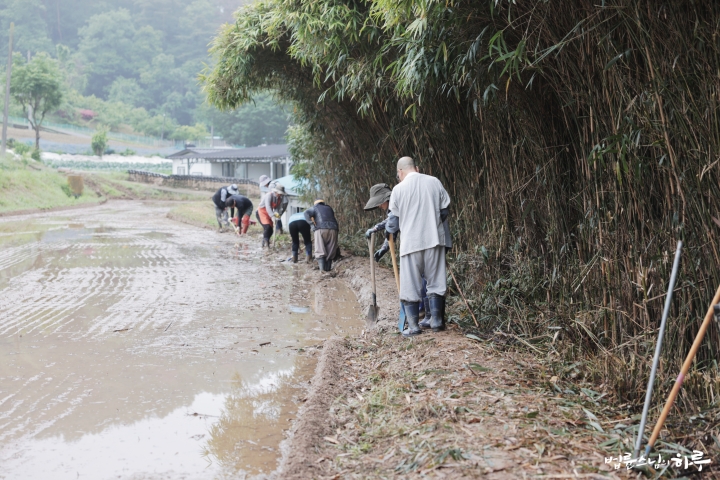
The rice paddy that had been inspected the day before sat in the middle of the village. Its ridge was low, so when the paddy filled with water, there was a risk it could overflow through the bamboo grove and into a villager’s house.
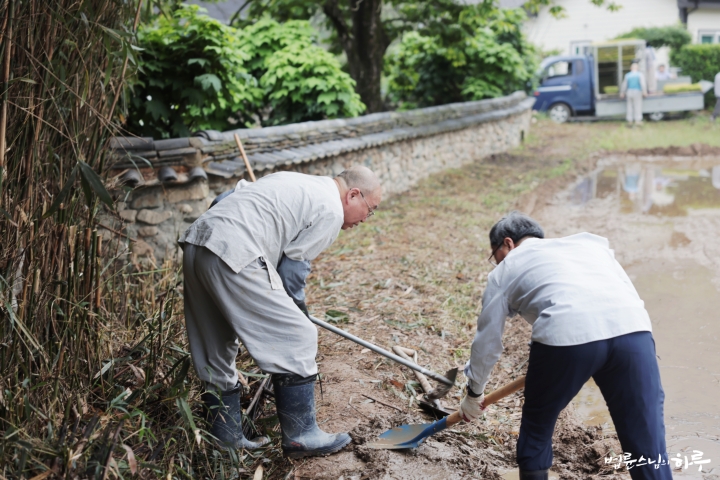
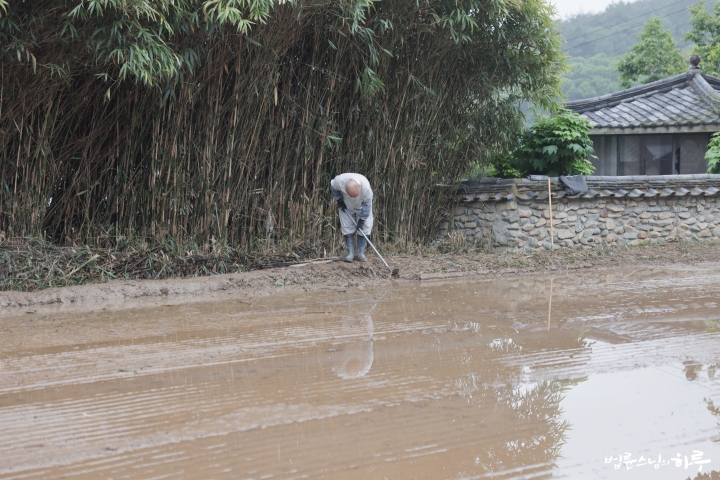
Sunim used farming tools to mark the boundary line between the rice paddy and the ridge path so that the ridge on the bamboo grove side could be reinforced. Using the boundary line Sunim had drawn as a guide, the Dharma Teachers raised the low ridge.
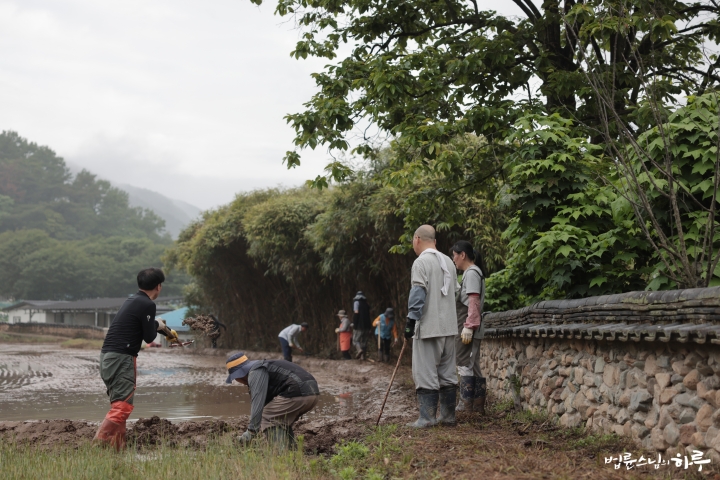
Sunim offered various pieces of advice on reinforcing the ridge. He explained that digging up too much soil from inside the paddy would make it difficult to plant rice seedlings with the transplanter, so only about a shovelful of soil should be added to the ridge. He also noted that if someone stepped into the paddy with rubber boots and trampled the soil, the seedlings could not be evenly planted, so the ground would need to be leveled again. As for the ridge path, although the bamboo had been cut the previous day to clear a passage, it was still very narrow. Widening and improving the path to a width where people could safely walk was no small task.
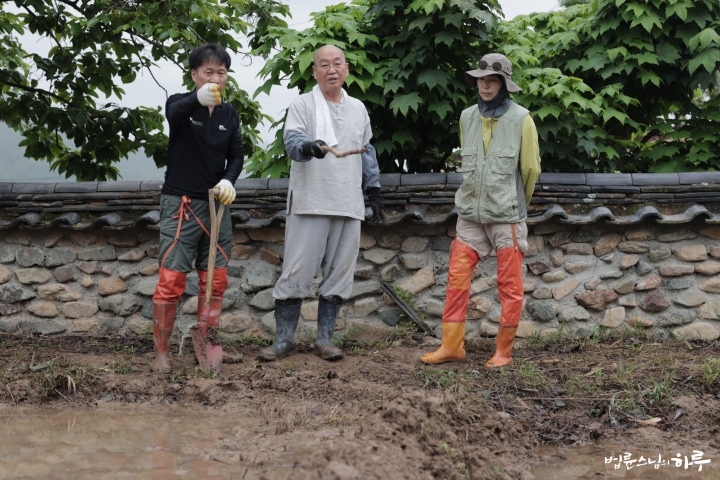
With Sunim’s guidance and the Dharma Teachers’ diligent shoveling, a sturdy ridge path was finally completed. Because the paddy where rice was to be planted had been poorly leveled, the surface was uneven—one side was exposed while the other had deep water. To enable proper rice planting, the Dharma Teachers leveled the paddy floor multiple times. The rice paddy ridge team finished their work.
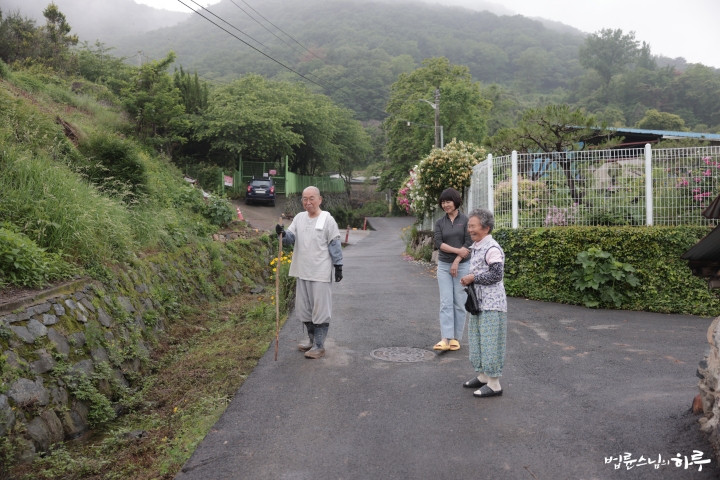
With boots covered in mud, they headed to the stream. On the way, they met some villagers. Sunim greeted an elderly woman and reminded her to always be careful when using her electric scooter, especially at night when visibility is poor. The village elders use electric scooters to move around the alleys, but the scooters do not have reflective safety stickers on the back, making them very difficult to see at night. Once, while traveling by car at night, Sunim had nearly encountered a dangerous situation when a scooter suddenly appeared. Fortunately, no accident occurred, but afterward, Sunim had identified the number of scooters owned by the village elders and attached reflective stickers to all of them. Sunim once again urged the elder to be very cautious when riding the scooter at night.
Next, Sunim greeted a woman who had beautifully decorated her yard with flowers and a vegetable garden, and they talked about plans to create a flower bed around the dolmen. Currently, the dolmen sits in the middle of a rice paddy, so visitors who come to see it in the summer cannot get a proper look. The plan is to leave the paddy around the dolmen unplanted and turn it into a flower bed so that visitors can examine the dolmen closely and take photographs. The woman smiled and promised Sunim that whenever she got new flower seeds, she would scatter them around the dolmen.
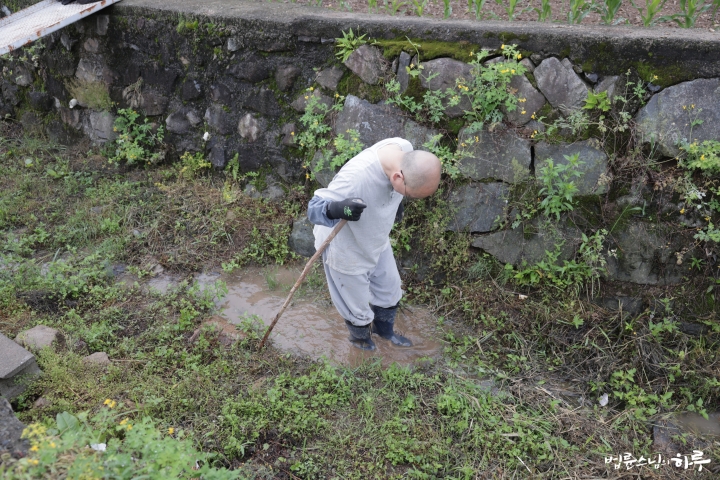
After exchanging greetings, Sunim washed the mud off his boots at the stream and immediately went to check on the vegetable garden team. He observed their progress and brought them compost and organic fertilizer as needed.
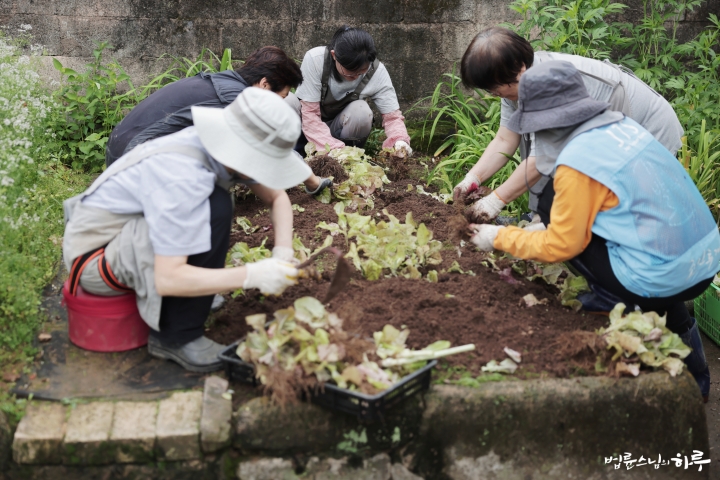
The vegetable garden team cleared the lettuce bed, where flower stalks had begun to grow. Some lettuce and coriander were left in place to collect seeds. In the remaining beds, all the lettuce was pulled up and sorted—some for immediate eating and some for making lettuce kimchi.
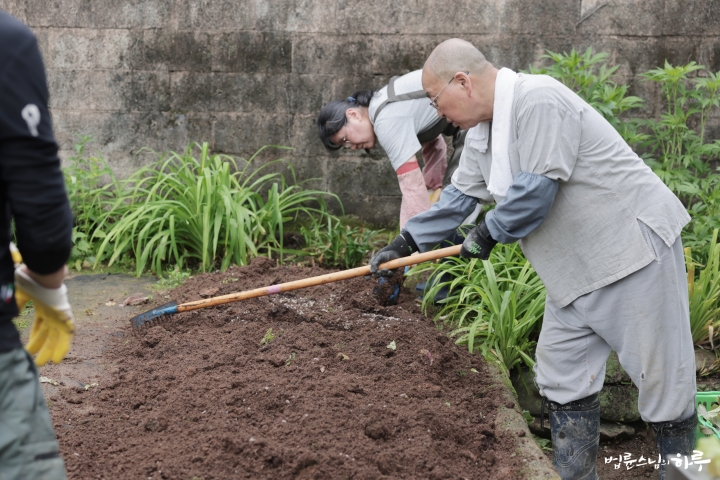
Then they spread organic fertilizer and compost over the garden bed and turned the soil with shovels to mix it evenly. On the prepared ridges, they planted young radishes. Previously, when they had sown young radish seeds, the water from the watering can had been too strong and had washed away the soil covering the seeds. Hardly any of the seeds had sprouted, so today they carefully resowed the radish seeds. The vegetable garden team also completed their work. At 8 a.m., Sunim had breakfast with the Dharma Teachers.
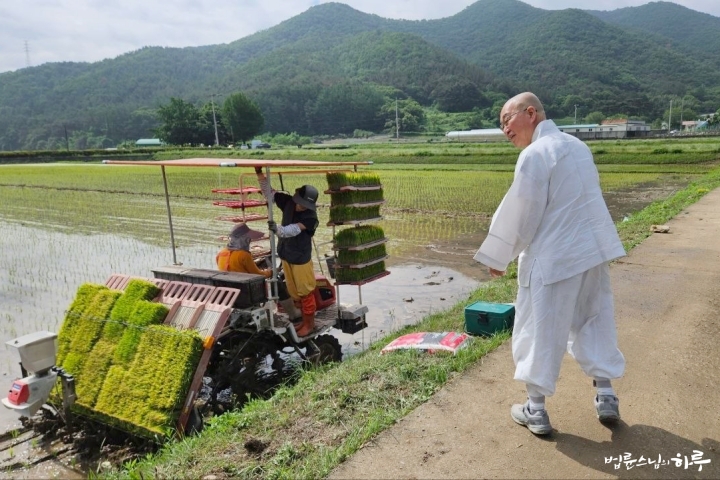
The Community Dharma Teachers’ Retreat was scheduled to begin at 10 a.m. Before the retreat started, Sunim heard that the farming team was planting rice and briefly visited the site to encourage them. Thanks to the team’s hard work over several days in the hot weather, the rice planting for the 6,000-pyeong paddy was nearly complete. After observing the rice planting, Sunim returned to the retreat center. Meanwhile, the Dharma Teachers had finished showering and were preparing for the session with Sunim.
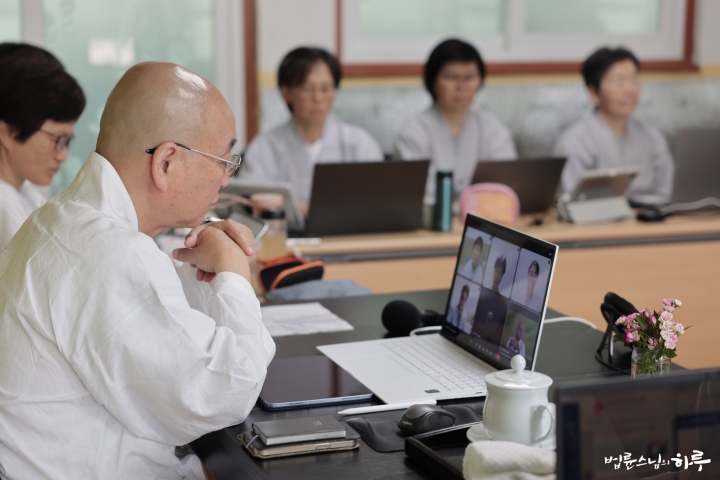
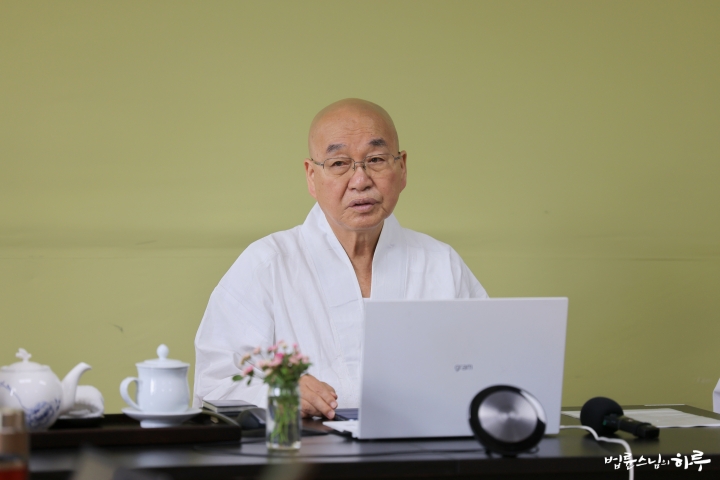
This was the final review meeting of the retreat. It was a time to make final confirmations on the matters that had been deeply discussed over the past three days. Items that had been concluded were briefly confirmed and moved past, while items still under discussion were advanced further. For two full hours, they focused on carefully reviewing each agenda item.
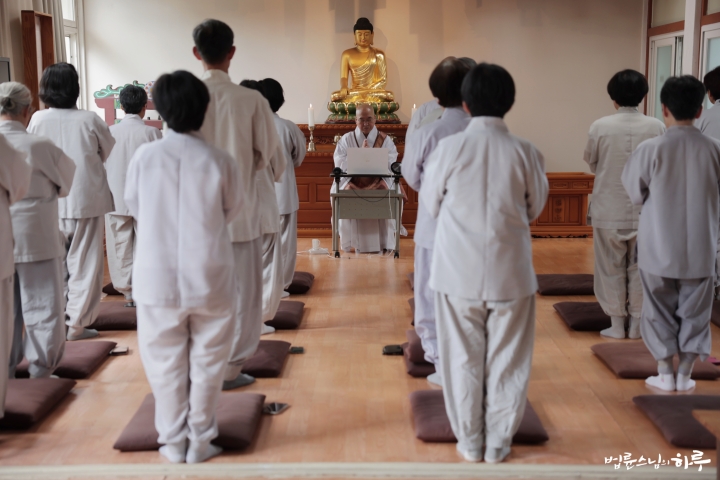
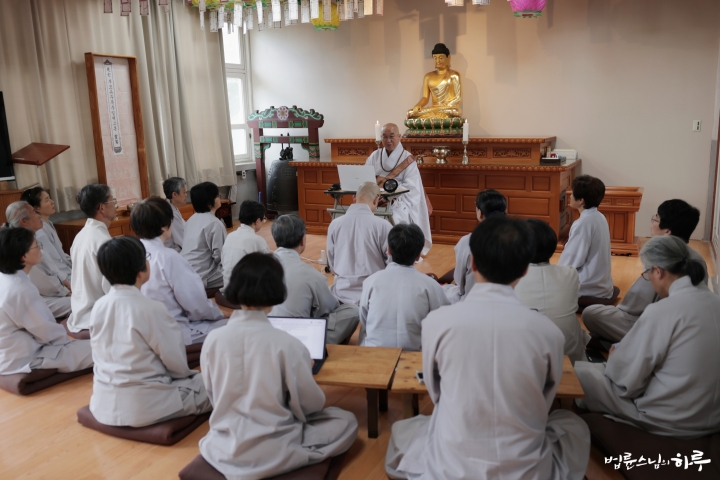
Starting at noon, the closing ceremony of the Community Dharma Teachers’ Retreat was held in the Dharma Hall. The ceremony opened with the Three Refuges and the Heart Sutra. With the Song of Requesting the Dharma and three bows, the Dharma Teachers requested a Dharma talk from Sunim.
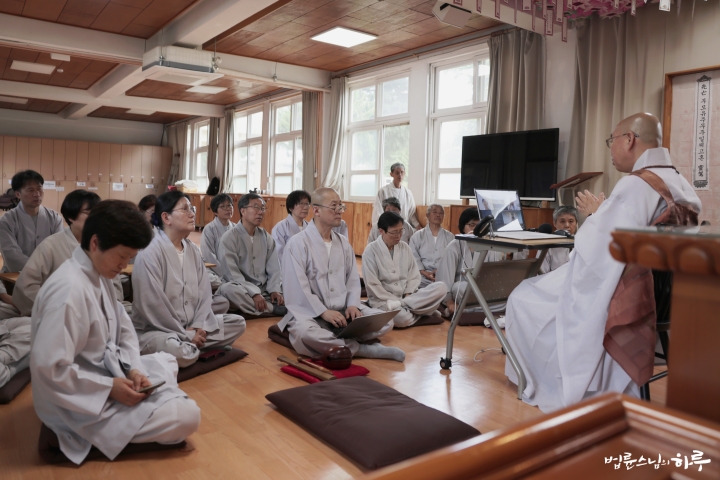
Since the Dharma talk was conducted in a natural conversational style without microphones, the Dharma Teachers pulled their cushions closer and sat near Sunim.
“The world we live in is always a difficult time for those living in that era, regardless of which period it is. During the Japanese colonial era, colonial rule itself caused suffering. After liberation, the Korean War brought tremendous hardship. After the war, poverty was the problem, and military dictatorship also tormented people. Yet if we quietly reflect on the present, there is no war, no colonial rule, and no dictatorship. Almost no one is starving. From this perspective, there is hardly any reason to call our time a difficult one. And yet we constantly live saying, ‘This is a time of crisis.’ Looking at it this way, there has never been an easy era. People living in their own time feel that their lives are hard because they themselves are struggling.What Creates Suffering Is Not the Situation but Attachment
Regardless of the era we live in, what matters is not the situation but our perspective. If we think we suffer because of this or that, we will always suffer no matter what we do. But if we can live freely under any circumstances, we will not be dragged around by suffering no matter what era we live in. Those who live alone say it is hard to live alone. Those who are married say it is hard to be married. Those without children struggle wanting to have a child, and those with children struggle because of their children. When young, we struggle with studying and finding a job. When older, when life should become easier, our eyes grow dim, our legs ache, and our bodies hurt all over, so we struggle again.Why the Buddha’s Teachings Resonate More as We Go Through Life
When we quietly observe how people live, we can clearly understand why the Buddha’s teachings have been passed down to this day. There are countless teachings in the world, but the more we go through life, the more we resonate with the perspective of practice that the Buddha taught. So when we share this teaching with others, we do not need to feel too burdened. We can speak with joy, as if delivering truly good news. Such teachings are needed in every era, but perhaps they will be needed even more going forward. In the past, when people had no food, eating was the most urgent concern. When they had no clothes, getting dressed was urgent. When war broke out, stopping the war was urgent. When people fled as refugees, returning home was urgent. In such situations, the words ‘You can be free and happy under any circumstances’ do not easily resonate. To a hungry person, the immediate meal is more pressing. But today, those conditions have changed considerably. Of course, there are still economic difficulties, such as not having a home and needing to buy one. However, if we look just a little more deeply, we can more easily understand than before that suffering does not come from the situation itself but arises because we are attached to it.The Present Era Is Actually Well-Suited for Spreading the Dharma
People say things are harder these days. They say there are so many distractions in the world that it is hard to practice. But from another angle, this may actually be a better era for understanding the perspective of practice. It has become increasingly difficult to make other excuses. In that sense, the world needs the Buddha’s teachings more, and the conditions are relatively good for spreading the Dharma. The remaining task, however, is how to create points of contact with people.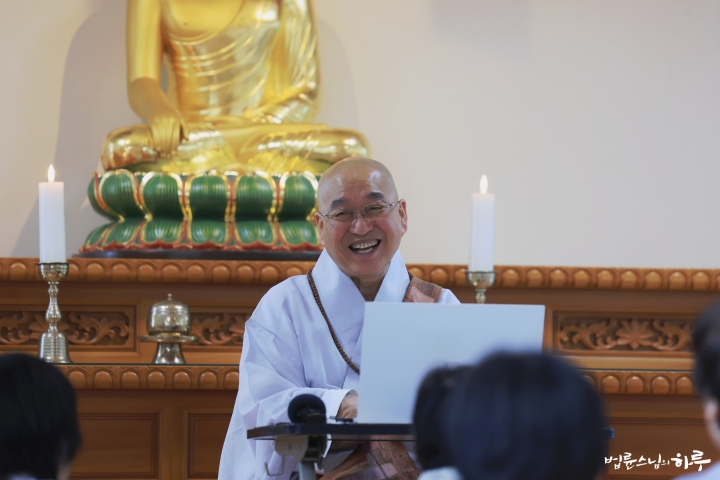
From an Age of Justice Back to an Age That Worships Power
Second, the era we have lived in since the end of World War II until now has been, in a word, an era that called for ‘realizing justice.’ We experienced colonial rule, dictatorship, and war. In World War II alone, about 80 million people lost their lives. After experiencing such tremendous tragedy, people reflected. They realized how foolish human beings can be. So nations created an international organization called the United Nations (UN) to cooperate with one another, established economic development plans, and formed various organizations to help neighbors. Colonized countries became independent, and efforts to eliminate various forms of discrimination, including gender discrimination, continued. Dictatorships moved toward democratization. Looking back at the past period we have lived through, our society has also grown economically and achieved democratization. Globally, things have generally moved in this direction. However, perhaps because humans forget past suffering too quickly, or because we have become too prosperous, extreme claims have recently been gaining ground. Even fascist claims, which would have been guarded against in the past, are increasingly winning people’s support. Most notably, even the United States, the world’s most powerful country, can be seen moving in that direction. And this phenomenon is not limited to communist countries like Russia or China; authoritarian tendencies are emerging in many countries. Perhaps this is because people think it is more efficient. Democracy is fundamentally a process of coordinating and compromising among different opinions. But that process is increasingly felt to be frustrating. So in the progressive era, openly revealing what was in one’s mind was criticized as uncultured or socially condemned. But now we have entered an era where it is considered acceptable to express such emotional remarks openly. The era is gradually shifting toward viewing the direct expression of what is in one’s heart as more honest and courageous. As a result, the number of people enthusiastic about politicians like Trump is growing. The era is increasingly becoming one that worships power. How much power one has, how much influence one can exert over many people—these are becoming important values.How Technological Advancement Has Changed the Structure of Power
This tendency is likely to grow stronger. Even if someone like Trump appears and then disappears, things are unlikely to return to the way they were. They may ease somewhat, but overall, the trend will move in that direction, and conflicts between nations will intensify. I believe the background to this phenomenon is technological advancement. As technology advances, the capacity of individuals or groups that use it efficiently has become far greater than in the past. Someone like Elon Musk, who effectively leverages technological advancement, gains enormous wealth and influence. The assets of a single person have come to exceed the combined assets of many others. When this happens, not only economic power but power across all of society becomes concentrated in a few. When power is roughly equal, people discuss and compromise. But when power is concentrated in a few, those few come to think there is no need to consult with the powerless. We can understand Trump’s remarks like ‘What is the point of constantly consulting with small UN member states that have no power?’ in this context. The idea is that a few powerful countries like the US, China, and Russia can just discuss and handle matters, so why bother listening to all the opinions of small countries? This appears as moves to reduce UN dues or aid contributions, or to scale back the role of international organizations. From this perspective, the current political changes are not simply political issues but the political reflection of changes in the structure of power caused by technological advancement. Especially as artificial intelligence comes into full play, this phenomenon is likely to expand further. In such an era, absolute poverty may decrease, but the gap between rich and poor is likely to widen rapidly. Just as great wealthy elders appeared in the Buddha’s time, today as well, people of immense wealth keep emerging. When wealth and power become extremely concentrated in this way, those without power tend not to confront the powerful but rather to envy them and try to follow them. Of course, not everyone is like this, but across society as a whole, this tendency is growing stronger. As a result, the values of democracy and mutual cooperation that have developed over the past 80 years are gradually weakening, and the power-centered way of thinking that was somewhat excluded in the past is emerging as a new mainstream. This change did not begin suddenly in recent times. Socially, it can be said to have already started in the 1980s. Reaganomics and neoliberal policies pursued by the Reagan administration in the United States can be considered the beginning. In our country, this connects with the atmosphere during the Lee Myung-bak administration. In an atmosphere that worshipped power and emphasized individual capability, the logic that ‘one smart person feeds ten thousand’ gained traction during this period. With the beginning of the digital society, this phenomenon accelerated further, and today its results are becoming clearly evident.A World Moving by the Logic of Power
Going forward, conflicts and competition between nations are likely to intensify further. Beyond the Russia-Ukraine war and the US-Iran tensions, the issue of China and Taiwan may continue to be a source of tension. The world is likely to move increasingly in the direction of operating by the logic of power. Looking at China’s past history, this can be compared to the transition from the Spring and Autumn period to the Warring States period. Wars were constant during that time, but that did not mean the economy completely collapsed or the world became a wasteland. With the emergence of iron-age civilization, production continued to increase. So wars were being fought, while at the same time new technologies emerged and growth also occurred. Looking back at our country during the democratization movement, society was always noisy and turbulent. There were many protests and intense conflicts, but the economy kept growing. However, the conflicts in our society today are somewhat different in nature. Rather than conflicts aimed at improvement, they have the character of conflicts on the way down. They are not clashes for moving in a better direction but conflicts that appear in the process of collapse. In that sense, global conflicts may grow more severe, and the risk of our being swept up in them is very high. Just look at the North-South Korea issue. Russia, which is currently at war, and North Korea are connected, and North Korea is also connected with China, where tensions are rising over Taiwan. Meanwhile, South Korea is connected with the United States. If a conflict arises in Taiwan, we are connected to the US that responds to it, and since North and South Korea are in a hostile relationship, even a small spark could quickly draw us in. In such a situation, how we preserve peace without war is an important task.What We Must Do Even When the Chances of Success Are Low
However, one thing we must clearly recognize is that changes of the era can sometimes far exceed our efforts. We work hard, but in retrospect it may seem to have had little meaning. Even as we try to prevent war, war expands. Even as we conserve and reduce consumption to address the climate crisis, the climate crisis deepens. Even as we speak of national unity to reduce social conflict, the result may seem to be deepening conflict. This is because the broad flow of society is far greater than the force with which we try to create change. It is like trying to hold back a once-in-a-century flood by building a levee, no matter how hard we work. Looking at the big picture, I think we are at a point where one could say, ‘It makes no difference whether we do it or not.’ This is the flow of the current era. In such a situation, our choice is twofold. One is to let the world go as it goes. Whether war breaks out, the gap between rich and poor widens, or conflicts grow, there is a path of saying: let people suffer enough and then reflect, and we will solve it then. The other is to keep trying even when the chances of success are not high. Even without being able to guarantee the outcome, we do our best for peace, for social integration, and for overcoming the climate crisis. Even if the probability of success is low, the idea is to do our best, thinking it is better than doing nothing. From this perspective, even if we cannot change the world, we can be evaluated as having slowed the pace toward catastrophe at least a little. Of course, looking at it more broadly, one could say, ‘What is the point of slowing it down?’ or ‘What difference does it make whether we collapse today or tomorrow?’ But our stance is to do our best. From a practitioner’s perspective, seeking only the peace of one’s own mind (Hinayana) is closer to the former choice, while plunging into the suffering of the world and acting together (Mahayana) is closer to the latter choice.Finding Meaning in the Process Rather than in Results
From that perspective, we must do our best. If unification is achieved, if national integration is achieved, and if the Happiness School raises the level of national happiness, those who participated will feel great fulfillment. No matter how hard they worked, their satisfaction will be very high. Even when facing death, they may feel, ‘I am dying having done something meaningful.’ But looking at the current flow, it does not seem likely that the results will unfold that way. Rather, it is more likely that the thought ‘Why did I go through all that trouble?’ or ‘Wasn’t it all pointless?’ will arise. To use an analogy, what we do is similar to going into battle. In that battle, the chances of defeat may be higher than the chances of victory. From the practitioner’s perspective, if it is the right path, then regardless of winning or losing, whether things are accomplished or not, the very process of walking that path is what matters. That is why I always say that for practitioners, there is no such thing as sacrifice. If we are not attached to the outcome, the thought of sacrifice does not arise. But if we become attached to the outcome, anyone can become a victim. Whether we work for the world or for Jungto Society, we are prone to feeling resentful, thinking, ‘I devoted my life and got nothing in return.’ What matters here is finding the meaning of one’s life in the process of doing the work itself. If we have already gained meaning in our lives through that process, it does not matter much if the outcome does not turn out as we hoped. Imagine sculpting a statue out of clay, only for a flood to wash it all away. You might think, ‘Everything I made by devoting my youth has disappeared.’ But if the process of making it was itself joyful, it does not matter much whether the statue is swept away by water, taken by someone, or remains as it is. This is the teaching of the Diamond Sutra. The meaning of the Diamond Sutra is not found in interpreting each character one by one, but in embodying this perspective in our lives. But what about reality? We say we practice, but we are not yet in a state where we have fully embodied it. From the perspective of practice, we should transcend even matters such as what happens after death or the reality of illness. In the Buddha’s time, everyone was made to solve such things on their own, but today we still have many shortcomings. Otherwise, resentment may arise in our minds. Therefore, we must acknowledge the reality that our practice is not yet complete and prepare at least minimal supportive measures so that the community can take care of one another.Why Supportive Measures Are Needed to Reduce Regret
This is somewhat different from the concept of welfare in the secular world, but at the very least, we need to build a foundation where people can receive treatment and care and live more comfortably when they grow old, fall ill, or face death. The reason we hold memorial rites and enshrine memorial tablets is not so much for the deceased, but because the thought that ‘even when I die one day, the community will remember me’ provides comfort to those who are currently living. In this way, I think it is necessary to establish at least a minimal safety net within Jungto Society that can reduce regret, even when practice is insufficient. In the Buddha’s time, none of this was done. Everyone was made to resolve things through practice. That was not coldness in the manner of ‘live or die as you will,’ but rather because the practice-centered perspective was clear. However, although we today say we practice, we still have many shortcomings compared to the Buddha’s time. That is why I am saying that some degree of supportive measures is needed.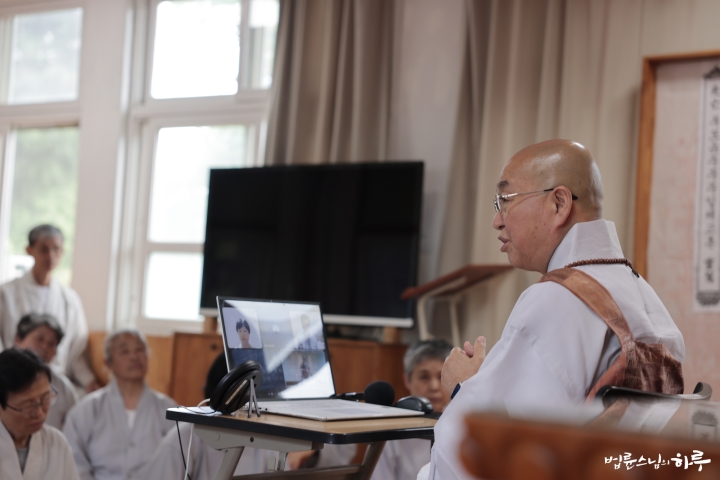
Establishing an Offline Foundation to Complement Online Activities
“Going forward, we need to think together at the level of the entire Jungto Society about how to establish an offline foundation that can complement our online-centered activities. This issue was also raised as an important task during this meeting. It would be good to have a gathering where those involved can come together and thoroughly discuss why offline complementation is needed and how to prepare for it. This doesn’t mean we should unconditionally build facilities, but rather that we should observe future changes and make necessary preparations one step at a time. That’s all for today. Please be faithful to your respective duties and take good care of your health. Having been sick myself, I’ve come to realize that not being sick is the best. Being sick doesn’t mean I can’t work, but it’s not a great situation either. So please take care of your health and don’t overexert yourselves. No matter how much work there is, we need to go the distance. Rather than rushing in haste, I hope you can maintain a perspective that allows you to sustain yourselves for the long haul.”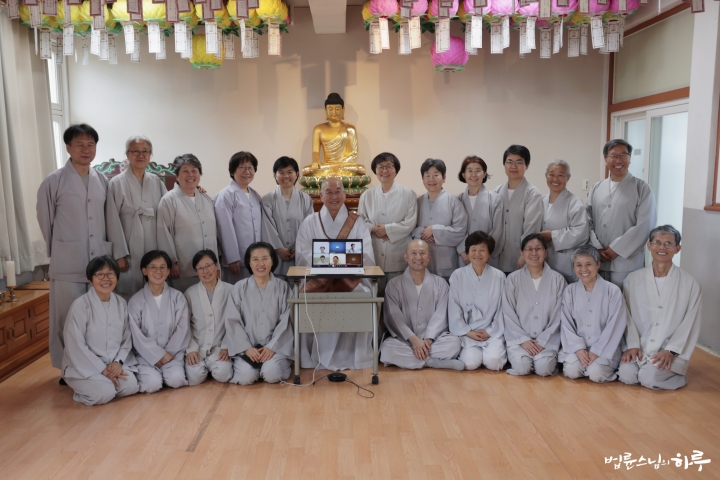
Afterward, the four-day Sangha Dharma Teachers’ Retreat concluded with the Four Great Vows. The Dharma Teachers who had participated in the retreat online also joined the group photo through their computer screens.
The Dharma Teachers did a thorough cleaning and packed their belongings in advance to move to their respective places. Since there were tasks that hadn’t been completed during the morning communal work, the work resumed in the afternoon. The vegetable garden team sowed lettuce seeds, while the rice paddy team loaded onto trucks the bamboo that volunteers had cut earlier in the morning.
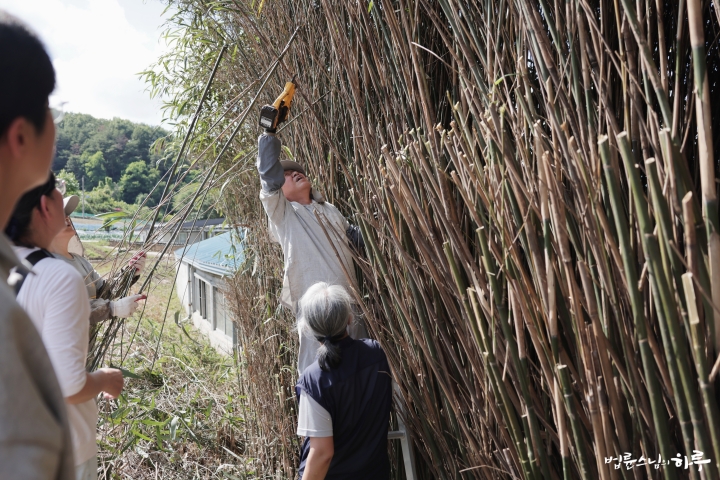
Sunim also changed into work clothes and, using a ladder, cut bamboo above his height with automatic pruning shears. Since Sunim had started the work yesterday, much more bamboo had been cleared, and the shadows cast over the rice paddy had almost disappeared. While Dharma Teacher Mubyeonsim held the ladder steady, Sunim climbed up and reached high with his arms to cut the bamboo, and when the cut bamboo fell, Dharma Teacher Myodeok caught it. The other Dharma Teachers worked together to gather the fallen bamboo, pull it out from the paddy paths, and load it onto the truck.
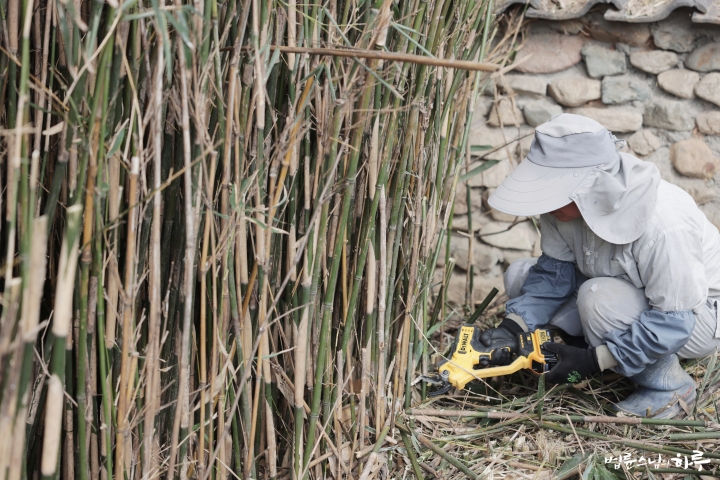
Sunim examined the area where the bamboo had been cut yesterday. This time, he squatted down and used the automatic pruning shears to cut bamboo in areas that needed tidying up.
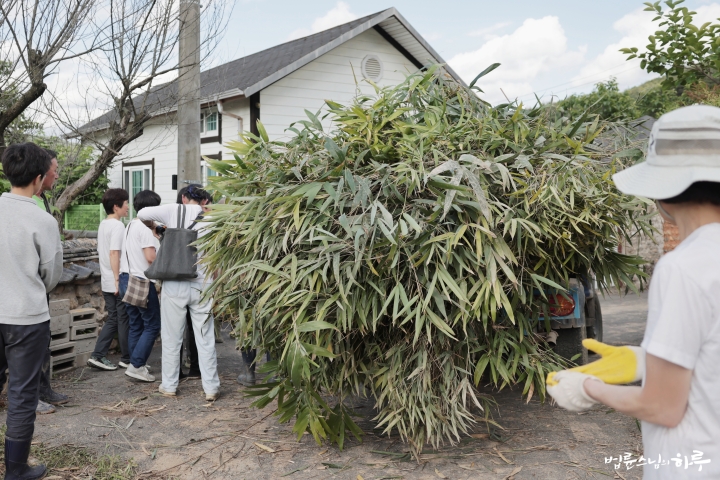
During the afternoon work, the sun suddenly began to beat down intensely. In the neighboring paddy, the farming team was busy transplanting rice seedlings with a rice transplanter. Sunim broke into a sweat under the suddenly scorching sunlight. Following yesterday’s progress, a large amount of bamboo clearing was accomplished today as well. The cut bamboo was loaded onto the truck and transported in two trips, all moved to the Dubuk Jungto Retreat Center.
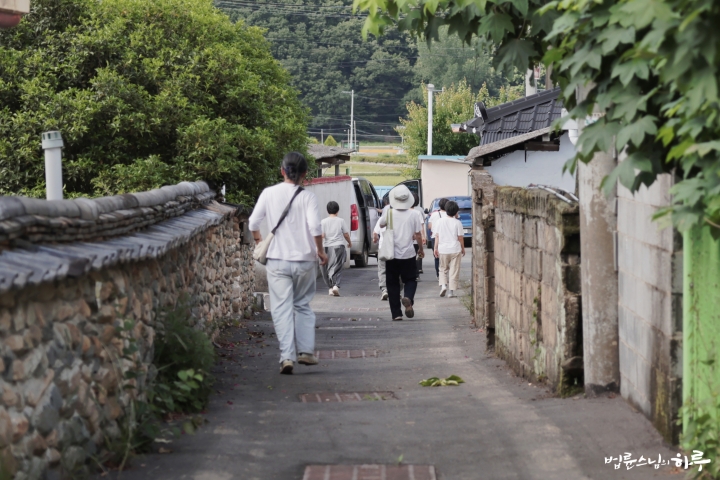
It was 3:30 p.m. As it was time for the Dharma Teachers to return to their respective places, they offered their final greetings to Sunim, then went to the retreat center to load their belongings, finished a brief tidying-up, and boarded a van to head to their respective places.
Sunim changed out of his sweat-soaked work clothes and attended to various tasks at the Dubuk Jungto Retreat Center from around 4:30 p.m. In the evening, after dinner, he took some rest and concluded the day’s schedule.
Tomorrow morning, Sunim plans to cast an early vote, followed by a medical appointment and a visit to pay respects at a funeral.