Let Us Create a New Culture to Spread This Wonderful Dharma.
May 23, 2026 – Online Jungto Dharma School Dharma Q&A, Buddha's Birthday Eve Cultural Festival
Even though I know that all suffering and attachment come from my own mind, I keep blaming others and can’t cleanly let go of relationships or lingering feelings. Will continuous practice help? Right after doing 108 prostrations in the morning, I feel a little better, but as time passes into the afternoon, I tend to return to my old state of mind.
Through the online classes, I understood that “pleasure and pain go around in cycles” and that “to be free of suffering, we should aim for a peaceful state without either pleasure or pain.” I understand the principle intellectually, but of all the teachings I’ve learned, this is the hardest one to practice or even feel motivated about. Wouldn’t a life with a little pleasure and a little suffering actually be more worth living?
I wonder if even the anger and stress I feel in situations that anyone would consider unjust ultimately stem from my own attachment. I’m not sure whether my anger comes from my own mind insisting that “the other person should act according to my standards,” or whether it’s a natural awareness of objective injustice. How should I distinguish between feeling that something unjust is unjust and the attachment Sunim speaks of in the Dharma talks?
When negative feelings arise or I get angry or irritated, I try to recognize my state of mind and turn it in a positive direction. Recently, a coworker who was trying to help me made a mistake and ruined the work I was doing. At that moment, I noticed my irritation and told my coworker outwardly that it was fine, but every time I see that person, feelings of resentment keep arising, and it troubles me. How can I manage this mind?
I am the head of a household with a wife who has epilepsy and two children, and I have been running a small coffee shop for 17 years. With monthly rent and costs increasing every year, and sales dropping due to intensifying competition, my financial situation is getting harder. I find myself attached to avoiding losses, anxious to find quick answers and solve problems, and greedy to make only the best choices. What kind of mindset should I cultivate to overcome the difficulties ahead? Could awareness be the key to a solution?
After the conversation with the six questioners, Sunim concluded the Dharma Q&A with closing remarks.
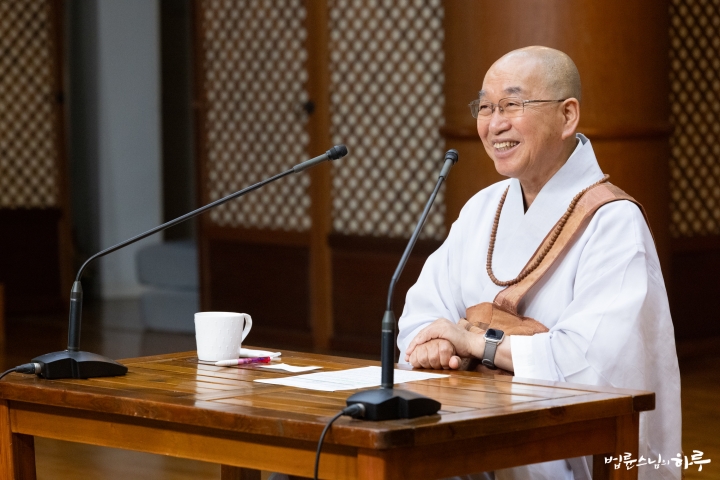
It was already noon by the time the Dharma Q&A ended. After lunch, Sunim received acupuncture treatment, and after 2:30 p.m., he headed to the main auditorium.
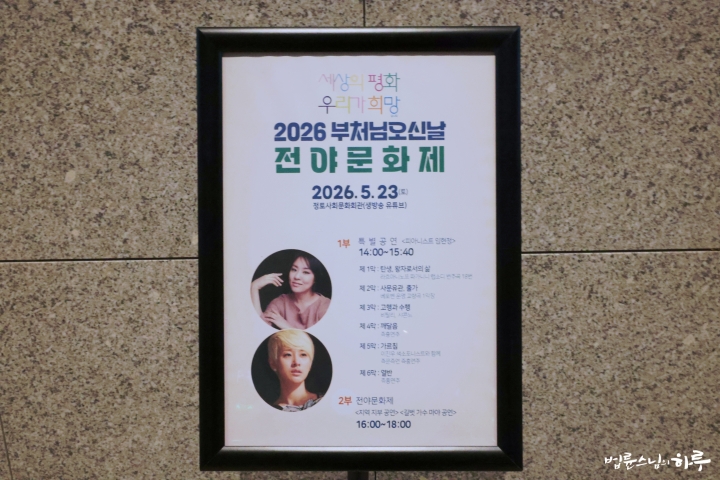
The Buddha’s Birthday Eve Cultural Festival was being held in the basement main auditorium of the Jungto Social and Cultural Center. It was the first eve cultural festival in the history of Jungto Society. Part 1, which began at 2 p.m., featured a celebratory Buddha’s Birthday recital by world-renowned pianist Lim Hyun-jung. Part 2, which began at 4 p.m., featured performances by various branches as well as a special guest performance by singer Maya.
First, there were opening remarks from Yusu Sunim, the branch Dharma Teacher of the Jungto Social and Cultural Center.
“This piano was donated by Lim Hyun-jung. She had a piano she’d been playing since high school, but it was too long front-to-back to fit into the center’s elevator. So she brought a different piano. Let me introduce Lim Hyun-jung. She attended the Awakening Retreat in Frankfurt, Germany, and at that time, I was her guide. Her mother is also a Jungto practitioner. She has always dreamed of performing at this center, and she considers it a great honor to perform here today. She had promised that when she grew into someone great, she would play the piano while the guiding Dharma Teacher gave Dharma talks. Even after all these years, she has not forgotten that promise and has come to perform for us today….”
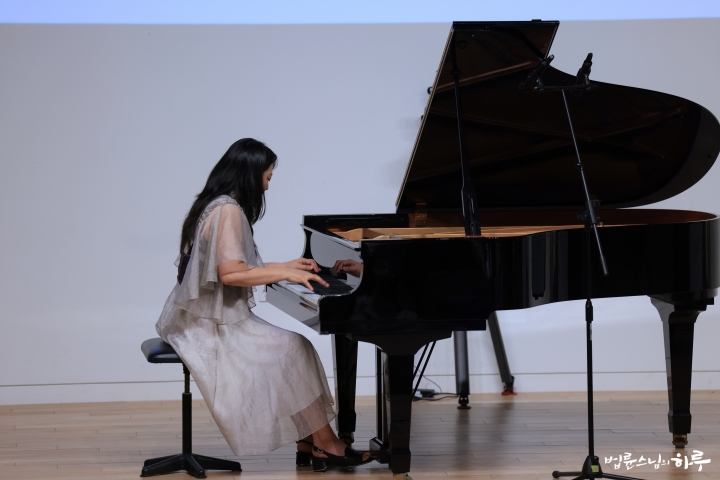
Lim Hyun-jung performed a piano recital that musically depicted the life of the Buddha from Act 1, “Birth,” to Act 6, “Nirvana.” For “Act 1: Birth, Life as a Prince,” she performed Rachmaninoff’s <Variation 18 from Rhapsody on a Theme of Paganini>, and for “Act 2: The Four Encounters and Renunciation,” she performed Beethoven’s <Symphony No. 5, 1st Movement>. “Act 3: Asceticism and Practice” was expressed through Vitali’s .
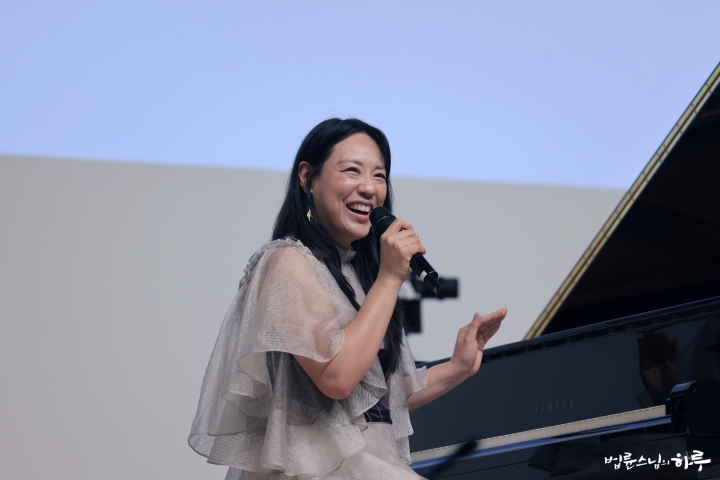
“Act 4: Enlightenment” was filled with an improvisational performance created together with the audience. Following Lim Hyun-jung’s guidance, the audience was divided into two parts to hum musical notes, and she played piano improvisations along with them, creating beautiful harmonies. “Act 5: Teaching” featured a segment called “Instant Q&A Performance,” inspired by the Dharma Q&A format.
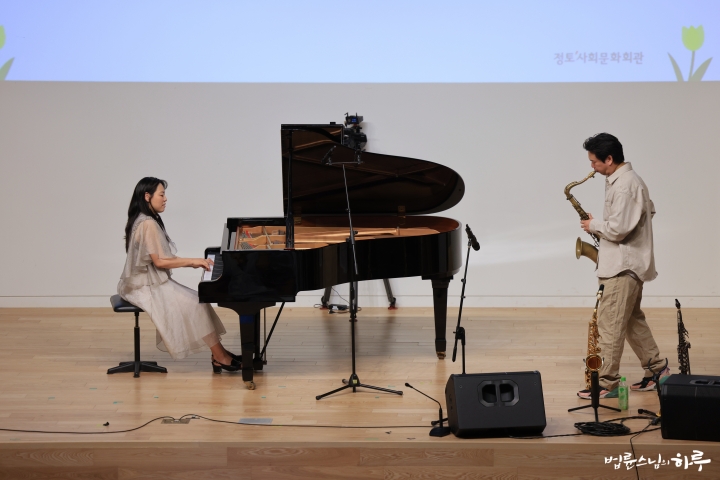
Audience members suggested theme words, which she then expressed on the spot through piano melodies. A joint improvisation with her husband, saxophonist Lee Jin-woo, followed. The piano and saxophone melodies blended together on themes such as “Peace on the Korean Peninsula” and “Young Buddha,” moving the audience deeply. To celebrate Buddha’s Birthday, she graciously accepted the audience’s final request to play “Happy Birthday” in a jazz style, and her witty yet moving performance heated up the atmosphere in the main auditorium even more.
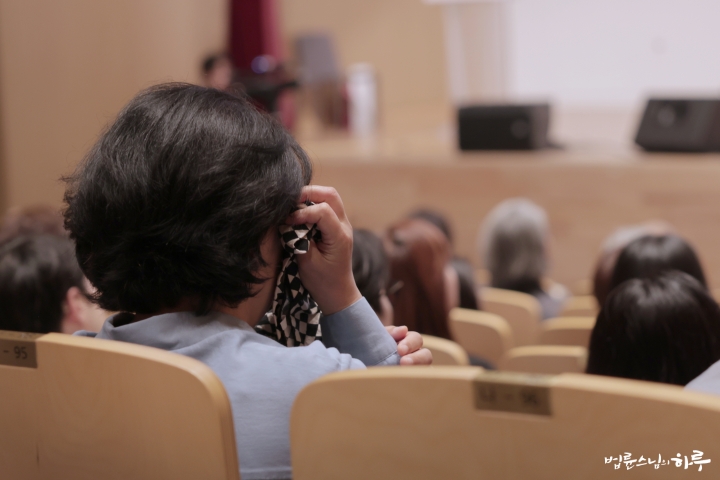
Some audience members were moved to tears by the passionate performance. The final “Act 6: Nirvana” also concluded with a grand improvisation.
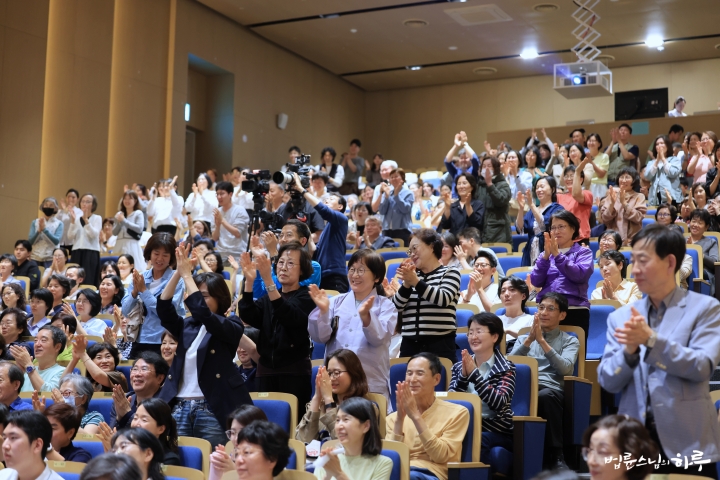
When the planned performance ended, the audience called for an encore with thunderous applause. Lim Hyun-jung returned to the stage and performed her own arrangement of , receiving great applause. A bouquet of flowers was presented to Lim Hyun-jung in appreciation for her moving performance.
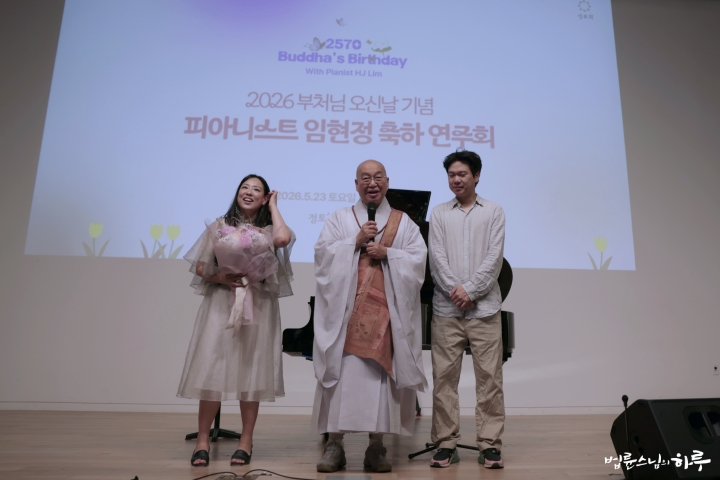
Sunim invited Lim Hyun-jung and Lee Jin-woo to the stage to express his gratitude once again. After the recital ended, there was a 20-minute break before Part 2.
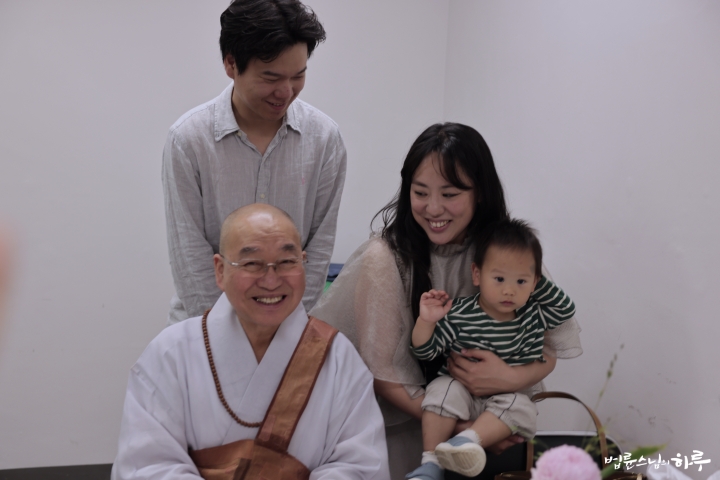
In the waiting room, Sunim met Lim Hyun-jung’s family again to express his thanks and give them books as gifts. Lim Hyun-jung expressed her gratitude repeatedly, saying, “It is such a great honor.” Sunim had been scheduled for acupuncture treatment that afternoon and had to lie down for an hour while receiving needles. He had asked to have the needles removed early so he could make it to the recital on time, but the practitioner said it wasn’t possible, so he had to stay still. Fortunately, he was able to spend the treatment time listening to the music from Acts 1 and 2 that Lim Hyun-jung performed via YouTube. Sunim then expressed interest in the part of Lim Hyun-jung’s improvisation where she expressed the Korean traditional rhythm “Jajinmori” on the piano, and asked her about it.
“How do Western people hear Korean music like Jajinmori? Have you ever performed with traditional Korean instruments?”Lim Hyun-jung replied that while performing abroad, the question she was asked most often was, “Why don’t you play the music of your own country?” After that, she began attempting ensembles with Korean instruments and studying traditional music more deeply. Meanwhile, the recital held in the main auditorium of the Jungto Social and Cultural Center had its registration close early, so many Dharma Teachers and Jungto practitioners who could not attend in person watched via YouTube Live. After chatting with her family during the break, Sunim returned to the main auditorium in time for the start of Part 2 of the eve cultural festival.
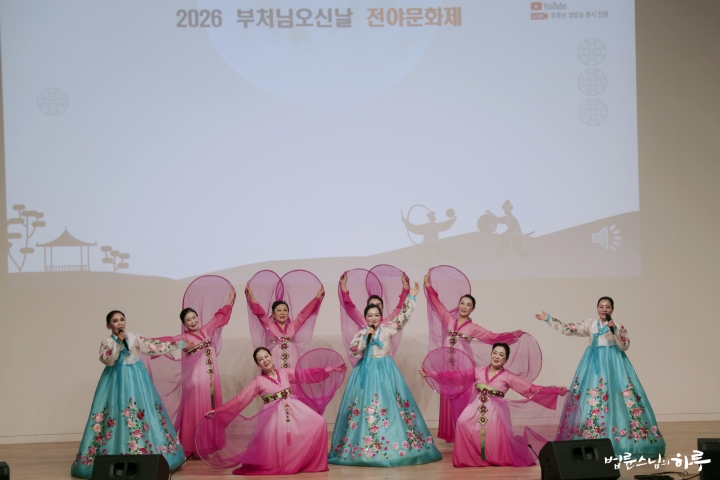
Part 2 featured performances by various branches. The first stage was an Arirang performance by the Gangwon-Gyeonggi Eastern Branch’s “Korean Peninsula Unification Art Troupe.” Composed of North Korean defectors who sing of harmony and peace between the South and the North, the troupe wore splendid hanbok and stage costumes as they presented beautiful songs and dances. The heartfelt singing of the North Korean defectors deeply moved the hearts of the audience.
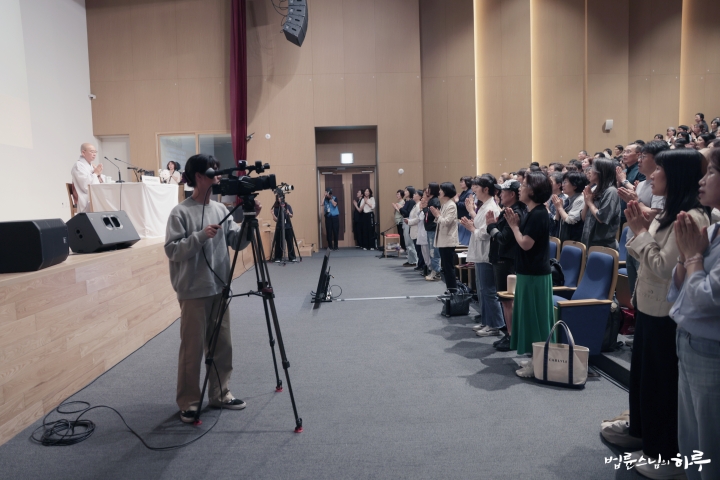
This was followed by Sunim’s Dharma talk for the eve cultural festival. The congregation requested the Dharma from Sunim with the Dharma-requesting song and three full bows.
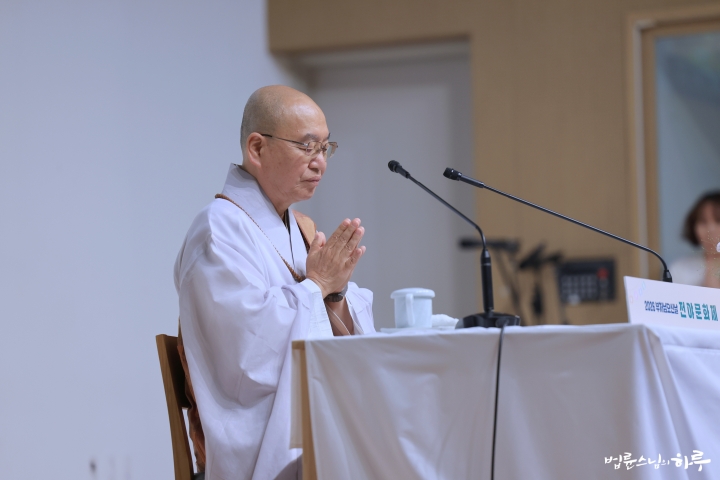
After the Dharma talk, performances carefully prepared by ten branches began in earnest.
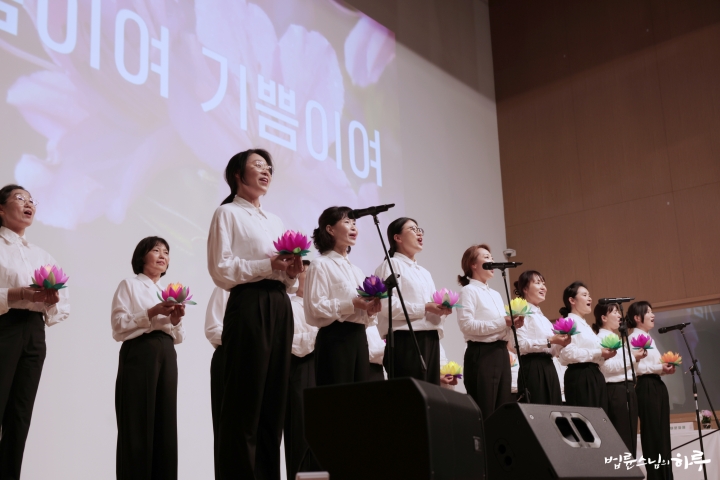
From the Center Special Branch, the “Maya Buddha” team took the stage holding bright lotus lanterns and sang the Buddhist hymn .
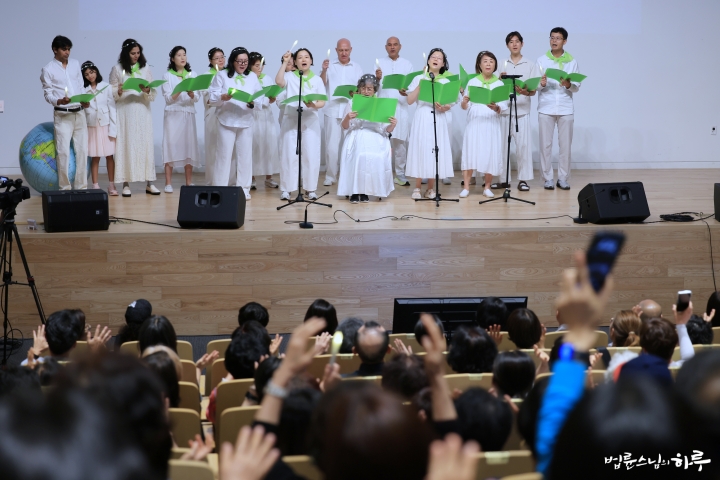
The International Special Branch moved the audience with a song accompanied by a video featuring Buddha’s Birthday congratulatory messages from local members.
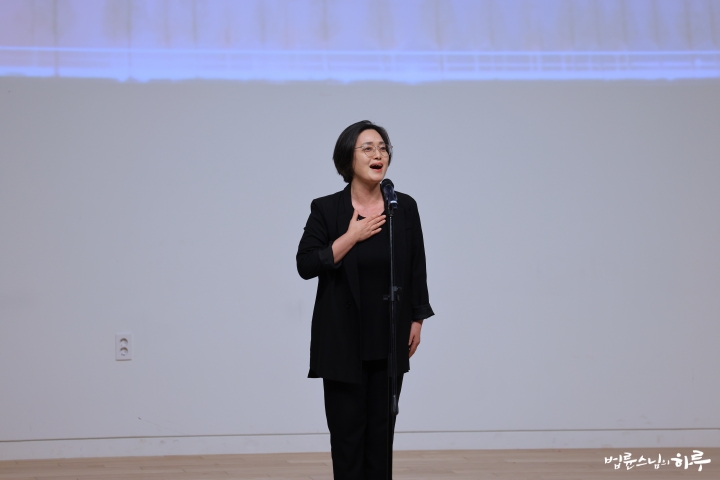
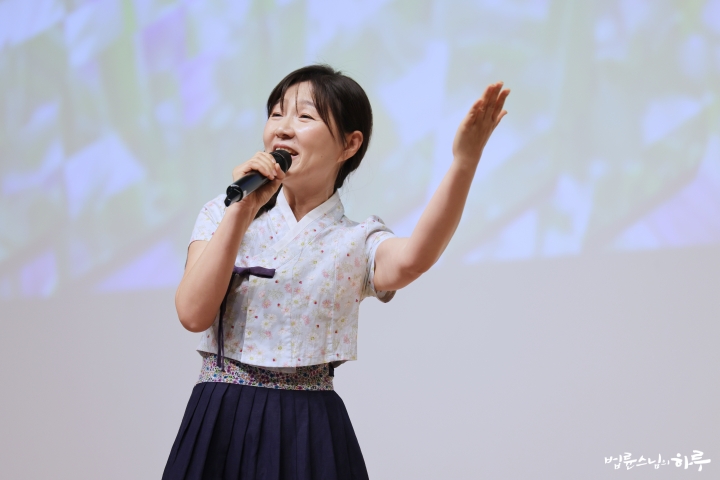
Next, Lee Ji-young of the Gyeongnam Branch sang the art song in a beautiful voice, and Lee Seon-ho of the Daejeon-Chungcheong Branch enthusiastically performed , a song composed by his son, heating up the stage.
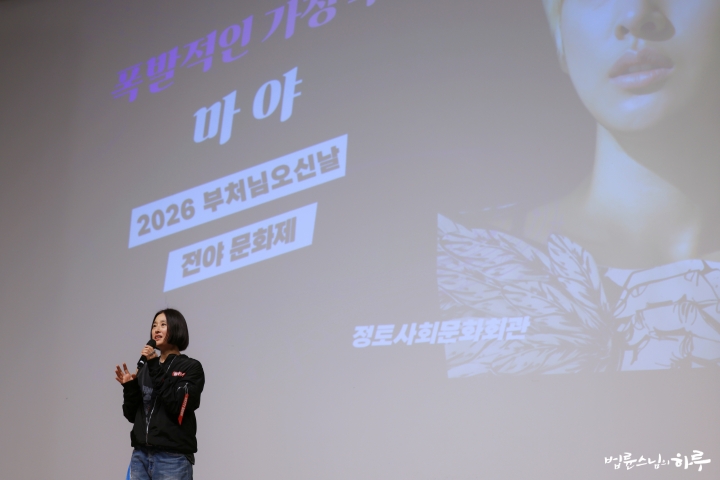
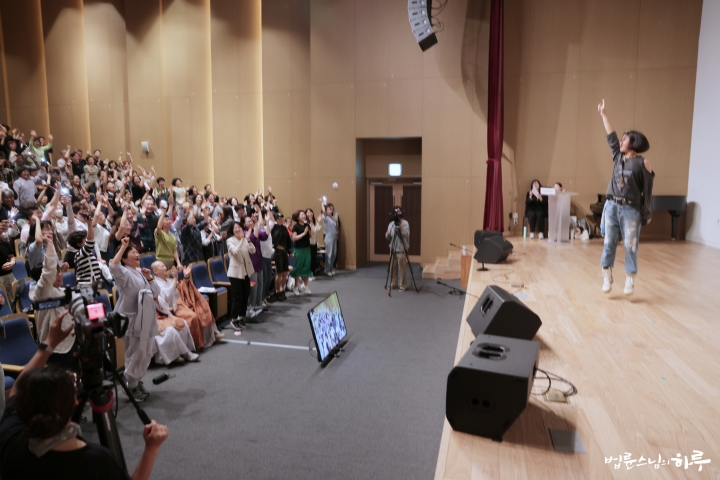
After the four branches’ performances ended, special guest singer Maya appeared. With her powerful voice and overwhelming stage presence, she set the venue abuzz, and the audience joined in the performance with thunderous applause and cheers.
After Maya’s exhilarating performance, the Incheon-Gyeonggi Eastern Branch presented a traditional Sri Lankan Kandyan dance. Nethmal from Sri Lanka wore a splendid traditional costume and performed dynamic dance moves.
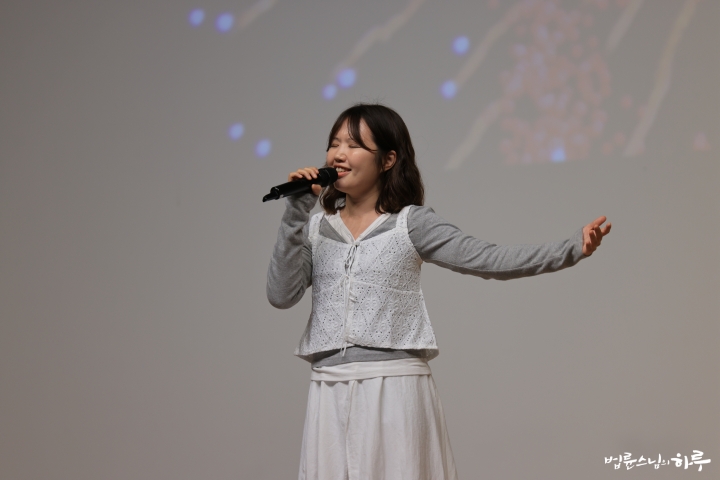
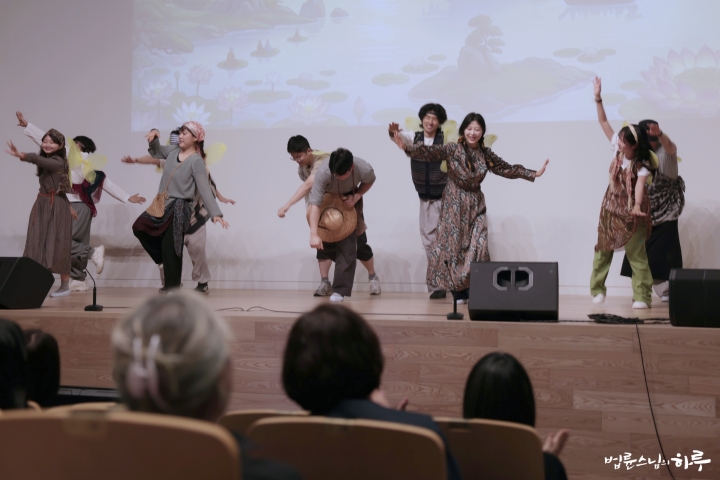
Next came the stage of the Youth Branch. Kim Ye-hoon sweetly sang , and “Young Buddha Class 7” presented <Paradise of Rumors – Jungto Version>, a parody of AKMU’s . When the final question asked “Where is this rumored Jungto?”, the witty answer “Right here, right now!” drew a wave of laughter from the audience.
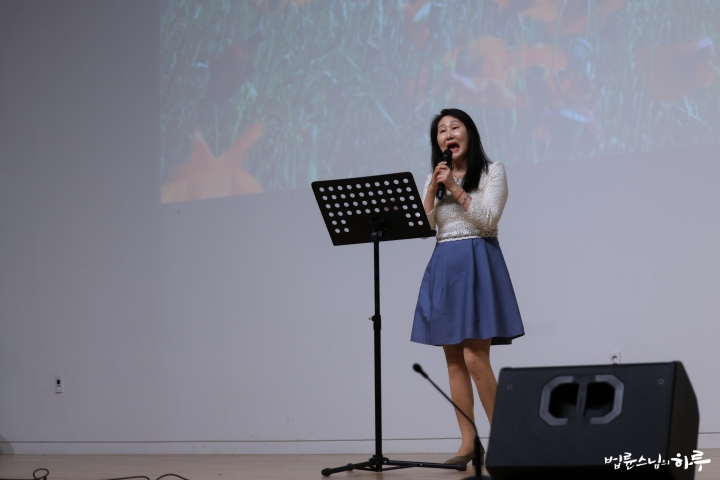
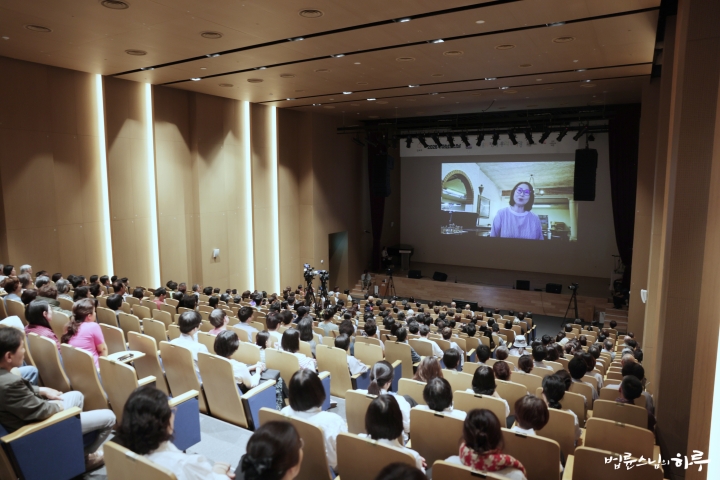
Then Jang Hye-jin of the Seoul-Jeju Branch performed , and Kim Ae-kyung of the Overseas Branch sang Rossini’s via video, conveying clear and pure charm.
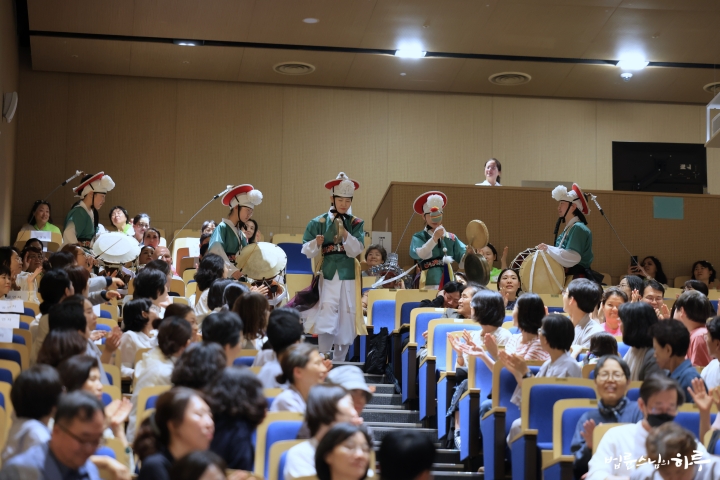
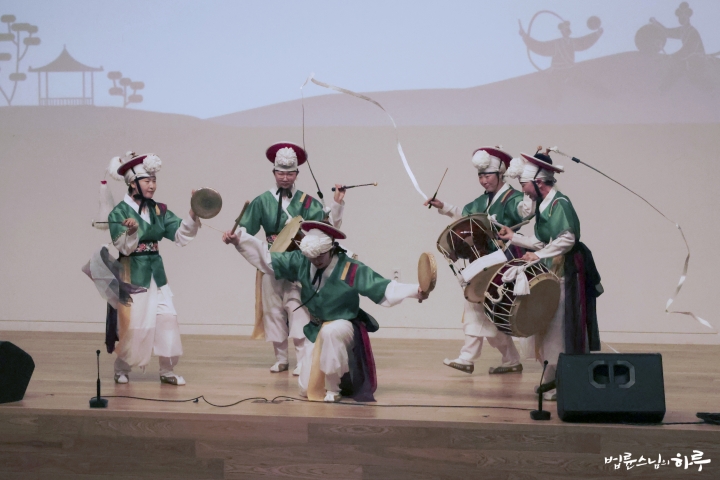
Finally, the “Pungnyu Madang” five-member ensemble prepared by the Daegu-Gyeongbuk Branch presented a spirited samulnori performance. The entire audience clapped along to the beat, fully enjoying the festive atmosphere.
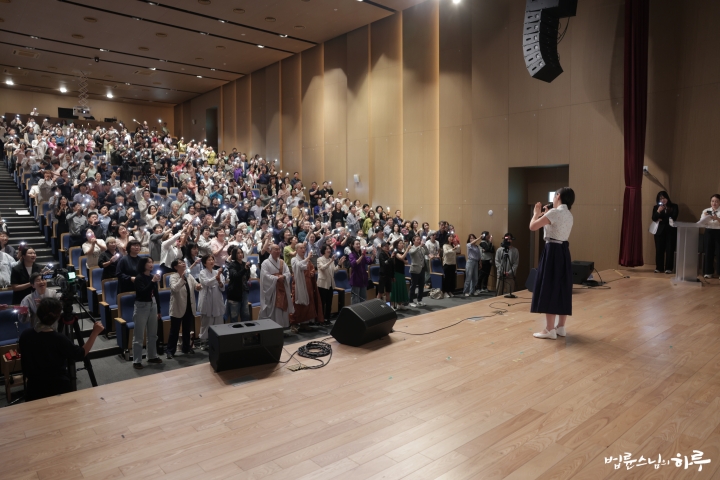
The final performance was a moment shared by both audience and performers. Led by Lee Seon-ho, everyone sang the Buddhist hymn , and the audience turned on their cellphone lights, filling the main auditorium like a beautiful galaxy as they sang together.
The festival concluded with the “Four Great Vows,” the great vow of Buddhists, and with promises to meet again at the next day’s Buddha’s Birthday Dharma Service, the first-ever Buddha’s Birthday Eve Cultural Festival in Jungto Society’s history came to a close.
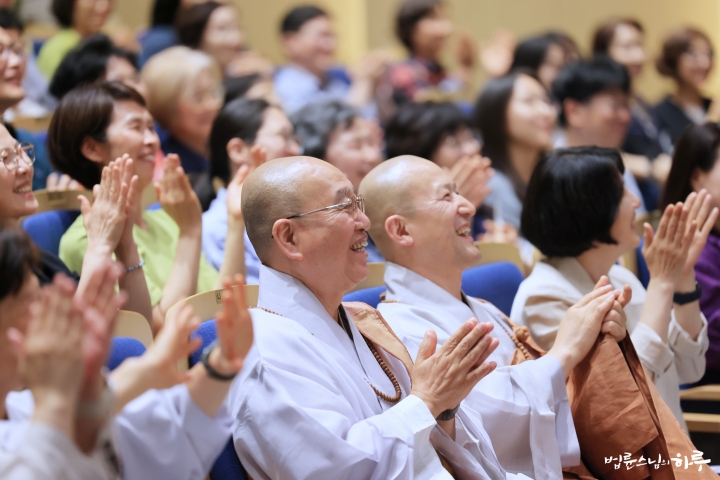
Sunim remained in his seat in the main auditorium until the eve cultural festival ended, staying with the congregation throughout.
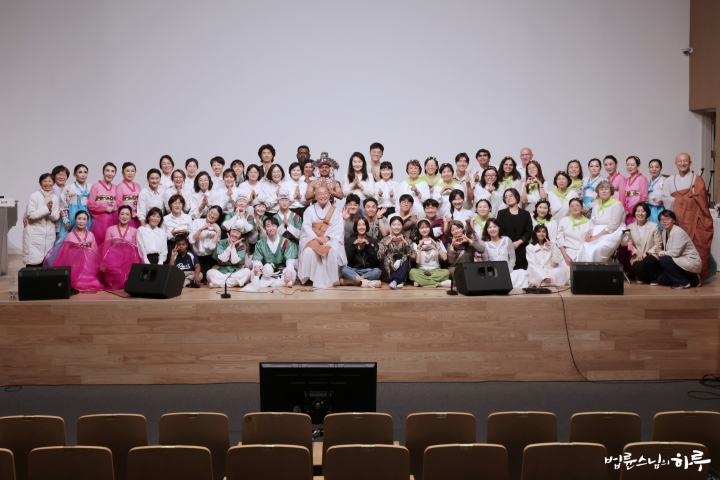
After the event ended, all the performers came up on stage to take a commemorative photo with Sunim. As the Buddha’s Birthday Dharma Service was scheduled for the next day, the performers and volunteers swiftly wrapped up the cleanup and returned home.
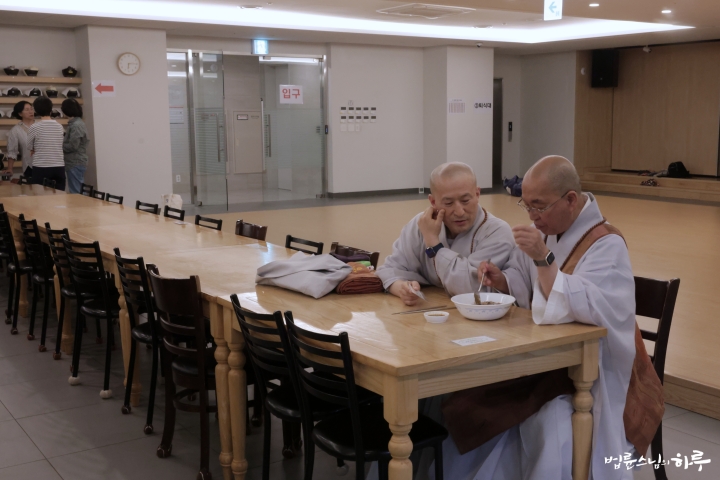
Sunim went down to the dining hall on the first basement floor and had dinner with Yusu Sunim. After the meal, he moved to his office, where he completed the final review of matters related to the Buddha’s Birthday event before wrapping up the day’s work.
The following day, Buddha’s Birthday, will begin with the Buddha’s Birthday Dharma Service at 10 a.m., followed by a Dharma assembly for community leaders at 3 p.m., and a Dharma assembly for young adults at 7 p.m.