Sunim, You’ve Spent Your Whole Life Listening to Others’ Questions, So Today Let Young Pomnyun Ask a Question!
November 8, 2025. Day 2 of Youth Festival, Sunim's Peace Talk Talk, Kim Je-dong's Direct Talk Talk
Hello. It’s the second day of the Youth Festival. Today, the Jungto Social and Cultural Center welcomed young people with various lectures, seminars, performances, booths, and food prepared abundantly for them.
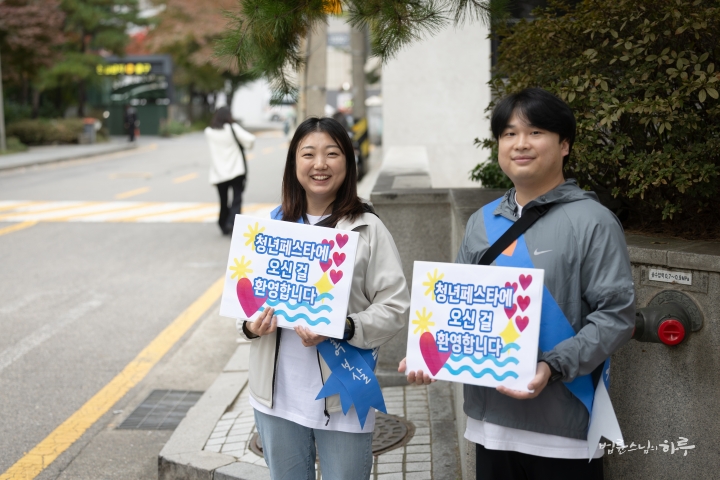
After completing morning practice and meditation, Sunim worked in his office before heading to the 9th floor auditorium at 10:30 AM where the Youth Festival events were being held. The second day of the Youth Festival began with a lecture by Minister of Unification Jeong Dong-young on the theme of “Opening Peace on the Korean Peninsula with Youth.”
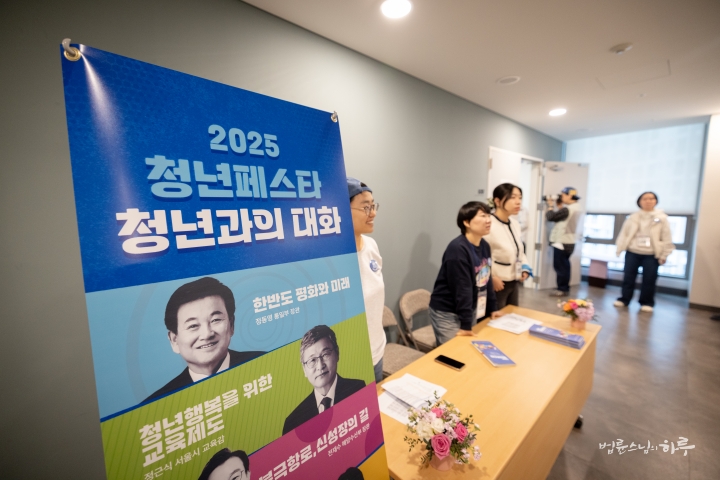
When Minister Jeong Dong-young arrived at the venue, Sunim warmly greeted him.
“Thank you for taking time out of your busy schedule to be here.”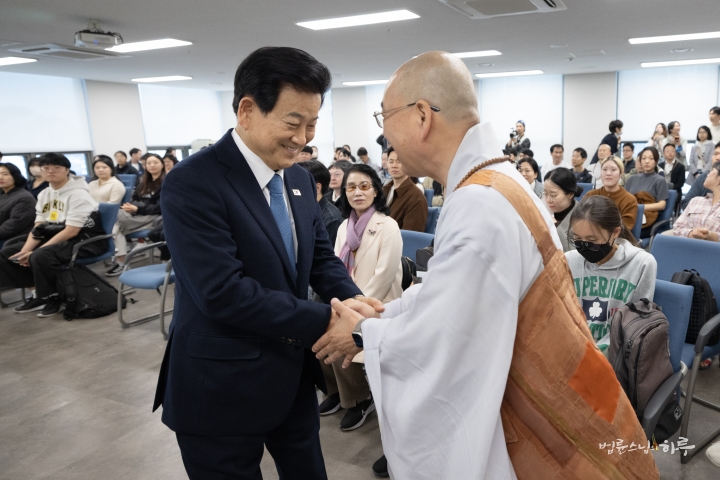
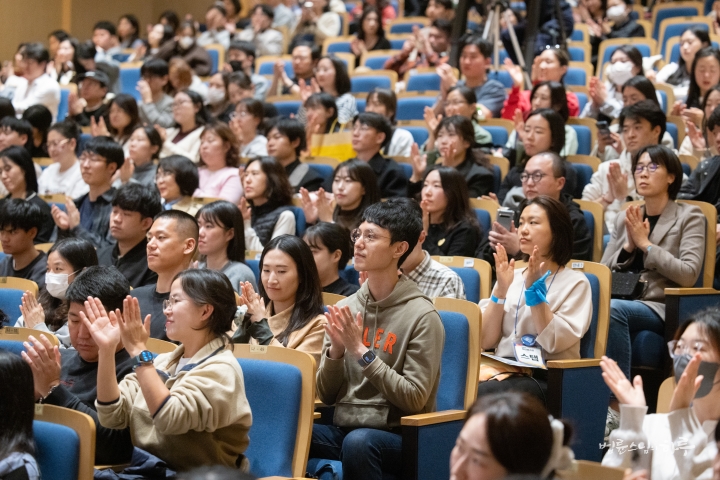
About 100 young people were seated. First, they watched a video of Minister Jeong Dong-young pledging in front of President Kim Dae-jung’s grave to inherit the spirit of when the Kaesong Industrial Complex was first created after becoming Minister of Unification. Then, Minister Jeong Dong-young came up on stage to great applause.
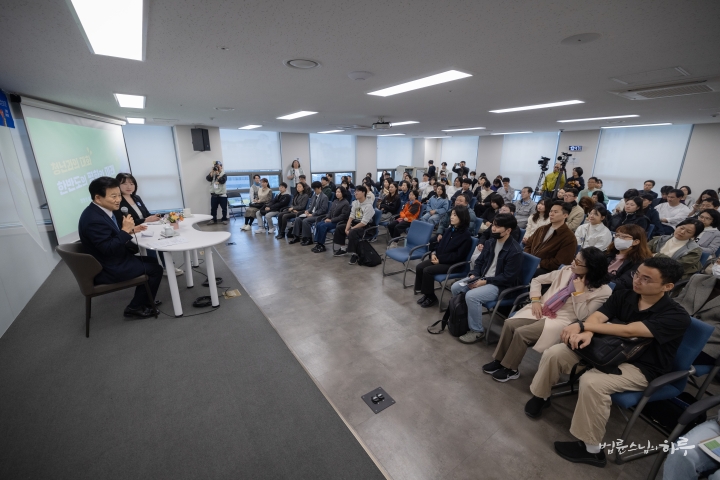
During the hour-long lecture, Minister Jeong Dong-young emphasized that young people should not forget that they are the central generation to reconnect North and South Korea and open the future of the Korean Peninsula.
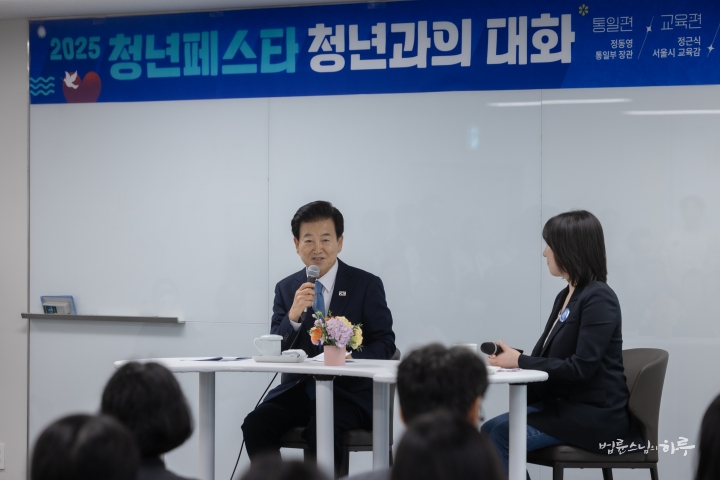
“I believe that the power of youth has always been at the center of South Korea’s journey from colonization, war, dictatorship, and poverty to where we are today. The Kaesong Industrial Complex, where North and South shared daily life, was a precious space where ‘small unification’ was realized, and I consider reopening its doors as my calling. Unification is not a grand slogan but a real issue directly connected to young people’s lives – jobs, culture, and freedom of movement – and it must be achieved through a gradual and peaceful process. Only when time accumulates for North and South to meet and cooperate can unification be possible, and only when we unite domestic public opinion can our diplomatic power come alive in the international community. What we need now is not ideological fighting but courage for peace and coexistence, and only when young people become unification volunteers and peace volunteers can North and South reconnect and the future of this land open.”
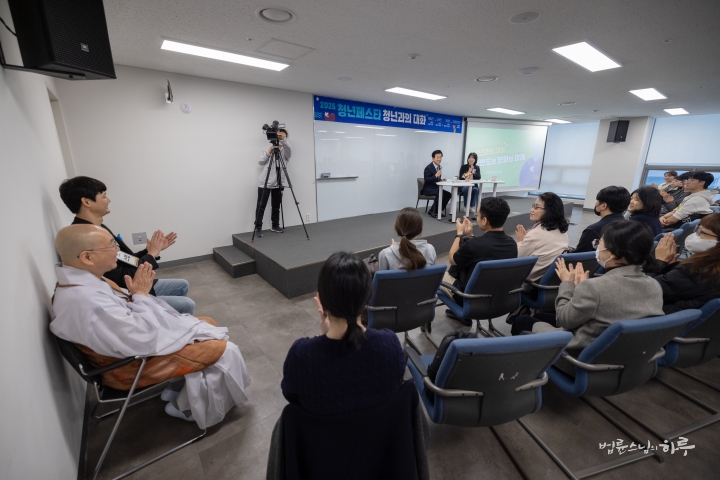
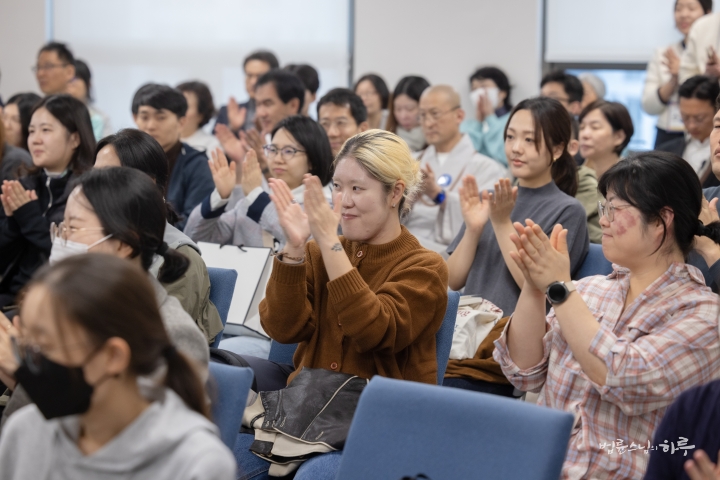
During the Q&A session that followed, young people asked questions about why they don’t see unification as realistic, the divided perceptions within South Korea, and the need for rebranding the Ministry of Unification. Minister Jeong Dong-young broadly exchanged opinions with the youth, emphasizing the importance of resuming dialogue and changing perceptions through direct experience, uniting domestic public opinion, and transforming the Ministry of Unification’s image to suit future generations. Sunim sat in the audience and listened attentively to the communication between Minister Jeong and the young people.
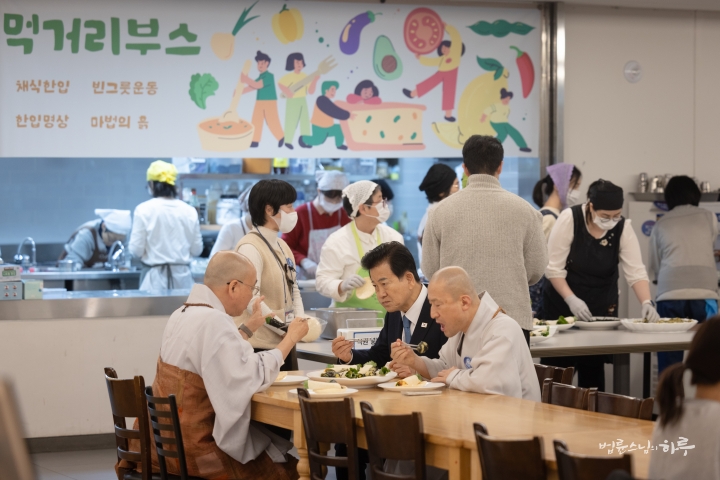
After the lecture, Sunim moved with Minister Jeong Dong-young to the basement dining hall where the food booths were located. They had lunch together and continued an in-depth conversation about ways to improve US-North Korea relations and inter-Korean relations.
After finishing the meal and seeing off Minister Jeong Dong-young, Sunim attended National Assembly member Kim Ye-ji’s lecture at 1 PM.
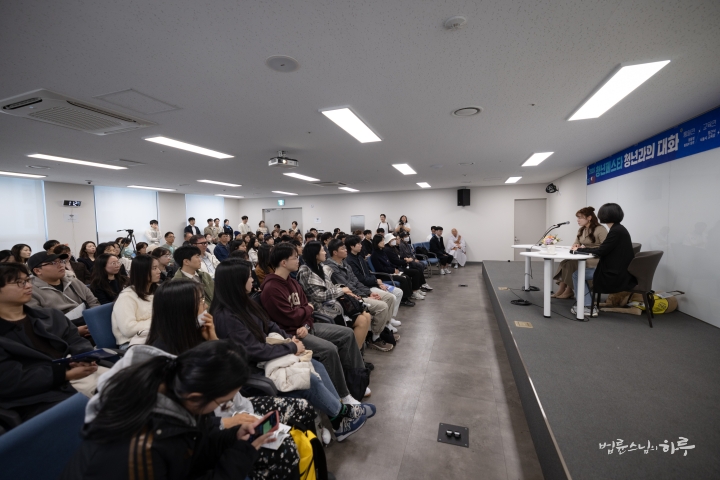
National Assembly member Kim Ye-ji is a former visually impaired pianist who has consistently voiced opinions in the fields of culture, arts, and disability policies. In the National Assembly, she has been working to create practical changes by proposing various bills to enhance the rights of people with disabilities and expand accessibility. At today’s Youth Festival, she made time to share her story about ‘politics without discrimination’ based on her own experiences.
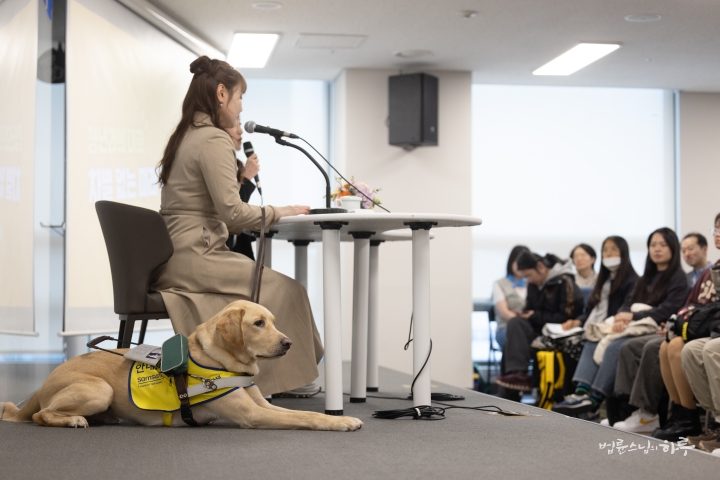
Coming on stage with her guide dog Taebaek, National Assembly member Kim Ye-ji emphasized that young people who respect each other’s differences and have the courage to ask questions are the ones who will create a future politics without discrimination.
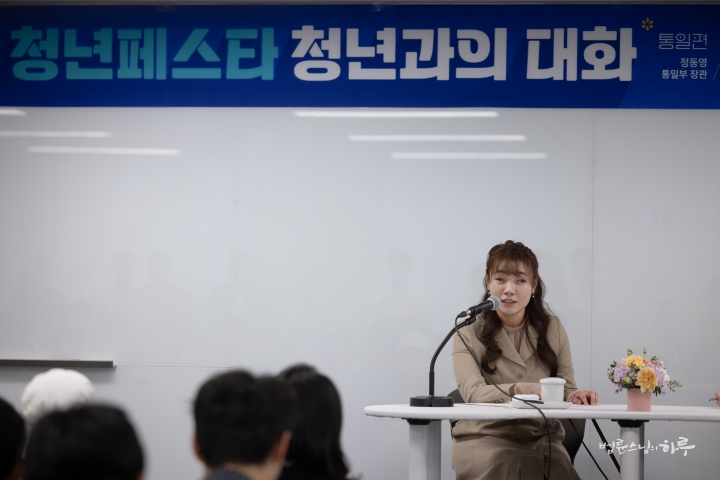
“Disability is not an individual’s limitation but a matter of how fair an environment society provides, and we must always remember that discrimination doesn’t only arise from massive systems but quietly seeps into familiar standards and expressions in daily life. People with different senses, languages, and experiences are not defective but beings who show diversity, and politics is not something done by people sitting in specific positions but begins in your life from the moment you question why something is taken for granted and whose voices are being excluded. Future politics will grow on solidarity rather than competition, on recognition of differences rather than homogeneity, and requires the courage to bear discomfort and make space for each other. Each and every one of you is already a political subject, and the acts of questioning, communicating, and choosing in daily life are the starting point of the ‘politics without discrimination’ we will create together.”
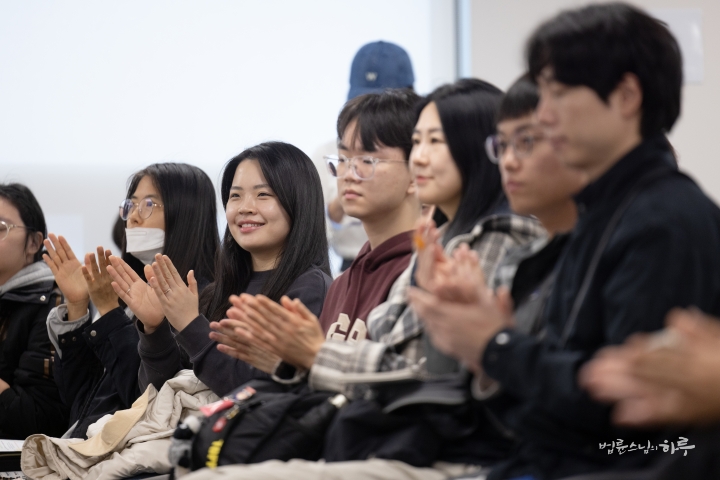
In the Q&A session that followed, young people boldly asked about their real concerns regarding the psychiatric hospital protective admission system, trust in the state, and fairness in real estate policies. Assembly member Kim Ye-ji discussed procedural safeguards, the need for system improvements, and the importance of citizens participating in politics by directly verifying facts. Sunim sat in the audience listening to Kim Ye-ji’s conversation with the young people.
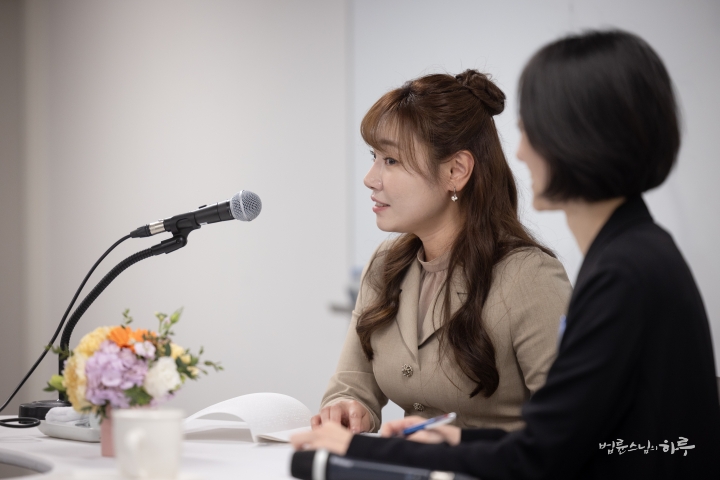
After the lecture, Sunim moved to the reception room and had tea with National Assembly member Kim Ye-ji. Kim Je-dong, who was scheduled to appear in the next program, also arrived early and joined the conversation.
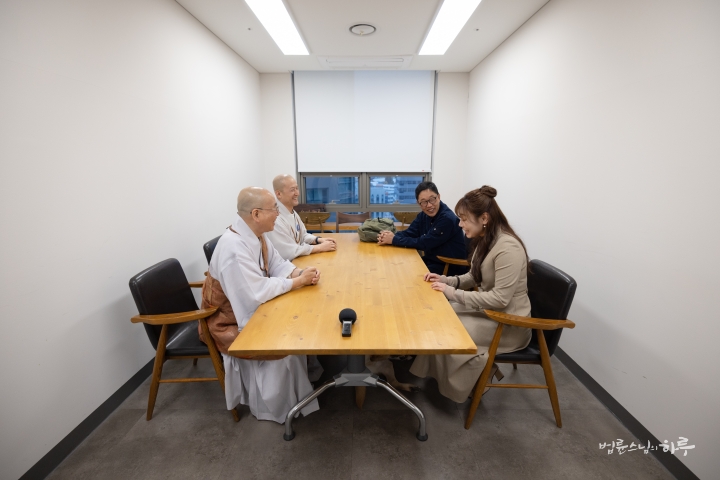
They continued deeper discussions about deep institutional challenges that Korean society has yet to resolve, such as reforming the protective admission system for people with mental illness, the excessive burden of care placed solely on families, difficulties in decisions about death with dignity and life extension, and organ donation consent procedures. In particular, Sunim shared his direct experience with the issue of discontinuing long-term life-sustaining treatment and emphasized the need for social review organizations. Assembly member Kim Ye-ji pointed out that while change will take a long time because Korean society is rooted in family-centered culture, it absolutely needs discussion.
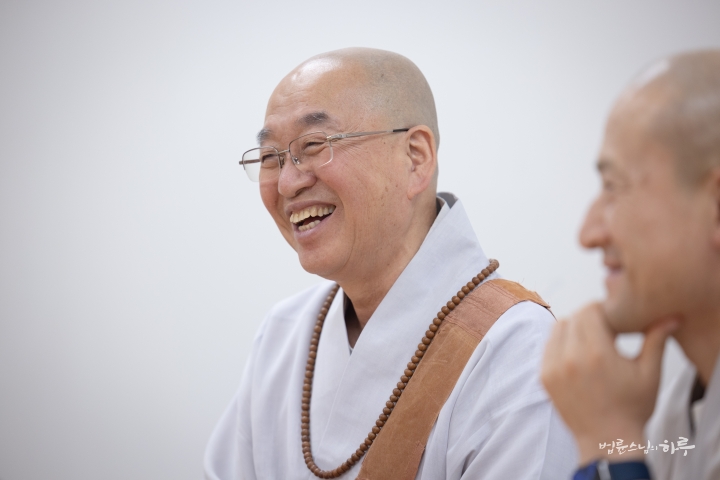
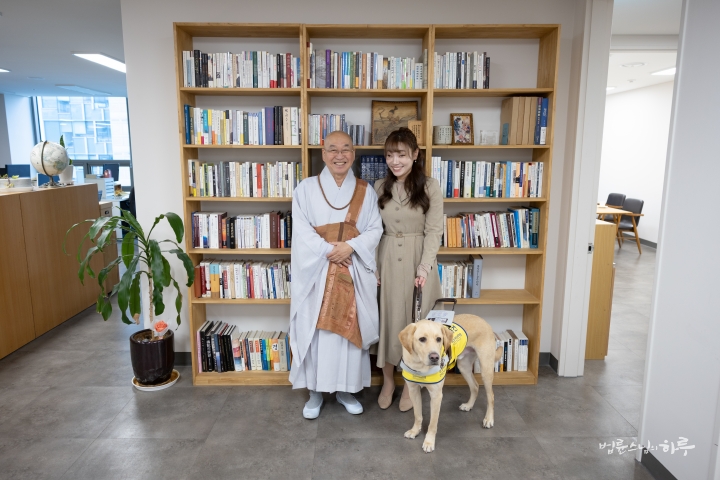
After finishing tea, they took a commemorative photo together.
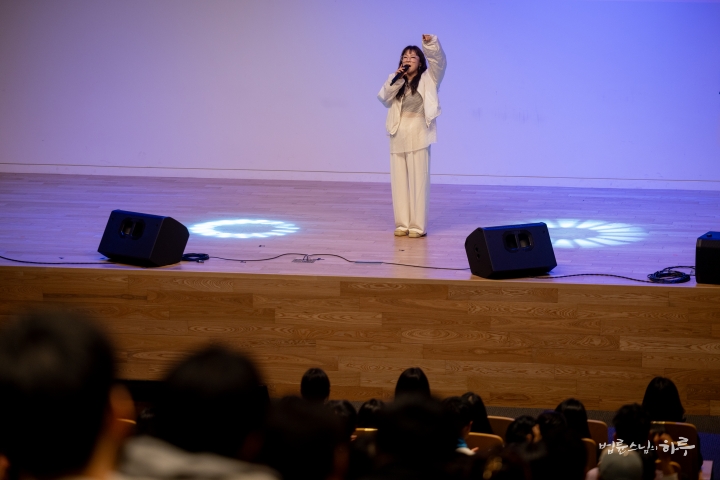
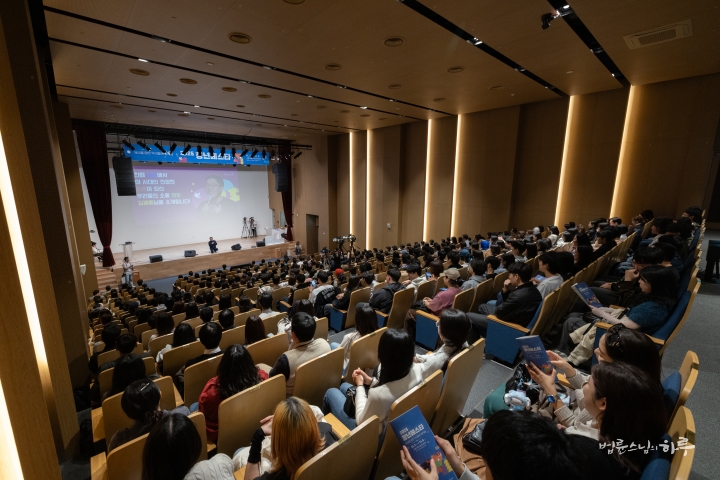
From 2 PM, Kim Je-dong’s Direct Talk Talk lecture continued. About 500 young people were seated in the underground auditorium. Before starting the lecture, singer Nan A-jin energized the atmosphere with lively songs.
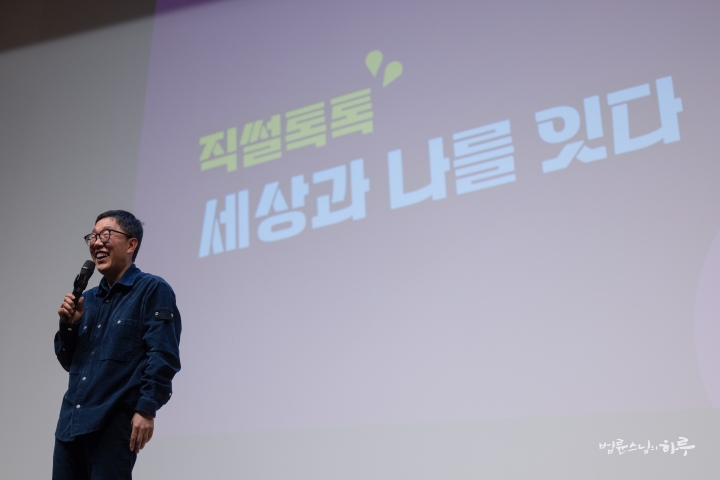
Then Kim Je-dong came up on stage to great applause and delivered his message through humor and stories, telling them not to be discouraged and to turn the world upside down.
“Why should young people be discouraged? You don’t need to be discouraged in front of anyone. The world, you know, if you just twist it a little and throw out ‘Why is this like this?’ you’re already finding your own path. Nobody in the world knows all the answers. Me too, I’m always wavering and wandering. But that wavering isn’t bad – that’s the power and talent of youth. You don’t need to be scared of the AI era either. In the end, what only humans can do is laugh, worry, make friends, and care for each other’s hearts. Don’t try too hard to find big answers, just laugh gently a few times a day and lighten yourself up. Don’t worry about what others think, just slightly turn toward your joy. It’s okay to be anxious, it’s okay to waver, and questioning and turning things upside down and taking one step forward in that state – I believe that’s the real power of youth.”
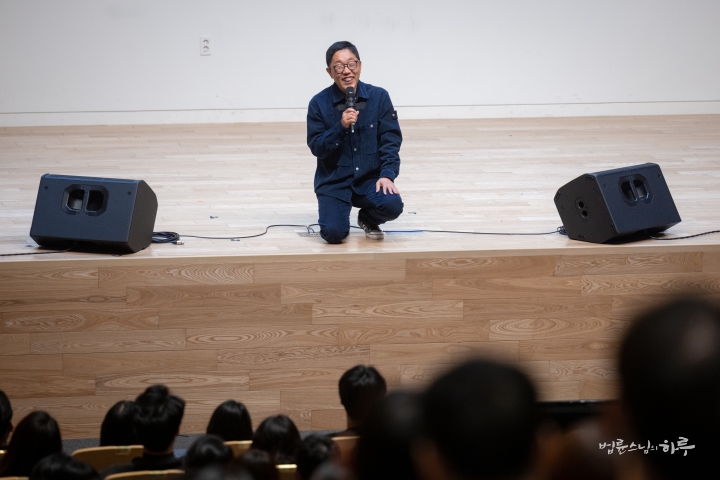
When the lecture ended and the Q&A session began, Kim Je-dong caught the atmosphere of “What should I ask?” flowing through the hall and first pointed to Venerable Pomnyun Sunim.
“Sunim, you’ve spent your whole life listening to others’ questions, so today let young Pomnyun ask a question!”
When the microphone was passed, Sunim immediately shared his concern.
“How can I get Kim Jong-un and Trump to meet? That’s my concern.”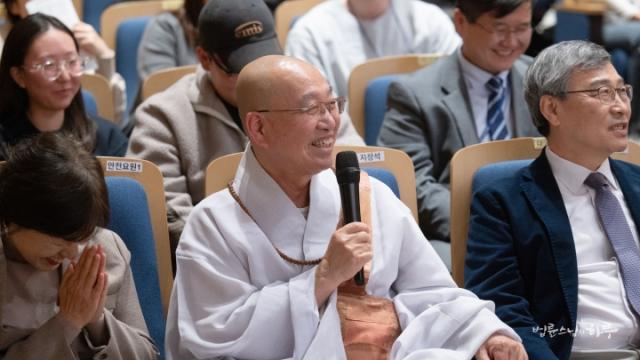
When Sunim threw out the heavy international relations question, the auditorium burst into laughter, and Kim Je-dong caught it right back.
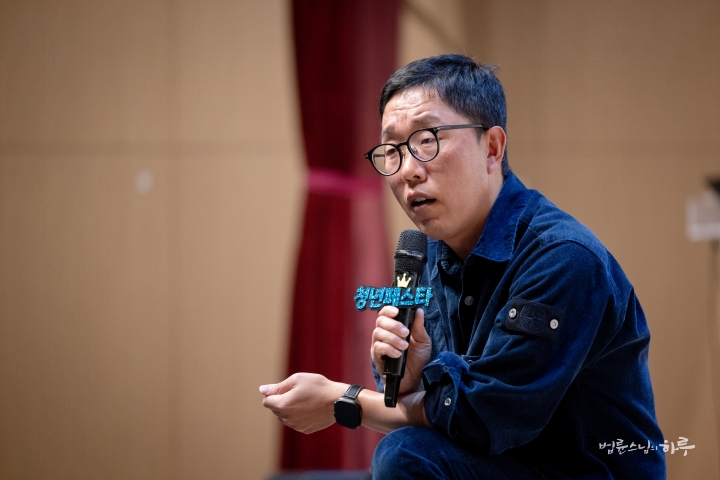
“Sunim, please keep your feet on the ground! We’re talking with young people and suddenly a summit meeting…!”
Yet he naturally connected Sunim’s question to a message about thinking about young people’s role in the midst of great changes of the times.
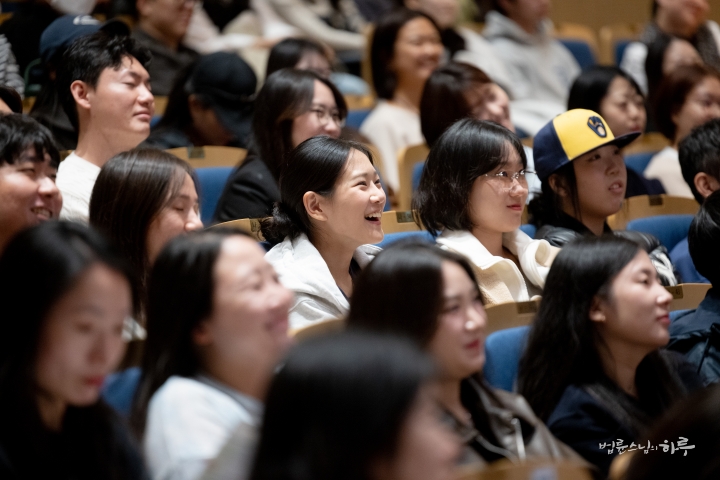
The questions that followed were also diverse, fitting the atmosphere of the young people. The conversation naturally flowed to realistic concerns like confidence, loneliness, dating, education complex, unification, youth politics, and anxiety in the midst of changing times. Kim Je-dong shared a long breath with the young people, moving between light jokes and deep comfort, and finished with a deep bow.
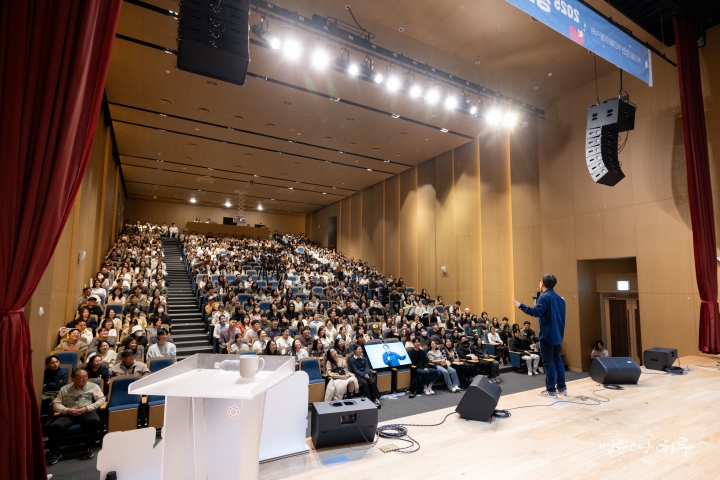
“It’s fine to be happy from time to time. Let’s laugh gently three times a day. You are the generation that will open Korea 100 years from now.”
After finishing the lecture, Sunim immediately had tea with the next speaker, Seoul Superintendent of Education Jeong Geun-sik, at 4 PM. Before the lecture, they conversed about various topics centered on the purpose of the Youth Festival, the reality of the education field, and their respective experiences. In particular, Superintendent Jeong Geun-sik mentioned the recent series of student deaths and expressed how heavy an educator’s heart is. In response, Sunim emphasized the need to station counseling specialists at each school and strengthen early detection and treatment systems. He also suggested practical alternatives such as structural improvements like forming small classes and assigning multiple homeroom teachers rather than placing students with emotional difficulties in one class.
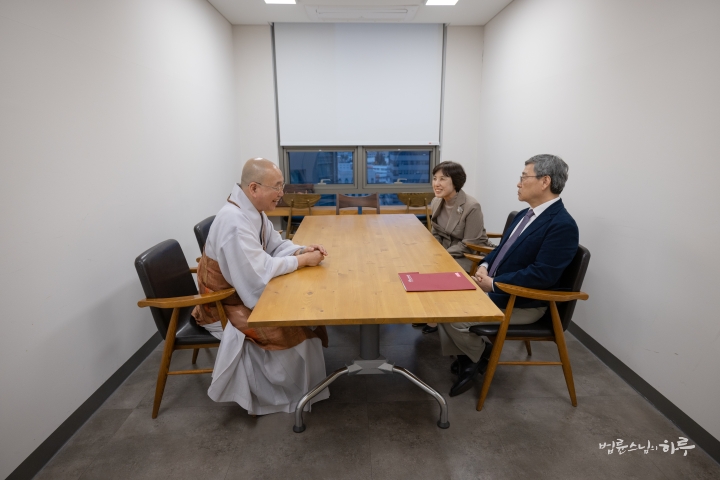
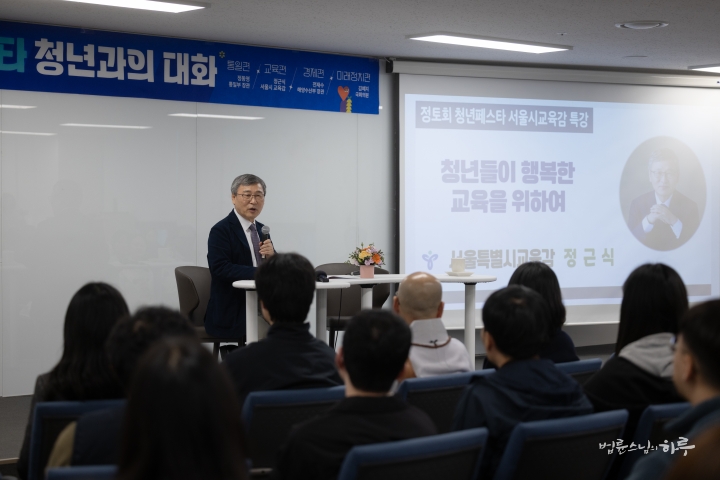
After 30 minutes of conversation, it was time for the lecture, so they moved together to the 9th floor auditorium. Superintendent Jeong Geun-sik came on stage to great applause and gave an hour-long passionate lecture on the theme of ‘Cooperative Education Without Competition.’
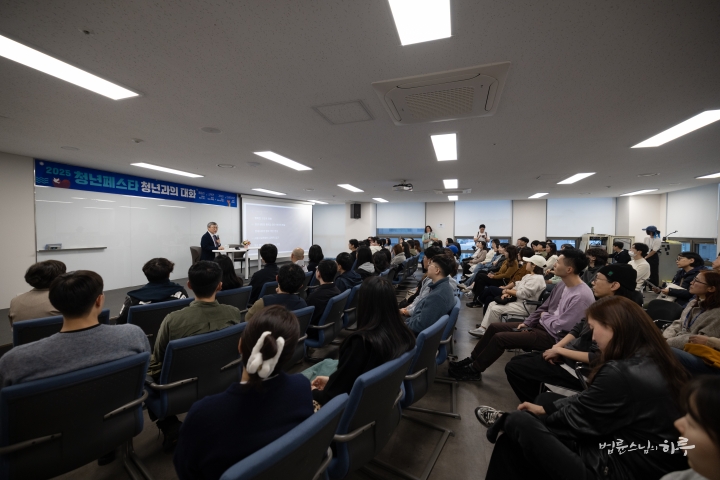
“The schools you attended and today’s schools have completely changed. We’ve moved away from competition and grade-centered education to an era where it’s more important to care for students’ emotional difficulties like anxiety, depression, and loneliness and to nurture ‘mental health.’ Children need ‘relationship building, emotional regulation, and self-understanding’ more than studying, and parents and teachers also need to continuously learn to keep up with rapid social changes. When each young person builds their life at their own pace and grows as democratic citizens with abilities for cooperation and empathy, future society will be healthy. Above all, the most important task for Korean education is for the older generation not to force their unfulfilled dreams on their children, but to trust and let go so children can choose their own lives.”
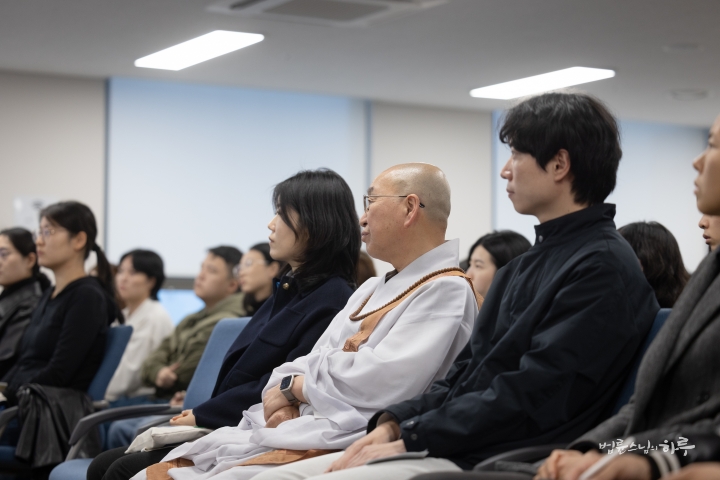
Various questions addressing real education problems continued from the audience. A participant working as a special education teacher asked how to support slow learners and students with disabilities in the AI era. The superintendent explained that the ‘Learning Diagnosis and Growth Center’ for dyslexia, dyscalculia, and slow learners, customized AI and edu-tech programs, and a broader special education system are rapidly expanding. Questions also arose about youth unemployment, aptitude issues, and job changes in the AI era – anxieties that young people directly experience. The superintendent emphasized that self-direction and cooperation abilities are more important than getting jobs at large corporations in this era, stressing that young people need the courage to find their own paths. Sunim sat in the audience and listened attentively to the lecture content until the end.
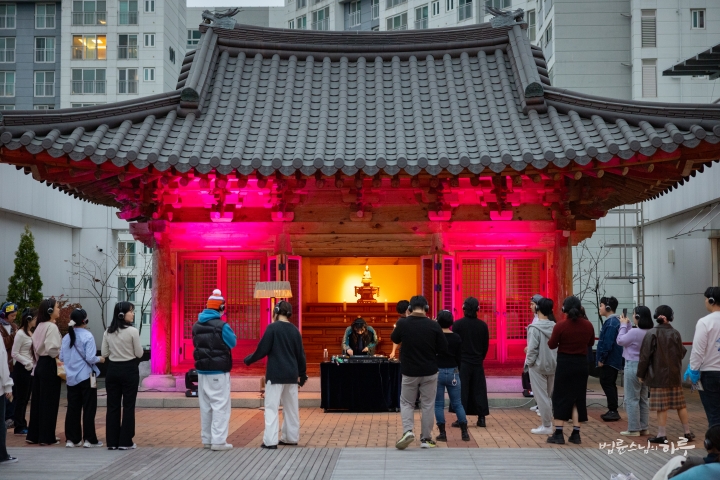
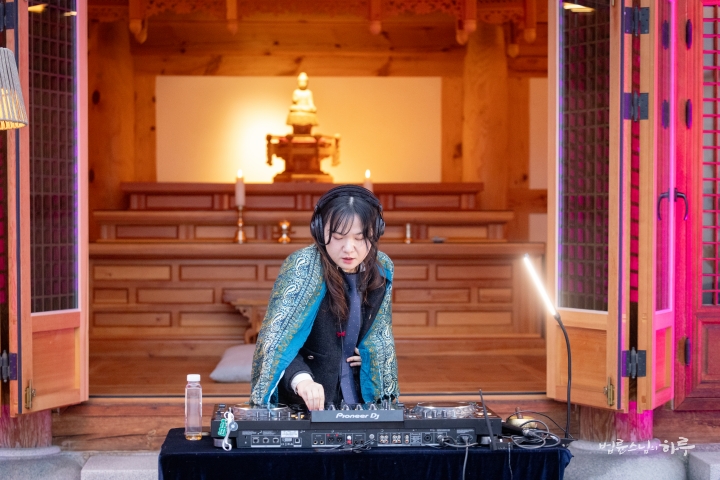
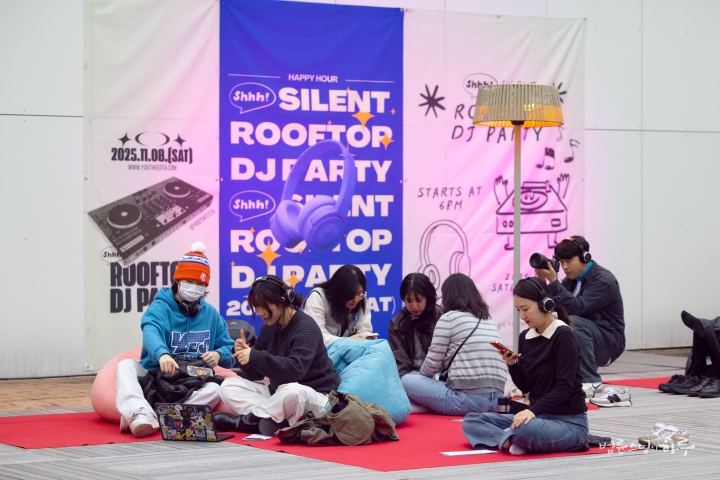
Meanwhile, a silent DJ party was in full swing on the 15th floor rooftop of the Jungto Social and Cultural Center. Young people wore wireless headphones and freely enjoyed music, moving their bodies to their own rhythms. Not a single sound escaped outside the rooftop.
At 6:30 PM, Jung Eun-hye, an actress and artist with disabilities, visited Sunim with her family for tea and conversation. Ms. Jung had appeared at the Youth Festa’s Eco Cinema corner held in the 6th floor conference room from 4 PM to 6 PM, where she had conversations with young people. She shared how wonderful it was to have time to talk with the youth, and they exchanged updates about their lives.
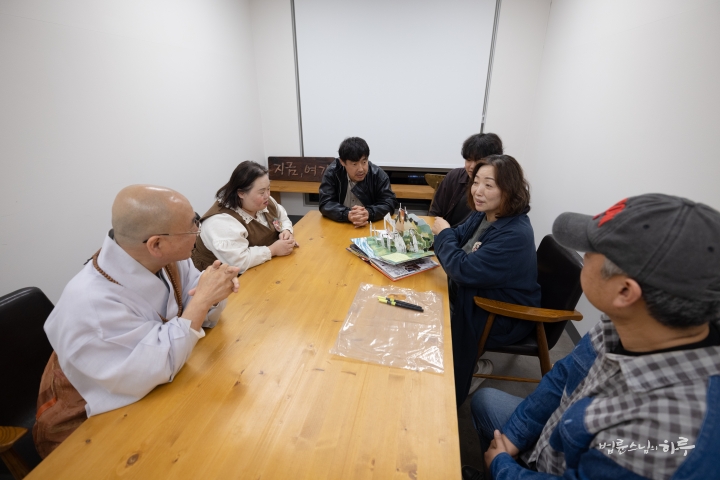
Ms. Jung presented Sunim with a signed book made from her own paintings as a gift.
“Thank you. What a wonderful gift.”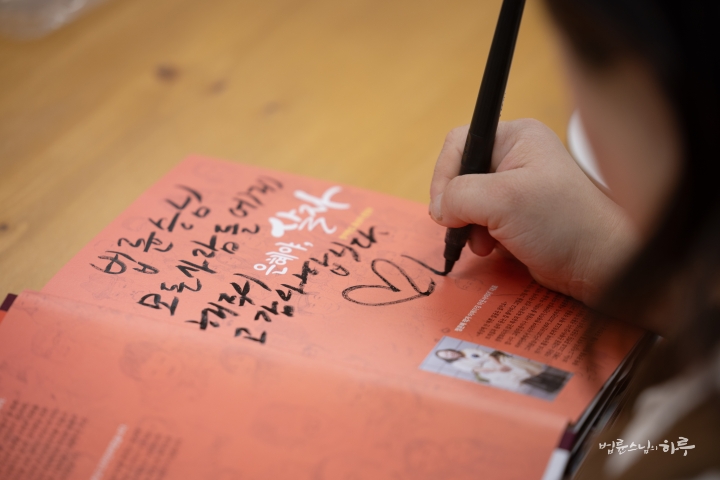
Ms. Jung then shared her recent concerns with Sunim.
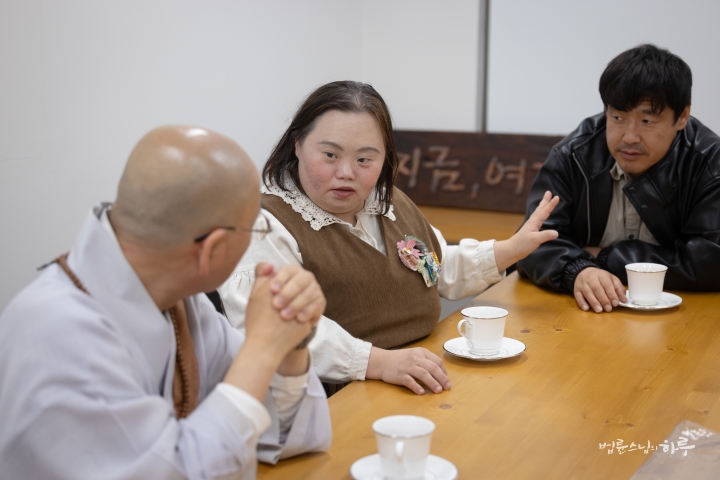
“I became somewhat famous after appearing in a drama. But since then, I haven’t received any casting offers, which worries me. While I enjoy painting, I also want to act. I can make a living just by painting diligently. But I want to earn a lot of money.”
Sunim replied with a smile.
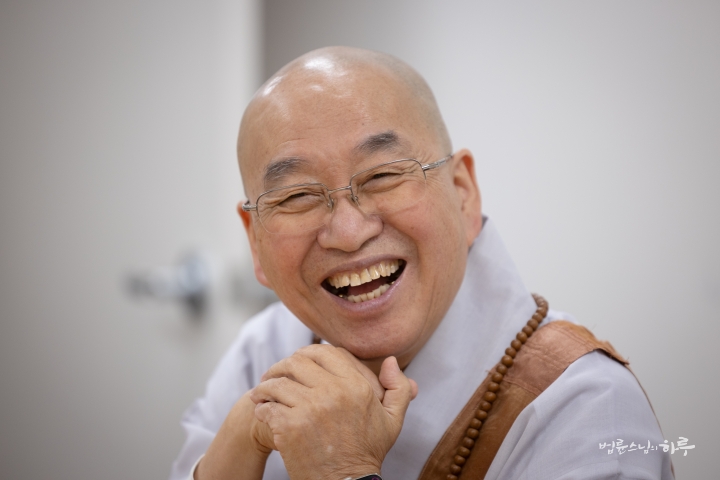
“Yes, you’re right.”
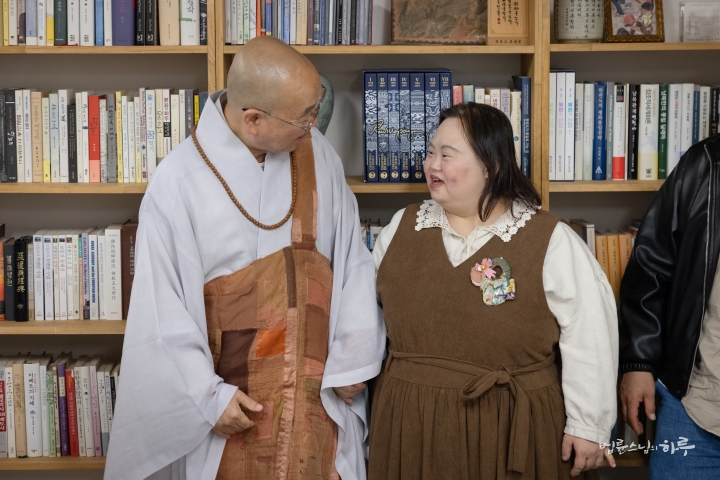
As Ms. Jung’s family members also shared their concerns, it was time for Sunim to begin his lecture. Though it was regrettable, they took a commemorative photo together and said their farewells.
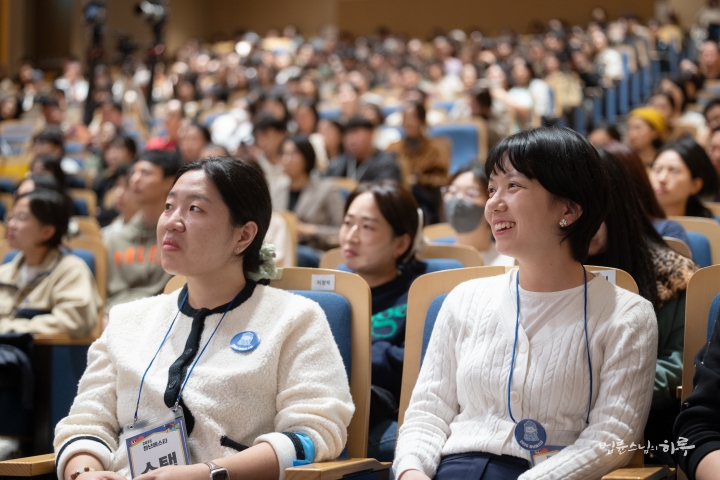
Sunim hurried to the underground auditorium. With about 450 people seated, the Dongguk University Baeksang Cheering Squad gave an opening performance before the lecture.
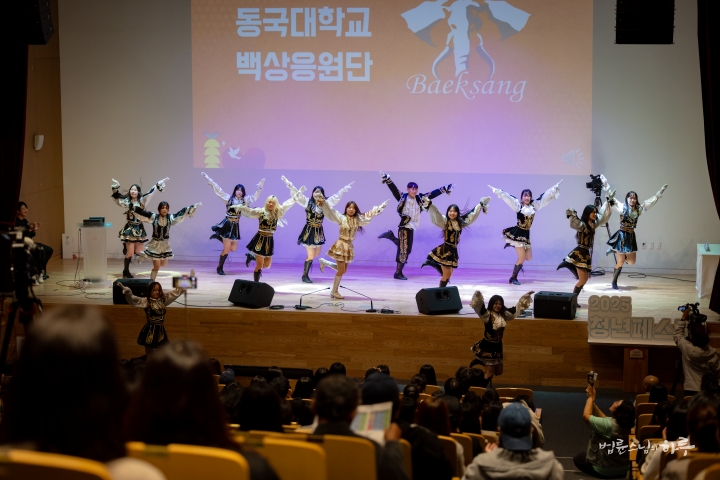
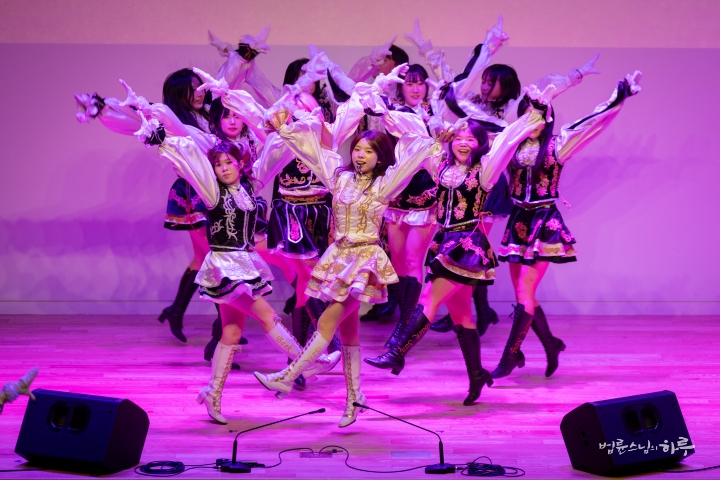
As the performance continued with precise movements, lively rhythms, and animated gestures down to the fingertips, applause erupted. The energy of the youth filled the space.
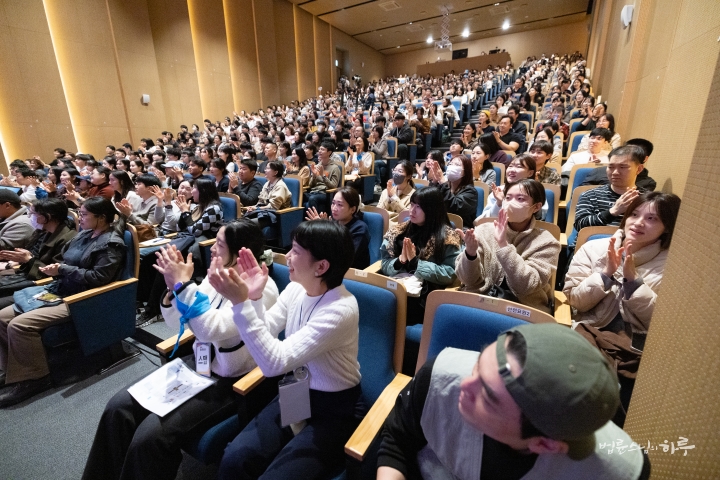
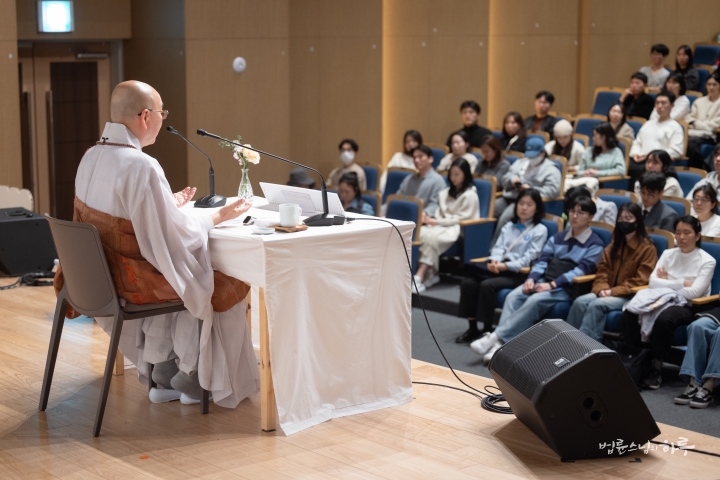
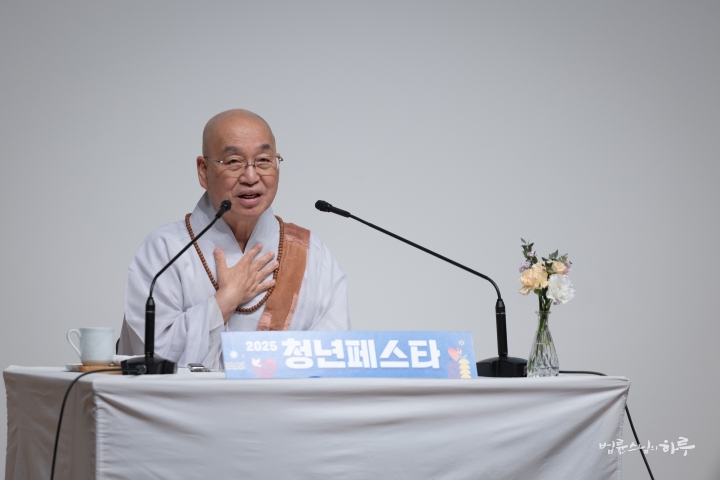
Following the vibrant performance, everyone watched a video about “peace,” today’s lecture theme. When the video ended, Sunim walked onto the stage to great applause. First, Sunim greeted everyone with a smile.
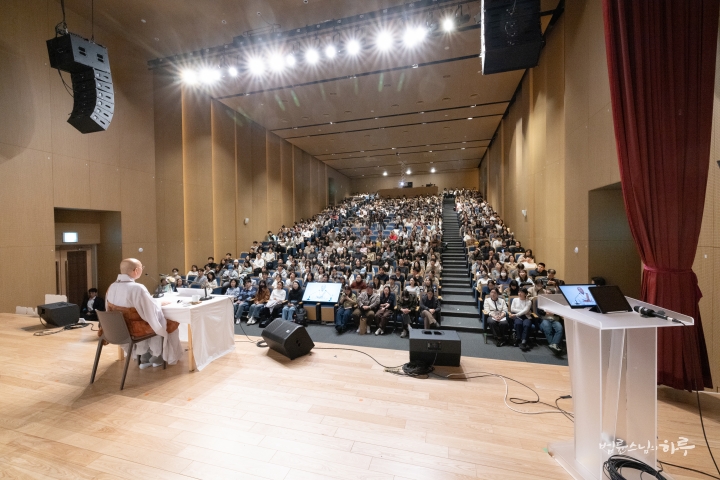
“Yes!”
“While this event continues until tomorrow, this lecture is the last program for today, the second day. The theme of this lecture concerns our society’s issues rather than individual problems. However, ‘social issues’ don’t arise completely separate from individuals. Individual problems can accumulate to become social issues, and there are also aspects that operate independently of individual influence. That’s why Jungto Society makes ‘practice’ – which prevents us from falling into suffering regardless of our circumstances – the foundation of life. At the same time, we carry out various social activities with the intention of making our society more peaceful, just, and sustainable. These activities include movements for peace on the Korean Peninsula, relief work to help neighbors in need, and environmental movements to respond to the global climate crisis. Now, let’s have a conversation based on your questions.”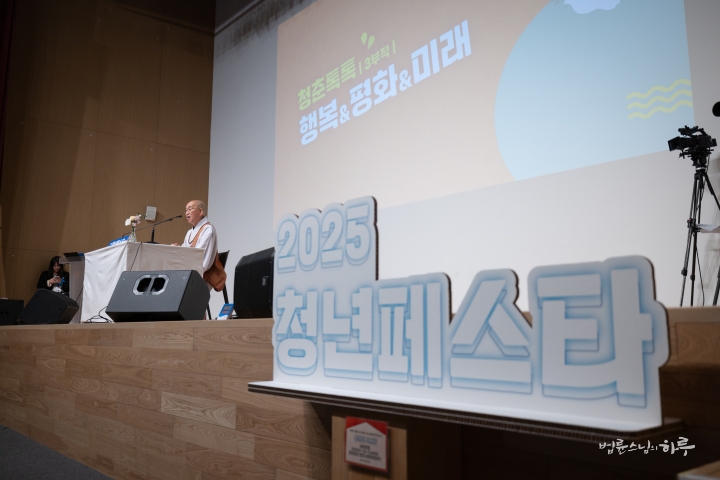
Anyone with questions about peace issues or our society could raise their hand and ask. For an hour and a half, four people asked their questions and had conversations with Sunim. One person shared concerns about how to relate to others in today’s extreme social atmosphere.
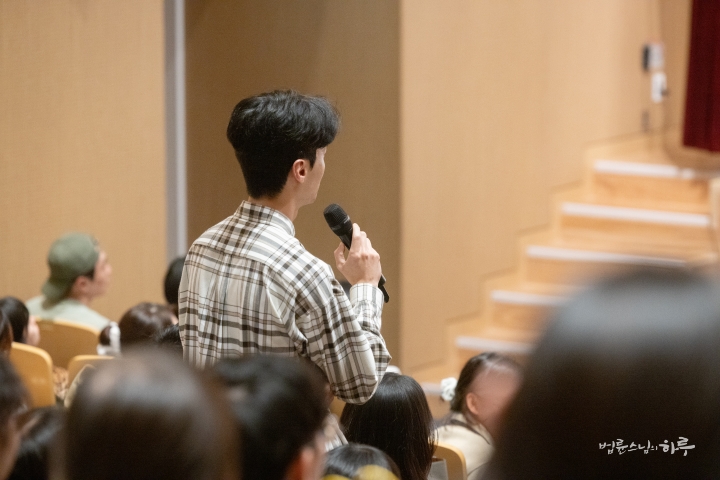
Should I Try to Have Conversations with People Who Have Different Political Views?
“I believe that each person’s political views fully reflect their life philosophy, especially their perspectives on social wealth circulation and the socially disadvantaged. That’s why I consider political views to be an extremely important criterion. In fact, I try not to form relationships with people who have blind or stubborn political views in my daily life, and I especially keep my distance from those who promote hatred as if it were an ideology. However, recently I’ve begun to feel confused about this attitude of mine.
The first trigger was the December 3rd martial law issue and experiences during the presidential election period. These were important issues that could greatly affect the nation and people’s lives, but among my acquaintances, there were those who defended the martial law or said that even those responsible should be respected. At that time, I became deeply concerned about how dangerous our society could become if we couldn’t even persuade close people on such matters.
The second is the current ‘difficulty of conversation’ with people. I feel that many people tend to stubbornly insist on their own thoughts rather than trying to understand others. There were many cases where conversation was impossible. But when I discovered good-natured personalities even among such people, I questioned, ‘Is it morally right for me to reject them just because they’ve been influenced by certain political ideologies?’ So these days, when meeting new people, I wonder whether it’s better not to bring up politics at all, or whether it’s better to ask about their political views from the start and not form relationships if they don’t match. I’m curious whether I should live trying to have conversations and understanding with such people even if it means occasional conflicts, or whether avoiding conflict is a better way of life.”
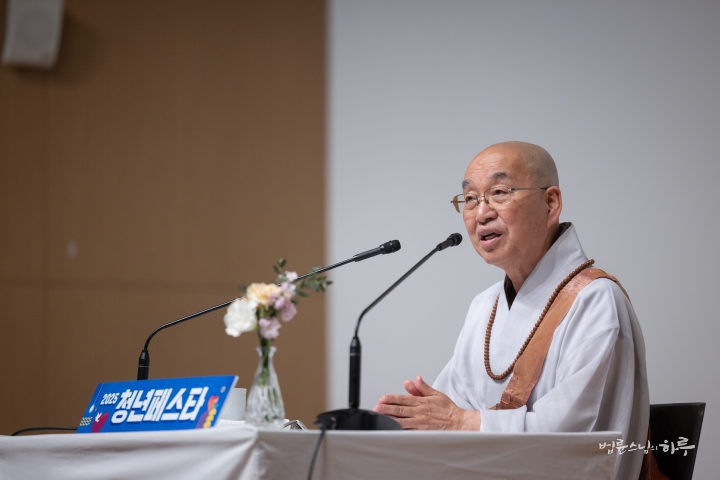
“I’ve actually met people from certain religions. I find it difficult to understand or accept an attitude that unconditionally rejects others simply because of their different religion. I felt that forming relationships with such people could endanger my life. However, I think most religious people who aren’t like that are quite acceptable. What has confused me recently, though, is that our society is becoming extremely polarized. This is clearly evident just by looking at party support rates or presidential approval ratings. If we can listen to and respect each other’s stories based on diverse religions or values, I would gladly converse with them and take their views into consideration. But these days, there are too many people caught up in extreme ideologies who disparage each other. Seeing this reality, I worried, ‘If I reject all of them, I won’t be able to form relationships with anyone.’ I’m wondering what I should do in this situation.”
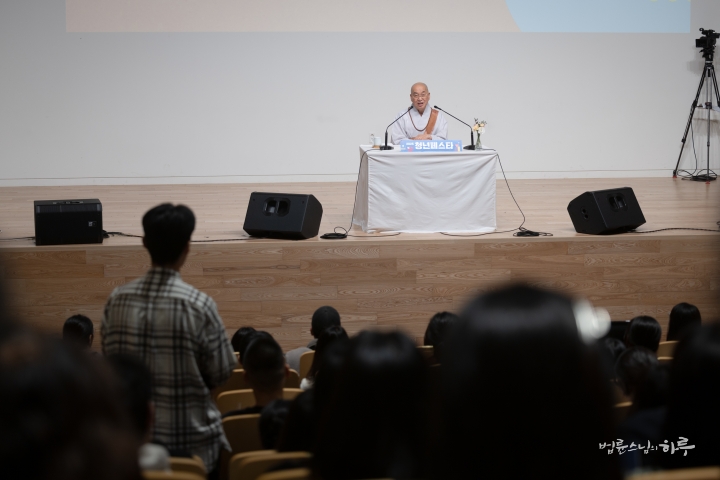
“Thank you. I understand well.”
Questions continued to follow.
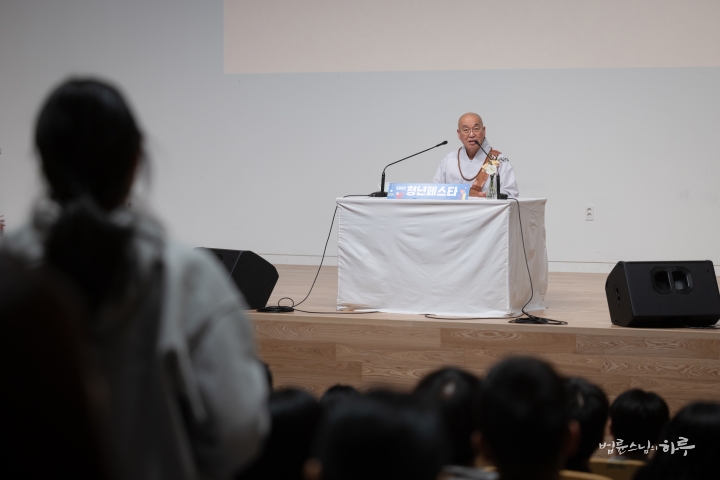
While I agree that peace on the Korean Peninsula is essential, over time, North and South Korea have diverged significantly in political, social, and cultural aspects, and the necessity for unification doesn’t feel as urgent as before. In this situation, why do you still believe unification is necessary?
Seeing recent threats to democracy, I’ve developed a fear that democracy could regress again through elections with North Korean residents after unification. How should I view unification amid such anxieties?
As a teacher facing students who have lost their peace of mind in the classroom, I struggle daily with what role I can play. How should I determine the boundaries of how far I can intervene for my students and what lines I should maintain?
What standards should we have to balance national interests and universal human values amid international conflicts? What position should South Korea take as a nation, and what direction should we as citizens demand from our politicians?
As the conversation concluded, Sunim discussed the three challenges facing our society and the roles of the nation and youth within them.
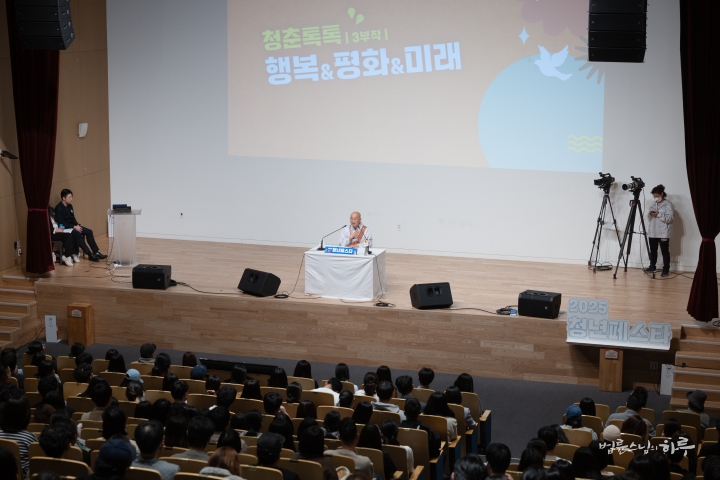
**For a Society Where Youth Can Have Hope
**
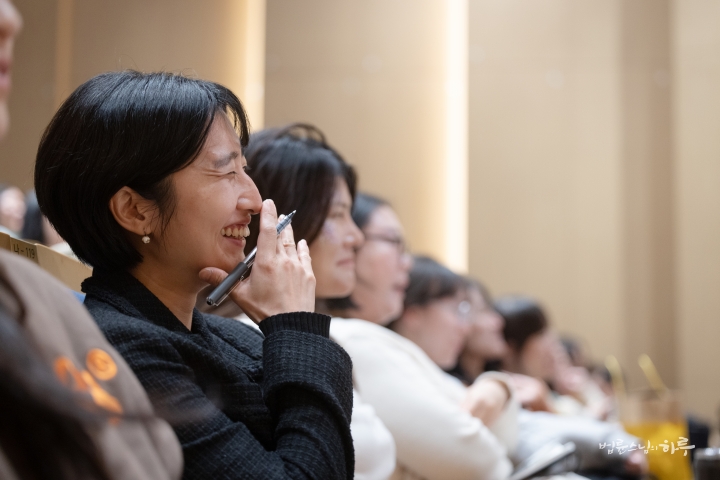
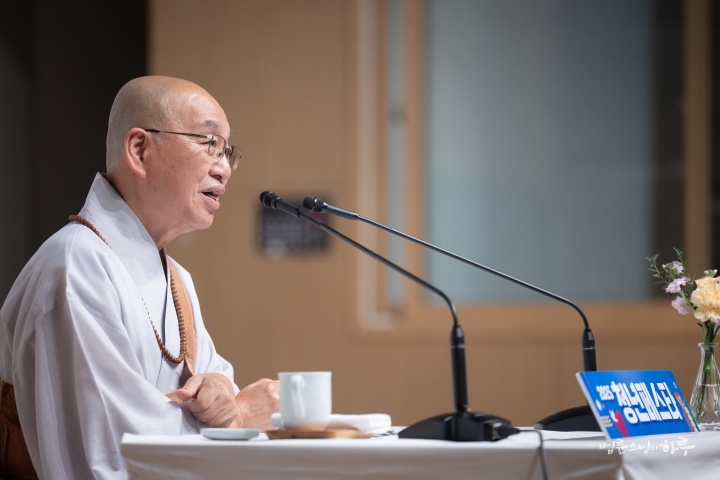
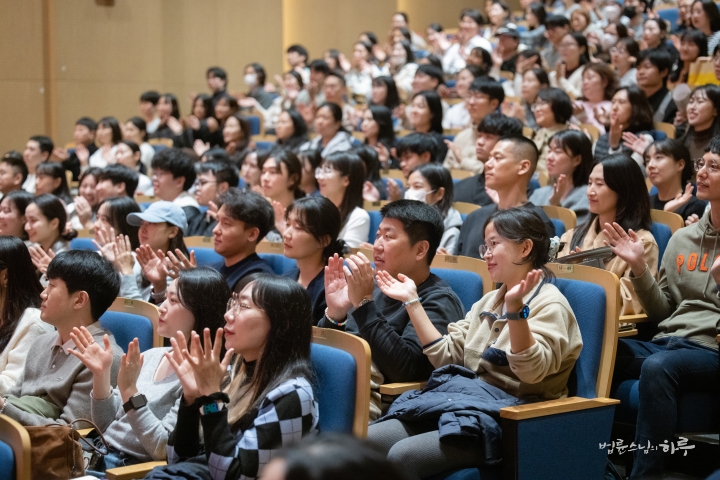
The second day of the Youth Festa concluded with loud applause.
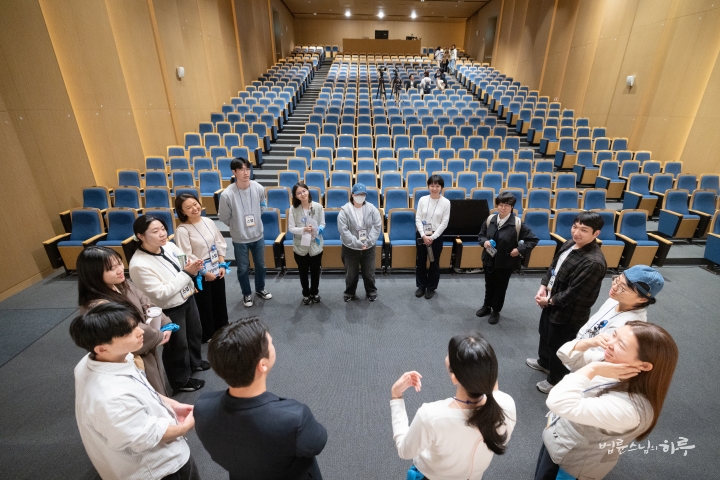
After all the participating youth left the Jungto Social and Cultural Center, the supporter volunteers cleaned their assigned areas, wrapped up, and prepared for tomorrow’s program.
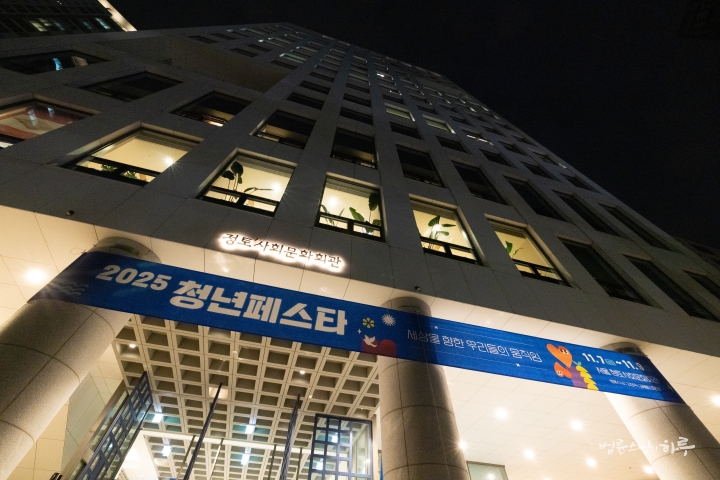
Tomorrow is the third and final day of the Youth Festa. In the morning, actor Jo In-sung will have a dialogue with youth on the theme “Finding Life’s Path Together,” and in the afternoon, Sunim will have a dialogue with youth on “Stories of Hope for Youth in the Era of Climate Crisis and AI,” followed by the closing ceremony to conclude the three-day Youth Festa event.