I’m So Anxious About Having to Care for My Sick Family Member for Life
September 27, 2025 - North America East Coast Lecture Tour (2) New York
Hello. Today, Sunim is giving the second lecture of his North America East Coast tour in New York.
After returning to his accommodation at 10:20 PM last night, Sunim rested briefly before conducting a live broadcast of the Jungto Dharma School entrance ceremony at 1 AM local time (2 PM Korean time). This September, approximately 1,900 students from both Korea and abroad enrolled in the Jungto Dharma School.
After watching a congratulatory performance by a graduate of the Jungto Dharma School, there was time to hear reflections from the new students. Listening to each person’s thoughts, one could feel the excitement and anticipation of this new beginning. Following the welcoming remarks from the President of Jungto Society, everyone requested a commemorative Dharma talk from Sunim. Sunim first expressed his congratulations and then provided a detailed introduction to what students would learn at the Jungto Dharma School.
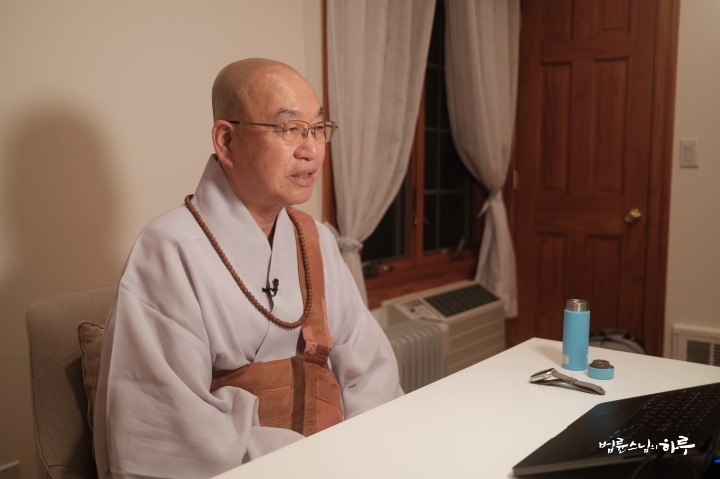
Jungto Dharma School: A Place to Learn Through Experience, Not Knowledge
Once we diagnose that we are currently in a state of suffering, we then examine why we have come to be in such a suffering state. Then we can realize that we suffer because of our attachment to wanting things our way, and when things don’t go as we want, we suffer. If we remove the cause—that is, if we let go of attachment—there will be nothing to suffer about. Then we study from the perspective of ‘How can we let go of attachment, let go of greed, and break through ignorance?’ It is very important to have this systematic approach of viewing our problems through problem (suffering), cause (origin), cessation (cessation), and method (path). The Buddha called these the Four Noble Truths. In Chinese characters, they are organized as: suffering (苦), origin (集), cessation (滅), and path (道). They can be described as suffering, the cause of suffering, the cessation of suffering, and the path leading to the cessation of suffering. Rather than memorizing ‘The Buddha’s teaching is the Four Noble Truths of suffering, origin, cessation, and path,’ we start from our own problems, examine whether our state is one of suffering, investigate why we’ve reached this state, remove the cause to eliminate suffering, and practice staying aware of our mental state to maintain the state where suffering has ceased. It’s not about knowing the knowledge of ‘suffering-origin-cessation-path,’ but about practicing to always examine things from this perspective whenever a problem arises. For example, let’s say you get angry. You examine ‘Why am I angry?’ look for the cause, and when you remove that cause, the anger disappears as you realize ‘There’s nothing to be angry about.’ Then you study how to prevent anger from arising in the future.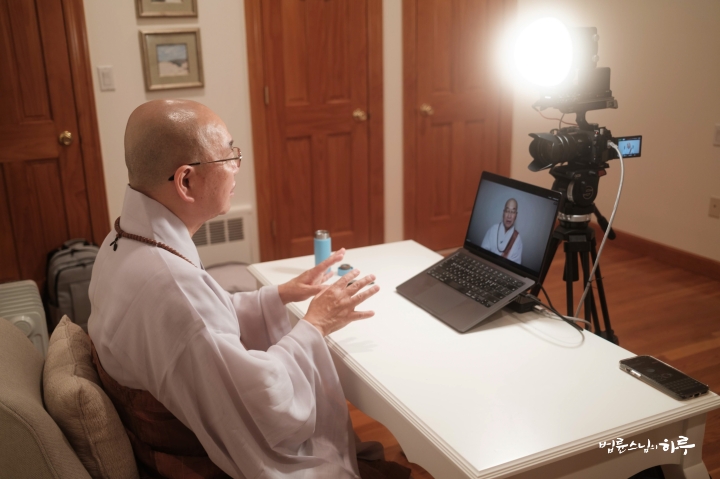
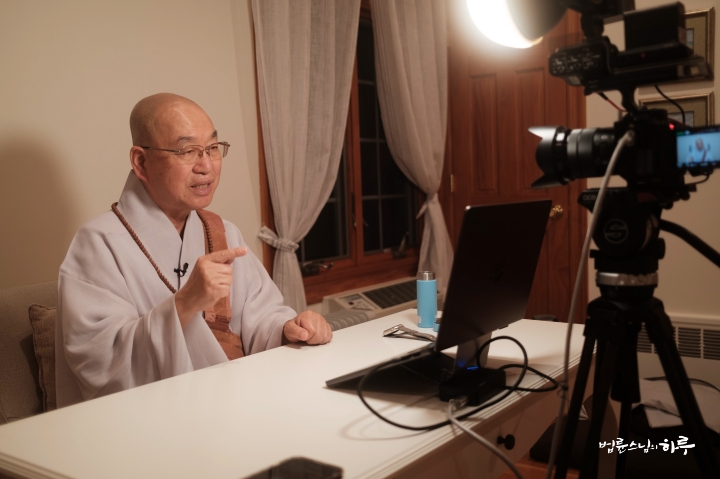
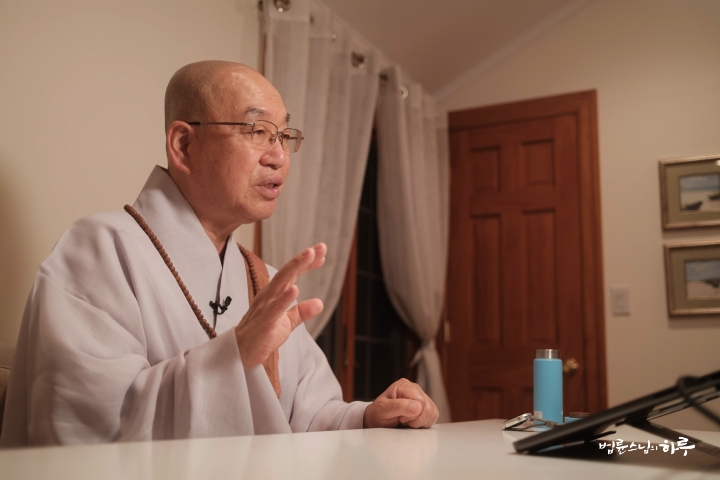
After the Dharma talk ended, all new students entered their respective video conference rooms by group for introductions and greetings. Sunim went to bed after 2:30 AM.
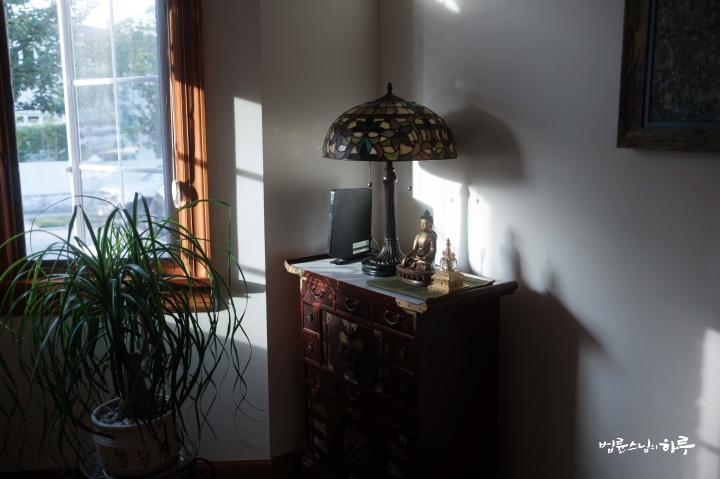
After a brief rest, he woke up at 5:30 AM for morning practice and meditation, followed by breakfast. After the meal, he spent the morning communicating with Korea, handling work matters, and resting. After lunch, he departed for Flushing at 1 PM, where the New York Dharma talk was scheduled.

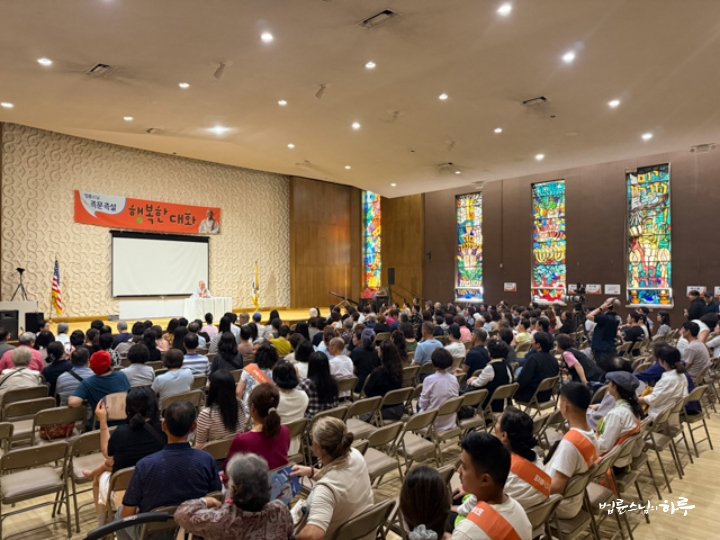
Today’s Dharma talk was held at the Korean Community Services (KCS) in New York. This organization provides various programs including welfare, education, health, mental health, job training, and immigration support for Korean Americans and immigrants in the New York metropolitan area. Today, Venerable Pomnyun Sunim’s Dharma Q&A was held here.
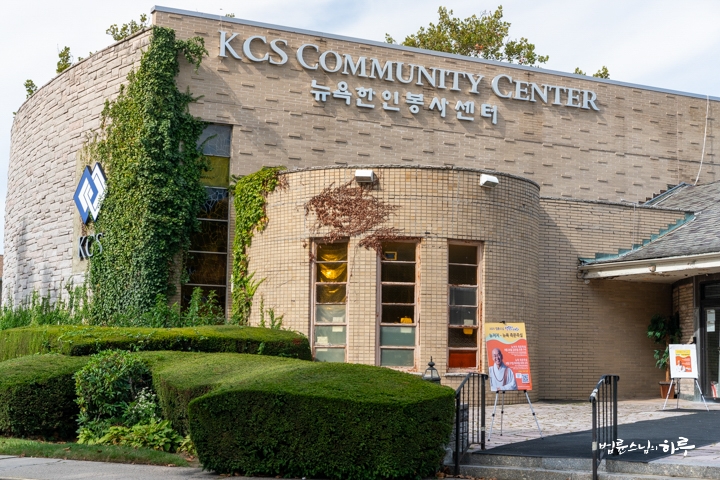
As Sunim entered the venue, volunteers and participants recognized him from the parking lot and greeted him. In particular, Ms. Cha Hyo-soon, former president of New York Jungto Society, warmly welcomed Sunim at the entrance despite being over 80 years old. Many people who had led New York Jungto Society for a long time attended, and Sunim greeted them warmly.
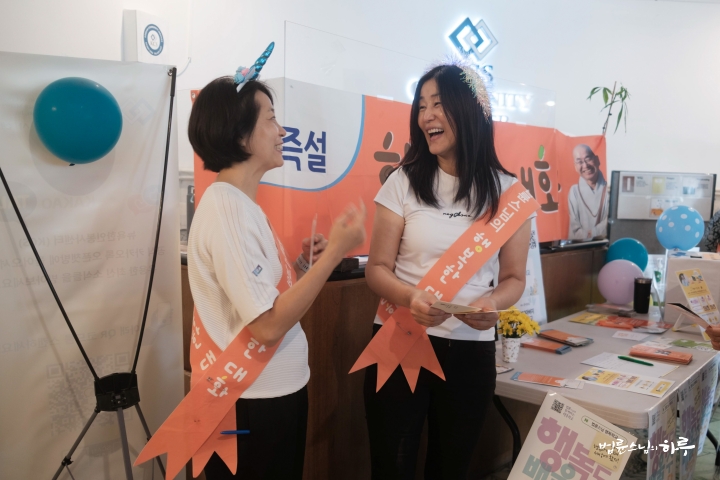
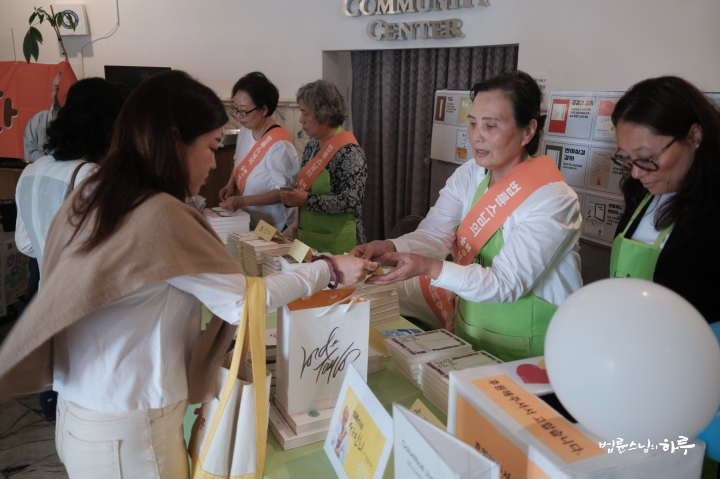
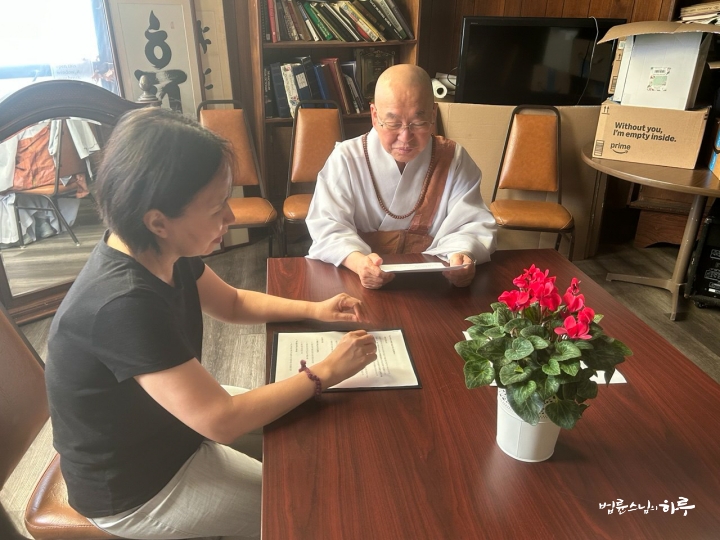
From 1:30 PM, Sunim had a meeting in the waiting room with Professor Janice Shin from Hofstra University on Long Island. Professor Shin has been conducting a ‘Support Program for Preschool Children with Developmental Disabilities’ with university students in Vietnam and Laos, achieving good results. She has been working for several years to collaborate with JTS on this project. This time, she proposed conducting a small experiment in Cambodia before potentially expanding the project to Myanmar, the Philippines, and other areas. The professor said she feels energized after meeting with Sunim and promised to create a clearer proposal.
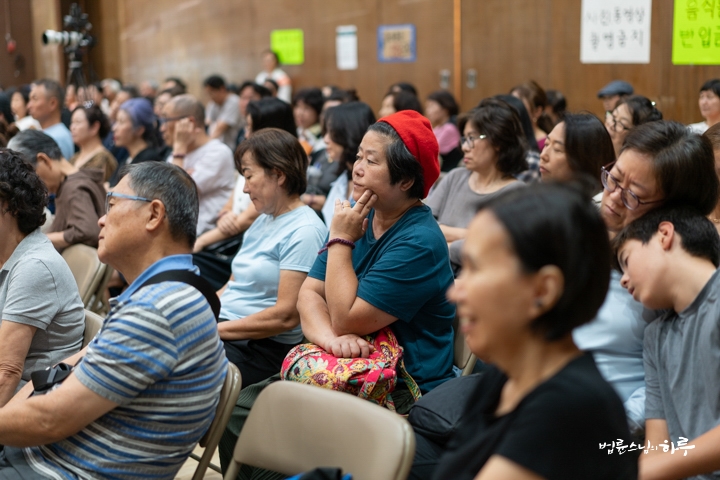
After the meeting, it was time to begin the Dharma talk. Following the introductory video about Sunim, he took the stage. With over 240 people filling the venue, applause and cheers erupted. Sunim began the conversation by emphasizing the chaos caused by reduced international aid since Trump’s election and the role and attitude of individuals within this context.
The Trump Era: Gaps in International Aid and Small Efforts for Peace
Since I’ve been helping poor people in Southeast Asia for a long time, I’m receiving requests for support from various places. However, it’s difficult for an individual to replace what the US government was doing. Due to the civil war in Myanmar, many refugees have emerged – Rohingya people crossing into Bangladesh, and Shan and Karen people crossing into Thailand. UNHCR had been providing support to ensure at least minimal survival, but with funding cut off, refugee camp operations have become extremely difficult. In a way, it makes you realize how much good work the US had been doing. The US government covered about 30 percent of total aid funding. Now that it’s stopped, only basic food supplies are barely being provided, and essential goods support has become nearly impossible. While the current situation is chaotic, it’s still much better than the upheavals of World War II or earlier periods. Everything is relative, isn’t it? No matter what era or environment we live in, we must find happiness within it. At the same time, we must make even small efforts to make our society more peaceful and just. Only then can we prevent deterioration and create a better world.”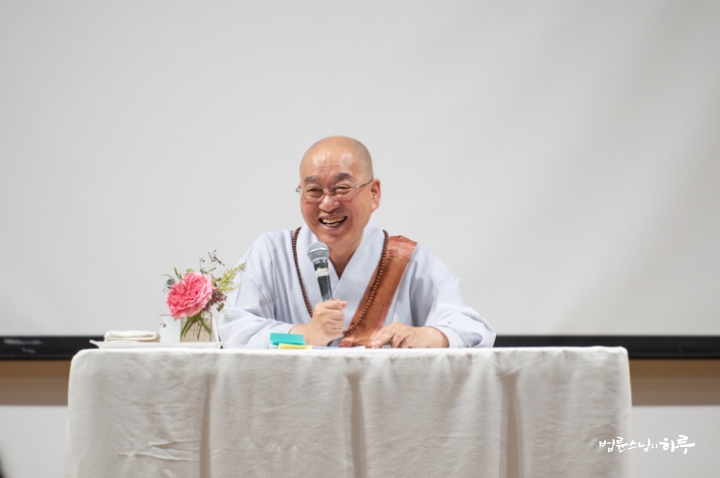
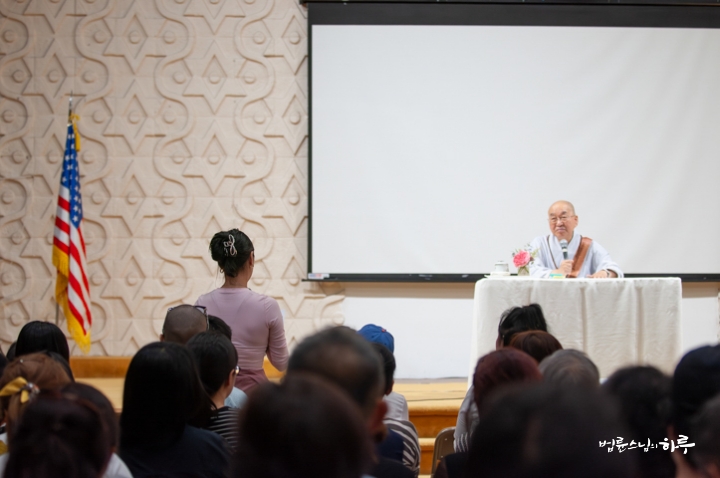
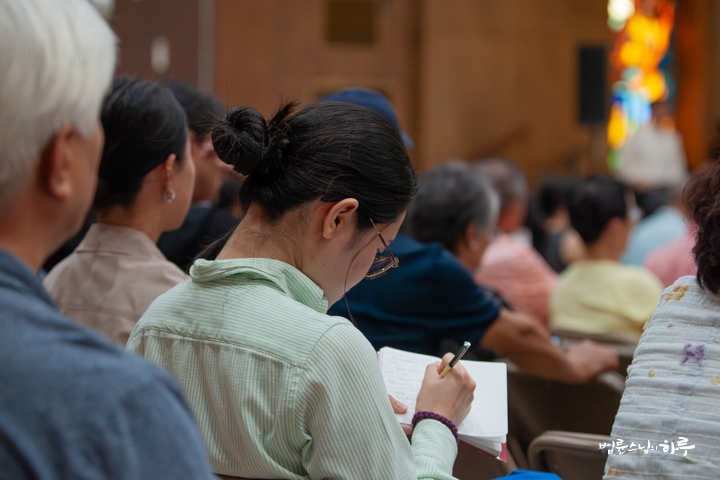
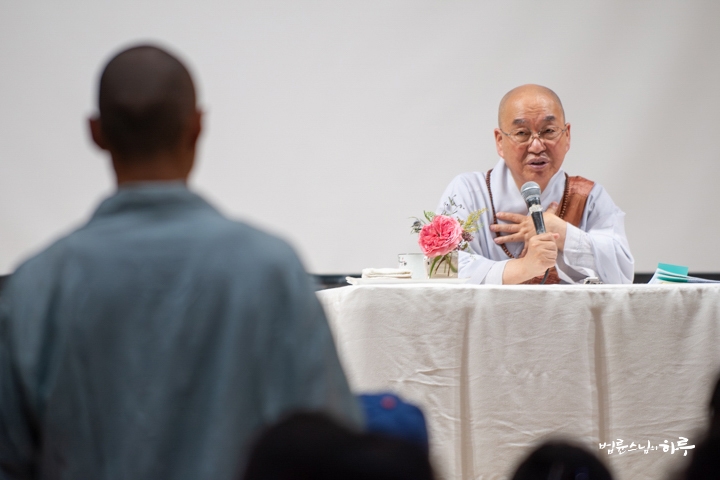
Next, anyone could raise their hand and ask Sunim questions. During the two-hour session, 12 people were able to have conversations with Sunim. One of them expressed anxiety about having to care for a mentally ill family member for life, saying that it was exhausting and difficult for them as well.
I’m So Anxious About Having to Care for My Sick Family Member for Life
“Among my birth family and immediate family, three people are not in good mental health. My biggest concern is one immediate family member. According to the doctor, they have recovered about 75 percent. The problem is that there has been no further improvement since then. I’m anxious about whether I’ll have to live with this worry for the rest of my life. Additionally, we have very different personalities. I always prepare 10 minutes early, but this family member is always 10 minutes late. They only move when I urge them, which is frustrating. If it were just casual outings, being late wouldn’t matter, but for things like hospital appointments or school schedules that can’t be missed, I end up having to take care of everything. Thinking that I’ll have to continue playing this role makes my anxiety even worse. But when I think about talking to them directly, I’m afraid it might stress them out and make their symptoms worse, so I can’t bring myself to say anything. I asked the doctor whether I could point this out directly or at least mention it lightly, but I didn’t get a clear answer. In the end, just hearing ’75 percent recovery’ itself is a huge stress for me. Moreover, two members of my birth family also have problems. One of them had dental problems last winter and while deeply worrying about their health issues, their psychological state deteriorated, causing the whole family to suffer for several months. Around that time, my immediate family member was also hospitalized, so we went through a difficult period. After some time passed and they recovered, we found some stability, but recently their teeth have gotten worse again and they need major treatment for more than six months. Rather than just the physical illness, I’m already worried that the mental problems might recur like before.”
“It would help.”
“While praying doesn’t increase customers, since I feel less stressed, I can manage more efficiently, and as a result, it helps with running the store. But people approach it thinking, ‘If I practice, customers will increase, my illness will be cured, my child will get into college, my business will succeed.’ That’s why confusion arises about whether there’s spiritual efficacy or not. The original purpose of practice is to stabilize our minds. It has no direct relationship with curing illness, business success, or passing exams. However, when the mind is stable, it helps with recovery from illness, contributes to store management, and gives strength for studying. We need to make this distinction. But when people connect it to ideas like ‘praying or practicing will bring more customers,’ problems keep arising.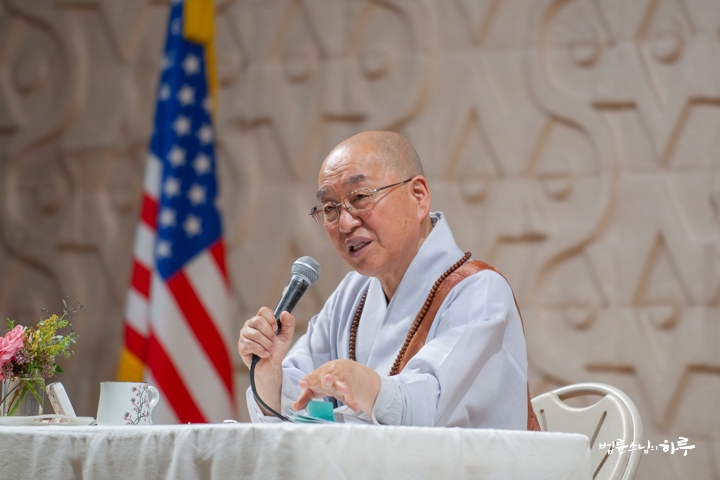
“I understand.”
Questions continued one after another.
How do you tailor your dharma talks to each individual’s capacity?
I see others’ faults more clearly than my own. What practice would be helpful?
I’ve been experiencing my husband’s anger and verbal abuse since pregnancy and am now raising a 3-year-old. If I divorce my husband, with whom I haven’t spoken for over a year, how should I live?
I’m curious about what it means to become a wise adult.
What concerns do you have, Sunim?
I’ve been living using anger and rage as my energy source. From a religious perspective, why should we control anger?
After becoming very ill, I’m wondering how I should live my life.
You’ve been practicing and praying for over 30 years. What changes have you experienced?
I want to live feeling peace of mind, but I’m becoming more aggressive as I age.
Among the questioners, some expressed their gratitude to Sunim.
“My mother, who has cancer, asked a question at your last dharma talk and has been courageously fighting cancer since then. I wanted to express my gratitude to you.”
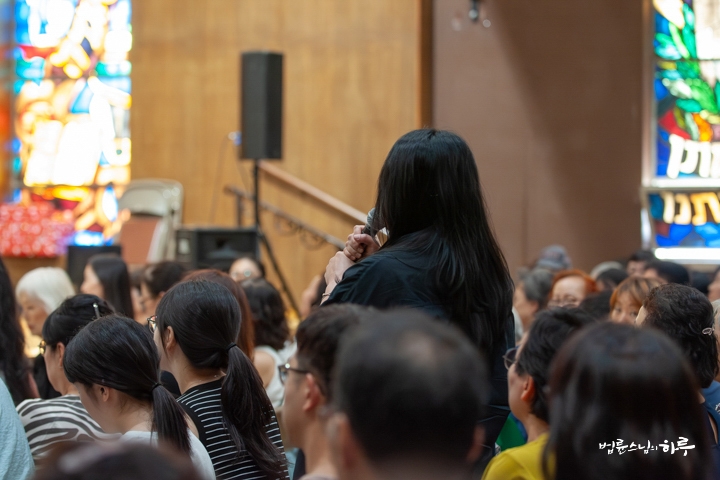
Sunim wanted to take more questions, but had to conclude the dharma talk after two hours as he needed to travel to Manhattan, where traffic is heavy, for an English-interpreted Dharma Q&A.
After the dharma talk, many people purchased books and received Sunim’s autograph. One elderly person in particular came to get autographs after purchasing more than 10 books. When Sunim asked,
“Why are you buying so many books?”the elderly person smiled and replied.
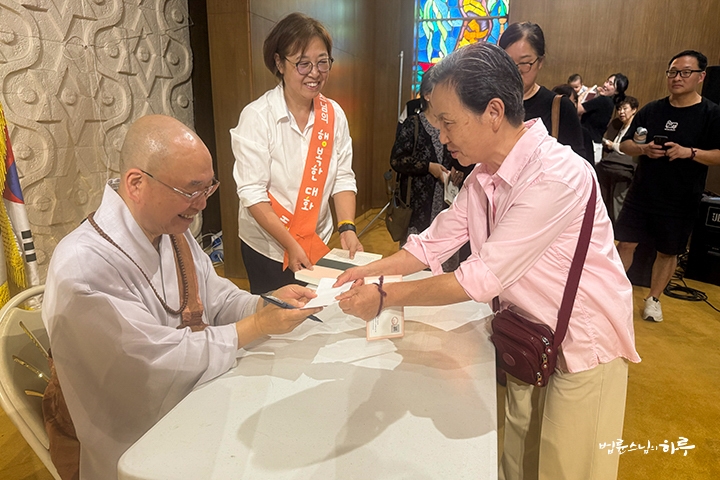
“Even if I meet you again in the future, how many more times will I be able to see you? I bought many books because I wanted to look at your face longer while you sign them.”
Someone who introduced themselves as a Catholic said they watch Sunim’s YouTube videos diligently and handed over an envelope with a donation, saying it was to contribute to good work. Many people expressed their gratitude, saying they had become happy after listening to Sunim’s dharma talks.
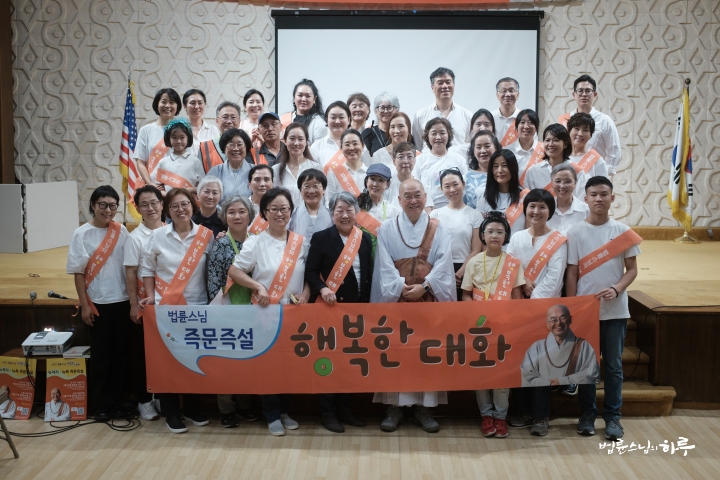
After the book signing, Sunim took a commemorative photo with the dharma talk volunteers.
Sunim presented signed books to Park Mi-kyung, who was in charge of the dharma talk, and Kwon Young-mi, who was the deputy coordinator, and took a commemorative photo together.
“Thank you for all your hard work preparing for the dharma talk.”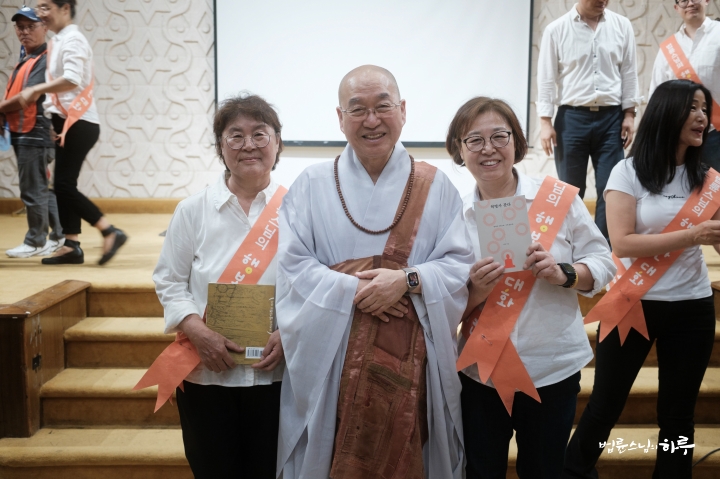
After expressing gratitude, Sunim waited in the car while Dharma Teachers Myodeok and Beophae had a sharing session with the volunteers.
After wrapping up the dharma talk, they departed for Manhattan at 4:45 PM. Due to the UN General Assembly, there was concern about arriving on time as traffic was heavy yesterday, but fortunately, traffic was less congested than yesterday. They considered taking the subway but decided to travel by car instead.
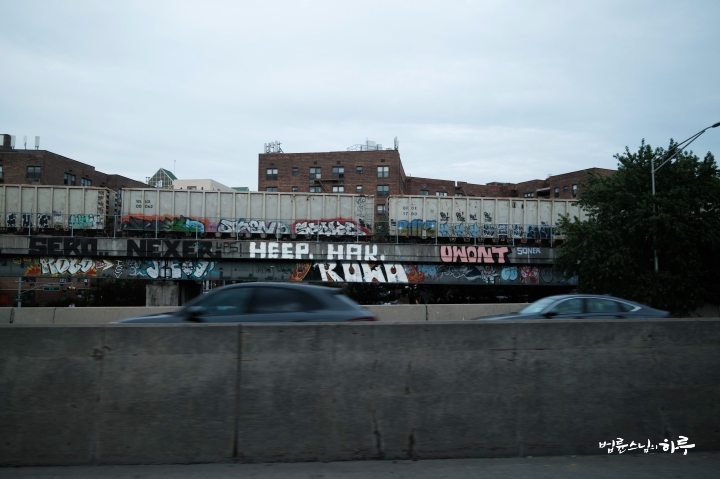
Today’s English-interpreted dharma talk was held at The Blanc Art Space. It’s a multi-purpose art space used for art exhibitions, performances, lectures, talks, and art-related events.
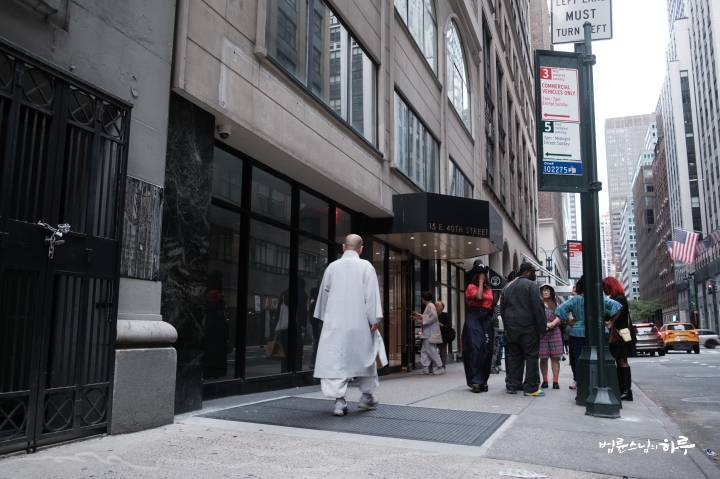
Arriving at the venue at 5:45 PM and going up to the 12th floor where the dharma talk was held, volunteers were busy setting up. After warmly greeting the volunteers, Sunim moved to the waiting room.
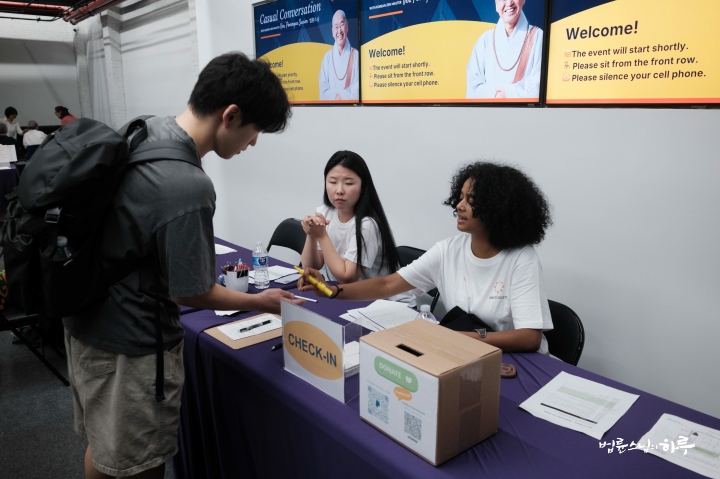
Eleven Jungto Dharma School students and graduates were scheduled to attend this English-interpreted dharma talk. Before starting the dharma talk, Sunim had a conversation with the Jungto Dharma School students in the waiting room from 6:30 PM.
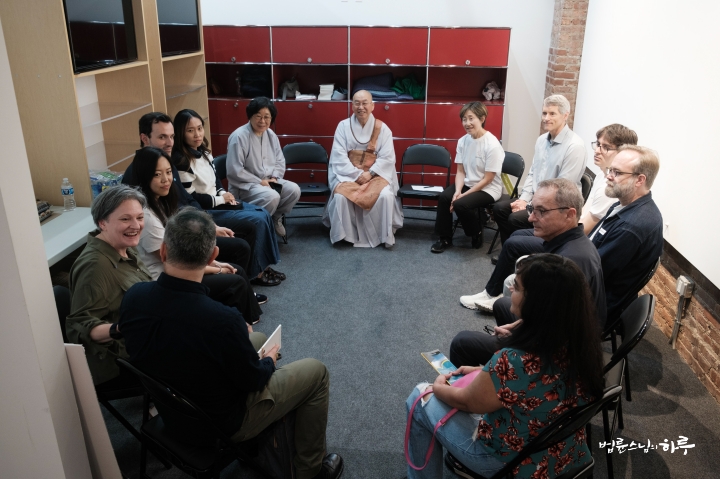
After listening to each person’s reflections on their Jungto Dharma School classes and how their lives had changed, Sunim answered questions about their curiosities. While most came from New York and New Jersey areas, one person came from Virginia, one from Boston, and one from Connecticut, making it a meaningful time to have direct conversations with Sunim.
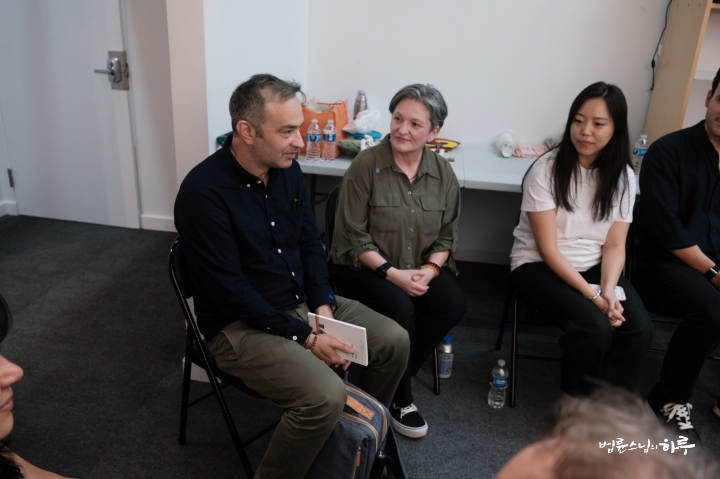
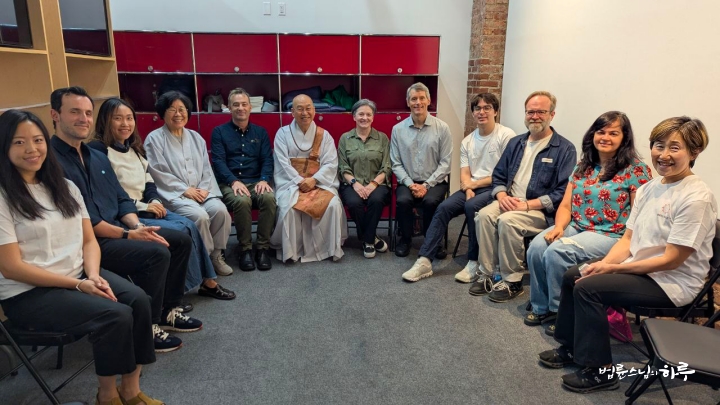
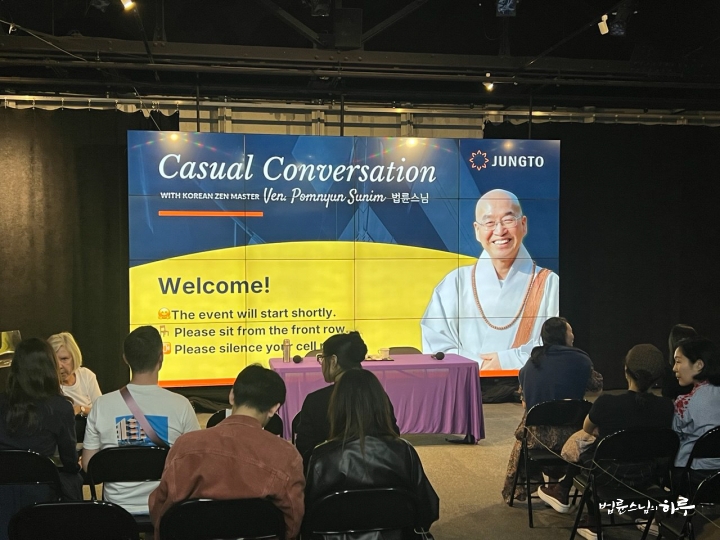
At 7 PM, everyone moved to the lecture hall together. Rafael, a Jungto Dharma School graduate, performed a celebratory guitar performance. The beautiful guitar playing brightened the atmosphere as it welcomed the audience.
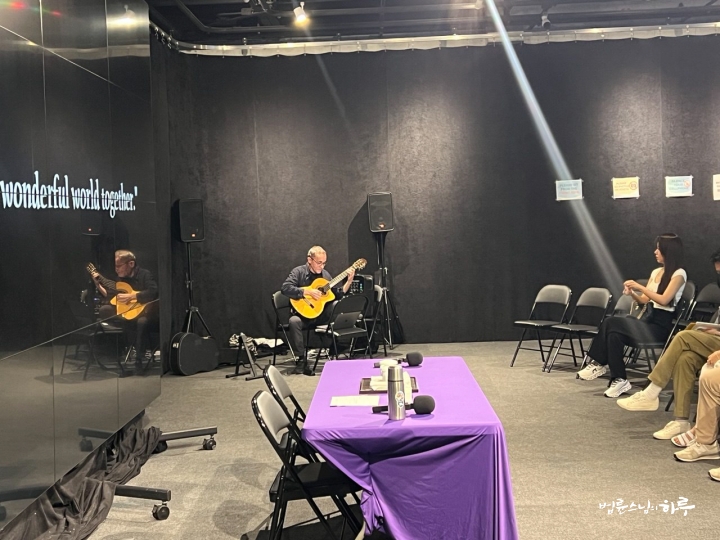
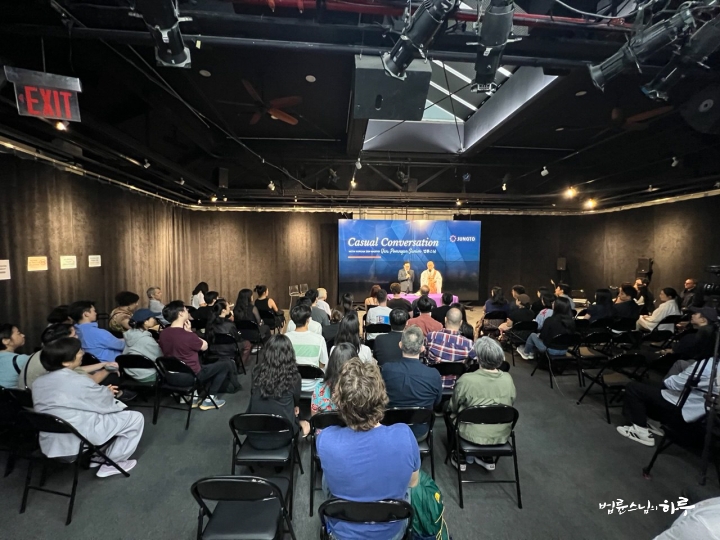
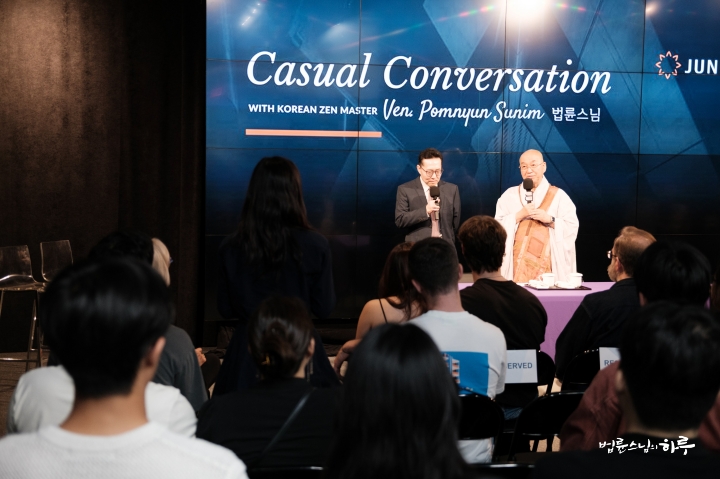
About 80 American citizens filled the cozy lecture hall. When Sunim and Jason, who was interpreting, headed to the stage, loud applause erupted. First, Sunim gave his greeting.
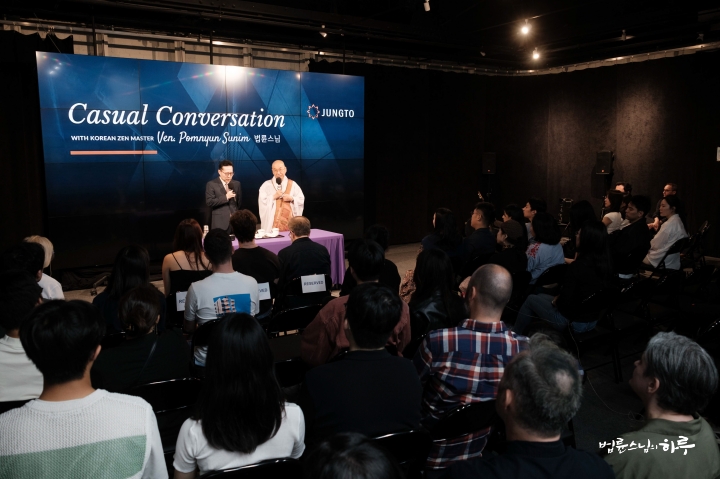
“Yes, it wasn’t difficult.”
“That’s good.”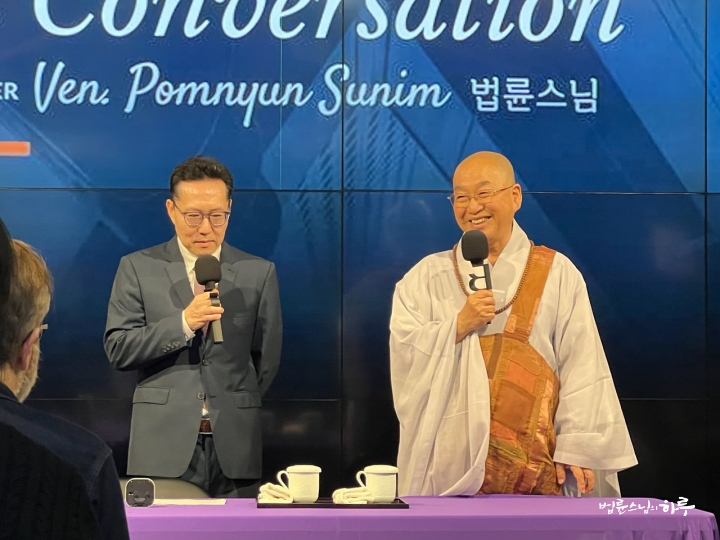
Following this, Sunim took 3 pre-submitted questions and 8 on-site questions. They had conversations on various topics for an hour and a half. One person sought Sunim’s advice, saying that anger and hurt from conflicts with employees in their organization still remained, and they wanted to find peace of mind within that situation.
How Can I Manage the Anger That Remains After Conflicts with Employees?
“I lead a nonprofit organization. For the past decade I worked hard to get it off the ground and it’s now pretty well recognized within the industry. Around the time that my business started taking off, I began having a lot of problems with my employees. Most of them who are 20 years younger than I was they started acting as if their CEOs had decided not to take orders. They behaved rudely and stepped on my boundaries, so I started, I had to let them go one by one. About a year ago, I semi-shut down the business as my health declined too much, It’s been a year and I still find myself angry. Sometimes you know, the memories of what happened just pop up-things that were said, situations we were in-and I’m still angry. I’m secretly hoping that they would burn in hell. They fail miserably in the rest of their careers, and I think I’m still afraid to hire new people and form a new team. But I know I have to move forward, and I also want to find peace in my heart. I would really appreciate your words on how I can do that.”
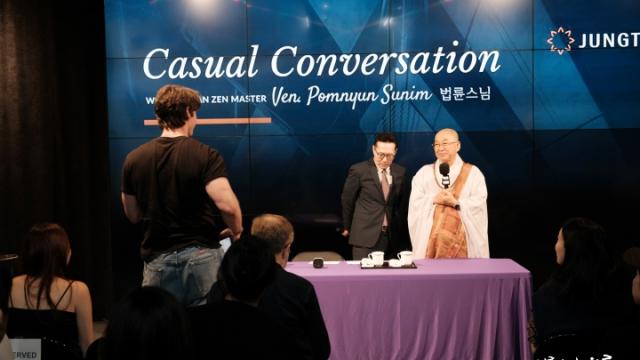
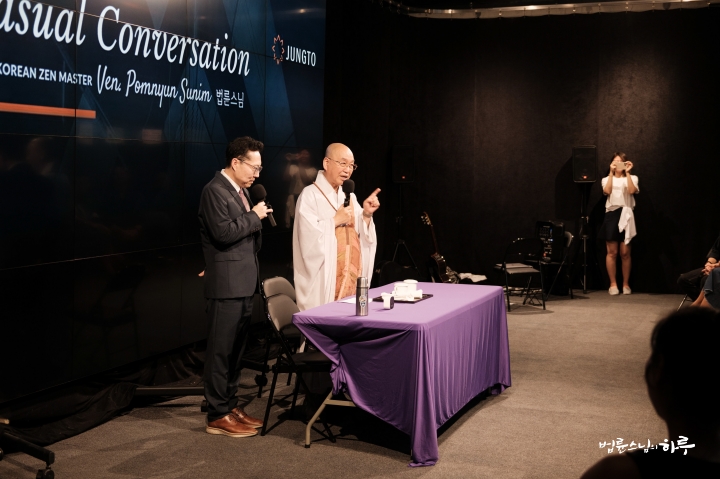
“I have two small questions. I understand that in marriage people are entitled to have different opinions, but at work, don’t you have to follow what your boss says? I think one of the reasons this experience became trauma instead of just an experience was because I had this enormous fear of letting people go and speaking up the truth-that others didn’t want to hear. They were acting out really badly and I just had a very difficult time. What they were doing was not work –appropriate and, stuff like that, and it just went on for way too long. I guess I want to be free of that fear.”
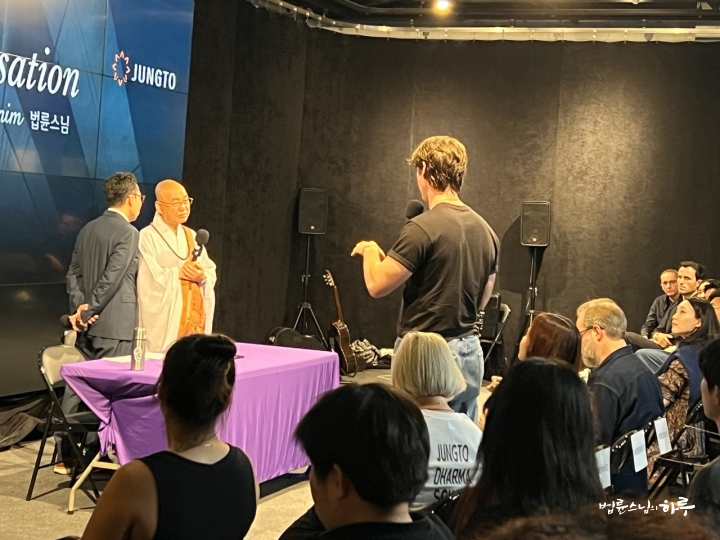
“I did let my employees speak very freely. Debate and open discussion were part of our culture. So it’s not as if I imposed my opinion or orders – it’s just that from the very beginning, I think my problem was listening to other people too much.”
“Yes, even so, the fact that conflict arose means it’s not just the subordinate’s problem – you as the supervisor also bear some responsibility. Conflicts can arise in any organization. But right now, you’ve been hurt by this incident. If the supervisor was hurt this much, imagine how difficult it must have been for the subordinate? You need to look at this from a broader perspective.”“Thank you. I understand.”
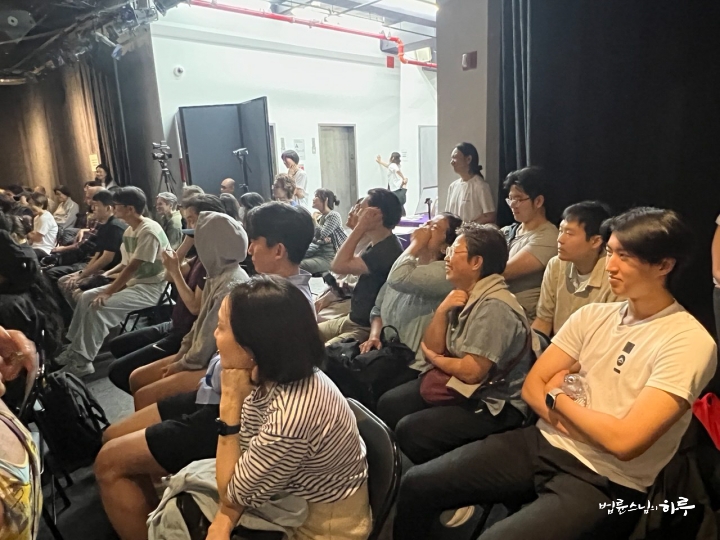
Questions continued one after another. Rather than current affairs, most questions were about personal concerns.
Since my father’s suicide in high school, life feels meaningless and I can’t find motivation to live. How should I change?
I want to know about daily awareness and enlightenment, not just conceptual understanding of Buddhism. What kind of enlightenment and awareness do you experience in each moment?
Since America is a Christian nation, it seems people’s beliefs are based on fear of angering God. Is it possible to have morality that isn’t based on fear?
I grew up under the influence of fundamentalist Judaism. Having experienced fear and manipulation, I want to pursue new spiritual practice but feel cautious.
Due to difficulties running a nonprofit organization, I experienced having to fire employees and downsize. Because of those memories, I feel afraid to hire new employees.
I live in the world based on what I know, but what attitude should I have toward what I don’t know?
I dream of establishing and running a good organization after graduation, but I was recently diagnosed with anxiety disorder and depression. I worry about what will happen if my depression worsens after starting the company.
After getting a job, I was taking medication for stress and anxiety but stopped due to physical difficulties. I’m considering taking it again but worry about side effects.
I’m financially dependent on my parents. Should I unconditionally become independent from my parents when I turn 19? What should I do in my case?
I’m a college freshman with vague fears about my major and future career.
I calculated the support I received from my parents as a child in monetary terms and gave it to my mother, but she wants to give it back. I’m worried because my mother seems to be in danger but doesn’t realize it.
After answering all the questions, it was nearly 9 PM. The lecture ended with loud applause.
Although an official book signing wasn’t scheduled due to the need to vacate the venue on time, audience members who purchased books naturally requested autographs. Sunim returned to the table on stage and held an impromptu 10-minute signing session. The faces of those leaving with autographs were full of smiles.
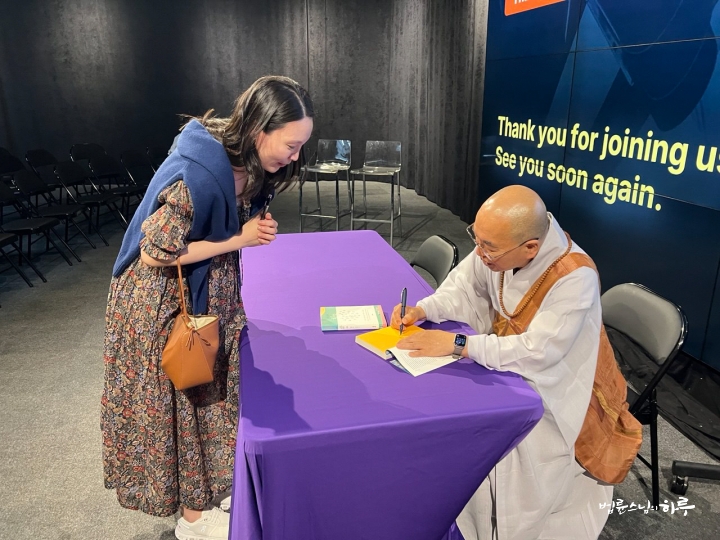
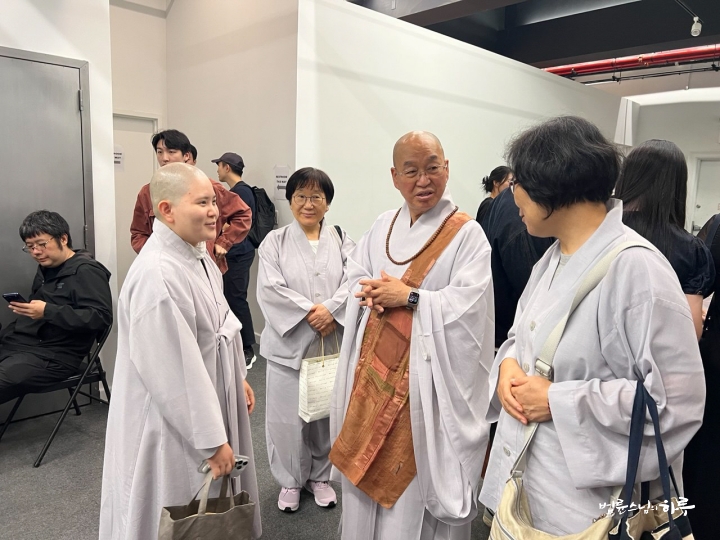
Venerable Go, who had invited Sunim to Columbia University last year, also attended and thanked Sunim. A student from Harvard University asked Sunim to please come to Harvard next year for an English interpreted lecture.
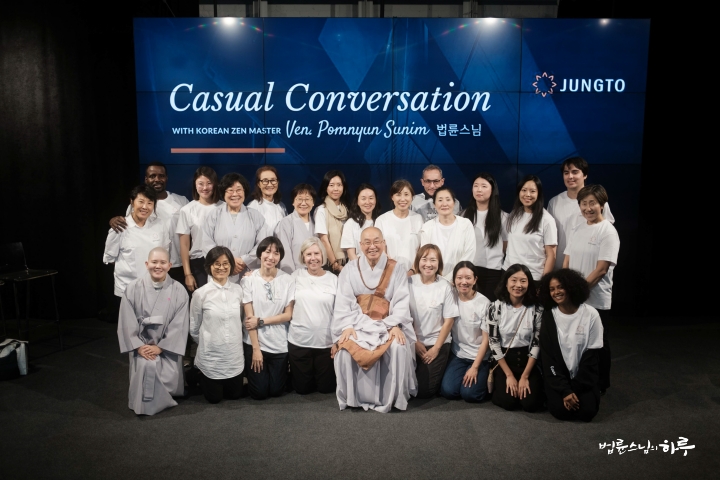
Sunim took a commemorative photo with the volunteers who prepared the lecture.
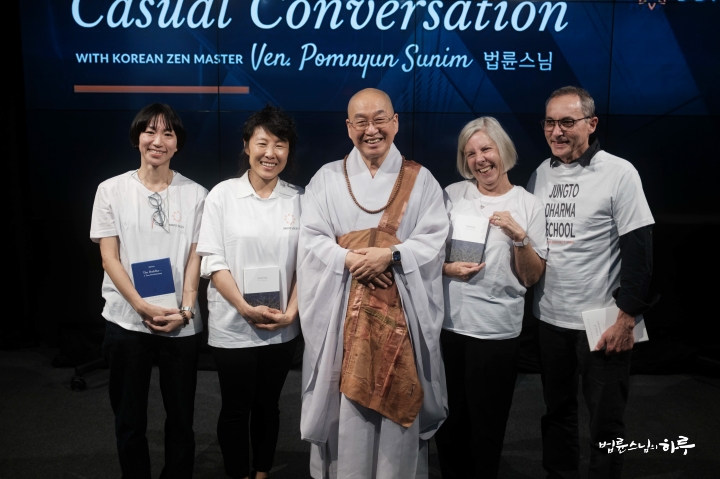
After the photo session, Sunim presented books as tokens of appreciation to Kim Min-ji, the overall coordinator; Lee Aram, the deputy coordinator; Sue Strong, who served as MC and secured the venue; and Rafael, who played guitar.
Sunim thanked the volunteers who prepared the lecture for their hard work before heading to his accommodation.
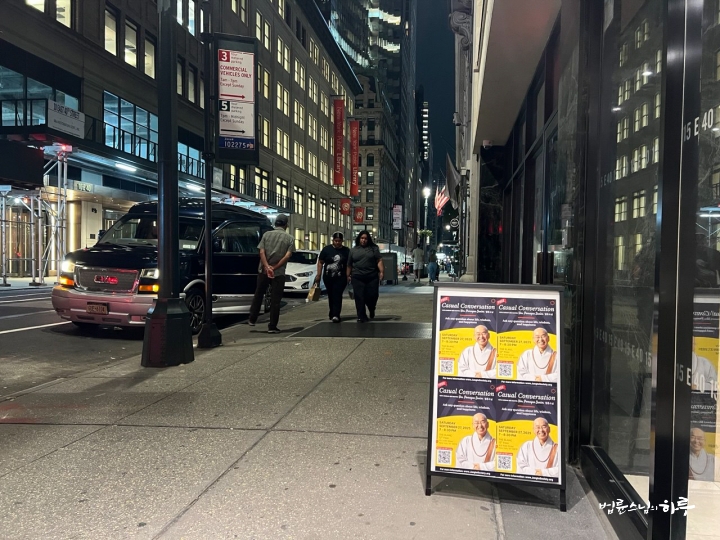
The volunteers then had a mindful sharing session with Dharma Teacher Beophae. Since this lecture included local volunteers, the entire process was conducted in English. Everyone shared their impressions from the lecture in English as well. They all said it was an opportunity to vividly experience the Mosaic Buddha.
“It was truly wonderful to be able to participate together. I’d like to attend again if there are more events like this in the future. I’m grateful to feel that such positive things are happening here in today’s society where so many negative things occur.”
“It was an opportunity to realize that I can’t do anything alone, and it was a chance to truly feel that we are the Mosaic Buddha.”
While several English interpreted lectures have been held in New York, they were either university-invited lectures or prepared by Korean Jungto Society members. This English interpreted lecture was particularly meaningful as it was the first New York lecture where local people also participated as volunteers.
Sunim returned to his accommodation at 9:50 PM, had a late dinner, and concluded his day.

Tomorrow, he will fly to Toronto, Canada, where he will give an English interpreted lecture for locals at the University of Toronto at 1 PM, followed by a Dharma Q&A for Korean immigrants at 5 PM.