Will Human Value Disappear When Artificial Intelligence Surpasses Humans?
Sep 23, 2025 - Arrival in Korea, Visit to Dubuk Retreat Center Farm
Hello. The hot summer has passed, and we’ve entered early autumn with cool mornings and evenings. Today marks the return to Korea after completing the Southeast Asia survey trip.

Sunim departed from Bangkok Airport at 1:20 AM and arrived at Incheon Airport at 8:45 AM Korean time. He got off the plane after spending the night on board, dozing off in his seat.

After leaving Incheon Airport, Sunim headed straight to Dubuk Retreat Center. Due to heavy traffic, the journey took 6 hours by car, arriving at 3:45 PM.

After a late lunch, Sunim toured the Dubuk Retreat Center farm in the afternoon. He first checked how much the cabbage, radish, and lettuce planted in the garden five days ago had grown.
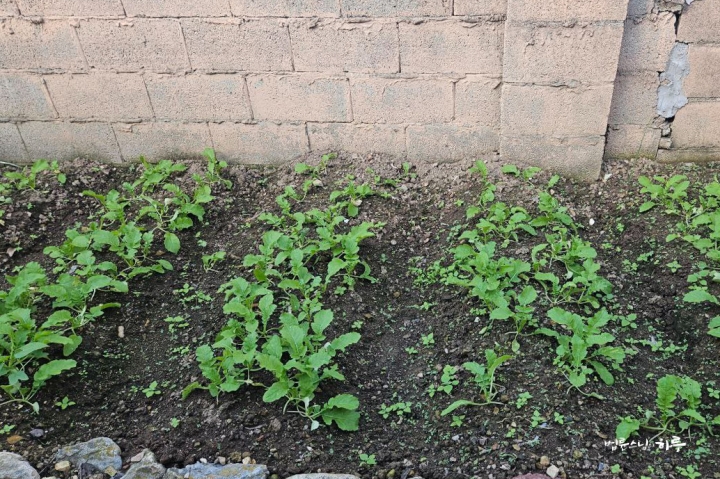
He first inspected the radish field. The radishes had settled in, sprouting evenly green leaves. Though the leaves weren’t large yet, their orderly rows showed vigor, and their energy was evident as they grew confidently among the weeds. Underground, they were preparing to gradually develop their roots.
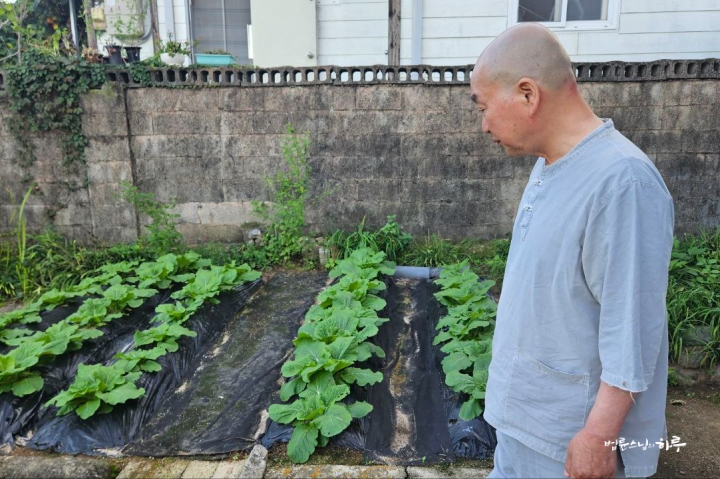
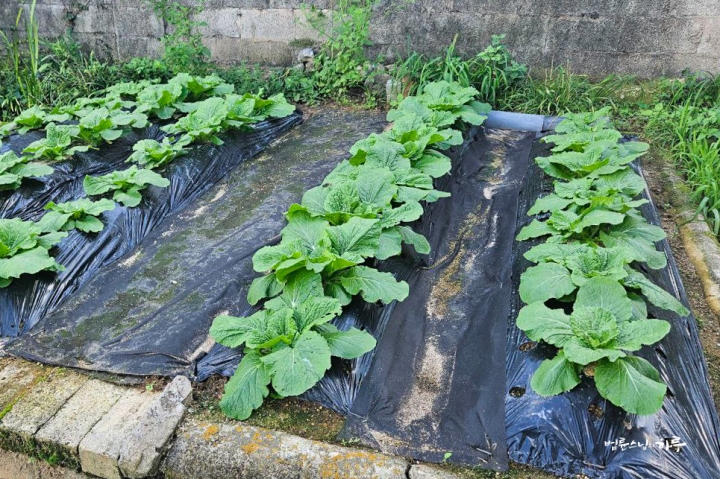
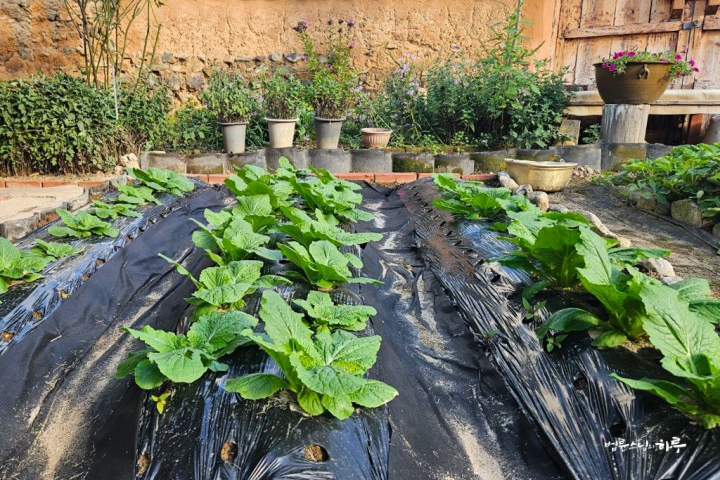
Next, he walked to the cabbage field. The cabbages planted on vinyl mulch had grown much larger than the radishes. Their broad leaves spread in all directions, growing lushly, while the centers gathered in circles, showing signs of heading. The cabbages lined up at regular intervals looked abundant and robust at a glance.

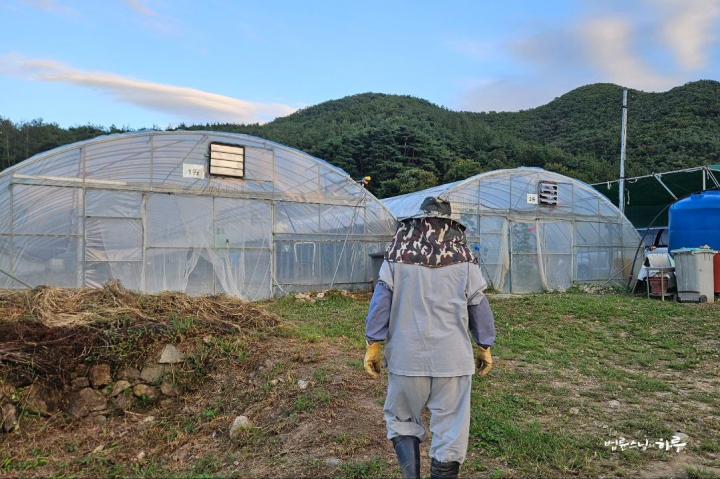
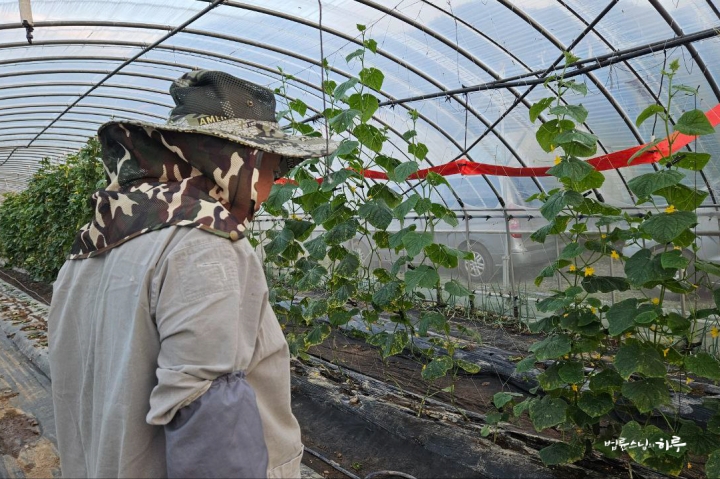
After changing into work clothes, Sunim went to the greenhouse to inspect the crops.
The cucumbers growing on vines stretched straight along the strings, with yellow flowers blooming among the green leaves. The flowers shone brightly in the sunlight, showing promise of bearing fruit. Sunim observed the growth of the cucumber flowers and leaves for a moment. Inside the greenhouse, green leaves and yellow flowers harmonized together.
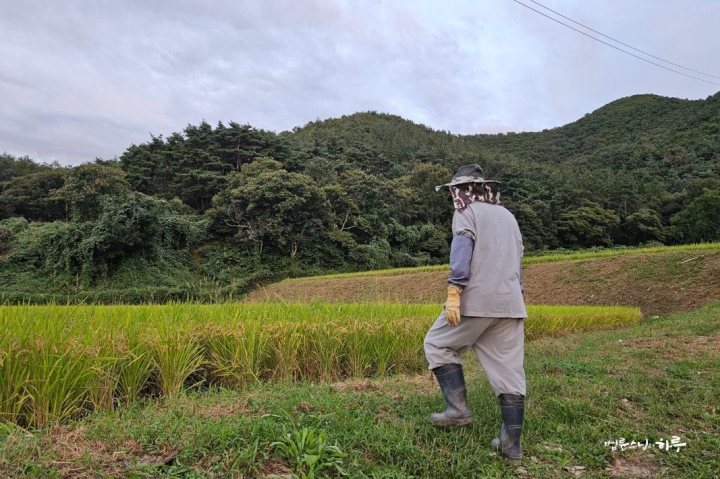
Next, he walked along the rice paddy ridges, examining the color of the rice and the condition of the fields. Among the green leaves, the yellowing rice was bowing its heads.
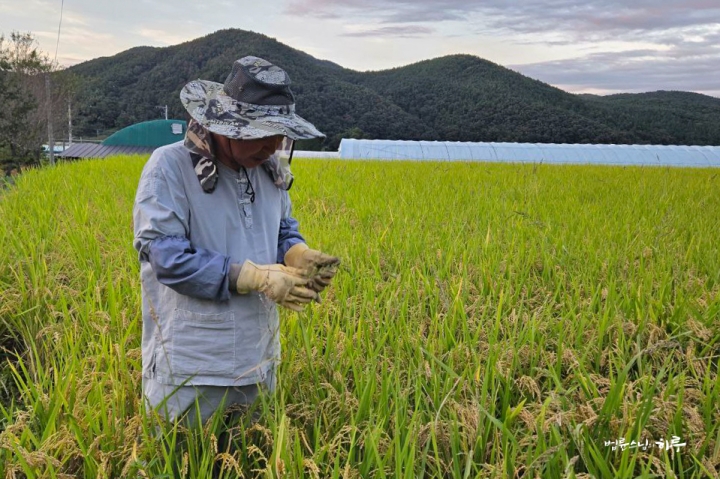
Sunim entered the middle of the rice field and examined the grain heads in his hands. The rice grains were gradually ripening, indicating that the autumn harvest was approaching.
Many barnyard grass plants had grown between the rice plants. After pulling out the weeds, he left the field.
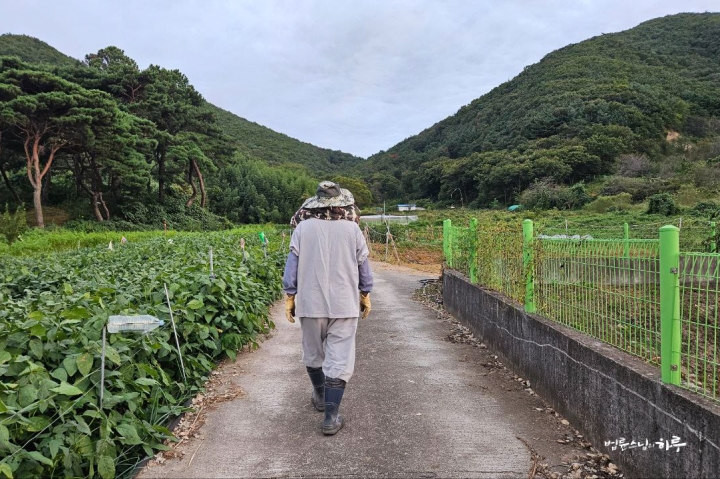
Around Dubuk Retreat Center, there are many chestnut trees that have been cultivated since old times. Among them, there’s a tree that drops chestnuts a bit early. Wondering if any chestnuts had fallen, he went to check. Sure enough, many chestnuts had fallen.
“I should gather some chestnuts. If we boil chestnuts for tomorrow’s interfaith gathering, the elders will enjoy them.”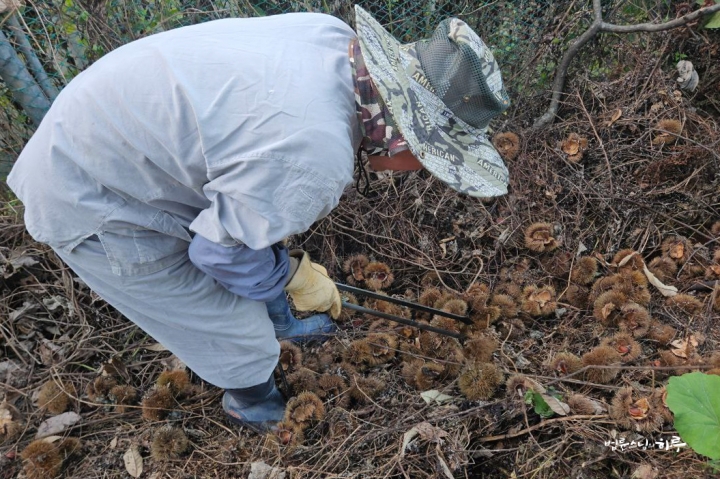
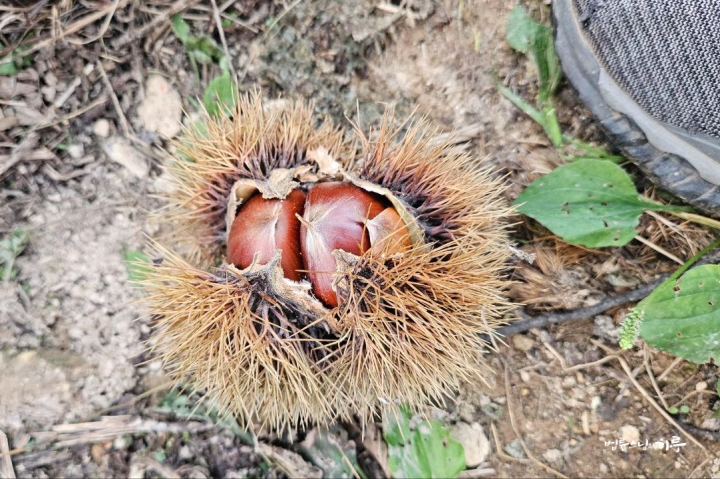
Sunim gathered the fallen chestnuts under the tree. Wearing gloves and using tongs, he examined each fallen chestnut bur on the ground and extracted the chestnuts. Inside the burs were firmly ripened brown chestnuts.
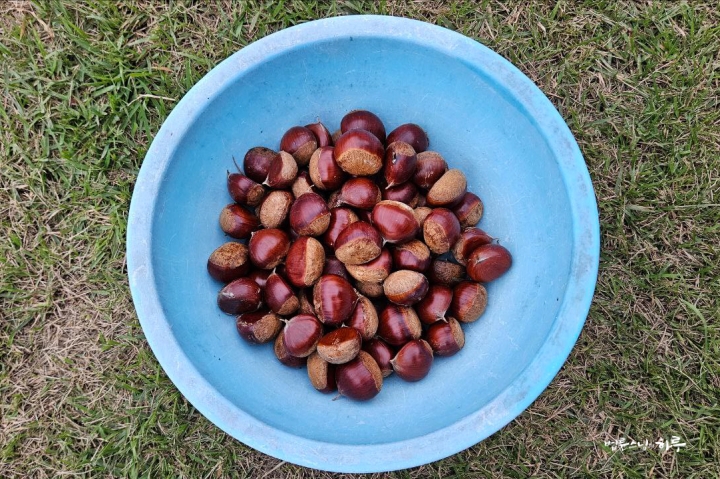
The gathered chestnuts were collected in a basket. Seeing the shiny chestnuts piled high gave a feeling of autumn’s abundance.
By the time all the chestnuts were gathered, evening was approaching. After dinner, Sunim handled various tasks indoors and went to bed early to recover from the fatigue of the overseas trip.
Since there was no Dharma talk today, I’ll conclude by sharing a dialogue between Sunim and a questioner from yesterday’s Dharma Q&A in Bangkok.
Will Human Value Disappear When Artificial Intelligence Surpasses Humans?
“I feel that technology is advancing too rapidly these days. With the emergence of artificial intelligence (AI), predictions are being made that AI will surpass human capabilities. Technological advancement is rapidly progressing to a level where it can replace everything humans do. In a way, it seems that human dignity and value could be lost. What mindset should we have living in such a world?”
“I had many worries, but they seem somewhat resolved.”
“However, as distribution shifts largely online now, self-employed people are taking a big hit. What kinds of institutional or policy measures should society implement in response? Reviving traditional markets and self-employment isn’t what we should do now. What’s needed is building social safety nets for people who are severely impacted during transitions. For example, there could be ways to support minimum living expenses for people who fall due to changes in occupational categories. These days, the number of children has drastically decreased compared to before. Accordingly, the number of teachers graduating from education colleges should also decrease. Previously, teachers taught 60 students per class, then it decreased to 50, 40, 30, and 20 students. Since the number of children has decreased, the number of teachers should also be reduced, but if we reduce teachers, we should also reduce the number of education college professors, and furthermore, the number of education colleges. But now we can’t reduce the number of education colleges or teachers. So we’re moving in the direction of continuously reducing the number of students per teacher from 20 to 15 to 10. We need to move toward reduction anyway, but since we can’t change the system immediately, there’s resistance. In this situation, the challenge is ‘how to create social safety nets?’ It’s impossible to maintain the current number of education colleges and teachers. In the past, graduating from medical school guaranteed becoming a doctor, but that won’t be the case in the future. Also, people thought becoming a teacher after graduating from education college was a decent job, but listening to teachers now, they say it’s degrading into a 3D (difficult, dirty, dangerous) occupation. Like that, preferred occupational groups change with social changes. The problem is that parents foolishly insist on what were good jobs when they were young and force those careers on children who will live 20 years in the future. Of course, it would be nice if things went as parents think, but it becomes problematic if the world changes completely differently than expected 20 years later. When creating workers needed for industrial society, learning and mastering lots of knowledge and skills at school enabled efficient career acquisition. But now we’ve changed to a society where knowledge is stored in external servers and can be searched and used. Still, the school system remains focused on memory-driven exams and similar practices. What’s studied this way will become useless in the future. If a man in his 50s who accumulated tremendous agricultural know-how has to go weld at a shipyard due to societal changes, the skills learned over 20 years become completely unnecessary. So people in their 20s end up working better than those in their 50s. As you said, it’s true that people in existing occupational groups fall due to technological development. But I don’t think the world will end or human dignity will be damaged because of it. Of course, there were cases where the dignity of urban poor was greatly damaged during past industrialization. When living farming in the countryside, they could maintain dignity despite poverty, but they lost that dignity becoming urban poor. Such changes will happen in the future too. No one can predict what new jobs will emerge in the future. As you said, the world changes at a rapid pace.
“Thank you. I understand well.”