Even When I Travel for a Few Days, Not a Single Friend Sends Me a Message
Oct 29, 2024, Day 2 in Bhutan: Visiting Nabji Chiwog, Rice Harvesting, Meeting with Zhemgang Governor
Hello. Today is the second day of our visit to Bhutan.
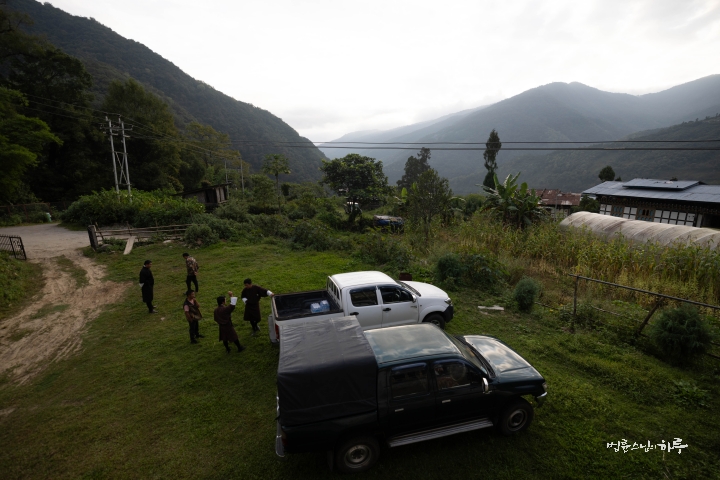
After completing his morning practice and meditation, Sunim had breakfast.
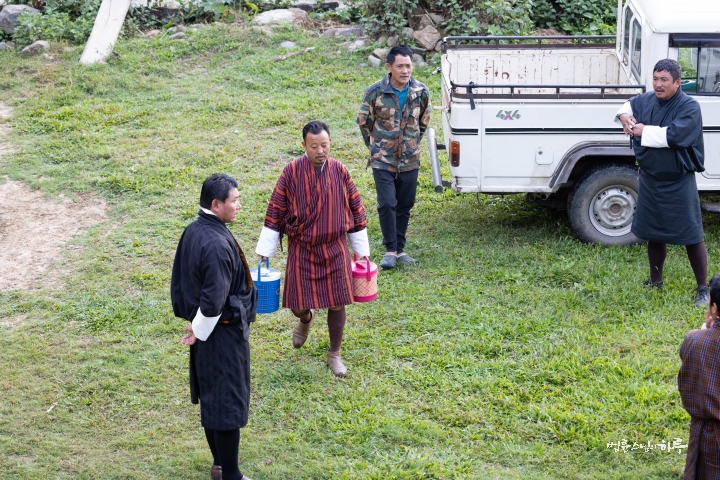
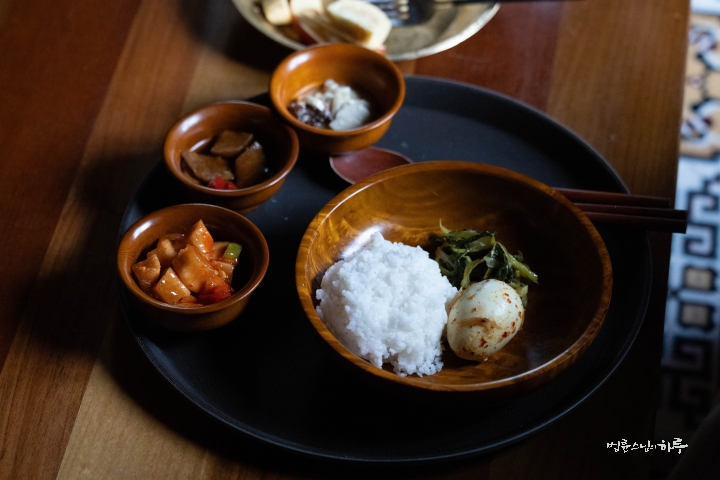
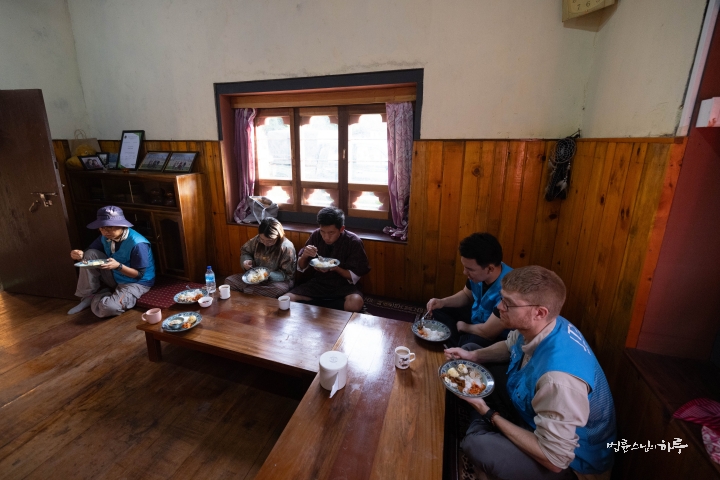
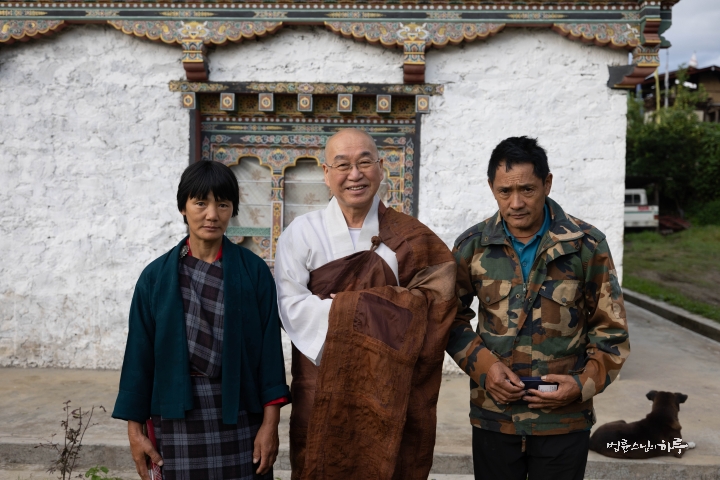
After eating with gratitude, Sunim took a commemorative photo with the host couple of the lodging.
After finishing the meal, the visit to Nabji Chiwog began at 7 a.m.
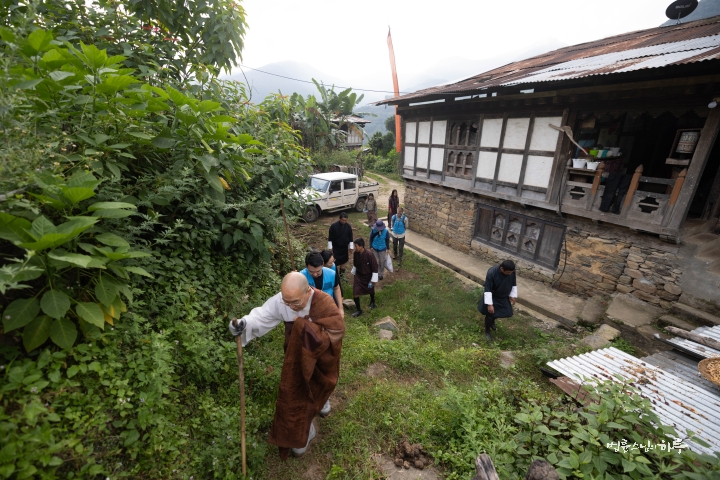
After walking a short distance from the lodging, a golden field appeared.
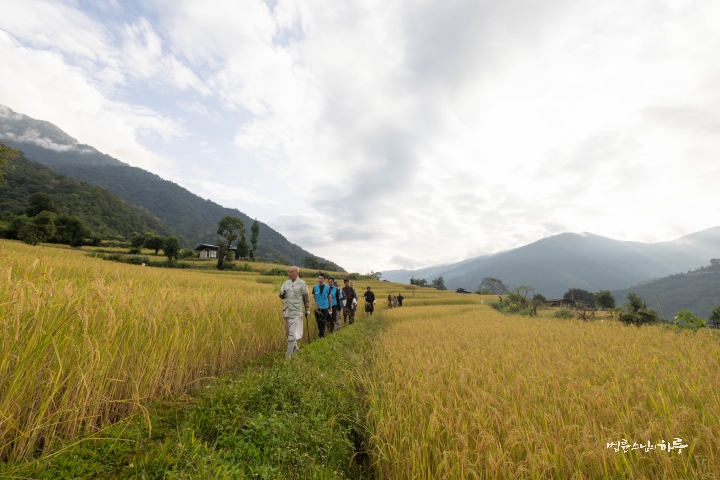
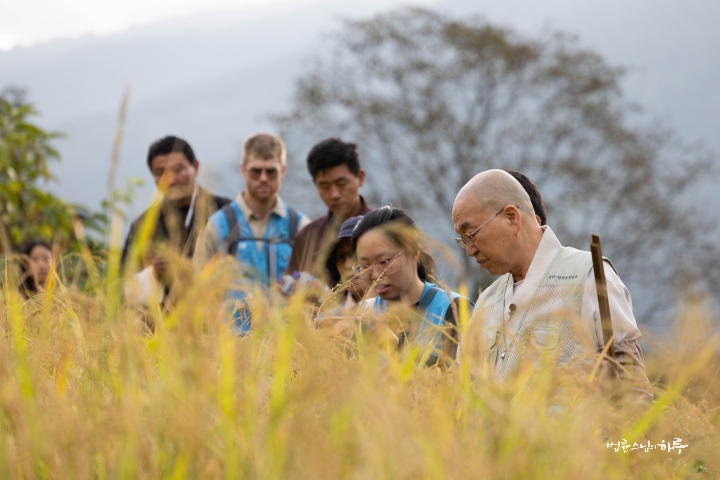
Hearing Sunim’s words, the Tshogpa of Nabji Chiwog smiled and replied.
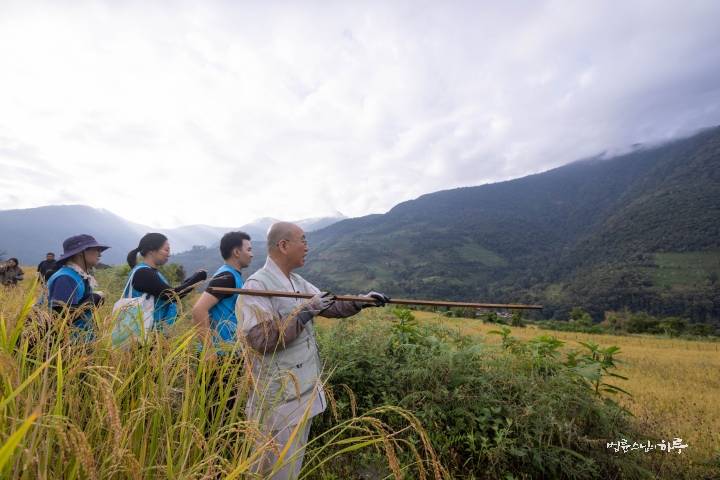
“Thanks to the irrigation channel you helped us build, our harvest this year is likely to double.”
After passing through the golden fields, we came across empty paddy fields where residents were not farming. The owner of the land had grown too old to continue farming, and suggested that Sunim could make use of this land. The villagers had tried to reclaim it, but there were too many stones, making it difficult. Fortunately, the government office said they would provide an excavator this year, making reclamation possible.
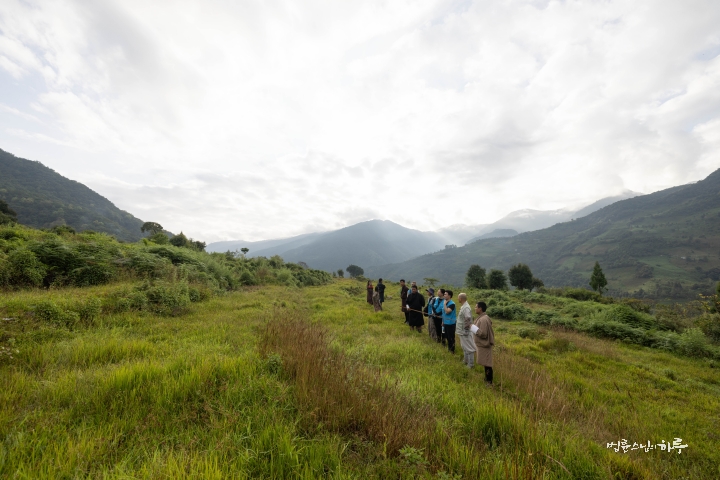
After looking around the empty fields, Sunim spoke.
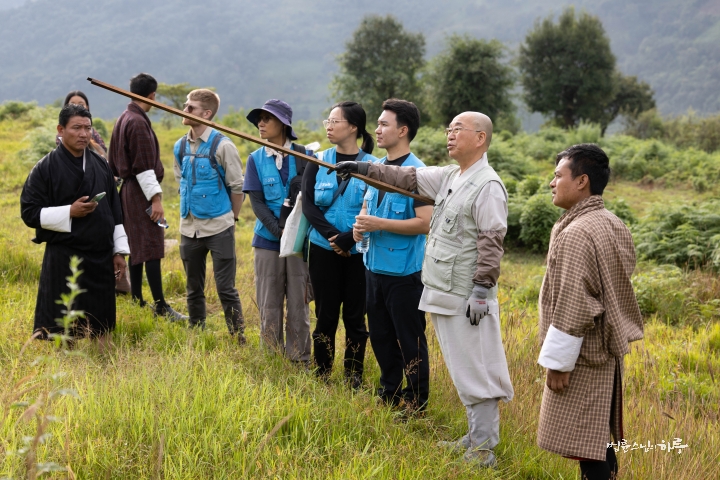
“About 30 acres in total.”
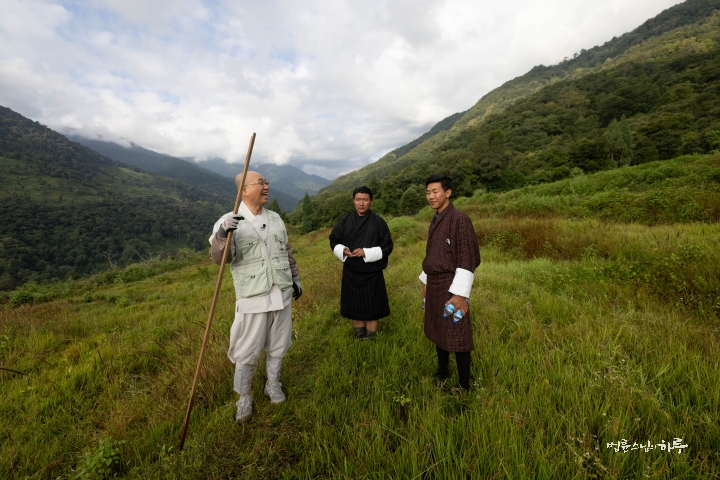
After examining the empty fields, we headed to an area where new road construction had been done in the village.
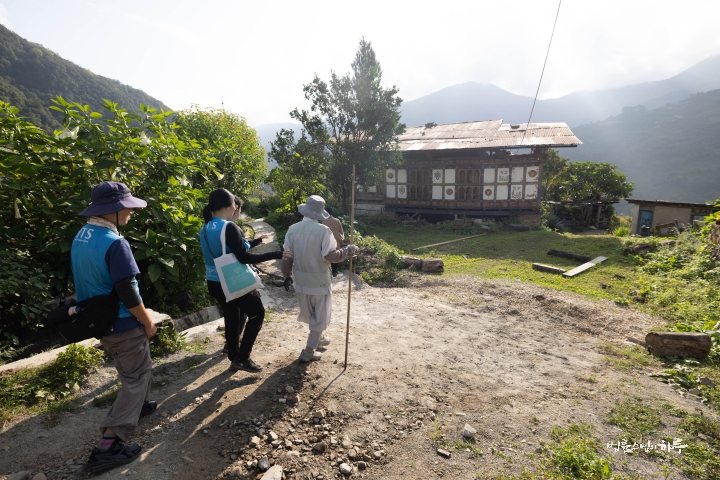
A narrow road had been neatly constructed with cement. The Tshogpa (village leader) had applied to JTS for a pilot project, and the villagers had worked together to build the road.
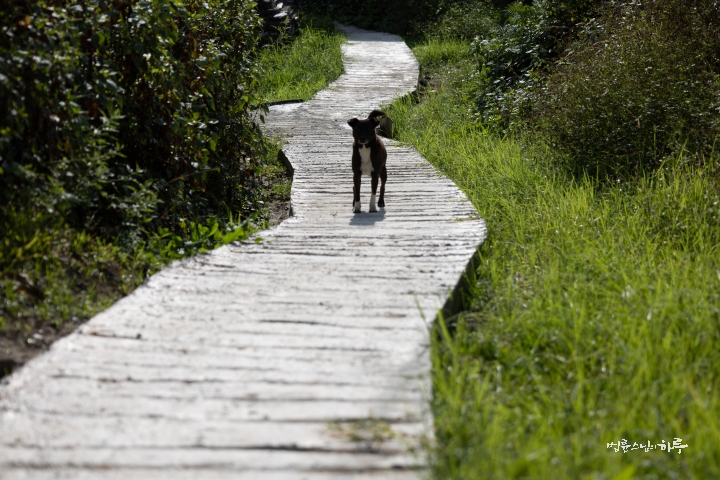
The Tshogpa showed Sunim the road and made another request.
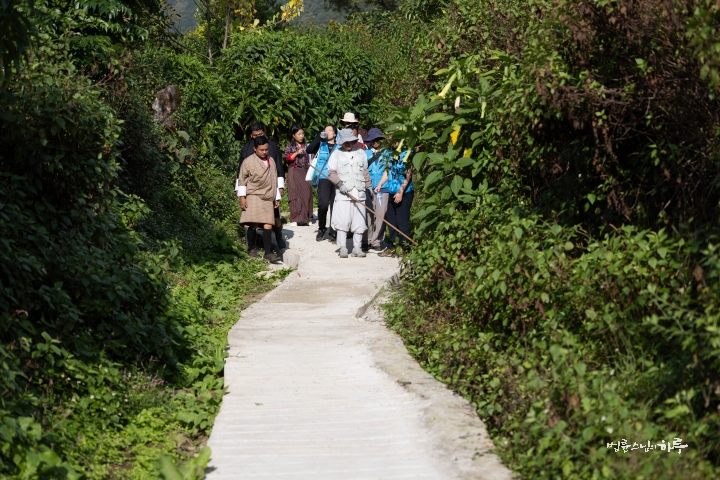
“The width is 1 meter, which is too narrow for the rear wheels of a cultivator to pass. We’d like to widen it to 1.5 meters.”
Sunim smiled and said.
“When you first requested it, you said it was a path for people to walk on, so I told you to make it 1 meter wide. If you had told me it was for cultivators, I would have said to make it 1.5 meters from the start. I asked several times if it was for machines…”The Tshogpa explained the reason.
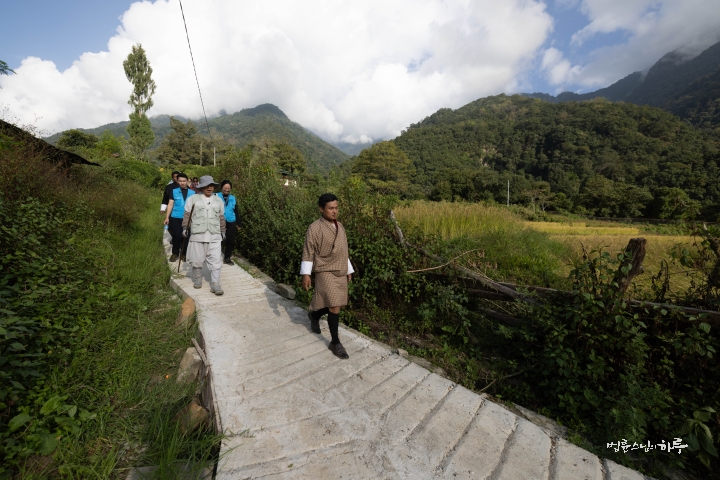
“We were worried that if we asked for 1.5 meters from the beginning, you might not grant our request. We were concerned about appearing too greedy.”
Sunim smiled and said.
“I’m suggesting making the road suitable for machines. If I’m willing to build a road where there isn’t one, why wouldn’t I agree to pave an existing road?” (laughs)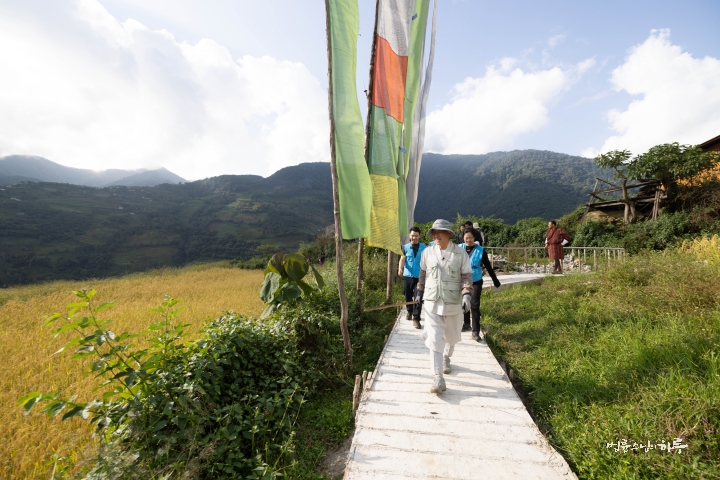
After agreeing to additional construction to widen the road to 1.5 meters, we headed to the temple in Nabji Chiwog.
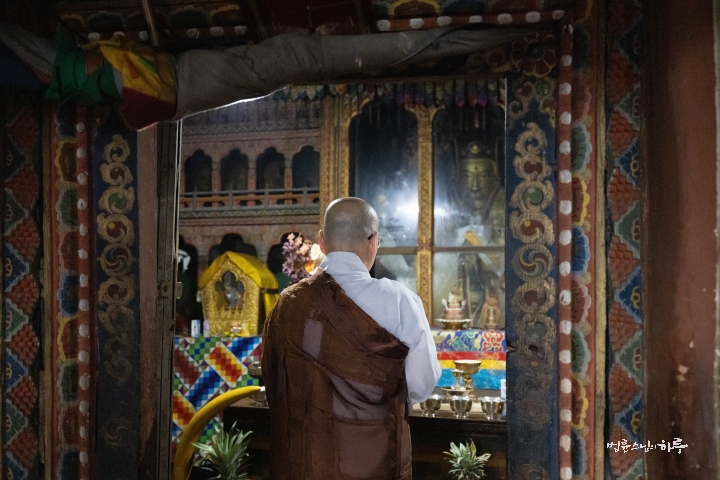
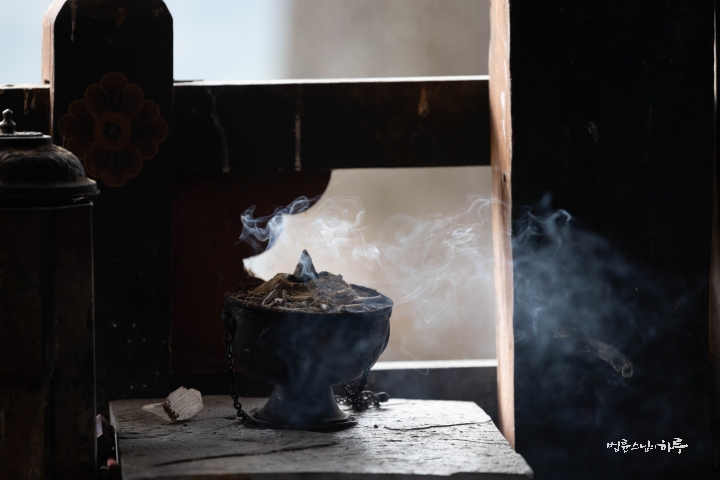
After paying respects at the temple, we examined the area in front of the temple where the Nabji Tshogpa had requested repairs.
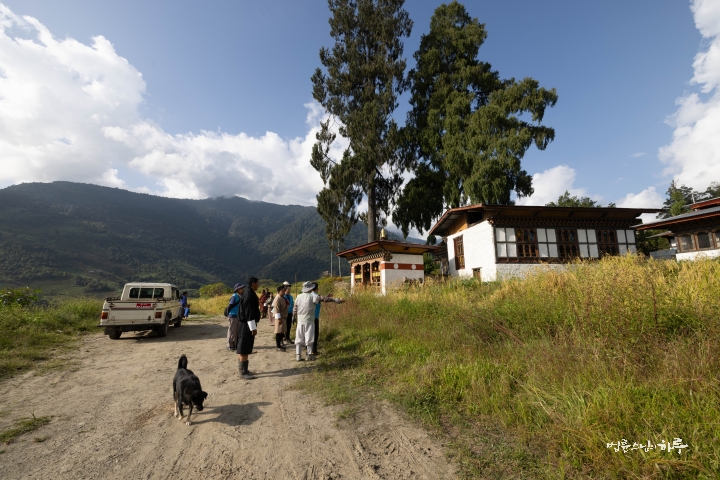
“We’d like to pave the entire area in front of the temple with cement. Many pilgrims visit, and parking is very inconvenient. There’s also a lot of dust.”
Sunim replied.
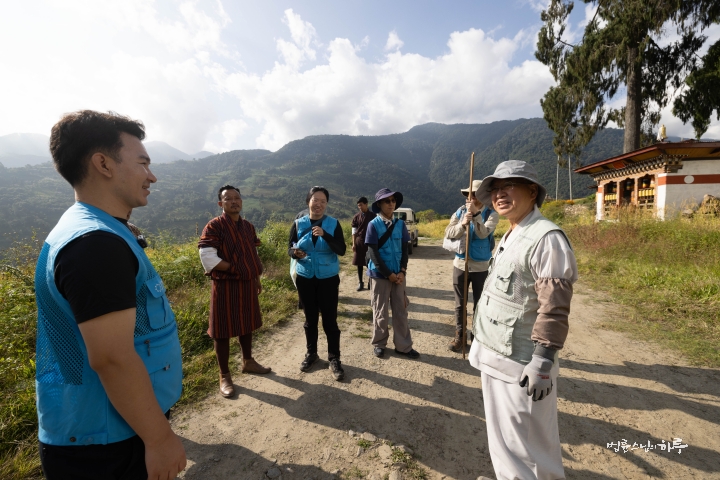
As the Tshogpa was very eager to pave the area in front of the temple with cement, we decided to discuss it again in the afternoon. We then went into the paddy field in front of the temple to help with the harvest.
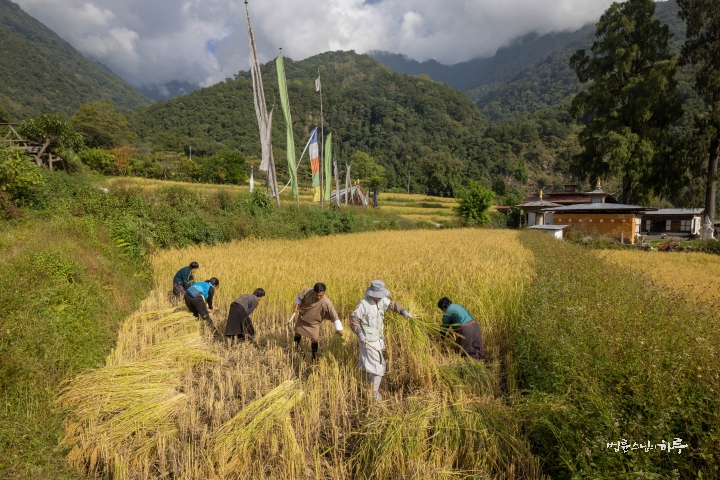
“It’s fine to cut in the middle.”
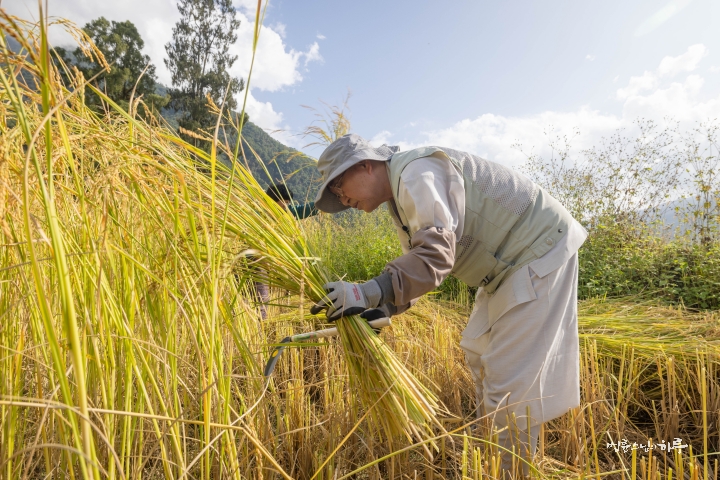
The rice plants were indeed very tall. As Sunim started cutting the rice with a sickle, villagers, central government officials, Gup, Mangmi, Tshogpa, and JTS volunteers all joined in cutting the rice.
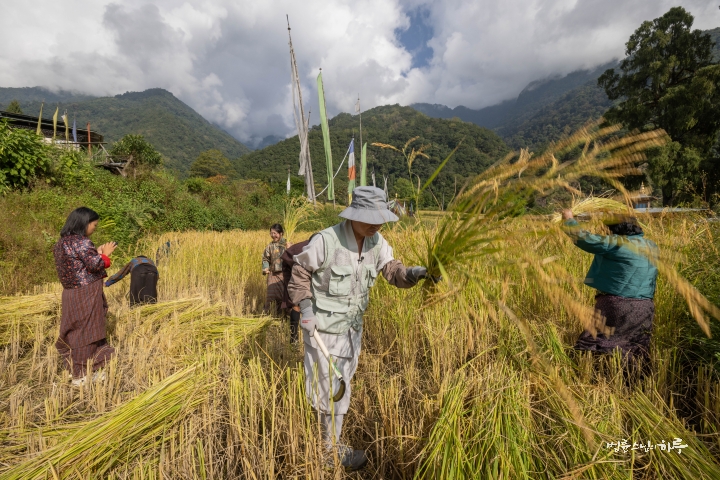
Sunim asked Ms. Yeshi, a central government official:
“Ms. Yeshi, have you ever cut rice before?”“This is my first time using a sickle.”
“This is how we learn, one step at a time.”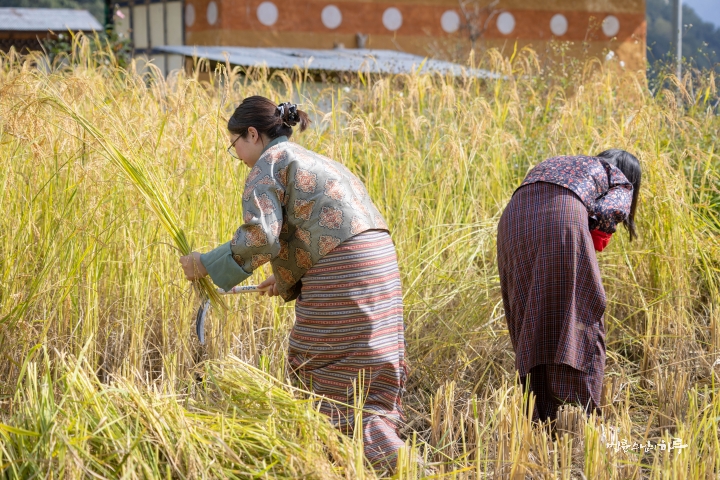
While cutting the rice, Sunim asked the residents various questions.
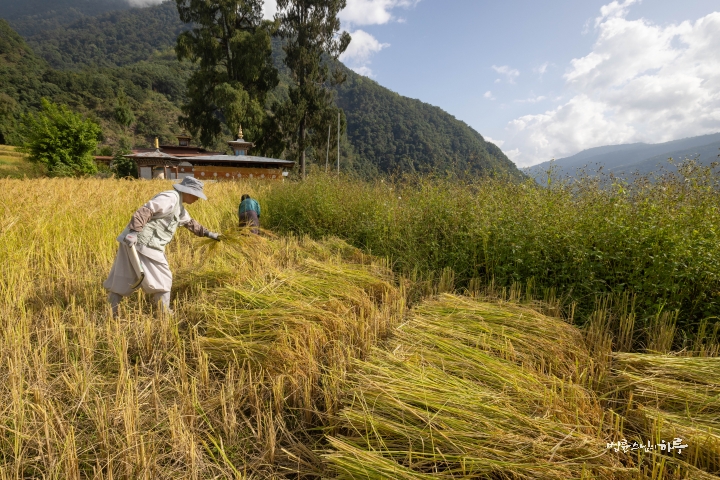
“We don’t have machines. We hold the rice stalks and beat them against stones.”
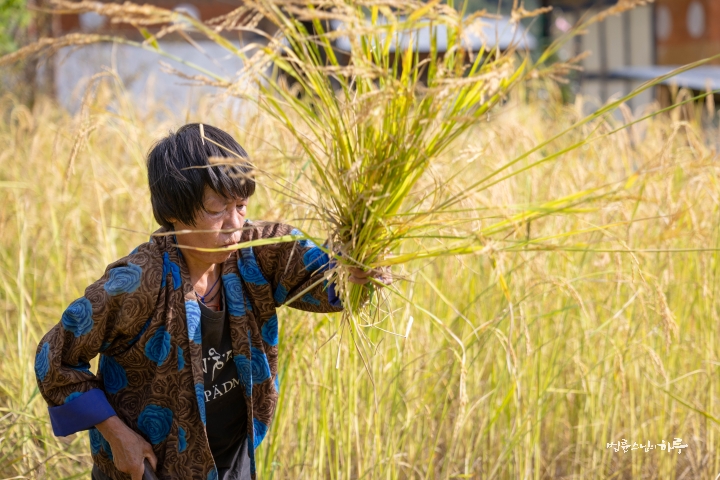
Cutting the rice in the middle made it difficult to gather neatly. However, it was easier in some ways as it didn’t require bending over as much.
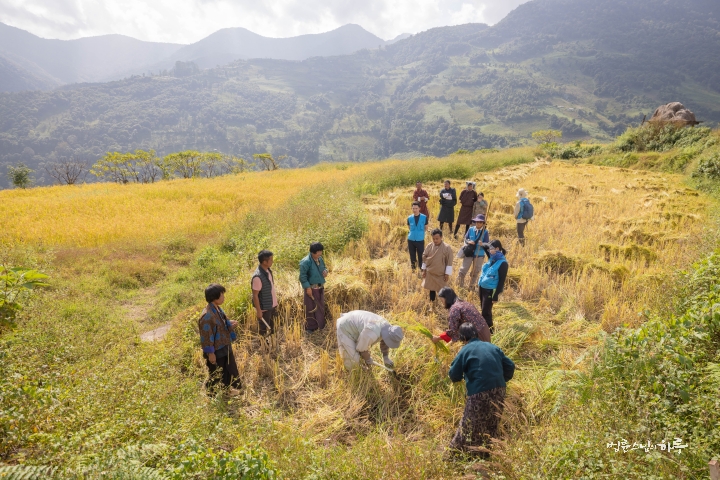
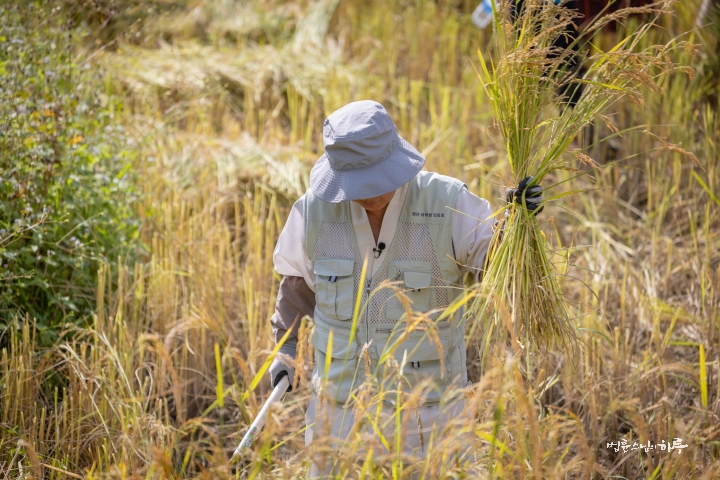
The sound of sickles cutting rice echoed quietly through the mountains for an hour. After all the rice was cut, beads of sweat formed on Sunim’s forehead.
“Good job, everyone!”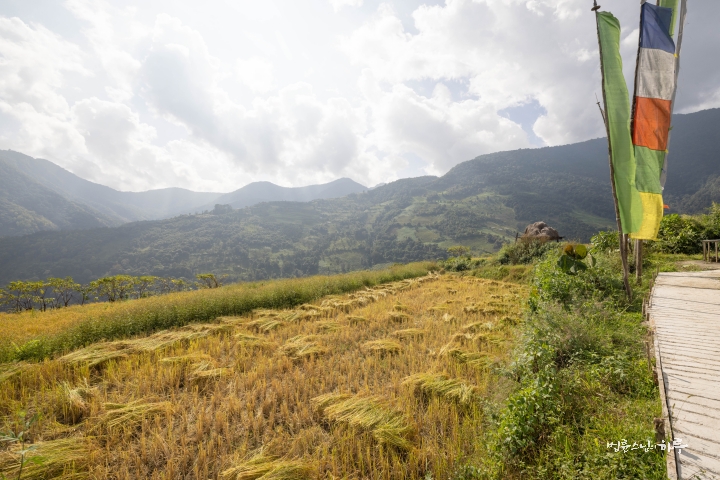
After leaving the rice field, Sunim wiped his sweat with a towel and resumed the inspection.
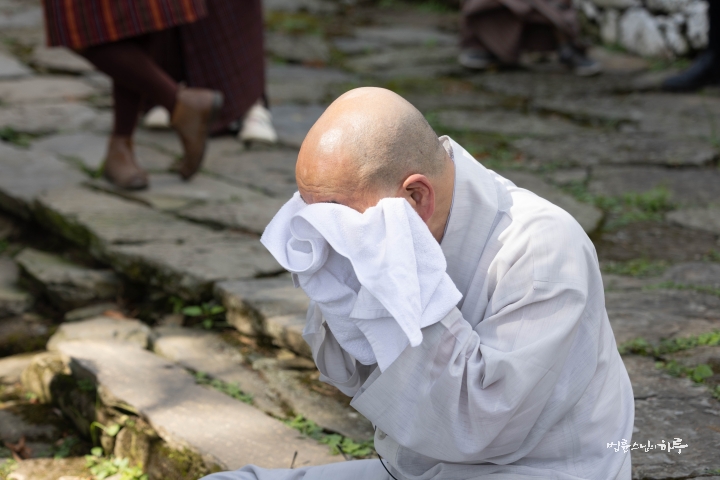
Instead of taking the road, he went down the rice field embankment to examine if a grid-like farm road could be constructed.
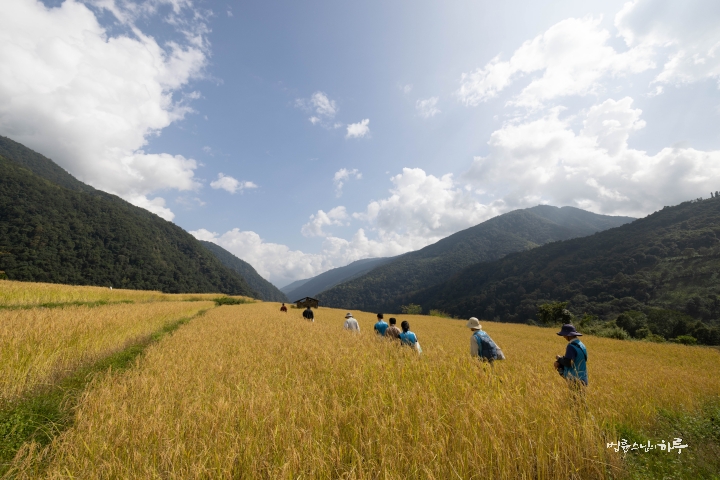
The entire area consisted of terraced rice fields, and the space between the fields seemed too narrow to easily construct new farm roads. After completing the inspection, it was decided to discuss the matter further.
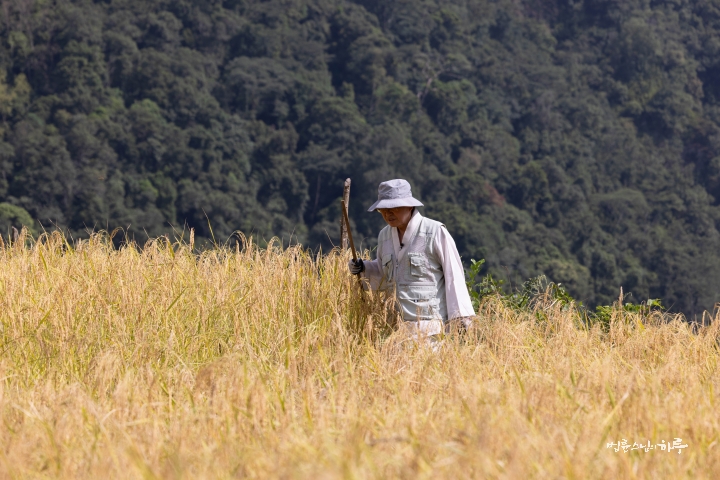
Finally, Sunim inspected the rice field where rice had been planted in rows in the Korean style. Although he could have gone by car, he chose to walk along the rice field embankment, just as the villagers do.
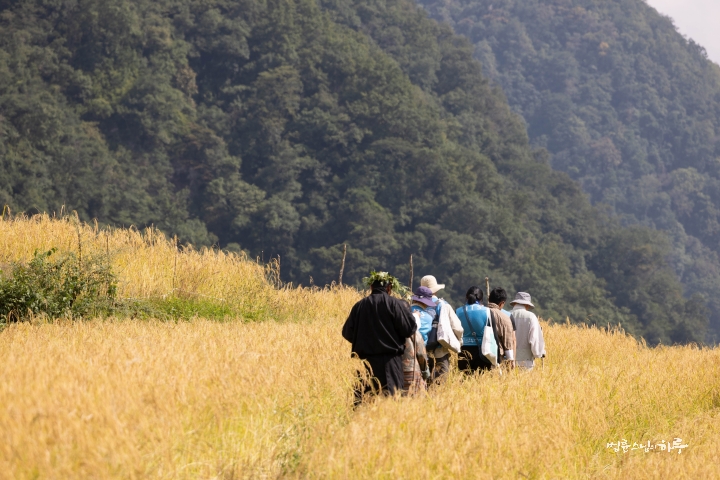
Last April, an agricultural expert from South Korea visited and advised that planting in rows would increase yield, so they experimentally planted one field in rows. Sunim asked Chokba.
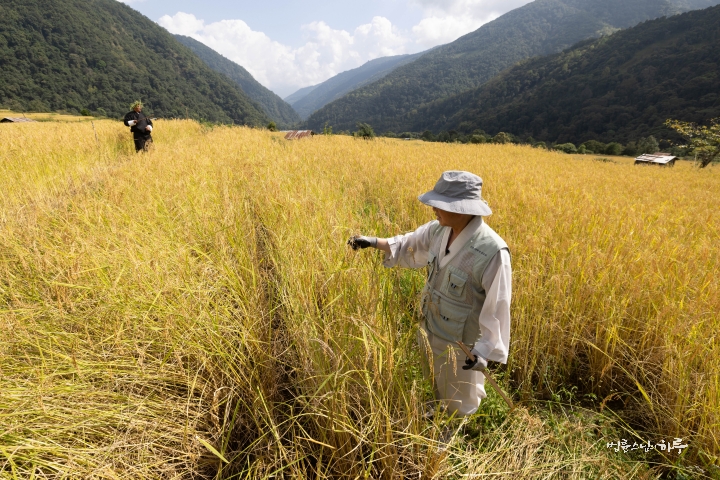
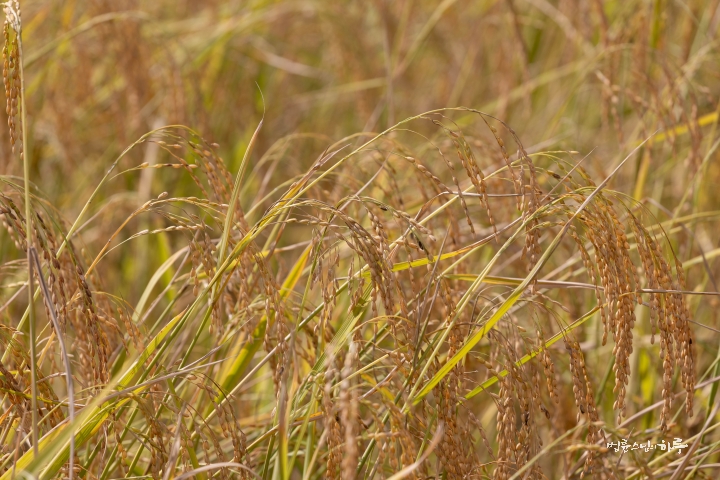
“The rice planted in rows grew better initially after transplanting, but by harvest time, there wasn’t much difference.”
It seemed that whether planted in rows or not, there was little difference, possibly due to the tall variety of rice. After taking photos for comparison, Sunim went outside the field’s fence.
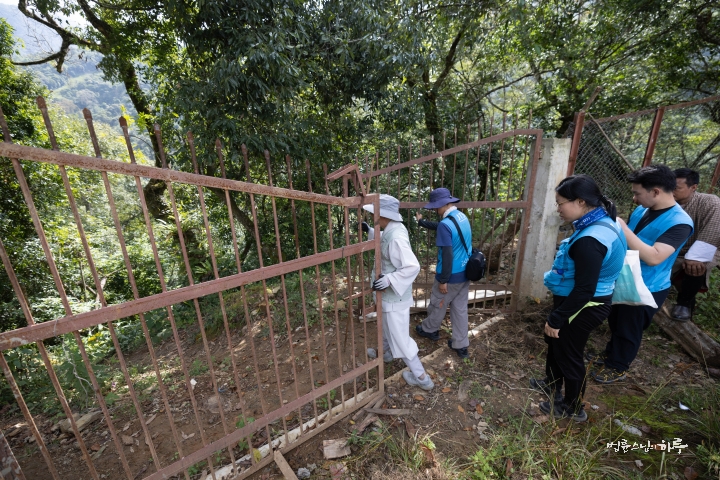
Chokba requested a road be built around the entire outside of the field’s fence. He explained that it was difficult for people to go to work and transport the harvest along the narrow embankments of the field, which extends from the top to the bottom of the hill.
“It would be great if you could build a road around the field to make it easier to transport the harvest. Since it’s difficult to ask people for land inside the field, we’d like to build the road outside the fence.”
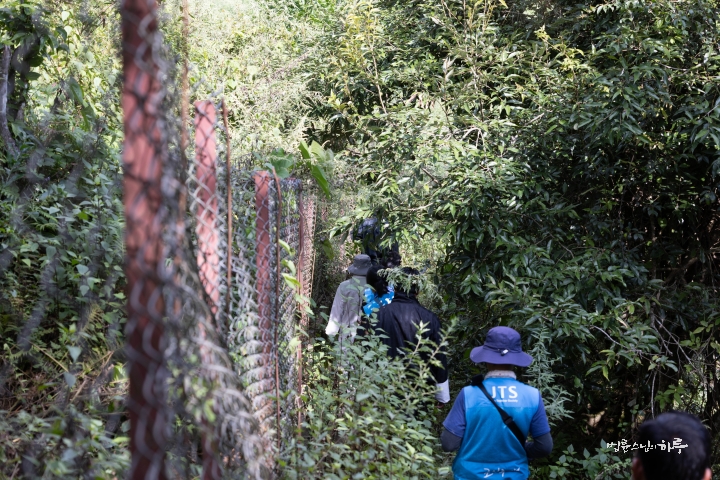
Upon going outside the field’s fence, it was found to be a very steep cliff.
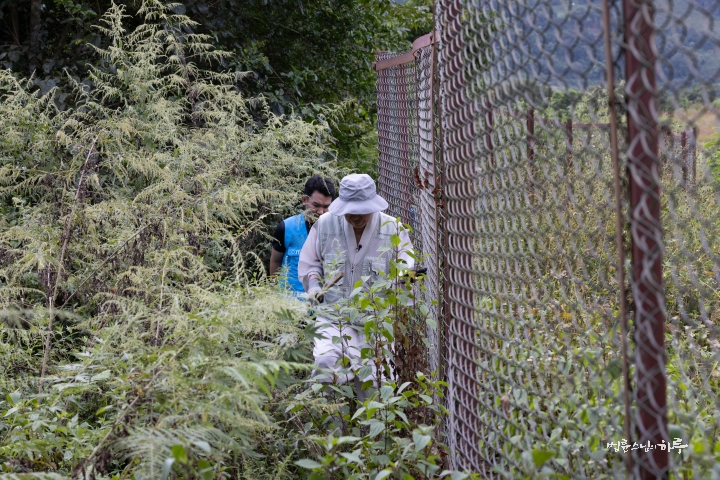
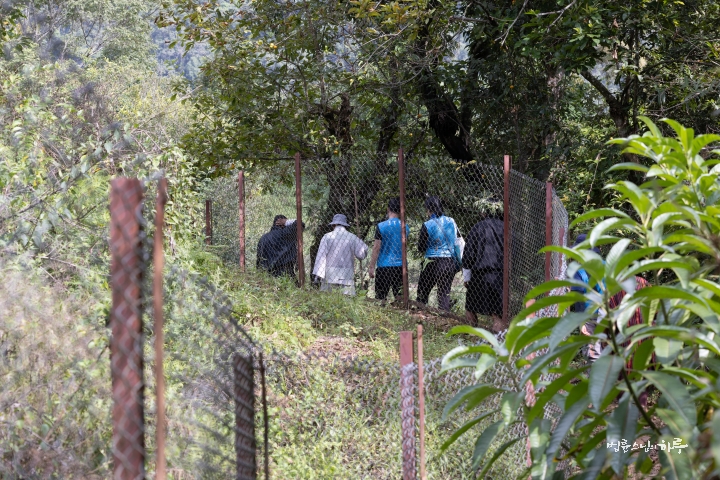
The entire area outside the fence surrounding the field was inspected. It seemed nearly impossible to build a road outside the fence, and even inside the fence, the slope made road construction challenging.
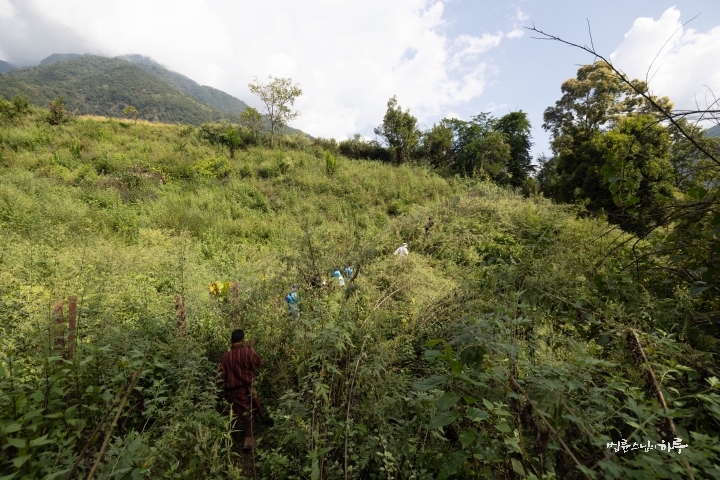
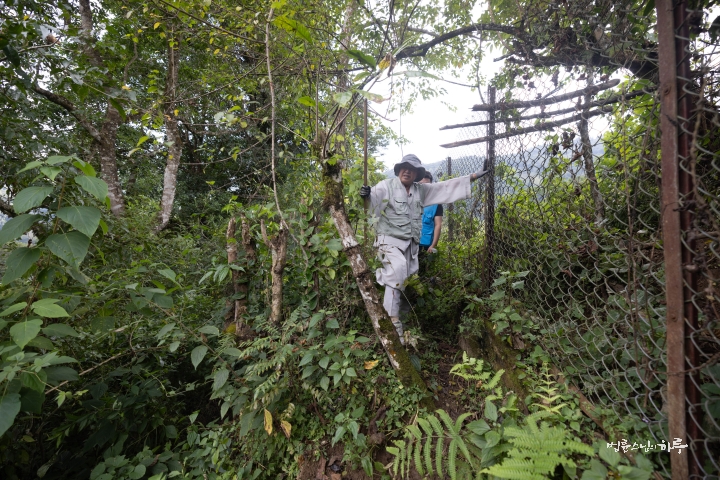
After more than two hours of inspecting the steep terrain, Sunim was drenched in sweat. Despite his knee pain, he completed the inspection without complaint.
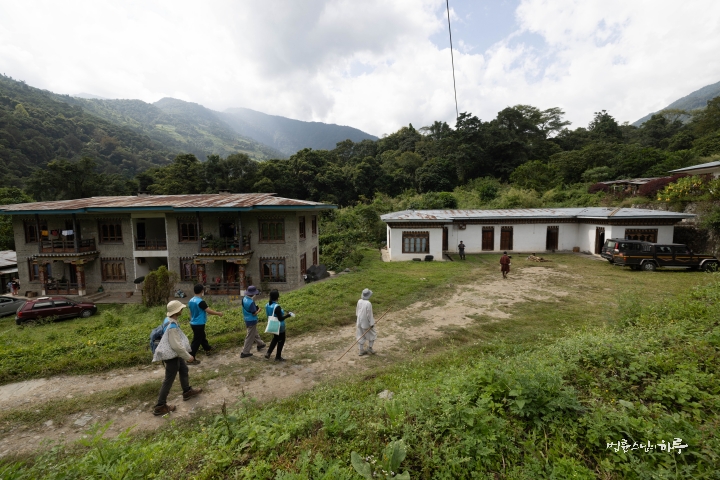
At 11:45 AM, the group arrived at the Kolpu Gyeok office. After a brief rest to recover from the sweat-inducing inspection, lunch was served at 12:30 PM, prepared by Kolpu Gyeok.
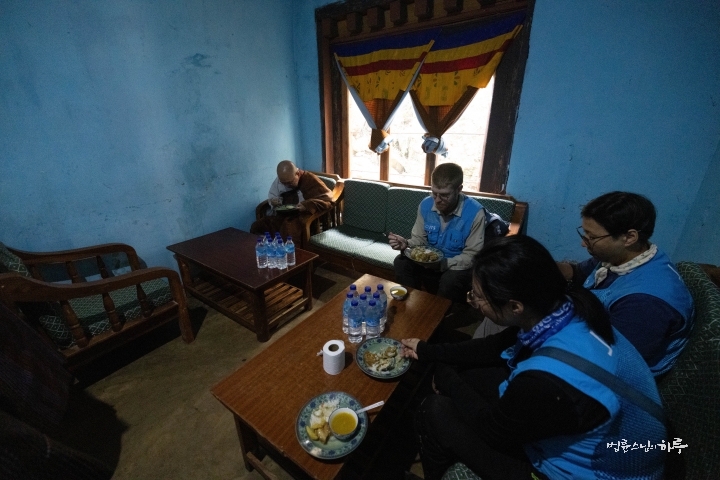
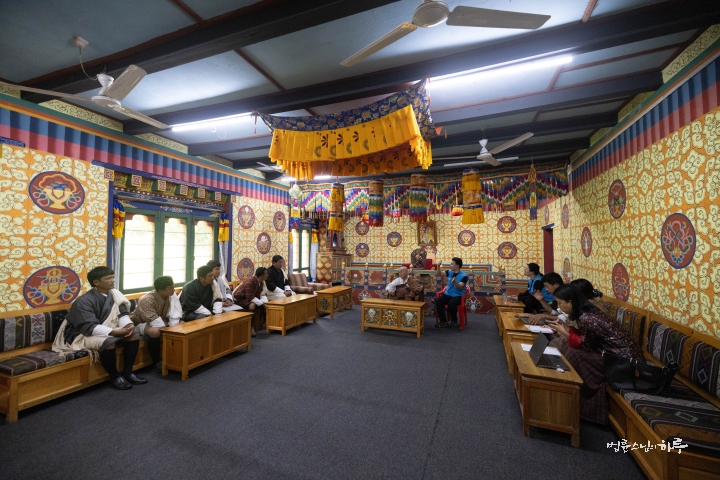
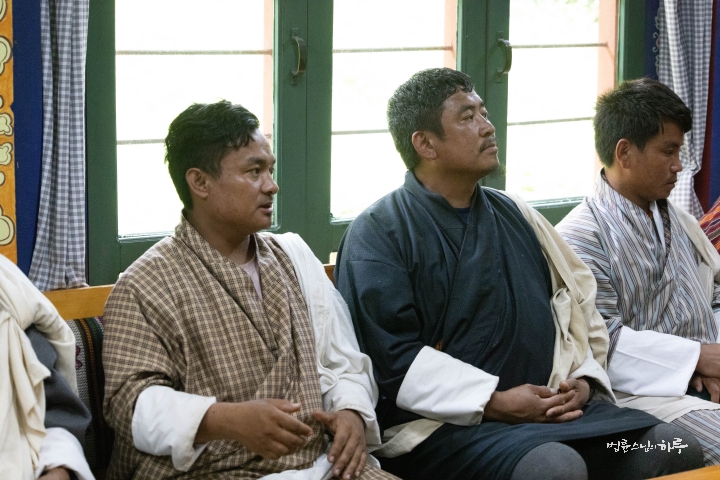
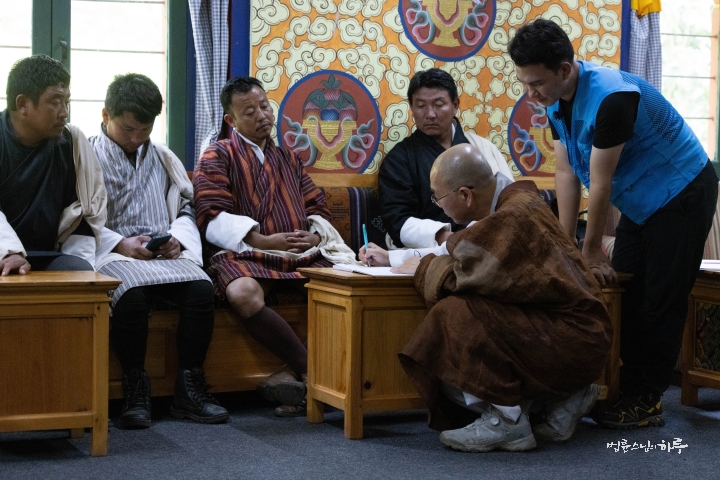
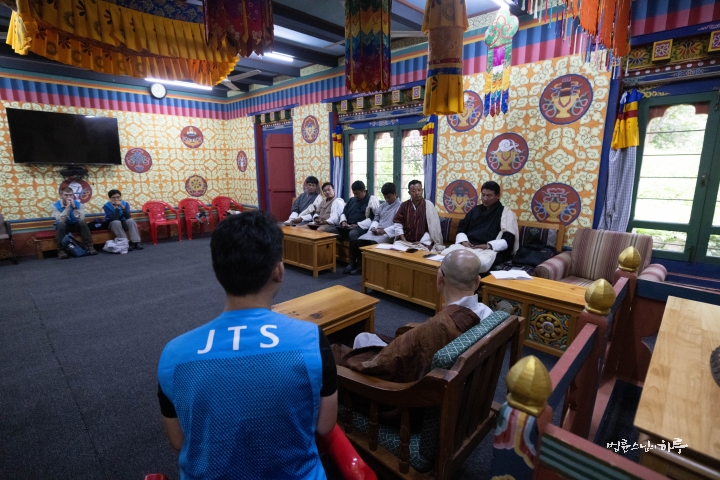
After lunch, at 1 PM, a meeting was held at the Kolpu Gyeok office with Geop, Meongmi, and Chokba present, based on the morning’s inspection. The first topic of discussion was the issue of constructing farm roads.
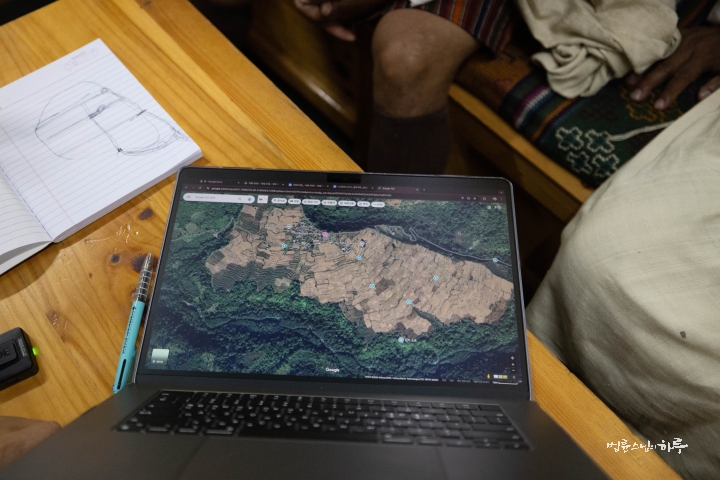
Sunim provided a detailed explanation using Google Maps on a laptop.
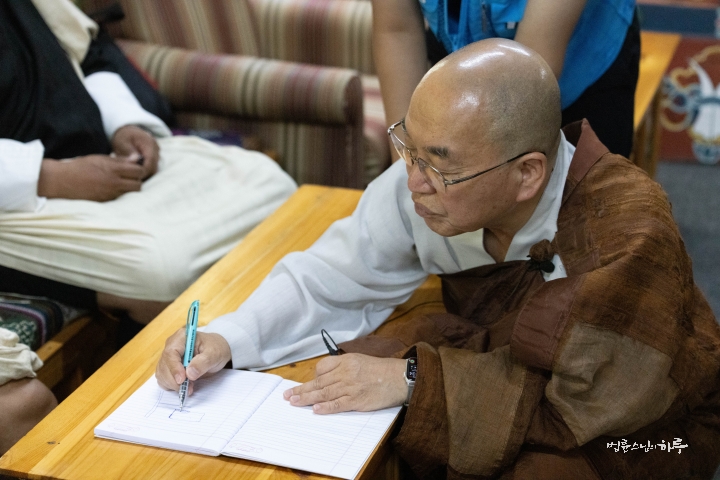
Sunim drew a map on paper and explained again how to build the farm road in a way that was easy for the officials to understand.
Chokba wanted to immediately proceed with building a parking lot and road in front of the temple. However, developing the area around the temple requires a comprehensive plan and the consent of the residents, so it was decided to discuss it during the next visit.
All the residents were busy harvesting, so it was impossible for everyone to gather. Although Chokba was disappointed, it was finally decided to immediately proceed with repairing the reservoir, connecting the unfinished parts of the irrigation canal, and widening the narrow village road to allow cars to pass. The rest would be discussed during the next visit, and the meeting was concluded.
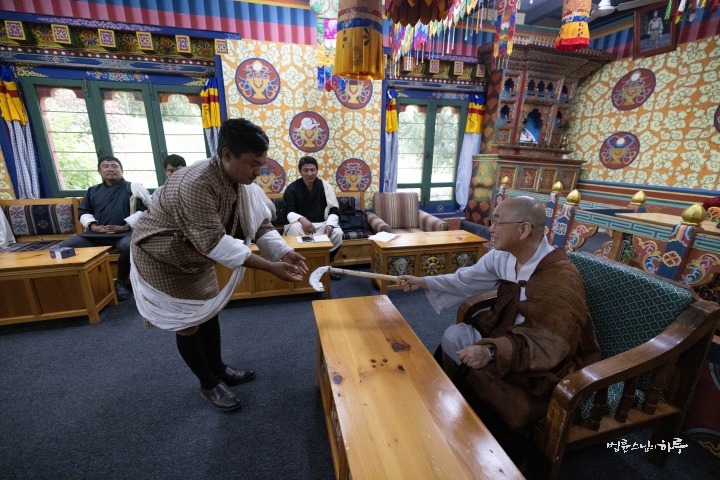
After the meeting, Sunim presented gifts he had brought from South Korea to Chokba. He gave a lightweight sickle that Chokba had praised, and a hearing aid for a deaf villager to try as a demonstration.
They came out of the office and took a commemorative photo together.
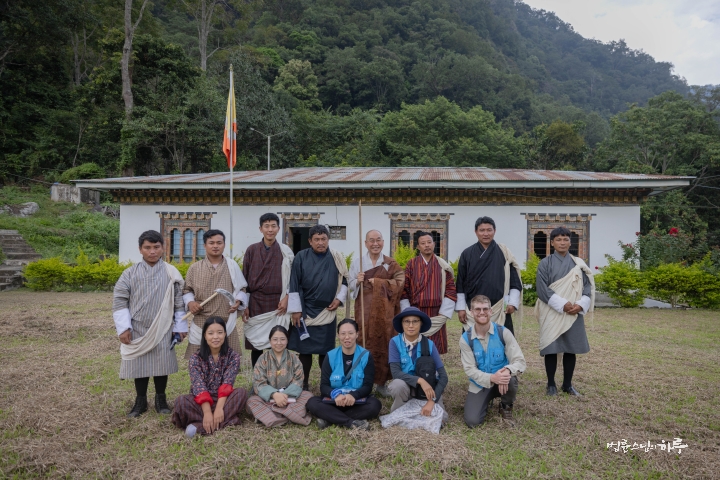
Promising to visit again, they exchanged farewells and at 2:40 PM, got in the car and headed towards Phangkhar Gewog.
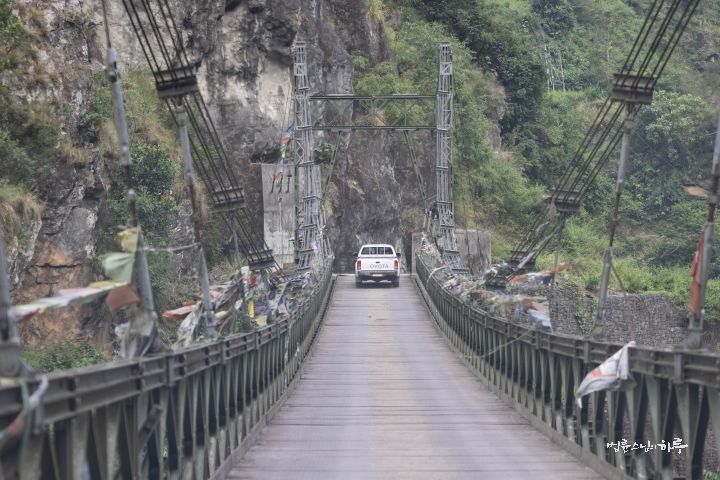
In the first half of the year, a JTS volunteer lived in an empty house in Langdurbi Chiwog, but it was a very remote mountain village with inconvenient transportation. In the second half, they rented a house next to the Phangkhar Gewog office on a main road and set up a temporary office.
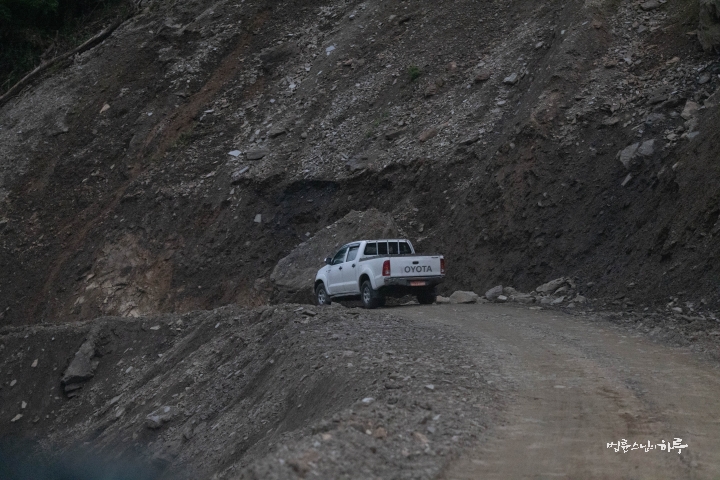
After driving for 3 hours and 20 minutes on mountain roads, they arrived at the Phangkhar Gewog office at 6 PM. The sun had set during the journey.
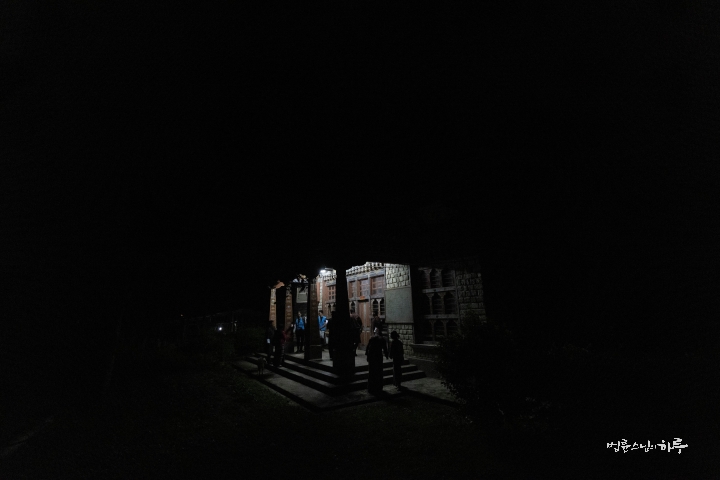
As Sunim got out of the car, the Zhemgang governor warmly welcomed him.
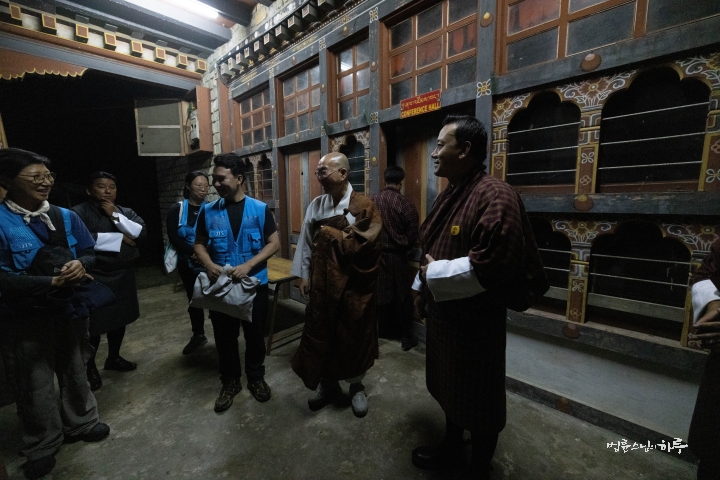
After exchanging greetings, a meeting was held at the Phangkhar Gewog office from 6 PM, attended by the Zhemgang governor and Bhutanese government officials.
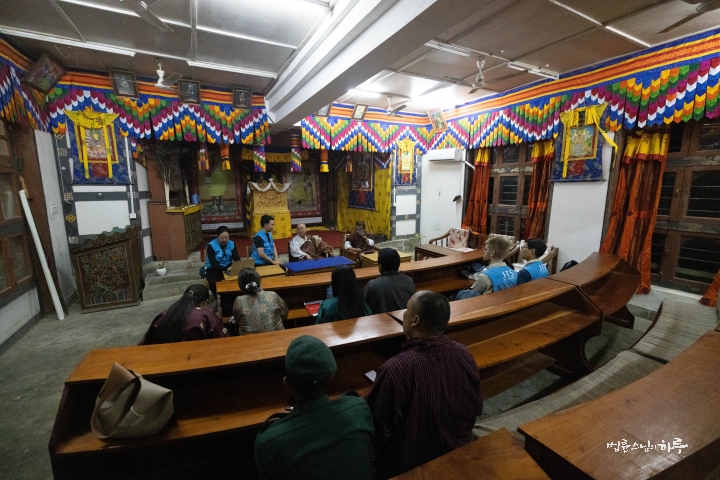
First, Sunim shared the details of his field investigation of Nabji Chiwog, then discussed the next visit schedule for December with the Zhemgang governor. A Zhemgang official reported a schedule for Sunim to visit all the Chiwogs in Zhemgang from December 25 to January 7.
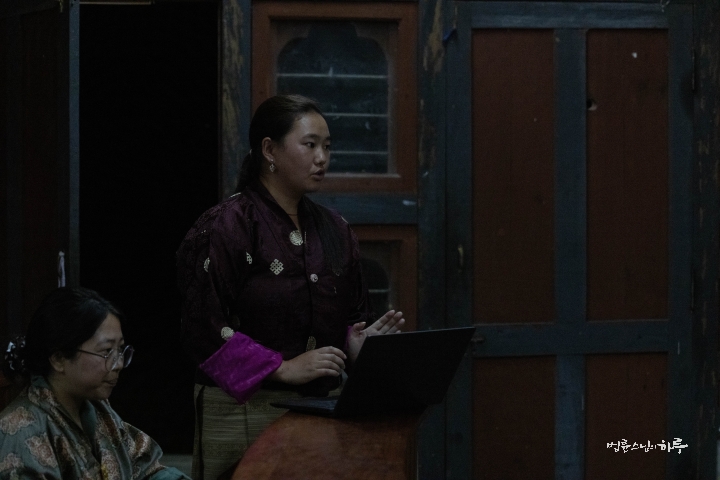
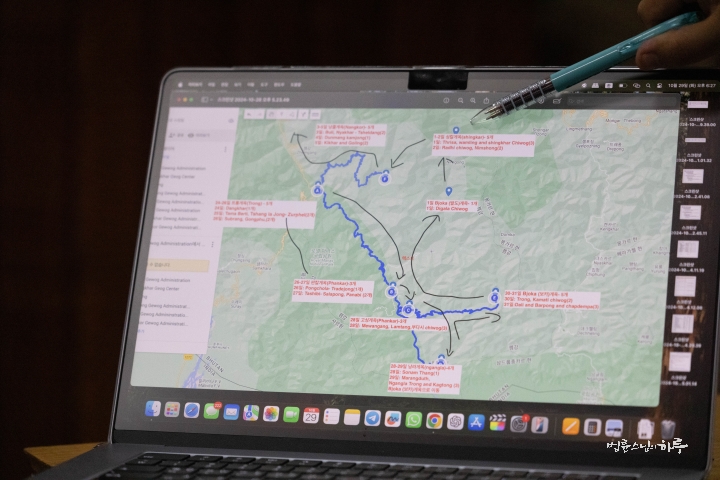
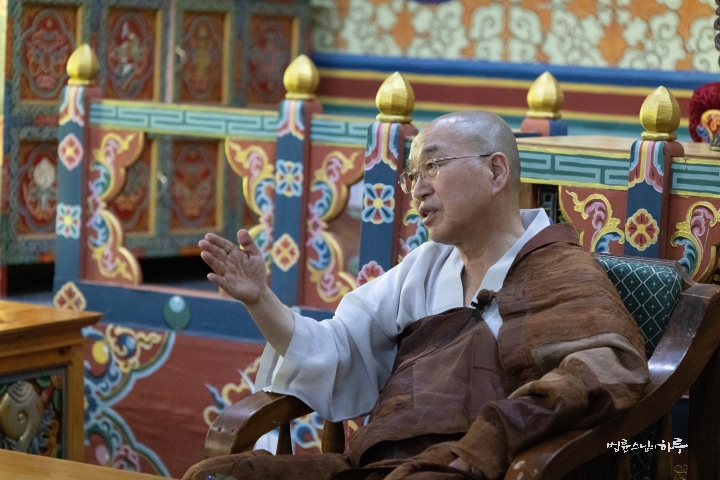
After hearing the report, Sunim spoke.
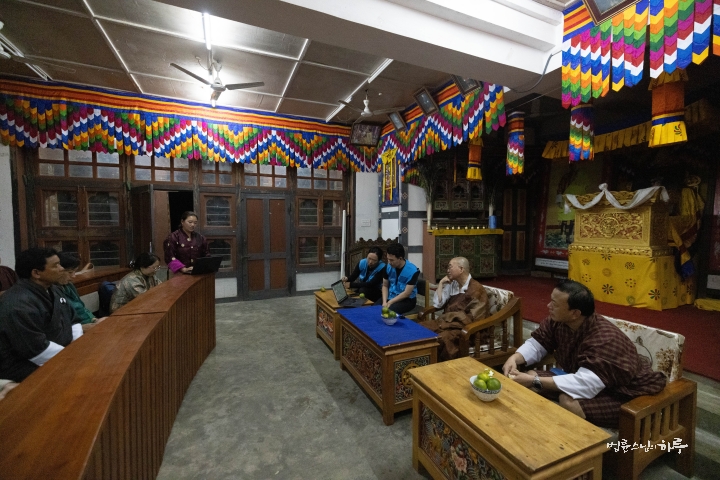
He then explained plans for ophthalmology, dental, and ENT medical activities starting next year, as well as plans to send volunteers from South Korea. He also shared news about the recent completion of a new school in the Turkey-Syria border region that had collapsed due to earthquake damage.
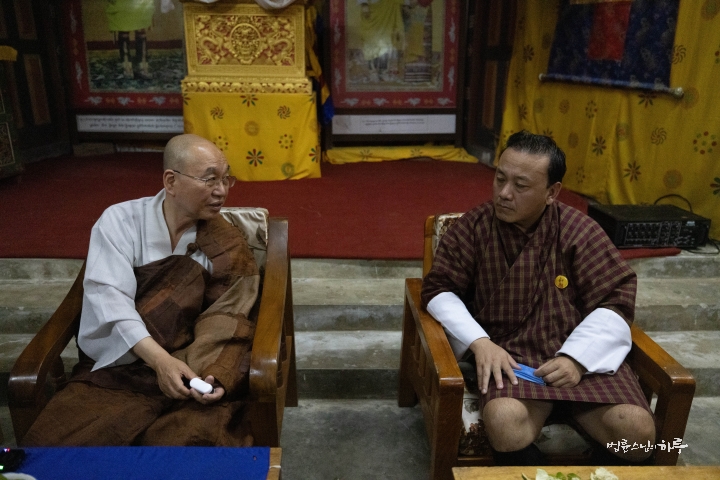
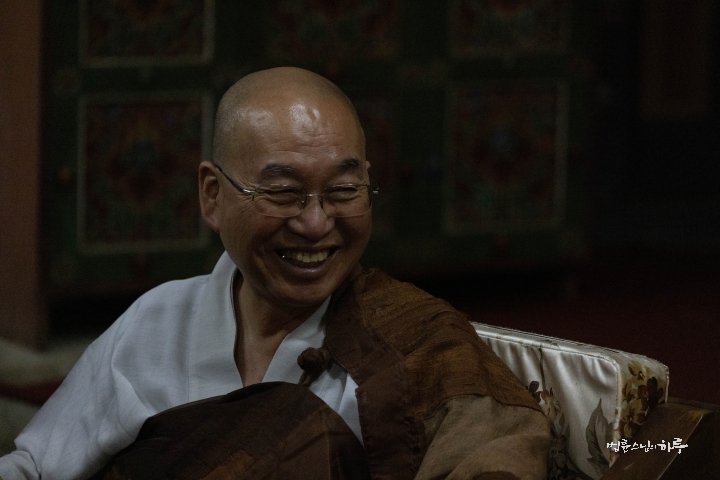
“That’s right.”
As the conversation ended, Sunim expressed his gratitude to the Zhemgang governor.
“Thank you for agreeing to attend tomorrow’s completion ceremony despite your busy schedule.”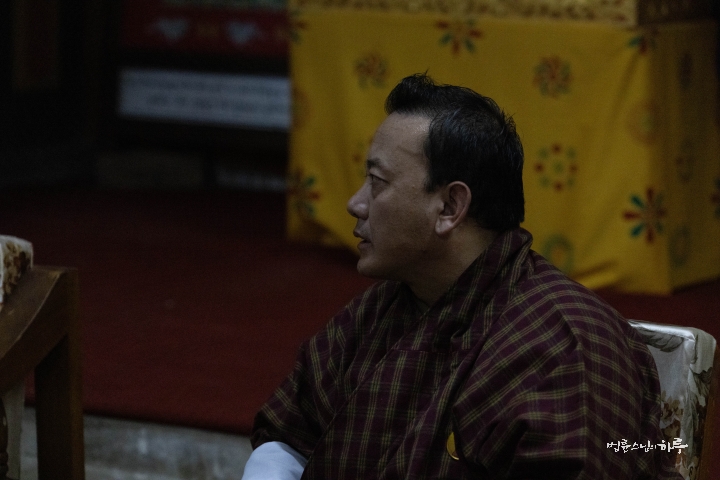
The Zhemgang governor also expressed his gratitude to Sunim.
“You’ve come from far away and are working hard, so I should gladly join you. I’m really busy too, but tomorrow is the day you complete the first project in Zhemgang with the residents, so I’m happy to be there.”
“It’s the first project in Zhemgang, so if you give some encouraging words to the residents, they will be more motivated.”The Zhemgang governor offered to provide the Pangtang Eco-lodge hotel as accommodation for Sunim, but Sunim politely declined, saying he needed to personally stay at the lodging where the JTS volunteers were living. The governor also offered to host dinner, but Sunim declined and went to the temporary lodging where the JTS volunteers were staying to share the meal they had prepared.
After the meal, the house owner came with flowers and fruit to welcome Sunim. The owner greeted him in Korean, thanking him for visiting Bhutan.
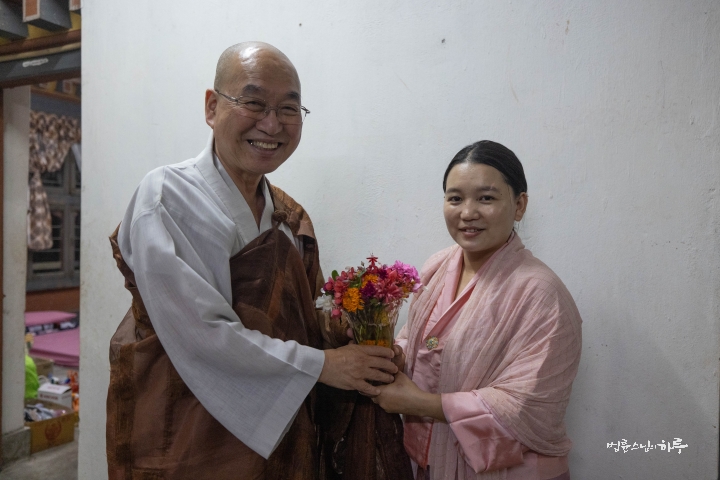
“Thank you.”
“Oh, you can speak Korean.”“A little. I learned from watching Korean dramas.” (Laughter)
Sunim also gave socks and toothpaste he had brought from South Korea as gifts.
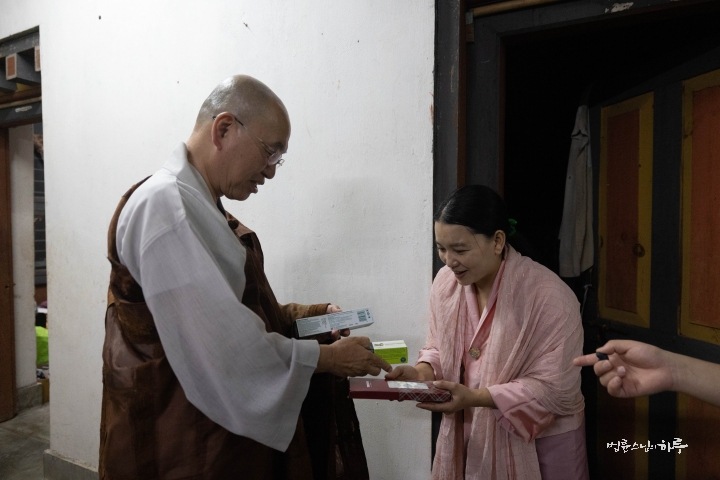
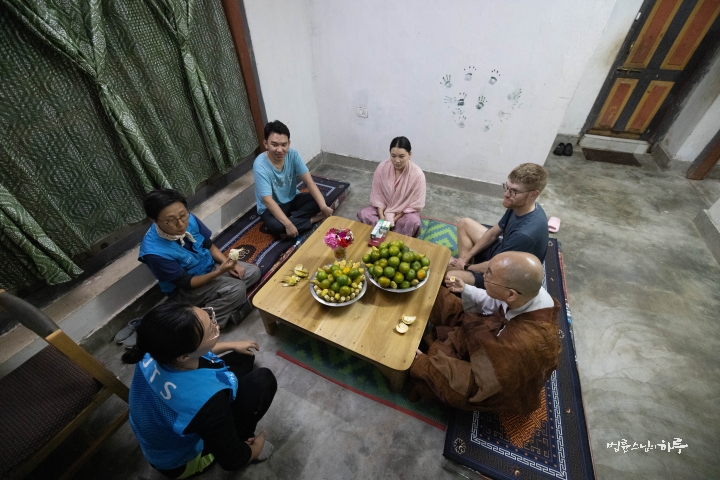
They sat around eating fruit and exchanging greetings with the house owner, concluding the day’s schedule.
Since there was no Dharma talk today due to the all-day field investigation, I’ll introduce the content of a conversation between a questioner and Sunim from the live Dharma Q&A broadcast on the 25th.
Even When I Travel for a Few Days, Not a Single Friend Sends Me a Message
“I often feel lonely because I don’t have friends. It seems like people just pass by and don’t stay by my side. I had a difficult childhood living under an abusive father, and after marriage, my husband, who grew up in a broken family, didn’t know how to give love and wasn’t family-oriented. Raising a son with intellectual disabilities has been so difficult and intense that I find it hard to make friends. I wish I had just two or three true friends. What should I do?”
“It’s good not to have friends. It becomes a problem when you keep obsessing over the idea that you should have friends. Conversely, if you obsess over the idea that you shouldn’t have friends, having friends becomes a problem. They say life is about coming alone and leaving alone, right? A friend simply means someone you know. But you’re idealizing friendship too much, thinking of it as someone with whom you can deeply share what’s in your heart. That’s why you think there’s no one like that around you.
“I know someone who returns from a trip and finds 50 KakaoTalk messages on their phone. They have so many people around them. But when I come back from a week-long overseas trip, I don’t receive a single message. In the past, I had a friend whom I loved dearly, but after several decades, I realized they didn’t want me to get close, and our relationship ended. When I return from overseas or when I’m sick, I don’t receive any messages from anyone. I often wonder, ‘Why don’t people want to be close to me?'”
“Try setting some principles for yourself, like ‘I’ll always lend money to anyone who needs it’ or ‘I’ll buy a meal for anyone who calls me.’ If you go abroad for a week, you might come back to find over 100 calls from people asking to borrow money. You might also have over 100 calls from people asking you to buy them a meal. Most of the time, people contact others when they need something. No one contacts you if they don’t need anything. If people contact you frequently, it means they need you. If you don’t receive many calls, it means people don’t need you much.
“Yes, I understand.”
“Don’t crave contact from others too much, and don’t feel disappointed when you don’t receive calls. Life is ultimately solitary. When we die, we can’t take our spouse, children, or parents with us. That’s the nature of our lives. It’s very important to be able to stand alone in life.
“Thank you.”
Tomorrow morning, Sunim will move to Goshing Gewog to attend the completion ceremony for the water supply project in Rimathang village, followed by the completion ceremony for the water supply project in Rebati village. In the afternoon, he will travel to Trongsa, and in the evening, he will have a meeting with the Trongsa governor.