Why Can’t We Feel Satisfied Even After Getting What We Want?
Oct 13, 2024 - Historical Tour of Gyeongju with Happy Citizens
Hello. Today, about 800 Happy Citizens from all over the country have gathered for a historical tour of Gyeongju with Venerable Pomnyun Sunim.
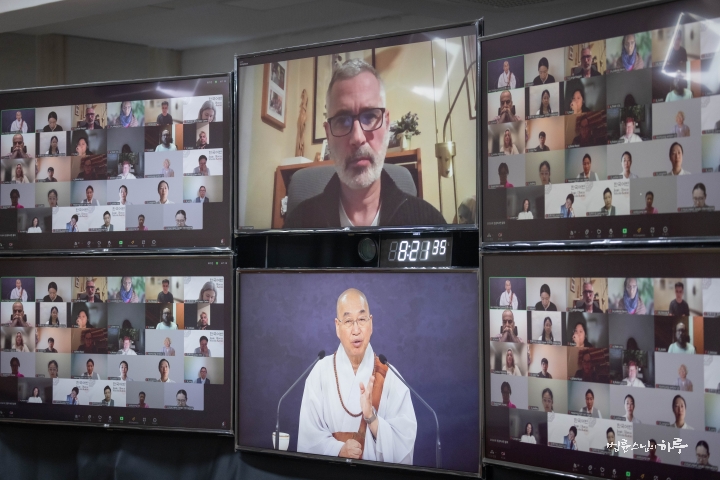
After completing his morning practice and meditation, Sunim began his day at 8 AM with an online Dharma Q&A session with students from the Jungto Dharma School. The Jungto Dharma School is an English-language course equivalent to the Jungto Buddhism Course. Seventeen students from the Western and Eastern United States, Canada, the United Kingdom, Germany, Cyprus, Indonesia, the Philippines, Vietnam, Hong Kong, and Korea are attending the class.
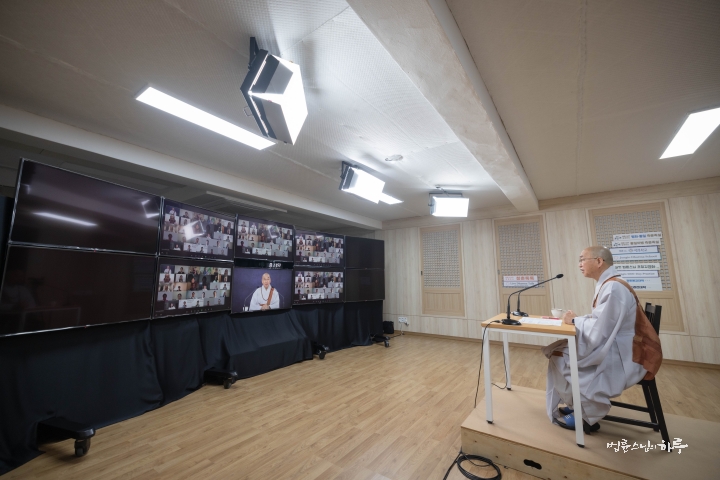
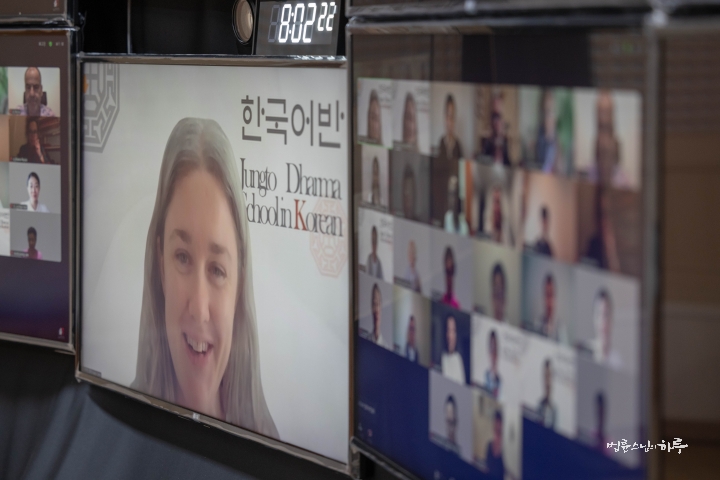
After hearing feedback from a few participants, everyone bowed three times to Sunim, requesting his Dharma teaching. Sunim greeted them.
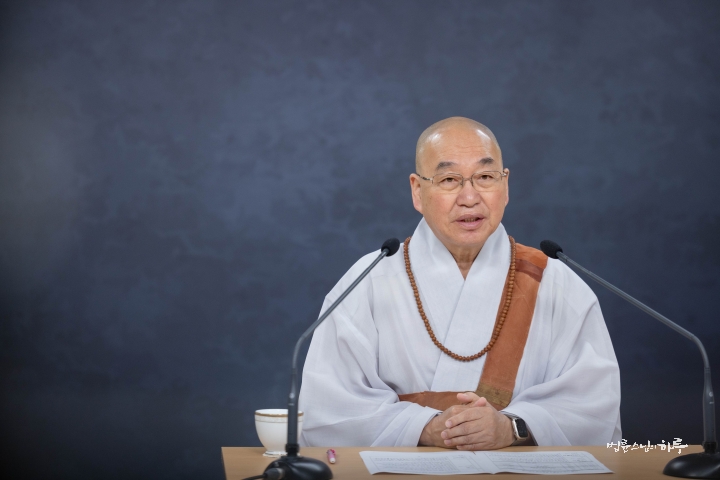
Today is an opportunity for you to freely discuss any difficulties or questions you have while studying at the Jungto Dharma School, or any personal concerns. There are no fixed answers to any problem. However, it’s necessary to understand things as close to the truth as possible. Now, let’s hear your stories.”
For an hour and a half, four people pressed the raise hand button and conversed with Sunim. One of them asked how to approach practice and maintain perspective, noting that despite striving for desired outcomes, satisfaction remains elusive even after achieving them.
Why Can’t We Feel Satisfied Even After Getting What We Want?
“Why is there always a contradiction in human behavior? First, We desire something, when we get it we feel happy for a short while, but soon after, we return to a sense of lack. For example, I want to be successful or earn a lot of money, but when I get it, the feeling of satisfaction is somehow lacking; it is not the same feeling of satisfaction that I had before when I only imagined getting it. Second, a desire arises in me to do something, but I find myself lazy or procrastinating about doing it. For example, I have a desire to read self-help books to improve myself, but after buying about 20 books, I don’t read them at all. Why is that? Why did I want to do it in the first place if I am not going to do it later? Is the ‘me’ of yesterday, who has the desire to do something, and the ‘me’ of today, who feels lazy to do it, not the same person? These are some of the cases where I somehow feel that there is a contradiction in my behavior and I feel that there is no consistent ‘me’.”
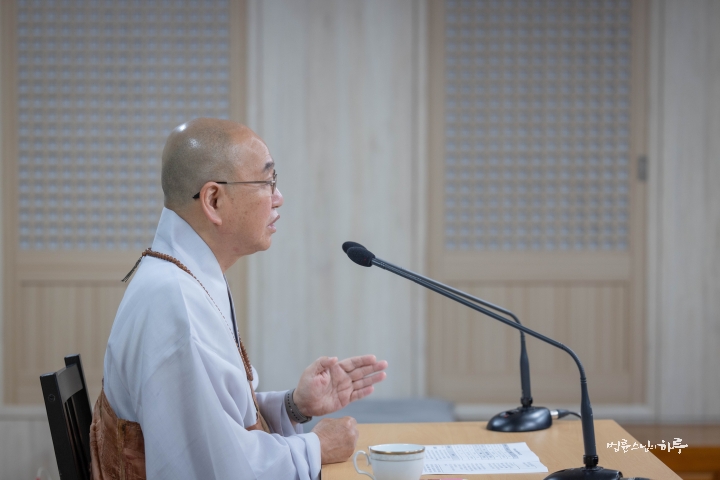
Once you understand this nature of the mind, you can live accordingly. For example, when poor, one might think, ‘If I just had $10,000, I wouldn’t want anything more.’ So when they get $10,000, they’re very happy. But soon, it starts to feel like $10,000 is not enough. Then they think, ‘If I had $1 million, I really wouldn’t want anything more.’ But when they get $1 million, the joy is fleeting. Next, they feel they need $1 billion. If you see through this, you realize that having a lot of money doesn’t make you happy. The same goes for status, popularity, or health. When sick, we think we’d be content if only we weren’t ill, but once healthy, other desires arise. Understanding this principle helps you learn to be content here and now. This doesn’t mean you shouldn’t take any action. If necessary, you can earn more money or seek a higher position. But that doesn’t necessarily make you happier. So, whether rich or poor, high-ranking or low-ranking, everyone can live happily, right? If this trait didn’t exist, it would mean that those with high status or wealth should be happier, and those with low status or poverty should be unhappy. That’s why it’s important to understand this not as a contradiction, but as the inherent nature of how the mind works.
The human mind is always changing. It’s particularly influenced by the six sense organs. For example, if you go to a wedding and see someone getting married beautifully, you might think, ‘I want to get married too.’ Or if you meet a monk or a priest who seems admirable, you might think, ‘I should become a priest or a monk instead of getting married.’ Or if you see someone who did great things for the country and died, with many people respecting them, you might think, ‘I want to die with dignity too.’ But what would happen if people did everything their mind suggested? Would you get married today, divorce tomorrow to become a monk, and die the day after? It’s natural that you feel one way today and another way tomorrow. That’s why the Buddha spoke of ‘observing the impermanence of the mind’ (관심무상, gwan-sim-mu-sang). The mind is not constant; it always changes according to conditions. So, the mind is not something to be fully trusted. Therefore, when a thought arises, you should observe it like, ‘Oh, this kind of thought is arising now.’ Like, ‘Now, I want to read that book!’ Tomorrow, a different thought might arise. So it’s not that you don’t want to read anymore, but that a different thought has arisen, and you’ve lost interest in that book.
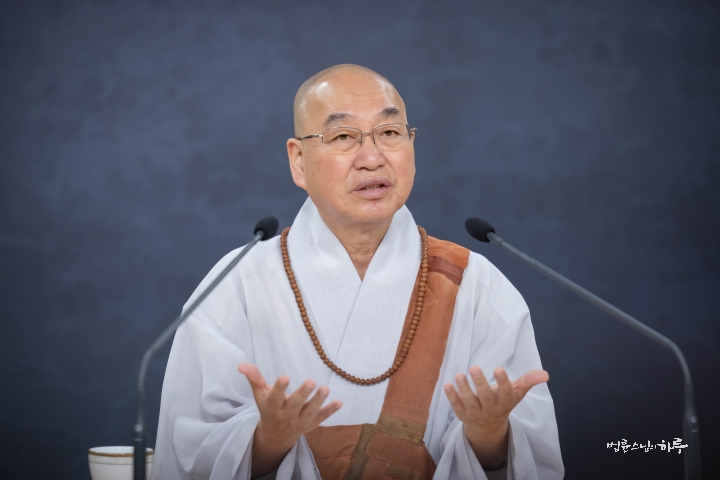
Elections are also changing. In the U.S. presidential election, the ability to raise money for advertising has become more important than a candidate’s actual capabilities. Nowadays, artificial intelligence is used to create personalized advertisements tailored to each individual. When people see these ads, they’re stimulated in a way that appeals directly to them, leading them to vote without considering the candidate’s abilities or other qualifications.
Whenever such emotions arise, we need to briefly observe them, thinking, ‘Oh, this feeling is arising now!’ and calm our minds. This way, we can avoid these temptations. We should just observe, ‘This feeling is arising now!’
“I understand. Thank you.”
After answering the following questions, Sunim concluded the live broadcast at 9:30 AM.
Upon leaving the broadcasting studio, Sunim immediately headed to Gyeongju for a historical tour with Happy Citizens.
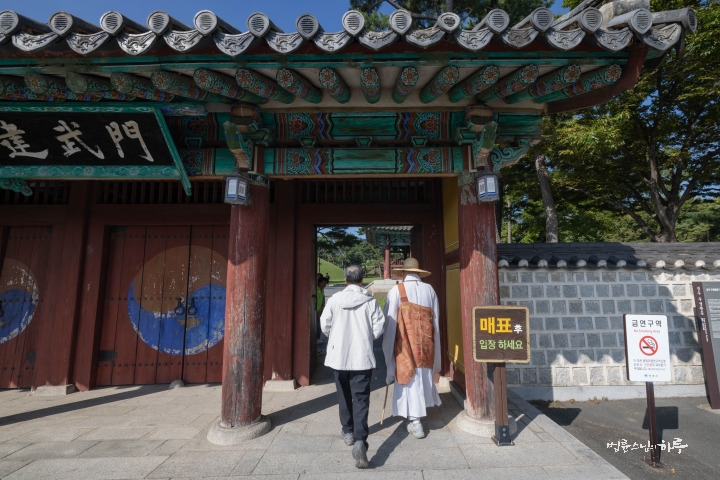
Today, Sunim planned to tour the Royal Tomb of King Muyeol, General Kim Yu-sin’s Tomb, Sacheonwangsa Temple Site, and Queen Seondeok’s Tomb with about 800 Happy Citizens from across the country. The goal was to discuss what perspective one should have to carry out activities with a proper historical consciousness.
Early in the morning, Happy Citizens who had departed early from all over the country were arriving at King Taejong Muyeol’s tomb. At 10 AM, when everyone arrived, the Gyeongju historical tour for Happy Citizens began. Sunim greeted everyone warmly and explained the purpose of this Gyeongju historical tour.
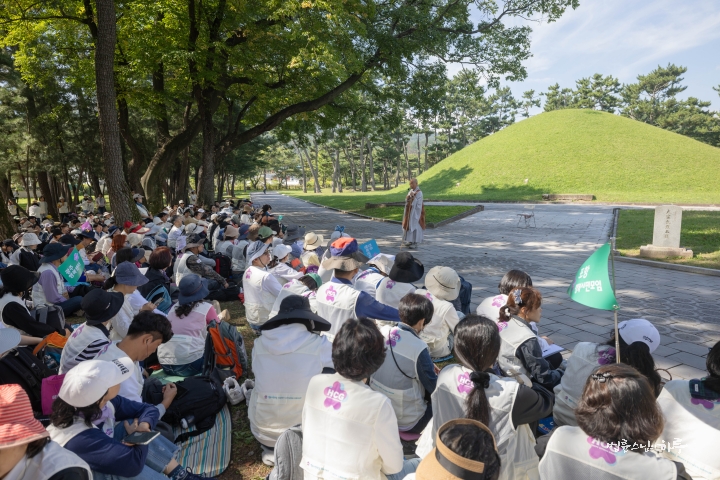
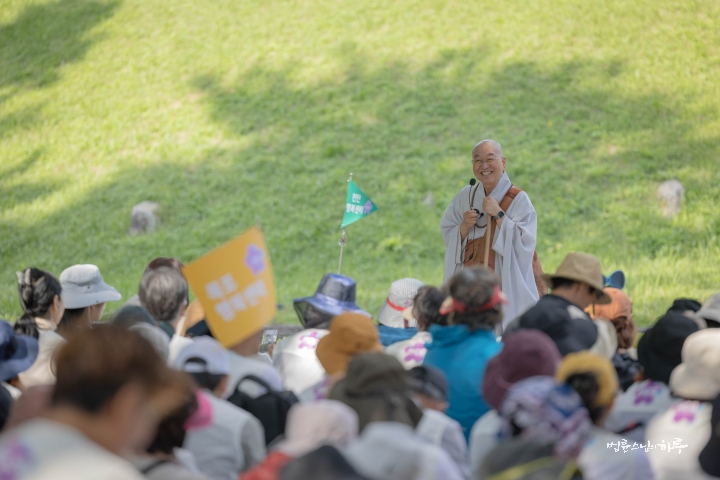
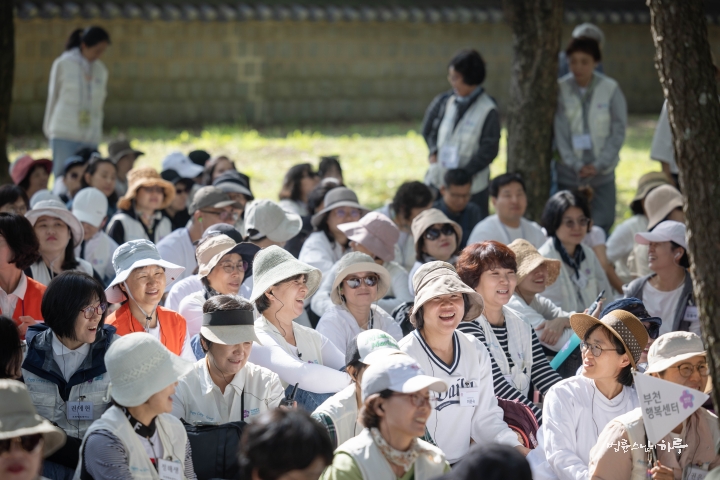
Lessons from the Consensual Unification of Silla and Gaya
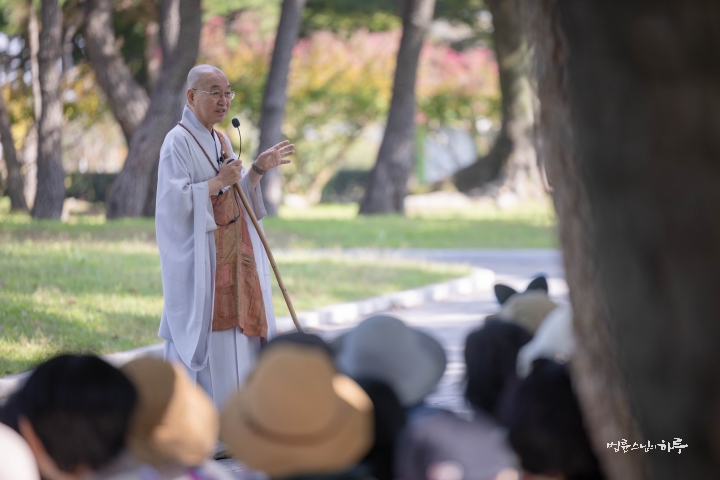
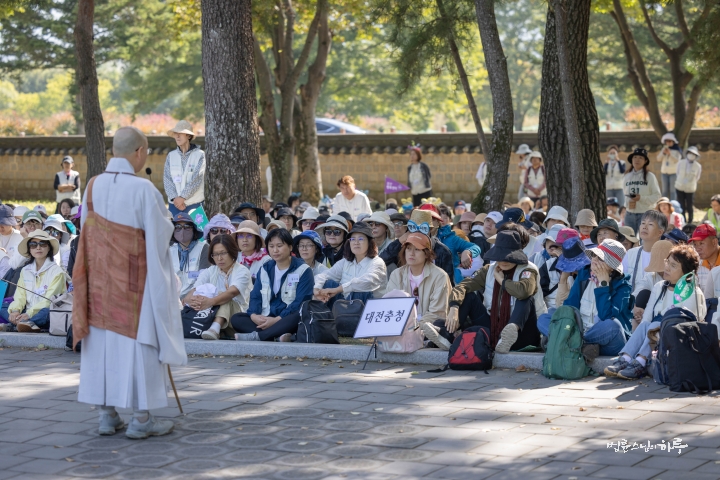
As sunlight flickered through the clouds, a cool autumn breeze blew. The trees surrounding King Muyeol’s tomb appeared even greener. The members of the Sangha, basking in the sunlight to relieve their fatigue, were captivated by Sunim’s words.
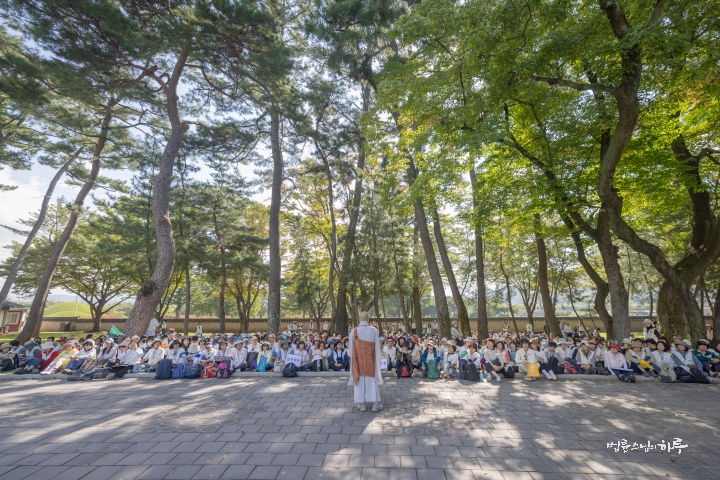
While there were limitations to Silla’s unification of the Three Kingdoms, there were certainly lessons for today’s South Korea to learn. After listening to an hour-long explanation, people stood up and walked around King Muyeol’s tomb. Exiting through the back gate, the Seoak village appeared at the foot of Seondo Mountain.
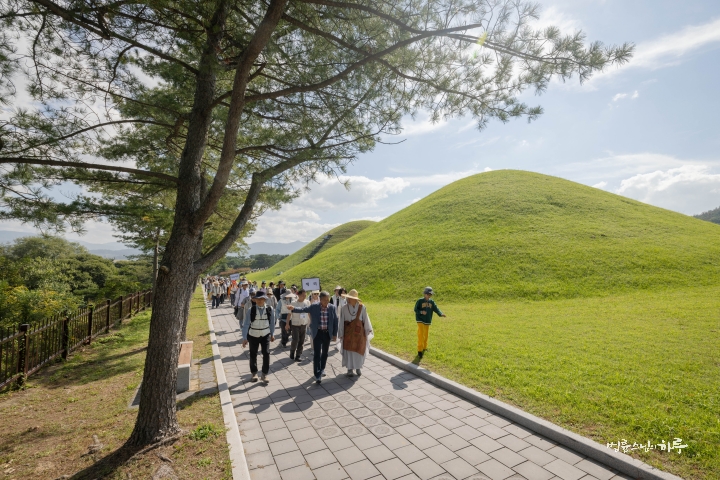
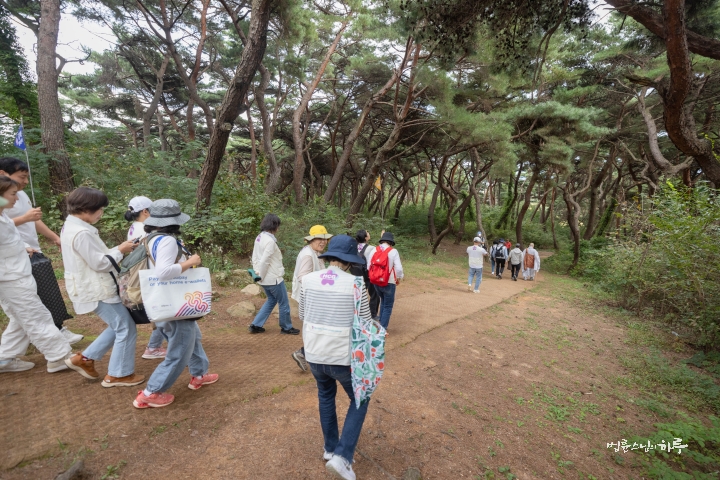
About 800 people formed a long procession, walking through the alleys of Seoak village to explore the area. Beautiful chrysanthemums were blooming along the roadside in various spots.
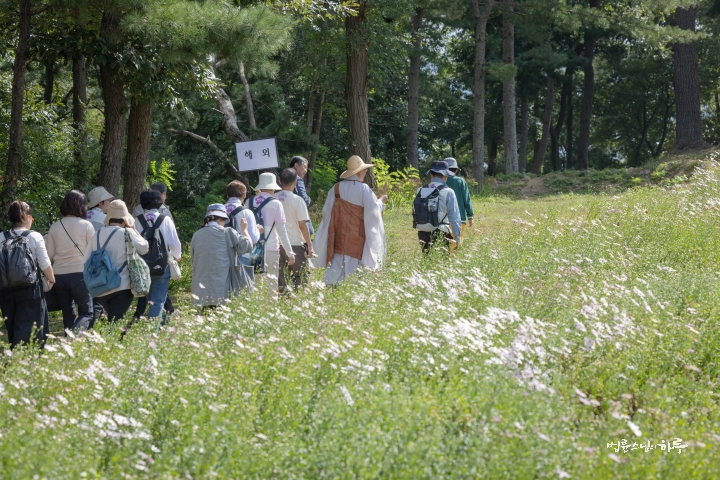
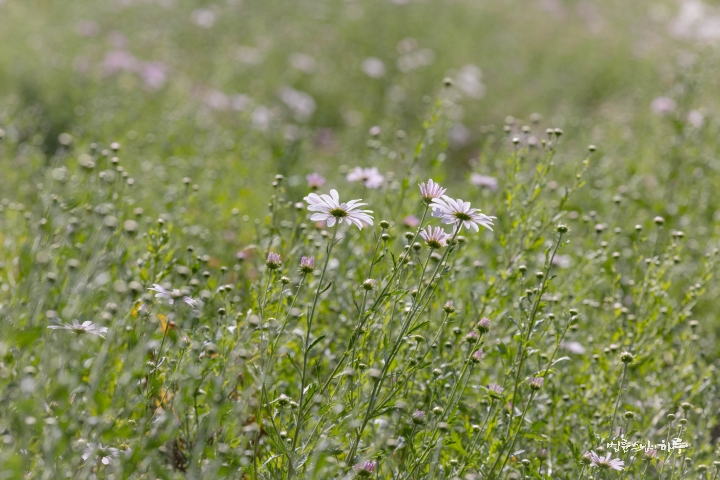
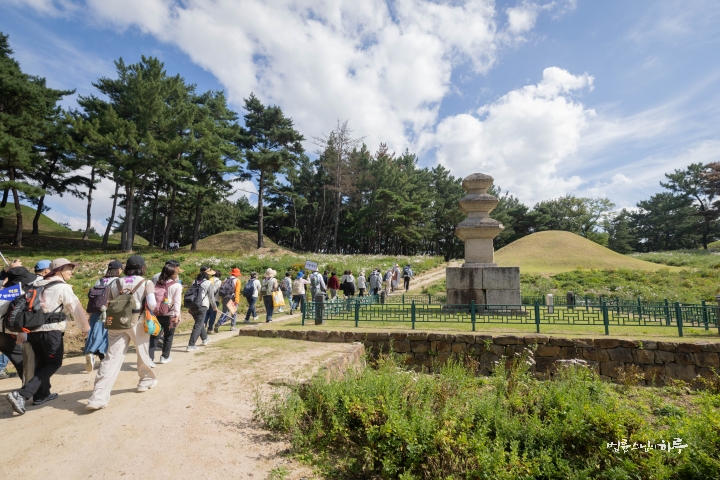
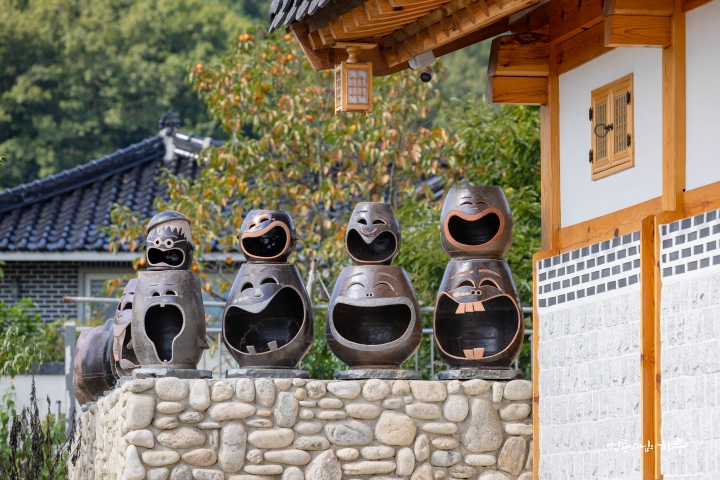
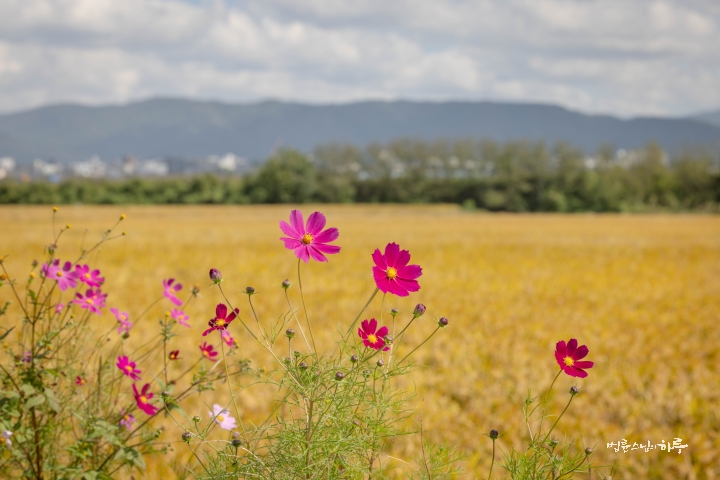
After passing the three-story stone pagoda in Seoak-dong and the Dobong Seodang, a golden field spread out in front of them. They walked slowly along the road where cosmos flowers swayed in the autumn breeze. Sunim suggested singing a song using the transceiver.
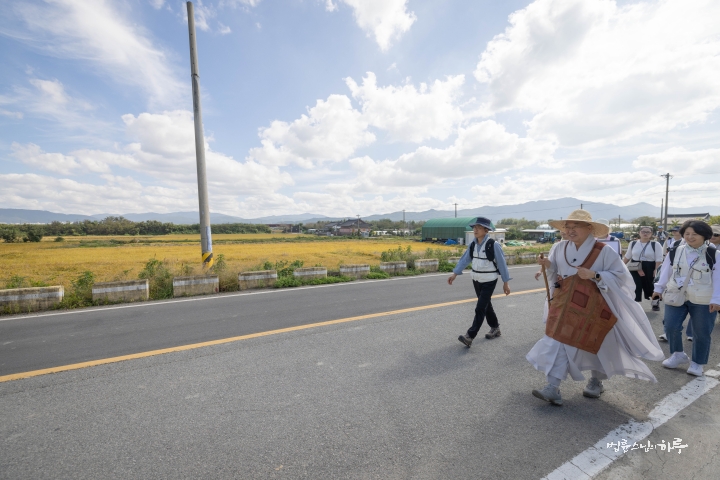
One person volunteered to sing a song.
“As autumn comes, the autumn breeze gently blows ♬ Green leaves change into red skirts, gathering swallows heading to the southern lands, asking them to return when spring comes.”
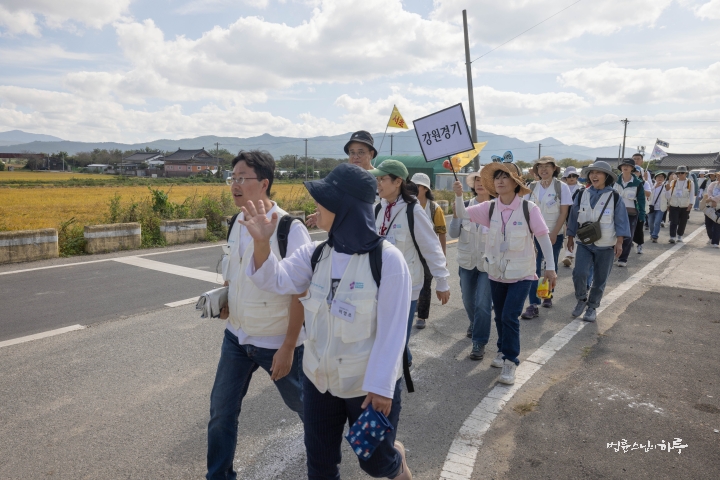
They enjoyed the autumn scenery while singing songs in relay.
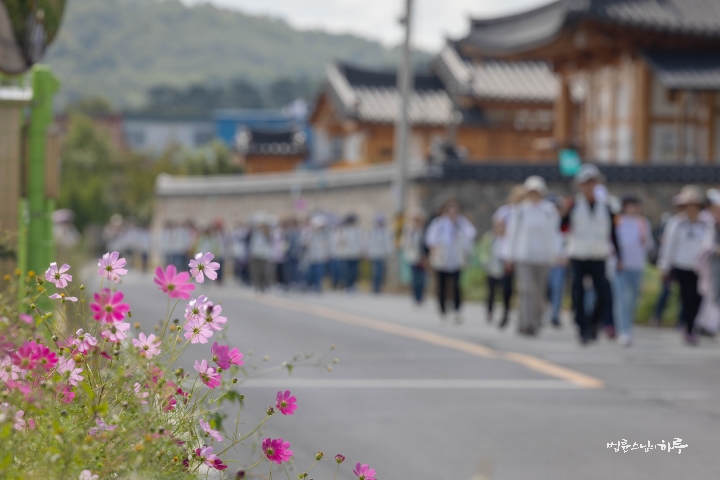
Before long, the front of the group arrived at General Kim Yu-sin’s tomb. It took 1 hour and 15 minutes to walk from King Taejong Muyeol’s tomb to General Kim Yu-sin’s tomb. The event staff warmly welcomed the happy citizens.
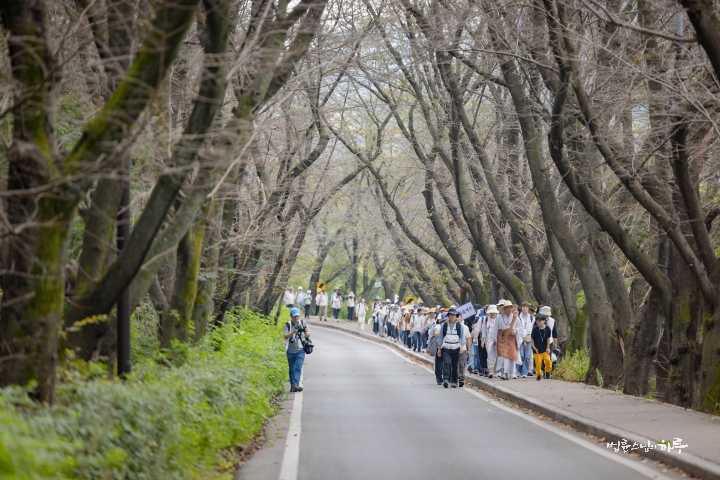
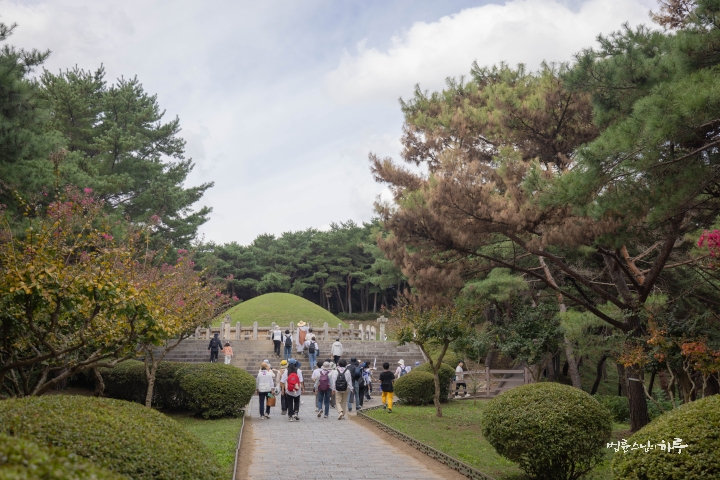
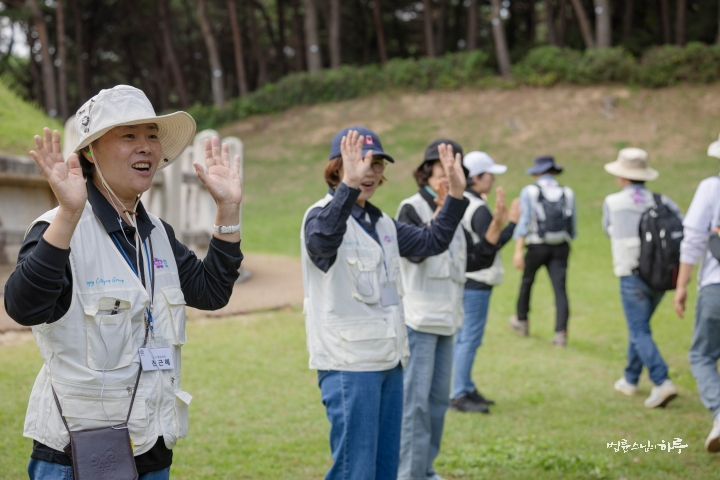
As the 800 happy citizens gathered again at General Kim Yu-sin’s tomb, Sunim continued his explanation.
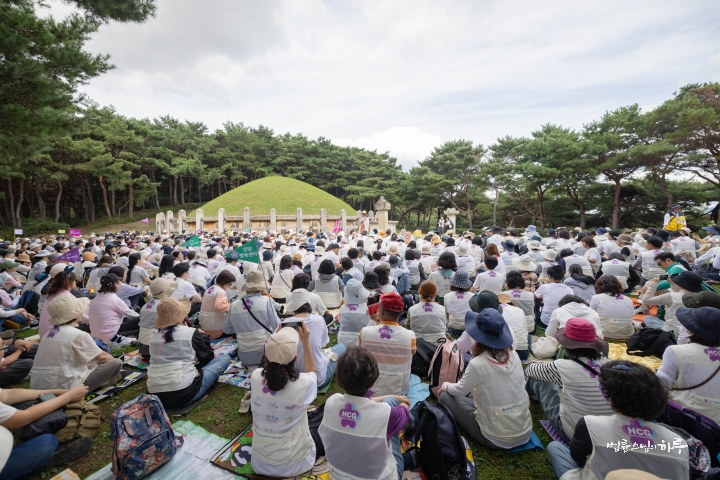
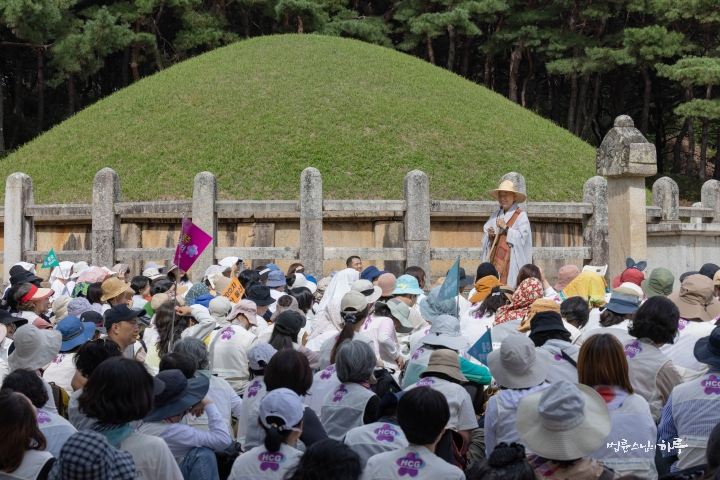
Silla’s Culture Shone Like Today’s Korean Wave
Today, as we walked from King Taejong Muyeol’s tomb to General Kim Yu-sin’s grave, we studied how Silla revitalized the country, achieved unification, and ultimately rose to become the central nation in East Asia. Although Silla’s territory was small, its civilization was highly advanced. It was very similar to today’s Korean Wave. At that time, Silla was a tributary state to Tang China, but Silla’s culture was so developed that it became popular within Tang. This was called “Silla-bang.” Similarly, while we are currently influenced by the United States, we are also seeing Korean culture being exported back to America through the Korean Wave.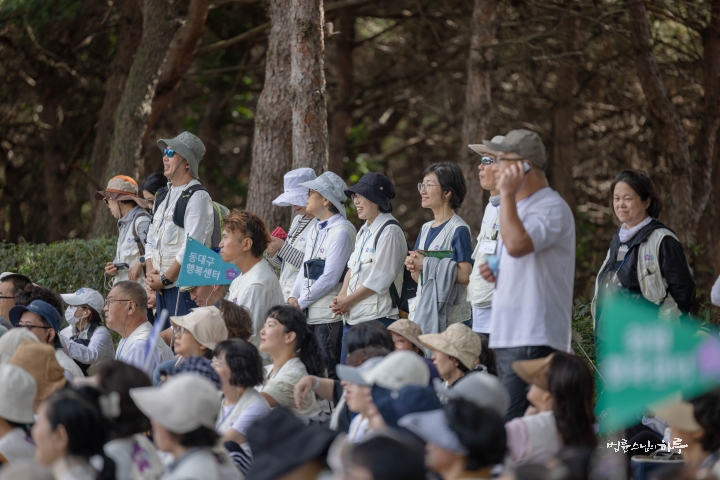
Sunim then shared various stories about General Kim Yu-sin’s achievements and how later generations evaluated him.
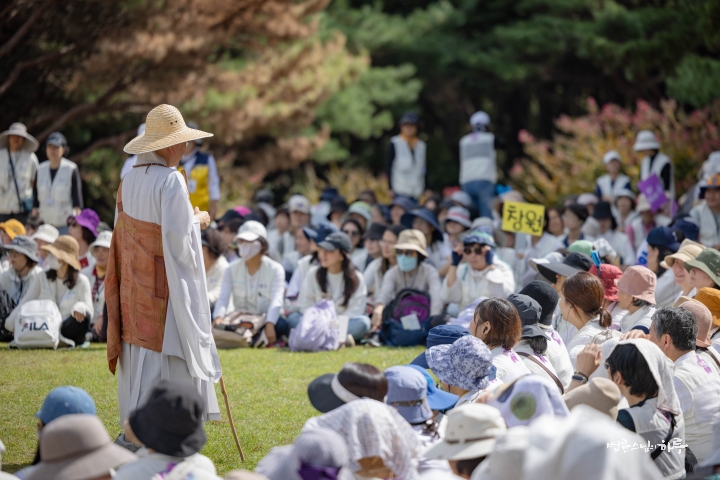
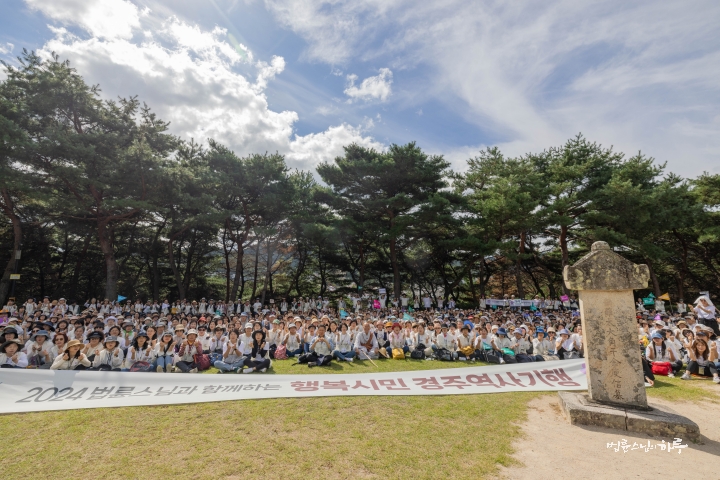
After finishing the explanation, everyone chanted the Happiness School slogan together and took a commemorative photo while seated.
“Let’s all be happy! Let’s all be happy! Let’s all be happy!”
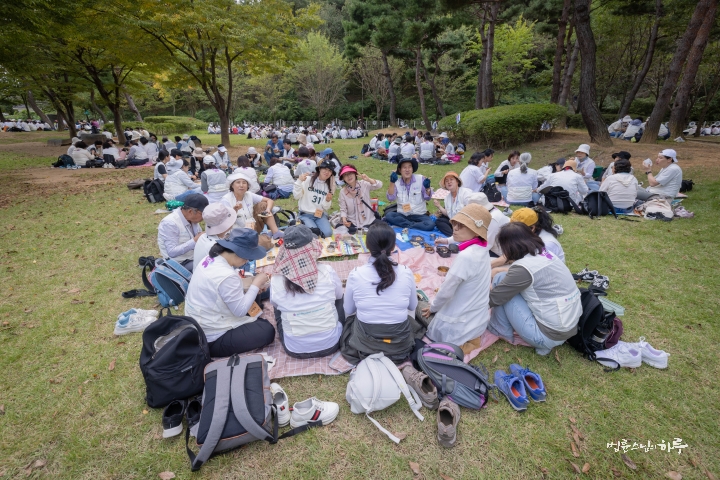
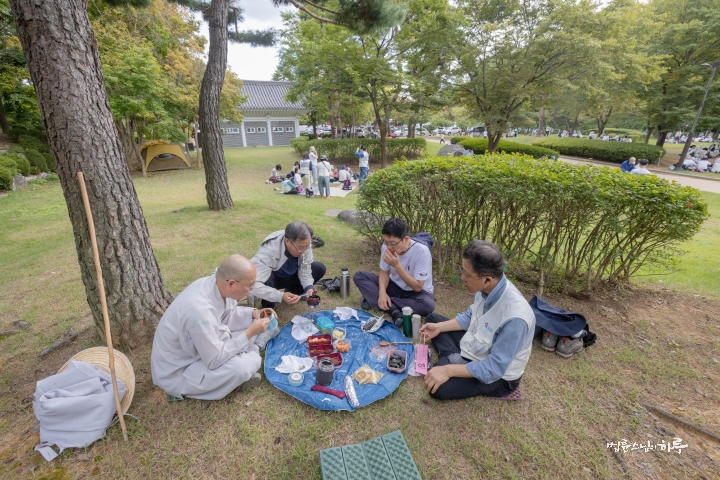
Departing from General Kim Yu-sin’s tomb, Sunim headed towards Heungmu Park. Upon arrival, people gathered in regional and small groups, spread out picnic mats, and had lunch. Everyone enjoyed a pleasant lunchtime, sharing the packed lunches they had brought from home.
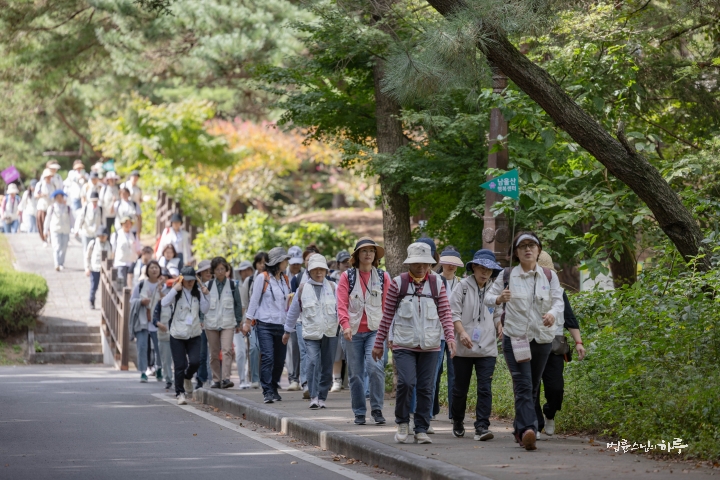
After having lunch from a packed meal, Sunim headed towards Nangsan Mountain, which was considered sacred by the Silla people.
About 800 people gathered again at the site where Sacheonwangsa Temple once stood at the foot of Nangsan Mountain. Although it’s now an empty lot, some traces of the temple and pagoda have been partially restored.
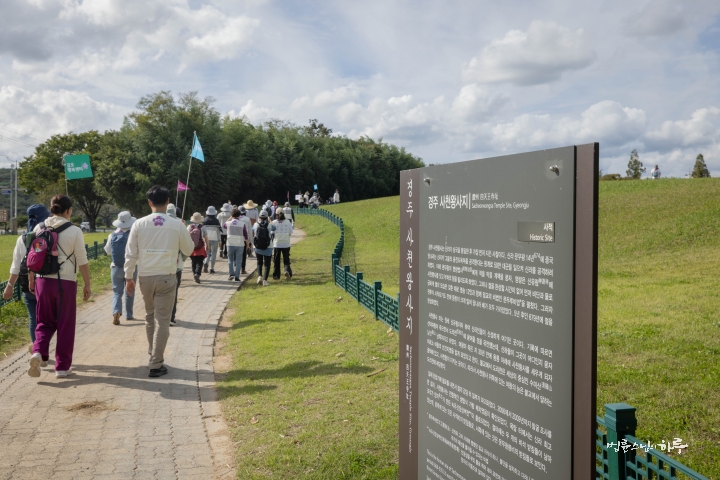
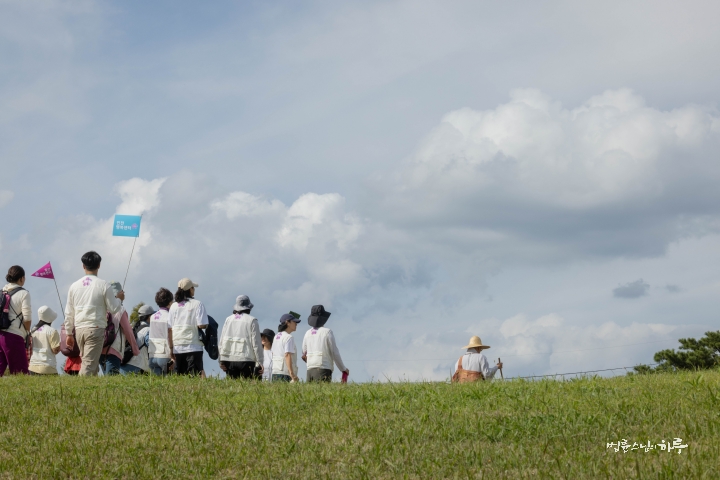
Sacheonwangsa Temple was a place where people prayed earnestly to prevent the invasion of 200,000 Tang troops when news came that they were planning to attack Silla. Sunim told an entertaining story about how Silla defeated Tang China.
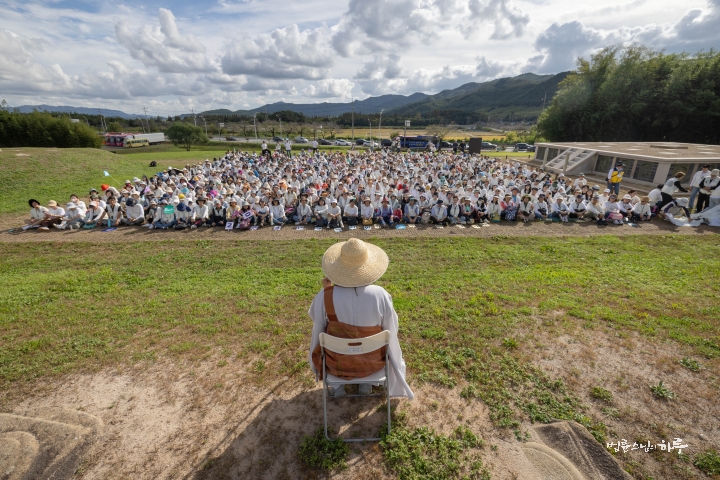
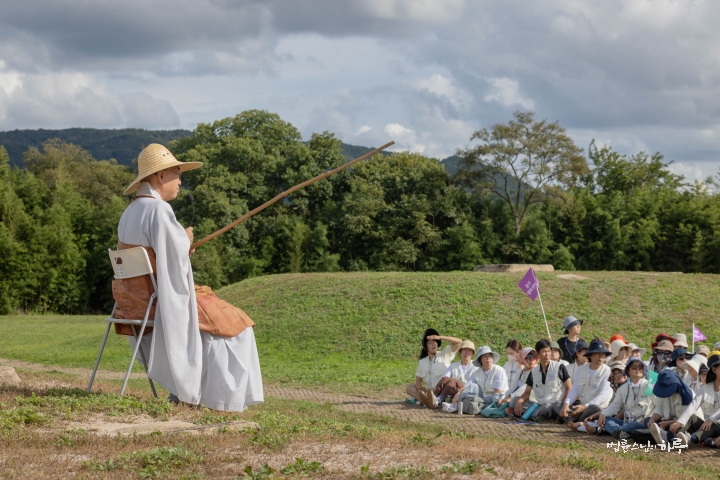
A National Defense Temple Built to Protect the Country from Foreign Invasion
Historically, Silla had seven sacred sites before Buddhism was introduced. One of these was Sinyurim. Sinyurim means “a sacred place where gods play,” implying its holiness. King Munmu ordered a temple to be built here to perform the Munduru esoteric ritual, a secret Tantric Buddhist practice, believing it could repel the Tang dynasty’s army. Such temples are called national defense temples. They have no relation to religious activities. The temple was not built to spread Buddhism but to protect the country. However, before the temple could be completed, news arrived that the Tang army had already set out. In haste, a temporary temple was erected using straw to create a Buddha statue and draping it with silk. After the temple was hastily built, 12 Confucian monks gathered to perform the Munduru ritual. Suddenly, a storm arose in the West Sea, causing the entire Tang army of 200,000 to be submerged in the sea. Whether you believe it or not, this account is recorded in the Samguk Yusa (Memorabilia of the Three Kingdoms). This is not a story I made up.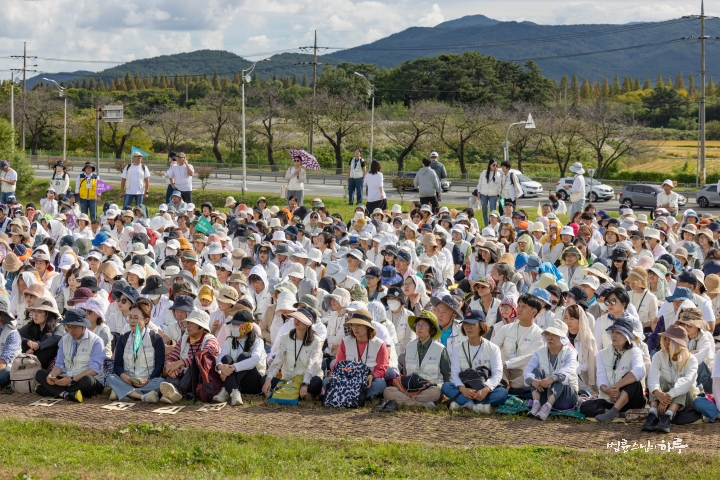
The reason we need to pray here is to protect our country from potential foreign intervention by Japan, the United States, China, and others in the process of achieving reunification between North and South Korea. A few years ago, Jungto Society reenacted the Munduru ritual here, praying for peace on the Korean Peninsula. Even now, Jungto Society members gather here every Sunday morning to pray for peace and reunification of the Korean Peninsula.
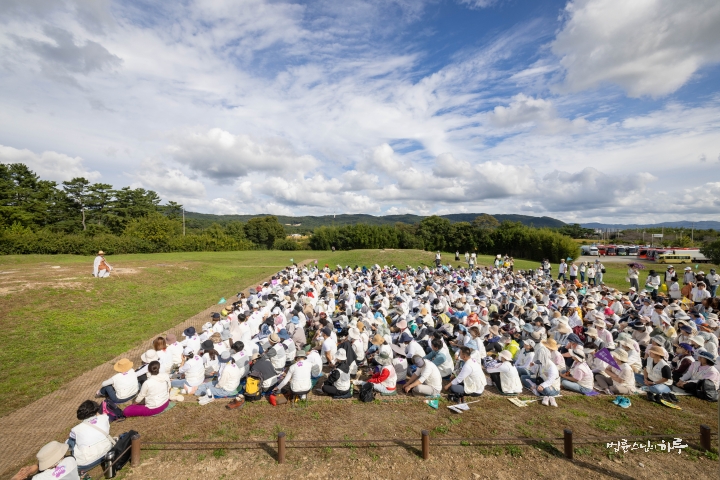
After touring the site where Sunim and 12 yogacara monks performed the Munduru ritual, the group left Sacheonwangsa Temple and walked along a mountain path to reach Queen Seondeok’s tomb. The cool forest path and mountain breeze were refreshing.
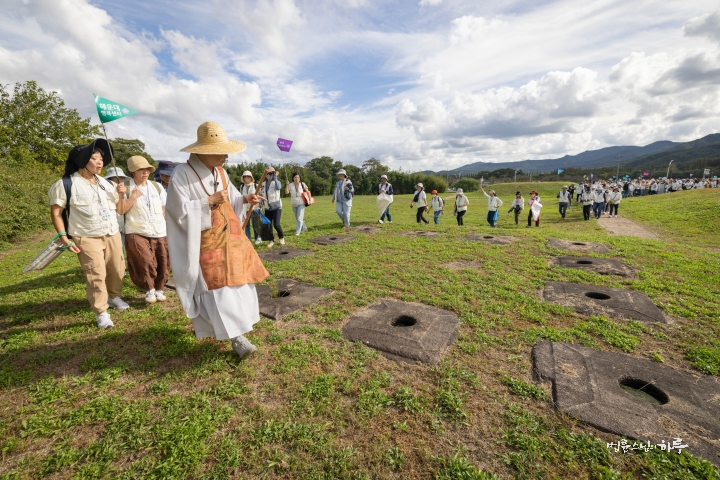
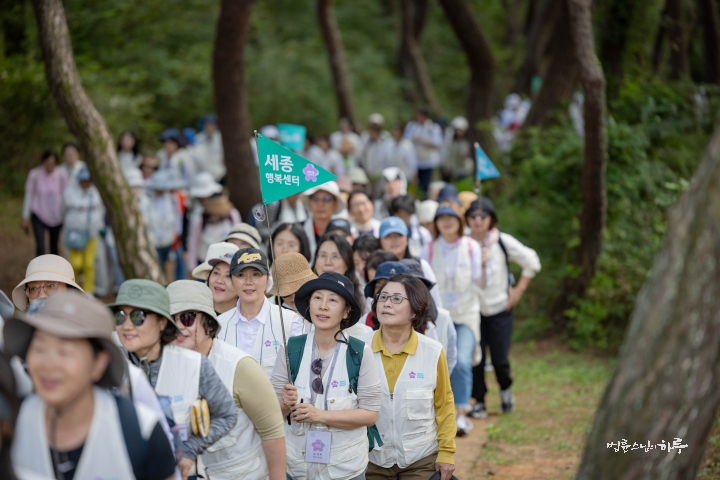
As everyone gathered and sat at Queen Seondeok’s tomb, Sunim suggested singing a song. A few people enthusiastically raised their hands and began to sing.
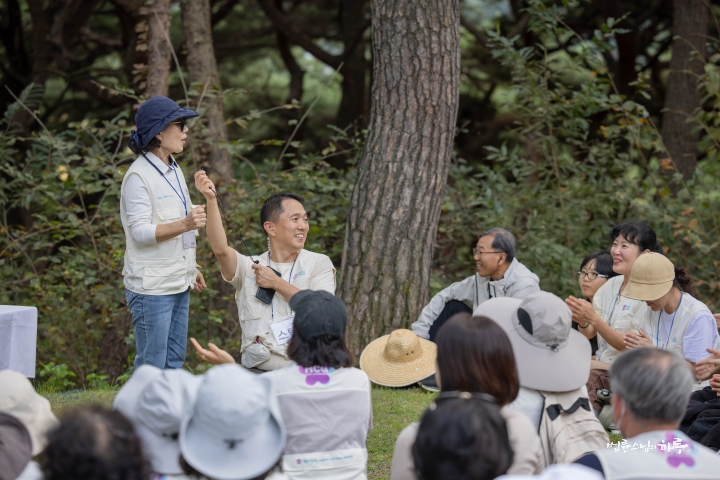
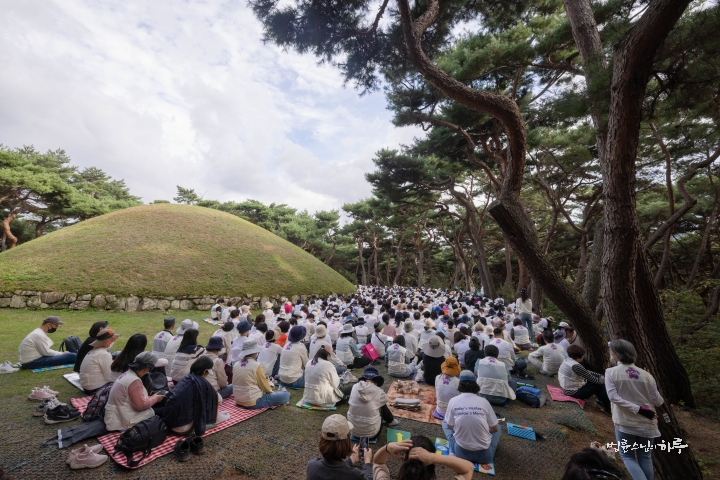
After the lively singing session, Sunim continued with his explanation.
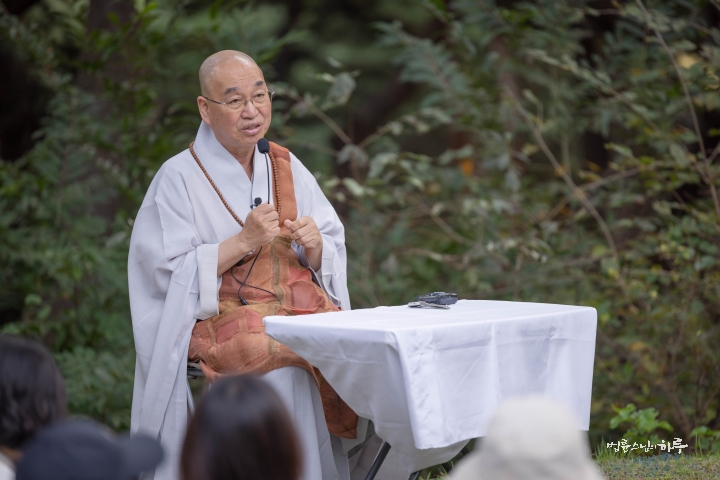
‘Your country has a female ruler who is wise but lacks authority because she is a woman. That’s why other countries invade at will. You must build a tall nine-story pagoda at Hwangnyongsa Temple to demonstrate the nation’s authority.’
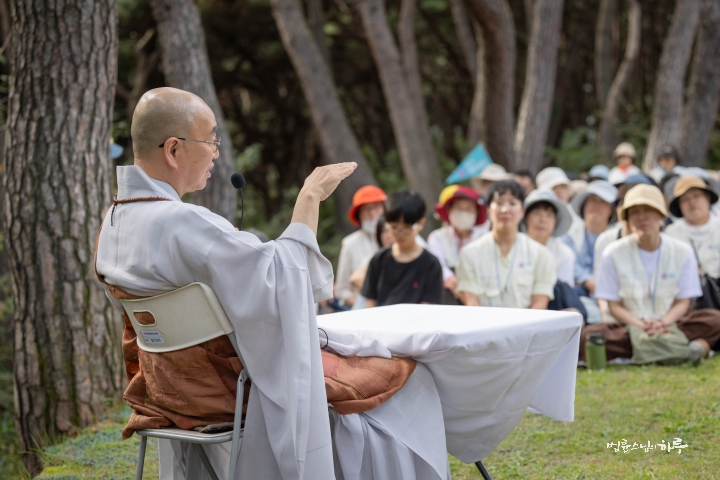
Why We Should Prepare for the Future Especially in Difficult and Bleak Times
We often talk about unification or achieving peace based solely on the results, but there are always causes leading up to those results. These outcomes are the product of 30 years of effort. Looking even further back, we can see that the peaceful merger of Silla and Gaya 150 years earlier ultimately led to Silla becoming the main player in the unification of the Three Kingdoms. Therefore, we shouldn’t chase after immediate visible benefits. We should always think about the future of the country, considering what our nation will be like at least 30 years from now. If we predict that the future will worsen, we need to make plans to prevent that. If we desire our country to be a certain way in 30 years, it’s the duty of leaders to prepare from now to make it happen. However, looking at our country’s current leaders, it seems they can’t even look three years ahead, let alone 30, and are only focused on immediate issues. This doesn’t mean we’ll collapse right away. But as the nation’s growth engines gradually deplete in various sectors, we’ll start going downhill in just 10 years. By then, no matter how hard we try, it will be difficult to prevent the decline.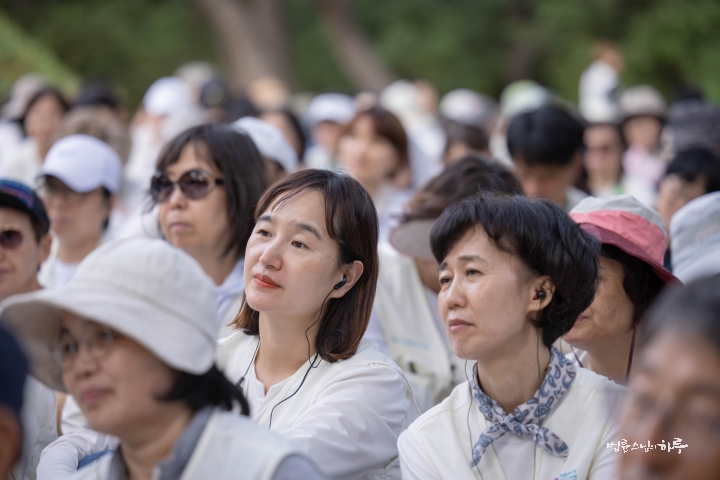
All the Happy Citizens felt proud to hear that female leadership played a significant role on the Korean Peninsula 1,400 years ago.
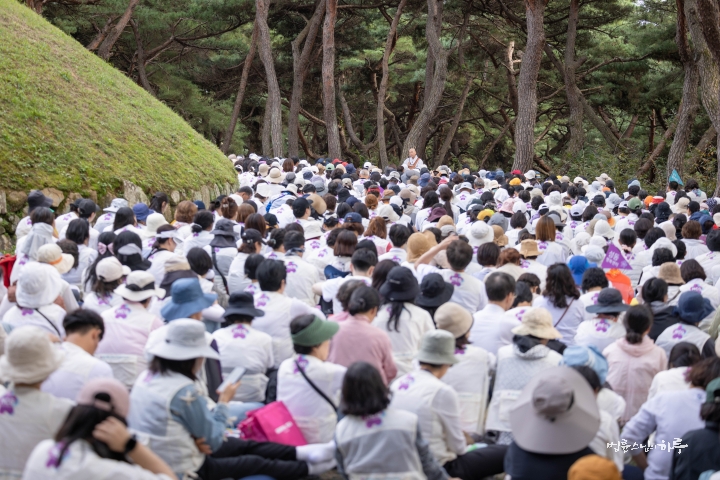
Following this, Sunim held a Dharma Q&A session to discuss the difficulties and questions that arose while carrying out Happy Citizen activities.
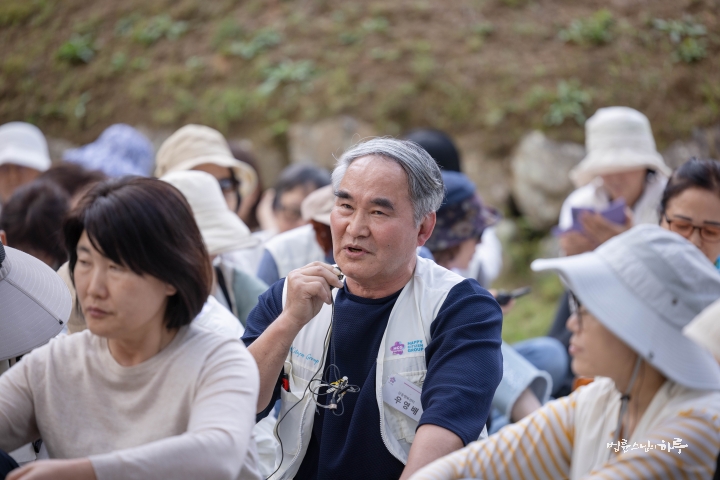
Various questions continued to be asked. After an hour of conversation, Sunim gave his closing remarks.
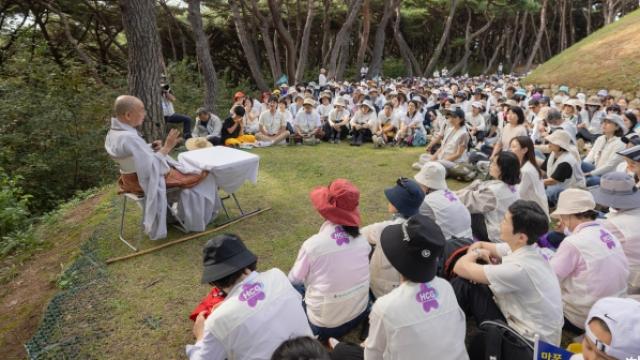
How About Living Life Light-heartedly?
You’re not fighting for independence, are you? Why are you doing these activities with such a heavy heart? You’re cooking meals like everyone else in the world, cleaning like everyone else, raising children like everyone else, and working at jobs like everyone else. Are you doing anything particularly special? Yet you’re always in agony. So, this can be seen as a psychological issue. Do things light-heartedly. Cleaning is exercise. Even washing dishes is exercise. It’s nice to have a dishwasher, but it’s okay if you don’t. You have rice cookers, vacuum cleaners, and dishwashers that do everything automatically, and then you ride stationary bikes indoors for exercise. Why do you do that? If you just clean your room, wash dishes, and walk when you need to go somewhere, you’re naturally getting exercise. Do animals in nature exercise separately while searching for food? Do squirrels go to the gym? So, it would be good if you could approach life a little more lightly.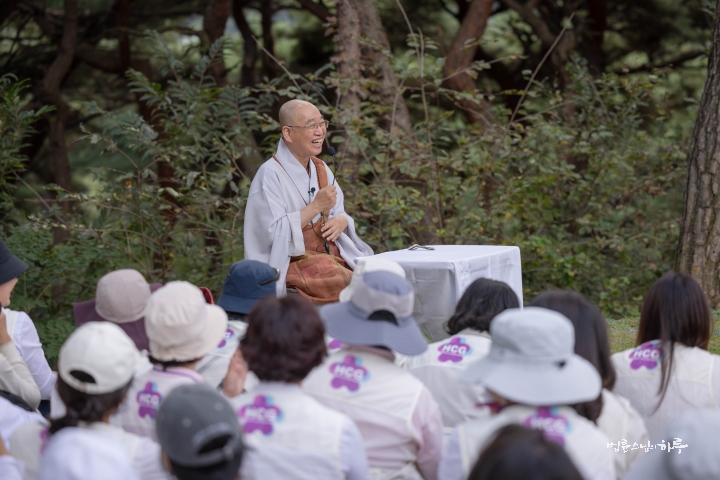
Also, if your partner gets angry and says, “I can’t live like this. Let’s get divorced,” don’t respond with, “Okay, let’s do it.” In such situations, even if you’ve been fighting, when your partner says, “Let’s get divorced,” you should kneel down and say, “Honey, anything but divorce.” You should do this even if you want a divorce deep down. This way, you can gain the upper hand later. It also allows you to maintain your dignity in front of your children. I’m not saying to live like the Buddha, but to stop doing things that harm yourself. It’s about using your head and living wisely. Don’t torment yourself, and don’t torment others.
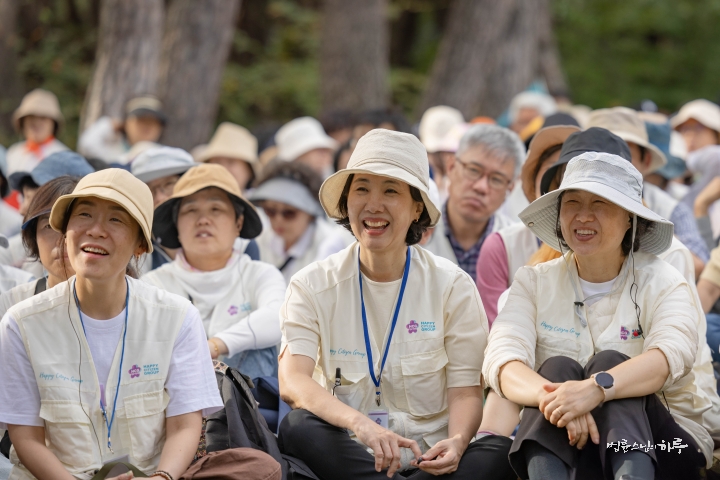
While you’re alive, living is easy. So you don’t need to worry about dying in advance. When the time comes, you’ll naturally die. But you spend your whole life saying you want to die, and when it’s time to die, you struggle to live. That’s why medical expenses are so high. When it’s time to die, it’s better to remove all the oxygen masks and everything else and just die. When it’s time to die, which is easier? Living or dying? Dying is easier. When you’re alive, living is easier than dying. The point is to live the easy way. With this perspective, I hope you all become happier day by day.
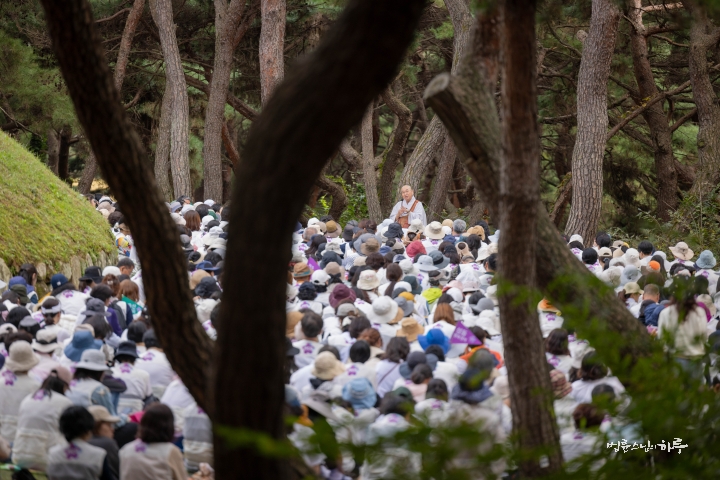
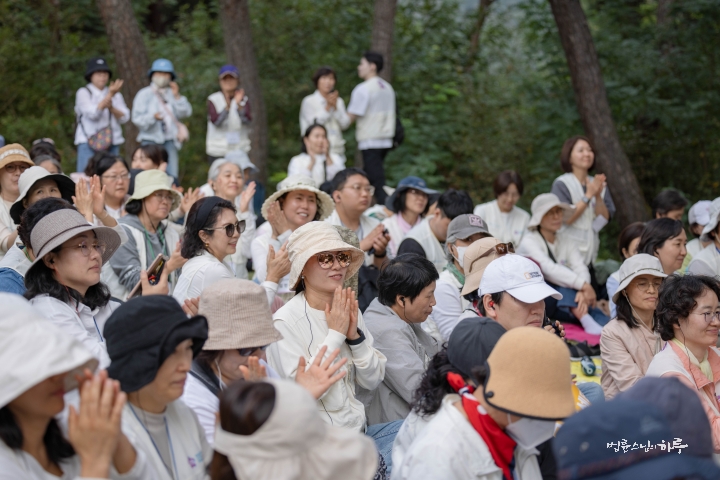
It was a time to reflect on the role of happy citizens today through the historical stories Sunim shared. Everyone expressed their gratitude with a big round of applause for Sunim, who guided the historical tour throughout the day.
After completing the historical tour, Sunim immediately headed to Dubuk Jungto Retreat Center by car.
Today is the opening day of the practitioners’ quarters that have been undergoing renovation for the past six months. A small space for practitioners was created by renovating an abandoned house in the neighborhood that was falling into disrepair. It’s called the “Dolmen House” because there’s a dolmen nearby. All the lay practitioners who worked hard on the renovation during the hot summer were invited to express gratitude for their efforts.
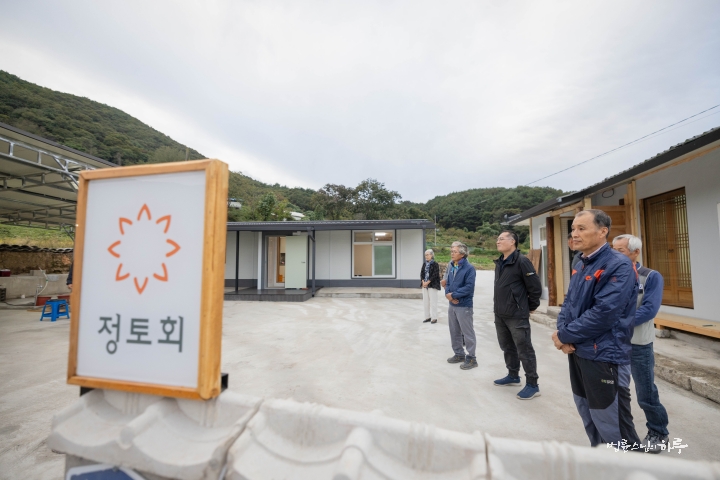
Sunim arrived at the Dolmen House after 5 PM. As soon as he got out of the car, the opening ceremony began with the chanting of the Three Refuges and the Heart Sutra.
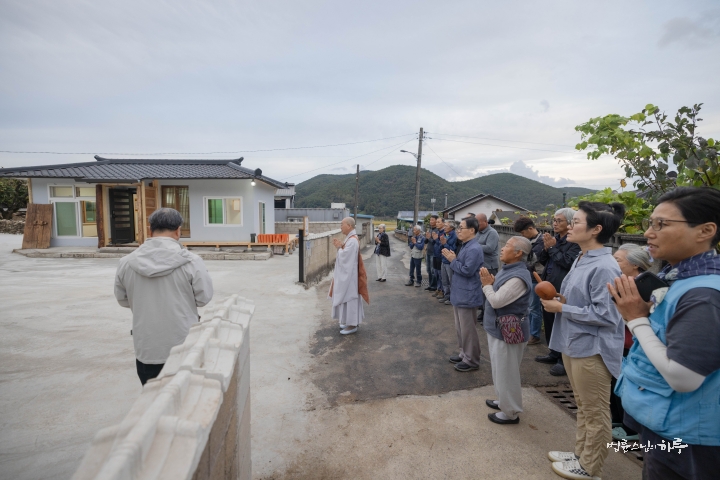
Then, a ribbon-cutting ceremony was held, and commemorative photos were taken.
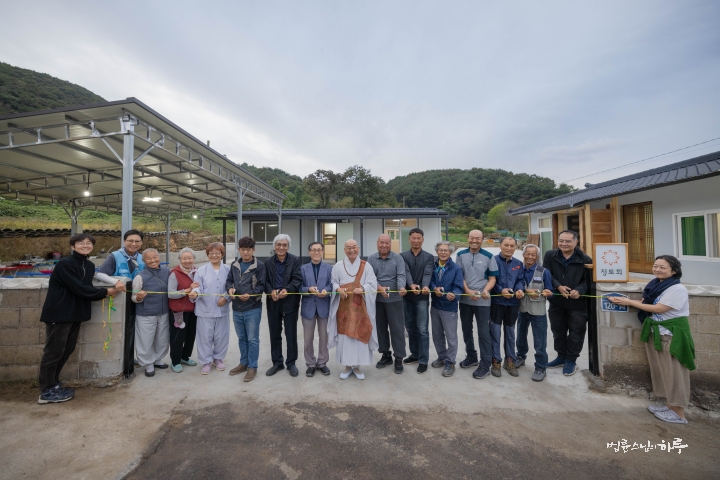
After expressing his gratitude to the lay practitioners, Sunim examined every corner of the house.
“It has been neatly refurbished.”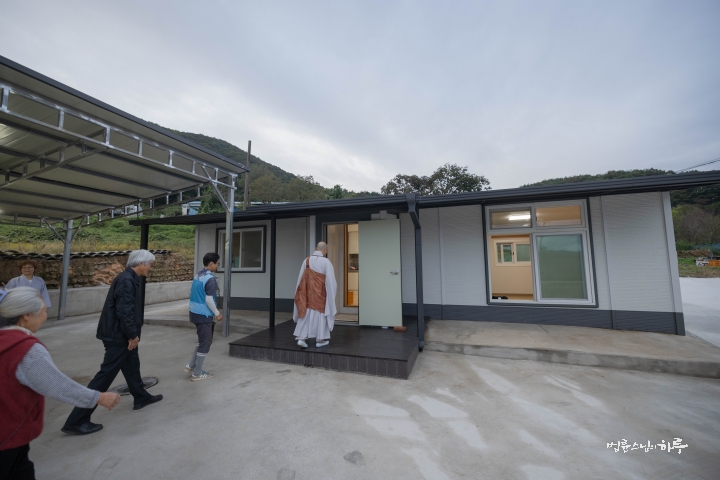
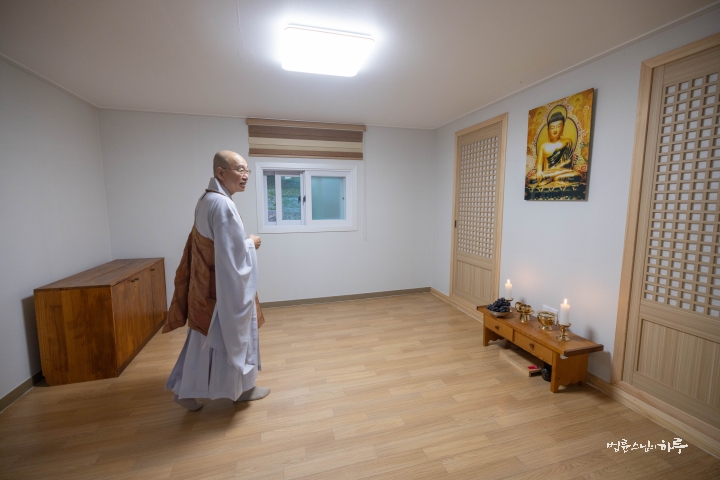
Next, Mi-eun Lee, who oversaw the construction for the past six months, gave a progress report on the Dolmen House up to today’s opening.
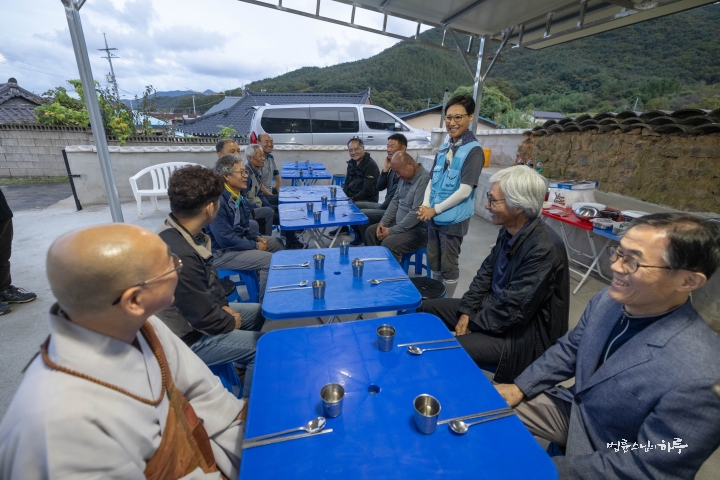
“Starting with the main building maintenance on May 20th, all work including plumbing, electrical work, window sash installation, interior and exterior floor plastering, insulation, wallpapering, and floor heating was completed by Jungto practitioners on August 6th. From August 15th, we began repairing the guest house, and after completing the foundation steel work, panel work, interior wallpapering, and floor heating, it is currently over 90 percent complete. We renovated the storage from October 1st to 3rd, and after finishing the concrete pouring for the entire yard on October 8th, we are having this opening ceremony today.”
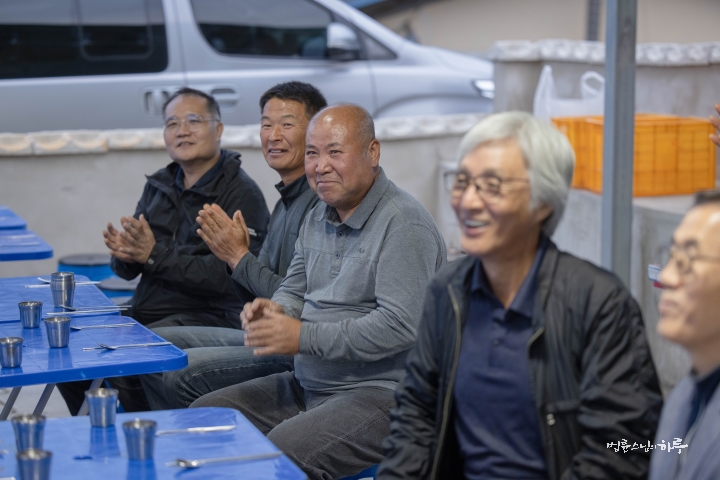
All these tasks were done by lay practitioners in their spare time outside of their regular jobs. We heard from a few of them about their experiences.
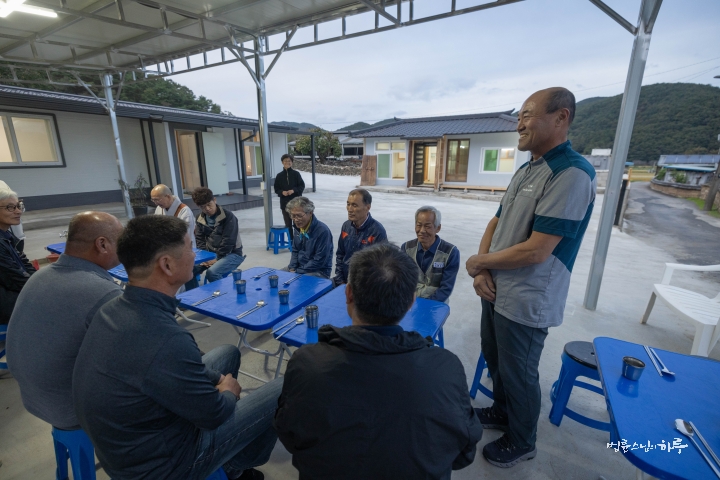
“I really felt what a mosaic Buddha means during this construction. It was moving just to see the process of work being completed one by one as the lay practitioners all contributed their time bit by bit.”
Everyone expressed their gratitude to the hardworking lay practitioners with a big round of applause. Finally, Sunim shared a few words for the lay practitioners.
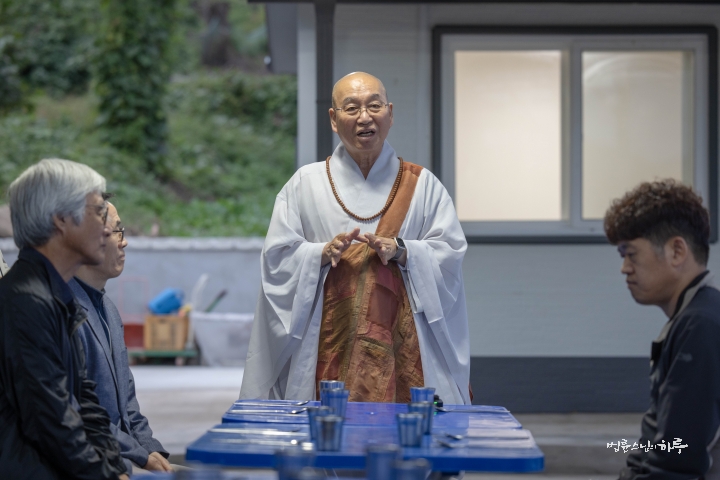
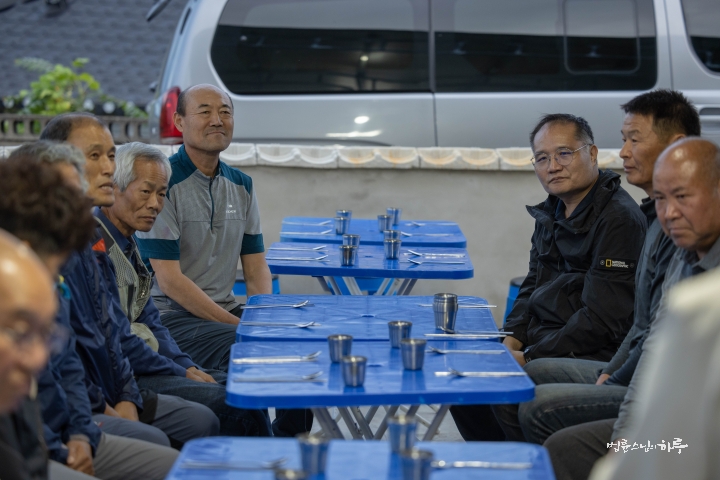
Sunim and the group shared a dinner prepared with care, taking time to encourage each other for their hard work.
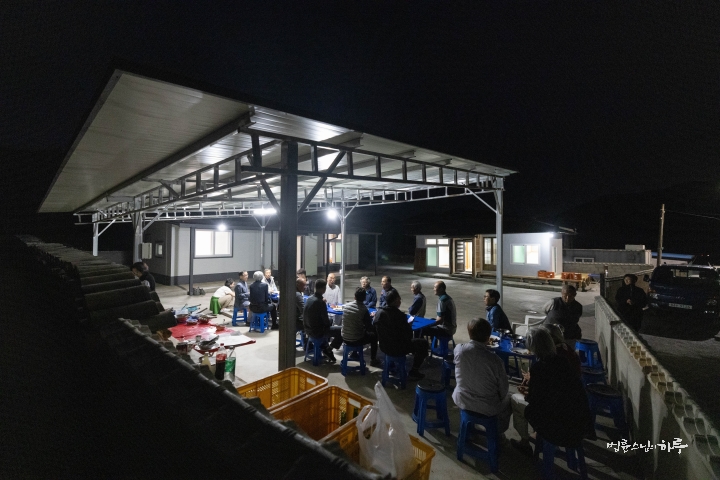
During the meal, Sunim provided a detailed explanation of the village development project currently underway in Bhutan.
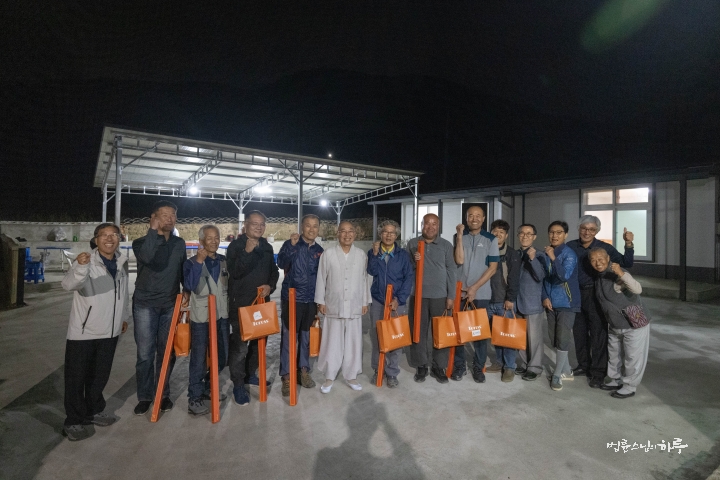
After the meal, Sunim presented each layman with gifts of new rice, an umbrella, and one of his books.
“Thank you for all your hard work. I’m grateful.”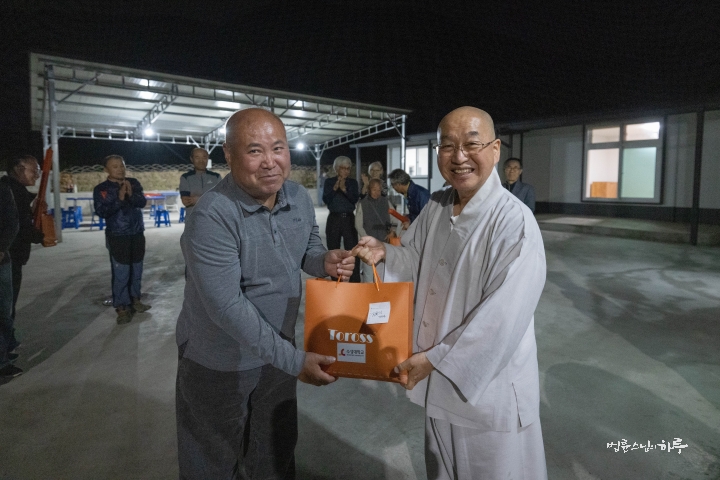
After taking a commemorative photo with everyone holding their gifts from Sunim, the Dolmen House opening ceremony concluded just after 7 PM.
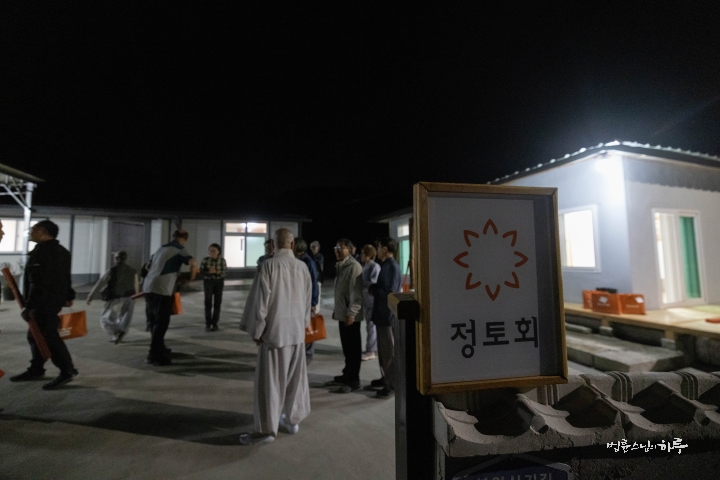
After all the laymen left, Sunim completed his work indoor and then finished his daily routine. Tomorrow, he is scheduled to hold a public hearing for the development of Jungto Society in the morning and a Dharma assembly for leading members combined with the opening ceremony for Semi-annual retreat for Jungto practitioners in the evening.