My Husband Gets Upset So Easily, I Don’t Know What to Do
Oct 1, 2024 - Commemoration of Master Yongseong's Enlightenment Day, Daegu-Gyeongbuk Branch Members' Day
Hello. Today is the 29th of August in the lunar calendar, marking the 138th anniversary of Master Yongseong’s enlightenment. Every year on this day, Jungto Society takes time to reflect on Master Yongseong’s life.
After completing his morning practice and meditation, Sunim departed from Dubuk Retreat Center at 7:30 AM to attend the commemorative Dharma assembly at Adomoryewon.
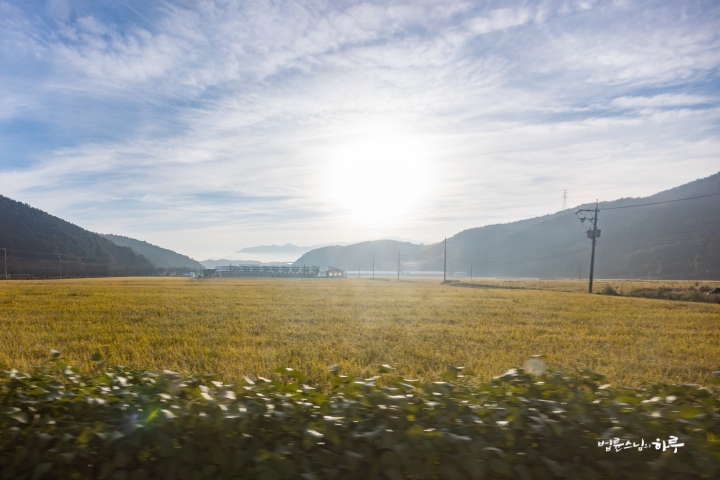
After driving on the highway for an hour and a half, Sunim arrived at Adomoryewon at 9 AM. Many volunteers were busy moving around, preparing to welcome people. As Sunim entered, everyone greeted him enthusiastically.
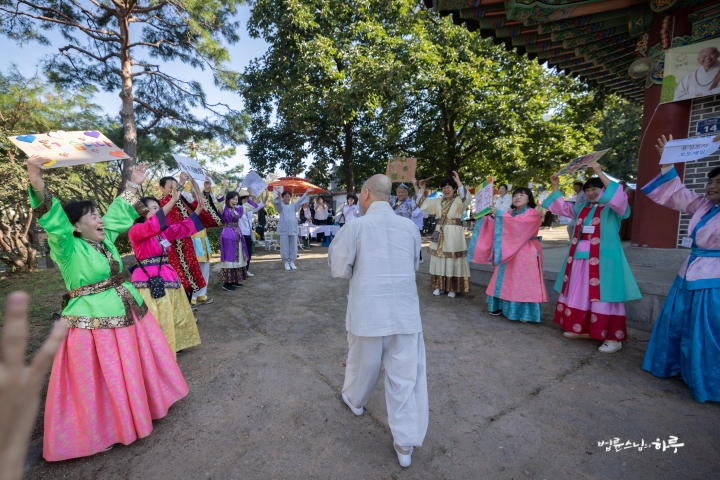
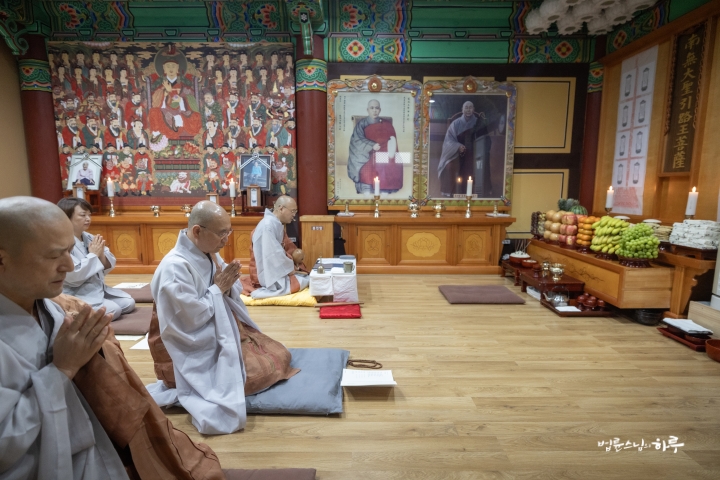
Moving to the Dharma hall, the first part of the event began with a tea ceremony honoring the lineage of patriarchs.
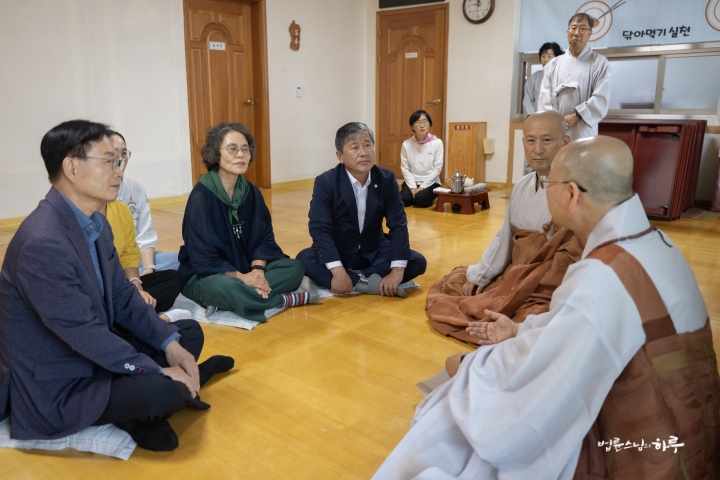
After the tea ceremony, local dignitaries including the Vice Chairman of the Gumi City Council, the President of Gumi Urban Corporation, and the head of Dogae-myeon visited for a tea conversation. Gumi City has built and is operating a Buddhist Cultural History Hall, Experience Center, and Storytelling Center on this site, and they were concerned about how to attract more citizens to visit. Sunim offered various pieces of advice.
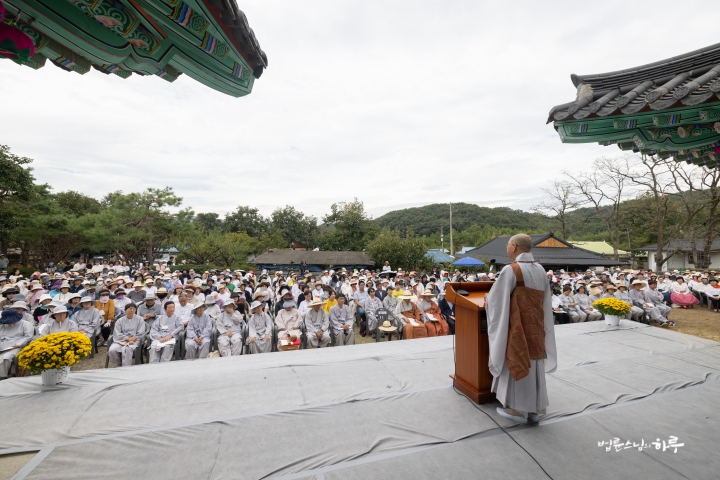
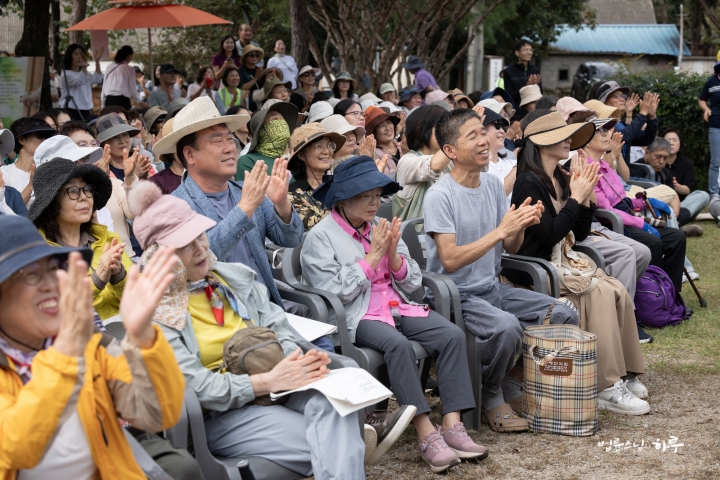
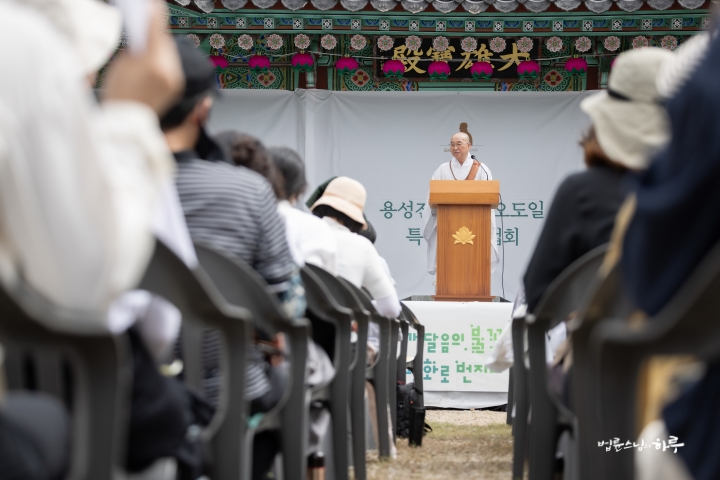
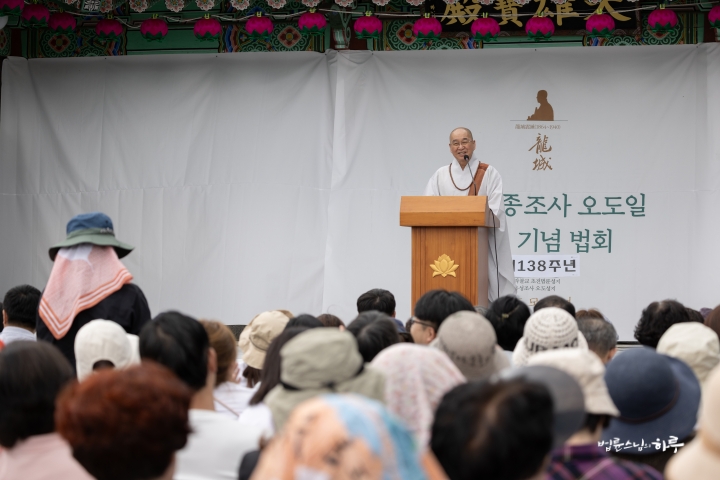
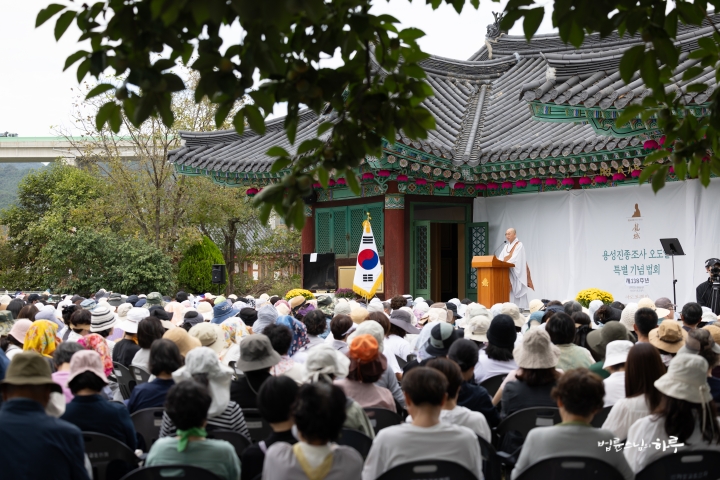
At 10 AM sharp, everyone moved to the courtyard for the commemorative Dharma assembly. Not only members of the Daegu-Gyeongbuk branch of Jungto Society, but also many from the Busan-Ulsan, Gyeongnam, and Daejeon-Chungcheong branches chartered buses to attend. With about 620 people filling the seats, the event began with the recitation of the Three Refuges and the Heart Sutra.
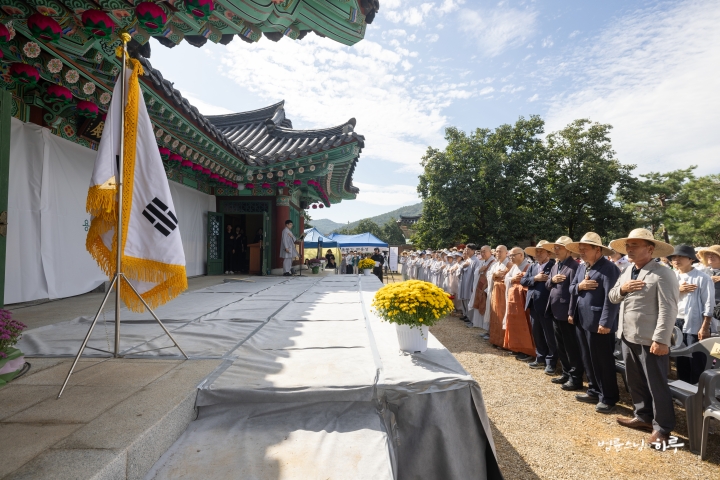
This was followed by a salute to the national flag, singing of the national anthem, a moment of silence for patriotic martyrs, and a reading of Master Yongseong’s biography. The Vice Chairman of the Gumi City Council then read a commemorative speech on behalf of the Chairman. Jungto Society members also participated in the commemorative event by watching the YouTube live stream online.
Next, members of the Daegu-Gyeongbuk and Seoul-Jeju branches collaborated to present a musical performance commemorating Master Yongseong’s enlightenment day.
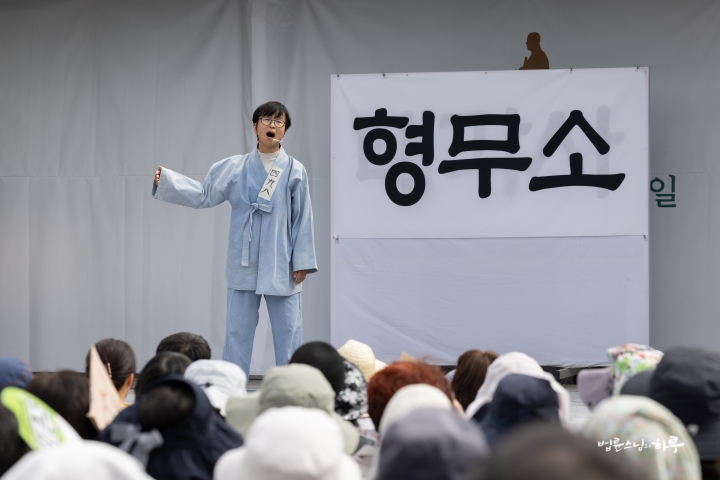

In the 1910s, when traditional Buddhism was forcibly Japanized due to Japanese invasion, Master Yongseong carried out an independence movement through Buddhist reform, believing that without the awakening of the people, it would be difficult to achieve national liberation and Buddhist revival. Until his passing, he devoted himself for over 30 years to the intellectualization, popularization, and practical application of Buddhism. The musical performance depicted the process of translating Buddhist scriptures into Korean.
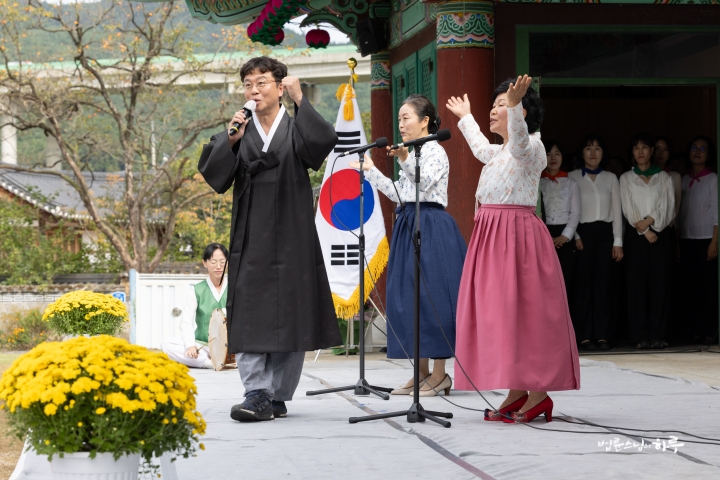
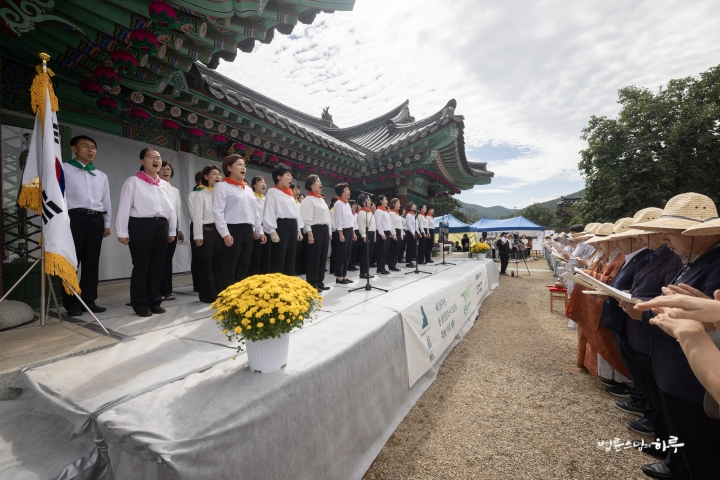
Next, everyone sang “The Song of All Koreans” together. This song was written by Master Yongseong Jinjongjosa and arranged by Great Master Bulsimdomunn. Led by a 33-member choir from the Daegu-Gyeongbuk branch, symbolizing the 33 national representatives, everyone sang all three verses with enthusiasm.
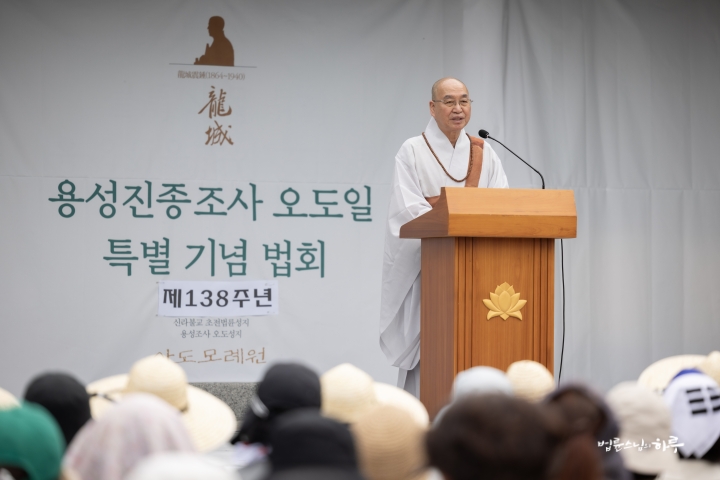
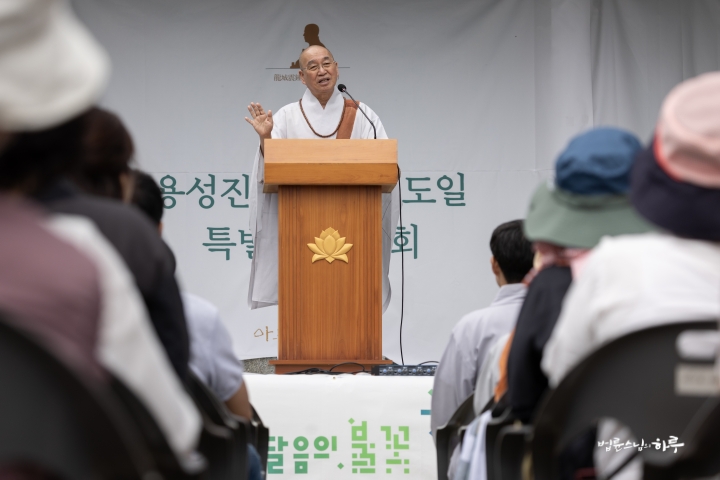
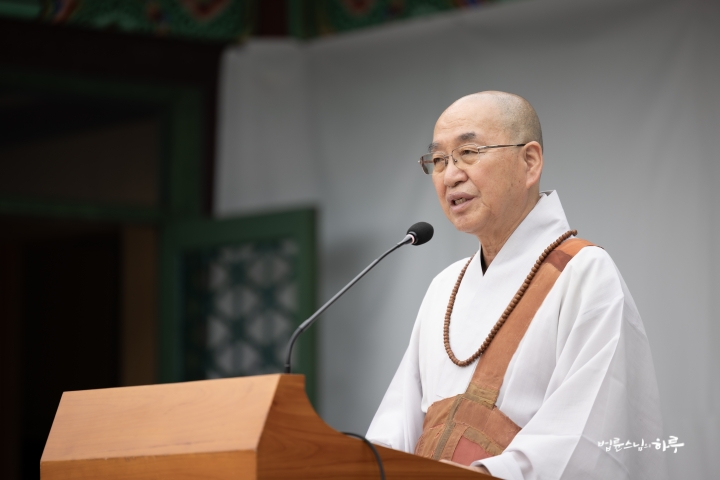
Next, Venerable Pomnyun Sunim gave a commemorative Dharma talk for Master Yongseong’s enlightenment day. Standing at a podium next to the Dharma seat, Sunim spoke about the historical significance of Adomoryewon, where the commemorative event was being held.
Where the Monk Spread Buddhism While Working as a Servant
At that time, Silla was a small country and lagged behind in cultural development. Geographically blocked by Baekje and Goguryeo, it took a long time for the advanced Chinese civilization to reach Silla. As a result, Silla was very conservative in accepting foreign ideas. Monk Ado came from Goguryeo to Silla to spread Buddhism and reached the house of the wealthy Morye in Ilseon-gun (present-day Seonsan), which was then the border of Silla. Since Buddhism was prohibited in Silla at that time, Monk Ado had no choice but to hide his identity as a monk. He took off his monk’s robe, grew his hair, and entered Morye’s house as a servant. He became a servant at the house of a village chief on the border. His main job was to take care of livestock. However, he was so diligent that in just three years of servitude, he increased the livestock and grew Morye’s wealth. Despite his low status as a servant, his character was so admirable that Morye’s younger sister came to admire him. At that time, China was transitioning from the Southern Dynasties of Song and Qi to the Liang Dynasty. The Liang Dynasty was very supportive of Buddhism. You’ve heard of Emperor Wu of Liang, who had a Dharma debate with Bodhidharma, right? When the Liang Dynasty sent envoys to Silla, they brought Buddhist items, including statues and incense. After the envoys left, they found incense among the gifts, but the Silla court didn’t know what it was. They went around Seorabeol asking, “Does anyone know what this object is?” but no one knew. They searched for someone who knew about this object all the way to the border. When they came to Morye’s house and asked, “Does anyone know about this?”, the servant stepped forward and said, “I know.” Everyone was surprised. Even the nobles of Silla didn’t know, but a servant in a border village claimed to know. The official from Seorabeol asked, “What is this object?” The servant replied, “It’s incense.” When asked, “What is it used for?” he answered, “When you burn incense during prayer, its sacred energy reaches heaven and brings miraculous blessings.” When asked, “How do you know this?” Monk Ado finally revealed his identity. “Actually, I am a monk, and because Buddhism is prohibited by law in Silla, I’ve been hiding my identity and living here as a servant.” Upon hearing this, the official immediately asked him to go to Seorabeol. Monk Ado shaved his head, changed into the monk’s robe he had hidden, and went to the palace to meet the king.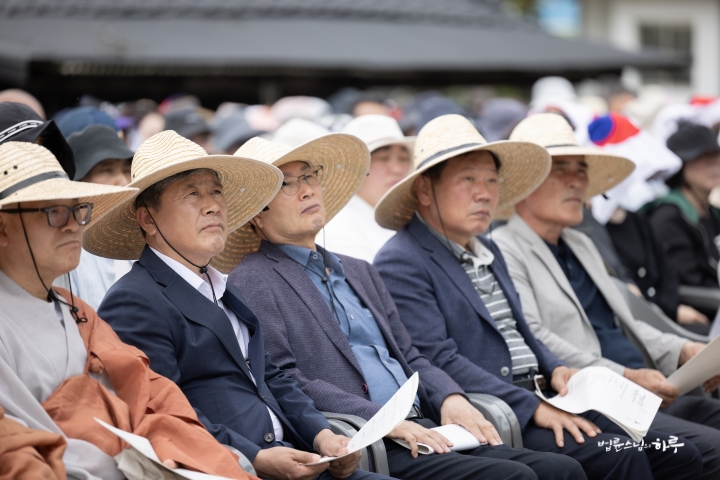
The Pioneering Spirit of Monk Ado Needed in Today’s Korea
In this way, Buddhism in Silla did not spread from the ruling class down, colluding with power, but gradually spread from the bottom up. While the exact dates of Monk Ado’s life are uncertain, it was at least 100 to 150 years after him that Buddhism was officially recognized in Silla with Ichadon’s martyrdom. The historical record that Buddhism was officially recognized after Ichadon’s death and the occurrence of miracles is just that – a historical record. By that time, almost all the people of Silla were already believing in Buddhism. It was just not officially recognized. This merit lies in Monk Ado’s spirit of spreading the Dharma.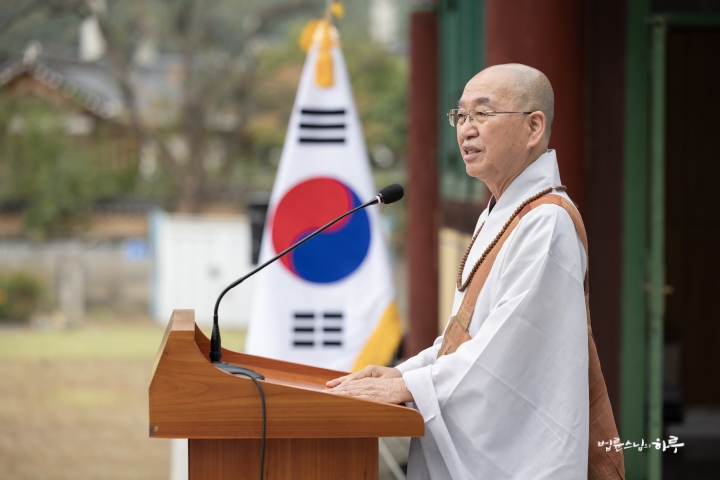
No Matter How Difficult Our Situation Is, It’s Not as Hard as It Was for Those Who First Spread the Dharma
On this day commemorating Master Yongseong’s enlightenment, I think about why the Master chose to attain enlightenment here among all places. And I reflect on the meaning of Master Yongseong’s dying wish to “take good care of the sacred site of the first turning of the Dharma wheel.” In my opinion, I think he left this dying wish to make us realize that no matter how difficult our situation is, it’s not as hard as it was for those who first spread the Dharma. They came all the way from India through China to this strange and unfamiliar place, solely to spread the Buddha’s teachings. Master Yongseong taught that we can only properly establish Buddhism and achieve national independence if we honor their merits and inherit their spirit. That’s why among his ten dying wishes, numbers 1, 2, 3, and 4 are about taking good care of the sacred site of the first turning of the Dharma wheel. This is the historical perspective of Buddhism. Just as we need a historical perspective as citizens of Korea, this is the historical perspective we should have as Buddhists.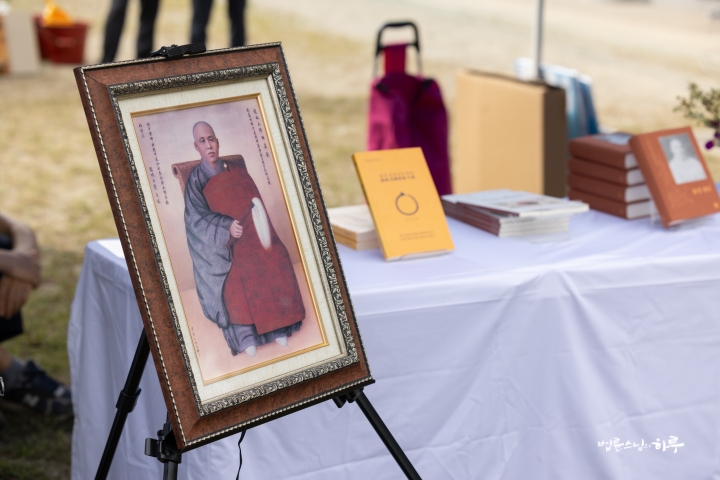
Understanding enlightenment as suddenly being able to fly on clouds with a staff is not a correct understanding of enlightenment. We see with our eyes, hear with our ears, and smell with our noses. However, a great barrier of concepts blocks us, preventing us from seeing properly even when we look, or hearing things as they are even when we listen. Enlightenment is when this barrier is suddenly lifted. This is called ‘yeosiljigyeon’ (如實知見), seeing things as they truly are. Enlightenment is when eyes that see reality as it is and ears that hear reality as it is are born.
In the Bible, Jesus was the son of a carpenter. But after fasting for 40 days in the wilderness and attaining enlightenment, he realized, “I am the Son of God.” This is expressed as being born again. Similarly, after six years of ascetic practice, Buddha suddenly realized, “I am not an ordinary being, but a Buddha.” With eyes clouded, one lives foolishly thinking oneself to be an ordinary being, but upon opening one’s eyes, one sees the world is already bright. Upon enlightenment, one realizes there is nothing to suffer about. It’s not that there was actual suffering to escape from, but rather that one was suffering due to being caught in illusions despite there being nothing to suffer about. Upon opening one’s eyes, the illusions disappear and one realizes there was never anything to suffer about in the first place.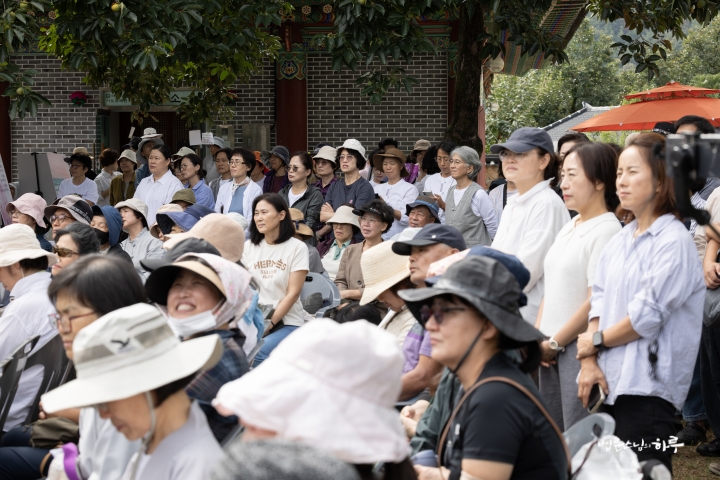
What We Should Remember at Adomoryewon
Today at Adomoryewon, we should reflect on the pioneering spirit of Master Ado and the patriotic spirit of Master Yongseong. It would be good to take this time to also consider our role within that context. Currently, domestic politics are deeply divided between ruling and opposition parties, progressives and conservatives. We must lead the way in unifying national discourse. We must play a role in bringing peace to the Korean peninsula, where the risk of war remains ever-present amid tensions between North and South. North Korean citizens suffered greatly from flood damage last summer. Even though we may be politically and militarily opposed, we must show compassion and help alleviate the suffering of the people, setting aside political conflicts. In today’s world of extremes, the Buddha’s Middle Way philosophy, Master Yongseong’s patriotic spirit, and Master Ado’s spirit of spreading the Dharma hold great significance. I hope we can all take time today to reflect on their meaning.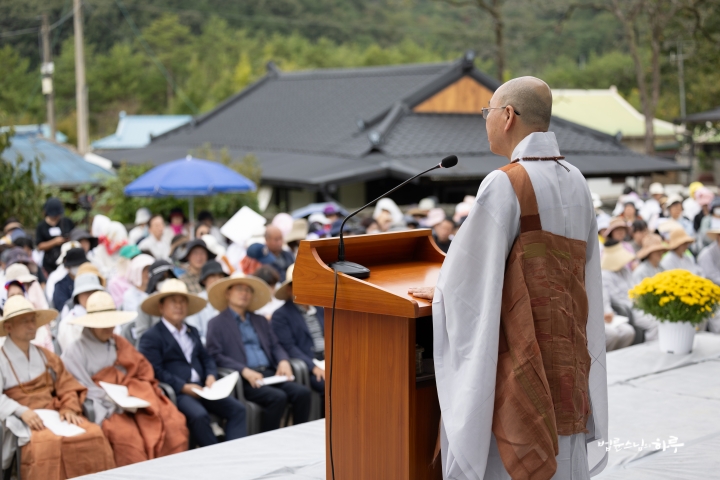
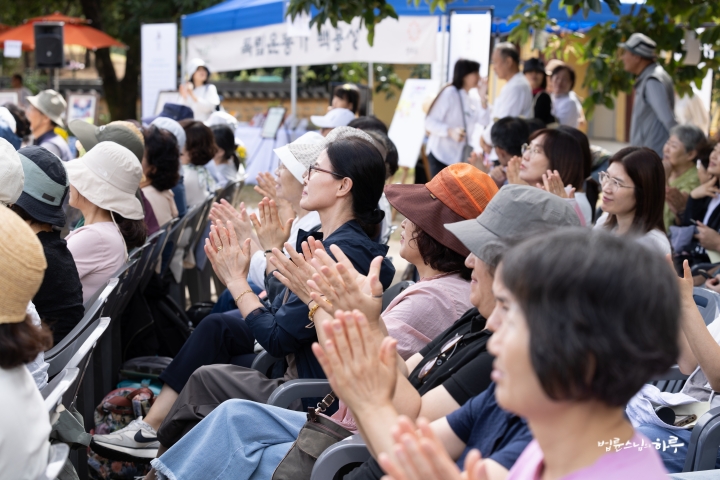
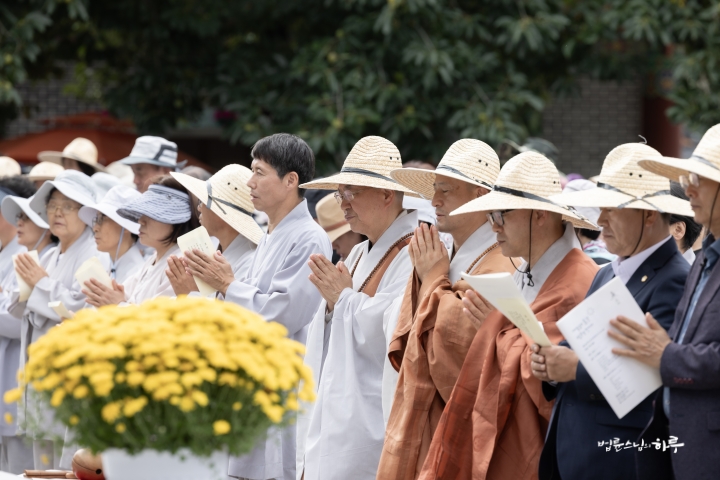
Inheriting Master Yongseong’s lifelong aspiration for national independence and the revival of Buddhism, all Jungto Society members pledged to work together for peace and unification on the Korean peninsula today. The ceremony concluded with the Four Great Vows.
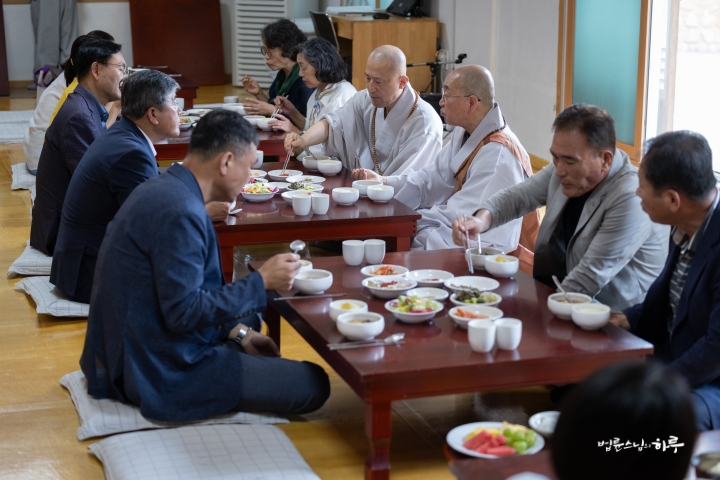
Sunim had lunch together with the invited guests. While dining, he shared various opinions on how government officials should approach development to make Adomoryewon a meaningful space for the citizens of South Korea.
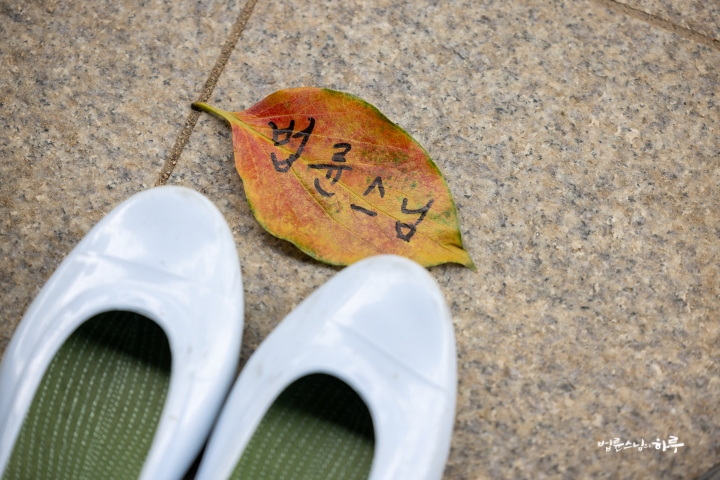
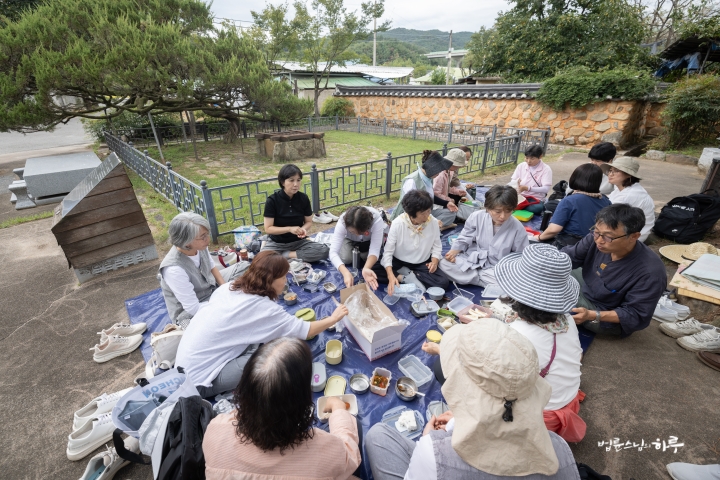
Members of the Daegu-Gyeongbuk branch scattered in small groups to have lunch with the packed meals they had brought.
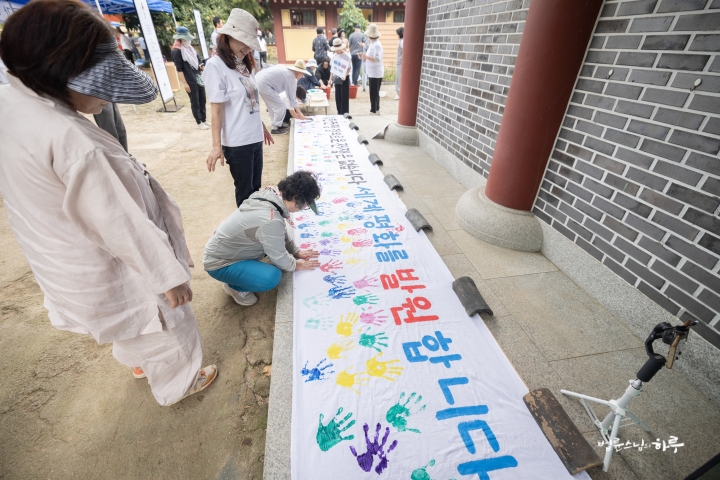
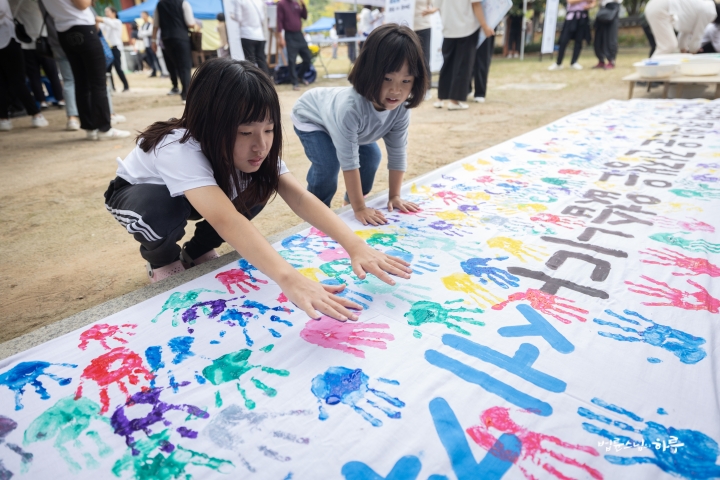
During lunchtime, various booths were set up throughout the area to commemorate the achievements of Master Ado, Morye Jangja, and Master Yongseong. All the members had an enjoyable time walking around Adomoryewon.
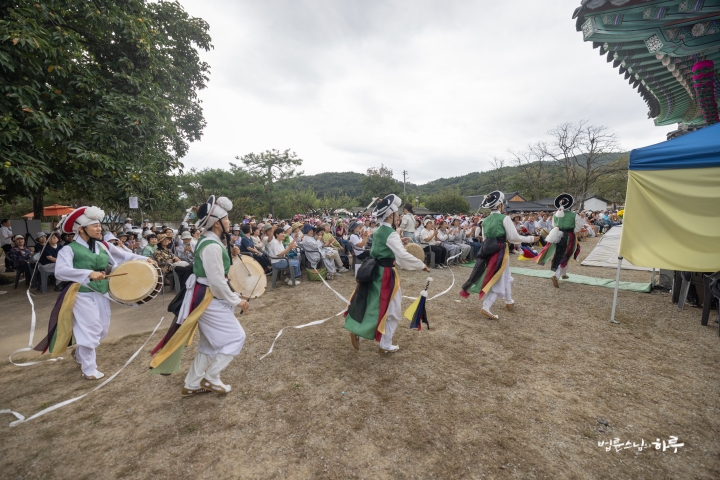
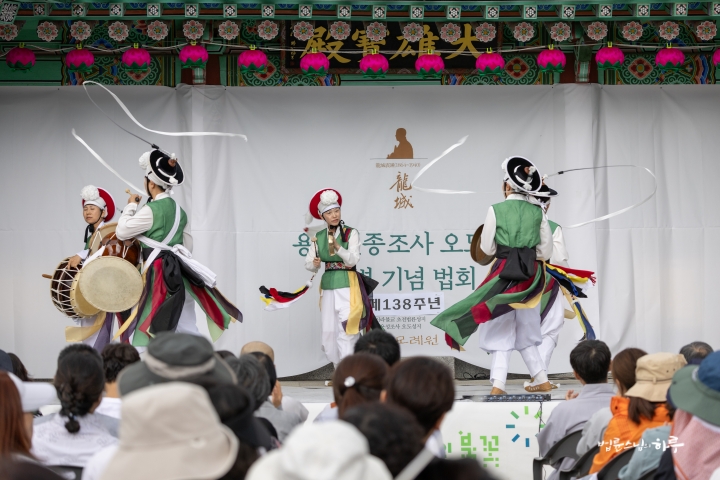
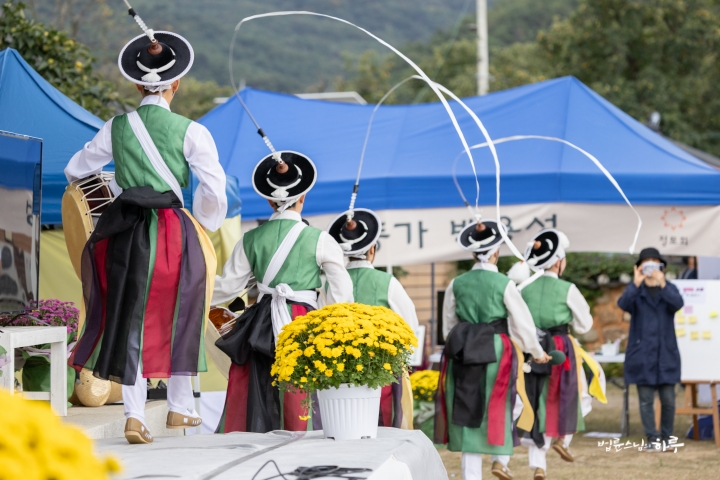
At 1:30 PM, the Daegu-Gyeongbuk branch members’ day event began. As the exciting traditional music performance started, everyone’s shoulders began to sway. Amidst the harmonious blend of kkwaenggwari, janggu, buk, and jing, beautiful dance movements unfolded as the sangmo ribbon twirled in circles, as if embroidering the sky.
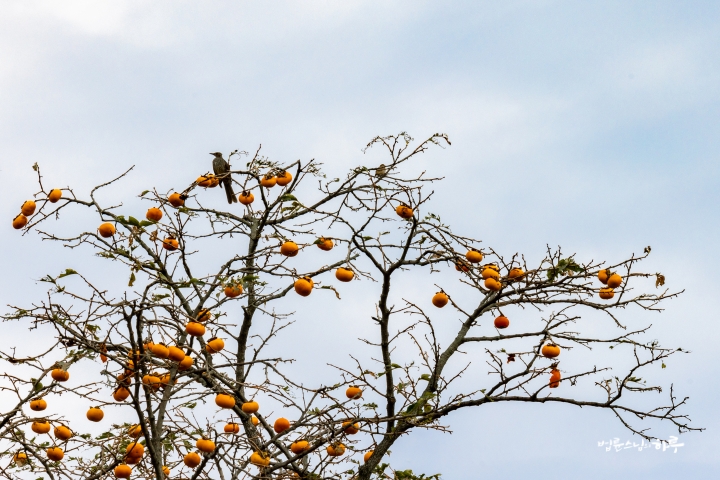
The Pohang branch performed a ukulele concert. The beautiful performance, harmonizing with the ripening persimmon trees, blue sky, and cool breeze, brought a sense of calm serenity to everyone’s hearts.
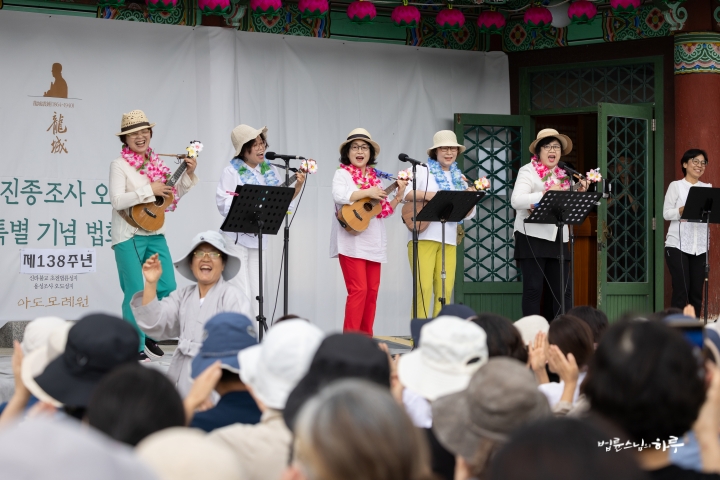
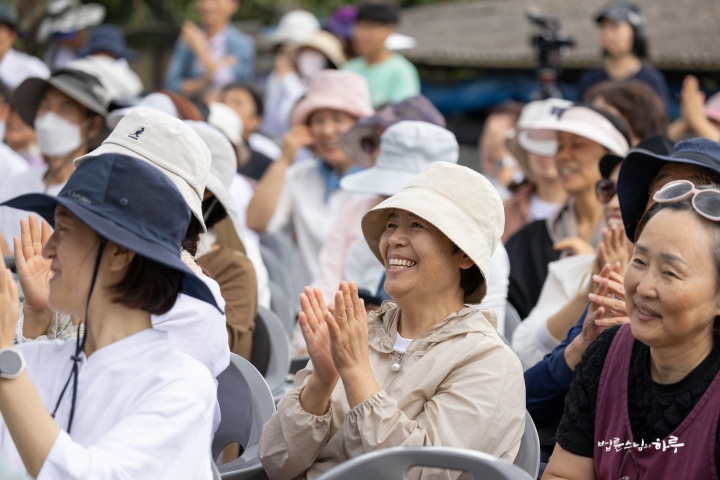
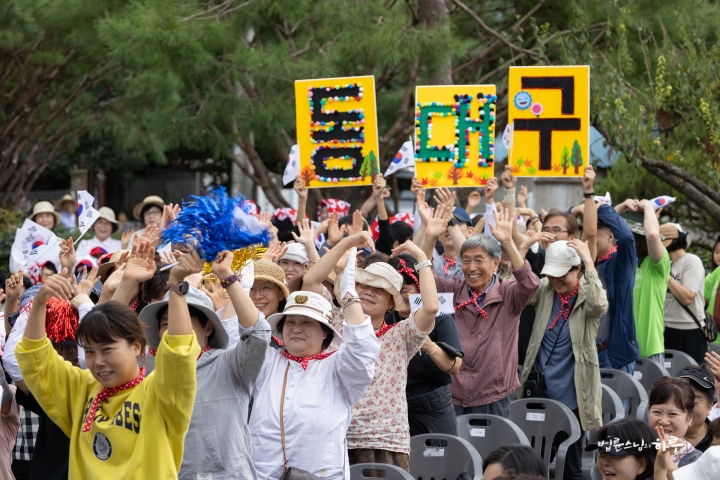
Next, there was time for each branch to introduce themselves. The Gyeongju, Gumi, Dalseo, East Daegu, Suseong, and Pohang branches introduced themselves with enthusiastic chants and songs. The members’ day event kicked off energetically with entertaining performances prepared by each branch.
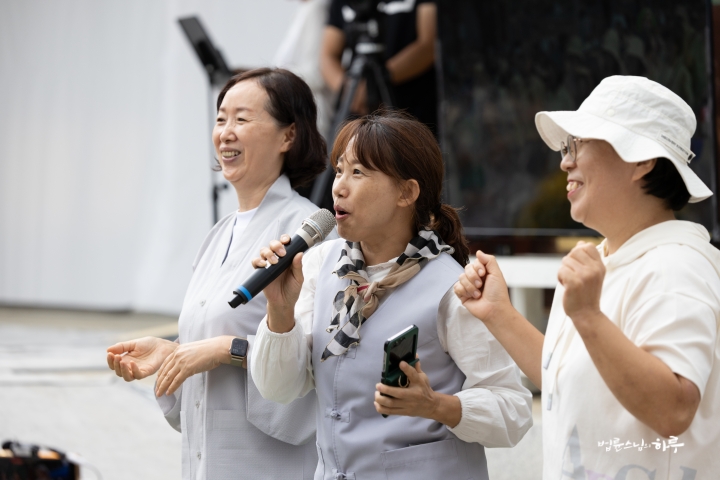
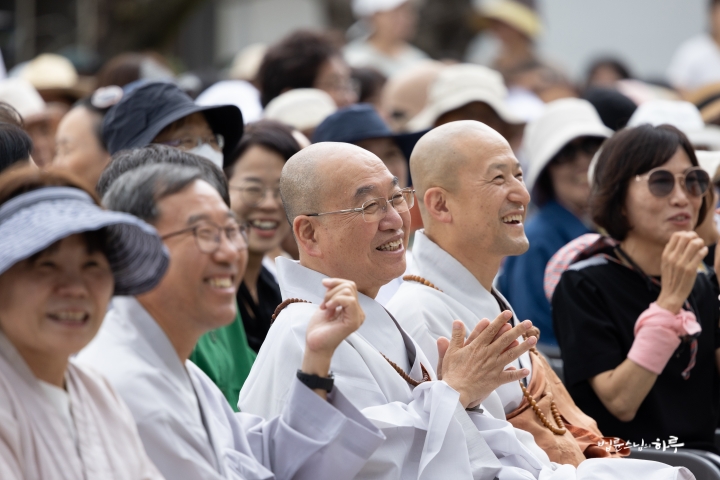
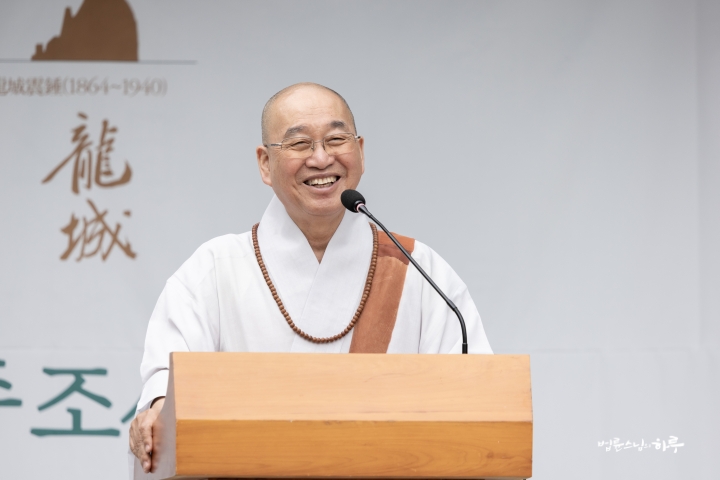
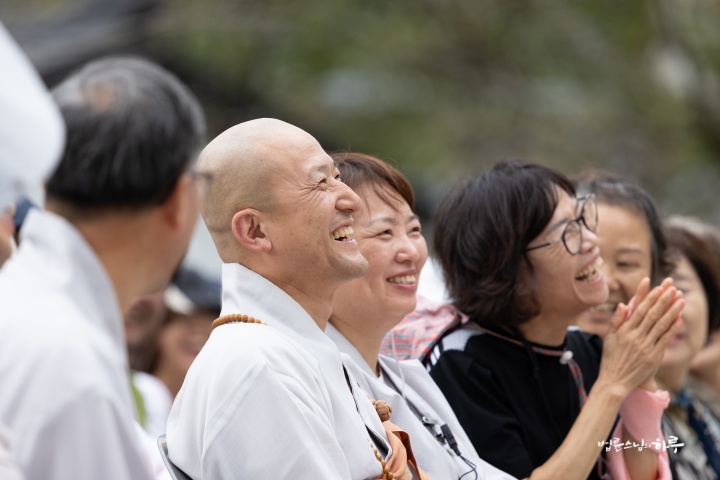
Amid laughter and applause, Sunim took the stage to continue the dialogue. With a bright smile, he gave his opening remarks.
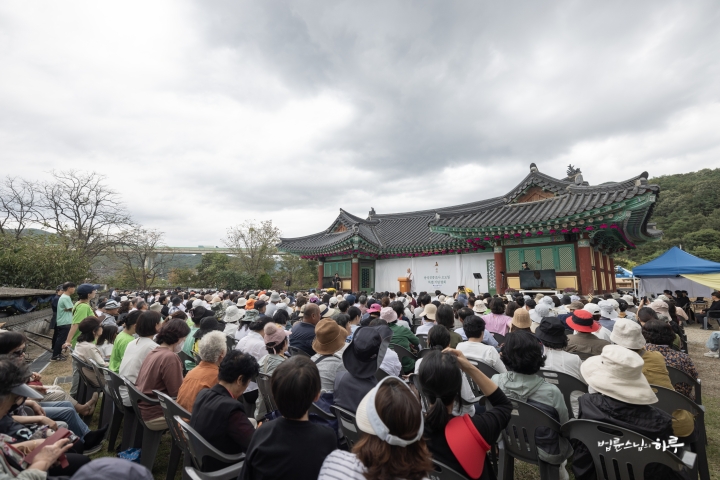
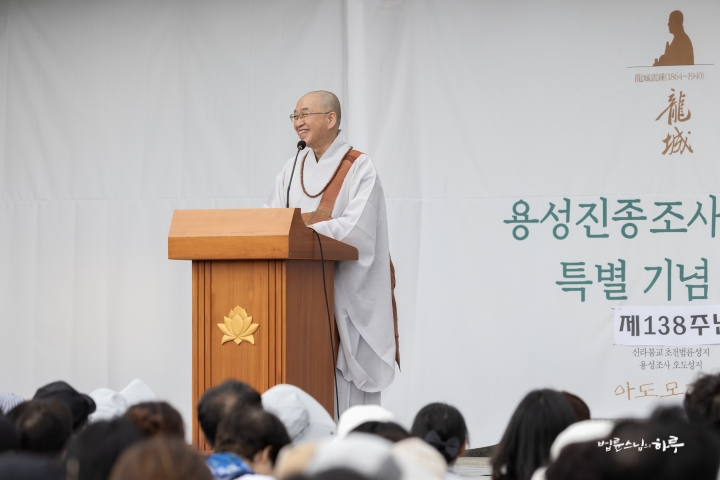
First, those who had submitted questions in advance asked Sunim their questions. Over the course of two hours, nine people conversed with Sunim. One of them shared a long-standing issue about not knowing how to deal with her husband who gets upset easily.
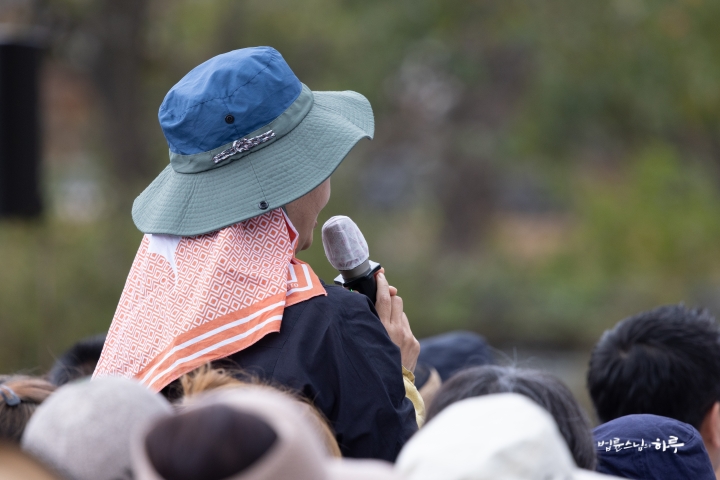
My Husband Gets Upset So Easily, I Don’t Know What to Do
“I used to fight a lot with my husband, but after joining Jungto Society, we fight less and our relationship has improved. My husband works as an overseas site manager. In the past, I would cry when he left for overseas trips and fight when he came home, but nowadays I’m happy when he’s home and even happier when he goes abroad. So my husband likes that I’m involved with Jungto Society, and I feel more at ease. However, I still stumble over the same issue every time. When my husband gets upset, he stays that way for about six months. He even stays upset during his overseas trips. I’m curious and don’t understand why he does this. After his recent return from an overseas assignment, he became very dissatisfied with me and we had a big fight. He said to me, ‘Have you ever bought me even a handkerchief for my birthday in the past 10 years?’ He’s the type of person who always feels compelled to buy things for the family, even kitchen supplies, so I didn’t buy things directly and only assisted because he wouldn’t like what I bought. When I heard this, I thought, ‘Here we go again.’ Also, my husband was under a lot of stress at his company, so while he was in the process of quitting and moving to a different job, we had another big argument.”
“Why did you argue?”“My husband absolutely hates it when I talk back to him.”
“When my husband told me that his friend was coming over for dinner, I said the weather was too hot and we even didn’t have any food to serve, asking what we should do. My husband said we could just reheat the kimchi stew we had and grill some cutlassfish. I said it wasn’t polite to serve leftover food to guests. We bickered back and forth about whether it was okay or not. In the end, when my husband started reheating the kimchi stew, I said, ‘If we do this, we’ll receive the same treatment when we visit other people’s homes.’ Then my husband got furiously angry and crumpled the ladle. Seeing that, I got angry too and said, ‘Why are you getting mad when I’m just expressing my opinion?’ Then my husband said, ‘I can’t live with you anymore. I’ll give you all my assets, so let’s get divorced.’ All his assets amount to just one house. A little later, he corrected himself and said he would give me the house. Since I had been careful because my husband gets upset so easily, I pretended to be surprised and said, ‘I’ll think about it,’ and the matter was settled for the time being. My husband is currently unemployed. He says he’ll find his own path, and I’m doing my own things and practicing, so we are not bothering each other. My husband buys ramen and instant rice to feed himself, and I cook my own meals. We eat separately. Now that my husband’s anger has cooled down a bit, we eat only dinner together. Even though I try not to upset my husband, he still gets upset. How should I approach my practice to solve this lifelong issue of mine?”
“Is your husband okay to live with? Or is it difficult to live with him? From your perspective, is it better to live with this man? Or do you think, ‘This is a good opportunity, it would be better not to live together’? You’re confused because you’re unsure about this.”“I’m fine either way.”
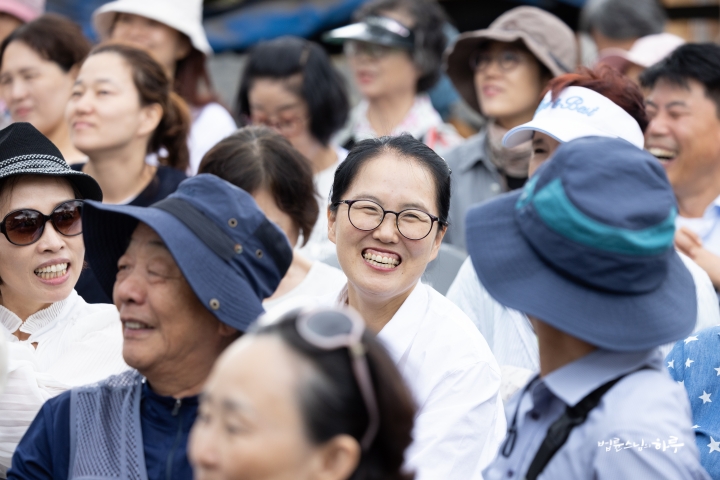
“Sunim, since I’ve gathered the courage to ask a question, could you please give me a prayer to recite for myself?”
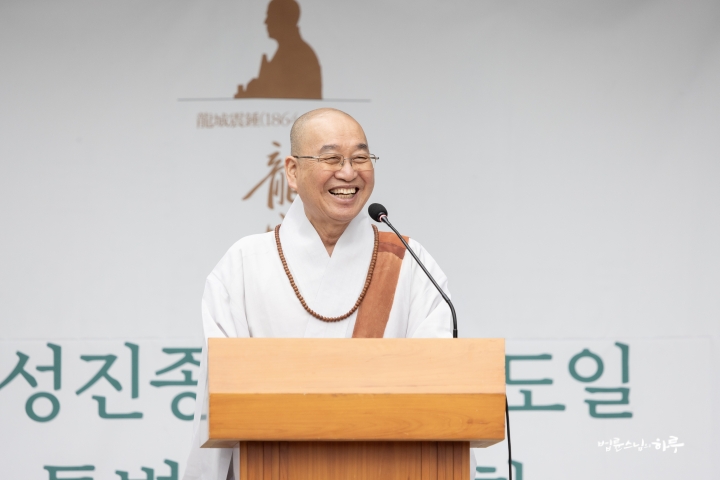
“I’m quite foolish, you see. I want to engrave it in my mind during my morning prayers.”
“Then try praying like this: ‘I am your mother.'”“Thank you.”
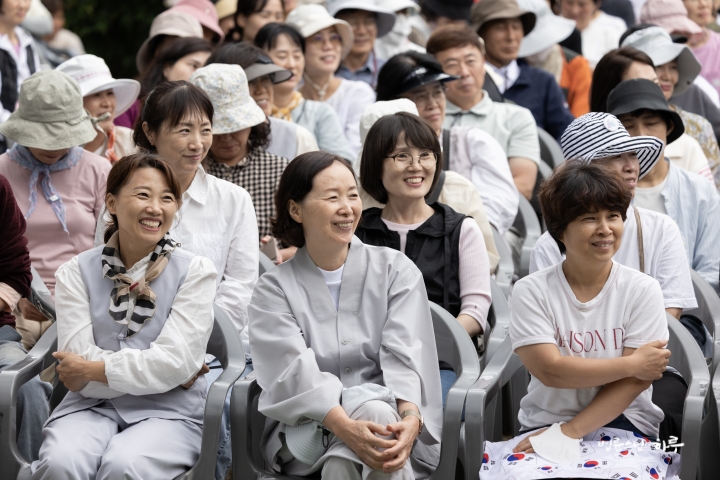
The questions continued to flow. Time flew by as the audience laughed, clapped, and empathized with each other.
After taking and answering impromptu questions from the audience, Sunim concluded the Dharma Q&A at 3:30 PM. He closed with final remarks.
The Members’ Day event concluded with a big round of applause, followed by a commemorative photo session.
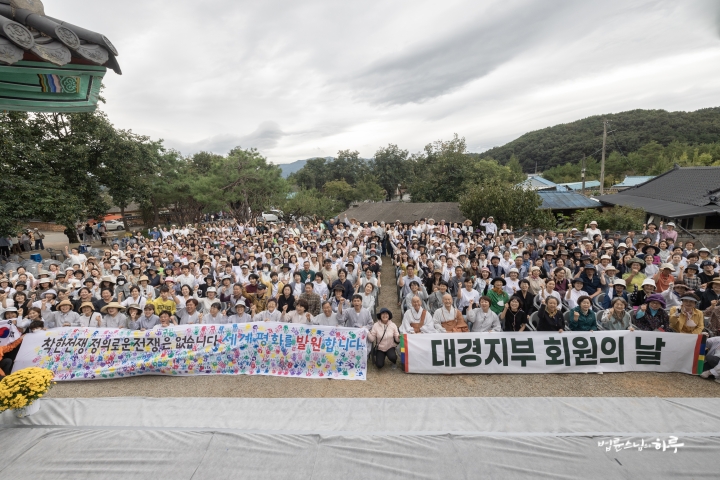
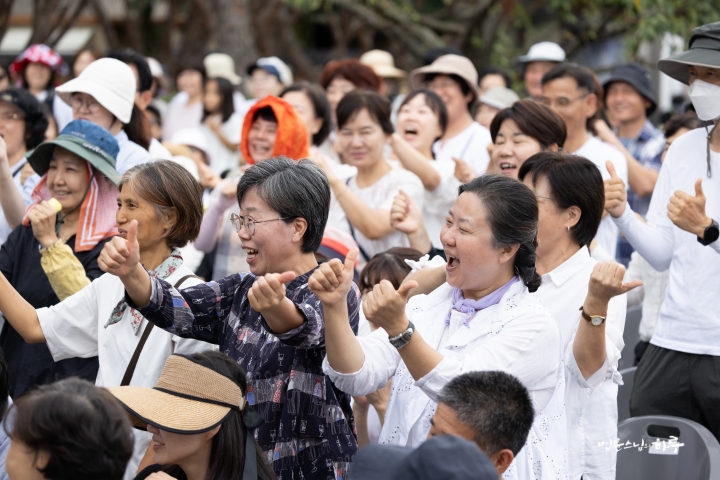
Following the morning Dharma assembly commemorating Master Yongseong’s enlightenment day, the Daegu-Gyeongbuk Branch Members’ Day marked a long day of outdoor Dharma assemblies. It was an opportunity to enjoy the autumn weather, strengthen the resolve to spread the Dharma, and spend time in harmony with fellow practitioners.
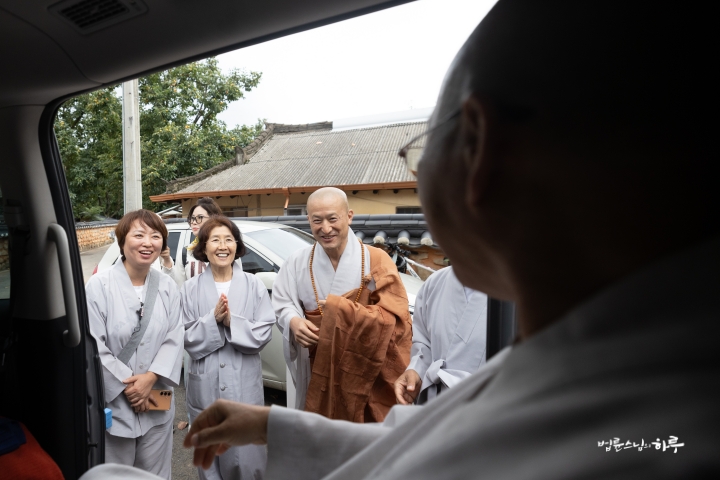
At 4 PM, Sunim departed from Adomoryewon and headed towards Seoul. The view outside the window was a continuous expanse of yellow-tinged autumn fields.

After a three-hour drive on the highway, Sunim arrived at the Seoul Jungto Center at 7 PM. In the evening, he wrapped up the day by attending to work indoors.
Tomorrow, Sunim is scheduled to broadcast the Weekly Dharma Assembly in the morning, followed by an invited lecture at the Asan campus of Sun Moon University in the afternoon.