My Husband Weighs 0.1 Tons. How Can I Help Him Lose Weight?
Sep 27, 2024 - Friday Dharma Q&A (Online and Offline)
I’ve Been Eating Lunch Alone at Work for Five Years
“I’ve been eating lunch alone at work for five years. My department colleagues are younger women, but they treat me disrespectfully because of their slightly higher position at work. During my time in the department, I’ve had three surgeries to remove tumors from my chest. I’m curious about how I can eat comfortably alone in the company cafeteria without feeling self-conscious.”
“Does the food not go down your throat when you eat alone?”
“I usually eat in the company cafeteria, and I feel very uncomfortable when I encounter someone I know. Everyone else comes in groups of two or three to eat with their department colleagues, but since I come alone, I think they might wonder, ‘Is there something wrong with that person?’ And it’s a bit difficult when someone I’m not close to in the department suggests going out to eat with others, excluding me. I need to continue working, but because of people I’m not close to in the department, I can’t eat with other employees, and I feel uncomfortable when I encounter people from other departments in the cafeteria. I’m wondering how I can eat alone without having these feelings.”
“In the past, there were hardly any people who ate alone, and meals were always eaten together. There’s even a saying, ‘Let’s eat together,’ isn’t there? But you seem quite young, yet you’re talking like someone over seventy. These days, it’s the era of eating alone. If you go to a convenience store nowadays, you’ll see people sitting by the window, eating alone, visible to passersby. Even in restaurants, while people might occasionally go together, most eat alone.”“I’ve been working in this group for five years, and because it’s a conservative group, I feel uncomfortable and self-conscious.”
“First, since it’s now an era of eating alone in society as a whole, you can think, ‘I’m ahead of the times,’ and eat alone. Remember when I asked if the food doesn’t go down your throat? If you can swallow your food when eating alone, there’s no problem. It would be an issue if you couldn’t swallow or kept getting indigestion. But if you can swallow well and don’t get indigestion, there’s absolutely no problem eating alone. As time passes, we’re moving towards an era where everyone will eat alone, so you can think of yourself as a trendsetter. In the past, it was often seen as strange for a woman to live alone. If a woman was over thirty and unmarried, living alone, people would think, ‘Is there something wrong with her?’ But nowadays, times have changed, and there are so many people living alone that hardly anyone thinks it’s strange if someone isn’t married. You’re still thinking in the old way. People don’t think it’s strange if you eat alone. Everyone is busy eating their own meal. They might think, ‘Why does that woman always eat alone?’ but it’s not really a big issue. Second, if you want to eat with others, you can offer to treat them. If you suggest to your colleagues, ‘I’d like to treat everyone to dinner today,’ they might say, ‘We won’t eat if you’re paying,’ or they might say, ‘Okay, let’s go eat together.’ If you want to socialize with people, you need to spend a little money. Why do you think people say, ‘Sunim, Sunim’? It’s because I provide counseling for free. If I charged 1,000 USD for each counseling session, would many people seek me out? When you pay a doctor for treatment, you’re grateful, but that’s it. You need to either help others or give money; you need to offer something. You shouldn’t expect others to approach you and say ‘Let’s eat together’ if you haven’t given anything. Either eat alone or offer to treat others.”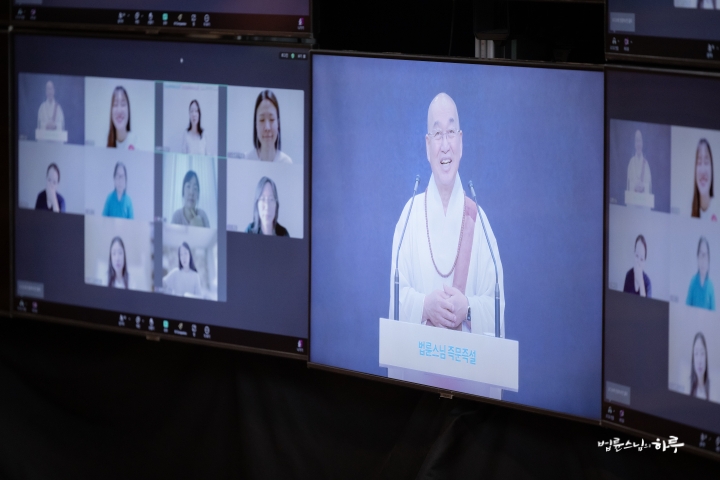
“There’s a reason why I eat alone. I work in the research department, where researchers are favored by superiors and treated well, while I, as an administrative staff, am treated poorly. One researcher spoke to me very rudely, which soured our relationship. Since researchers are the majority and I’m in the minority, that researcher would lead others to go out for lunch together, repeatedly leaving me out and isolated.”
“Then why don’t you get a Ph.D. and become a researcher yourself?”“I don’t want to do that job.”
“If you don’t want to do that job, you should accept this situation. The researchers might think, ‘Why should an administrative staff join us for lunch?’ You don’t want to do their job, but you want to be part of their group – that’s a bit self-centered, don’t you think?”“Do you think it’s right for researchers to be treated better?”
“What can you do if that’s how they want to behave? For example, if you’re a career soldier but much older than the officers, what can you do if the young officers go out to eat together?”“That’s the situation. They think they’re so great.”
“Well, they got Ph.D.s and became researchers, so they are accomplished, aren’t they? You said you didn’t want to do that job, right? What’s wrong with acknowledging their achievements?”“I simply didn’t want to do that job, but they act superior and eat together while being rude to me, which is hard for me. I’ve been eating lunch alone for five years.”
“If you don’t like seeing them anyway, isn’t it good that you can eat alone?”“I’m fine not eating with those people, but I feel the stares of people from other departments when they see me eating alone every time.”
“Nobody is thinking that. You’re the only one who has such thoughts. Besides, you could eat with staff from other departments.”“I’ve tried, but it’s not easy to match schedules because they’re busy. We can eat together occasionally, but not often.”

“Working at the research institute, I sometimes have conflicts with researchers. Even when I’m objectively not at fault, they look down on me because they feel superior. They say things like, ‘Can’t you handle this much?’ which has worsened our relationship. This situation hasn’t changed for five years. I think it’s a structural problem.”
“If this behavior is legally considered discrimination, you can file a complaint with the company. But isn’t the level of conflict you described common in most workplaces? In the military, no matter how long you’ve served, if you’re a non-commissioned officer, you must treat a newly appointed officer who just graduated from the military academy as your superior. Similarly, researchers think they outrank you because you’re administrative staff. It’s the same in schools. There are teachers who graduated from education colleges and passed the teacher certification exam, and there are administrative staff in the office. Teachers don’t consider office staff as their equals. But what can you do if that’s how they think? Let’s say you’ve been going to a temple for 30 years. Then a young monk who’s only been a monk for 3 years arrives. This person, although wearing monk’s robes, knows less about Buddhism than you do. But you’re still just a lay follower, despite your 30 years at the temple. Who should people bow to? Even though the monk is young and new and doesn’t know much about Buddhism, people have to bow to him because he’s a monk. This kind of conflict has existed for a long time. In the dynastic era, when a king died and his young son became king, the ministers who had served the father found it hard to respect the child king. When they acted a bit stiffly, the king would later remove all of his father’s ministers. That’s how the world works. In a research institute, people with Ph.D.s who do research are the focus. Administrative staff who support them can’t be the center. It will be the same even after 10 years. When you’re about to retire, researchers who could be your children’s age will join, but the situation will be the same because the positions themselves are different.”
“I’ve studied as much as they have, earned degrees, and even studied abroad. My educational background is similar to theirs. The only difference is our roles.”
“So, you are the problem. Other administrative staff without such academic backgrounds are doing well as employees. However, you have an academic background equal to or better than the researchers, but you were hired as an administrative staff rather than a researcher. This conflict wouldn’t exist if you hadn’t studied as much. That’s the issue.”“I don’t find them impressive. I think that’s the problem.”
“Then you have no choice but to quit. Don’t go to a research institute; instead, find a company with more administrative staff. The conflict arises because you’re trying to receive the same treatment as researchers who have different positions. If you continue to act this way, there’s a high risk that the researchers will gather and gossip about you, saying, ‘That person really doesn’t know their place.'”“Should I treat them kindly then?”
“You don’t have to be kind to them. Just do what they need. Don’t reject them, just diligently perform your administrative duties. Let the researchers handle non-administrative tasks, and you focus on doing your administrative work well to support their research. Administrative staff are there to support the research staff, right? That’s your job, so you should do it diligently.”“Even when I work hard to support them, they don’t acknowledge it, and that frustrates me. I do my job without any issues, but they still look down on me.”
“They won’t treat you like a researcher just because you’re good at administrative work. Your thinking is too narrow. The root of this narrow-mindedness is that you have a high level of education, including studying abroad, but you were hired as an administrative staff instead of a researcher. You didn’t like being a researcher, so you became an administrative staff, but now you realize that although you have similar educational backgrounds, the researchers have higher positions. It’s like when joining the military, others took the officer exam, but you took the non-commissioned officer exam. Even if you graduated from a better university, your rank is different. It’s like how even if I had worked in administration at a temple for 30 years, the person given the position of temple leader would be a monk. To live in this world, you need to accept this reality.”“So, I guess I’ll have to eat alone for the next 20 years until I retire.”
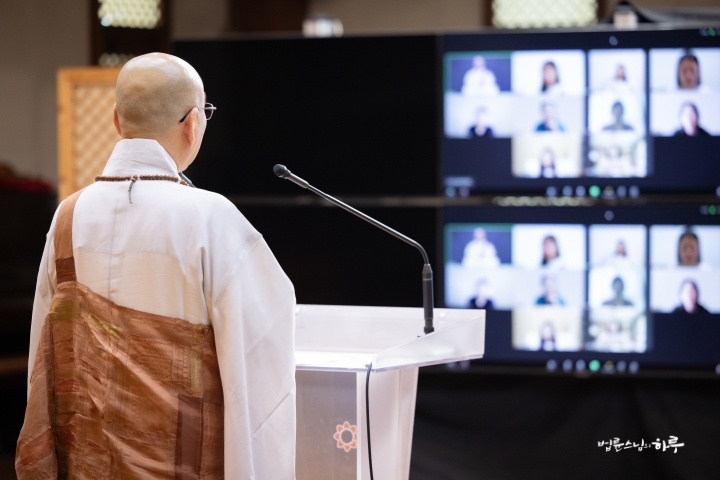
“I understand. Thank you.”
The questions continued.
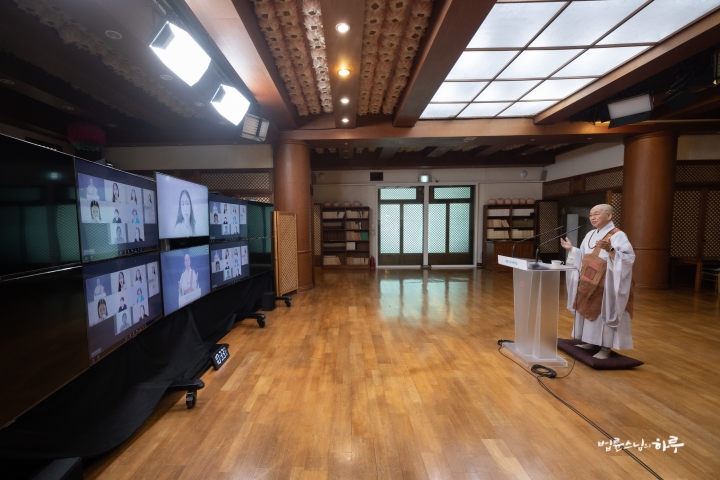
My long-cherished dream of becoming a flight attendant has been thwarted twice for unexpected reasons. With what mindset should I overcome this period?
It’s been a year since I received a spiritual calling. I’m very confused and distressed because my Buddhist values conflict with the shamanistic life my spiritual mother is forcing on me.
How can I free myself from the scars of verbal abuse and physical violence from my parents that continued into my adulthood?
By the time the conversation ended, it was almost noon.
After lunch, at 2 PM, Sunim had a meeting with visitors at the Peace Foundation. Another meeting followed at 4 PM with more visitors.

After the meetings, from 7:30 PM, Sunim held an offline Dharma Q&A session in the basement auditorium of the Seoul Jungto Social and Cultural Center.

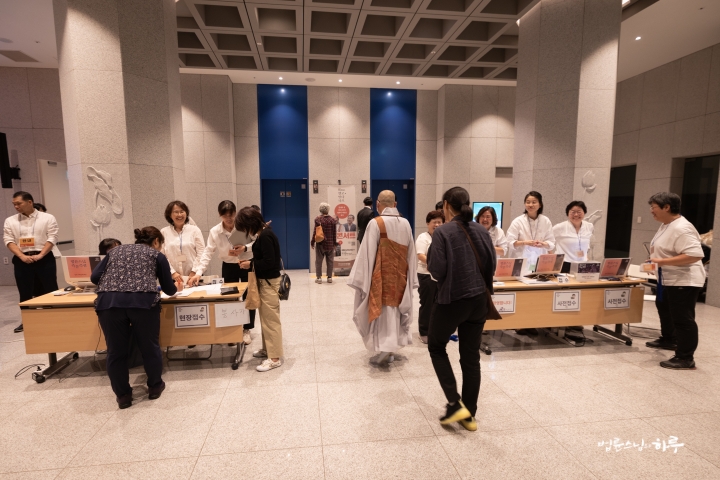
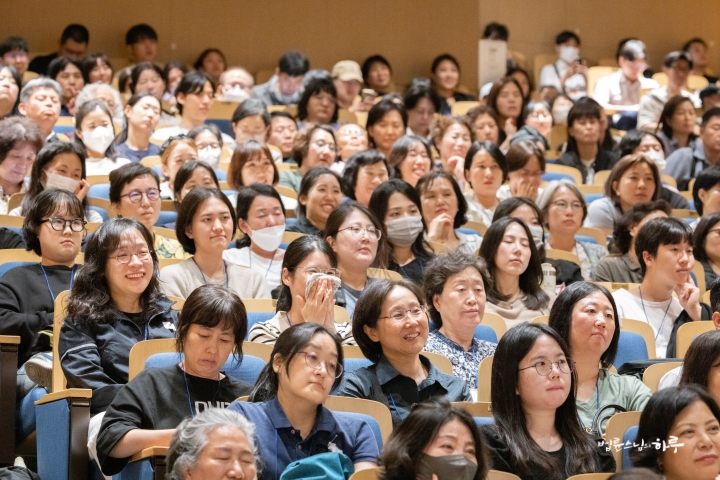
Many citizens came to the Jungto Social and Cultural Center to attend the Dharma Q&A. After registering on-site, they each put a numbered ticket into a draw box and made their way to the basement auditorium.


The lecture began with about 4,900 people watching on YouTube and 400 people present at the venue. After an opening performance, a video was shown of Sunim visiting the earthquake-affected areas in Turkey and Syria and conducting a JTS workshop in Bhutan over the past month.

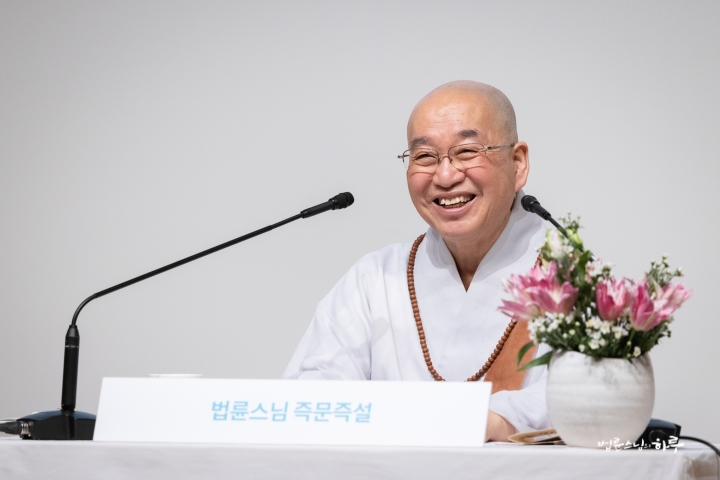
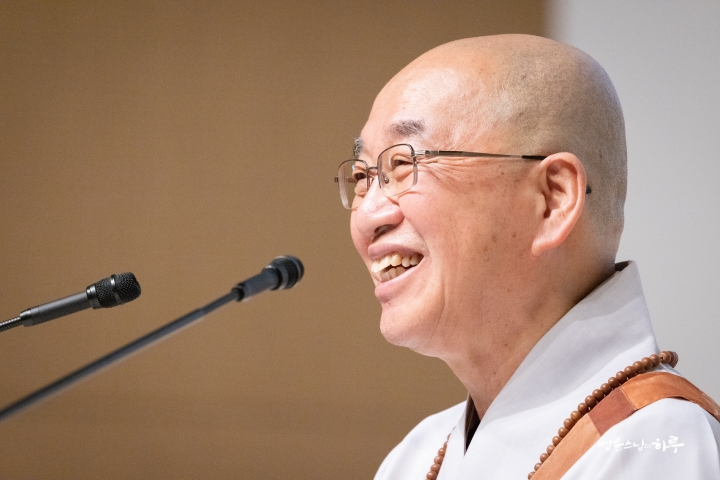
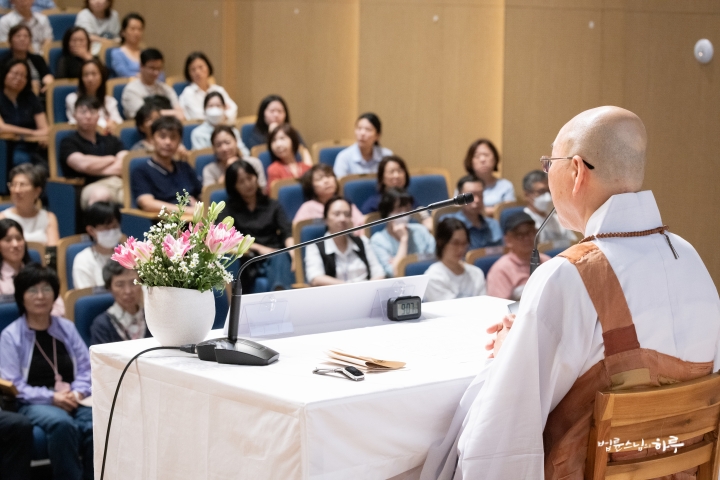
After the video, Sunim came up on stage. He greeted the audience with a smile.
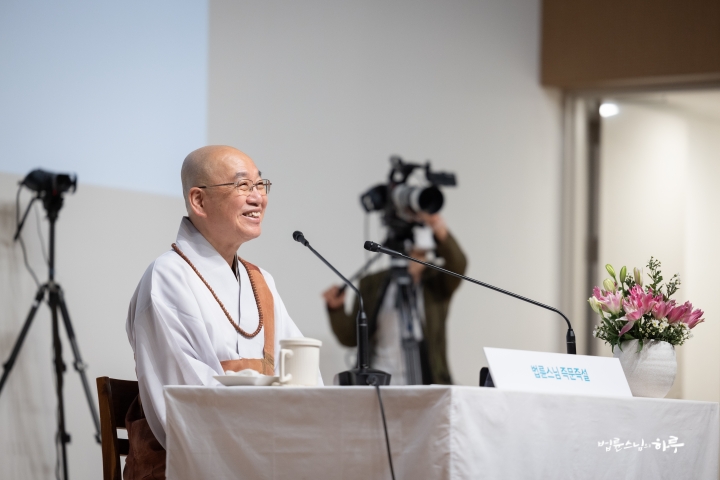
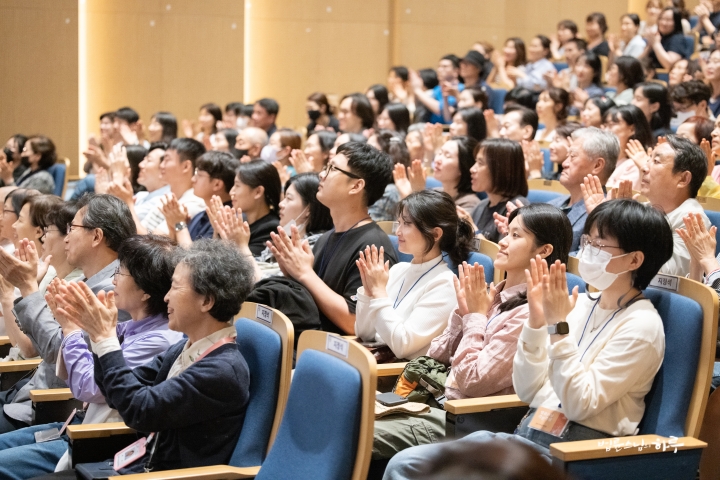
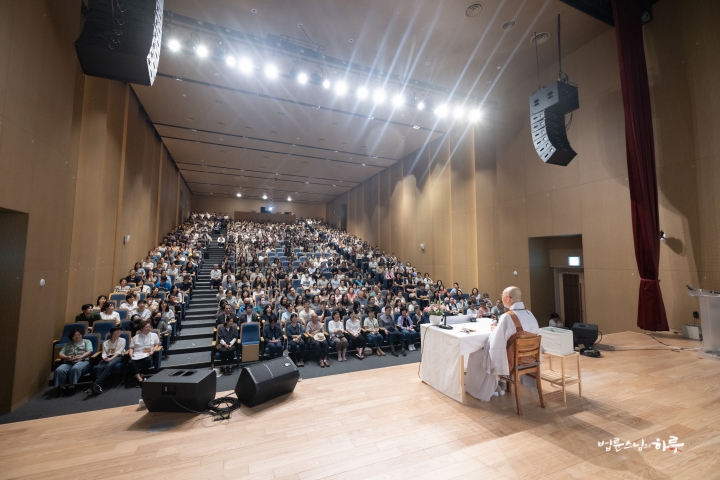
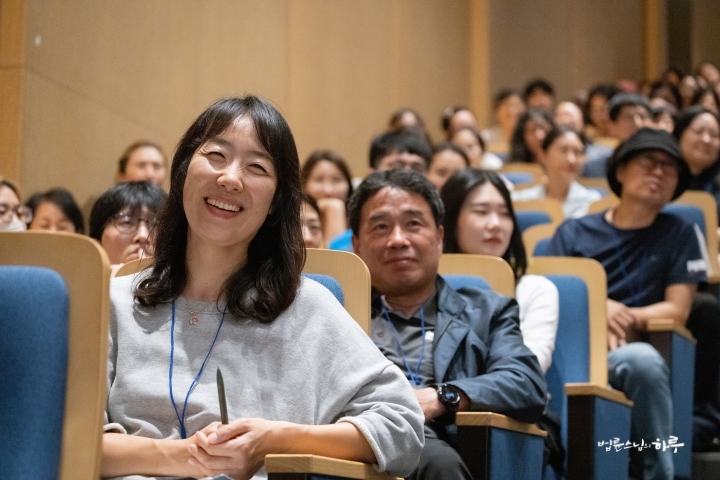
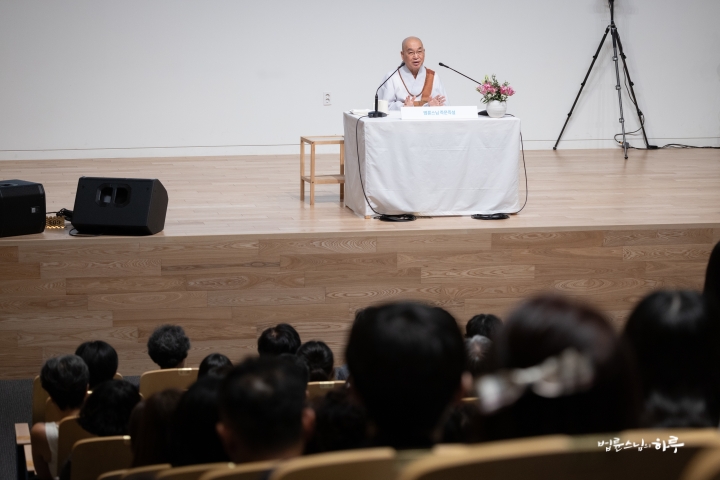
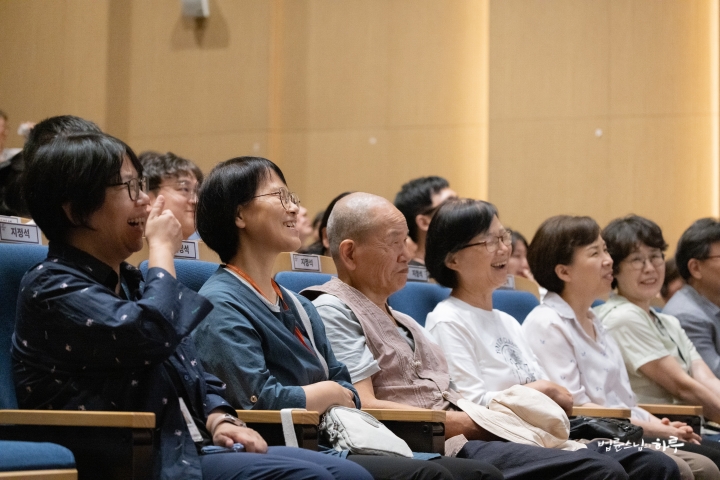
Then, five people who had submitted questions in advance had a conversation with Sunim. Two more people from the audience raised their hands to ask questions. One of them asked for Sunim’s advice on what to do about her husband who keeps gaining weight despite her efforts to get him a gym membership.
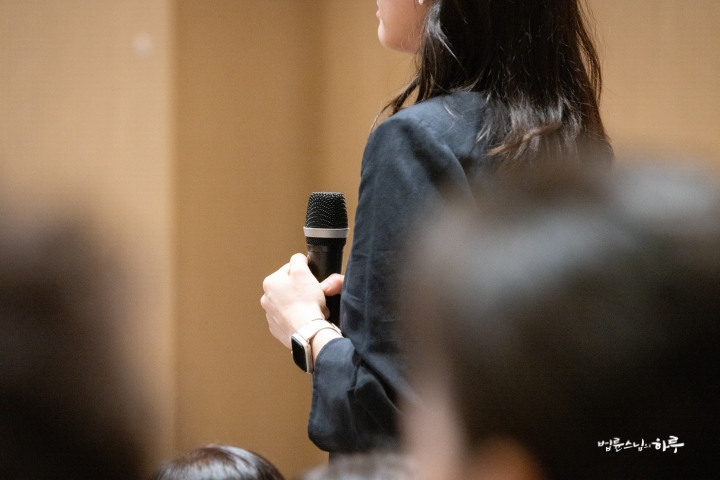
My Husband Weighs 0.1 Tons. How Can I Help Him Lose Weight?
“My husband has gained a lot of weight since we got married. At first, he was in the early 80kg range, but he reached 90kg and now he’s 0.1 tons. My husband doesn’t buy his own clothes. So when I buy clothes for him, he gets angry every time, saying they’re too small. He doesn’t realize he’s obese. A few years ago, at a funeral, one of his relatives from his family didn’t recognize him. It was a distant relative who only remembered him from when he was young, and they said, ‘Is this that child? Did you feed him too well?’ We hear similar comments often.”
“In such situations, you can reply, ‘Yes, we’re fattening him up to sell him.’ After all, cows need to be heavy to fetch a good price.” (Laughter)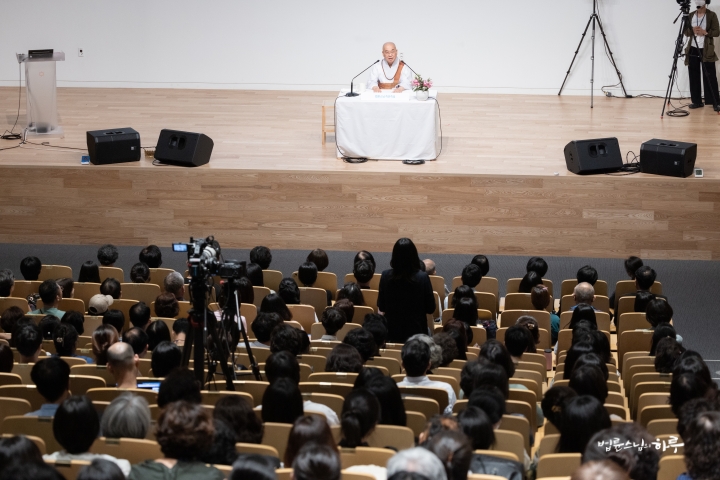
“Yes, I just laugh it off at those times. Now that we’re both approaching fifty, I wish he would lose weight for his health rather than appearance. When he gets a health check-up, everything comes back at risk levels. So I nag him to exercise. I’m not very diligent about it myself, but my husband doesn’t do it at all. After being a housewife, now that the children have grown up, I’ve started doing part-time work and sent my husband to the gym. He won’t go if it’s too far or if he can’t take a bath there, so I registered him at an expensive gym near our house. We’ve spent over 3 million won on gym memberships in the last three years. I’d be happy if he could just maintain his weight in the 90kg range. But he keeps gaining weight. I nag him, and then he gets angry, and this keeps repeating. Should I just give up on my husband? Or should I keep talking to him about it?”
“First, it’s good to keep talking to him about it for his health. If your husband doesn’t listen, you can’t force him. Have you ever asked him, ‘Honey, since there’s no change even though you’re going to the gym, don’t you think it’s a waste of money? Do you want to stop going?'”“Yes, and he says he won’t go.”
“I’ve informed you, and the choice is yours. If you pass away early, I can remarry, so that’s fine with me.”
You should comfort yourself with this mindset. There’s no need to torment yourself, right? If your worrying would improve your husband’s condition, you should keep worrying, but it doesn’t change anything. Worrying only hurts you. People who do things that harm themselves are foolish. You need to change your mindset. Think, “If you want to die that badly, there’s nothing I can do to stop you. If you go early, I can remarry or live alone, which is fine.” You should think positively like this. This doesn’t mean saying, “You won’t listen to me, so just die.” Don’t worry too much and try to think positively.
“Thank you.”
The questions continued.
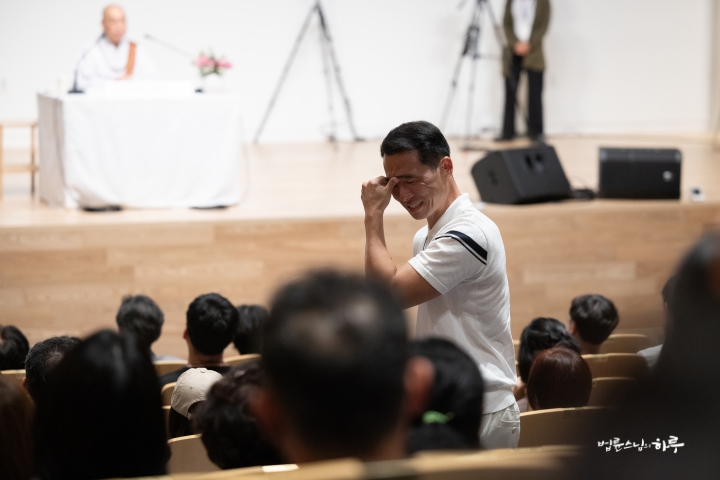
After the dialogue, Sunim gave his closing remarks.
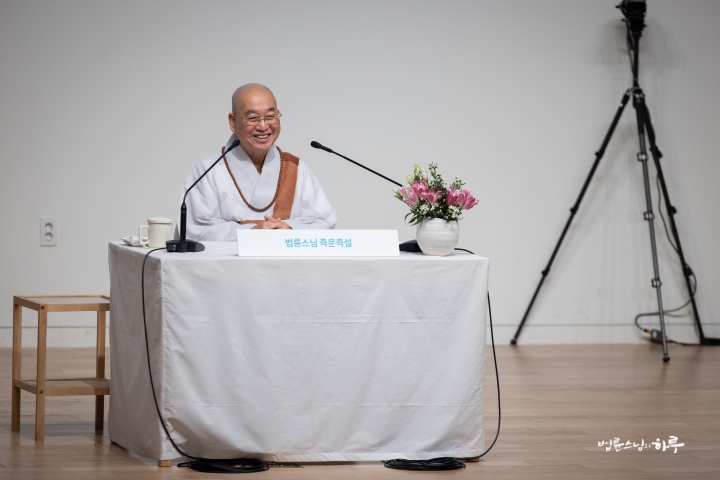
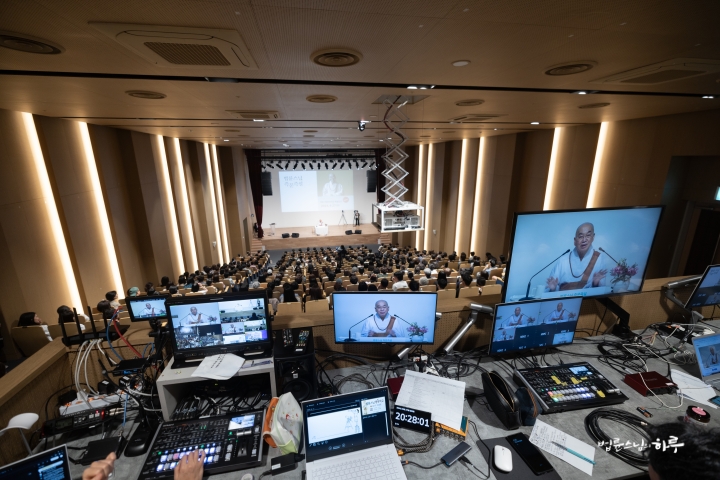

Following the guidance of volunteers, all attendees left the main hall, and a book signing event was held. Many people lined up in a long queue to receive Sunim’s signature and exchange greetings.
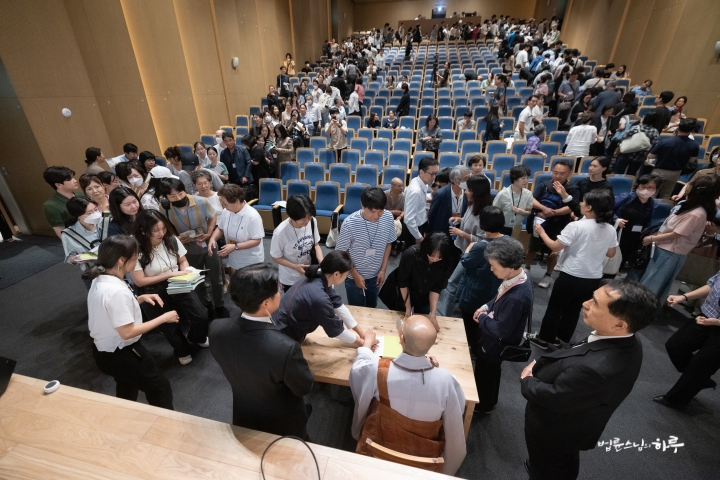
“Sunim, thank you so much. Your lecture has made me truly happy!”
There were many people expressing their gratitude to Sunim.


After the book signing, all volunteers gathered on stage for a commemorative photo. Those who prepared today’s lecture were members of the Incheon-Gyeonggi West Branch of Jungto Society. There were so many volunteers that they had to take two separate group photos.


“Incheon-Gyeonggi West, fighting!”
After expressing his gratitude to the hardworking volunteers, Sunim made his way to the Jungto Center.

Tomorrow, Sunim is scheduled to have an online Dharma Q&A with Jungto Dharma School students in the morning, followed by a live-streamed opening ceremony for the Jungto Dharma School. In the afternoon, he will deliver a guest lecture at the 5th anniversary celebration of the Kim Hong-shin Literary Museum.