How Can I Overcome the Sense of Loss After Losing a Loved One?
Sep 21, 2024 - North American West Coast Lecture Tour (7) Los Angeles, California State University, Northridge
Hello. Today marks the seventh lecture of Venerable Pomnyun Sunim’s North American West Coast tour. While yesterday’s lecture was held at CMC University in the northeast of Los Angeles, today’s event takes place at California State University, Northridge (CSUN), located in the northwest of Los Angeles.

After completing his early morning practice and meditation, Sunim participated online in the International Branch Volunteers’ Day event starting at 5 AM. This time was arranged for the members of the newly established International Special Branch, aimed at global dharma propagation – a goal of Jungto Society’s Second 10,000-Day Practice – to strengthen their bonds, cohesion, and maintain a proper practice-oriented perspective.
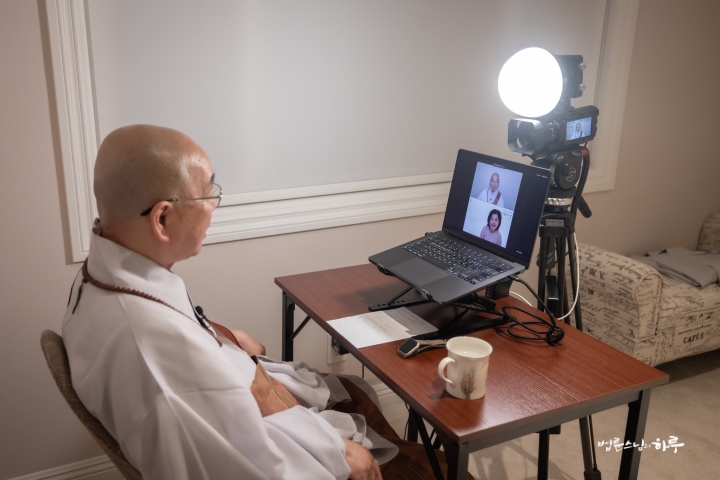
The event began with the recitation of the Three Refuges and Words for Practice, attended by about 70 International Special Branch volunteers from around the world.
First, there was a time for participant introductions. Each regional group, including New York, Dallas, Seattle, Washington, Europe, Toronto, LA, Tokyo, Southeast Asia, and Sydney, enthusiastically chanted their slogans while introducing themselves.
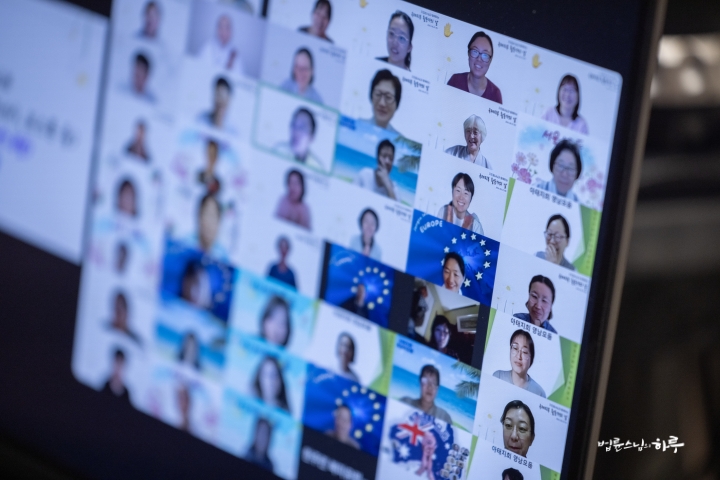
“Aja, aja, from Tokyo! Let’s go, let’s go, to the world!”
“Oompa, oompa, oompapa! Crossing the blue sea to Hong Kong, Vietnam, Indonesia, Malaysia, one for a hundred!”
Despite the time differences from dawn to night across countries, the enthusiasm for global dharma propagation was united.
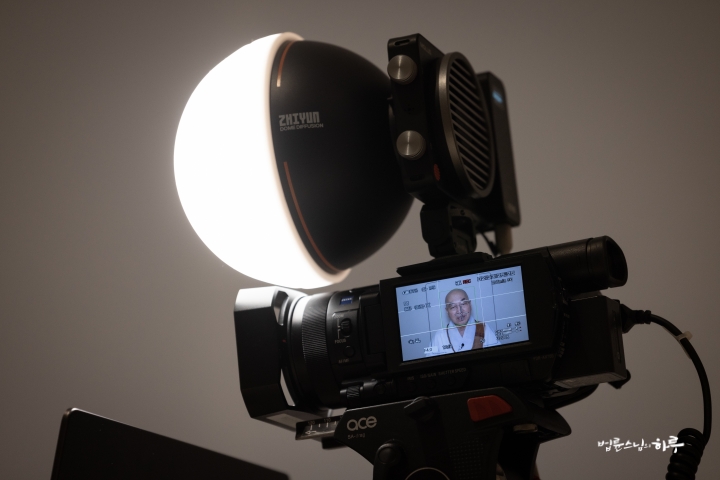
After the lively group introductions, everyone requested a dharma talk from Sunim with three bows. Sunim offered words of encouragement to the volunteers who are doing much with few people, along with explaining the characteristics of the pioneering work of global dharma propagation.
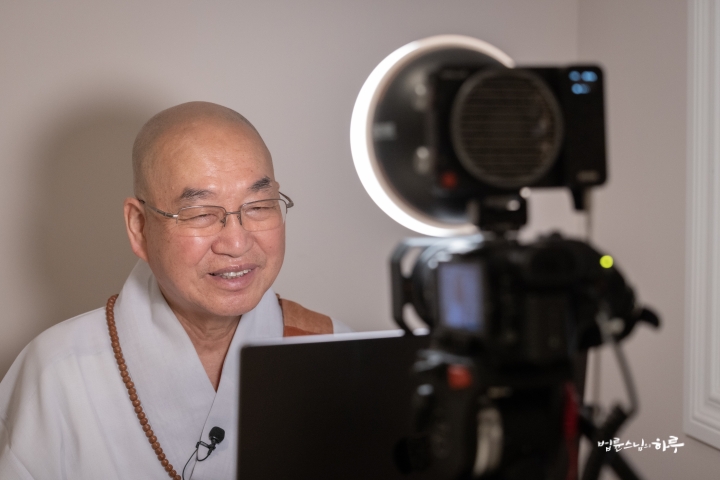
You Are People Writing a Page of History
In the early days of Jungto Society, we had no place of our own, so we rented buildings, lived in greenhouses, went to Nanjido to collect discarded materials to build houses, and started the Awakening Retreat in Mungyeong by setting up huts and using candles for lighting. In a way, these processes can be considered even more precious. Today’s Jungto Society came into being through these processes; nothing happened automatically without such processes. Moreover, it’s during these difficult times, working together and overcoming challenges, that deep affection and trust for fellow practitioners develop. If we focus solely on results, it can lead to competition. I’m not saying it’s okay to have no results. I wanted to emphasize that to achieve any result, a lot of unseen effort is required, and I hope you would approach your activities with the perspective of ‘I am pioneering.’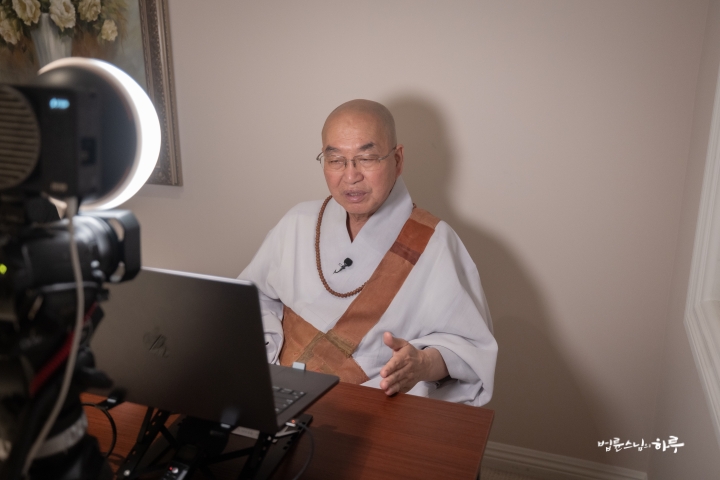
What Must Be Maintained No Matter How Busy We Are
Even for those living in temple communities who are unmarried, without regular jobs, and living as practitioners, it’s easy for practice to take a back seat when work is always prioritized. They might end up investing less time in practice and lacking the fundamental perspective compared to those who have regular jobs but consistently attend Dharma assemblies and participate in the 1000-Day Practice. This is because while they may know a lot from listening, they don’t actually practice much as they prioritize work. The international branches are likely to face the same risk. Thoughts like “Let’s do one more translation” or “We need to develop one more piece of content” can unknowingly lead to losing sight of the practice perspective. While there might be short-term work achievements, it ultimately leads to burnout and quitting. First, we need to take a long-term view rather than a short-term one. When we center our lives on practice, it may seem less efficient for work in the short term, but in the long run, work efficiency improves. Second, through diligent practice, we must always maintain a practice-oriented perspective to generate the aspiration that answers “Why are we doing this work?” If we lose the practice perspective by being overwhelmed with work, we later find ourselves constantly falling into thoughts like “Why am I doing this?” and feeling overwhelmed. We lose sight of the perspective that “Overcoming these difficulties is practice.” Just as couples think divorce is the solution when they don’t get along, or people think quitting is the answer when work gets tough, we might think quitting Jungto activities will solve our problems when we face difficulties. That’s why it’s necessary to maintain essential practices no matter how busy we are. This is not for others, but for ourselves. It’s not just for the present, but for the future. If we don’t lose sight of our practice, we can continue for a long time, but if we do, it becomes difficult to persist.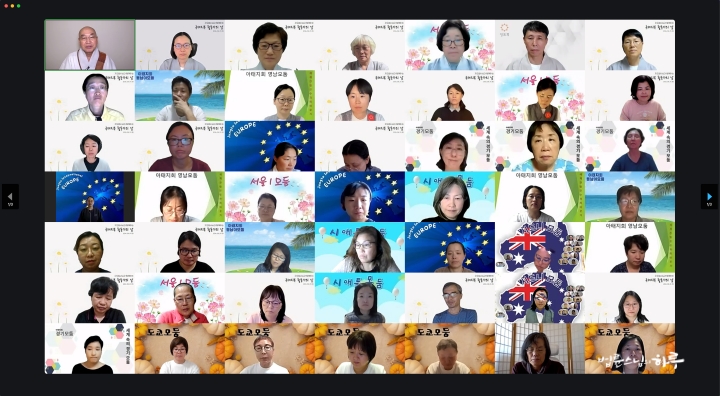
When we carry out our activities with a clear goal and a smile even in difficult times, we can move people. Without this, we lose our impact. When we consistently do one thing, we can maintain our balance and persevere even if we waver slightly. If we neglect our practice, we risk becoming mere functionaries without the identity of a practitioner. Conversely, giving up activities to focus solely on practice goes against the Jungto Society spirit of unifying work and practice. We must examine ourselves while doing this work. We must consistently practice even in the midst of our busy schedules. With this attitude, you can continue your activities for a long time.
Following this, there was a Dharma Q&A session where participants could ask questions about their activities. Seven people had pre-registered to ask questions and engaged in dialogue with Sunim, after which impromptu questions were also taken.↵
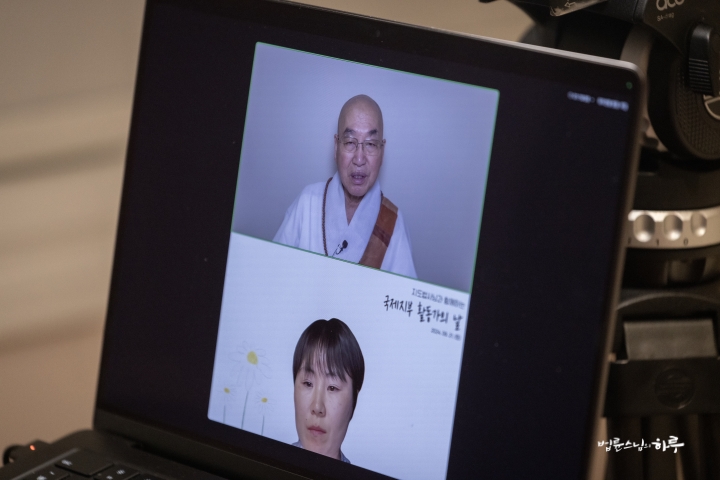
The discussion covered a wide range of topics, including the goals of the Jungto Dharma School, the issue of work being concentrated among a few highly capable individuals, appropriate communication methods with locals, cooperation between international and overseas branches, and branding the image of engaged Buddhism that practices social action. The International Division Volunteers’ Day event concluded at 7 AM after these conversations with Sunim.↵
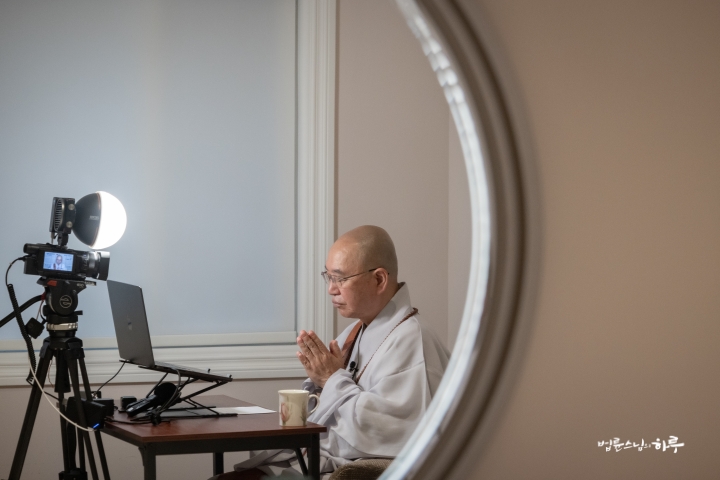
Sunim had breakfast and then took a short rest.

From 10 AM, an online meeting was held for international branch members who use local languages. Nine Jungto Society members who use languages other than Korean and five Jungto Dharma School graduates joined the video conference. They recited the Three Refuges and Words for Practice, followed by self-introductions.
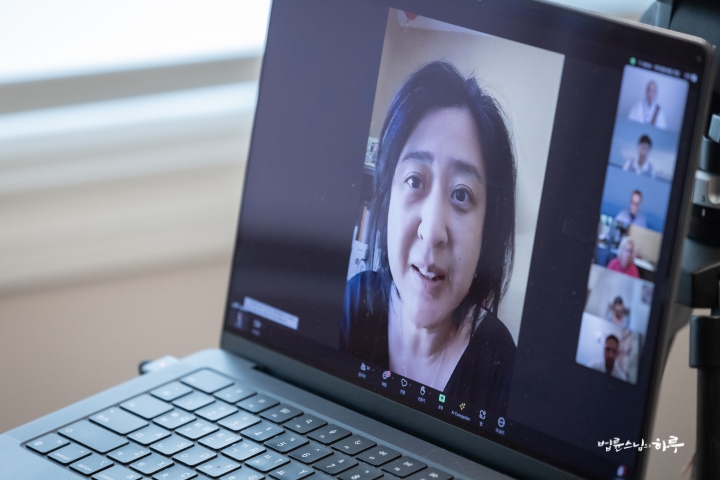
“Welcome everyone, Today is our first member’s day together with Venerable Pomnyun Sunim.”
The first batch of graduates from the Jungto Dharma School, an English-language Buddhist studies program, completed their course in February this year. Those who became Jungto Society members have been holding monthly meetings. After self-introductions from North America East, North America West, and Europe, Sunim gave a Dharma talk for the members.
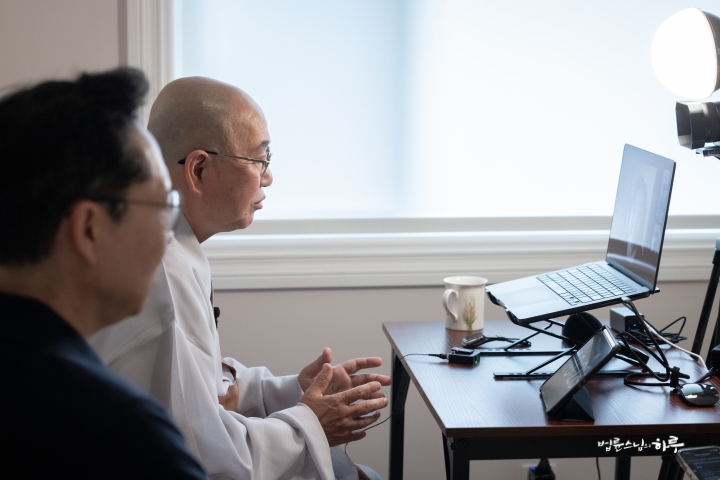
Sunim then explained about the life of a practitioner, how Jungto Society operates through volunteering, and various social action activities. He then took questions from the participants. Various questions followed.
Can Sunim advise how to study various Sutra?
I would like to reintroduce Buddhism to the Punjabi region of India where I was born. How can I do this?
The last questioner expressed concern about the future of Jungto Society after Sunim passes away.
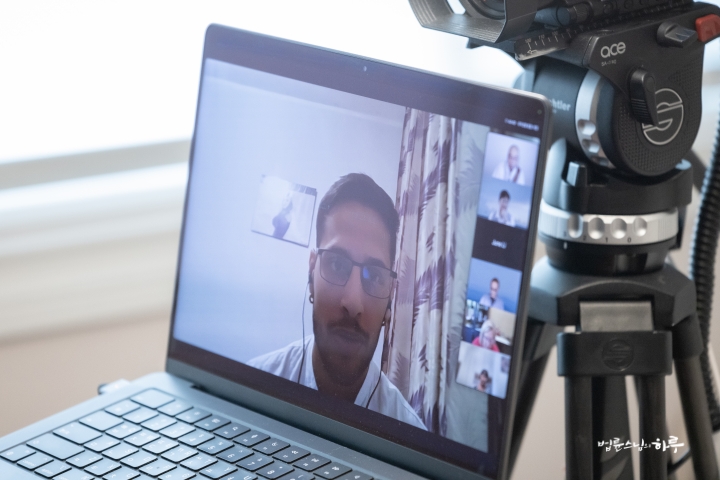
What Will Happen to Jungto Society After Venerable Pomnyun Sunim Passes Away?
“I understand that worrying about the future in advance is not a good thing. Nevertheless, I keep feeling concerned about what will happen to Jungto Society in the future without Venerable Pomnyun Sunim. Considering my age and Sunim’s age, I will likely be involved with Jungto Society for a long time, even in a time when Sunim is no longer with us. I’m curious about what direction Jungto Society will pursue and how it will operate in such a situation.”
“In Korea, Jungto Society has already transferred most of its activities to suitable individuals, so there’s no need to worry too much about my absence. However, since I am well-known publicly, there might be some external loss. But internally, I don’t think there will be any significant loss for Jungto Society.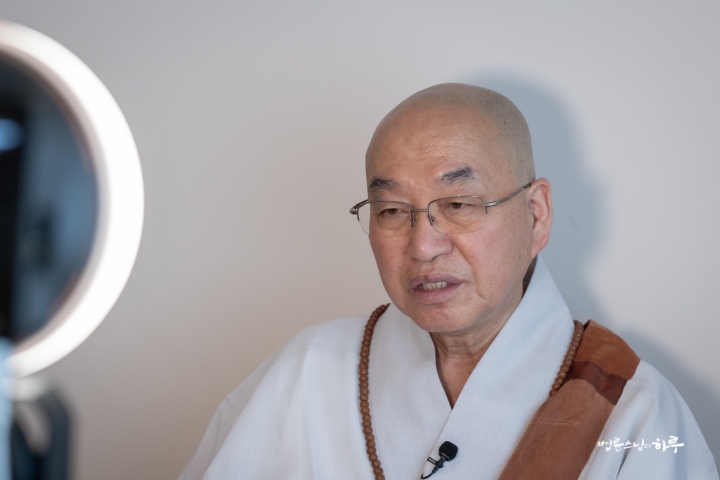
However, in terms of spreading the Dharma globally, my absence might be a bit of an issue because global Dharma propagation hasn’t yet been fully established. So you need to hurry up with your practice. There isn’t much time left. I estimate we have at most about 10 years left.
When I’m gone, you’ll be able to act more freely outside the boundaries I’ve set, which might actually bring more vitality. However, there’s a risk that these activities might deviate from the fundamental spirit of Buddhism. That’s why I hope you’ll take time to study Buddha’s fundamental teachings more deeply.Your free activities will certainly provide good vitality for the external expansion of Jungto Society. However, in that process, I hope you’ll deeply study Buddha’s fundamental teachings and then spread them in connection with your professional fields. For example, if the questioner is a psychiatrist, you could apply Buddha’s teachings to the fields of psychoanalysis and psychological counseling and develop them further.”
“Thank you. I will do that.”
After the conversation, Sunim encouraged the local language Jungto Society members, saying that today was a historic day.
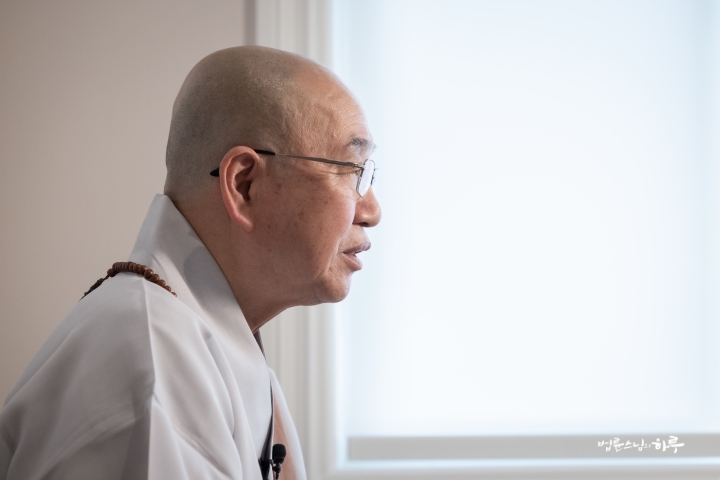
Today Is the Day Jungto Society for the World Begins
Since Jungto Society started in Korea, some Korean cultural traditions are embedded within it. How to transcend Korean cultural traditions and approach universally to people of different countries and ethnicities is something you will have to create going forward. I tried to exclude Korean cultural traditions as much as possible, but inevitably, Korean cultural characteristics will be present throughout Jungto Society because I was born and raised in Korea. If you think that the Korean cultural characteristics embedded in Jungto Society are obstacles to people around the world universally accepting Buddha’s teachings, it would be good to improve them through many discussions. However, I hope that you, as initial members, will first accept it to some extent, and then work towards improvement when spreading it to new members.Although this meeting was held in a simple online format, this occasion is very important. When we look back on today historically after a long time has passed, perhaps today will be remembered as the day Jungto Society for the world began. I look forward to your health and vibrant activities.”
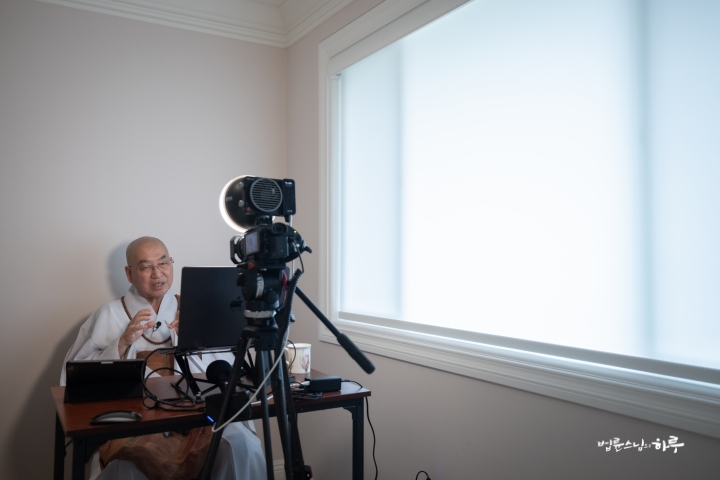
After listening to Sunim’s words, all eight members engraved the aspiration for global Dharma propagation in their hearts. The online meeting concluded with the Four Great Vows, and lunch was served at 11:30 AM.
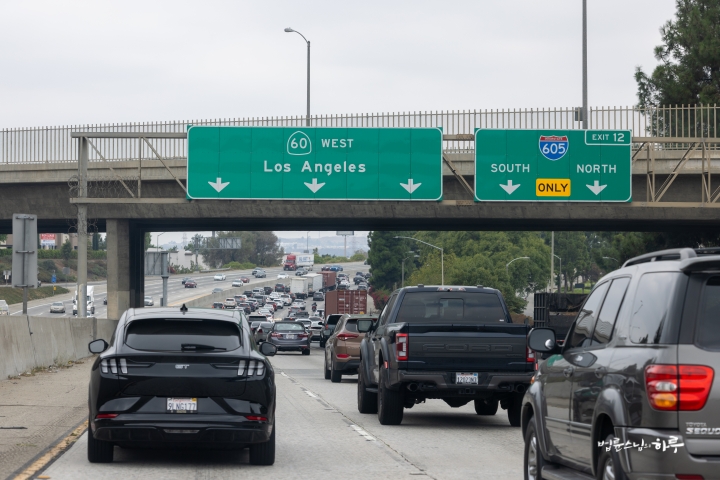
Immediately after finishing the meal, at 12 PM, Sunim set out to survey potential retreat center sites. While yesterday he had explored the northeastern outskirts of downtown LA, today he planned to survey the northwestern outskirts.
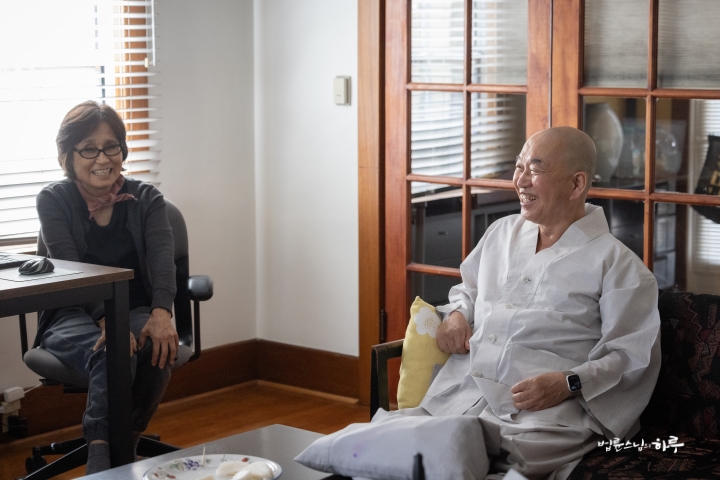
Before surveying the sites, he made a brief visit to Ms. Park Myung-gyu’s home.
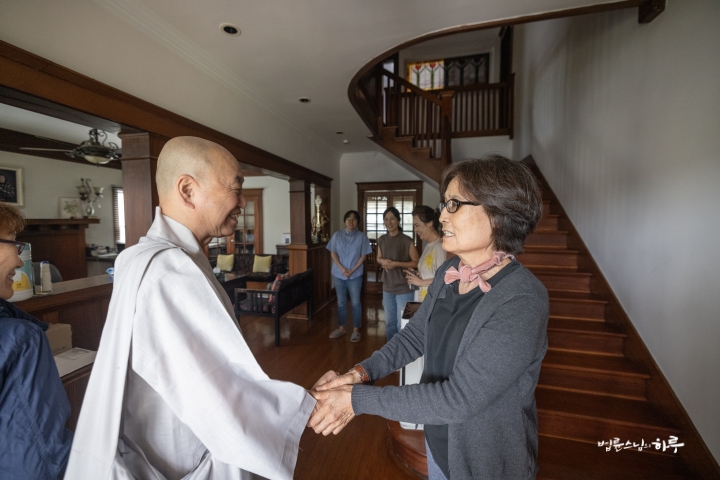
“Thank you for coming.”
Ms. Park Myung-gyu served as the first general affairs manager when LA Jungto Society was initially established, laying the foundation for Jungto Society to become known in the LA Korean community. Her late husband, Dharma teacher Lee Kang-jun, first invited Sunim to LA in 1992, and in 1993, the first Awakening Retreat and Dharma assembly were held in LA.
Ms. Park slowly performed three full bows. Sunim reciprocated with a bow.
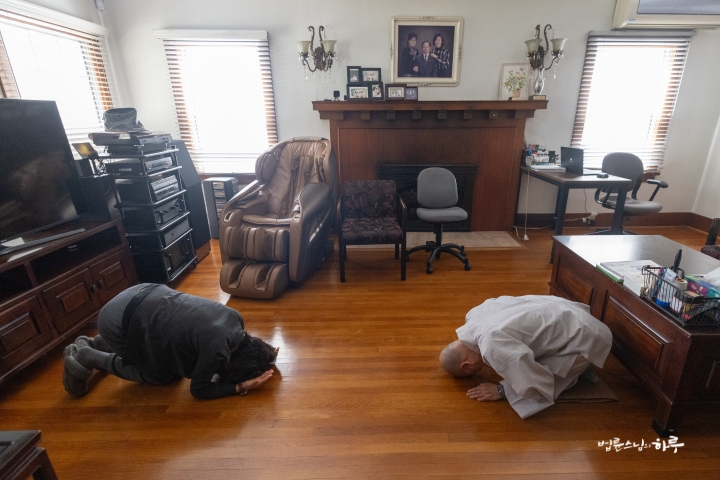
“My knees hurt, so this might be the last year I can offer bows.”
Sunim exchanged greetings, asking how she had been doing. Three of Ms. Park’s acquaintances and her daughter, who came to pay their respects to Sunim whom they admire, were also present.
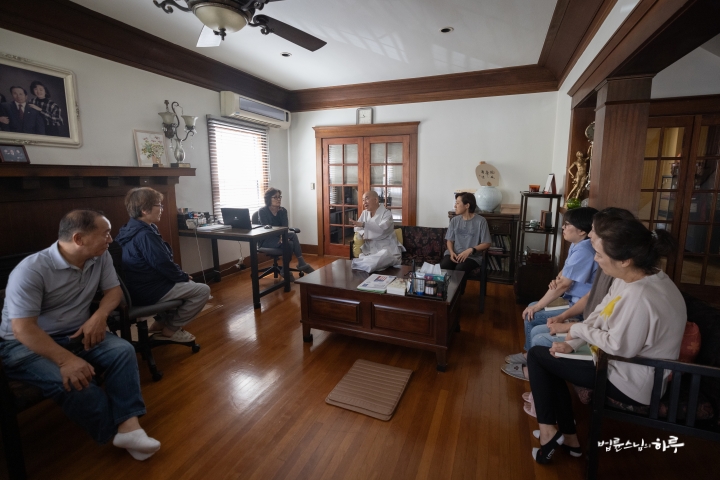
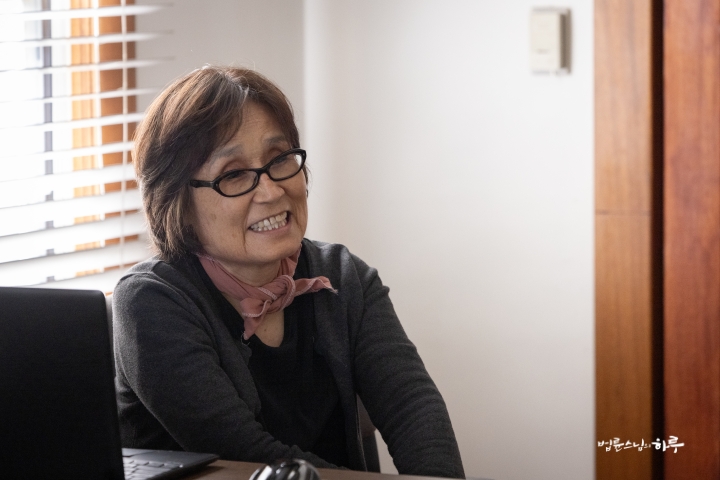
“Oh my, how will you manage with such fatigue? You don’t even fly business class, Sunim.”
“It’s good to take a night flight because I can sleep.”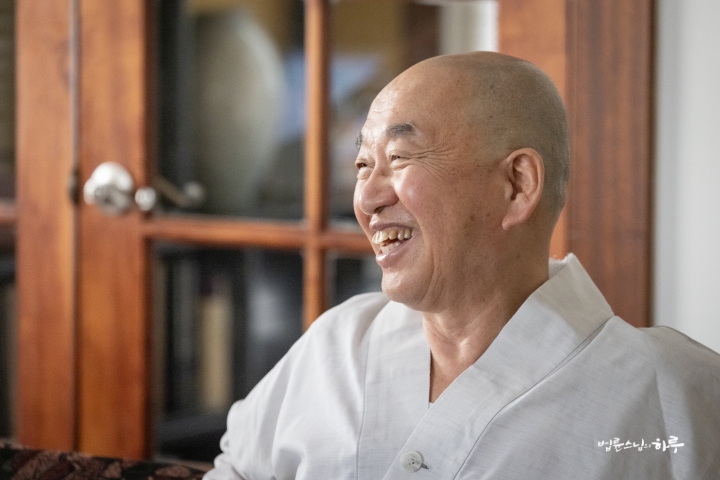
After 30 minutes of conversation, Sunim expressed gratitude to Ms. Park, saying, “You really went through a lot in the early days.”
Sunim got back in the car and drove diligently to the outskirts of downtown LA. Since the current LA Jungto Retreat Center is too far from the city, he looked for potential sites closer to the city that could be used as a retreat center.

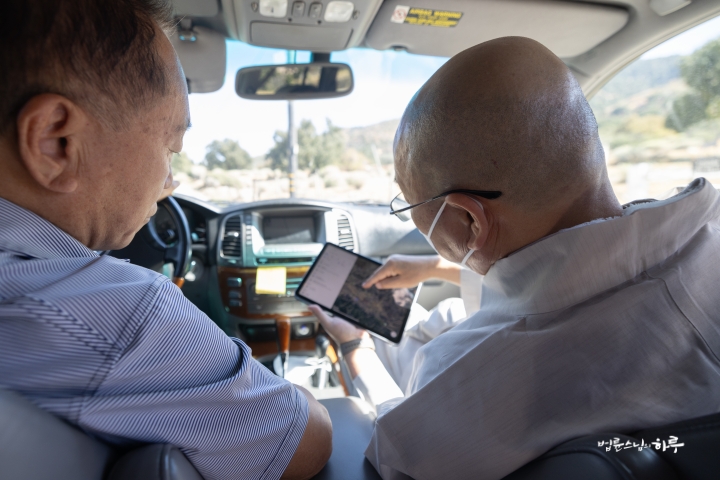
He surveyed a total of four locations throughout the afternoon. He had previously researched suitable places for a retreat center online. Upon visiting in person, he found that some had winding and rough access roads that would be difficult to navigate during winter snow, some had roads too close to villages, and others had unpaved roads. Each had its pros and cons.
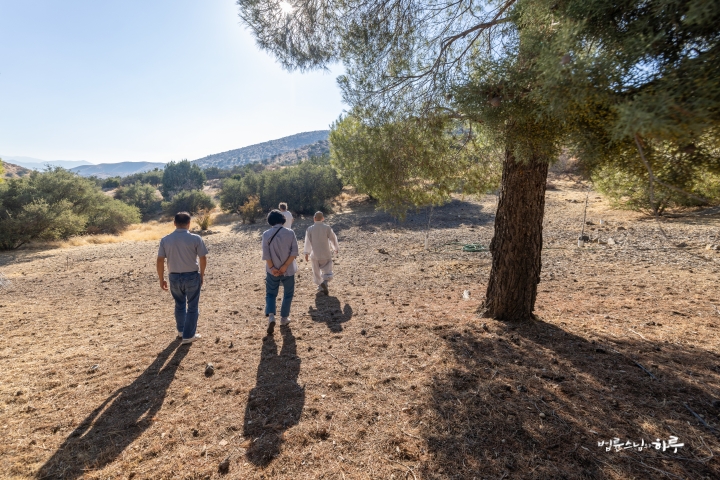
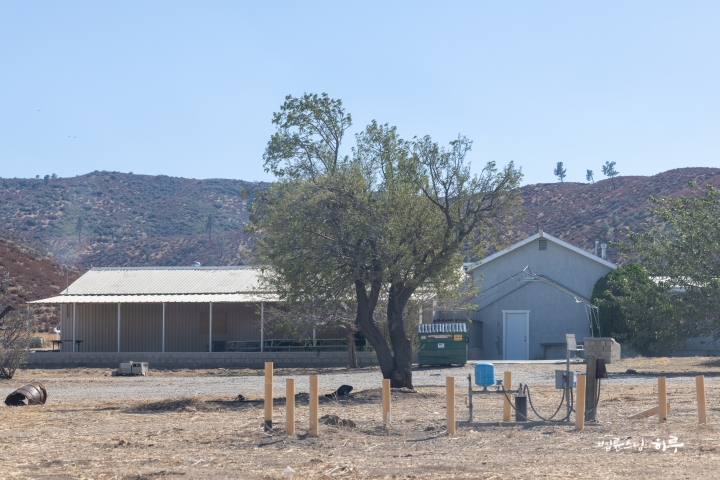
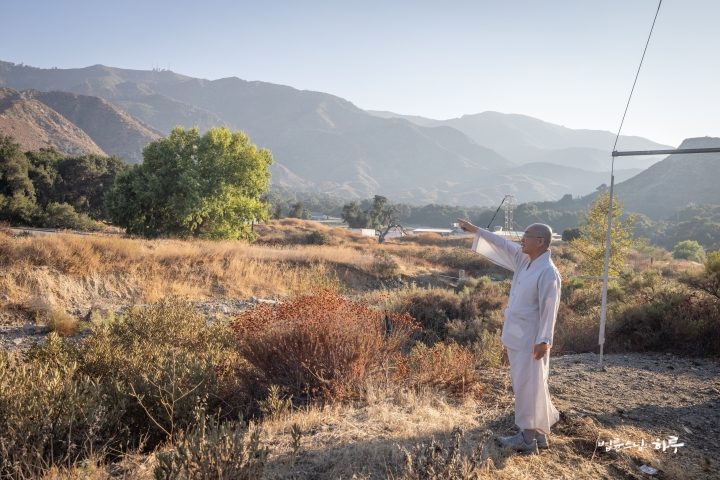
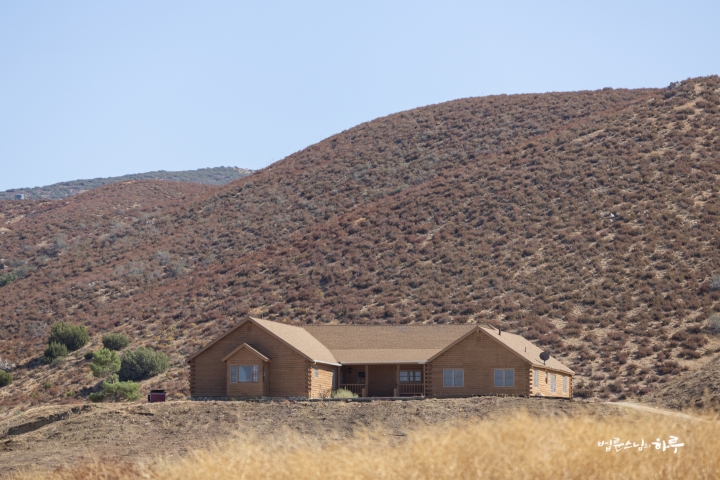
He decided to review these options again when he visits LA next time and concluded the survey at 5 PM.
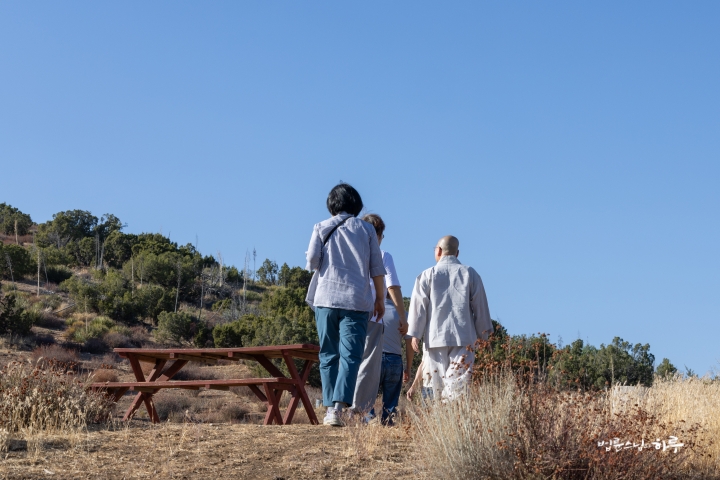
He drove for an hour towards downtown LA and arrived at the Dharma Q&A at 6 PM.

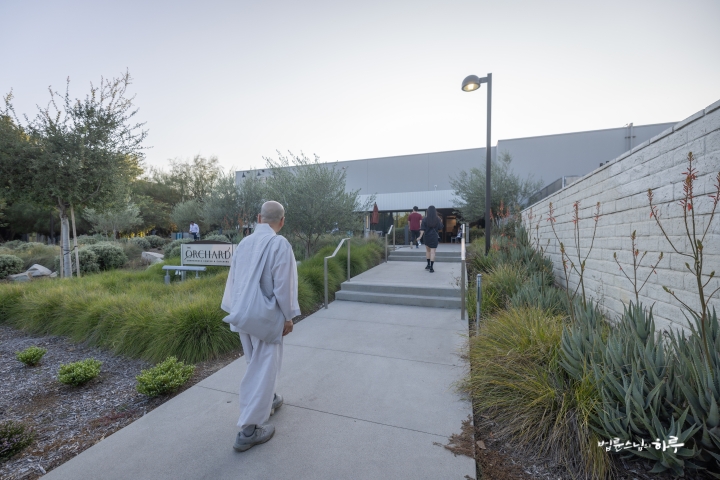
Today’s lecture is being held at the Orchard Conference Center on the campus of California State University, Northridge (CSUN) in Northridge, California.
fter a quick meal in the waiting room next to the lecture hall, He took commemorative photos with the volunteers who had prepared for the Dharma Q&A. This was because he needed to leave quickly after the Dharma Q&A to give a live Dharma talk for the Jungto Sutra School entrance ceremony.
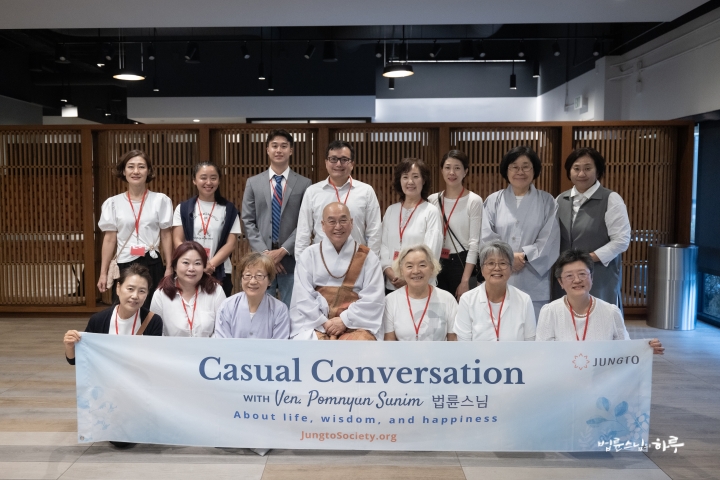
“Los Angeles! Fighting!”
The volunteers then dispersed to their assigned areas to warmly welcome the attendees.
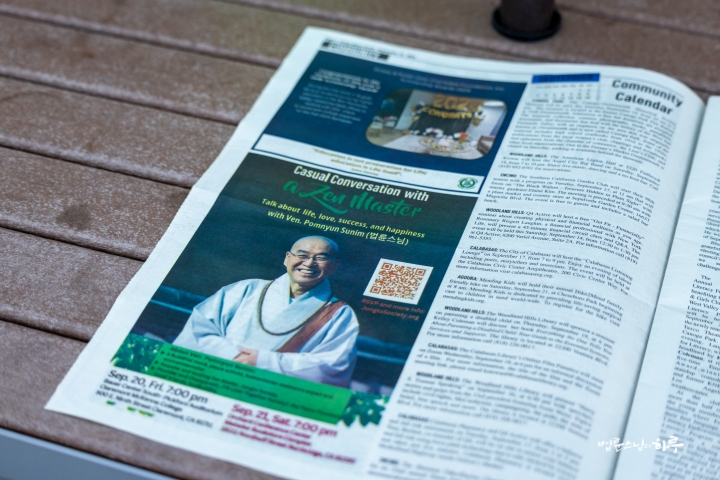
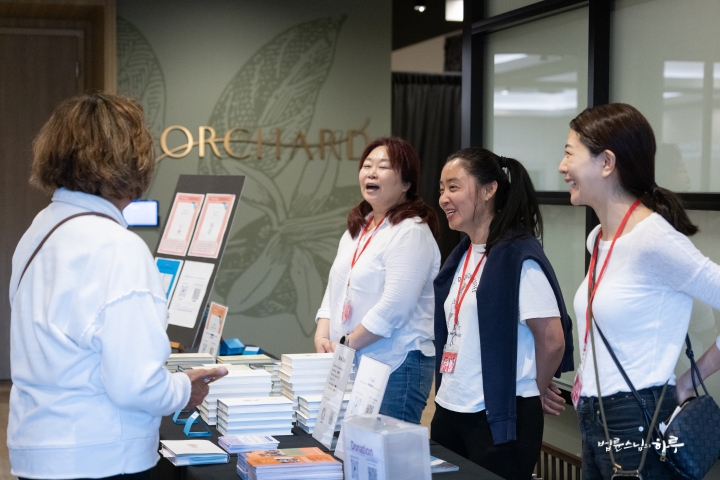
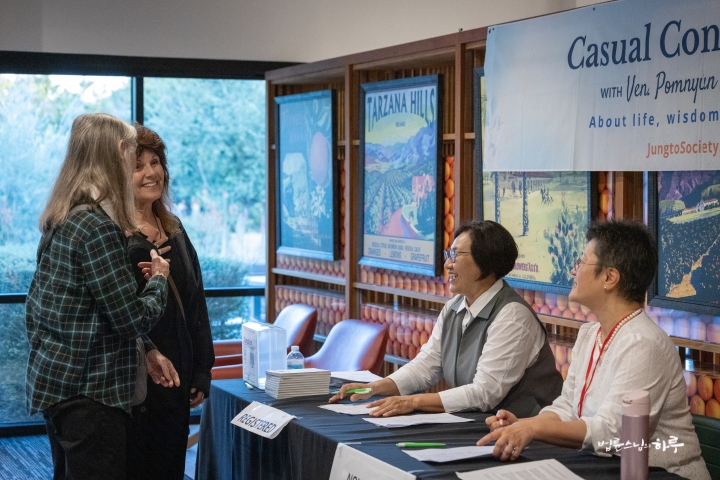
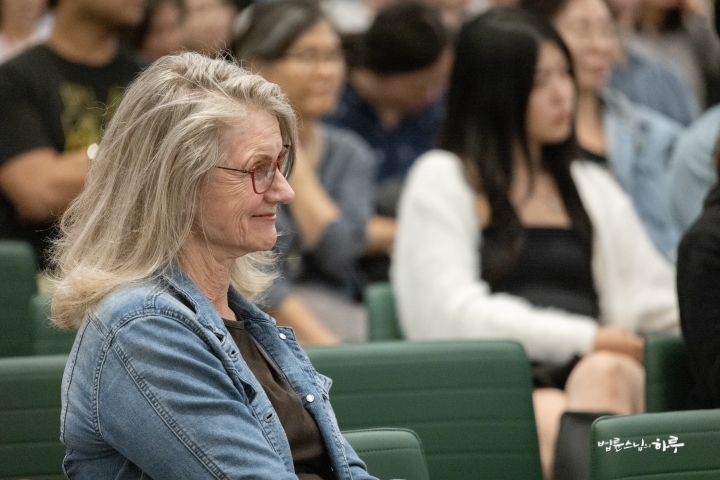
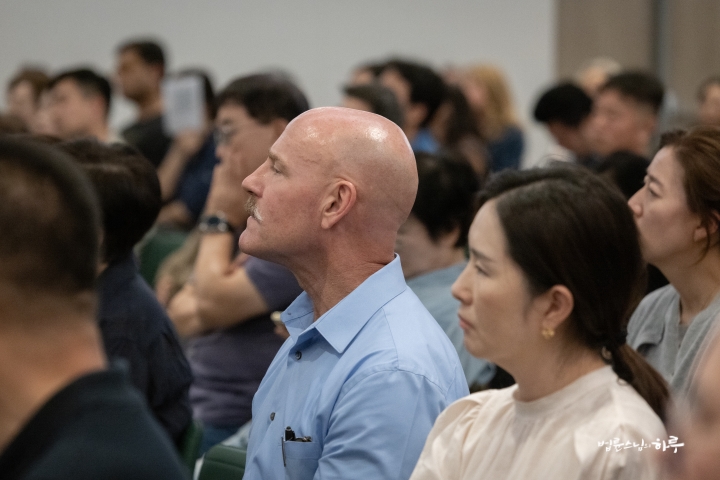
Many Americans came to the lecture hall after seeing the posters. At 7 PM, with about 150 people in attendance, Sunim’s introductory video ended, and he walked onto the stage amidst loud applause. Jason provided interpretation again today.
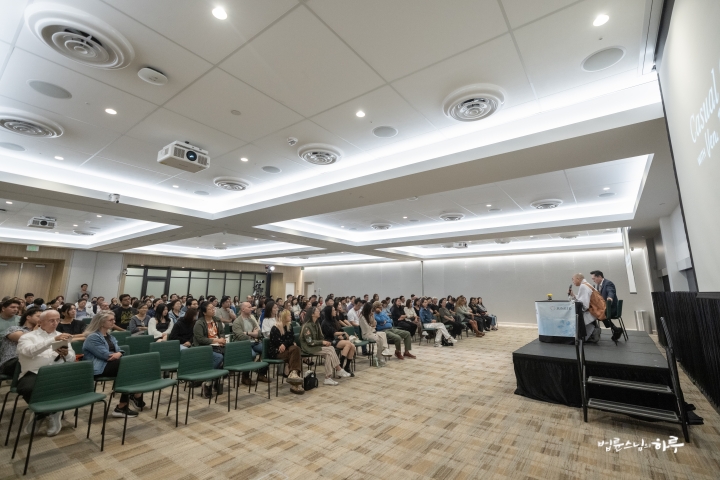
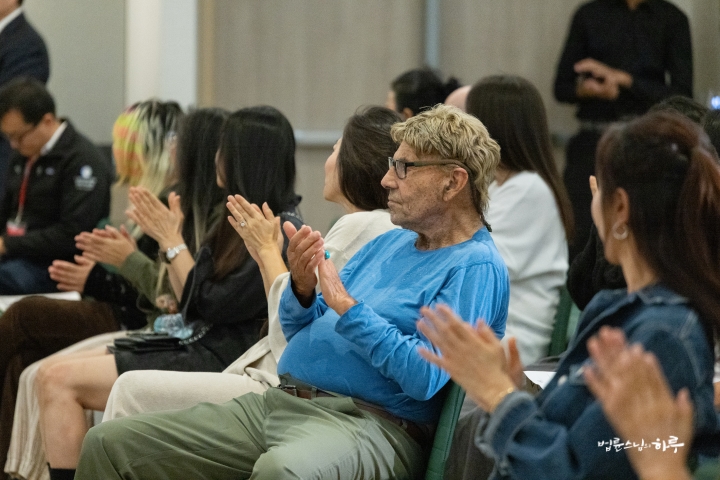
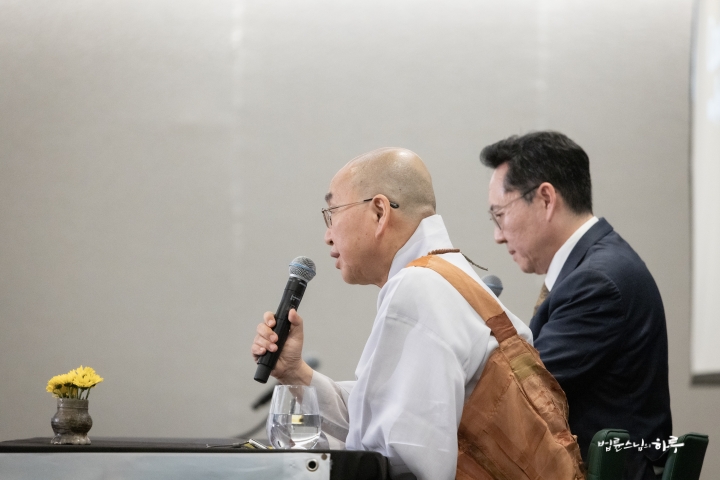
Sunim first gave a greeting and introduced the purpose of the Dharma Q&A.
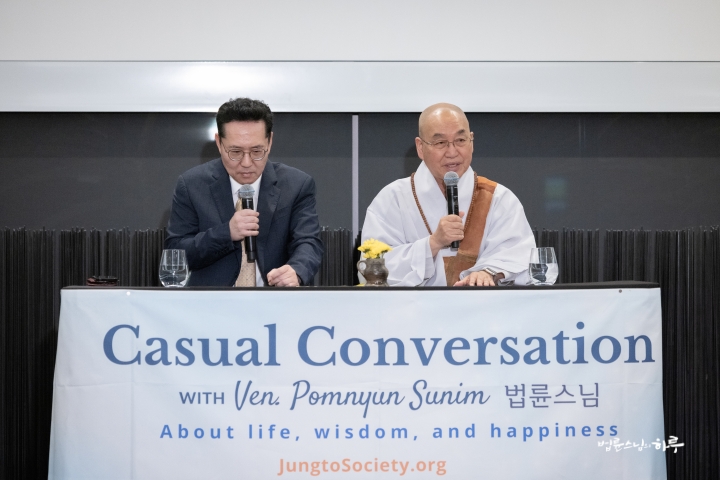
What Should I Do in This Situation?
“So, the topics for today’s Dharma Q&A can be either personal or social. We’re here to discuss any issues that make us struggle or feel difficult. In Buddhism, regardless of where the problem originates, we take the perspective of ‘What should I do in this situation?’ We don’t blame or resent others, but deal with problems by clearly focusing on our own perspective of ‘What should I do?’ This is Buddhist practice – becoming the master of oneself in any situation or problem that arises. Now, shall we begin our conversation?”Those who had submitted questions in advance asked first, followed by spontaneous questions from those who raised their hands.
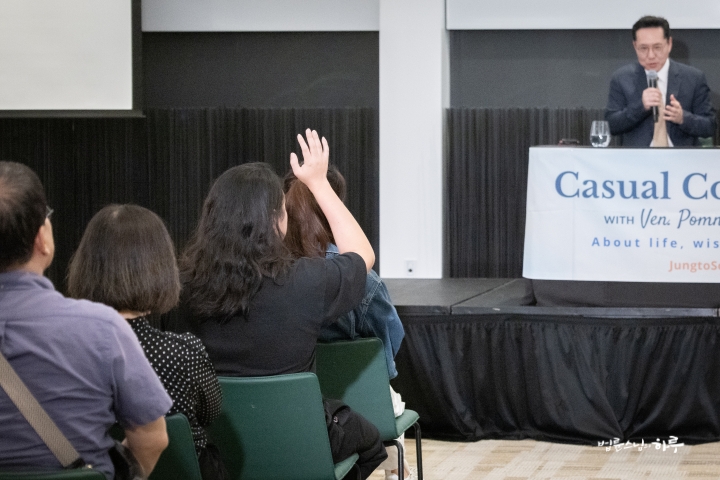
Over the course of an hour and a half, seven people engaged in dialogue with Sunim. One of them sought Sunim’s advice on how to overcome the sense of loss after losing a loved one.
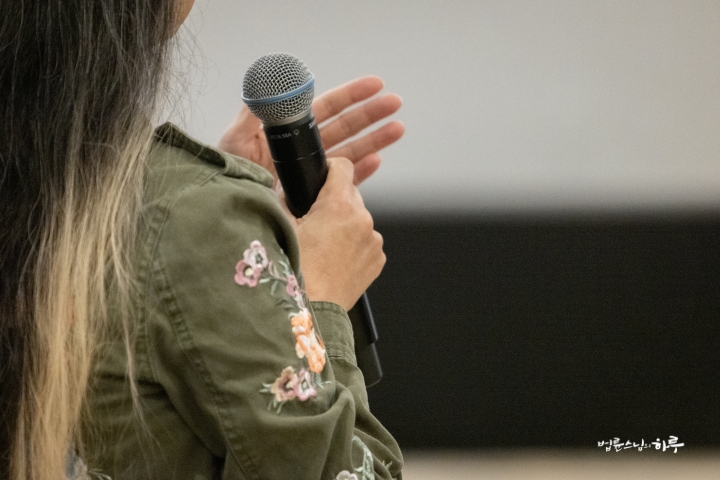
**How Can I Overcome the Sense of Loss After Losing a Loved One?
** “I’m asking about your methods, or how you cope with loss and grief after losing loved ones, when it feels like they took a part of you with them.”
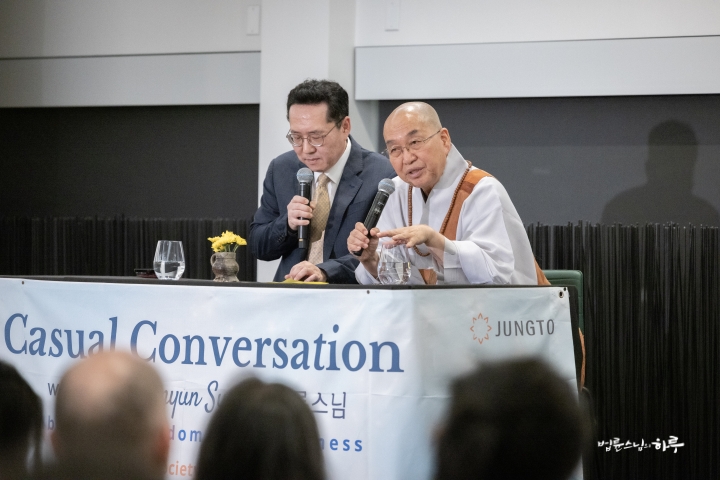
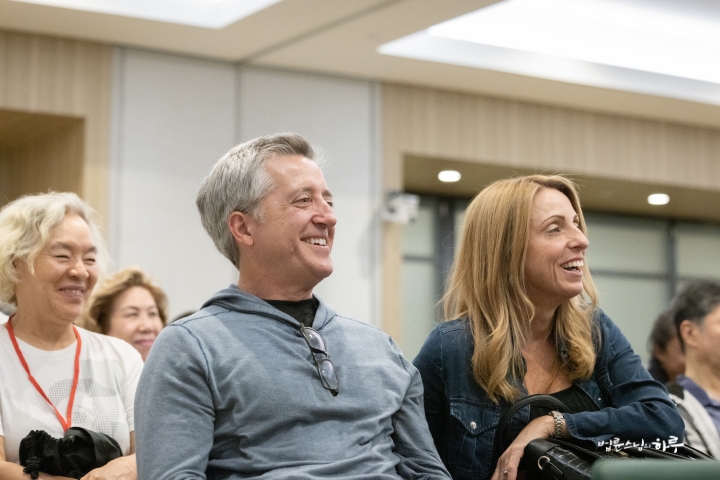
If the questioner needs someone, she can find another person. Those who cry and grieve the most tend to find a replacement more quickly. The reason is simple: they need the presence of a husband. Right now, she’s grieving because her husband has died, but because she needs the presence of a husband, she will soon find a substitute. This shouldn’t be considered bad. This is life. We shouldn’t approach these issues from an ethical or moral standpoint. It’s natural.
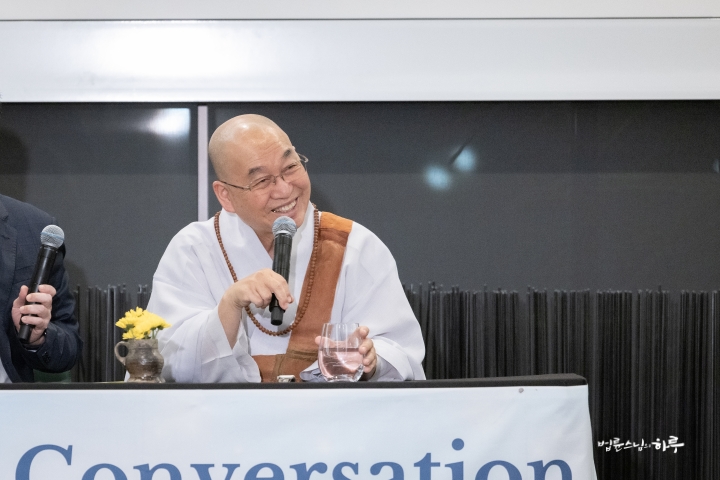
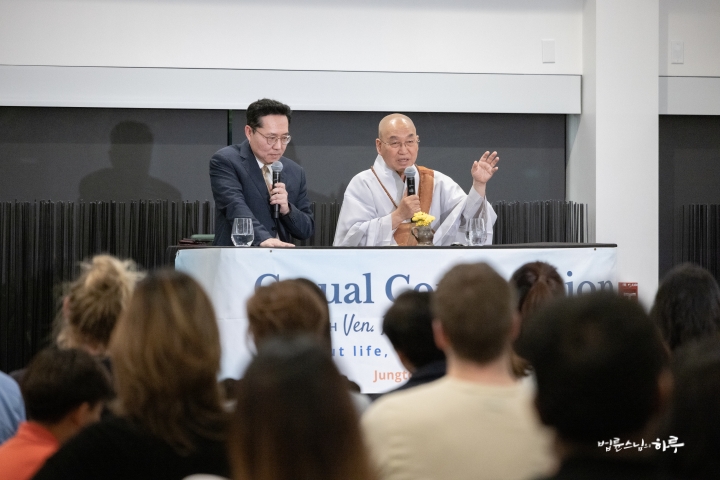
“Thank you. I understand.”
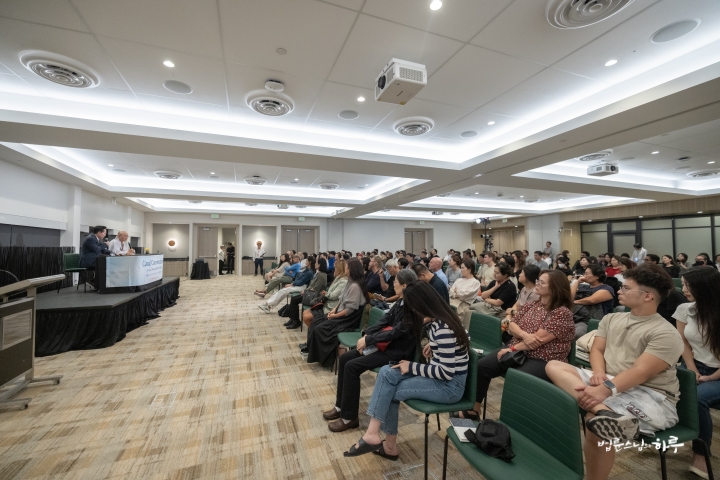
The questions continued.
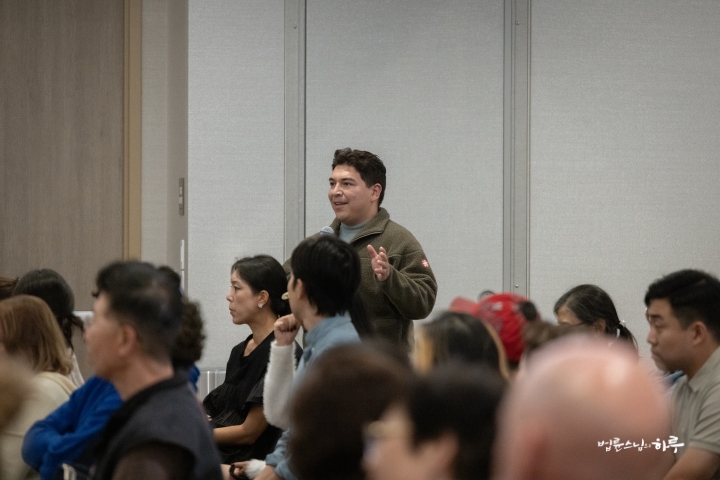
I’m curious about a meditation technique that can help me feel great compassion for the suffering around me while also experiencing inner joy.
My grandfather’s last wish was to visit his mother’s grave in North Korea. My parents oppose it due to political risks. Is it okay for me to keep this dream?
I’m curious about how nationalism and humanitarianism can coexist in Sunim’s social practices.
Technology is being developed to upload human brains to online servers to overcome the fear of death. What are Sunim’s thoughts on the moral issues of this?
My 9-year-old son is becoming more like me and is having increasing difficulty controlling his emotions. How can I help him manage his anger?
I’m studying psychiatry in medical school. What perspective should I have to maintain my own mental health while helping others with theirs?
By the time the conversation ended, it was 8:30 PM.
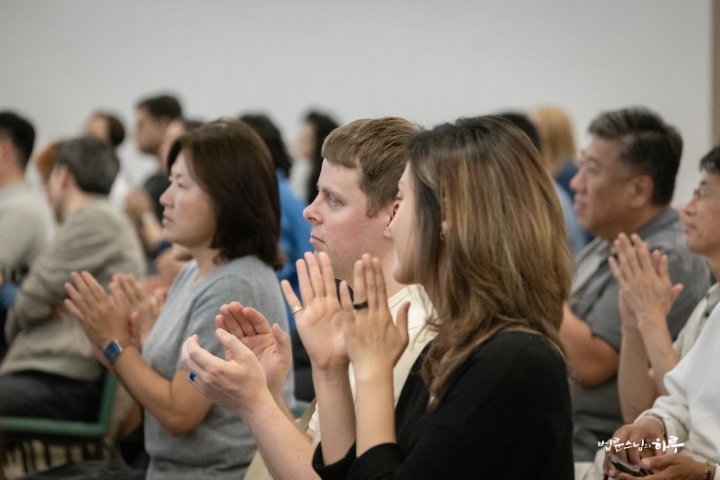
Immediately after, Sunim held a book signing backstage. Many attendees received Sunim’s signature, made eye contact, and expressed their gratitude.
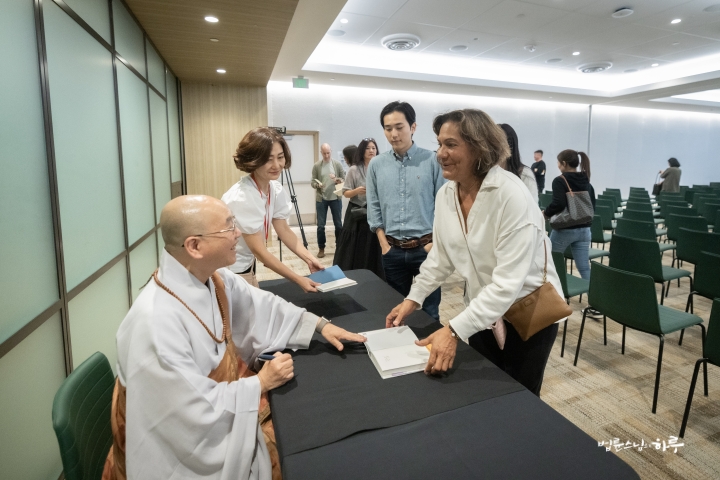
“The lecture was really good. I learned a lot about how to be happy.”
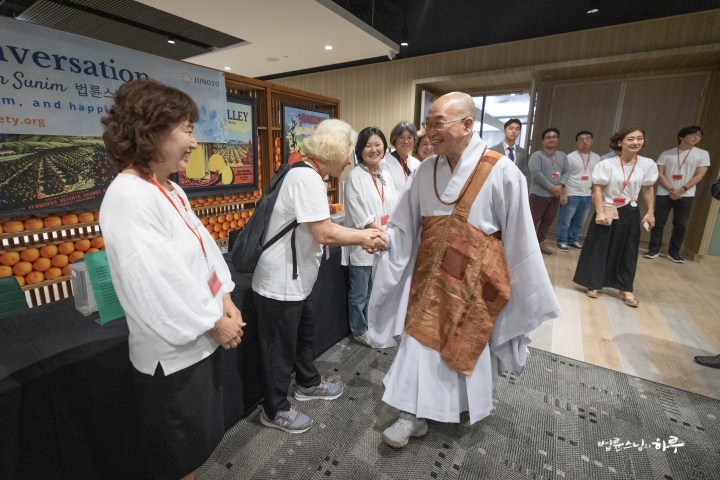
The book signing ended in 10 minutes. As Sunim left the lecture hall, volunteers lined up at the entrance to see him off. Sunim shook hands with them, expressing his gratitude. This year, there were two lectures in LA, so many volunteers had served for two consecutive days.
As the broadcast time approached, he quickly got into the car. After an hour’s drive, he barely made it to the accommodation just before the broadcast.

Sunim immediately took his place in front of the camera and started the live broadcast of the Jungto Sutra Course opening ceremony at 10 PM. It was 2 PM in Korea.
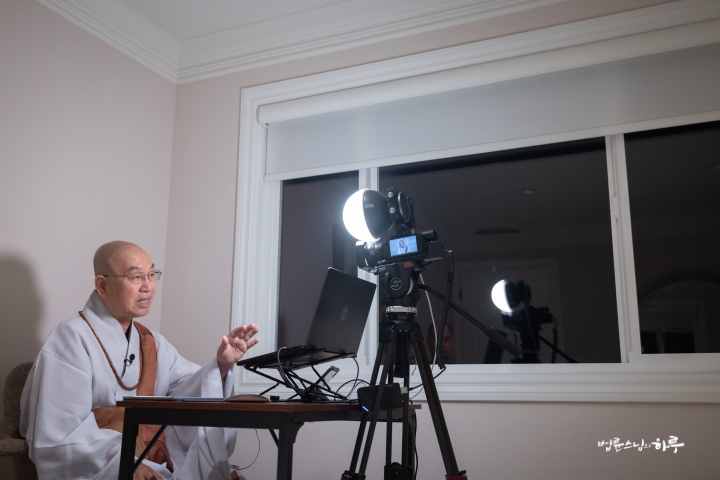
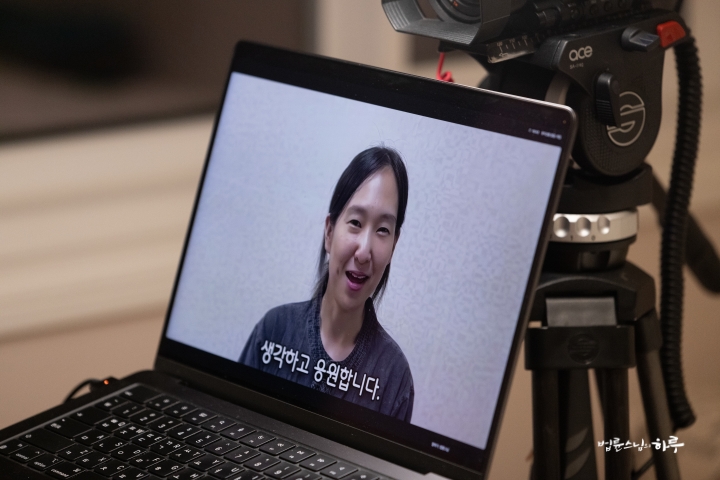
About 1,390 new students who enrolled in the September Sutra Course connected to the live broadcast. First, he watched a congratulatory video and listened to the sharing of some of the new students.
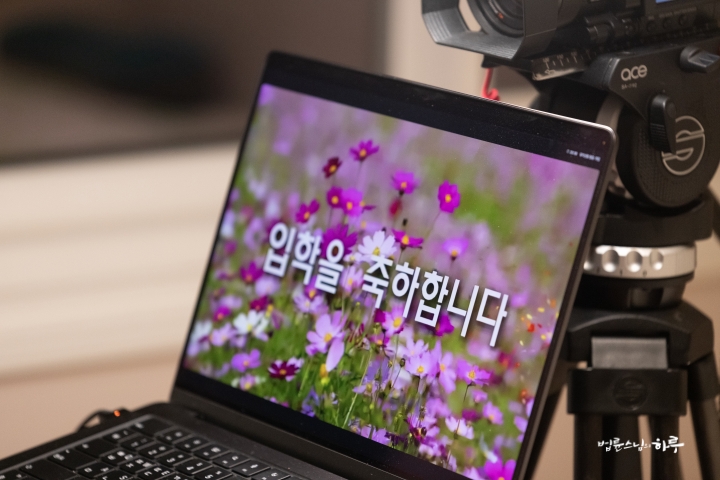
Then, he listened to the welcome speech from the President of Jungto Society, watched a video message from graduates, and together requested a Dharma talk from Sunim to commemorate the enrollment. Sunim conveyed his congratulations with a bright smile.
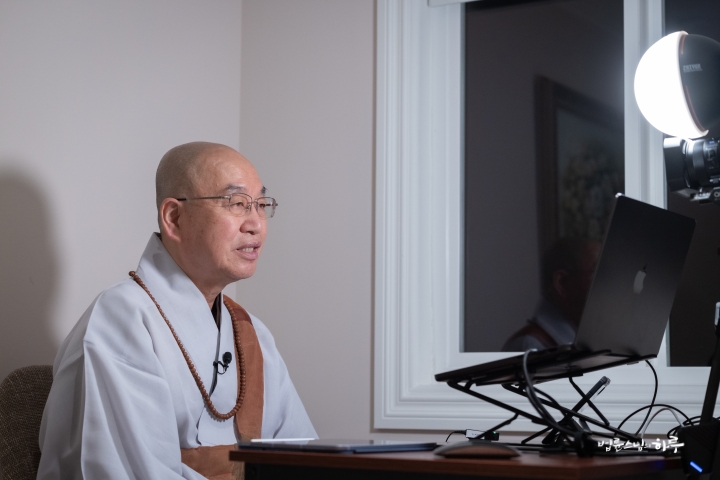
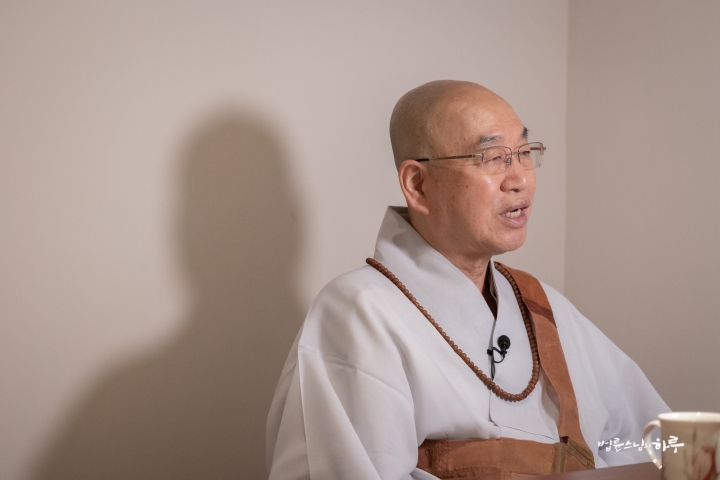
Sunim then proceeded to introduce the curriculum structure and characteristics of the Sutra Course in detail. He also discussed the mindset students should maintain while studying for the next six months. The Dharma talk concluded at 11 PM. It had been another long day.

Tomorrow, the eighth and final lecture of the North American West Coast tour will be held in Orange County for Korean expatriates. After the lecture, Sunim is scheduled to board a flight back to Korea immediately.