A Coworker Ruined My Work and I Feel Resentful. How Should I Deal With This Feeling?
Jul 5, 2026 - Religious Leaders' Peace Pilgrimage to Sri Lanka, Day 6 (Peace Museum, Departure)
Hello. Today, Sunim visited the Peace Museum in Colombo, which honors the achievements of Dr. Ariyaratne, who founded the Sarvodaya Movement, before departing for Korea.
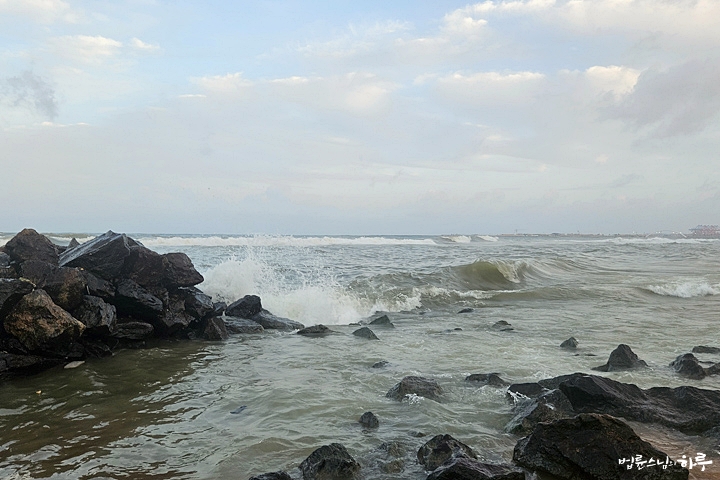
After his early morning practice and meditation, Sunim went for a morning walk. He walked along the beach in front of the accommodation with the staff members. Rather than a sandy beach, there was a railway track along the shore. Below the tracks were large rocks, and beneath the rocks was the seaside where waves crashed against the shore.
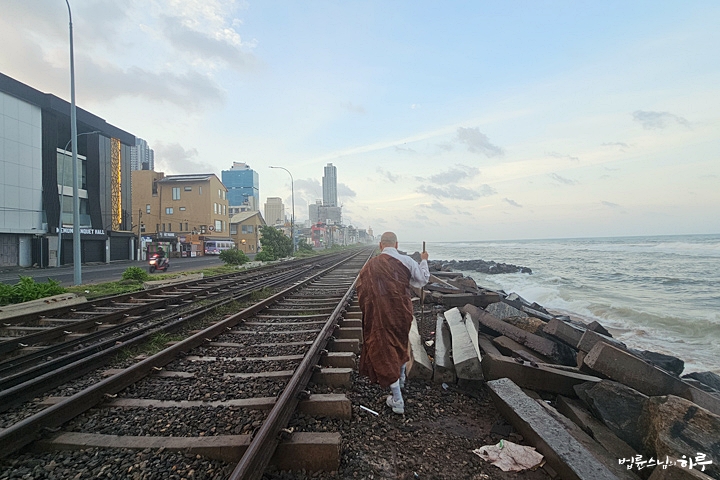
Sunim climbed down the rocks and briefly dipped his feet in the seawater.
"When climbing back up, be careful because the sand sticks to the bottom of your shoes and makes them slippery."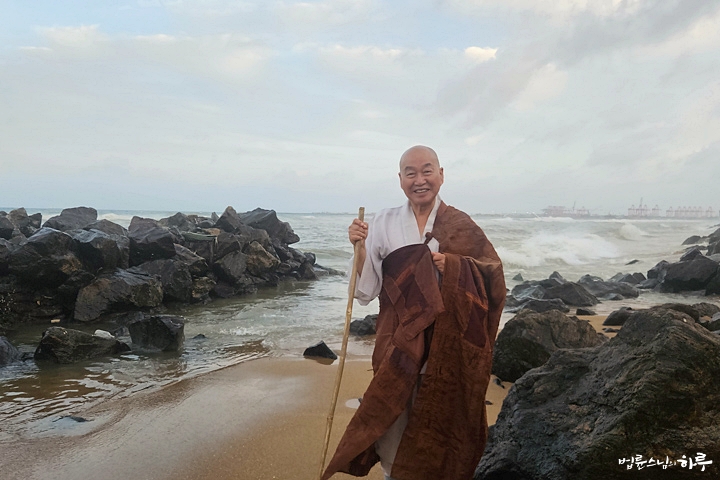
After the walk, Sunim returned to the accommodation and had breakfast at 7 a.m. After breakfast, he held an evaluation meeting with the Korean religious leaders who had shared the six-day journey with him.
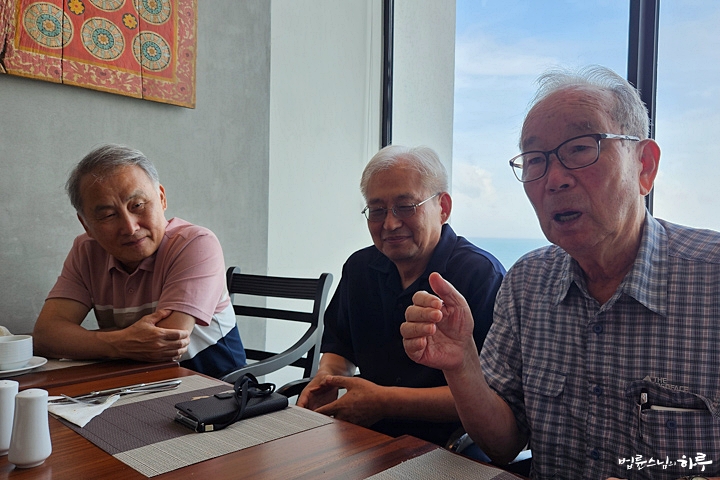
Reverend Park Nam-soo was the first to share his reflections on the pilgrimage.
"The most important thing I felt during this pilgrimage was that participants need to study a lot in advance. Rather than simply tagging along on a trip, if we know about the countries, religions, and history we are visiting, we can gain so much more.
I was deeply moved from the moment we were welcomed as honored guests at the airport. I believe this was not a courtesy extended to me personally, but was possible because of the trust that Venerable Pomnyun Sunim has built up over many years. When we invite religious leaders to Korea, I think we need to develop a culture of extending more thoughtful hospitality to them and thoroughly introducing the history and significance of each religious order."
Next, Pastor Park Jong-hwa shared what impressed him most during the pilgrimage.
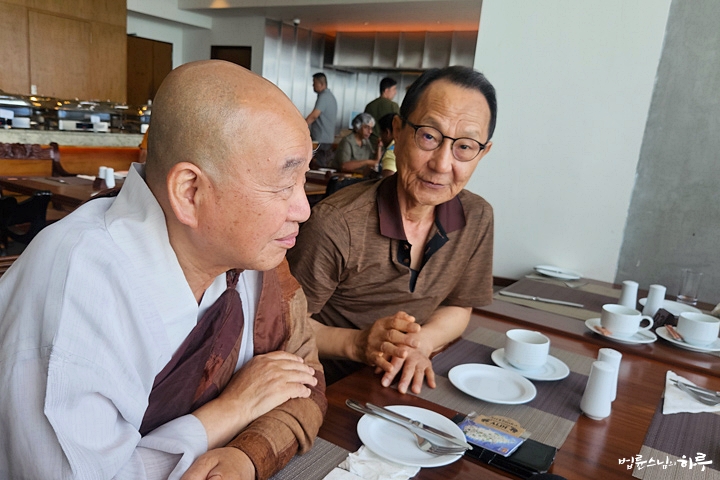
"What stands out most in my memory is the schedule that allowed us to meet directly with people affected by the war. Had we only met with religious leaders, it would have felt lacking, but because we met with people actually suffering on the ground, this pilgrimage carried much deeper meaning. I could directly feel what role religion must ultimately play in people's lives. Also, Jungto Society and the local staff managed the schedule so smoothly that participants could focus on the program without any worries. I've rarely experienced such a comfortable overseas trip."
Father Kim Hong-jin also shared his impressions.
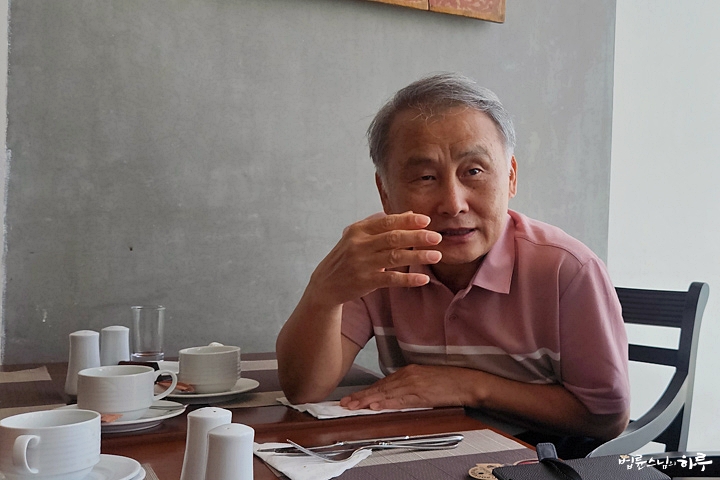
"When I heard about Dharma Shakti last year, I thought it was remarkable, but seeing the work firsthand was even more moving. It was truly impressive to see multiple religions working together so naturally. In Jaffna, my heart ached as I witnessed the lingering traces of war. Even though things appear peaceful on the surface, I felt that wounds still remain in people's hearts. Such natural cooperation among different religions is rarely seen even in Korea, so I believe Dharma Shakti is an excellent model of interfaith harmony."
Kyomu Kim Dae-seon also shared his reflections.
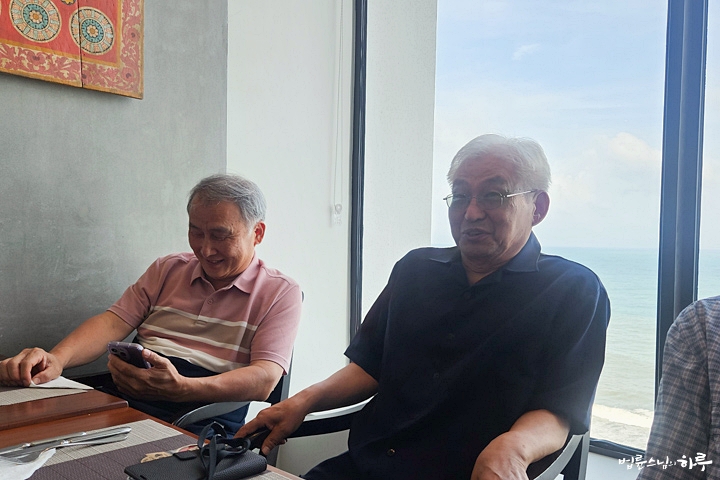
"I made this journey with a very peaceful heart. Seeing the work on the ground allowed me to more deeply understand the activities that Venerable Pomnyun Sunim has been carrying out, and I hope such exchanges will continue in the future."
The participants also suggested that a systematic record of this pilgrimage should be compiled and shared with Dharma Shakti and the Korean religious community, serving as a foundation for future cooperation. They agreed to expand regular exchanges involving both young and mid-career religious leaders to continue peace and reconciliation cooperation between Korea and Sri Lanka.
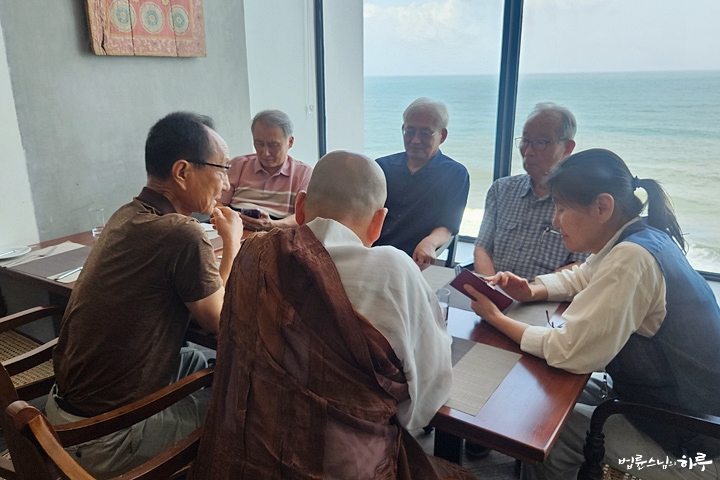
Finally, Sunim explained the direction for future cooperation.
"I hope we can continue interfaith exchanges and support programs going forward. The Peace Foundation will support exchange programs, and JTS will provide the necessary support when Dharma Shakti works for the local community—this is how we can cooperate. When practice extends beyond interfaith reconciliation to helping neighbors in need together, Dharma Shakti's role in the local community will grow even greater."After the evaluation meeting, Sunim briefly met with INEB Chairman Harsha and Secretary-General Moo.
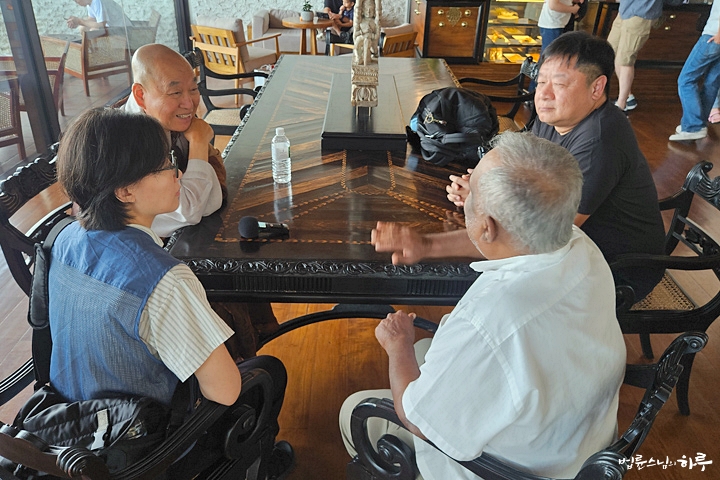
In the meeting, they shared updates on bilateral exchanges, including Korean language education in Sri Lanka, Sri Lankan students studying in Korea, and increased employment in Korea, and discussed future cooperation. They also exchanged views on Sunim's planned visit to US think tanks in October, along with the need for North Korea policy and economic cooperation for Northeast Asian peace. In addition, they discussed practical measures for future international cooperation, including the possibility of INEB's microfinance initiative and cooperation with NGOs.
Before returning home, Sunim's group visited the Peace Museum of Dr. A.T. Ariyaratne, the founder of Sarvodaya, to pay tribute to the late doctor and reflect on his life and peace movement.
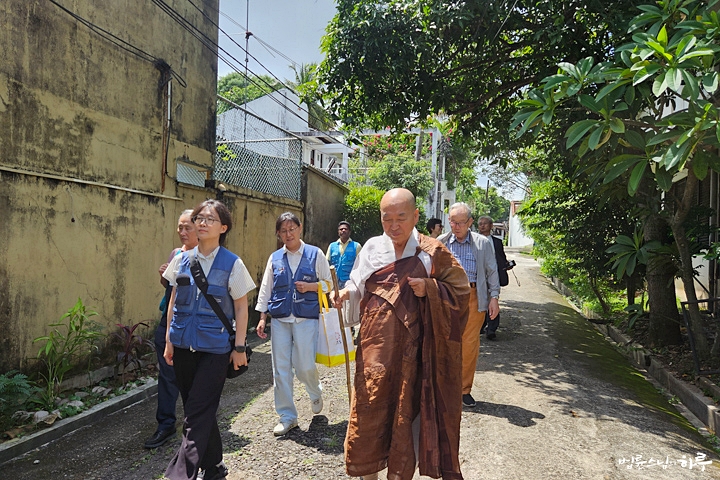
Since first meeting Dr. Ari in Boston in 1993, Sunim has maintained a long relationship of exchange and cooperation with him. Based on Gandhian philosophy and Buddhism, Dr. Ari founded the Sarvodaya Movement, which aims for "the awakening of all," and successfully developed village communities through the Shramadana Movement of sharing labor. During the civil war, he led various reconciliation activities, including peace marches, and integrated Buddhist teachings into community development and peace-building. He has also continued to provide healing and peace education for various groups, including prisoners, judges, and youth, through the Peace Museum and meditation center.
At 11 a.m., Sunim arrived at the Sarvodaya Peace Museum. Dr. Ari's wife and daughter Charika warmly welcomed Sunim's group.
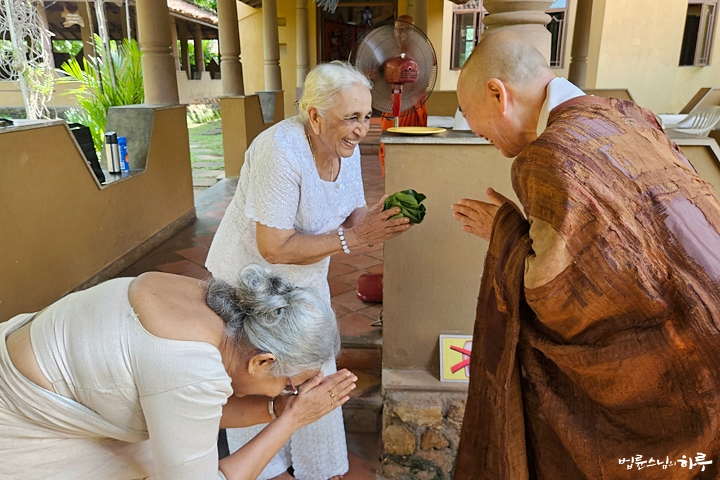
"Sunim's last visit was on May 18, 2023. Thank you so much for coming again."
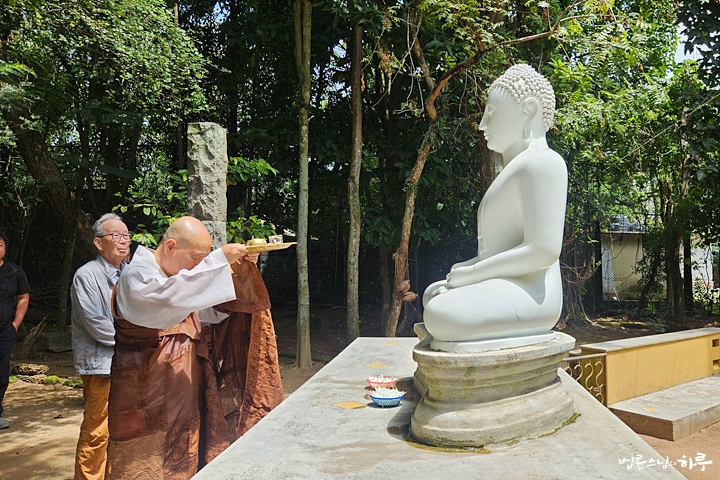
After exchanging greetings, they immediately paid homage to the Buddha statue under the Bodhi tree. This Bodhi tree had been planted with a branch taken from the Sri Maha Bodhi in Anuradhapura, which Sunim's group had visited a few days earlier. Then Sunim offered incense at the stupa where Dr. Ari's remains are enshrined.
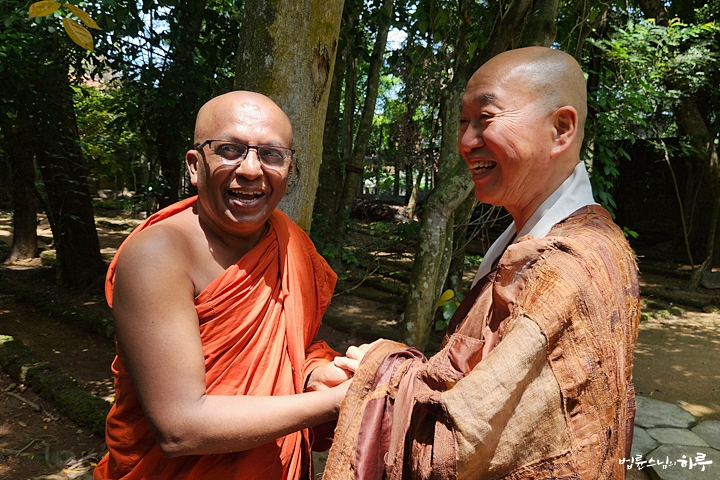
Venerable Dhammananda, who has a long-standing connection with Sunim, also came to greet him. Meeting after a long time, they held hands warmly.
Dr. Ari's son Vinya also came rushing over to greet Sunim upon hearing of his arrival.
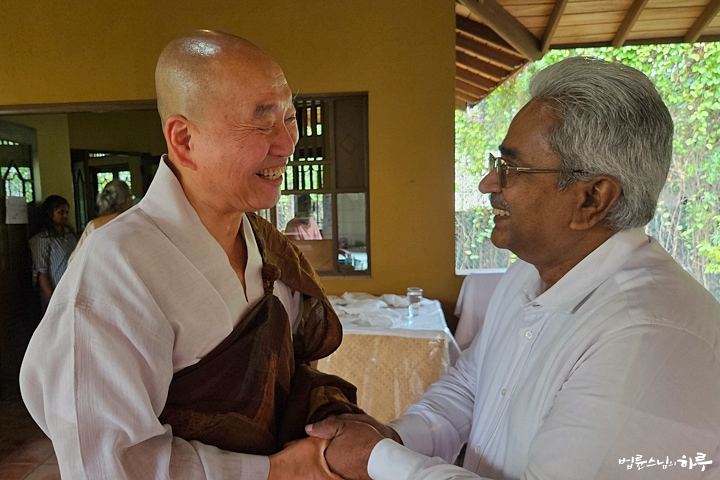
At 11:30 a.m., Sunim had lunch prepared by Sarvodaya. When Charika mentioned that the meal was prepared as vegetarian, Sunim smiled and said:
"Everyone has ended up eating vegetarian because of me."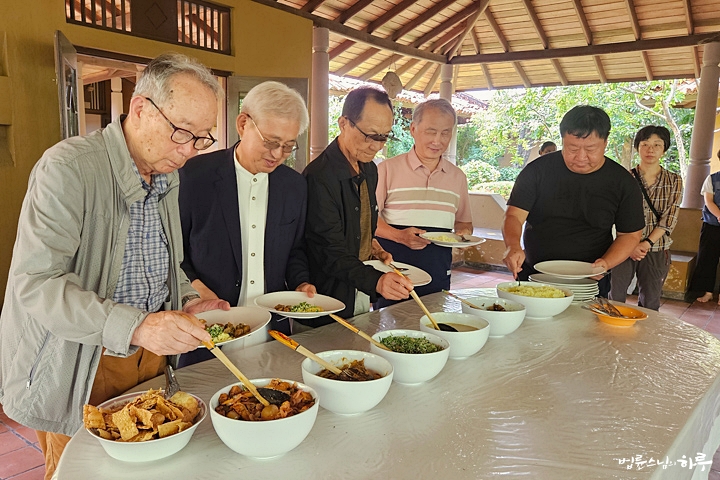
Sunim asked Venerable Dhammananda to offer a prayer before the meal. Venerable Dhammananda chanted in the Theravada Buddhist tradition.
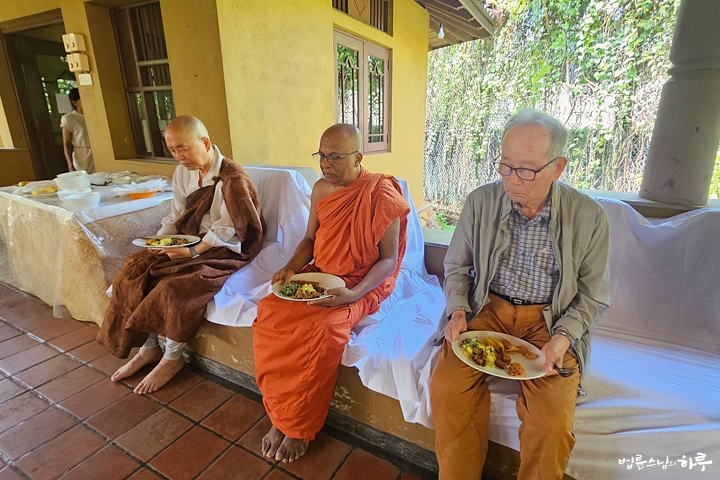
After the chanting, Sunim said:
"In the Buddhist tradition, we say 'Sadhu, Sadhu, Sadhu' before eating. Pastors and priests, please say 'Amen' before eating." (Laughter)After lunch, Suchit and Moo, who had accompanied the group throughout the trip, had to leave for other commitments, so they exchanged final greetings here. Suchit had managed the practical aspects of the six-day schedule and served as an interpreter.
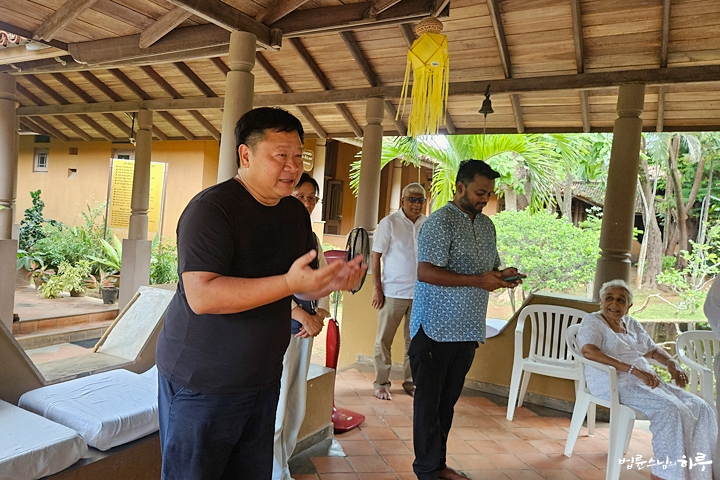
Before the Peace Museum tour, Sunim introduced the Korean religious leaders.
"In Korea, five religions engage in interfaith dialogue and jointly work on activities for peace on the Korean Peninsula. This time, through our exchange with Dharma Shakti, we visited Buddhist, Hindu, Muslim, and Christian communities. Before returning home, we came here to learn about Dr. Ari's Sarvodaya Movement."Vinya offered a welcoming greeting.
"Thank you for coming to remember my father before returning home. My father always spoke highly of Venerable Pomnyun Sunim and JTS."
Then, guided by Charika, the group toured the museum.
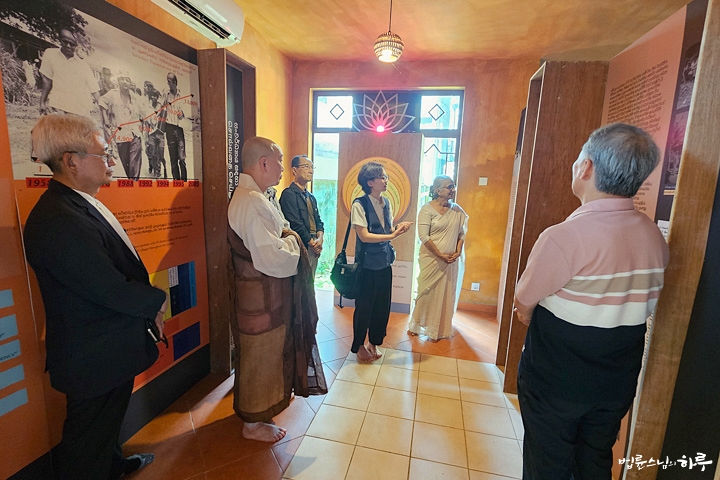
Charika shared a story from Dr. Ari's childhood.
"When Dr. Ari was fourteen years old, a woman would ask him for money every day on his way to school. At that time, his allowance from his parents was only 25 cents, but he would give that money to her. Then one day, as he passed by her house, he saw her working, twisting straw ropes. So he asked, 'You are working, so why are you begging for money?' The woman replied, 'The middlemen take all the profits, so I cannot earn a proper income.' That incident led the women to form their own cooperative, which became the first cooperative registered in Colombo."
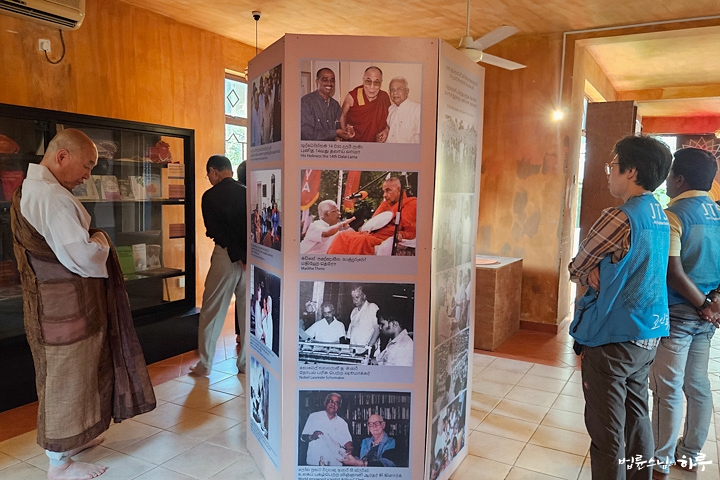
Charika also explained the meaning of Sarvodaya, Shramadana, the spread of the Sarvodaya Movement, and Dr. Ari's peace march during the civil war.
"The word 'Sarvodaya' was originally used by Gandhi and means 'the welfare of all.' However, Dr. Ari believed that the word 'welfare' implied expecting to receive something from someone. So he reinterpreted it to mean 'the awakening of all.' After being appointed as a teacher for the first time, he went to the countryside with his students. At that time, the students didn't know much about the poor reality of Sri Lanka and had no opportunity to interact with socially marginalized villagers. So he started the 'Shramadana' movement of sharing labor with the students. 'Shrama' means labor, and 'dana' means sharing. It was a movement to transform communities through sharing labor together. It started in one village. The initial goal was 100 villages, then expanded to 1,000 villages, and later to 15,000 villages.
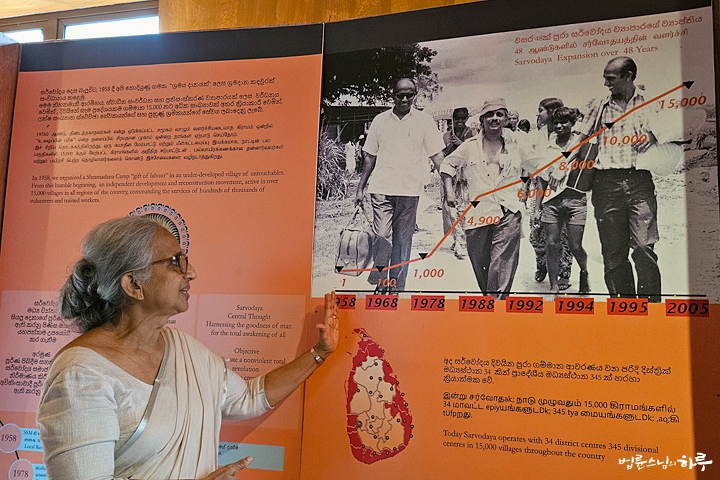
During the civil war, he began a peace march from Kataragama to Jaffna. Thousands of people who yearned for peace gathered, and as the march continued, more and more people joined. Eventually, the president at the time came by helicopter and requested that the march be halted due to the risk of assassination, so it could not reach Jaffna. Even afterwards, he continued to lead peace marches many times, centered in the southern and central regions."
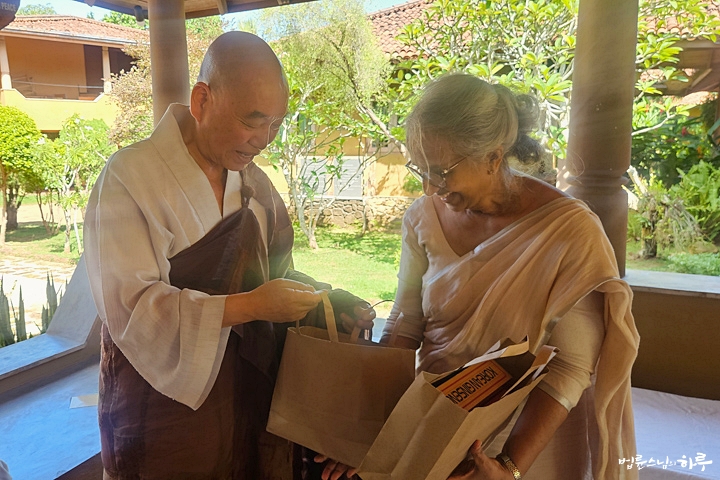
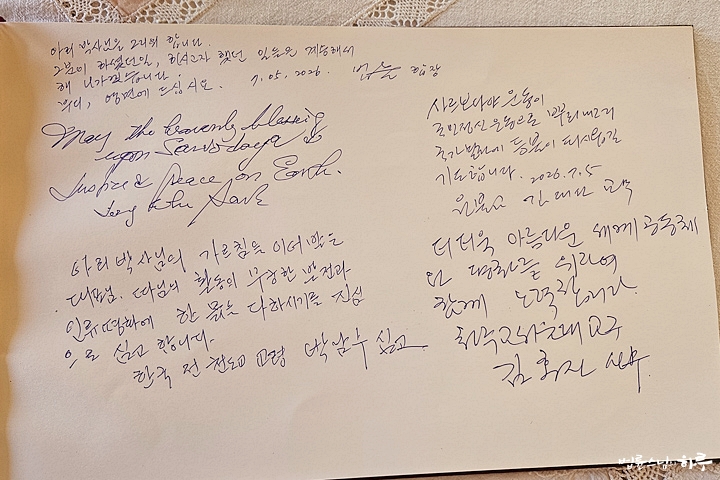
After the museum tour, Sunim presented gifts prepared in Korea and signed the guestbook, reflecting on the life of Dr. Ari, who had dedicated his entire life to peace and reconciliation.
As it happened, the URI (United Religions Initiative) office was located here, and Kyomu Kim Dae-seon, the Korean URI representative, was delighted to see the URI movement in Sri Lanka.
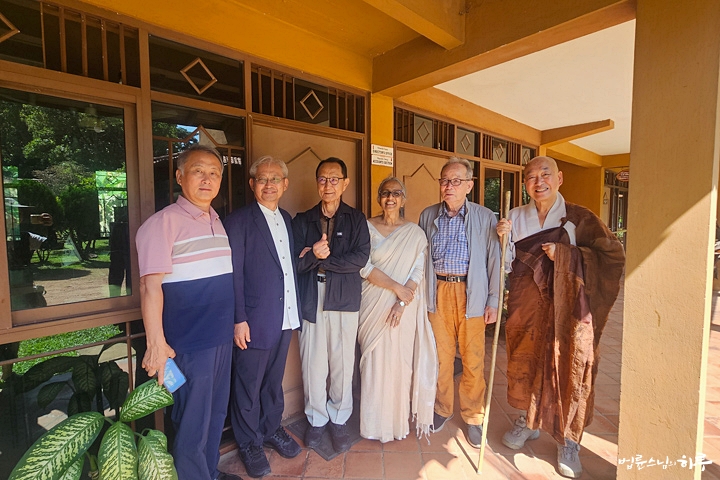
By the time it was 3 p.m., it was time to head to the airport. After taking a group photo in front of the URI office, Sunim's group boarded the bus, promising to meet again.
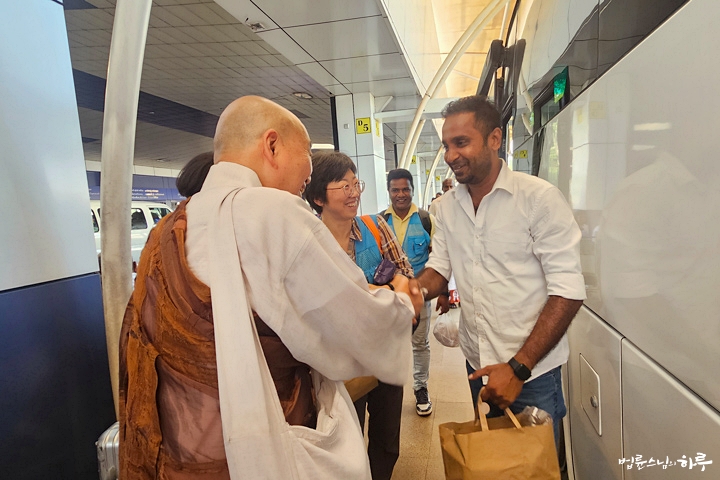
At 4 p.m., Sunim's group arrived at Colombo Airport. Sunim presented gifts of gratitude to the driver and assistant who had safely driven Sunim's group for the past six days. Every morning, the driver would burn incense in the car and pray sincerely for a safe journey, and he always welcomed Sunim's group with a smile when they boarded the bus.
Kim Yoon-mi from JTS, who had been in charge of all practical matters for this trip, was taking a different flight to Incheon via China, so she said her goodbyes and left first.
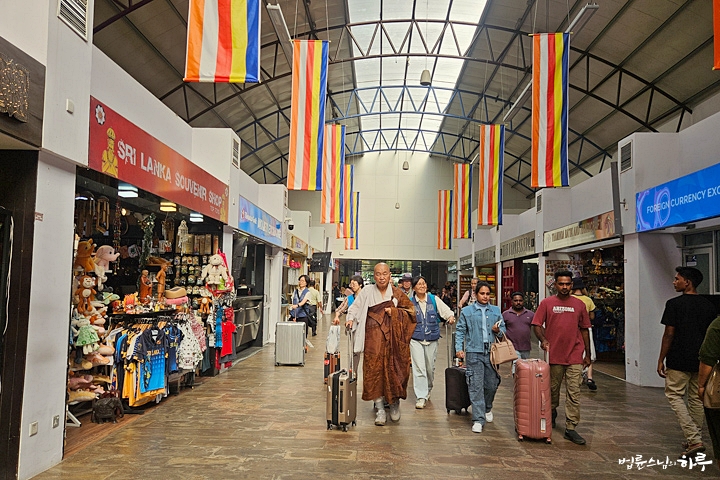
After completing check-in, Sunim sat in front of the gate and revised his manuscript before boarding.
Sunim's group boarded the 7:50 p.m. flight and departed for Korea. They are scheduled to arrive at Incheon Airport at 7:30 a.m. Korean time tomorrow.
As there was no Dharma talk today, this post shares a Dharma Q&A session from last May.
A Coworker Ruined My Work and I Feel Resentful. How Should I Deal With This Feeling?
"Rather than constantly trying to do something about it, the starting point of practice is simply to be aware. Just recognize, 'Ah, I'm feeling bad right now,' or 'When I think about that incident, I feel bad.' We often don't know our own minds as well as we think. Sometimes we resent someone without even realizing that we resent them. But when you become aware of your own mind, you begin to see why you feel bad. Feeling bad ultimately means that you are attached to that matter. What does it mean to resent someone? It means you are seeing that person negatively. But in reality, it also means you are holding onto a certain thought. Through practice, we learn the perspective that things are not good or bad, but simply different. However, right now you are holding onto the thought that 'I am right and you are wrong.' Because you are clinging to that thought, bad feelings and resentment arise. Feeling bad is not simply an emotional issue. It means you are creating an image that you are right and the other person is wrong about something that is merely different, and clinging to it. To simply be aware means to let go of the underlying premise you are clinging to—that you are right. It doesn't mean you should endure the bad feelings, nor does it mean you should employ some other special method after noticing the bad feelings. Just recognize that you are feeling bad. We have already learned and know that the cause of feeling bad lies in the attachment to being right. So, just as you would let go of a hot object the moment you grab it, you can let go of that attachment. Then you will no longer be swayed by negative emotions. It may not work well right away. But if you practice consistently, you will gradually be less affected. You keep holding onto the thoughts, 'Why did they do something unnecessary and ruin my work when I didn't even ask for help?' and 'Why did they meddle in someone else's business?' That's why you cannot let go of your attachment to the fact that the work was ruined. Because you keep holding onto the thought, 'If only that person weren't there, I wouldn't have ruined that work,' just seeing that person makes you feel bad."When I get angry or feel negative emotions, I usually try to become aware of my mind and turn it into something positive. But when I actually face the situation, it's difficult. Recently at work, a coworker said they would help me and ended up making a mistake that ruined my work. I hadn't even asked for help, and the situation made it look as if the mistake were mine, which made me even more upset and irritated. Because I knew the coworker didn't do it on purpose but was trying to help, I said outwardly that it was okay. But even as time passes, that incident keeps coming to mind, and every time I see that coworker, feelings of resentment and discomfort arise. In such situations, how should I look at and manage my mind? Also, I'm curious what practice is needed to notice negative emotions and, without being carried away by them, change to a peaceful state of mind."
"Yes. Thank you."