What Should I Do About My Child Who Cannot Adapt to School Life?
2026.7.4. Day 5 of the Religious Leaders' Peace Pilgrimage to Sri Lanka (Colombo, Meeting with Christian Leaders)
Hello. Today, Sunim traveled to Colombo and met with representatives from the Catholic Church, the Anglican Church, the Methodist Church, the Baptist Church, and the Presbyterian Church.
After finishing morning meditation, Sunim waited for sunrise and then went out for a morning walk.
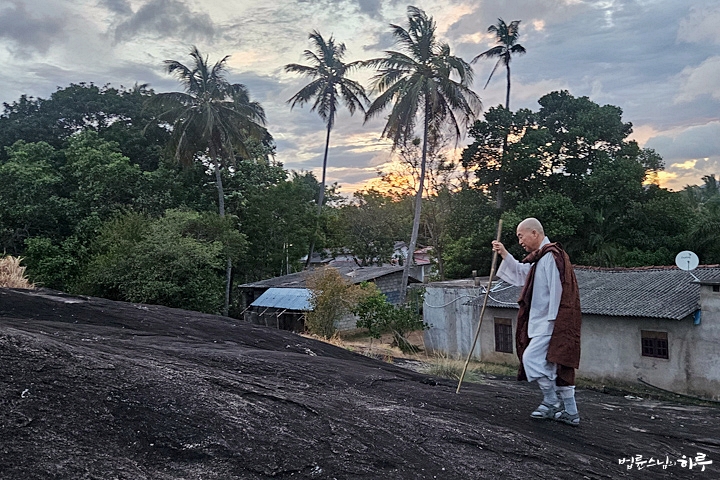
Since the place he had walked two days earlier was beautiful, Sunim went for another walk in the same area.
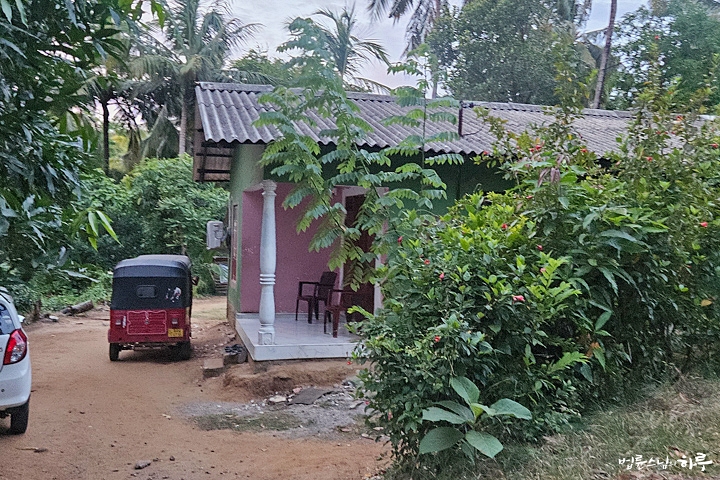
As they passed through the village, Sunim said with a smile:
"Shall we find a house to live in here too?"When one of the practitioners said it might be boring and dull, Sunim replied:
"Ask the people who live here. They will all say they are too busy to breathe. (Laughter)"After finishing the walk, Sunim returned to the lodging, loaded the luggage, and Sunim's group departed for Colombo at 6 a.m.
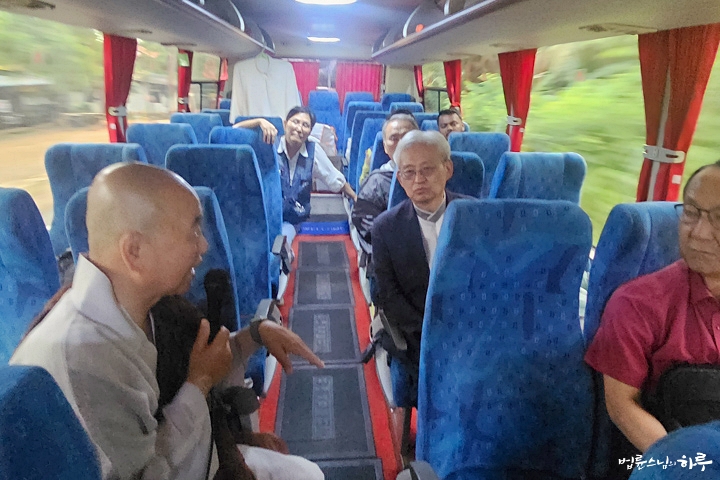
During the bus ride, Sunim held a brief meeting with the religious leaders.
They discussed ways to expand the Sri Lanka religious exchange program, community participation development projects in partnership with Dharmashakthi, and ways to support impoverished populations in vulnerable regions of Sri Lanka such as areas affected by civil war and highland tea plantation regions, as well as ways to establish a foundation for self-reliance.
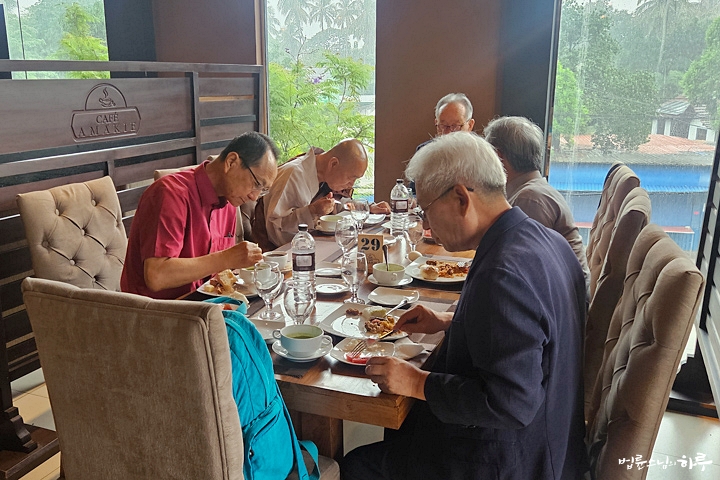
After an hour and a half of traveling, they briefly stopped at a restaurant for breakfast.
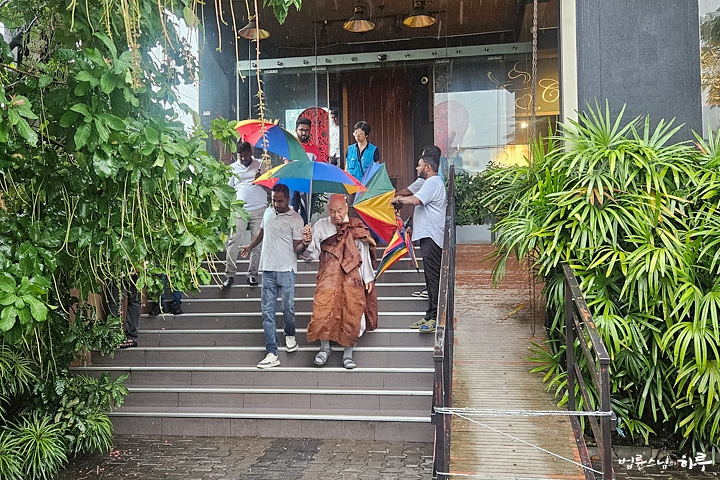
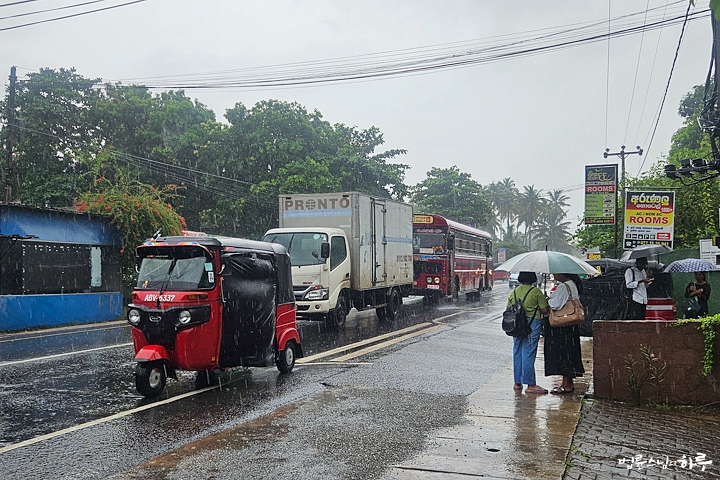
As they came out after the meal, a heavy downpour suddenly began. It is currently the rainy season in Sri Lanka, but fortunately, throughout this schedule, the weather had been good with no rain. This was the first time they had encountered rain during the Sri Lanka trip.
Someone said:
"Wow! We finally see rain in Sri Lanka!"
Sunim also smiled and said:
"Since today's visits are to Christian communities, there is no need to take off our shoes, so this works out well."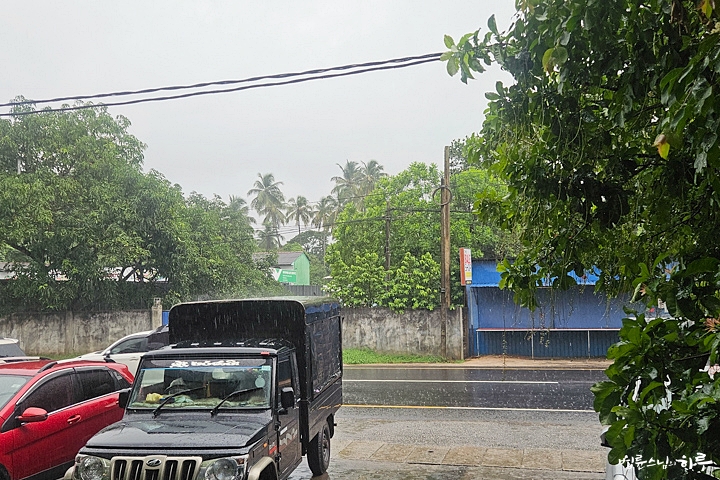
Sunim's group boarded the bus again and traveled about two more hours toward Colombo. Upon arriving in Colombo, the sun was shining brightly, suggesting it had not rained there.
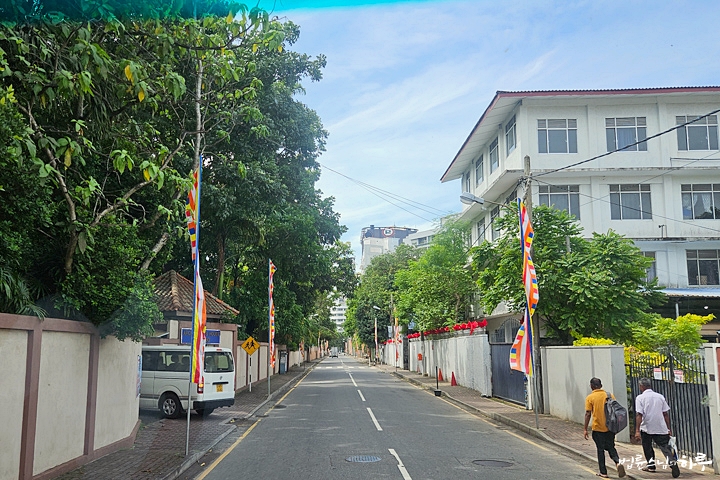
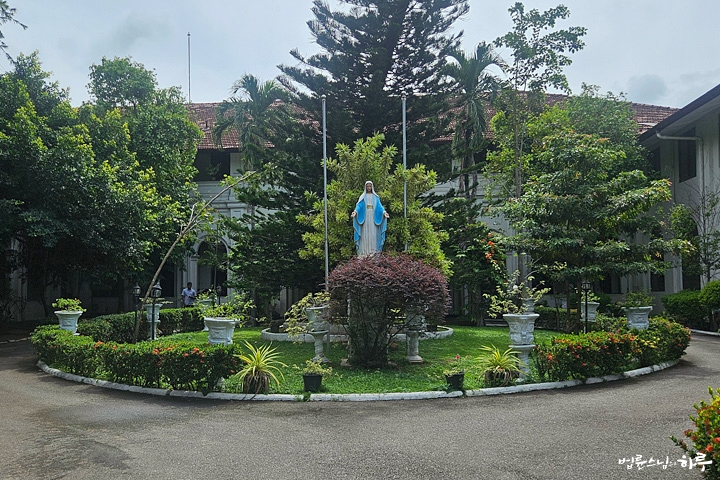
At 10 a.m., they arrived at the Archbishop's House of the Colombo Archdiocese and met with Cardinal Malcolm Ranjith, along with representatives from the Anglican, Methodist, Baptist, and Presbyterian churches.
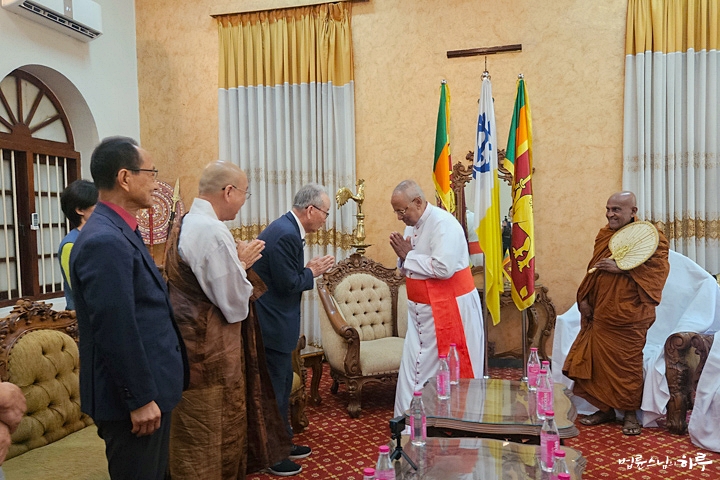
The Cardinal first introduced the Sri Lankan representatives, and Sunim introduced the Korean religious leaders. Then the Cardinal offered his welcoming remarks.
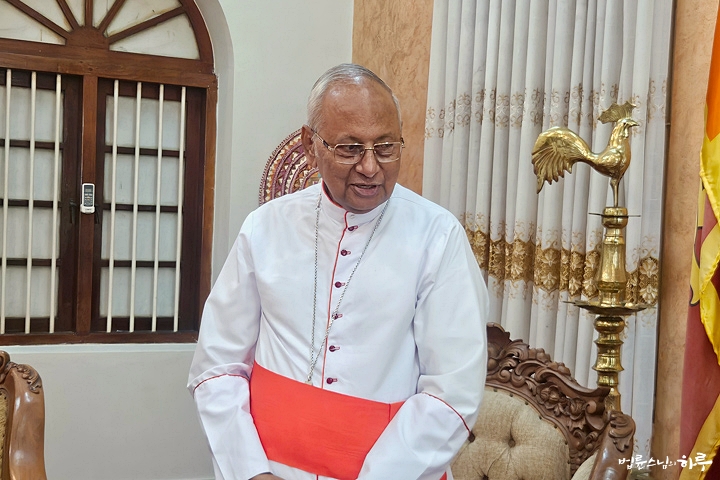
"First, I sincerely welcome all religious leaders who have come from Korea. Sri Lanka is a country where various religions have coexisted for a long time. In particular, Buddhism holds a very important place in our society and history, and it also has deep connections with Buddhist traditions in Asia such as Thailand and Myanmar. Our people have also been influenced by Buddhist culture for many generations. However, Sri Lanka is not a country of Buddhism alone. It is a multi-religious society where Buddhism, Hinduism, Islam, and Christianity live together, and we believe that inter-religious harmony is the most precious value that must be preserved at any cost.
Unfortunately, in politics, there are often attempts to use religion to gain power or to divide society. The role of religious leaders is to prevent such political exploitation and to ensure that religion does not become a tool of conflict. We must work together to protect the freedom of all people, regardless of their religion, to live their lives freely. Even when the Easter terror attacks occurred in 2019, there were movements by some to incite inter-religious conflict, but Buddhist leaders and Muslim leaders cooperated to prevent society from escalating into greater violence. We must not forget that Buddhism, Hinduism, Islam, and Christianity are all important members of Sri Lankan culture. It is our responsibility to protect this harmony from being damaged."
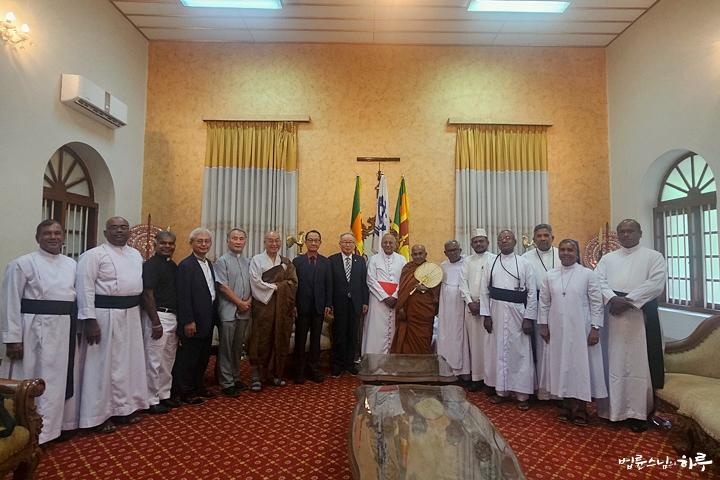
Sunim also began by expressing his gratitude for the warm welcome.
"Thank you, Your Eminence and the Christian community, for warmly welcoming us. Although our schedule has been short, we have visited the Muslim, Buddhist, Hindu, and Christian communities in turn. After this visit, we plan to hold an evaluation meeting with Dharmashakthi and discuss how to exchange and cooperate in the future. Before that, I would like to make one request to Your Eminence. Yesterday, we visited the Tamil community in Jaffna. Deep anger, sorrow, and resentment still remained in their hearts. I thought perhaps they are the people carrying the deepest wounds in Sri Lanka. What they wanted was not something grand. They wanted to be guaranteed autonomy to preserve their traditional culture and religion, and to live without discrimination in Sri Lankan society. They also hoped that the areas devastated by the war would recover economically as soon as possible. Although the entire country of Sri Lanka is facing difficulties, I felt that this region in particular needs a little more attention. Another issue is that the temples and lands that were occupied by the military during the war have not yet been returned. Venerable Assaji said that the government has plans to return them, but the residents are earnestly hoping to reclaim their land as quickly as possible. I hope that Your Eminence, Venerable Assaji, and other religious leaders will pay a little more attention to healing their wounds. If inter-religious dialogue had been the sole purpose, there would have been no need to travel all the way to Jaffna. We could have met Hindu leaders in Colombo as well. The reason we made that long journey was to visit them in person, listen to their stories, and feel what kind of wounds they carry. They said it was the first time foreign religious leaders had come to Jaffna to listen to their stories, and it gave them great strength. They also expressed deep gratitude, even now, for Venerable Assaji who visited them during their most difficult and isolated times to listen to their stories. I ask that Your Eminence, as a great leader of this country, also pay a little more attention to them."In response, one participant explained the reality of Sri Lanka. He said that for a long time, politicians have used religious and ethnic conflicts politically to divide society, and even when religious people work for peace and reconciliation, they are often misunderstood and accused of aiding the rebels. He said that supporting and reconciling with the Tamil people in the north is also not easy due to political interests, and that true peace is difficult to achieve as long as conflict is used as a tool of politics. Finally, he asked them to pray together so that Sri Lanka may move toward the path of reconciliation and peace.
Sunim nodded in agreement.
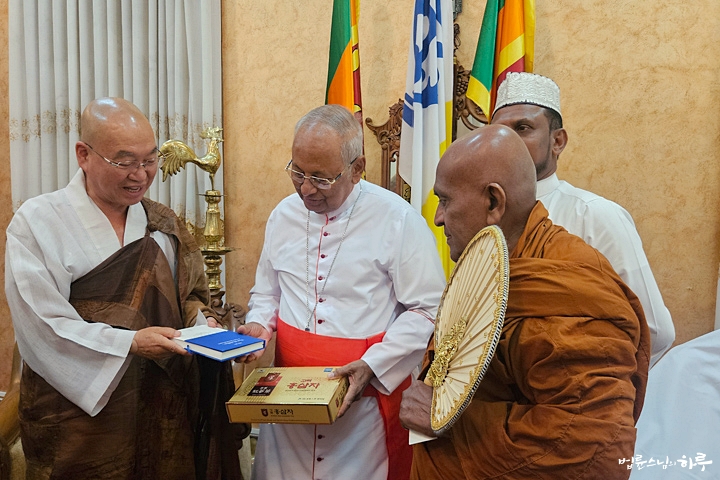
"We had a similar experience in the midst of North-South conflict. When we argued that humanitarian aid should be given to North Koreans who were starving, some criticized us, saying, 'The rice we support comes back as bullets,' or 'It helps the North Korean regime.' We even heard, 'If you want to side with North Korea, go live in North Korea.' In terms of viewing even helping people in need through a political lens, I think Korea and Sri Lanka are similar. Despite the difficulties, let us cooperate and move forward one step at a time."The conversation ended at noon. Sunim presented the prepared gifts, and they had lunch prepared by the Caritas Center.
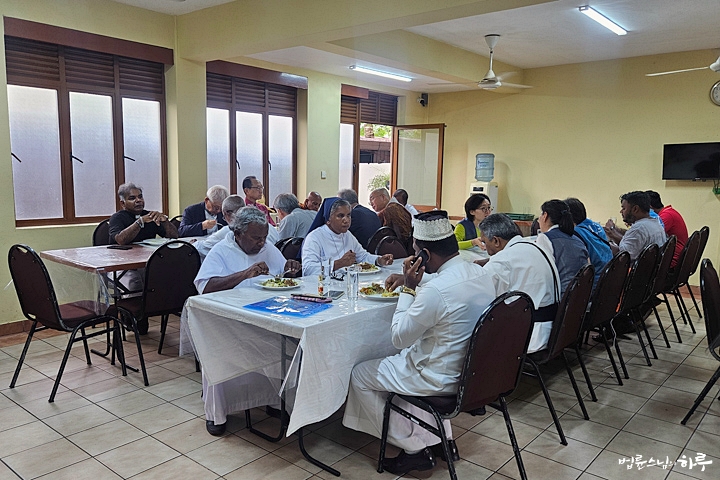
After lunch and a brief rest, the evaluation meeting for this schedule began at 2 p.m.
The evaluation meeting was attended by representatives of the three Buddhist orders, Christian leaders including the Cardinal, Muslim leaders, and Hindu leaders. It was said that it is very rare for the major religious leaders of Sri Lanka to gather in one place like this. This meeting was a meaningful occasion that showed the significance of trust and cooperation among religions.
First, Dharmashakthi briefed on the schedule of this program and offered their evaluation.
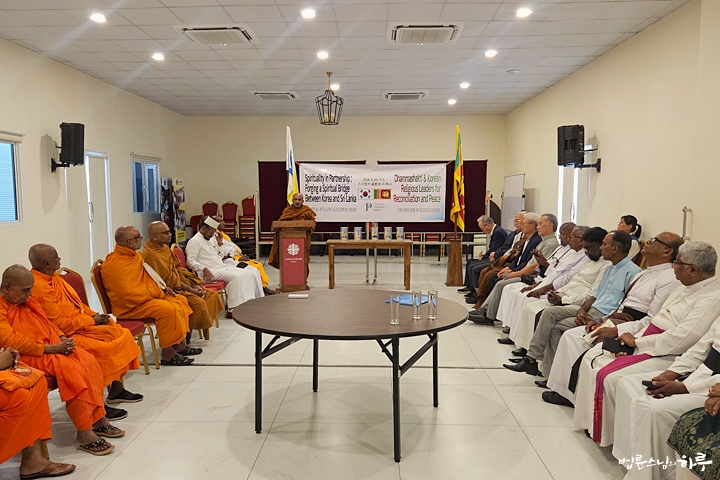
They explained that they had prepared the schedule so that the Korean religious visitors could meet extensively with religious leaders from Islam, Buddhism, Hinduism, and Christianity. They noted that the overall schedule—from the airport welcome, visits to each region, meetings with religious leaders, to the pilgrimage to sacred sites—had been successful, and highlighted the direct meeting between senior religious leaders of Korea and Sri Lanka as an important achievement of this visit.
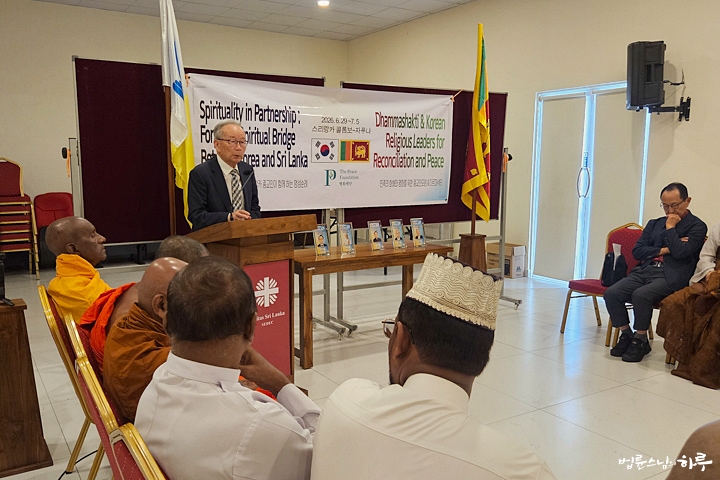
Grandmaster Park Nam-soo shared his reflections on this trip.
"Through this visit to Sri Lanka, I have been deeply moved by meeting various religious leaders. It was not simply visiting the temples of each religion, but I was able to see firsthand how religions are practicing together for reconciliation and peace. I think the most beautiful scene of this visit was seeing different religions working together for peace. I am now proud of Sri Lanka as well as Korea. I believe that if Sri Lanka continues this inter-religious harmony, it will become a country that leads world peace."
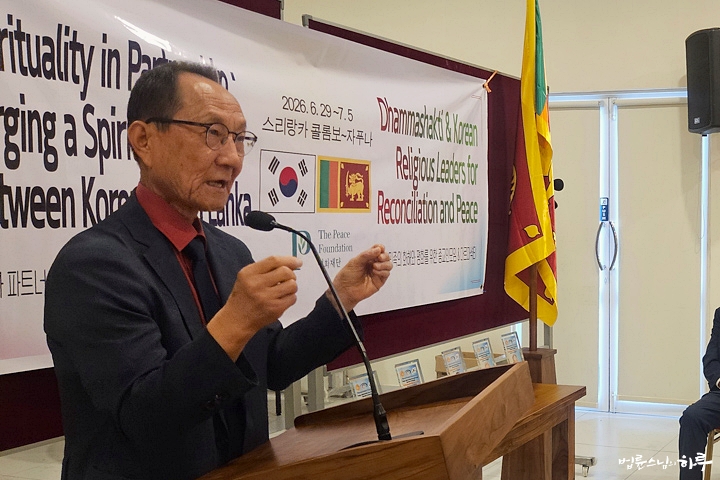
Reverend Park Jong-hwa also offered a few words. "I was most deeply moved when I met the families of war victims this time. I could read two messages in their eyes: the cry of 'Why did our family have to suffer like this?' and the plea 'Please never let war happen on this land again.' I believe we must share each other's pain and share hope together. The power that saves people is, in the end, trust, hope, and love. I hope Korea and Sri Lanka can build peace and reconciliation together based on these values."
Sunim then shared his reflections on this visit and the direction of future cooperation.
"I sincerely thank the members of Dharmashakthi and all religious leaders who have warmly welcomed us from the airport until now. Coming together like this, with different religions gathering to work together, is by no means easy because each religion has different beliefs, thoughts, and cultures. We know this difficulty well because we have had similar experiences in Korea. Nevertheless, Dharmashakthi has continued this difficult work for the past 30 years. I think that is truly something to be proud of. When you create a space for dialogue for peace, it is easy to be criticized from both sides. We too were criticized from both sides when we worked for North-South reconciliation. It must be the same with inter-religious dialogue. You must have also been criticized within your own denominations or communities. I imagine that Buddhism, as the majority religion, may have received even more criticism for leading the dialogue. In that respect, I highly value Venerable Assaji's courage. For reconciliation to happen, the majority side must first open its heart and be inclusive—only then can reconciliation and cooperation become possible. I pay my respects to everyone who has participated today. I hope you will continue this precious work.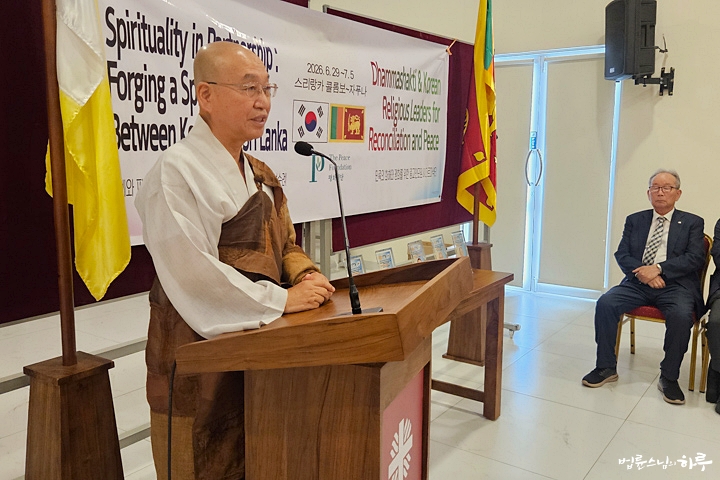
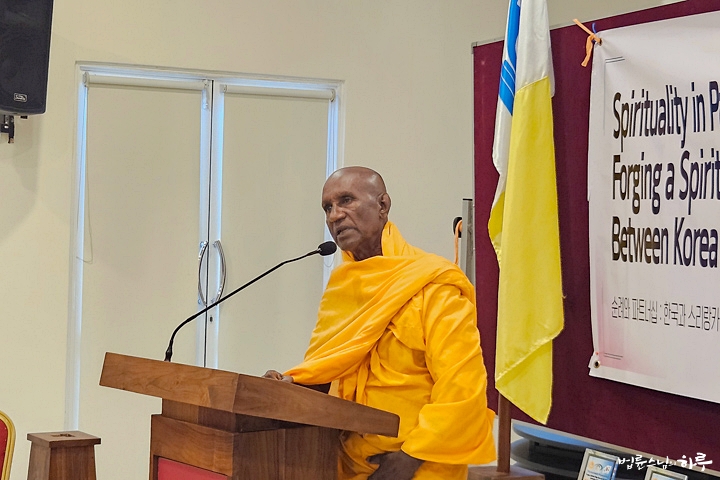
Venerable Wimalagnana spoke on behalf of the Buddhist community.
"I sincerely welcome the religious leaders who have come from Korea. Looking at the history of Buddhism, Buddhism spread from India through Sri Lanka to Korea, Japan, and many other countries. Considering that historical connection, today's meeting is all the more meaningful. Looking around the world today, every country is experiencing various disasters and conflicts that have not been experienced before. In times like these, people must understand their religions more properly and practice their teachings in daily life. I believe our role is to help people practice the teachings of each religion in their daily lives."
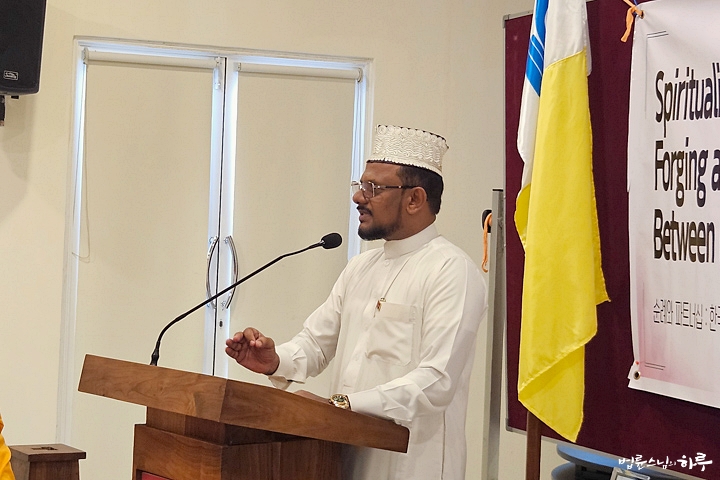
Mr. Firdaus Aurabi, the Muslim representative, also spoke. "In Islam, we teach that every person has their own responsibility, and Allah asks how one has fulfilled that responsibility. Dharmashakthi did not turn away from that responsibility, even during the most difficult period of the Sri Lankan civil war. The religious leaders here risked their lives to visit conflict zones and help people. I believe today's Dharmashakthi exists because of such courage and sense of responsibility. True change can be achieved when we work for reconciliation and peace with a pure heart. I am very glad to share this experience with the religious leaders from Korea today."
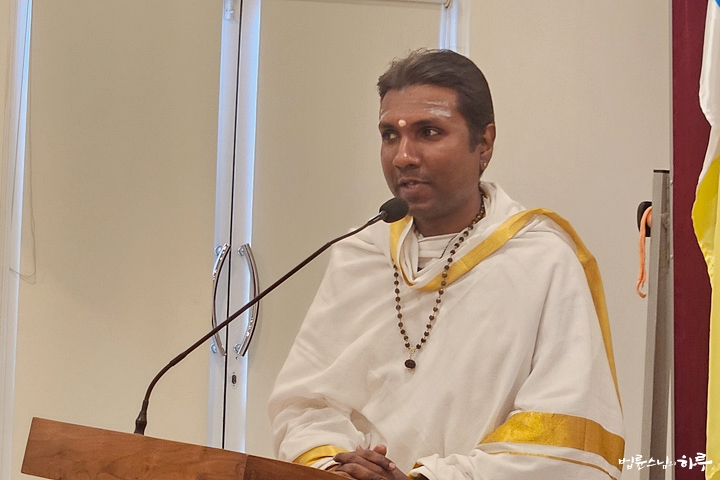
Swami Darshaka spoke as the Hindu representative. "It is very meaningful that you visited Jaffna in the north. That area has suffered many difficulties for a long time due to war and political conflict. I deeply appreciate your visiting such a place and being with the residents. If you visit Sri Lanka again next time, I hope you will also stay at important Hindu temples and experience our culture and tradition more deeply. I hope this meeting will become a spiritual bridge connecting Korea and Sri Lanka. I wish us to create peace, love, and happiness together."
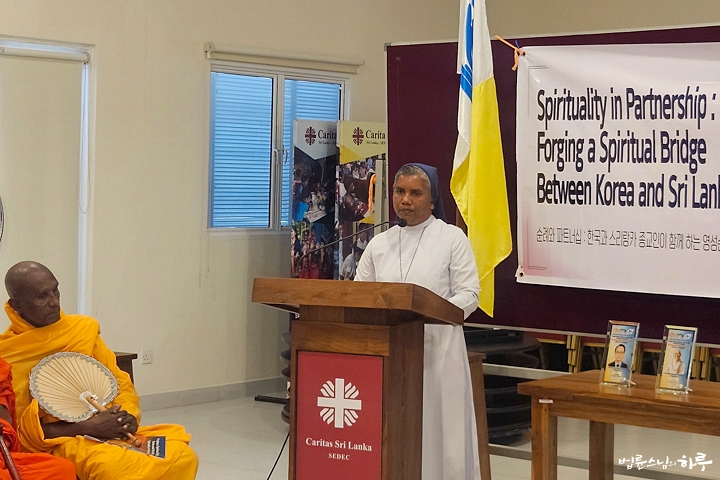
Sister Krishanthi from the Good Shepherd Sisters also spoke. "I am very glad to meet the religious leaders from Korea this time. I was deeply moved to see you making efforts to directly understand the reality of Sri Lanka. I hope we can continue to understand each other's realities and continue to discuss what we can do together in local communities. In particular, I hope we can create cooperative projects for those who need help on the ground. Also, I hope we can exchange with women religious leaders in Korea in the future, sharing our experiences and learning together."
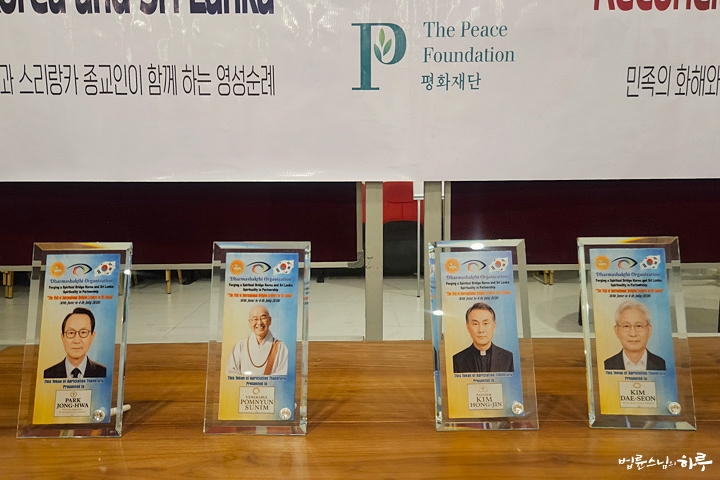
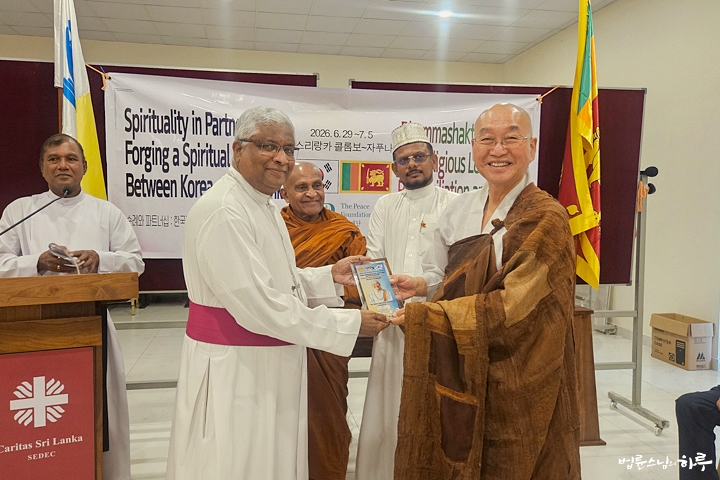
As the evaluation meeting concluded, Dharmashakthi presented plaques of appreciation and commemorative gifts to the Korean delegation. Sunim's group also presented the gifts they had prepared from Korea.
They spent some time exchanging conversation while having tea with the members of Dharmashakthi.
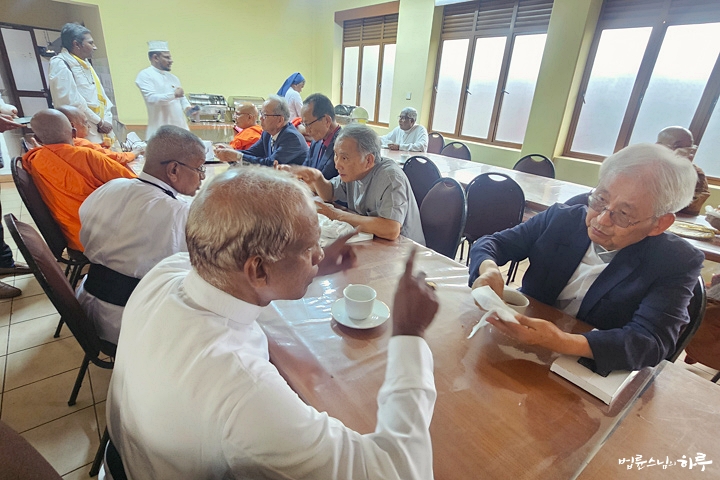
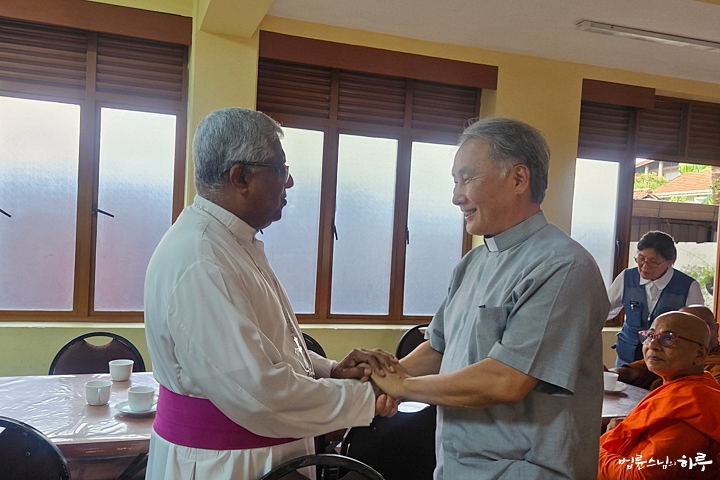
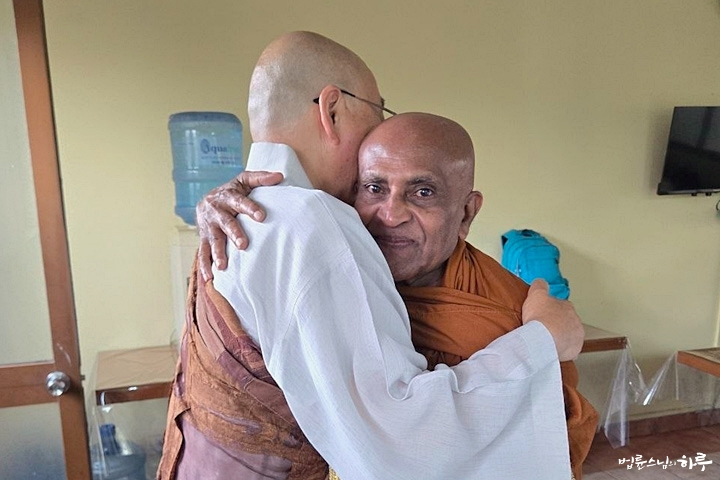
Sunim especially expressed gratitude to Venerable Assaji, who had accompanied the entire schedule.
At 5 p.m., Sunim's group returned to the lodging, unpacked, and took a brief rest.
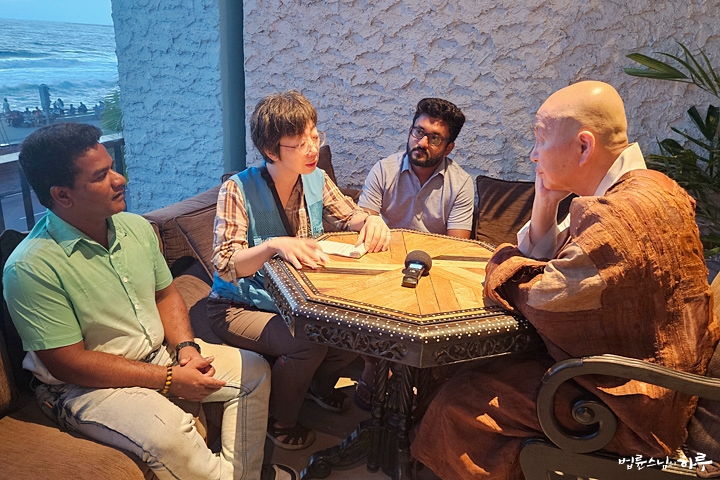
At 6:40 p.m., Sunim held a brief meeting with Kim Yun-mi, head of the JTS Overseas Business Team, along with Namal and Pasindu, volunteers from the Sri Lanka branch. They discussed the construction budget for the Gampola school building, the installation of a cable bridge in the Basara area, road access improvements, administrative work related to the agricultural waterway repair project, and cooperation with Dharmashakthi on various projects.
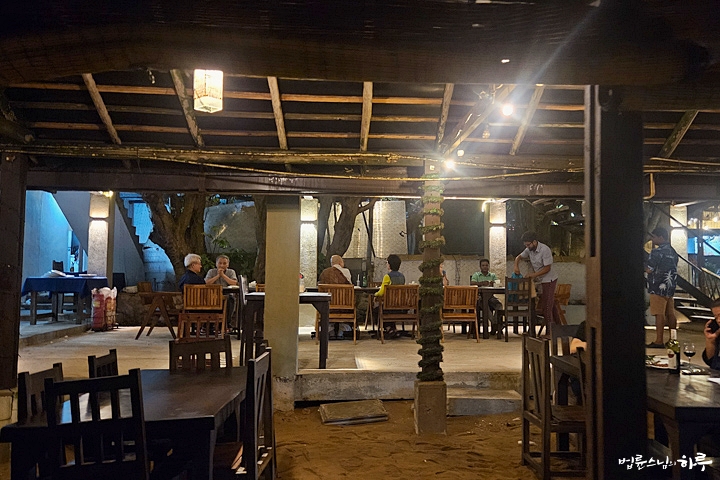
Mr. Harsha invited them to dinner, so Sunim's group left for the restaurant at 7:10 p.m. They arrived at the restaurant at 7:30 p.m. and had dinner.
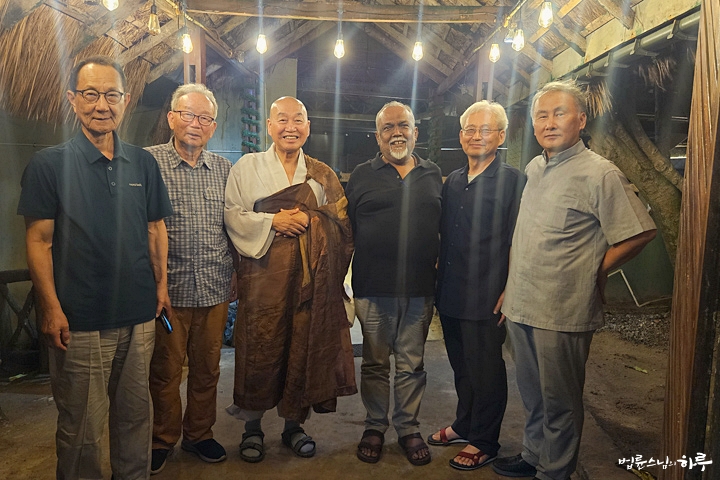
After dinner, they returned to the lodging, and at 9:30 p.m., Sunim held a meeting with Mr. Suchith from the Sri Lanka Engaged Buddhist Alliance.
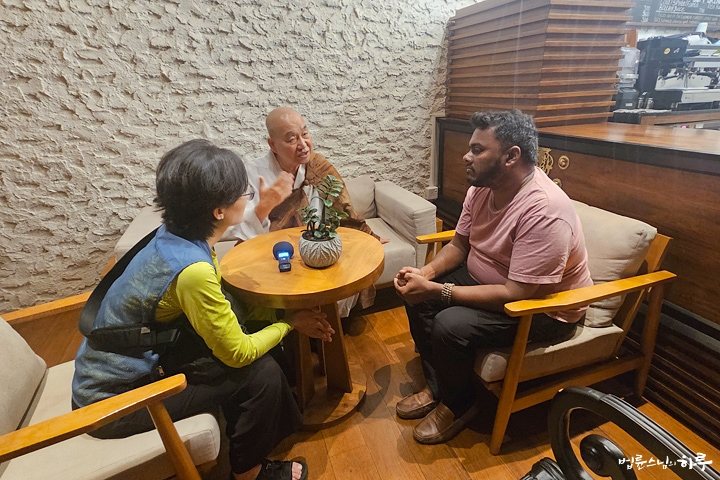
Sunim discussed with Mr. Suchith the direction of the youth movement, the network of Sri Lankan religious leaders, and the social role and cooperation of bhikkhunis. Finally, they discussed the future direction of exchange between Korea and Sri Lanka. Sunim said that this visit, as the first exchange with Dharmashakthi, was exploratory in nature and meaningful in understanding the field, and suggested that future exchanges should develop with a focus on actual dialogue and joint practice. He also said that inter-religious dialogue is not an end in itself but a means to resolve social conflicts and create peace.
By the time the meeting ended, it was 10 p.m. Sunim revised manuscripts and took a rest.
Tomorrow is the last day of the Sri Lanka schedule, when they will visit the Sarvodaya headquarters and the Peace Museum before departing for Korea.
Since there was no Dharma talk today, this post introduces a Dharma Q&A session held last May.
What Should I Do About My Child Who Cannot Adapt to School Life?
"Are you a doctor?""I am a mother of two children. My second child is currently in the second year of high school, but starting from the second year of middle school, she has had difficulty adapting to friendships. On school days, she complains of headaches and refuses to go to school. Even when she barely makes it to school, she often leaves early or is absent altogether, and this pattern has continued until now. She was diagnosed with panic disorder and anxiety disorder at the hospital, and it has been almost two years since she started counseling therapy. On holidays, she does relatively well at home, but only on school days does she complain of headaches again and repeatedly be absent or leave early. So I have suggested various alternatives, such as, 'Wouldn't it be better to just quit school and go to an alternative school or prepare for the qualification exam?' or 'You could learn a trade.' However, my daughter says she wants to go on the school trip with her friends and wants to graduate from school normally and go to college. Although she says so, in reality she continues to be absent and leave early. As a parent, I don't know what I should do for my child now. Also, when the child took a psychological test, I was told that she is temperamentally very sensitive and may have high anxiety. I am worried that if this sensitivity continues, my child may have to live with this pain for the rest of her life. I would like to know if there is any way I, as a mother, can help reduce my child's anxiety or support her at this time."
"I am not a doctor, but the process has been so difficult that, hoping it might help my child even a little, I have been listening to Venerable Pomnyun Sunim's lectures before bed, in the morning, and when I feel frustrated, even while walking."
"Sunim's Dharma talks are not about 'what to do with the child.' They are about 'what to do with my frustrated mind.' So they do not directly help with what to do with the child. The child's illness is the doctor's domain. Your role is to provide basic care, such as cooking meals and washing clothes. When you keep trying to intervene in matters that are not your domain, the situation becomes more complicated. Just do what you need to do. Once she is over twenty, how she lives is her own life. If she cannot live properly after that, it is more of a social issue than a personal one. But if you think of it as your problem, you will have to carry it for the rest of your life. On the other hand, if you think, 'I just need to do my part,' then even with such a child, you can live your own life happily.""It's not easy because she is my child."
"You are suffering because you think that way. It's not that having such a child is itself unfortunate, but rather that you are unhappy because of attachment to your child. There is no reason for a child to make a parent's life unhappy. Having a child with a disability does not make the parent's life unhappy. If the child has a disability, you simply help according to that condition. And there are limits to the role parents can play. After a certain period, that role transfers to society. In the past, when one family member faced difficulties, the whole family would collapse together, but that is not the case now. A child with a disability also has the right to live happily, and their parents also have the right to live happily. This is the direction of modern society. However, if you feel unhappy because of your child, it is like choosing unhappiness for yourself. Of course, if you choose to live unhappily, that too is your personal freedom. But if you say, 'What can I do? She's my child,' you should know that this choice itself leads to suffering. When such symptoms first appeared in the second year of middle school, what should you do first if your child shows difficulty with school life? When signs of deviation from normal appear, you must first check the health condition. If all the friends go to school but the child alone refuses to go, it is not something that can be solved by scolding. It is a kind of warning sign. In such cases, you need to go to the hospital and get checked. It's the same as when everyone is eating but the child alone refuses to eat, or refuses even when given other food—you must check the health condition. However, the child may simply have the trait of only eating certain foods. If the doctor says it's okay, you can accommodate that trait. Trying to forcibly change it can actually create problems. The same applies when the child says with conviction, 'I don't want to go to school.' You must first distinguish whether this is simply a matter of will or a health issue. If there is no problem in psychiatric examination, it may be the child's characteristic, and you can support her accordingly. Conversely, if it is an illness, treatment is needed. Treatment is not done by parents but by doctors. The parents' role is to provide the opportunity for treatment. If the child still refuses to go to school even after taking medication, you must also consult with the doctor about that. Adjusting the dosage or changing the treatment direction is the doctor's task. However, if the doctor says there is nothing more they can do, then the parent's role begins. When they say, 'Now the guardian must decide whether she goes to school,' then the parent must take on that responsibility. Even outside of the professional realm, if there is no one else to help, then you must take on the responsibility. In such times, you need to talk with the child sufficiently. If the child says she won't go to school, you present options like, 'Rest today. But if you keep being absent, you may be expelled. Would that be okay? Are you thinking of dropping out?' The same applies when she repeatedly leaves early—it is important to let her know the consequences of her choices. This does not mean giving the child everything she wants, but rather letting her know the situation as it is. How anxious must the child be to refuse to go to school? From the mother's perspective, going to school seems good, but to the child, school may feel like hell. She may feel like she's going crazy. If just sitting in school is unbearable, staying home may be better. Forcing her to endure can lead to bigger problems later. So, you must not conclude that 'going is definitely right' or 'not going is a problem.' Parents must center their observation on 'How is my child's condition?' rather than 'Am I comfortable?' To summarize: first, follow the doctor's judgment and continue treatment while consulting with them. Second, when you reach a stage where the doctor no longer intervenes, the parent must make judgments according to the child's condition. In such times, you should be able to say, 'If you don't want to go, don't go. And if it's too hard when you're there, come back.' At the same time, you must also tell her the reality: 'Is it very hard? But if you keep not going to school, you may be expelled.' If she goes to an alternative school and then quits, and then wants to go to another school, you should let her. This is because she is currently in a patient's condition. You should not press her, saying, 'I worked so hard to send you—why can't you go?' If she says she'll go, send her; if she says she'll come back, bring her back; if she wants to drop out and then re-enroll, help her; and if she wants to quit, accept that choice too. This does not mean giving in to whatever the child wants, but rather understanding the child's psychology. In the child's unconscious, two feelings coexist. The wish to do everything like other children, and the wish to rest because it is too hard when she tries—these two feelings are working simultaneously. Understanding this makes the situation much simpler to view. So when she says she won't go, you can suggest, 'Why don't you try if you can bear it?' And when she says she'll go, you can say, 'You can stop if you can't endure it.' You must always judge based on the child's condition. And now there is no need to worry about things like 'She needs to get a job when she's over twenty,' or 'I don't know how she'll live when she's old.' When that time comes, you can look into the necessary systems and receive support then. You can apply to the government for a disability rating and connect her with the necessary help. Continue such social support, and you should live your own life. Parents of such children also have the right to live happily. Also, a child with difficulties—whether mental or physical—also has the right to live happily according to their condition. However, in many cases, the child becomes more distressed because of the parents' expectations and desires. Why do parents decide things like whether she must graduate, whether she must go to college or not? That is for the child to decide. But since the child is still young, you can offer advice. It is enough to inform her that this choice leads to this result, and that choice leads to that result. That level is fine—there's no problem.""Yes, thank you."