The Solutions of the Past Cannot Solve Today's Problems
June 25, 2025 - Meeting with Buddhism Course Students at the Special Headquarters Branch, Peace Foundation Symposium
Hello. Today, Sunim has a meeting with the Jungto Buddhism Course students at the Special Headquarters Branch of the Jungto Social and Cultural Center, followed by the Peace Foundation's regular symposium.
After his early morning practice and meditation, Sunim revised manuscripts and then moved to the Peace Foundation to meet with North Korea experts. At 7 a.m., Sunim began his day by sharing a meal with North Korea experts. He reviewed recent price trends in North Korea and analyzed the outlook for U.S.-North Korea relations, as well as North Korea-China and North Korea-Russia relations, exchanging various views with the experts.
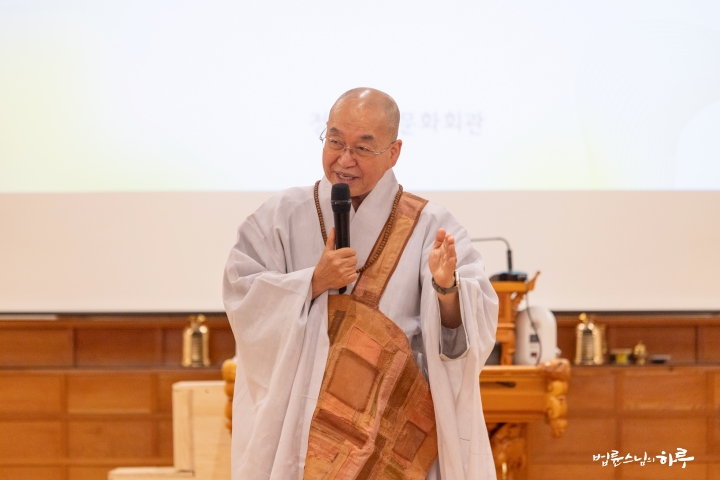
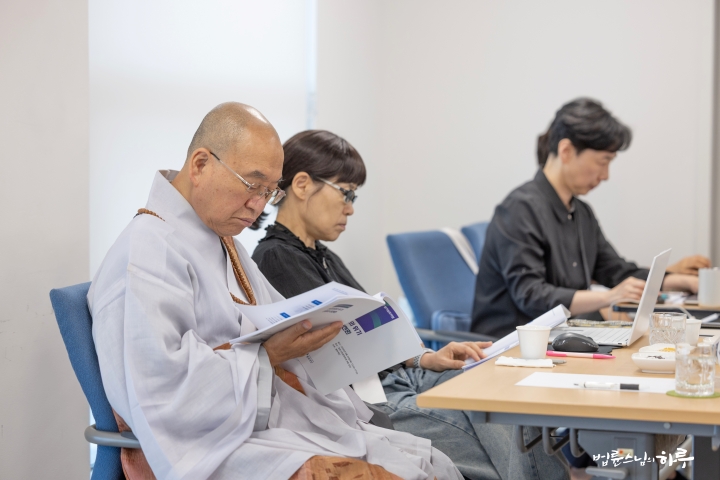
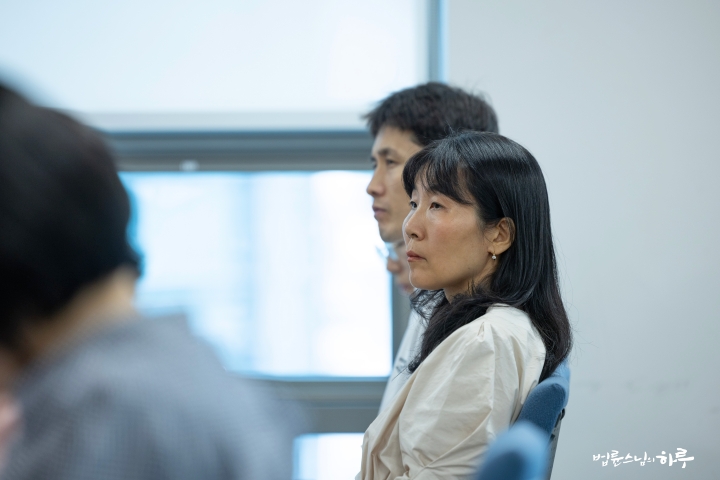
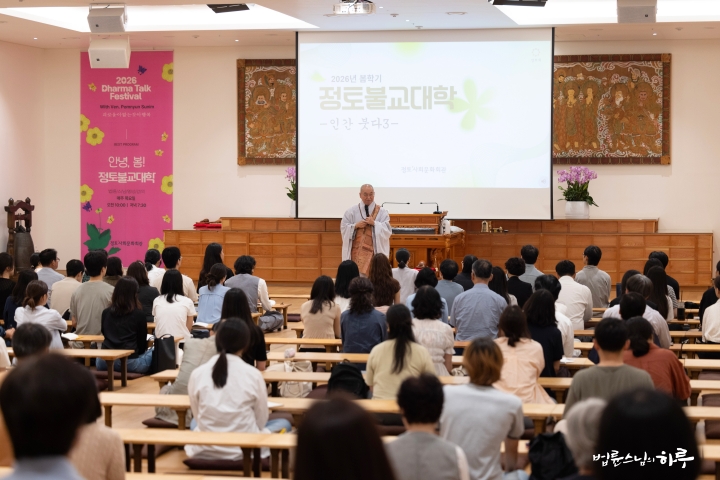
After the meeting, at 10 a.m., he met with peace and security experts. Before the meeting, Sunim briefly moved to the Dharma Hall on the third floor to greet the Buddhism Course students at the Special Headquarters Branch. When he entered the Dharma Hall, the students were waiting to greet Sunim before their class began.
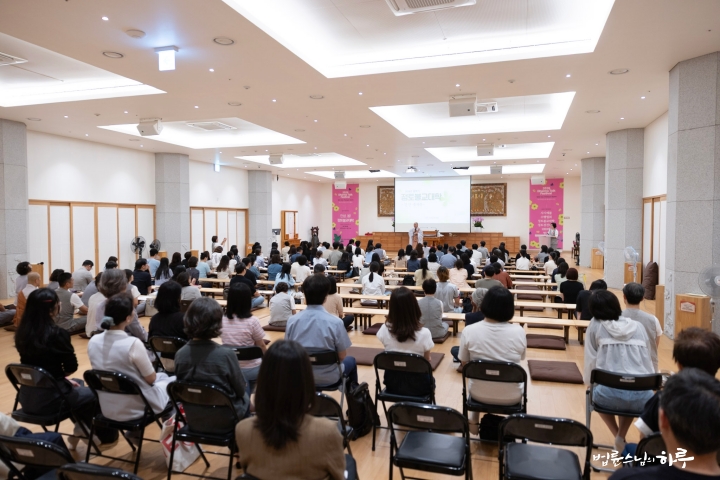
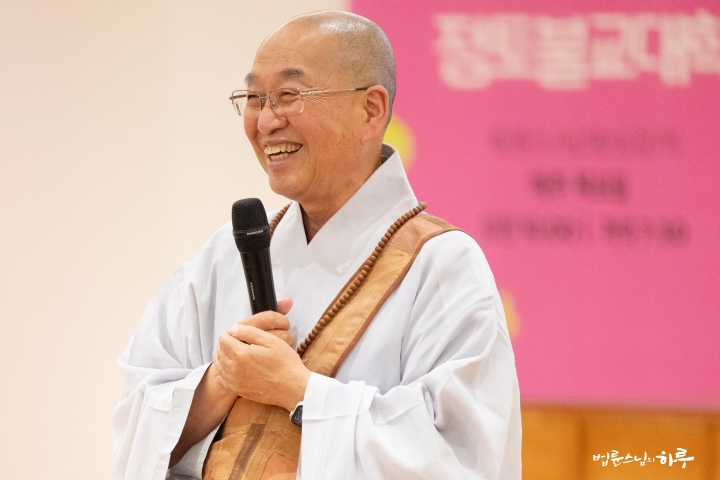
Although time was short before the experts' meeting, Sunim explained the core ideas of Buddhism for the students who come all the way to the Center every week to attend class.
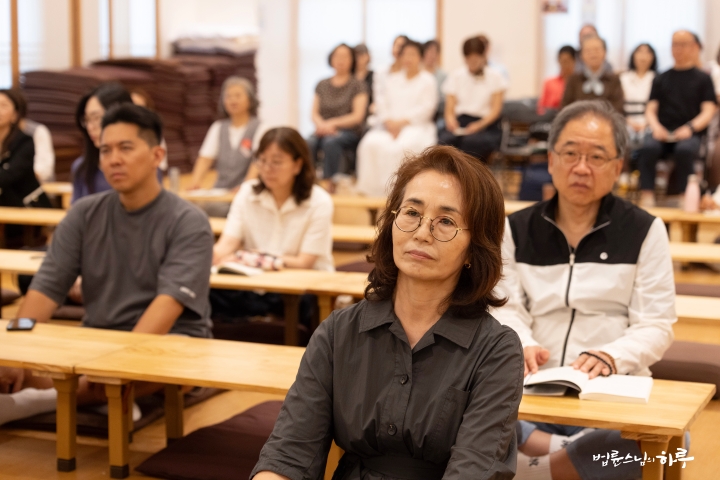
After wrapping up his time with the students, Sunim returned to the Peace Foundation on the 10th floor to meet with security experts. At the peace and security meeting, Sunim and the experts spent about two hours examining changes in the international situation, including the Iran war. They discussed the need to improve U.S.-North Korea relations for peace on the Korean Peninsula, anticipated strengthened military cooperation among North Korea, China, and Russia, and expressed concerns about security risks.
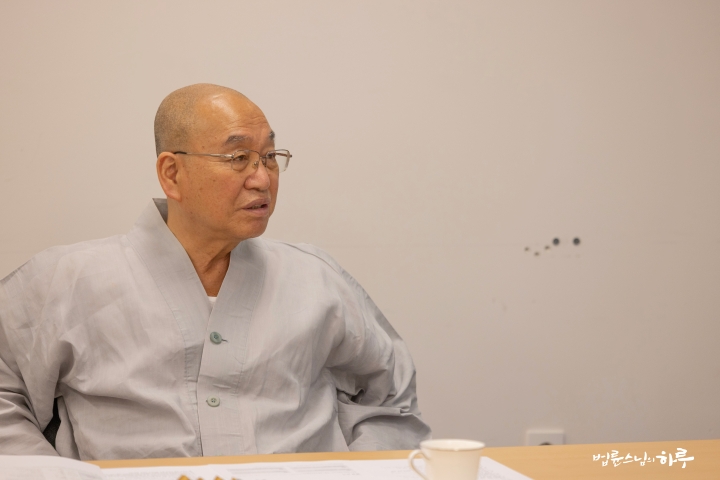
Around 12:30 p.m., Kim Yoon-tae (김윤태) and Ahn Sang-hee (안상희), who are preparing the Buddhist construction project in Sankisa, India, came to greet Sunim.
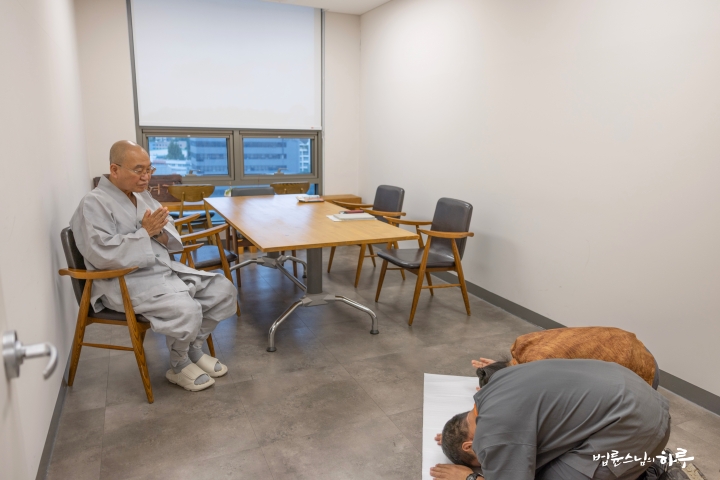
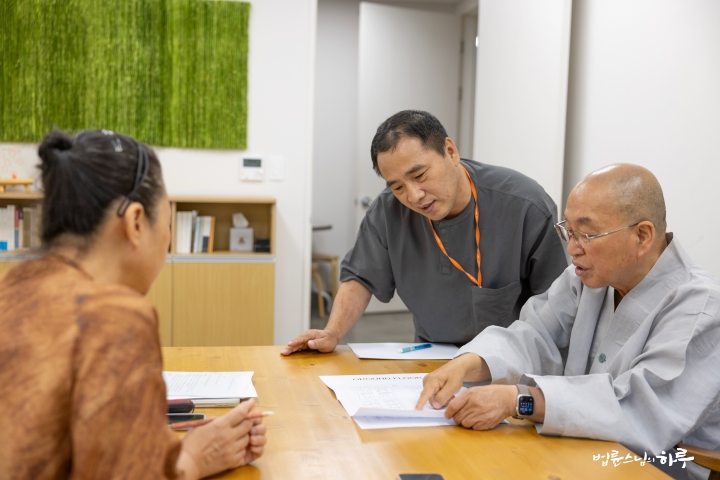
After exchanging greetings, Sunim reviewed the progress of the Sankisa Buddhist construction project with the two volunteers.
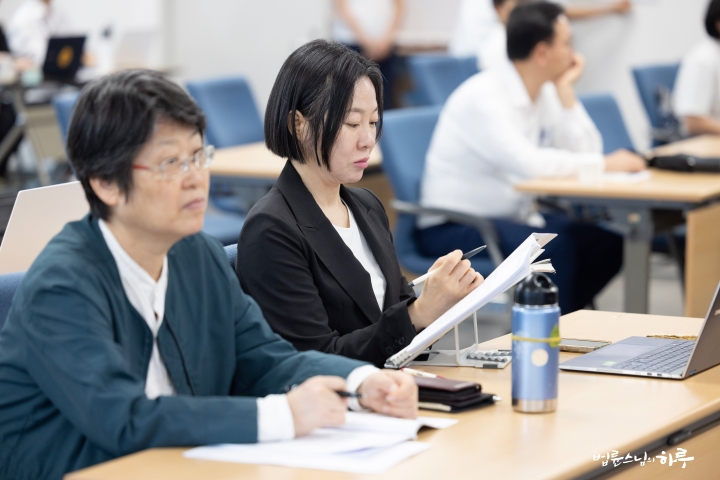
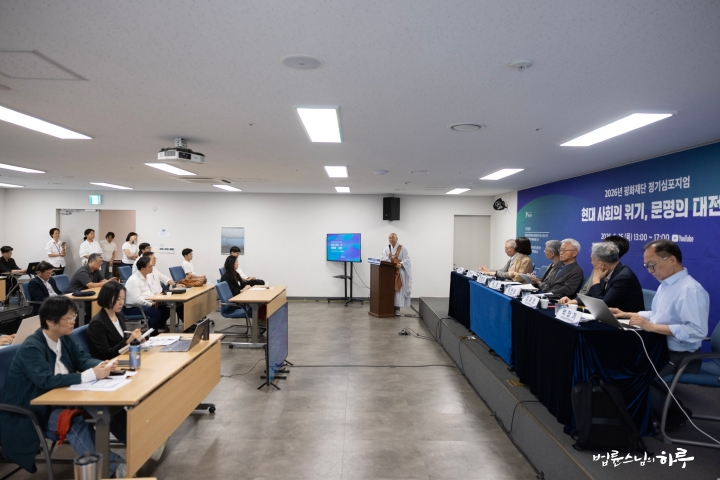
In the Peace Foundation auditorium on the 9th floor, preparations for the regular symposium were in full swing. The moderator, presenters, and panelists were taking their seats, and the event was set up for both in-person attendance and live YouTube streaming so that more people could participate in the symposium.
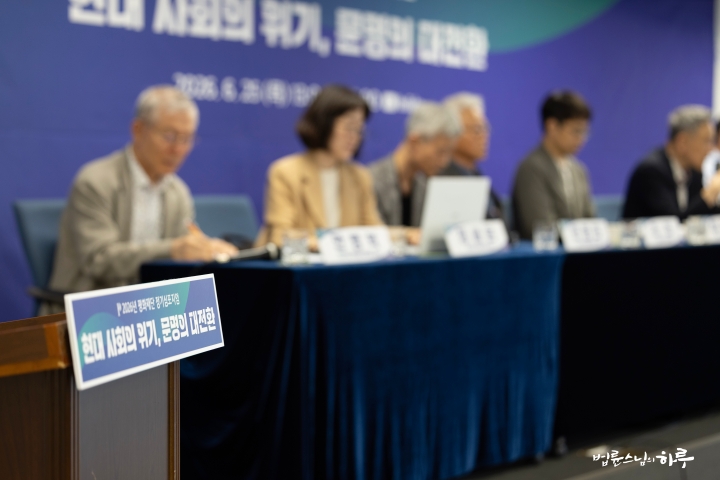

The theme of this symposium hosted by the Peace Foundation was "The Crisis of Modern Society and the Great Transformation of Civilization." At 1 p.m., the symposium began under the calm and gentle moderation of Dr. Cho Min (조민), an advisor to the Peace Foundation.
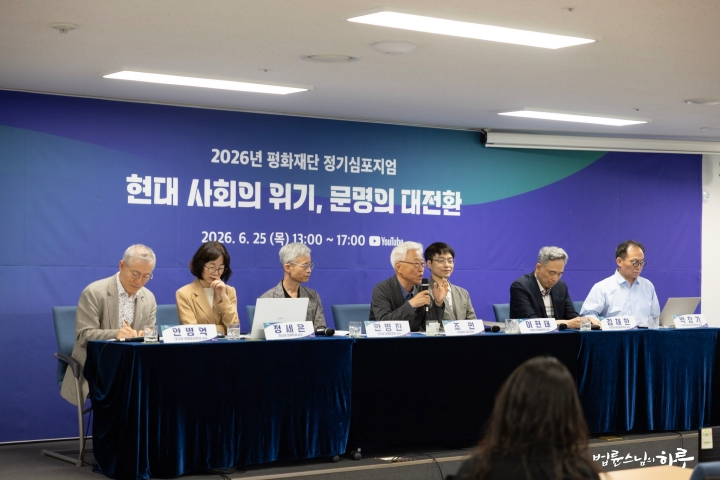
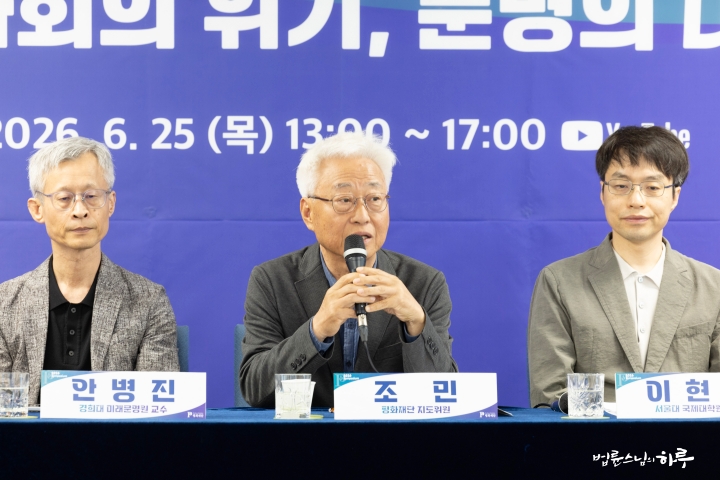
"Today, the Republic of Korea is facing multiple crises all at once—security crisis, economic crisis, political crisis, and the rapid entry into the AI era. At a time when the life paradigm we have been familiar with for the past 100 years is being fundamentally shaken, the changes we face are not merely shifts in the situation but matters of civilizational transformation. Today's gathering will not only diagnose the current phenomena but also explore the direction in which the Republic of Korea should move forward."
The first presenter, Professor Ahn Byung-jin (안병진) from the Institute for Future Civilization at Kyung Hee University, spoke about the civilizational transition and the crisis of the global order.
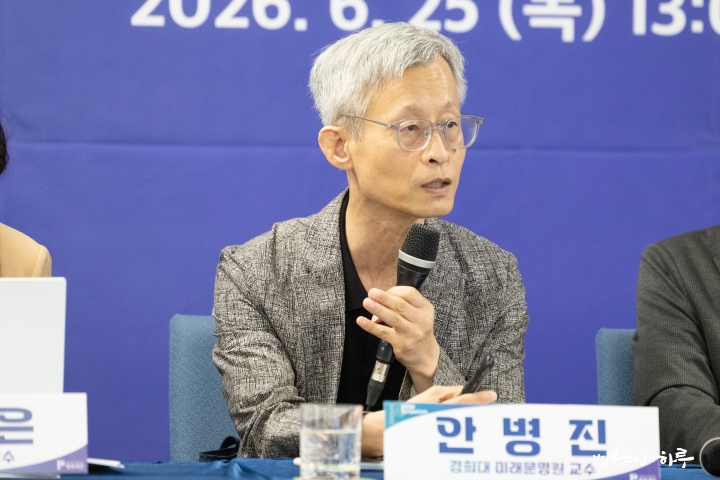
"What is more dangerous than today's Trump phenomenon in the United States is the rise of 'retrograde technocracy.' 'Retrograde technocracy' refers to a trend of using cutting-edge technology to return to a medieval feudal order. To overcome the chaotic changes happening now, we must discover new theories and concepts rather than rely on existing ones and the established social order. The Republic of Korea must be reborn as a country grounded in humane values, and the core of those values lies in planetary thinking and the coexistence of multiple civilizations."
The second presenter, Professor Lee Hyun-tae (이현태) from the Graduate School of International Studies at Seoul National University, presented on the civilizational transition and the global economic crisis.
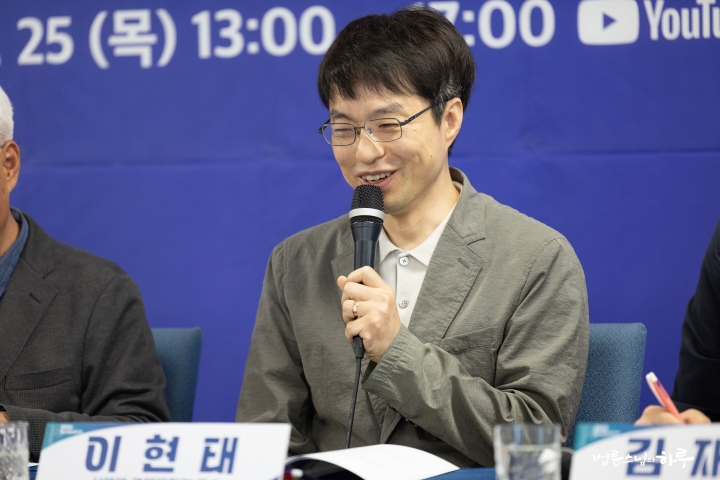
"The conditions of cheap trade, cheap energy, cheap money, and cheap labor that the world economy has enjoyed are collapsing. Because Korea has been a major beneficiary of globalization, the shock from the cracks in the global economy will be felt even more strongly here. Now that low-cost globalization has ended, we must build up our domestic demand base to develop resilience against external shocks. The current structural stagnation and market uncertainty cannot be resolved with conventional economic policies based on inertia. At the national level, we need to set new and creative coordinates that match the nature of this great transition."
The panelists' presentations that followed offered sharp and diverse analyses. Professor Ahn Byung-eok (안병억) from the Department of Defense and Military Studies at Daegu University focused on changes in Europe and the international order.
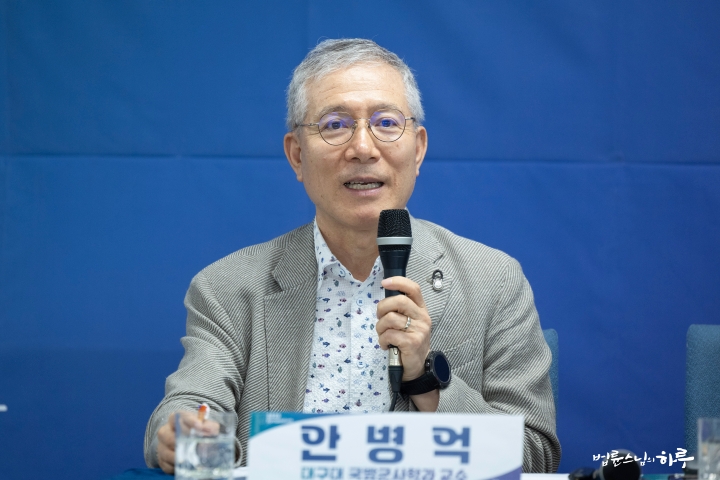
"As U.S. leadership weakens and China also fails to sufficiently provide international public goods, the world is moving toward a more complex and pluralistic order. Europe relies on the United States militarily, but it has played an independent role in areas such as AI regulation and climate response. Korea, too, must pay attention to the flow of this normative order."
Professor Kim Jae-han (김재한) from the Department of Political Science and Public Administration at Hallym University spoke about national interest and global public goods. He diagnosed today's crisis as a bottleneck phenomenon and pointed out that the prescriptions for breaking through the current state, rather than providing reassurance, made the situation feel more like an incurable disease, emphasizing the need for concrete and feasible prescriptions.
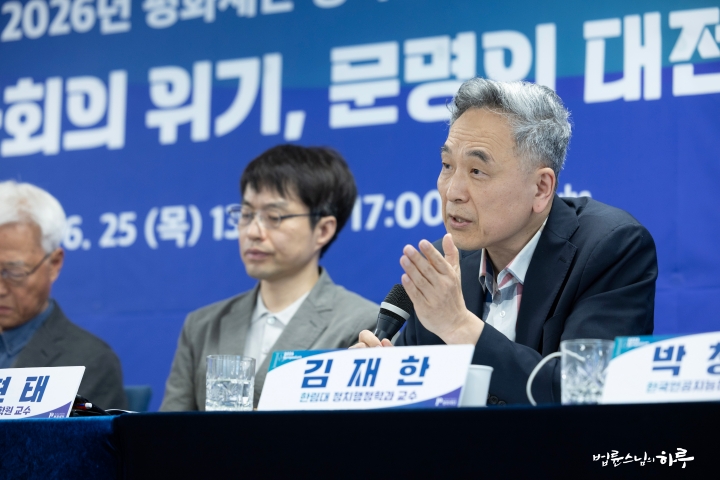
"It is difficult to solve today's complex crises with national interest alone at the state level. Issues such as national defense, peace, climate, and AI must be viewed from the perspective of public goods. The national interest of the Republic of Korea and the universal values of the global community do not necessarily have to conflict. Policy should not be exclusionary, satisfying only certain groups, but should head in a direction that as many people as possible can share. Moreover, the current situation cannot be resolved through the interests of any single country, so we must consider both national-level public goods and global public goods together. Whether Korea will speak only of national interest or create universal values and institutions that can go hand in hand with the global community will be an important question."
Professor Jung Se-eun (정세은) from the Department of Economics at Chungnam National University emphasized that restoring the value of labor is urgently needed, and criticized the contradictory structure in which the pain of economic crises is always concentrated on the weakest links of society—the working class and vulnerable groups.
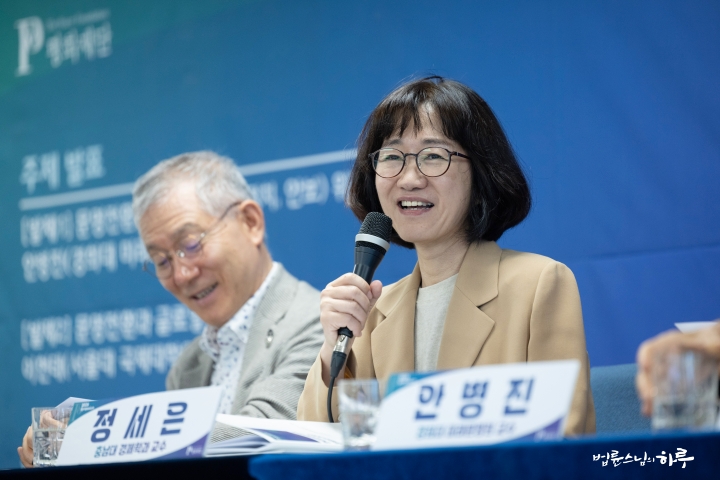
"With the stock investment craze, the path of working hard to build one's life is losing its persuasiveness, and young people want to become asset owners rather than workers. Platform monopolies symbolized by Coupang, dependence on big tech, and the stock investment craze are weakening the public sphere. The transition into the AI era must not become an amplifier of inequality. Chaebol reform, curbing unearned income, strengthening the welfare state, and restoring the public sphere will remain important tasks."
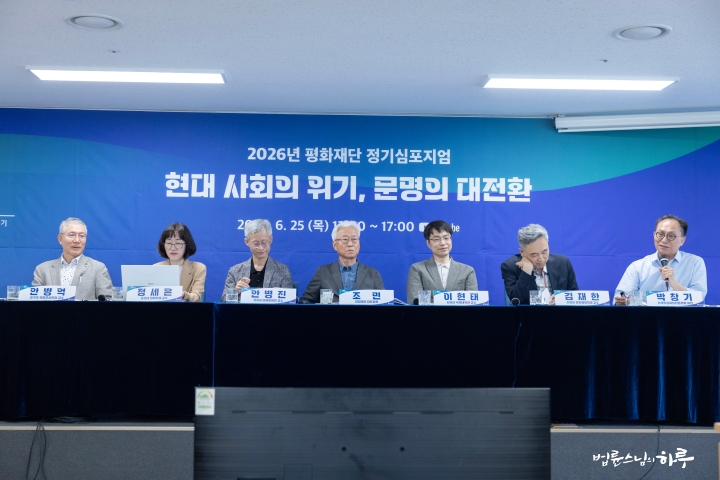
The final panelist, Chairman Park Chang-ki (박창기) of the Korea Artificial Intelligence Association, predicted that the semiconductor boom over the next three to four years would generate enormous excess tax revenue.
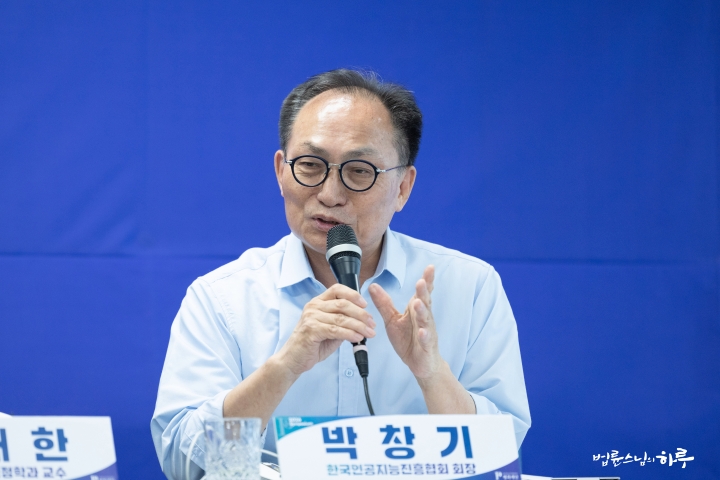
"Over the next 30 years, society will undergo major changes centered on artificial intelligence, and the rising value of big tech companies, the semiconductor boom, and increased tax revenue will simultaneously bring new problems and opportunities to the Korean economy. For advanced technology to become not a disaster leading humanity to ruin, but a great leap forward to a new civilization, an awakened civil society must monitor technological power and serve as a strong line of defense."
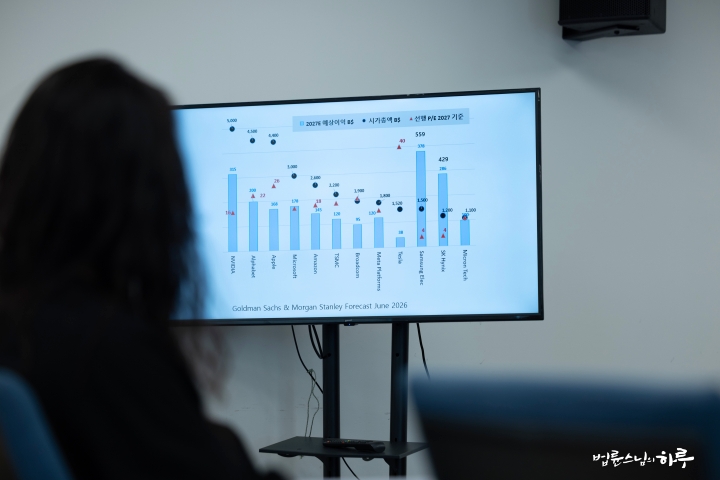
After the panelists' presentations, the general discussion began. The discussion grew increasingly in-depth. Topics exchanged included what should be taught to young people in an era when the value of labor is being shaken, whether Seoul's real estate problem can be solved through supply alone, and how to control the power of big tech and AI.

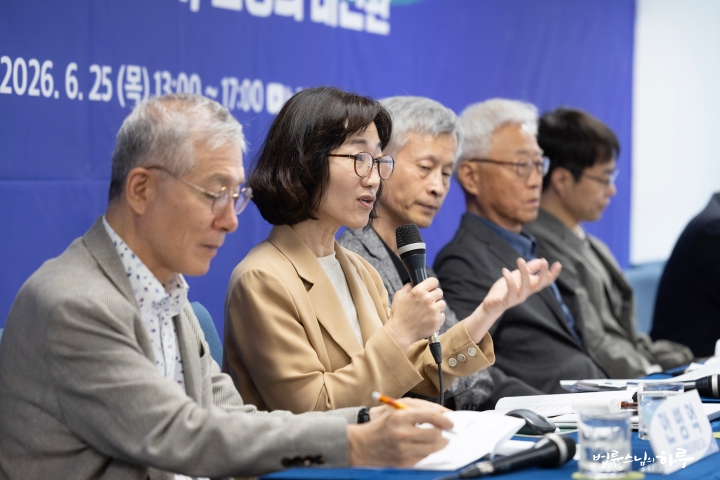
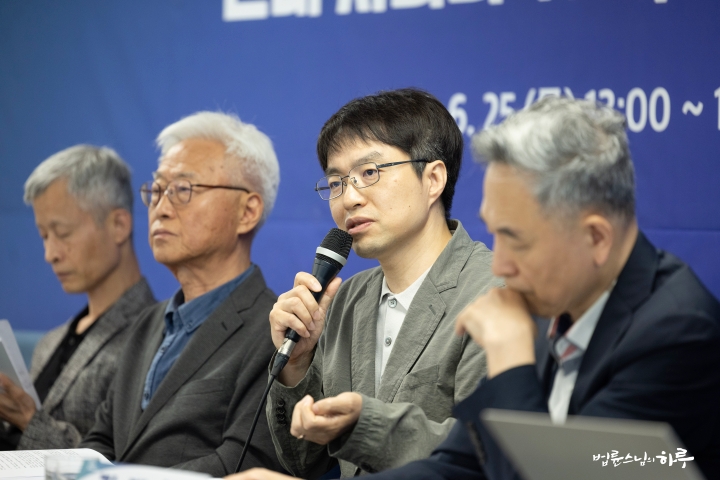
On site, interesting questions from the audience followed.
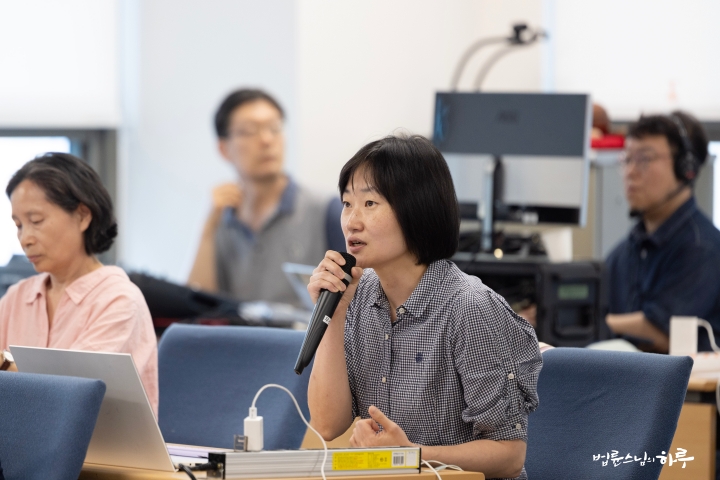
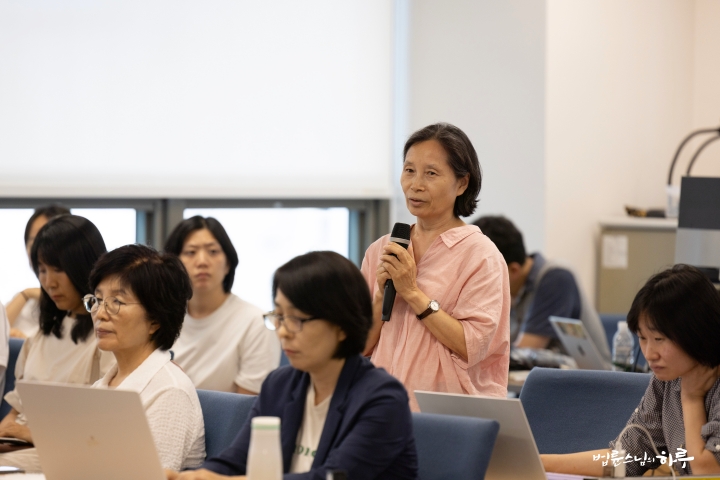
▪ It is true that young people no longer want to be workers but asset owners. How can we address this?
▪ In the AI era, when big tech and major powers like the United States and China, or the wealthy, monopolize technology and data, how can ordinary citizens survive?
▪ If you were to propose a policy on how to use the excess tax revenue that will arise in the future, what would you propose?
As the discussion between panelists and the audience came to a close, Professor Lee Hyun-tae brought up the cafeteria at the Jungto Social and Cultural Center.
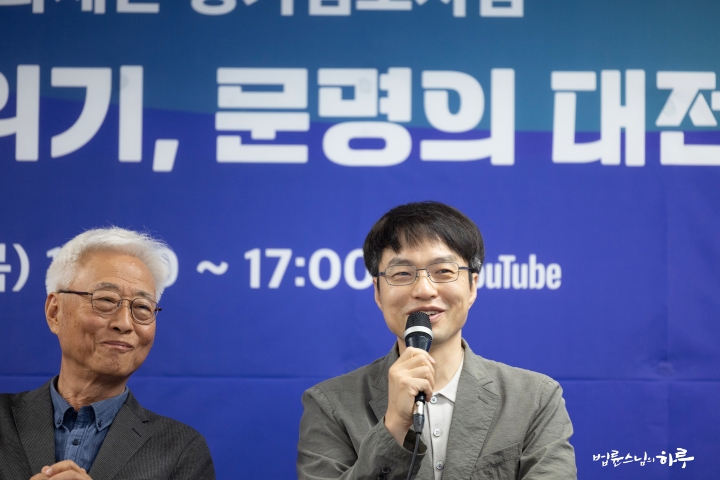
"I arrived very early today. (laughter) When I got here, I realized there was no place to have lunch. So I came into the Jungto Social and Cultural Center, and at the entrance, young people warmly greeted me with smiles.
That sight put me at ease, and when I asked if there was somewhere to eat lunch, they directed me to the basement cafeteria. When I went to the basement cafeteria, people were lining up to get their meals served. I also lined up for a meal, which I hadn't done in a long time, and enjoyed the food. As I was leaving after finishing my meal, I noticed the dishwashing area. When I went in, I saw people washing their own dishes in three stages. (laughter)
Although I spoke about economics, I think saving, sharing, and distributing in this way will be a more important breakthrough than producing more. From the young people who greeted me with smiles at the Jungto Center today to the cafeteria that saves water through three-stage dishwashing, it was a meaningful experience.
Difficult times continue. Rather than grand solutions, it occurred to me—for the first time in a long while—that what I experienced today at the Jungto Social and Cultural Center should be the true spirit of our times, and I was grateful.
The topic raised today at the Peace Foundation's regular symposium will start from here. I hope more people will come together to work through these issues going forward. Thank you for giving me a free meal today."
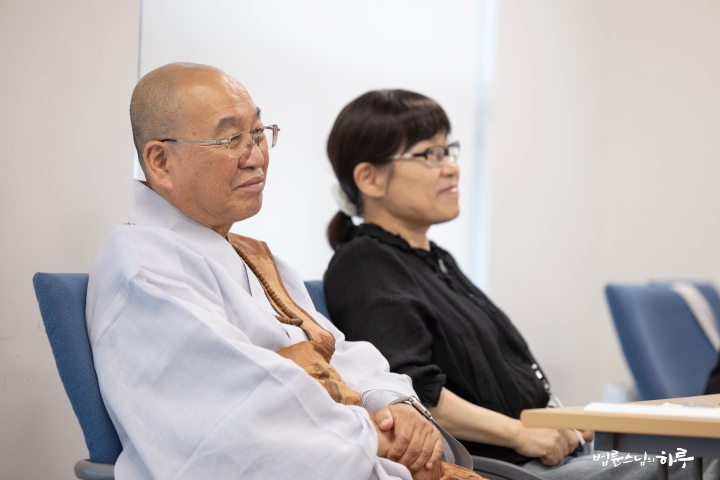
After listening attentively to the long discussion, Sunim gave closing remarks for today's symposium.
To Solve Problems, We Must Ask Fundamental Questions and Prepare Timely Measures
"Thank you to all the presenters and participants today. As I listened to today's presentations, various thoughts came to mind. First, regarding the real estate issue, it was mentioned that real estate has been a major challenge for our society over the past 30 years and still hasn't been resolved. As I listened, I wondered, 'Could it be that the real estate problem doesn't really exist, and we just keep calling it a problem?' In other words, I wondered whether this is simply the inherent nature of real estate that we are calling a problem, or whether there is a clear solution that the entire nation could agree on that we just haven't found yet.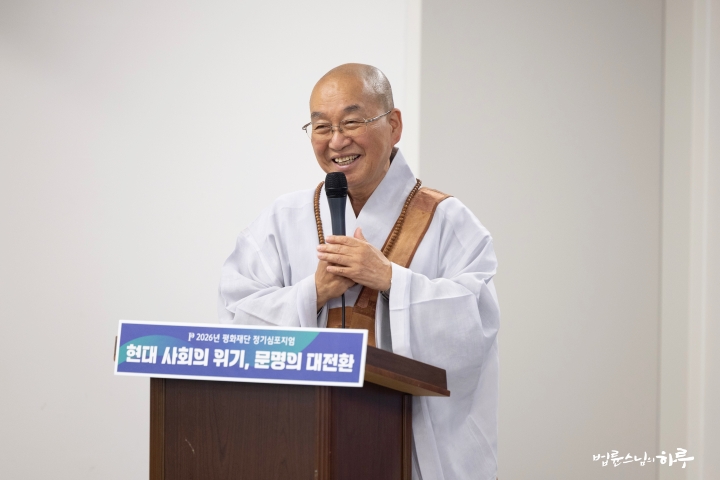
The Solutions of the Past Cannot Solve Today's Problems
I was abroad, so I couldn't follow the details closely, but I recently learned that the government has been discussing a volunteer military system. But can a volunteer military system really be an alternative? If we adopt a volunteer system by offering high military salaries, will many people apply? If we implement a volunteer system and no one applies, an even bigger problem arises. Such measures may have been solutions 20 or 30 years ago, but they may not be solutions at this point in time. There is a term in the Middle Way (中道) called 'siyung-jung (時中).' It means that the Middle Way exists at a particular point in time; there is no Middle Way that exists separately. In other words, timing matters. Putting forth past solutions as they are without considering current realities—I see this as a major problem in our society. Trying to solve today's problems with the social agenda or solutions of the democratization movement from 40 years ago will inevitably lead to repeated trial and error.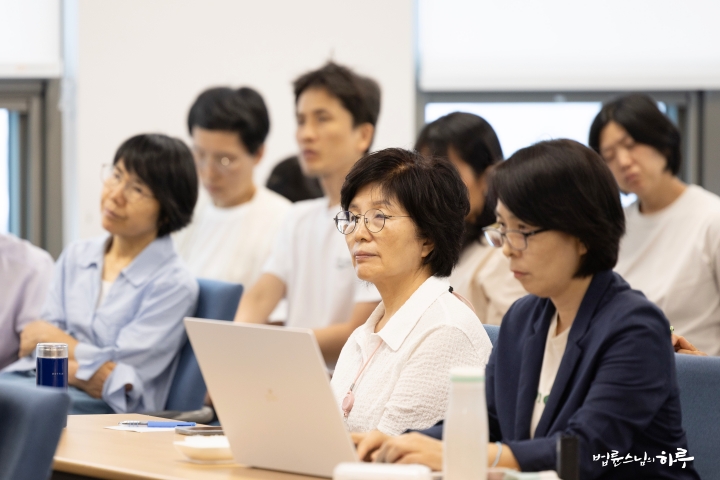
When Addressing a Problem, We Must Examine It Comprehensively
The same goes for the low birthrate problem. Young people are in an uproar because there are no jobs, so wouldn't having fewer children actually help solve the unemployment problem? Yet we leave the youth unemployment issue as it is and only raise concerns about the low birthrate. On one hand, people say the era of AI and humanoids is coming, while on the other hand, they worry about the low birthrate. So are we saying we want to have more children only to increase the number of unemployed? We need to recognize such contradictions and find solutions accordingly. We must also examine whether saying 'We'll give you a certain amount of money if you have a child' is really a solution to the low birthrate problem. Aren't the core causes of the low birthrate ultimately connected to issues of employment, housing, and education? If you ask young people, they say they don't want to have children if it means they can't provide the same support as others and their children will face discrimination. If there were a system where, once you have a child, the government takes responsibility for them up through middle school, problems like these might not arise. As such, when addressing any problem, we need to examine it from multiple angles and develop countermeasures. While it is important to view the various issues raised today as challenges facing our society, what is more needed is the vision to look further into the future. Let's say the low birthrate problem has been solved. If the majority of young people say, 'I won't be a worker; I'll be an asset holder or investor,' society could actually face an even bigger problem. Even if only 200,000 babies are born as is the case now, if these young people don't all flock to medical school but choose various paths in fields like science and technology, many social problems could actually be solved. The solution to social problems is not simply a matter of raising the birthrate. We need to think about 'What will the future generation learn, and how will they contribute to society?' This issue must be approached as a matter of social systems and values; approaching it merely from the perspective of population would make it difficult to solve.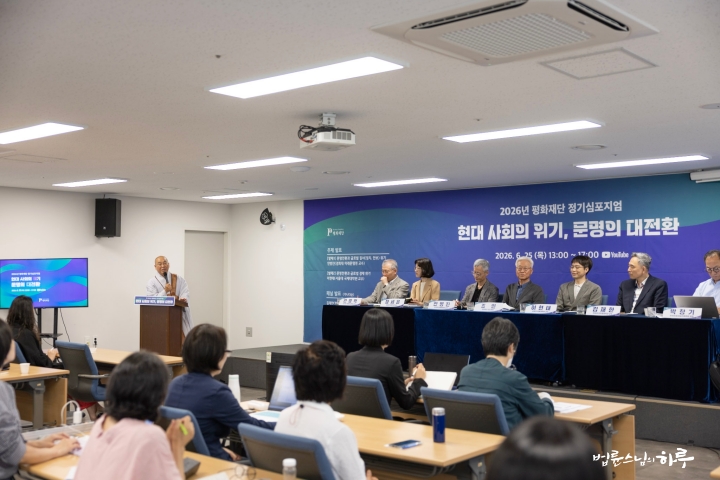
For Sustainable National Development, We Must Examine National Safety
Not just in our country but in most countries, fewer and fewer young people want to do the physical labor that builds social infrastructure. What will happen as a result? Go visit a railway safety inspection site sometime. There are only elderly people. For society to be sustained, just as the military protects the nation, we must recognize a contribution at least equal to that of the military for the workers who are responsible for society's basic infrastructure. If national support and treatment are not provided, all these positions will eventually be filled by foreign workers. When that happens, can we really guarantee the safety of our society? Beneath the prosperity and convenience our society enjoys lies enormous potential danger. Therefore, we need to look at society a bit more holistically. I believe that for 'sustainable' development, safety is more important. Therefore, we must first inspect the safety of the nation.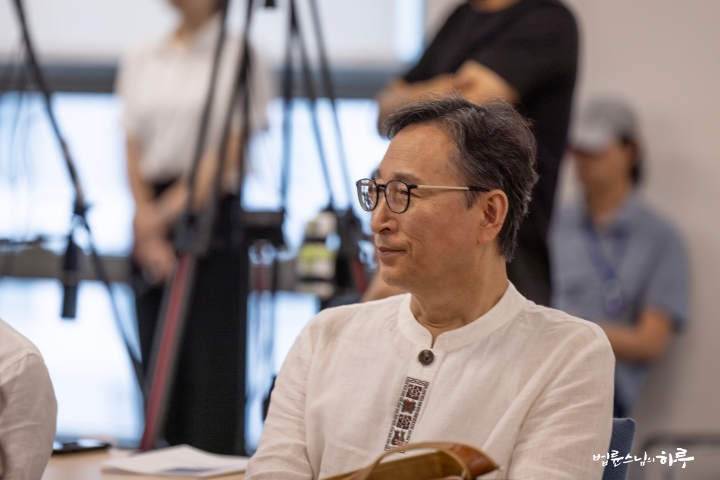
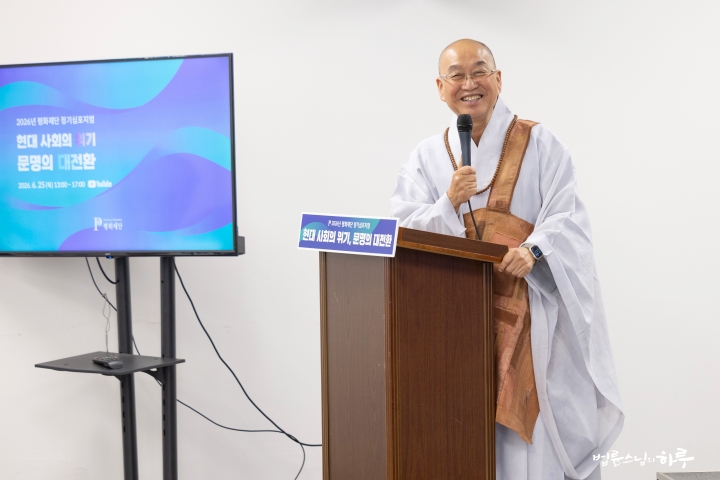
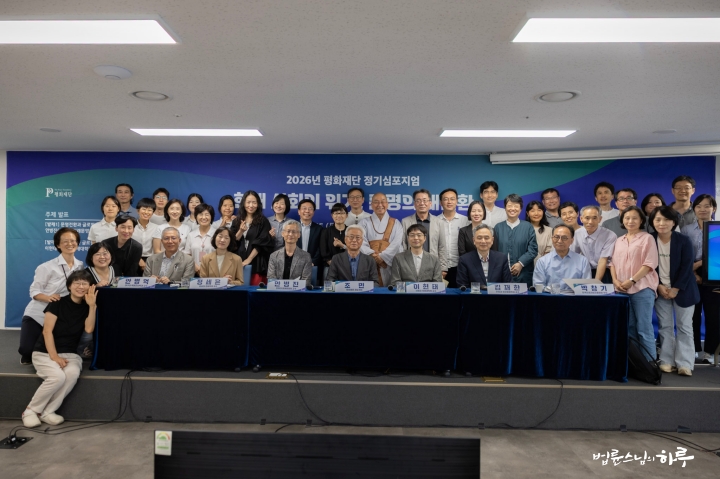
After the symposium, Sunim took a group photo, then presented books as gifts and expressed his gratitude to the panelists and presenters who attended today.
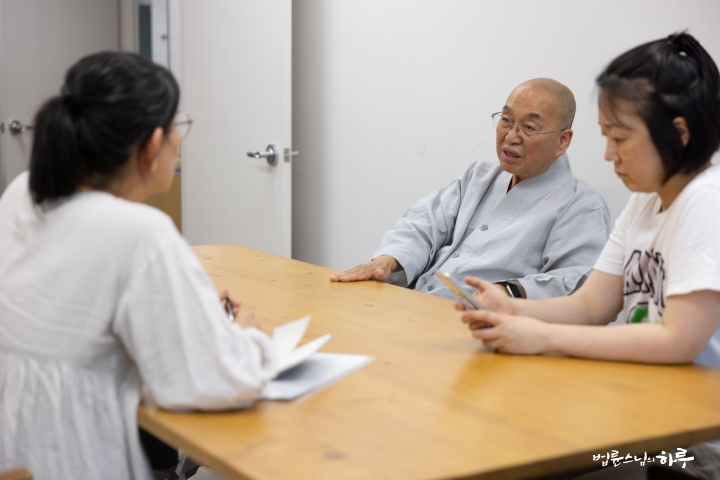
As soon as the Peace Foundation symposium ended, Sunim held a meeting with the staff in charge of the religious leaders' group visit to Sri Lanka to review preparations.
At 7:30 p.m., Sunim moved to the Dharma Hall to greet the evening class Buddhism Course students at the Special Headquarters Branch.
"Yes."
"Then let me ask you a question. Think about what you have learned so far. What is the core idea of Buddhism?""It's the threefold training of precept, meditation, and wisdom."
"It's that all things are created by the mind (一切唯心造)."
"We haven't taught 'all things are created by the mind' yet. (laughter)"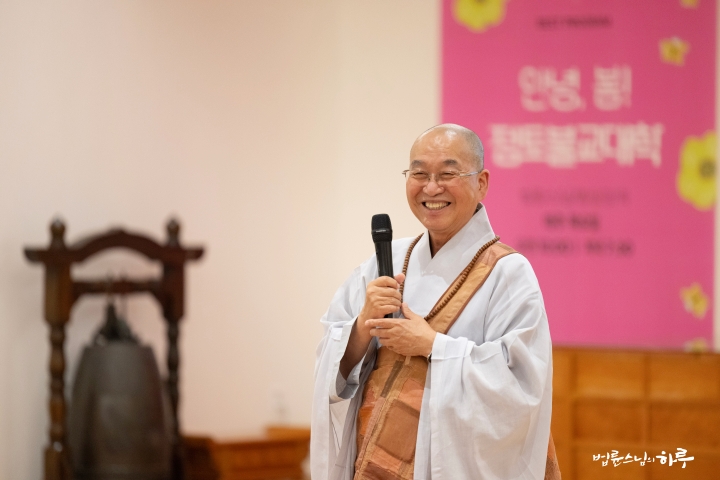
"Gojee banya-baramilda sidaeshinju sidaemyeongju simusangju simudeungdeungju (故知 般若波羅蜜多 是大神咒 是大明咒 是無上咒 是無等等咒)"
"Prajnaparamita is the most mystical mantra, the brightest mantra, the supreme mantra, and the mantra beyond all comparison. 'Sidaeshinju (是大神咒)' means the most mystical faith, 'sidaemyeongju (是大明咒)' means the brightest knowing, 'simusangju (是無上咒)' means the highest practice, and 'simudeungdeungju (是無等等咒)' means incomparable realization. These four can also be expressed as 'sinhae-haengjeung (信解行證).' Sin (信) is faith, hae (解) is understanding, haeng (行) is practice, and jeung (證) is realization. In other words, the enlightenment attained through faith, understanding, practice, and realization is a faith more solid than any other faith, a knowing brighter than any other knowing, a practice higher than any other practice, and the greatest realization that cannot be compared to any other realization.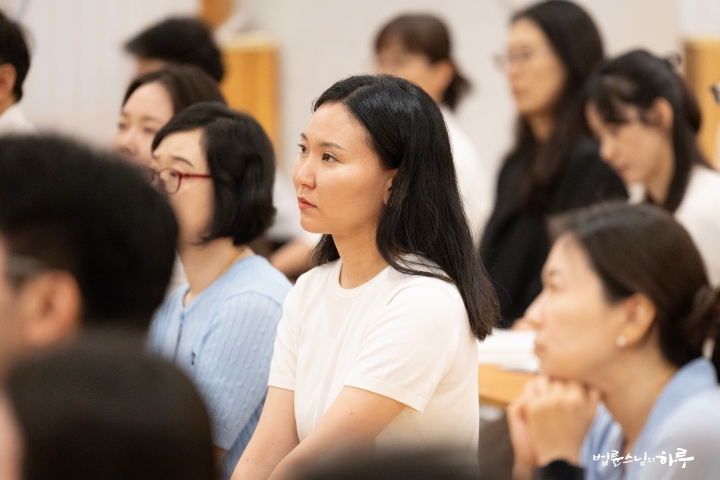
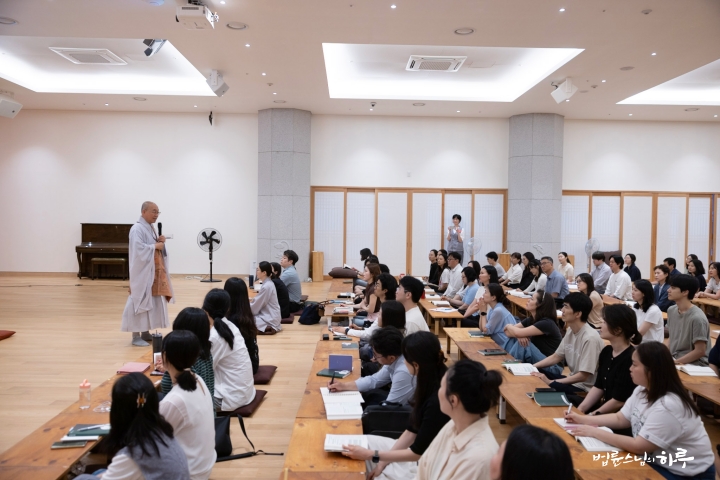
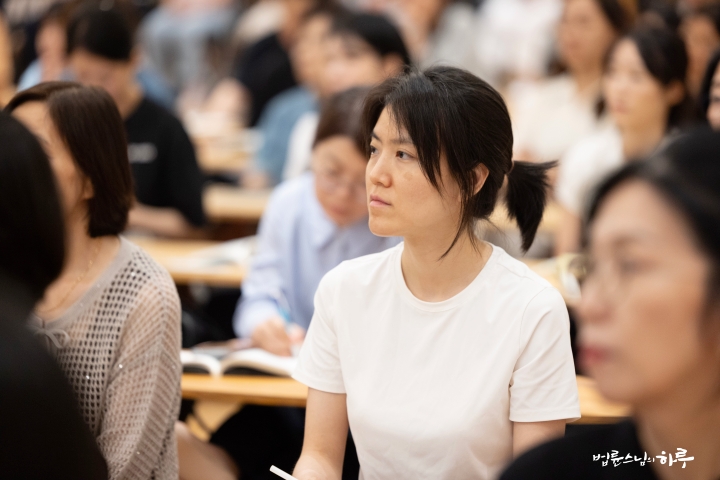
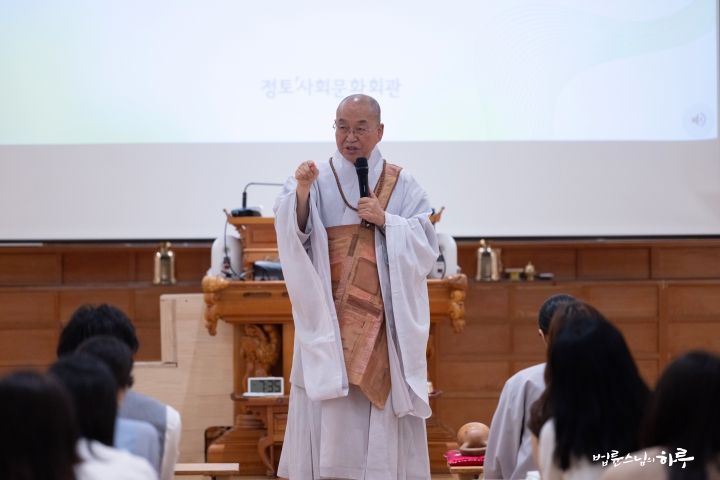
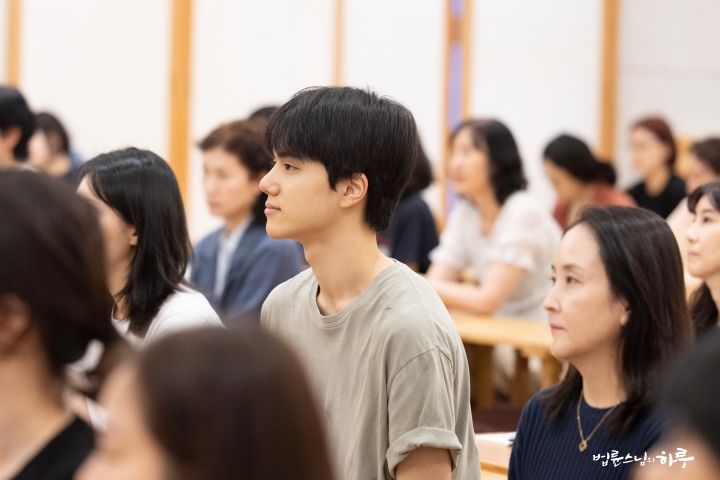
It was a short 15-minute on-site class, but it concisely summarized the core content that had been taught in class. The students also listened intently to Sunim's impromptu on-site class.
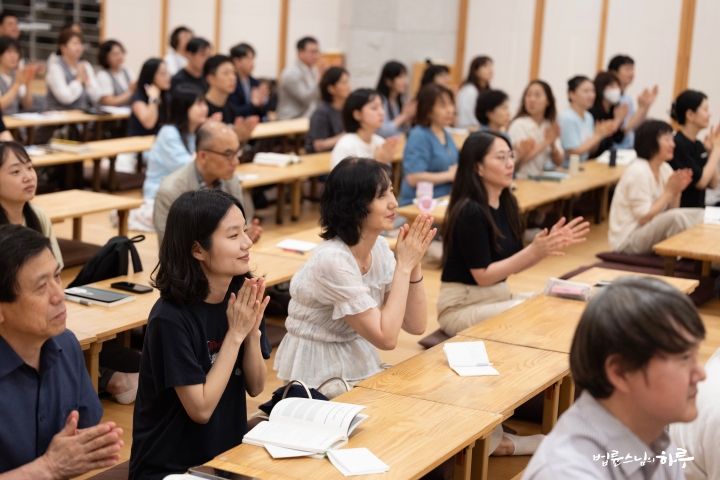
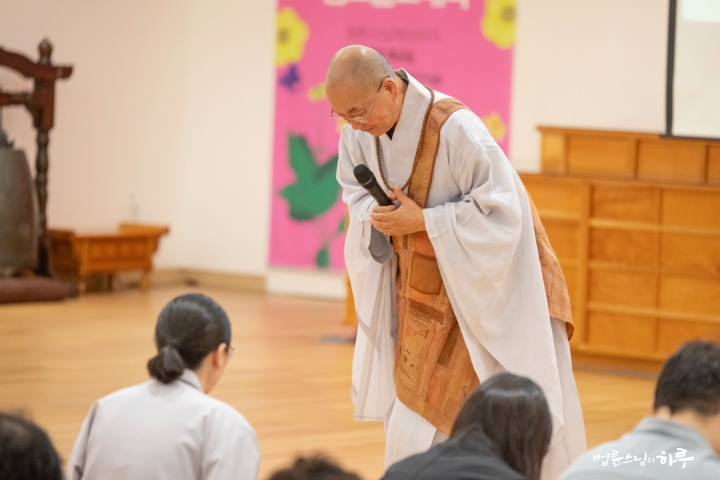
Sunim concluded his long day with the meeting with the Buddhism Course students. Tomorrow, he has meetings with guests scheduled throughout the day, and in the evening, there will be the Happy Conversation lecture in Ansan.