I'm 38 Years Old and Still Depend on My Parents. How Can I Become Independent?
2026. 6. 24. Religious Leaders' Meeting, Weekly Dharma Assembly, Research Seminar
Hello. Today, Sunim began his day with a breakfast meeting of religious leaders, followed by a live morning Weekly Dharma Assembly, an afternoon research seminar at The Peace Foundation, a planning committee meeting, and an evening live Weekly Dharma Assembly.
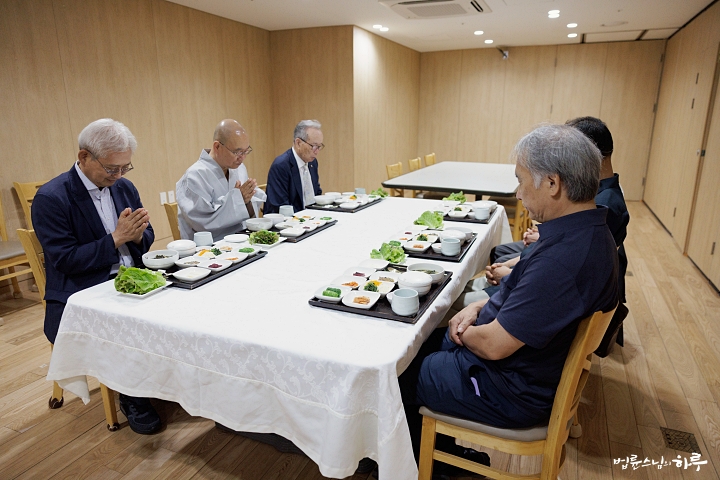
Sunim started his day with early morning practice and meditation. After 7 a.m., Sunim headed to the basement dining hall of the Jungto Social and Cultural Center. Today was the day for the monthly "Religious Leaders' Meeting for National Reconciliation and Peace." The bishop, pastor, priest, Won Buddhist minister, and Cheondogyo leader arrived at the center one by one, and Sunim warmly welcomed them. Around 7:20 a.m., once all the participants had arrived, a carefully prepared meal was served by The Peace Foundation staff and volunteers. Breakfast began with a mealtime prayer offered by Park Nam-soo, the Cheondogyo leader who chairs the religious leaders' meeting. The lettuce that Sunim had harvested in Dubuk yesterday was also on the table.
After breakfast, Sunim and the religious leaders moved to the 10th-floor conference room of The Peace Foundation to continue their conversation. Sunim shared a video of his recent visit to Bhutan with the religious leaders.
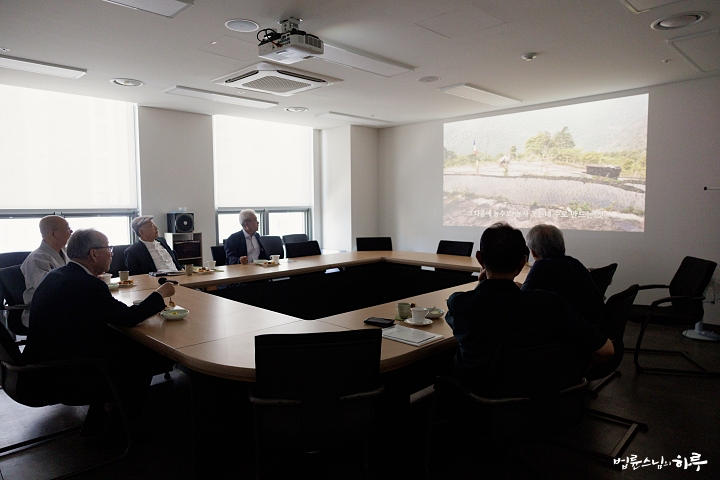
The video captured Sunim personally visiting 112 sites to inspect the progress of construction and encourage local residents.
After watching the video, Bishop Park Kyung-jo said to Sunim:
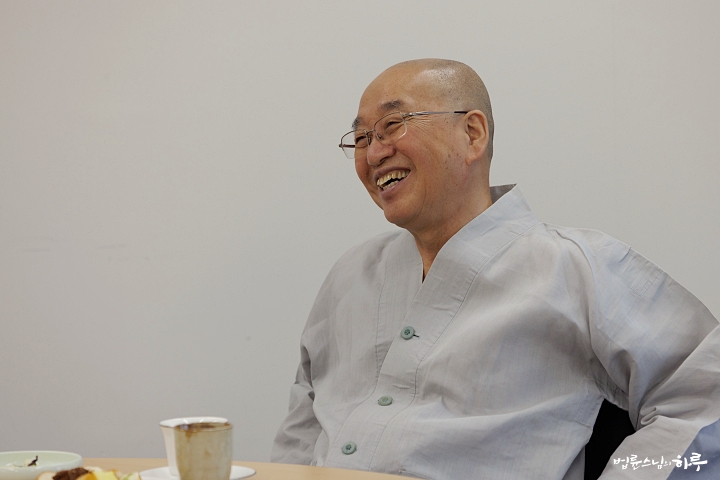
"Sunim, all that talk about you being unwell turns out to be a lie. (laughter)"
"Look at my face. I look half dead. (laughter) In the old days, I would have been going around full of energy.""You're carrying it all alone on behalf of us."
After discussing the situation in Bhutan, Father Kim Hong-jin shared his recent experience walking the Camino de Santiago pilgrimage route in Spain.
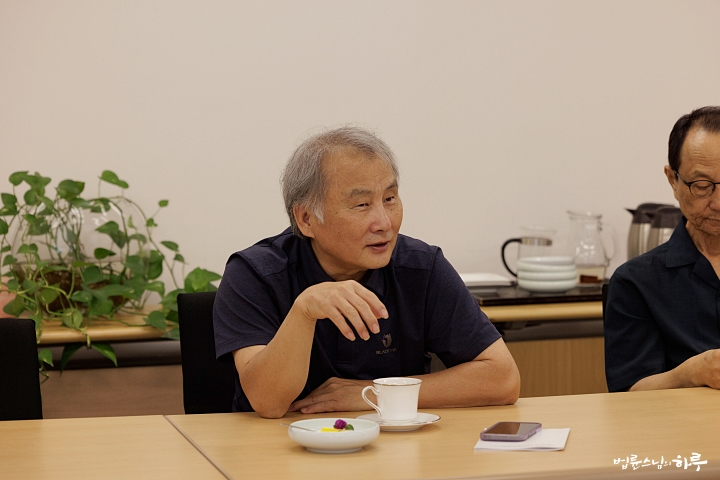
"After walking 130 km, I realized that if you walk slowly, you can get anywhere."
Since the religious leaders were scheduled to depart for Sri Lanka in a few days to meet with religious leaders there, time was taken to go over the preparations and the itinerary.
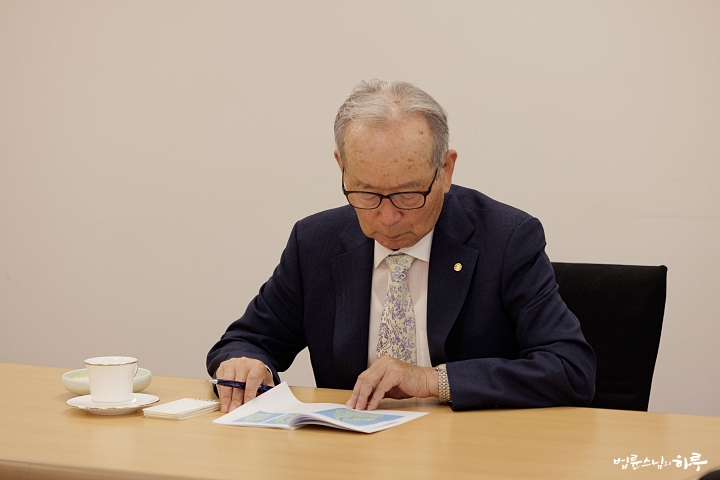
After the briefing, Bishop Park Kyung-jo said:
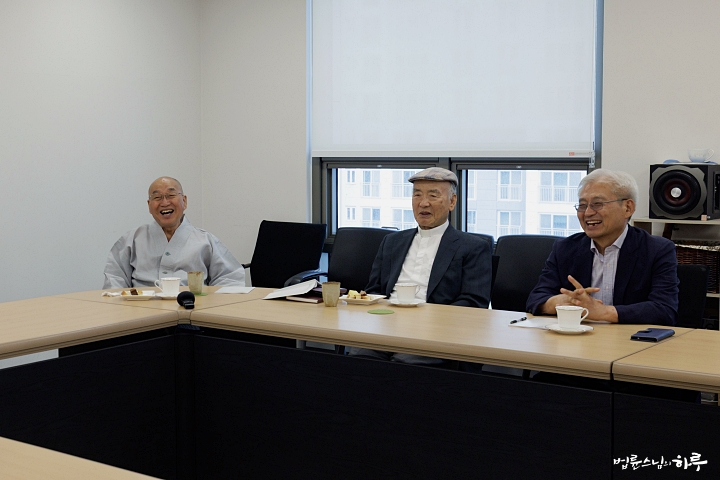
"As I was listening, I thought that we shouldn't just go to Sri Lanka. How about proposing that we also meet with religious leaders across Korea—Catholic, Buddhist, Christian, Won Buddhist, and others—and work together for peace in Korea? Our religious leaders' meeting is truly a wonderful gathering. It seems to be a really good gathering for ourselves as well."
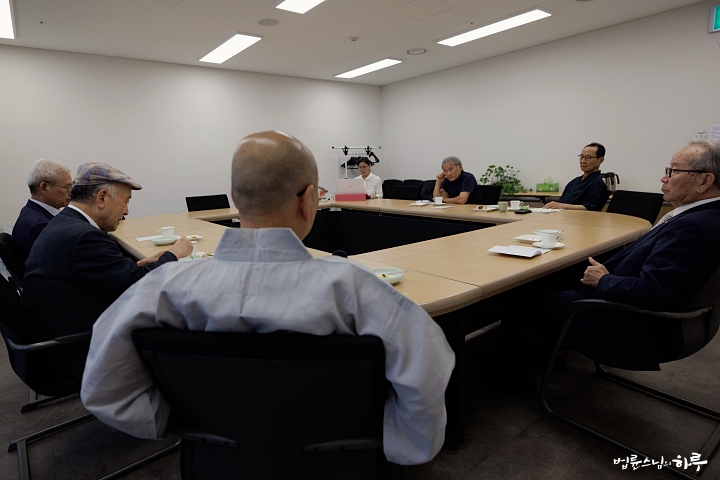
After discussing inter-Korean relations, the role of religious leaders, and the results of the June 3 local elections, it was time to wrap up the meeting. They agreed to meet at the airport on Monday, and after closing the meeting, Sunim saw the religious leaders off.
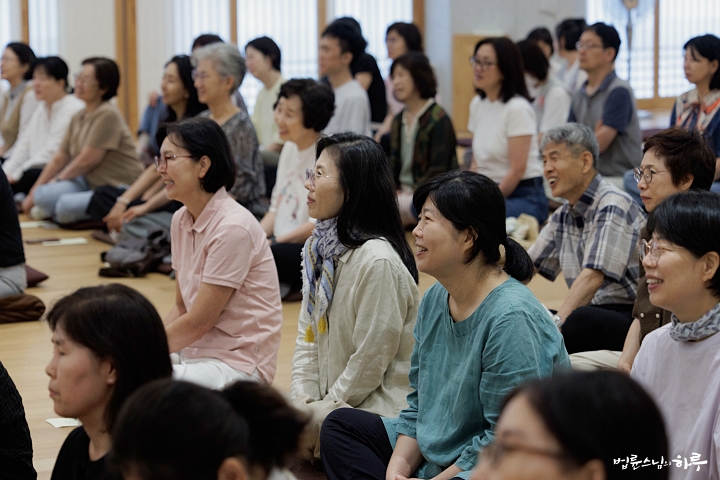
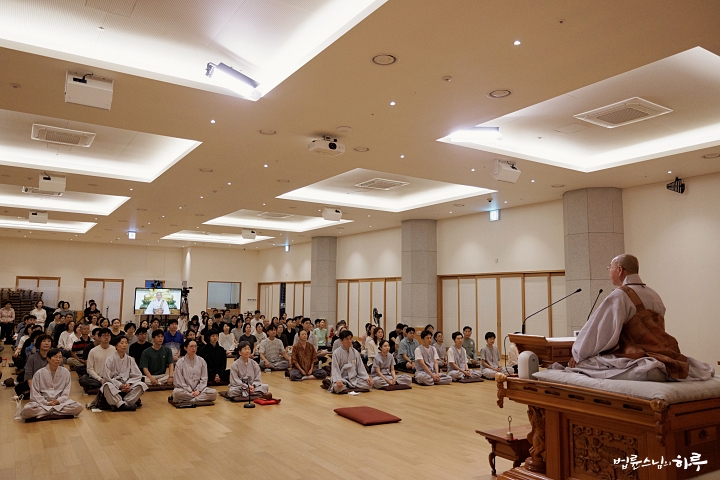
Sunim then moved to the Dharma Hall to give a Dharma talk at the Weekly Dharma Assembly. About a hundred members of the Sangha had gathered in the 3rd-floor Dharma Hall. At 10 a.m., the Weekly Dharma Assembly began with the Three Refuges and the recitation of the Heart Sutra. Jungto Society members joined the assembly online via video conferencing. After watching the weekly news of Jungto practitioners on video, the assembled Sangha requested the Dharma talk from Sunim with three bows.
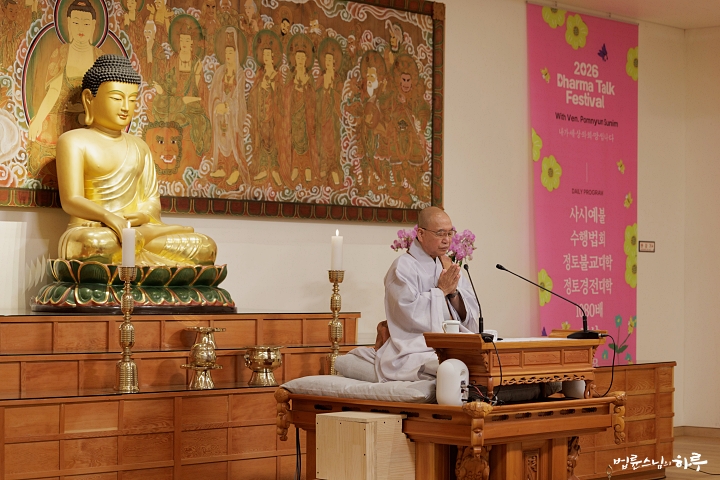
Sunim began his Dharma talk by saying that he had been in Dubuk for the past few days, where the summer weather had been as cold as autumn. He shared the results of the INEB study tour and encouraged members to participate in the opening ceremony of the second 100-day prayer of the 2nd 1000-Day Practice this Sunday. He also announced that he would be visiting Sri Lanka next week to exchange with religious leaders there.
Two pre-registered questioners were online, but due to a problem with the broadcasting system, the audio could not be transmitted, so questions were taken on-site instead. Two questioners at the venue asked Sunim questions.
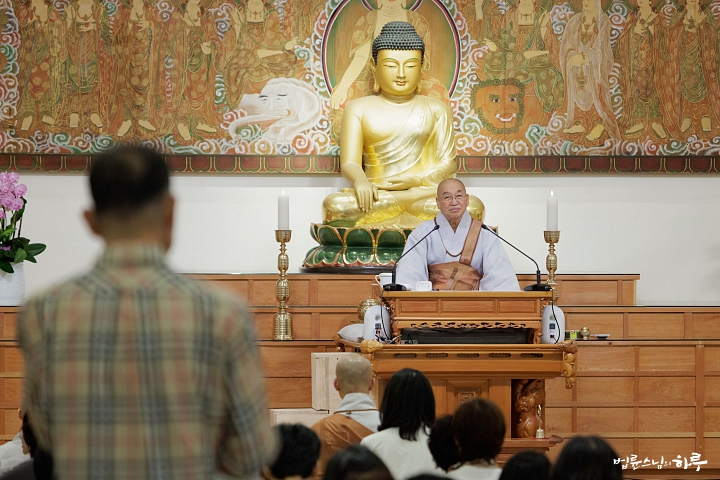
▪ I would like to propose forming a task force for the restoration of the Hwangnyongsa Temple site and for world peace.
▪ I am so happy and honored to meet Sunim in person. I would like to ask if Sunim has any new vows or good plans in mind for the future. Also, as I am planning the second chapter of my life, I would like to donate half of my assets in three years.
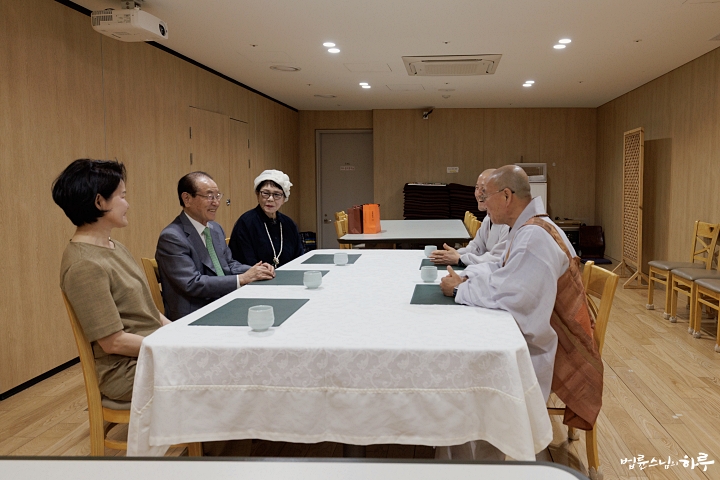
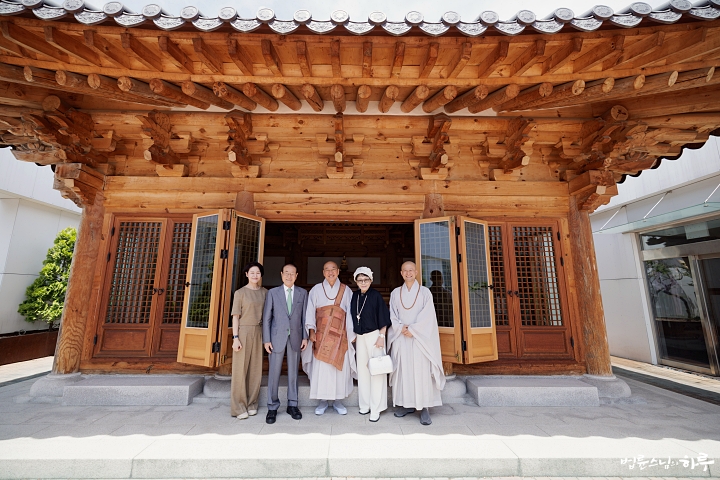
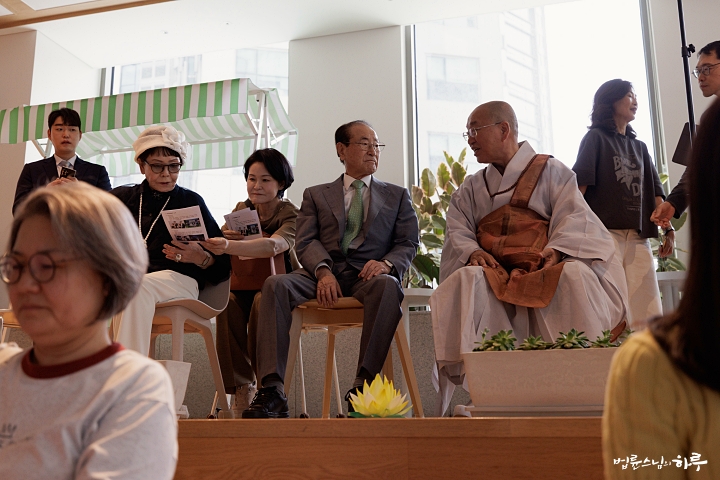
After the Dharma assembly, Sunim had lunch with Yoon Se-young, the founder and chairman of SBS, along with his wife and child. Chairman Yoon greeted Sunim by thanking him for appearing on "Dharma Master Pomnyun Road - Sunim and His Guests." After having lunch in the dining hall, they moved to The Peace Foundation to continue their conversation. Sunim guided Chairman Yoon and his family around various parts of the Jungto Social and Cultural Center. Sunim explained each location in an easy-to-understand way to the chairman and his wife, who are 93 years old.
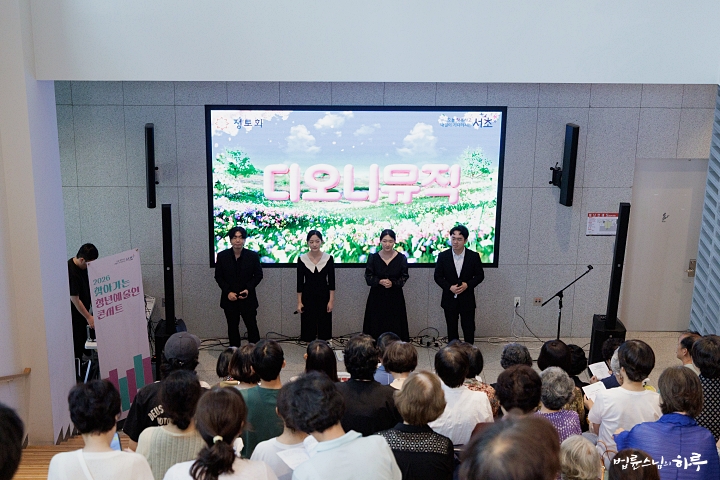
As it happened, the "Outreach Seocho Young Artists Concert," co-hosted by Seocho-gu Office and the Jungto Social and Cultural Center, was being held on the 1st-floor Spanish Steps, so Sunim and the chairman's party took a moment to sit down and enjoy the music.
After seeing the chairman's party off, Sunim went straight to the research seminar being held at The Peace Foundation.
For the research seminar, Kim Jin-wook, a retired career diplomat who now serves as a full-time volunteer at The Peace Foundation, prepared a lecture titled "The Astonishing World of Quanta!" based on his reading and long-standing research.
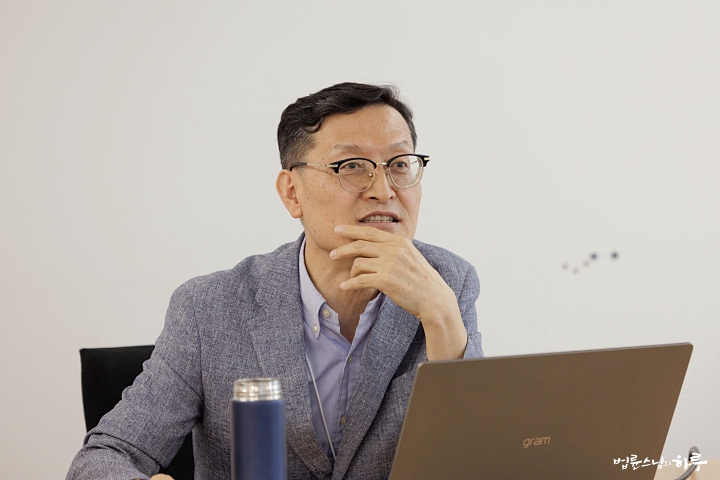
"Quantum mechanics is a rather difficult topic, but I will try to organize it as simply as possible, focusing on what I have learned along the way.
On a clear day, the diameter of the pupil that allows you to see the outside world is generally about 3 mm. How many atoms can fit into this circle? The annual budget of Korea's 17 metropolitan cities and provinces is statistically about $116.5 billion. Yet, more than that—230 trillion atoms—can fit into this 3 mm flat circle. Now we are going to explore that incredibly minute world."
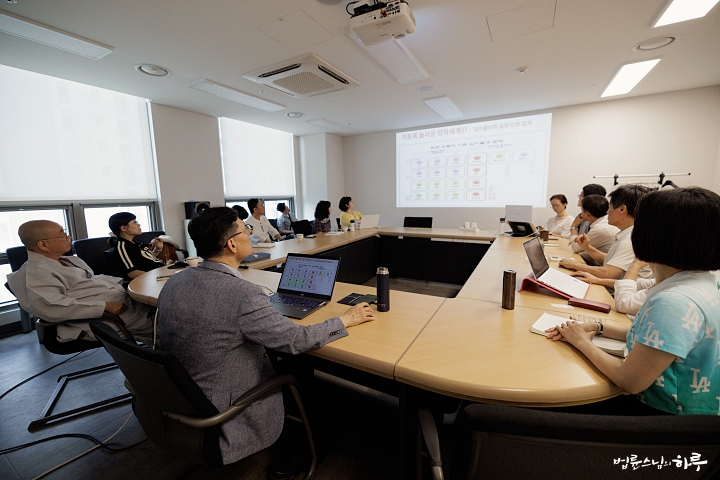
To invite participants into the world of quanta, which is beyond our imagination, Kim Jin-wook shared the latest news about quantum physics, sci-fi films, and stories of great physicists. He then comprehensively and engagingly explained the core content of the so-called "Copenhagen interpretation," concepts such as quantum superposition, quantum entanglement, and quantum leaps, as well as the influence of quantum mechanics and its applications in modern society.
After the two-and-a-half-hour lecture and Q&A session, Sunim shared his thoughts.
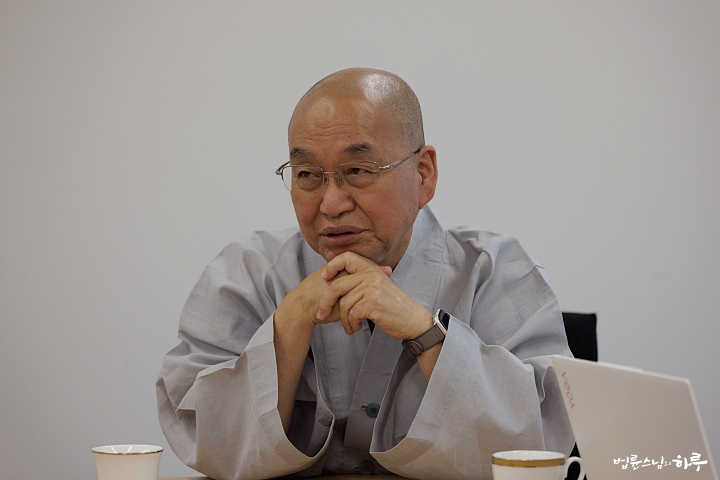
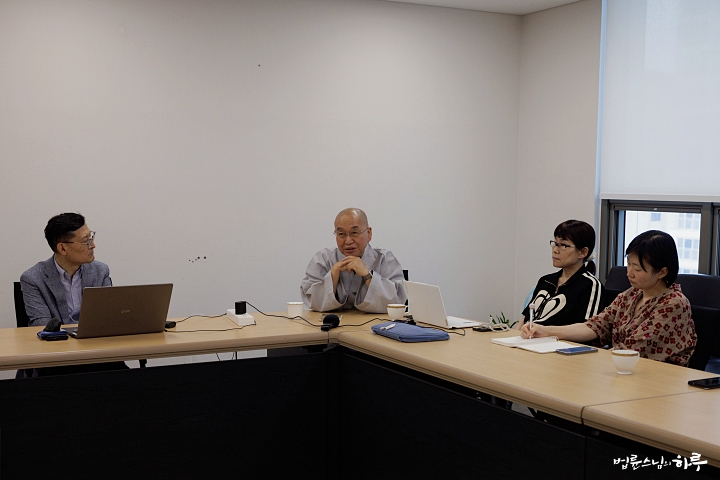
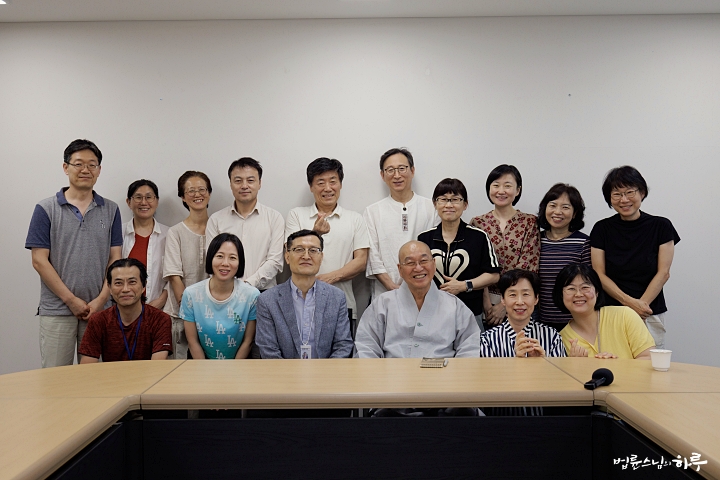
At 4 p.m., there was a planning committee meeting. Experts analyzed and committee members discussed how to view the trends and changes in public opinion regarding the results of the June 3 local elections, and how they might change in the future.
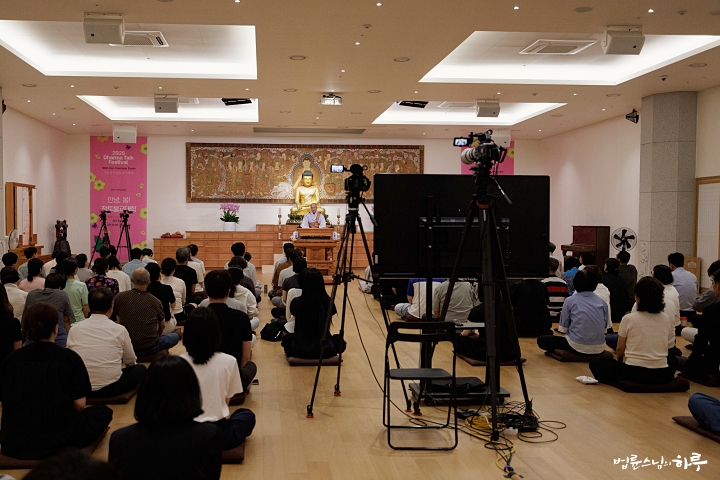
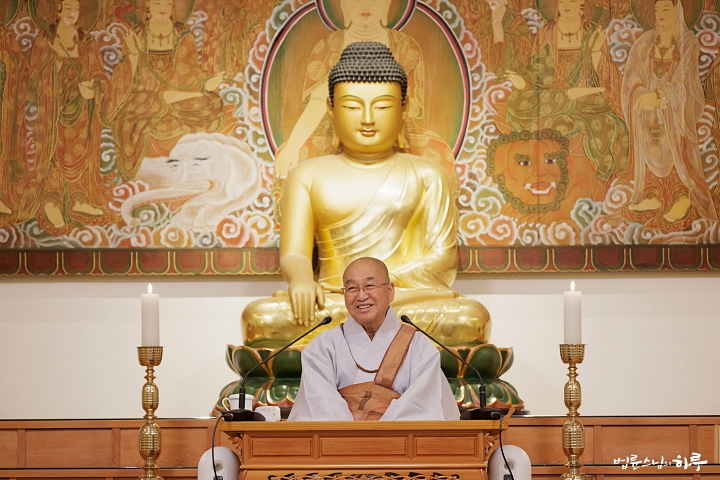
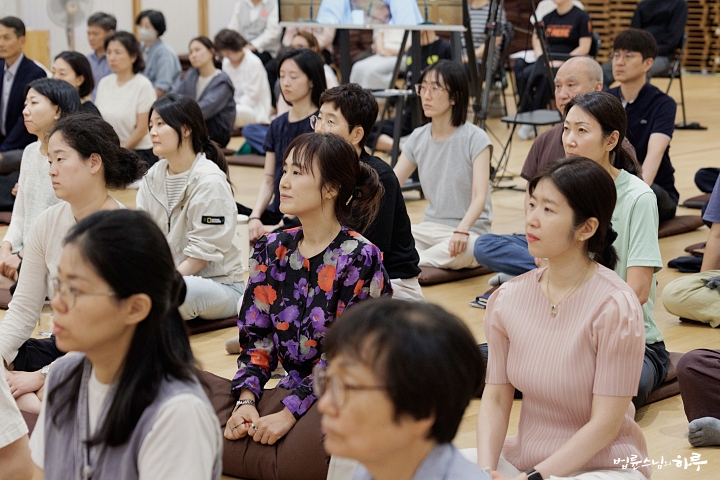
After the planning committee meeting, Sunim attended to business and then moved to the Dharma Hall for the evening Dharma assembly. About a hundred members of the Sangha had gathered in the Dharma Hall for the regular Wednesday Weekly Dharma Assembly, and Jungto practitioners from across the country had also joined online to listen to Sunim's Dharma talk.
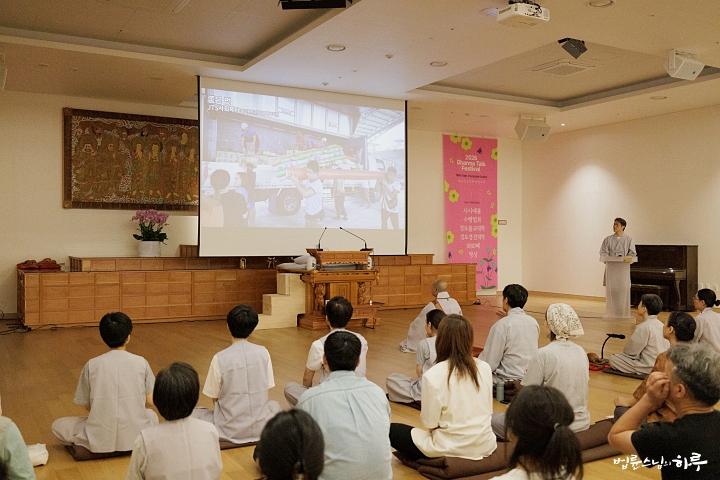
Sunim watched the weekly news of Jungto practitioners with the Sangha and heard about the week's events at Jungto Society. The Sangha then requested the Dharma from Sunim with the Dharma-requesting song and three bows.
Make My Life Free and Happy Through the 1000-Day Practice
What is the way to solve these problems? Of course, changing society to make it more just would help on one hand, but that alone is not enough. We need to manage our own minds by restraining our desires. We also need to adjust our human relationships by acknowledging and understanding others who are different from us. And we need to realize that nature is no longer an object of conquest but the foundation of our lives, and live in harmony with nature. The one who taught us this way of life is the Buddha. The Buddha's teachings guide us to become freer from this restlessness, loneliness, and anger.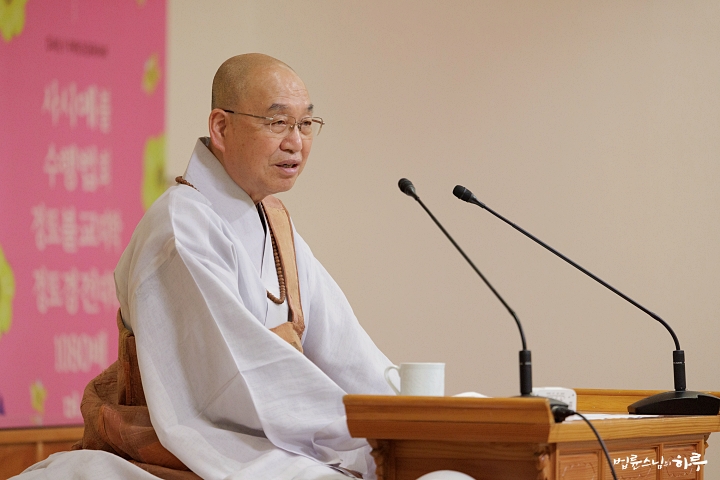
We Need a Resolute Commitment to Peace
We have overcome that pain and have, to some degree, successfully achieved economic growth and democratization. However, the fundamental pain of division still remains, and the risk of war breaking out again between North and South is also growing. We need, at the very least, a resolute commitment to peace—that there must never be another war on this land. North and South need to recognize and cooperate with each other. We must also cooperate with neighboring countries to build peace together. That is what we must do now. In June, we had Memorial Day on June 6 to honor those who sacrificed their lives for the country, and the June 15 Joint Declaration calling for the divided South and North to cooperate peacefully and move toward reunification. June is also the month when we reflect on the painful tragedy of the Korean War and repent.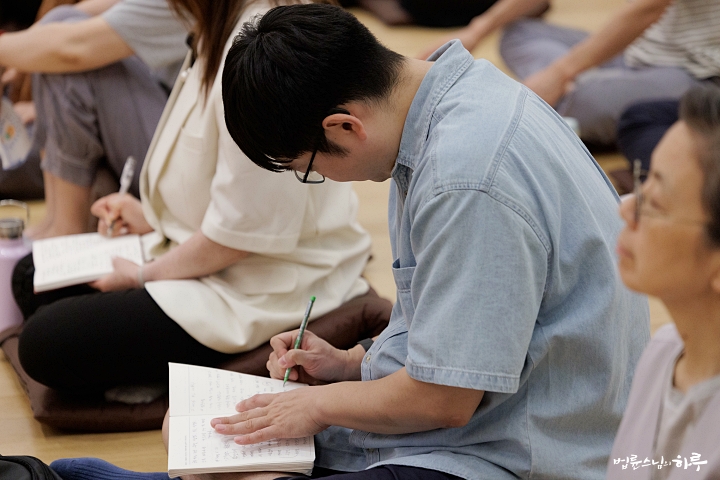
Online, the two pre-registered questioners who couldn't ask their questions in the morning asked Sunim questions, and one person asked from the venue. One of them, who is in her late 30s, shared her concern that she is still dependent on her parents and seems to lack independence.
I'm 38 Years Old and Still Depend on My Parents. How Can I Become Independent?
"The best option would be Jungto Society's '100-Day Chulga program, a residential retreat to let go of the old self and begin life anew.' Have you tried it?"" I'm thirty-eight years old this year, and I'm worried that I lack independence for my age. My parents are financially comfortable, so they have continued to support me even after I became an adult. However, I don't think I appreciated how precious that was or used it as a foundation, and I seem to have grown into someone who lacks independence and is dependent. Even after graduating from college, I have rarely engaged in consistent economic activity or held a steady job that could support me. My counselor told me that I haven't done what I need to do in life and have only done what I want to do, as if it were a hobby. Even the volunteer work I do at Jungto Society sometimes feels like I'm escaping because I have no direction in life. As I get older, I feel like I'm still a teenager going through puberty. I think it's because I haven't experienced the hardships and experiences appropriate for my age. I should muster the will to work even now, but my lifestyle of not knowing the value of money has become a habit, and I don't feel the urgency to make a living. Sunim, you always say that volunteering and helping others is the way to create merit and be useful, so I have been doing various activities at Jungto Society to build my strength. Even so, I still feel like I'm a child who lacks independence. How can I grow into an adult?"
"I'm currently receiving psychiatric treatment, so I think I should do it after I become stronger. I haven't tried it yet."
"Do you have any physical issues besides the mental ones?""I have hypochondria, so I think I've set mental limits on myself. I'm not particularly strong, but I don't have any specific health problems."
"If the 100-Day Chulga program is difficult, there are also programs like the '49-Day Mungyeong Stay.' Participating in overseas volunteer work at Jungto Society isn't something you can just do because you want to. If you go and can't adjust and come back, the travel expenses will be wasted, so it's good to first try communal living somewhere like the Mungyeong Jungto Retreat Center. After that, going to Mindanao in the Philippines or India to take care of children in need would greatly help you develop independence. Earning money isn't the only form of independence. If you can support your own food, clothing, and shelter through your own labor, that's also independence.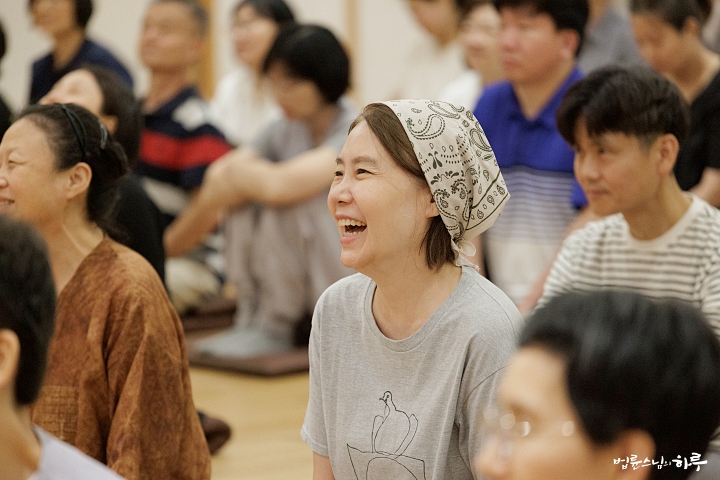
"Thank you for your words. I'm helping with my father's work. I'd like to ask if that kind of arrangement is also acceptable."
"Earning income while helping with your father's work is also fine. But if your father were to pass away, could you live on your own? That's why, even if you help with your father's work, it would be good to learn the work properly so that you can take responsibility for it alone, rather than just helping as if it were a part-time job. If you can cover your living expenses by helping with your father's work, that's also independence. But if that's not enough, you should look for additional work.""Yes, I understand. Thank you, Sunim."
After the Dharma assembly, Sunim wrapped up his work and took a rest.
Tomorrow, Sunim plans to participate in The Peace Foundation's regular symposium and a foundation meeting on the realities of North Korea.