I Want to Live Happily with My Husband Without Fighting
Jun 23, 2026 – Harvesting Lettuce, Cheongju Happy Dialogue
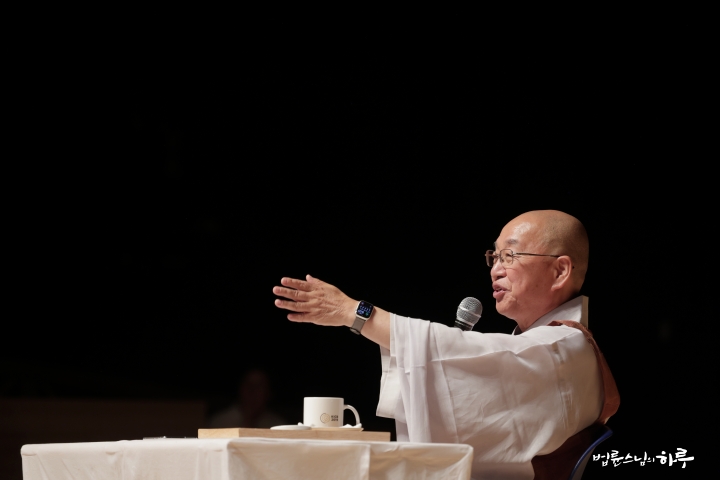
Hello. Today is the day for the Happy Dialogue at the Gaesin Cultural Center of Chungbuk National University.
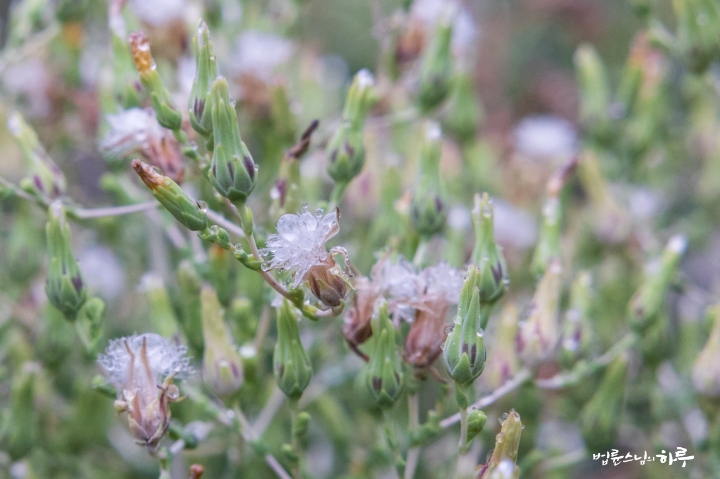
After morning practice and meditation, Sunim prepared for communal work at 6 a.m. to harvest lettuce from the garden at home. An unseasonable cold spell had arrived, making the midsummer weather feel as chilly as autumn.

The fog was thick, and a light drizzle was falling. Sunim put on a raincoat, rubber boots, and a cushioned seat pad, and began harvesting lettuce. In the small garden, the lettuce that had been planted a few weeks earlier during the Dharma Teachers' communal work session had already grown nicely.

Sunim picked the lettuce leaves one by one. There were three types of lettuce: leaf lettuce, green romaine, and red lettuce. He picked each leaf carefully, sorted them by type, neatly placed them in baskets, and packed them well to be used at tomorrow's breakfast meeting with religious leaders.

Sunim asked the Dharma Teacher who was helping with the communal work.

After harvesting the lettuce, Sunim tidied up the lettuce field, perilla field, strawberry field, and flower bed. Communal work ended just past 7 a.m., and Sunim had breakfast with the freshly harvested lettuce. Up until yesterday, he had no appetite and found it difficult to move, but eating breakfast with the lettuce and perilla leaves harvested at dawn seemed to help his body recover.
"It seems my appetite is finally coming back. (laughter)"After breakfast, Sunim got up to proofread manuscripts. After finishing the proofreading and getting ready, Sunim left for Busan for treatment.

After returning from treatment and taking a brief rest, Sunim left for Cheongju around 3:50 p.m. to give the Happy Dialogue lecture at Chungnam National University.

When Sunim arrived at the Gaesin Cultural Center of Chungbuk National University at 6:30 p.m., the lobby was packed with people who had come to attend the Happy Dialogue.
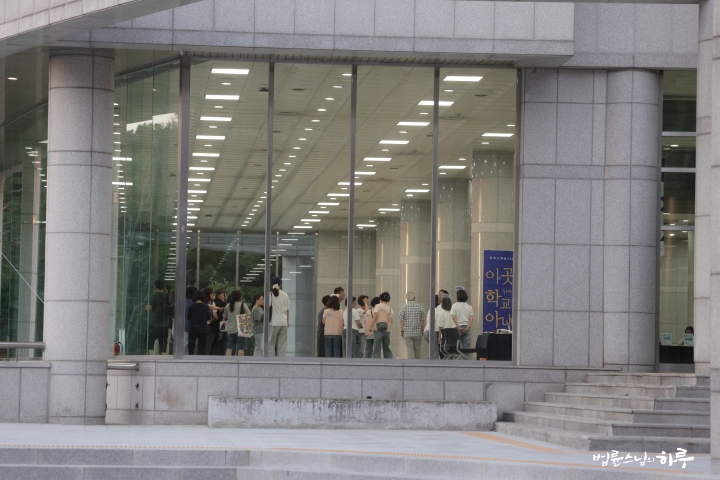

Coincidentally, former Ambassador Chu Yeon-gon(추연곤), who had served as Korean Ambassador to Guatemala, came to the lecture hall with his wife to meet Sunim. Ambassador Chu had a previous connection with Sunim—when Sunim visited Guatemala for his World Tour of 100 Lectures in 2014, the ambassador had invited him to a luncheon at the ambassador's residence, spending time together and listening to his lecture.
"Sunim! Hello, it's been seven years since I last saw you."
"Welcome. How have you been?""I haven't been able to visit you often, and I'm finally able to greet you today."
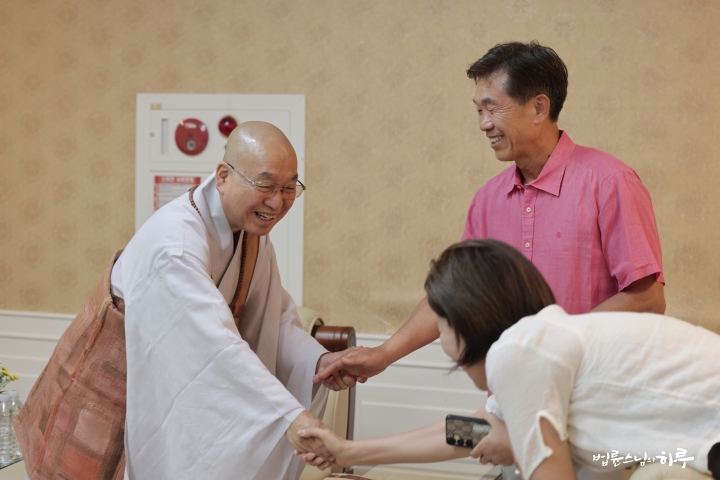
Sunim and Ambassador Chu held each other's hands and exchanged warm greetings.
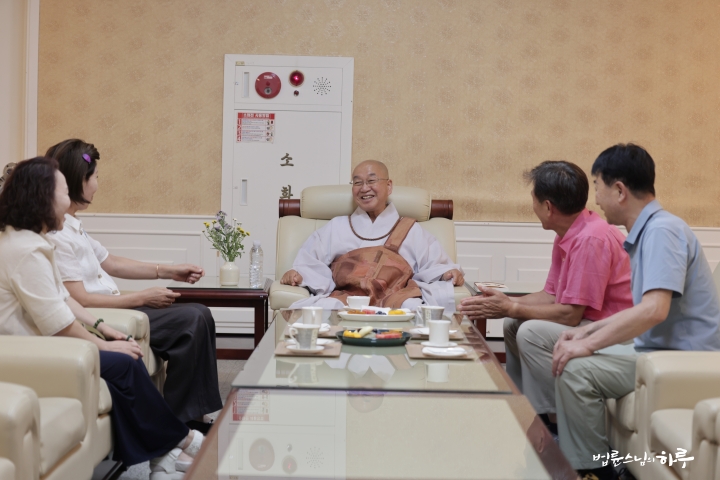
Sunim shared stories about his recent visit to Bhutan for the sustainable development project survey and talked about his health. As they shared old memories and recent updates, the time for the lecture had arrived. Sunim presented Ambassador Chu with a book, promised to meet again soon, and began preparing for the lecture.
Today's pre-lecture performance featured a jazz concert by Yoon Deok-hyun(윤덕현), a professor in the Department of Music at Mokwon University. He delivered a wonderful stage performance with trumpet renditions of two songs—Louis Armstrong's "What a Wonderful World" and "Butterfly" from a movie soundtrack.
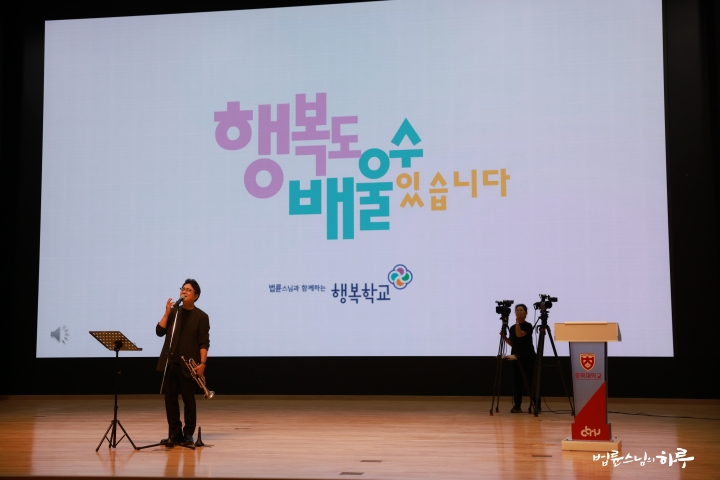
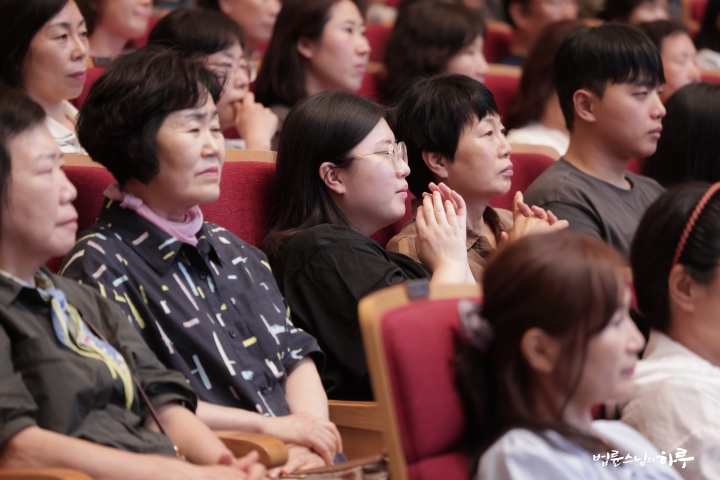
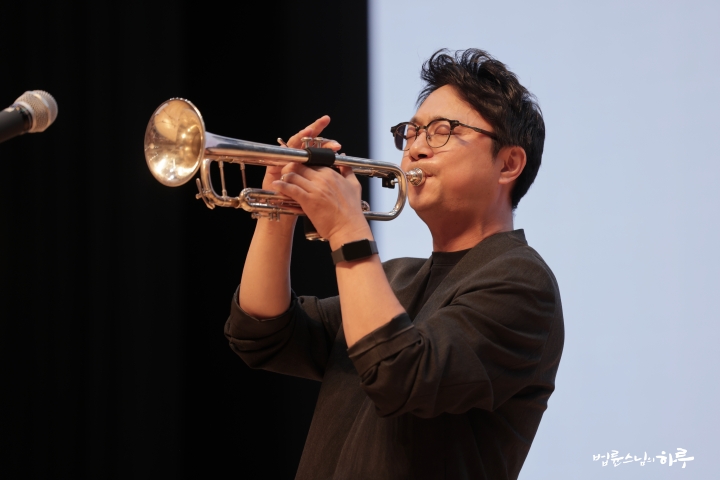
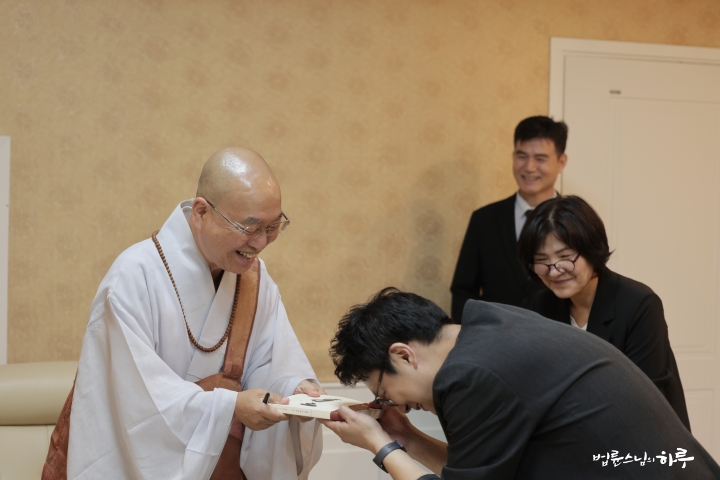
After the performance, Sunim thanked Professor Yoon and presented him with a book.
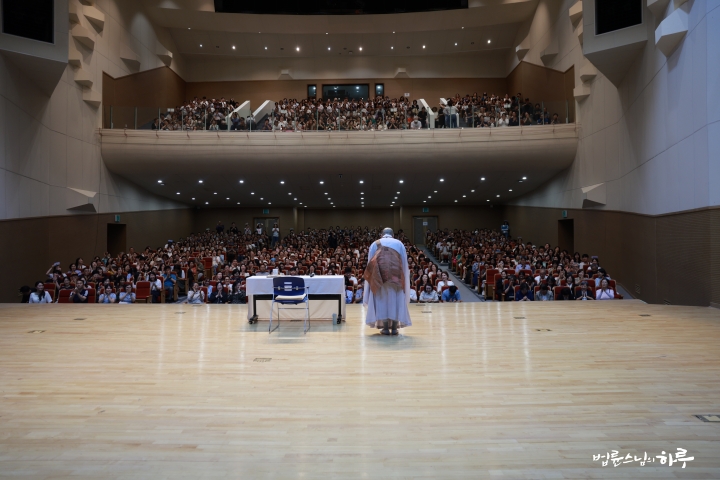
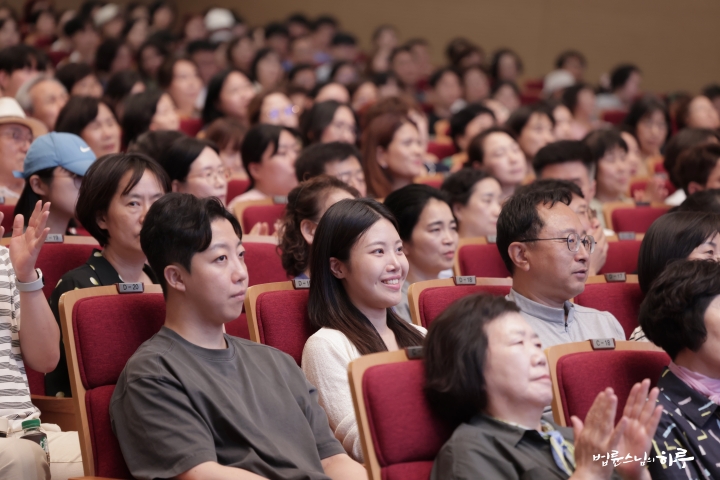
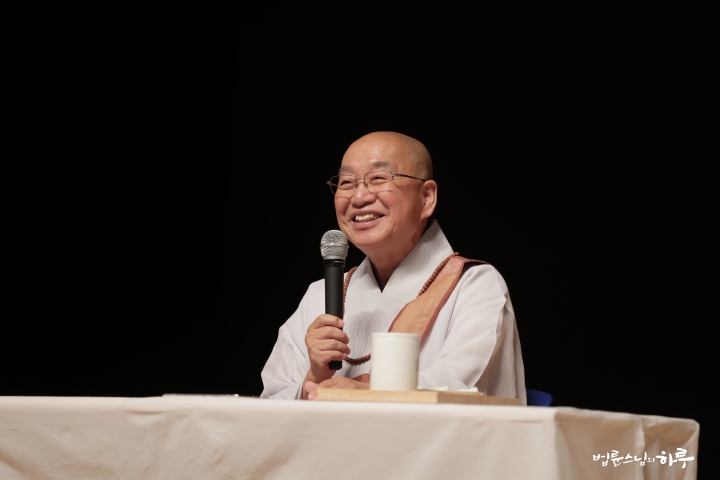
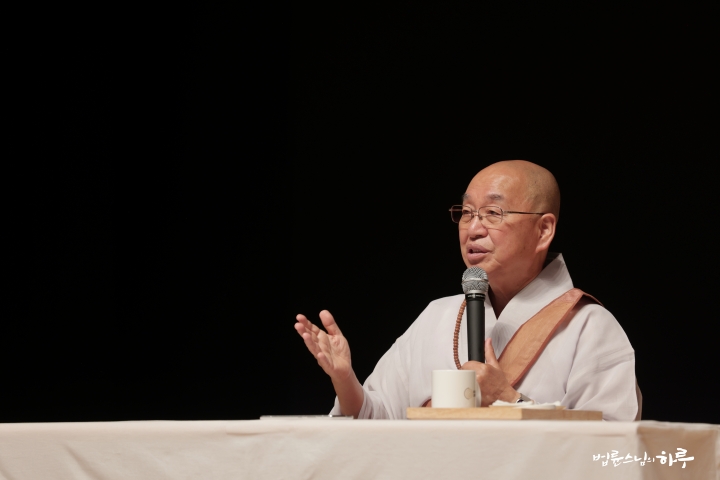
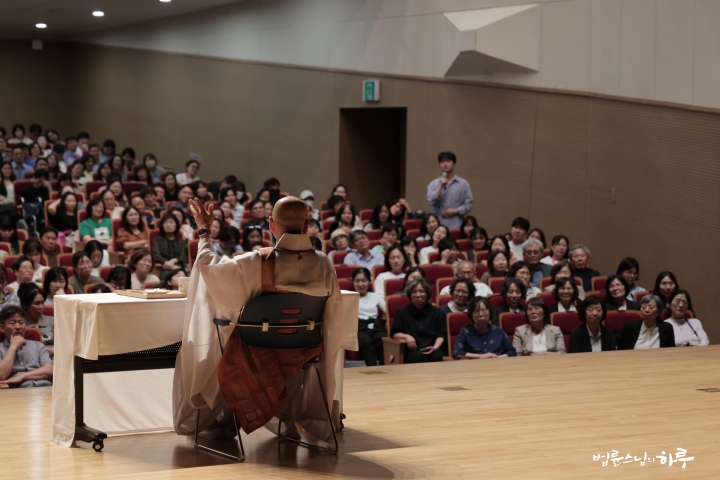
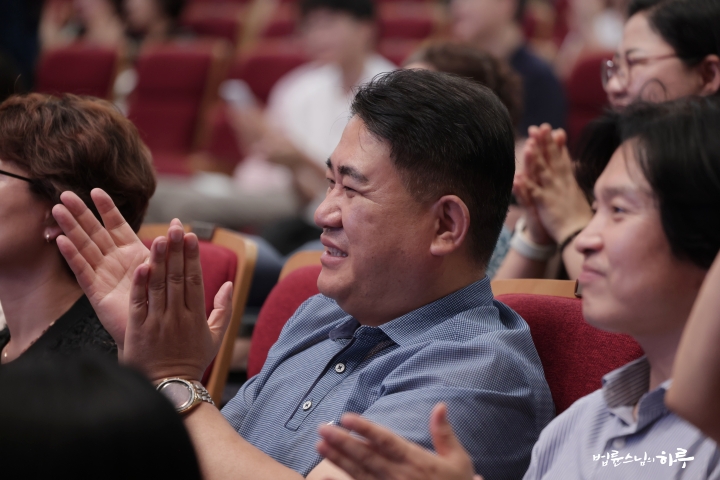
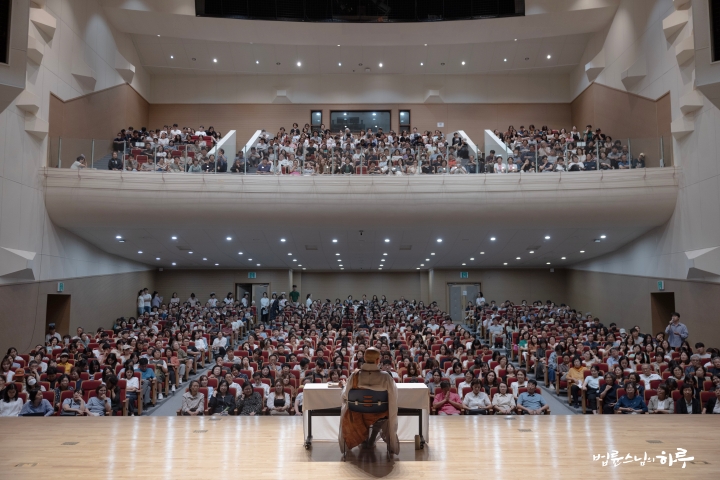
With all 733 seats in the Gaesin Cultural Center of Chungbuk National University filled, and 4,803 people simultaneously watching on YouTube, Sunim's Cheongju Happy Dialogue began. When Sunim stepped onto the stage, thunderous applause filled the lecture hall.

You Should Live Life Naturally, the Way You Like
There is no right answer in life. If you ask me, 'So how should I live?' I would answer, 'Live as you like.' No living thing in nature lives by predetermined answers. The squirrels in the mountains are the same. Would a squirrel roll around on the ground in anger because there are no acorns? If there are few acorns, it eats few; if there are many, it stores them away and eats them later. All living things in nature are protected by their mothers when young, but they live their own lives once they grow up. This is what's natural. Since humans are also part of nature, you should live naturally, the way you like.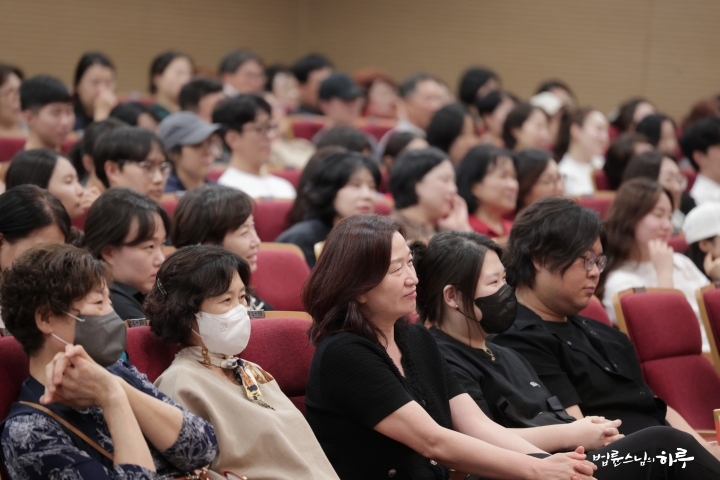
Dharma Q&A Is a Time for Dialogue with You
To have a conversation, you must first listen to the other person. Next, you need to understand their feelings. Lastly, if you want to share your thoughts, you can do so briefly. For example, suppose someone is struggling because their husband died. Then I ask, 'Did you live well or poorly when you were single before marriage?' Most people lived well on their own. Losing your husband is simply returning to your original state of being alone. But if after experiencing marriage you think, 'I need someone to share my life with,' then you can find another good partner. Like a blind person touching an elephant and thinking the part they touched is the whole, considering only your own experience as everything is called prejudice or attachment. When someone is trapped in such a single experience, I simply guide them to see the whole picture by saying, 'Try thinking of it this way, try thinking of it that way.' 'It's hard raising a child alone.' 'Why is it hard to raise a child alone? Even animals give birth and raise their young alone. Have you ever seen a dog struggle to raise five puppies on its own?'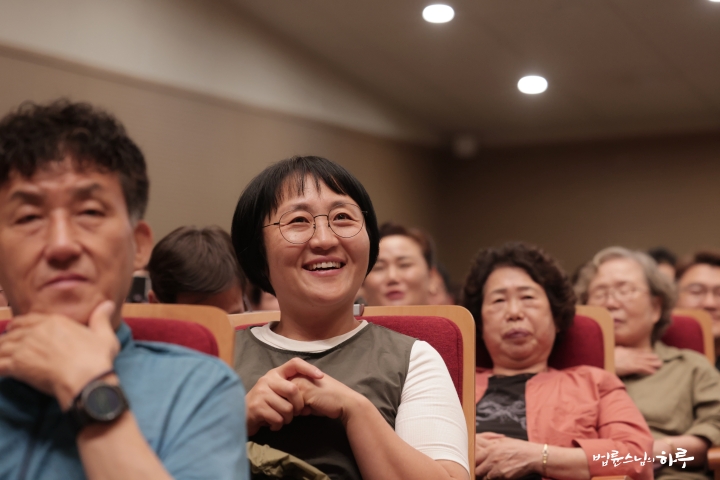
The One Who Decides Is the Master of Their Own Life
Suppose you planned a picnic because the forecast said no rain, but it rains. Should you blame the weather? You just need to decide whether to cancel or not. First, you can cancel the picnic because of the rain. Second, you can go on the picnic with an umbrella. Third, if you don't have an umbrella but still want to go, you can go and get wet. There's no right answer. You just need to decide as you like. But from what I see, you are not the masters of your own lives. You suffer because of your husband, your wife, your boss, and so you keep getting dragged around by others. When you say, 'Thanks to Sunim, I survived. Thanks to Sunim, I didn't get divorced'—that's not because Sunim decided your life, but because you yourselves decided as you saw fit. And yet you say, 'I'm suffering because of this'—that's life too. (laughter) Now then, let's talk comfortably, as if sitting in a tea house chatting with Sunim."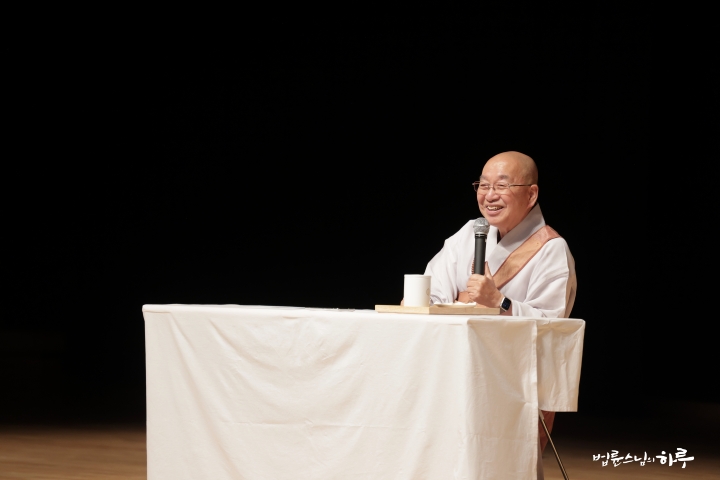
I Want to Live Happily with My Husband Without Fighting
"I've been married for 22 years. I met my husband at work, fell in love, and got married. Living together, I find he treats me well. He buys me things and earns a good living, so we've been living comfortably without money worries. But our personalities don't match. The reason we keep fighting is that my husband thinks I'm talking back to him. I'm just expressing my thoughts, but he keeps saying, 'You're talking back again.' When we argue, my self-esteem gets badly hurt, and that makes the fight worse. Lately, I've even been the one to bring up divorce during our arguments. I wanted to receive comfort from Sunim and have my husband get scolded a bit. But when I looked at Sunim's YouTube videos, I noticed Sunim doesn't really say nice things to people who ask questions. (laughter) So I hesitated whether to ask or not. I want to live more happily with my husband without fighting, so I decided to ask."
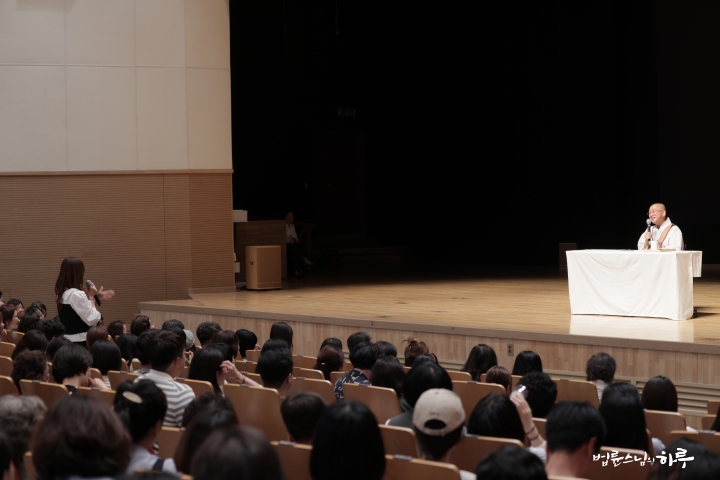
"I'd like to have a brief conversation with you, and I'd also like you to scold my husband a lot." (laughter)
"Alright. Let's talk with you first. If your husband is good-looking, treats you well, and earns good money, that sounds pretty good.""Yes, he's fine."
"Your eyes for choosing a partner must be good, right? You would have picked a decent man. You wouldn't have chosen a lousy man. If you chose him thinking, 'This man is decent. He earns well and is a good person,' then he must be at least a decent person on average. If you thought, 'Venerable Pomnyun Sunim is decent,' or 'This person is decent,' but everyone in the world said, 'That person is bad,' then your eye for judging people would be lacking. Do you think your judgment is decent or lacking?""I think it's lacking."
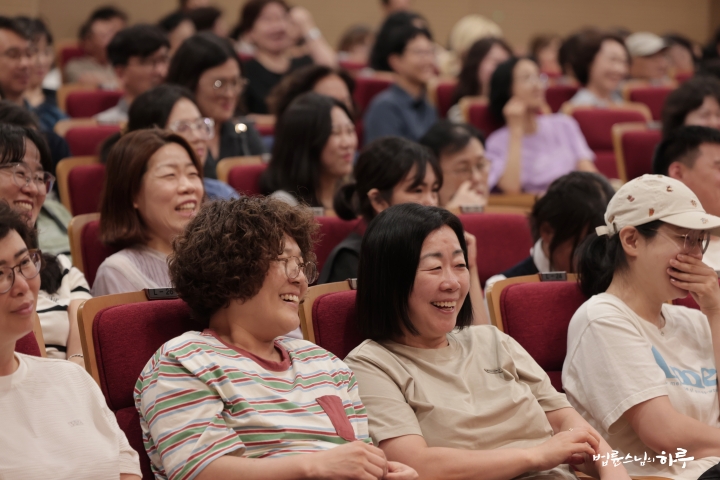
"I think a little. But I think my husband is superior to me."
"Then you should just do as your husband says.""But it's not always like that."
"Saying it's not always means there are times when you're right too, doesn't it?""Yes."
"You chose your husband. Looking back now, do you feel you chose so badly that 'I must have been completely out of my mind. My eyes were off'? Or do you think, 'He has some problems, but he's pretty good overall'?"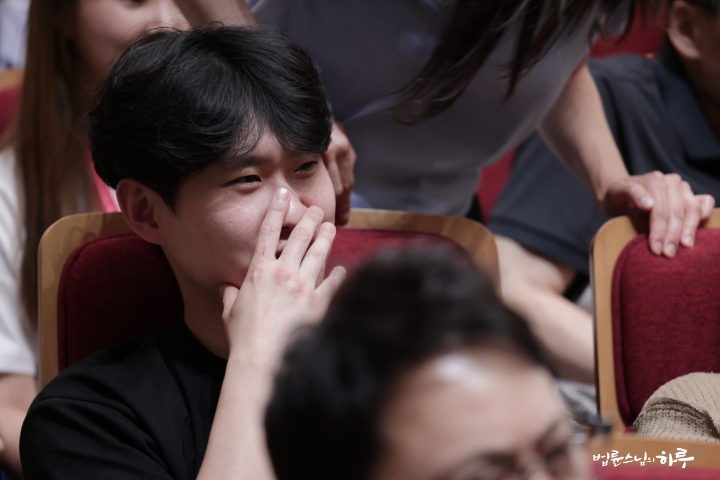
"He's pretty good overall."
"But you said you can't take it anymore and even brought up divorce. If you divorce, would other women see this man—who is a decent man—favorably or unfavorably?""They would see him favorably."
"Then wouldn't they snatch him up quickly? There are many women right now waiting for you to let go of him. (laughter) Are you confident you can meet a better man than your husband after divorce? Are you confident you can meet a man who has more money, better looks, and a personality that accommodates you in every way?""I think it would be quite hard to meet someone like that."
"Then wouldn't you regret it if another woman takes your husband later? Right now you're in a bad mood and divorced, but looking back later, you realize there's no man as good as him. It's like buying a car—it got a small scratch, so in a bad mood you sold it. But you can't afford a new car, and when you went to look for a used one, you couldn't find anything as good as the one you sold. When you went back to look for it, someone else had already bought it. So you need to think carefully now. (laughter)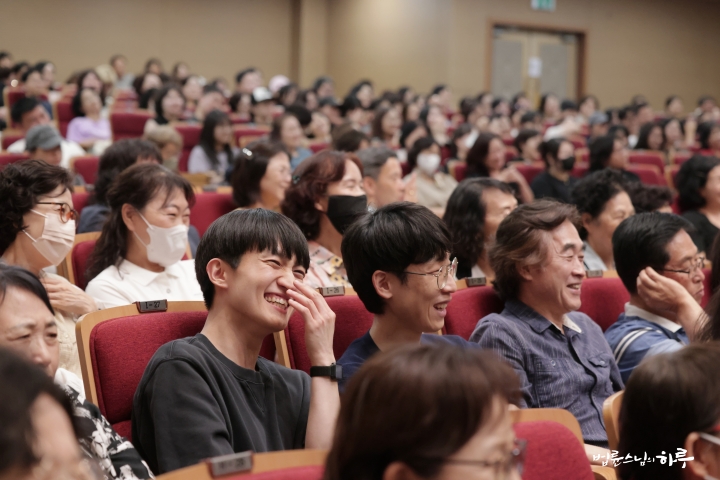
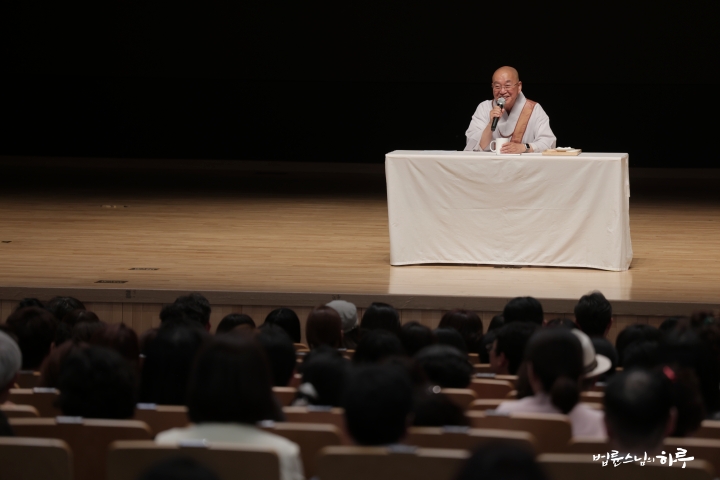
"But Sunim, I don't hold on to a man who wants to leave."
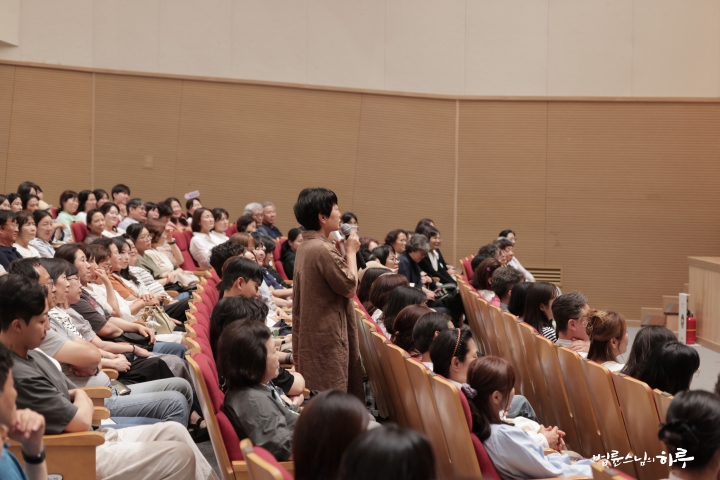
"Yes. But what I want from my husband is for him to reduce his nagging just a little. If he could cut it down from ten times to two or three, that would be wonderful."
"But you said your husband thinks you're talking back, right? From your husband's perspective, talking back is essentially nagging too.""It's not really nagging. For example, we often go hiking, and my husband suggested we go to the mountain fortress this weekend. I'd been there many times before, and I had a lot to do on the weekend, so I said I wanted to rest today. Then my husband said, 'That's an excuse. You don't want to go, so you're not going. Why don't you just say you don't want to go instead of making excuses?' That's how we got into an argument."
"Well, what he said is right.""Yes. When I hear it, it's right, but it makes me feel bad. And it wasn't really that I didn't want to go—I refused because if I went, my tasks would pile up."
"But Sunim! My husband actually tries to persuade me exactly the way you just described."
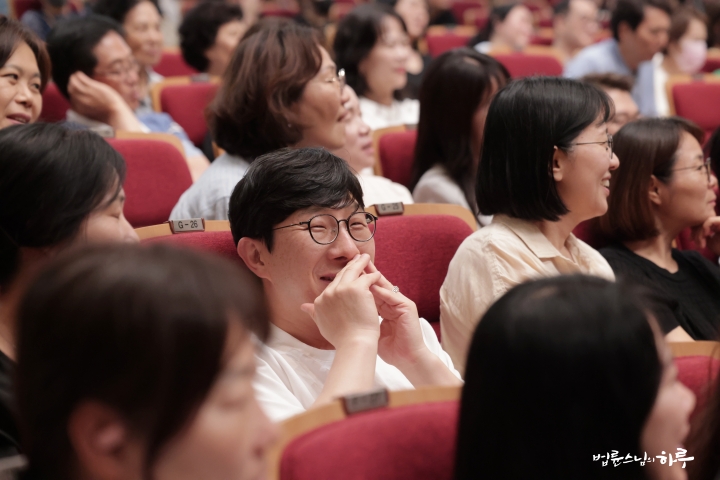
"This is why I hesitated to ask. I understand what you mean."
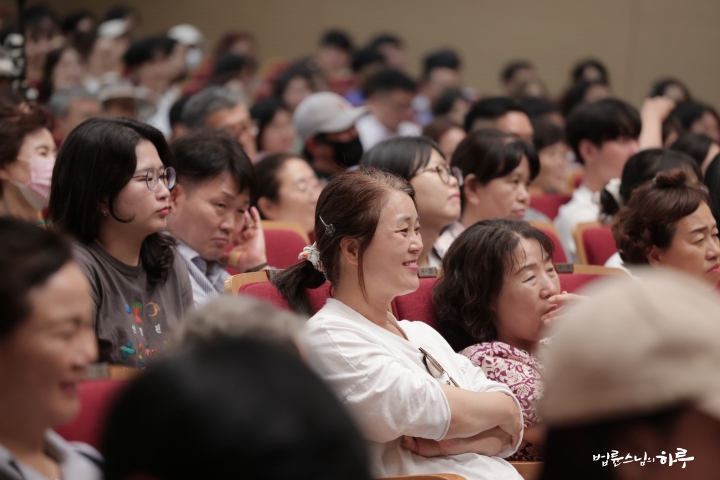
"Not 100 percent, but something similar."
"How could I possibly change your husband? So you just need to solve your own problem. Let me give you an example. Two people have buckets over their heads, so they can't see in front of them. They like each other and try to embrace, but they keep bumping into each other because they can't see. What should they do to avoid bumping into each other? If the other person takes off their bucket, they can see, so the two won't collide. But you still can't see, so you'll bump into your mother and father standing next to you. However, if you take off your bucket, even if everyone else is wearing buckets, you can avoid them. So what's important—taking off your own bucket, or taking off others' buckets?"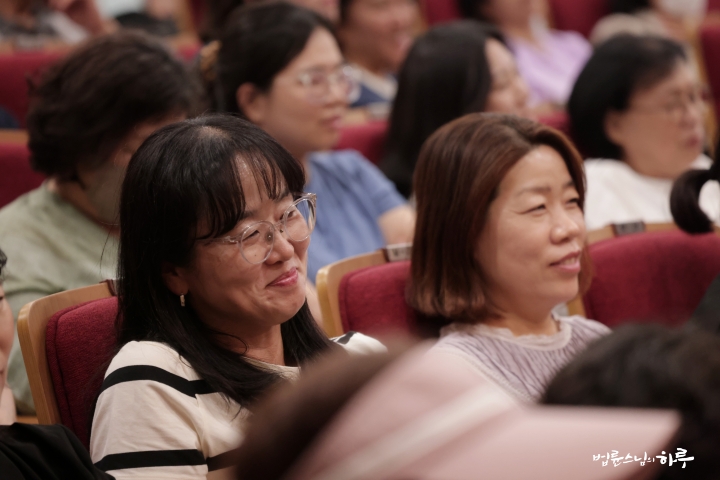
"My own bucket."
"Right. You just need to take off your own bucket, so why do you try to take off others' buckets? While stumbling around unable to take off your own bucket. Is it because of a bodhisattva's heart that thinks, 'It's fine if I wear a bucket, but I must remove the buckets of sentient beings'? (laughter) You just need to open your own eyes. If you open your eyes, even if everyone in the world has their eyes closed, you won't bump into them. There's no need to talk about other people. When your husband suggests going hiking, just recognize, 'Oh, my husband wants to go hiking.' Instead of saying, 'Why do you want to go hiking again?' just receive it by saying, 'Oh, you want to go hiking?' Then you can honestly express your opinion. If your husband keeps insisting that you go, then you need to calculate a bit. If you think, 'This person has more money, more ability, and many advantages over me, so causing a conflict would be a loss for me,' then bear with it and go even though you don't want to. On the other hand, if you think, 'I can live well without you,' then you can say, 'No. You go alone.' This is called weighing interests. When I like someone, I have no choice but to take the lower position. There's no other way. But people like someone yet try to take the upper position. That's why suffering arises. At such times, you need to take the lower position with the attitude, 'You are my king.' This doesn't mean your husband is right, but after understanding 'Oh, my husband thinks that way,' you express, 'But this is how I feel.'""Yes. I understand well." (applause)

There were several other questions as well.
▪ I feel uncomfortable seeing my remarried husband taking care of the children he brought from his previous marriage.▪ Is there any way I can help restore the troubled relationship between my parents?▪ I recently had surgery for thyroid cancer and have returned to daily life, but I feel sorry for myself.▪ How should I approach problems that can't be solved no matter how much I try, such as improving my parents' relationship?
After the lecture, a book signing was held in the lobby. Many people lined up and waited to get Sunim's autograph on his books.
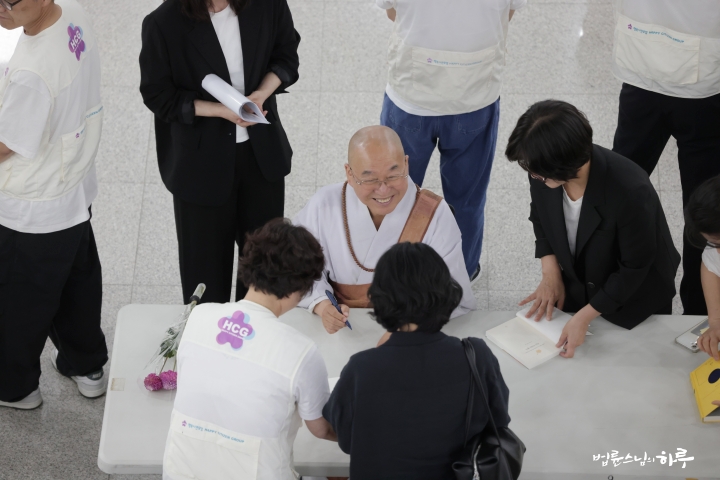

After the signing, Sunim took a group photo with the 69 volunteers who had prepared the Cheongju Happy Dialogue. The volunteers chanted a slogan they had prepared for Sunim, whose health has not been good lately.
"Sunim! Please stay healthy!"

Sunim thanked the volunteers and headed back to Seoul.
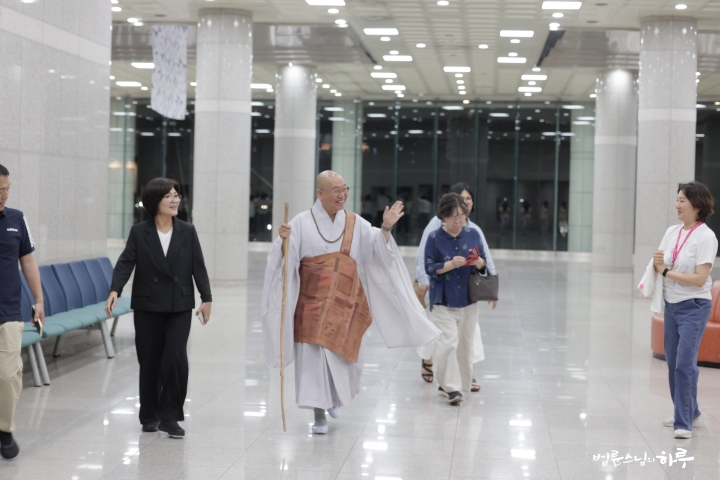
He arrived at the Seoul Jungto Center at 11:30 p.m. After unpacking, Sunim finished the day's work by proofreading manuscripts.

Tomorrow, Sunim will hold a meeting with religious leaders at the Peace Foundation, and will conduct the Weekly Dharma Assembly both in the morning and afternoon at the Dharma Hall.