I Lost All My Savings in Stock Investments and I'm Suffering Deeply.
Jun 19, 2026 – Day 7 of INEB Program (Visiting Jungnimjeongsa, the National Bhikkhuni Association Hall, and Attending the Dharma Q&A)
Hello. Today marked the 7th day of the INEB (International Network of Engaged Buddhists) Study Trip, with visits to Jungnimjeongsa Temple and the National Bhikkhuni Association Hall, followed by attendance at the Dharma Q&A.
Sunim began the day with early morning practice and meditation. After breakfast, he reviewed manuscripts and attended to administrative work until the 10:30 AM visit to the National Bhikkhuni Association Hall.
The INEB delegation, after sleeping at Hyuhyudang lodging at Silsangsa Temple, woke up and immediately boarded vehicles at 4:30 AM to head to Jungnimjeongsa Temple in Jangsu-gun, Jeollabuk-do, the birthplace of Master Baek Yongseong.
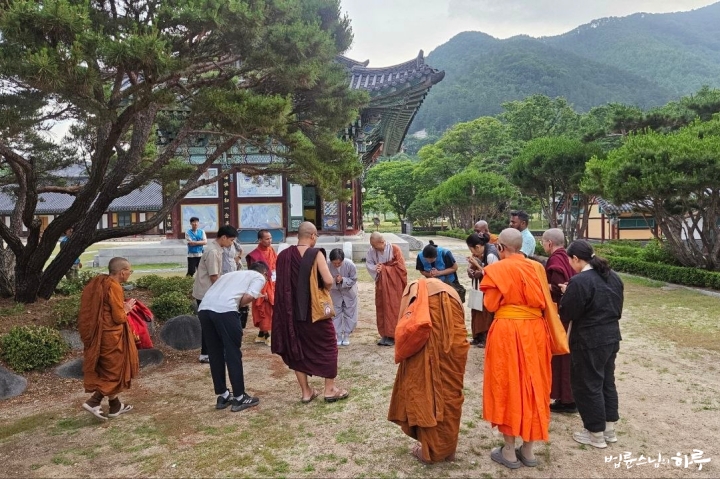
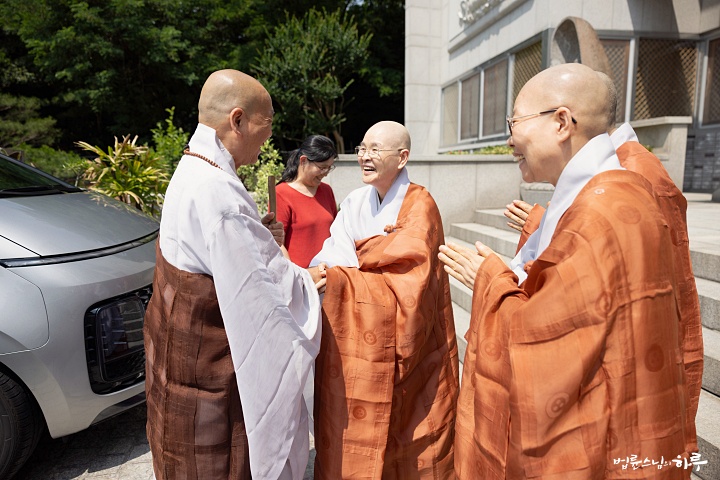
At 5:10 AM, when the delegation arrived at Jungnimjeongsa Temple, Yusu Sunim and Dharma Teacher Beopjeong welcomed them.
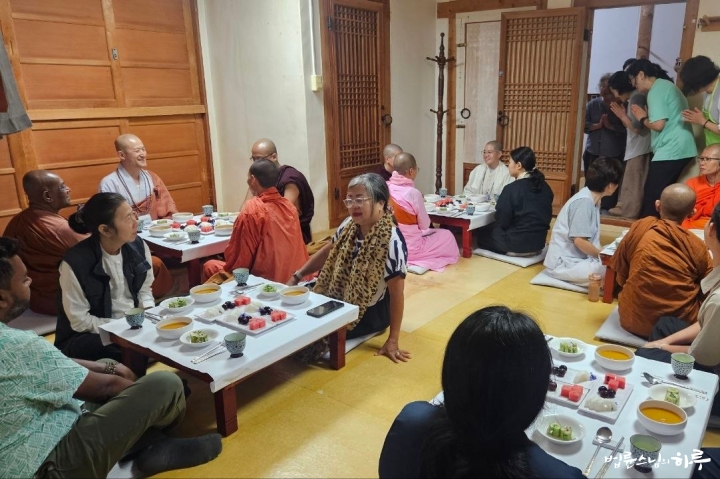
The delegation entered the main Buddha hall of Jungnimjeongsa Temple to pay respects, then moved to the monks' quarters where they had a warm porridge breakfast. The porridge and refreshments had been prepared in advance by the Bodhi volunteers of Jungnimjeongsa Temple.
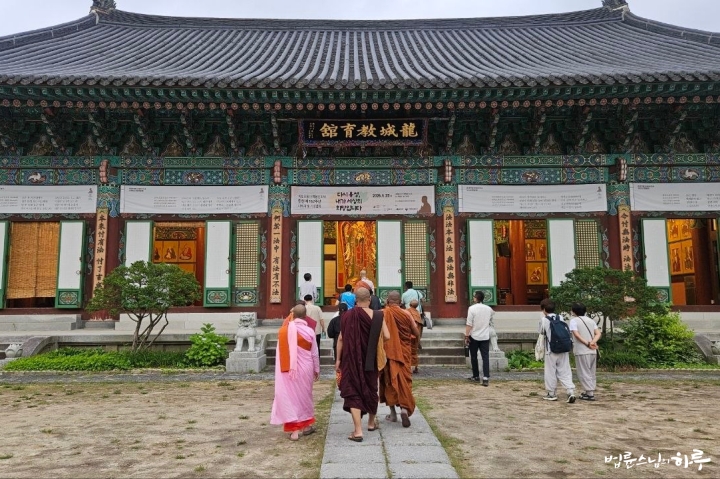
After breakfast, the delegation moved to the education hall to look around. The education hall featured various Buddhist paintings illustrating Master Baek Yongseong's Dharma lineage and the history of Buddhism, allowing visitors to learn how the Dharma was transmitted from Shakyamuni Buddha.
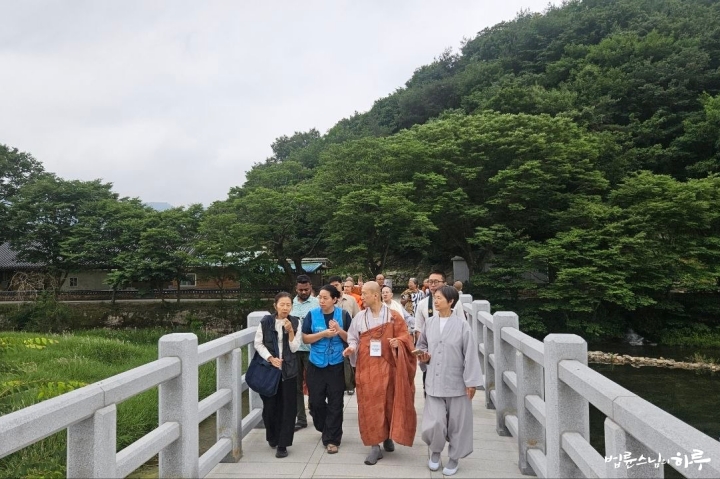
After visiting Master Baek Yongseong's birthplace, the delegation left the temple grounds, crossed Yongseong Bridge, and entered Jangsu Mulbit Park, arriving at the Baek Yongseong Memorial Hall, which opened in December last year.
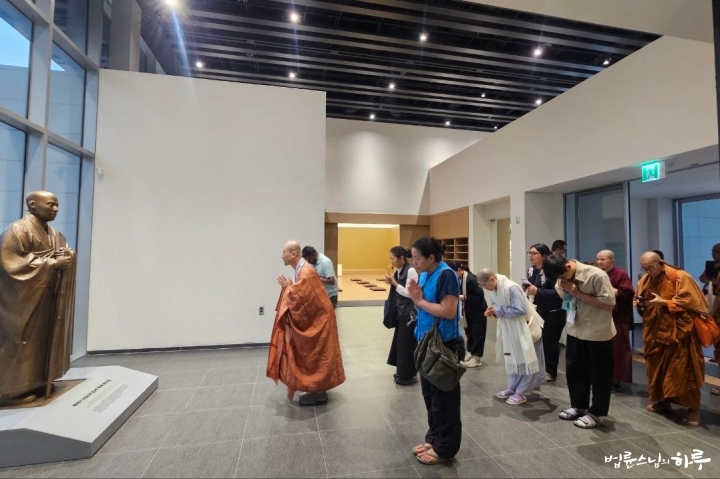
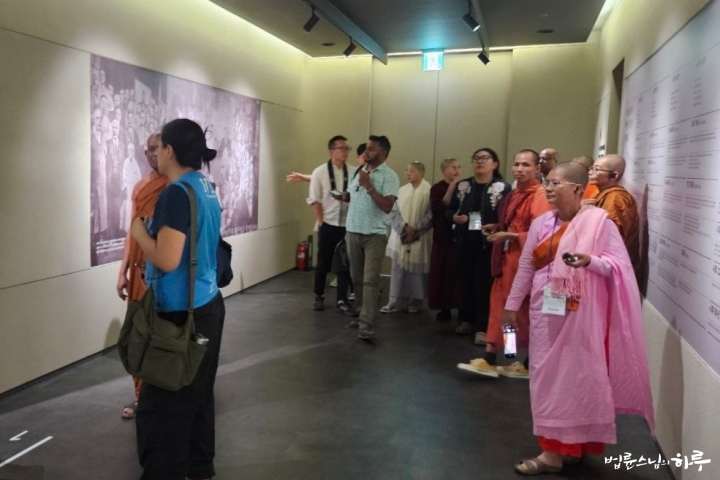
Here, guided by Yusu Sunim, the delegation toured the first and second floors and learned about the life and work of Master Baek Yongseong, an independence activist and Buddhist leader. The memorial hall currently serves as the main temple for the Daejeon-Chungcheong Branch and Gyeongnam Branch of Jungto Society, and is managed and operated by Jungto Society members through their volunteer efforts. The delegation also heard the story of how Venerable Bulsim Domun, Venerable Pomnyun Sunim's teacher, dedicated his entire life to fulfilling Master Baek Yongseong's last wishes.
Since the next event was scheduled in Seoul, the INEB delegation could not stay longer. They boarded the vehicles around 7 AM, departed from Jungnimjeongsa Temple, and headed to Seoul.
Sunim left the Seoul Jungto Center at 10 AM and arrived at the National Bhikkhuni Association Hall (Beobryongsa Temple) in Gangnam-gu around 10:30 AM. Gwangyong Sunim, the president, along with several bhikkhuni Sunims, warmly welcomed Sunim and the INEB delegation.
The National Bhikkhuni Association Hall of the Jogye Order of Korean Buddhism serves as the headquarters and central practice place for approximately 5,000 bhikkhuni Sunims across Korea. This visit was arranged so that the INEB delegation could understand the current state and activities of Korea's bhikkhuni organization and explore possibilities for future exchanges.
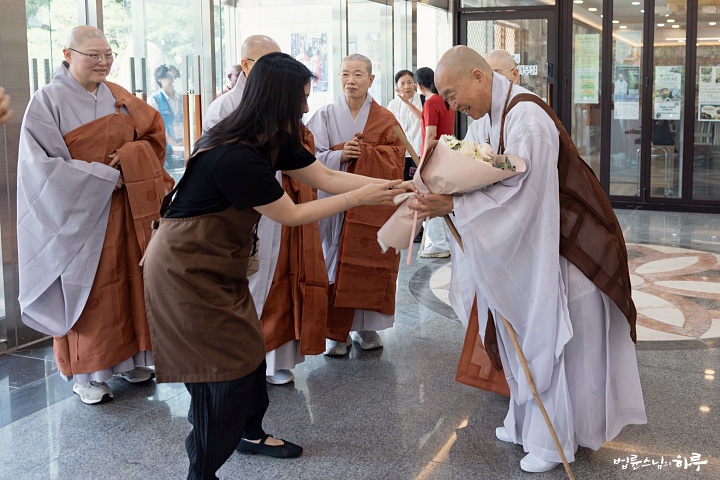
The bhikkhuni Sunims welcomed Sunim and each member of the delegation by presenting them with bouquets of flowers.
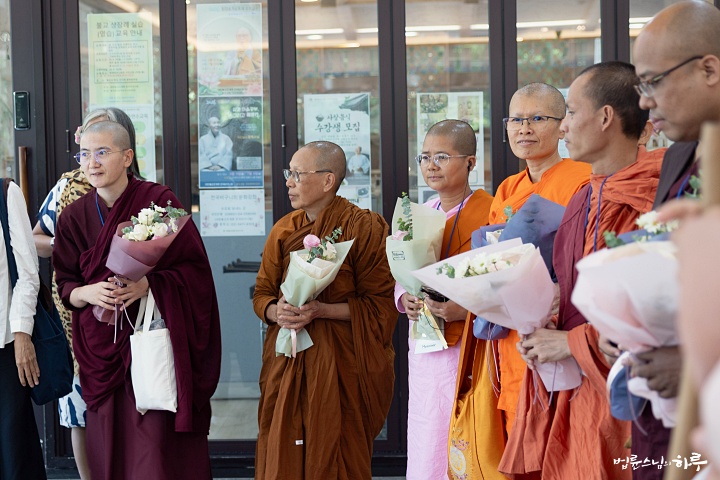
Sunim and the group first headed to the Buddha hall, where the sasi (mid-morning) service was in progress. Sunim first offered the bouquet he had received before the Buddha and then participated in the sasi service. Afterward, the group took commemorative photos and toured the interior of the Bhikkhuni Association Hall, with Dharma Teacher Jeongho, the Director of International Affairs, explaining each location.
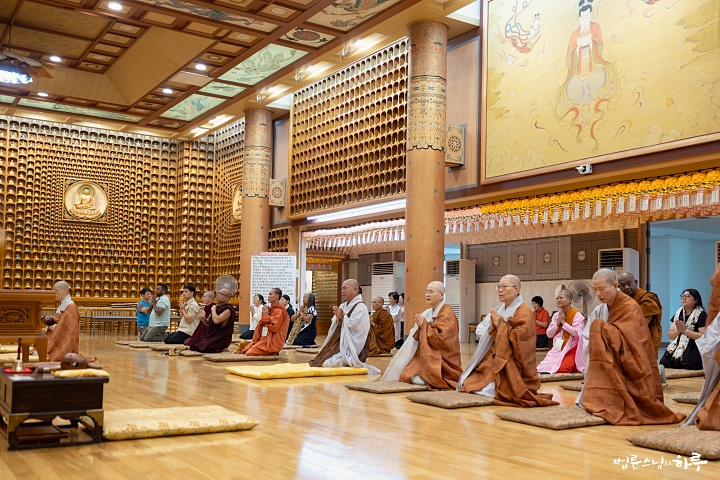
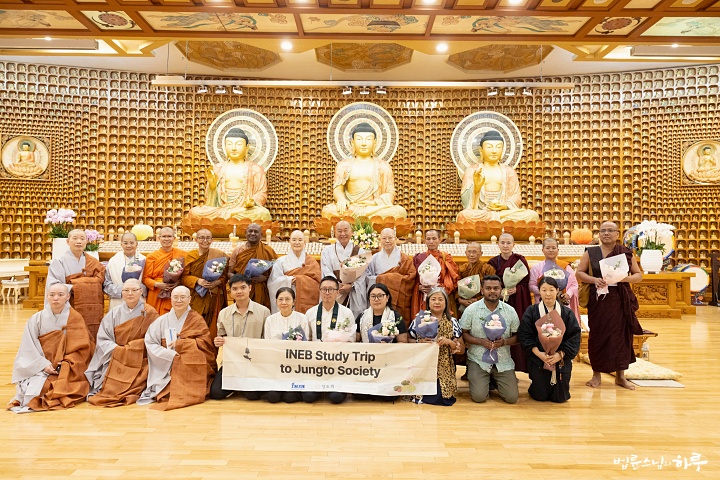
The delegation toured the various halls within Beobryongsa Temple, including Gwaneumjeon (Hall of Avalokitesvara) and Jijangjeon (Hall of Ksitigarbha), as well as classrooms, the Korean Bhikkhuni Sangha Research Institute, an auditorium, a small shop, the Temple Cuisine Research Institute, practice spaces for the public, and the Paper Flower Research Institute.
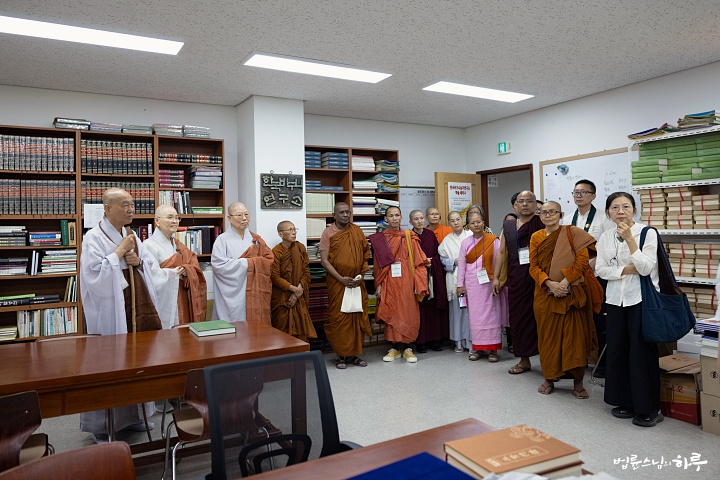
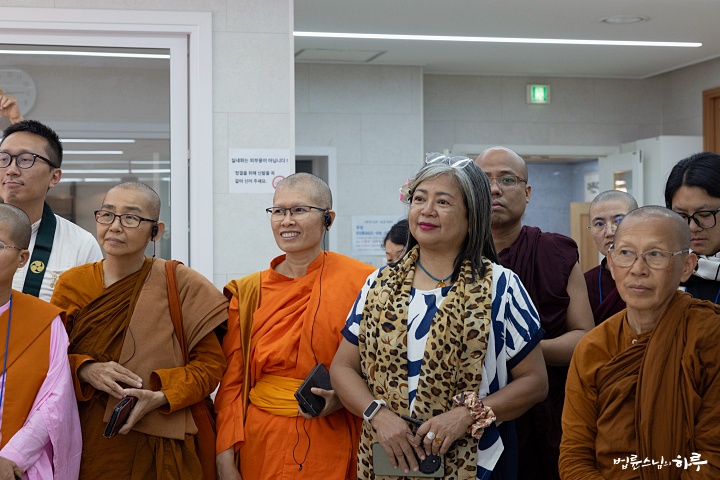
While touring the spaces of the Bhikkhuni Association, Sunim remarked:
"I hope the activist from the Bhutan Bhikkhuni Foundation takes a good look at what the Korean National Bhikkhuni Association is doing. (Laughter)"After the tour of the Bhikkhuni Association Hall, Sunim's group moved to a classroom to receive a presentation about the National Bhikkhuni Association.
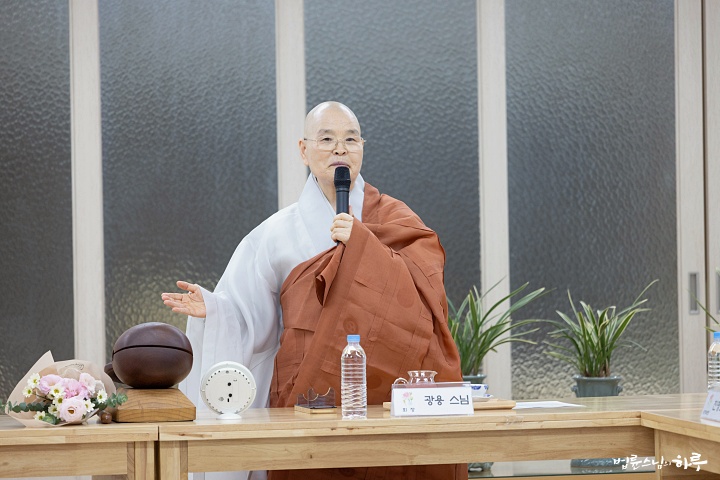
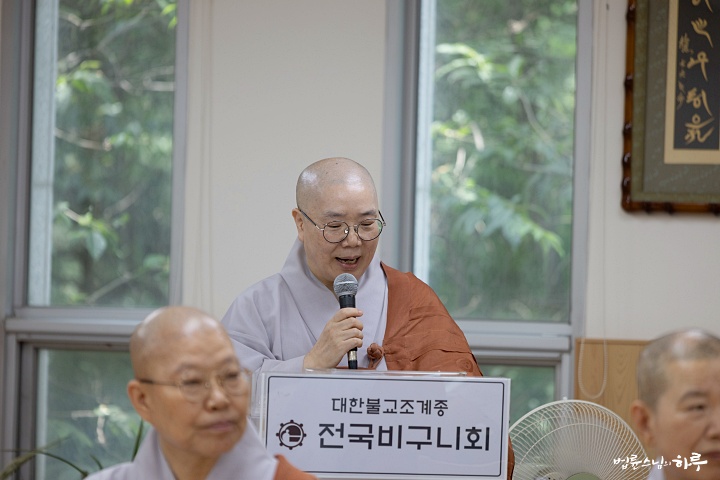
First, Gwangyong Sunim, President of the National Bhikkhuni Association, gave a welcome speech.
"Hello. I am very pleased and delighted to meet you. This is our second meeting following last October, which makes it all the more wonderful. As the 13th President of the National Bhikkhuni Association of the Jogye Order, one of my duties is to host events like this. It is an honor to welcome those who, centered around Venerable Pomnyun Sunim, are working hard in their respective places to spread the Buddha's teachings in various Buddhist countries. As I understand, the INEB delegation departed Silsangsa Temple at 4 AM today, passed through Jungnimjeongsa Temple, and traveled all the way to Seoul, so you must be quite tired. I trust that thanks to your dedication in spreading the Buddha's 2,570-year-old teachings in various places, the Buddha's Dharma will continue to develop and society will become purer. I wish that all of you, centered around Venerable Pomnyun Sunim, may receive the Buddha's protection in your daily lives and practice, and that your aspirations may be well manifested and fulfilled. I wish you health and happiness. We kindly ask for your understanding if there are any shortcomings in our arrangements."
The moderator then invited Sunim to say a few words.
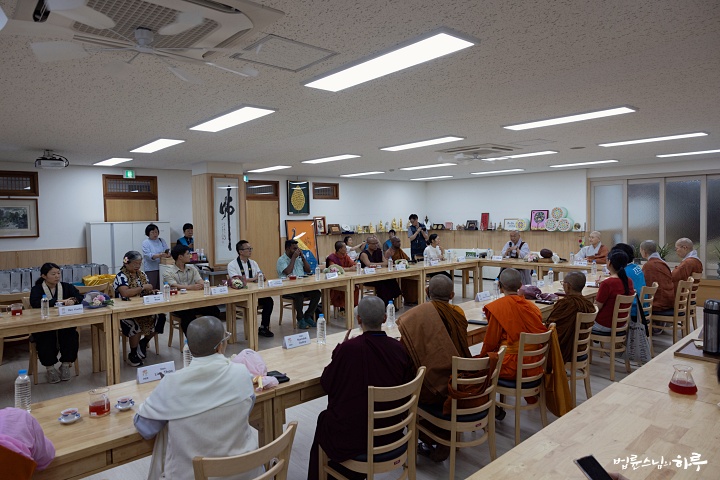
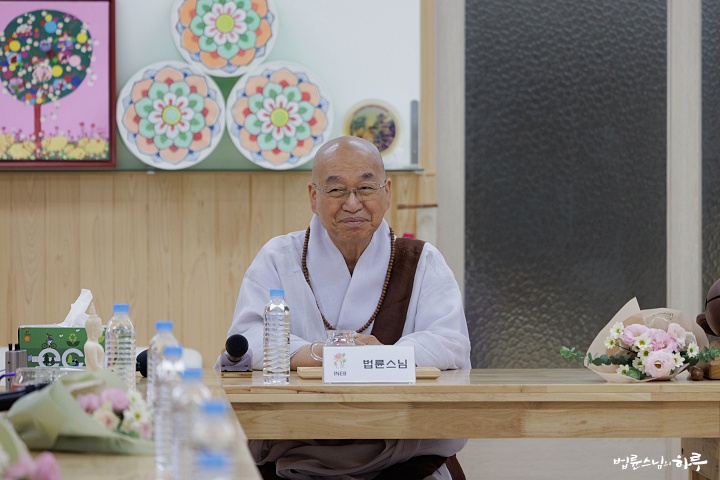
Next, Dharma Teacher Jeongho, Director of International Affairs, gave a presentation introducing the National Bhikkhuni Association. The delegation learned that the National Bhikkhuni Association includes approximately 5,000 bhikkhunis, and heard about how the organization is structured. They also learned about the history of the National Bhikkhuni Association, key projects such as bhikkhuni sangha education, death preparation education, educational projects, and welfare support, as well as the four main research institutes of the National Bhikkhuni Association: the Korean Bhikkhuni Sangha Research Institute, the Temple Cuisine Research Institute, the Tea Culture Research Institute, and the Buddhist Spiritual Care Research Institute.
The National Bhikkhuni Association also held environmental concerts and ran a Green Temple movement, and operated Jabiwon (a residential facility) and a nursing hospital where elderly Sunims could stay in their later years. The delegation also heard about other main projects.
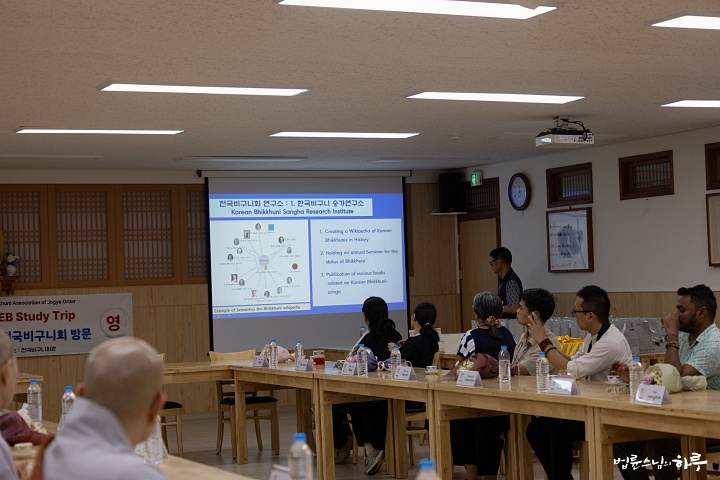
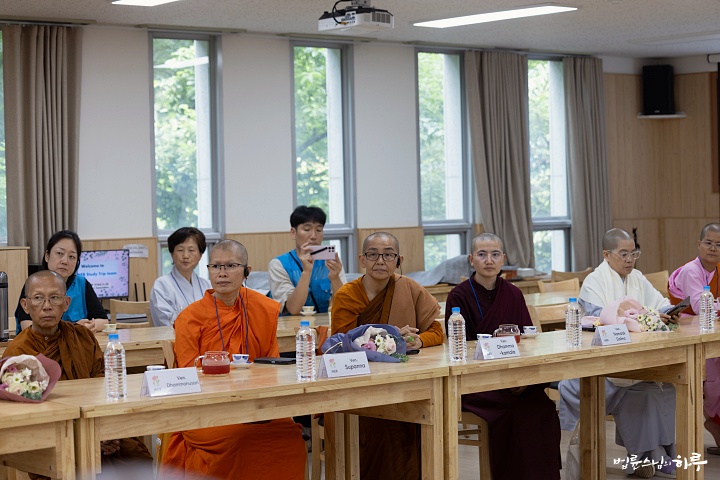
All INEB participants listened intently to Dharma Teacher Jeongho's presentation. A question-and-answer session followed.
▪ When you receive ordination, do you use your existing name, or do you use a new name? How does this work legally?
▪ You mentioned providing scholarships to Myanmar students. I would like to know approximately how many people have received scholarships and whether there are specific criteria for awarding them.
▪ Do you feel there are differences between bhikkhus and bhikkhunis in Korean society? For example, social differences, not having equal rights, or different opportunities. And I am curious whether there are differences in how lay people offer dana to bhikkhus and bhikkhunis in Korean society.
There were more questions from the participants, but as it was lunch time, they decided to continue the conversation over the meal, and the introduction of the National Bhikkhuni Association concluded.
The National Bhikkhuni Association then presented Sunim with a gift, and Sunim in turn presented the books he had prepared. The INEB delegation also presented a Buddha statue they had brought as a gift to the National Bhikkhuni Association, and the National Bhikkhuni Association also distributed gifts to each member of the INEB delegation.
Everyone moved to the dining hall for lunch. Sunim expressed his gratitude to those who had prepared the meal in the dining hall.
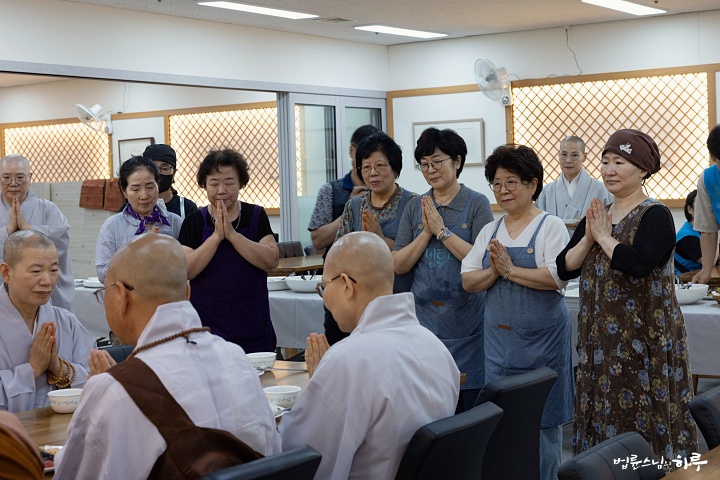
"Thank you for preparing the meal."Sunim and the INEB delegation had lunch made with carefully prepared food. Sunim expressed deep gratitude to those who had prepared the meal. He invited the meal volunteers to join so the Southeast Asian Buddhist Sunims could offer blessings. Those who prepared the food and those receiving the offering gathered together to offer blessings before starting the meal.
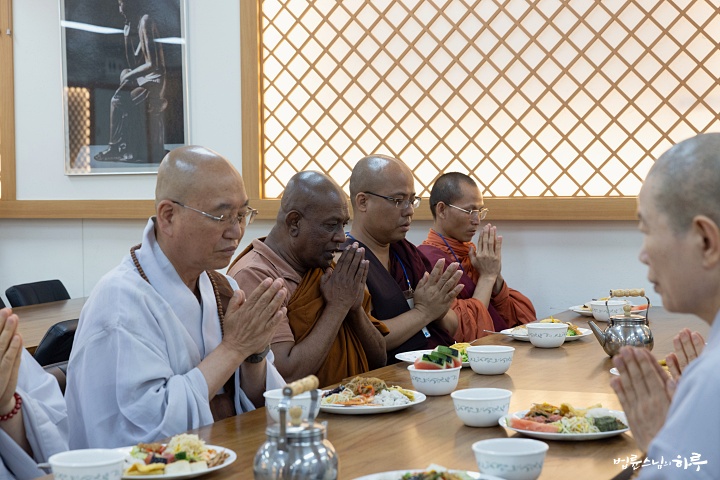
After the meal, Sunim said, "I should have introduced each member of the INEB delegation to the Sunims of the National Bhikkhuni Association at the start of today's program, but I didn't get the chance," and took time to introduce participants from each country. Sunim also suggested holding a Q&A session for participants who didn't have a chance to ask enough questions about the National Bhikkhuni Association due to lunch time.
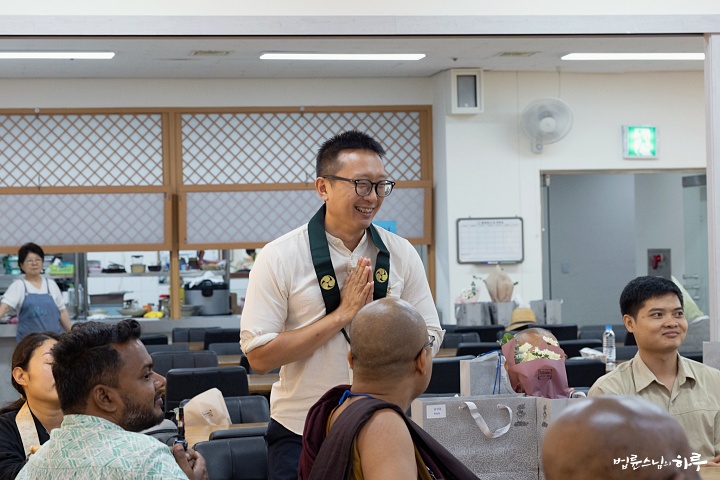
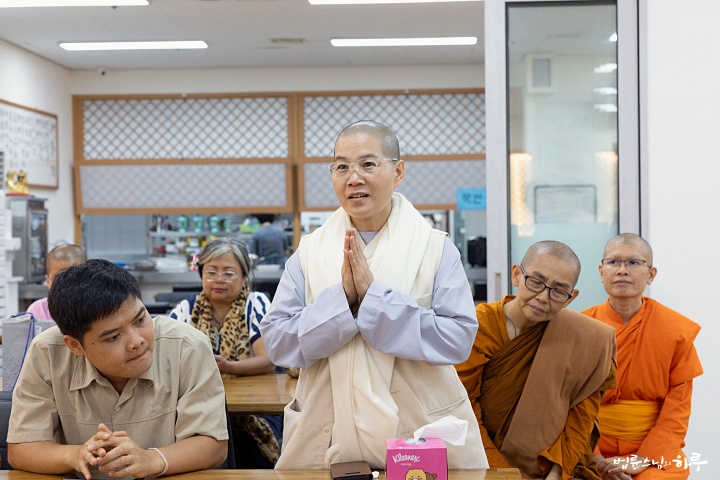
All participants had a great deal of interest in the National Bhikkhuni Association, and questions continued.
▪ I heard that there is temple cuisine education. How many applicants are there?
▪ In Sri Lanka, "mother" has the meaning of "one who created the world." I wish the activities of the Korean National Bhikkhuni Association the best of success.
▪ You have a very diverse range of educational programs. Do you conduct bhikkhuni ordination yourselves?
▪ Is it possible for women of other nationalities to receive bhikkhuni ordination in Korea?
▪ Is there a medical insurance system for bhikkhunis?
▪ Are there social engagement movements led by bhikkhunis?
▪ In Korea, is there a difference between bhikkhuni and nun?
▪ Has the number of bhikkhunis changed compared to the past 10 years? Do you see it increasing in the future? In Thailand, there are less than 300.
▪ What is temple cuisine, and how is it related to bhikkhuni Sunims?
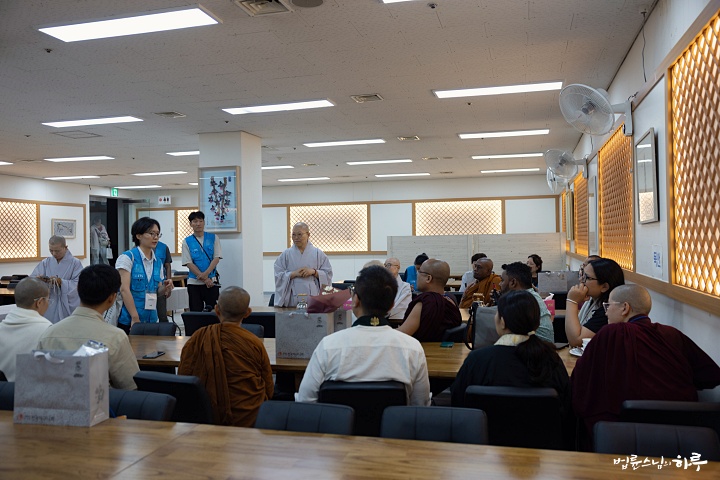
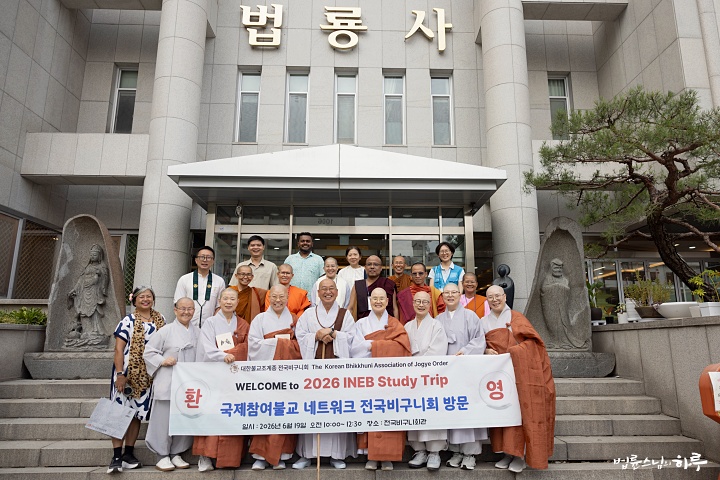
After thoroughly addressing the participants' curiosities about Korean bhikkhunis and the National Bhikkhuni Association, the delegation took a group photo together and left the National Bhikkhuni Association Hall while being seen off by the bhikkhuni Sunims.
Sunim moved to the Seocho Jungto Center, while the INEB delegation moved to Jogyesa Temple.
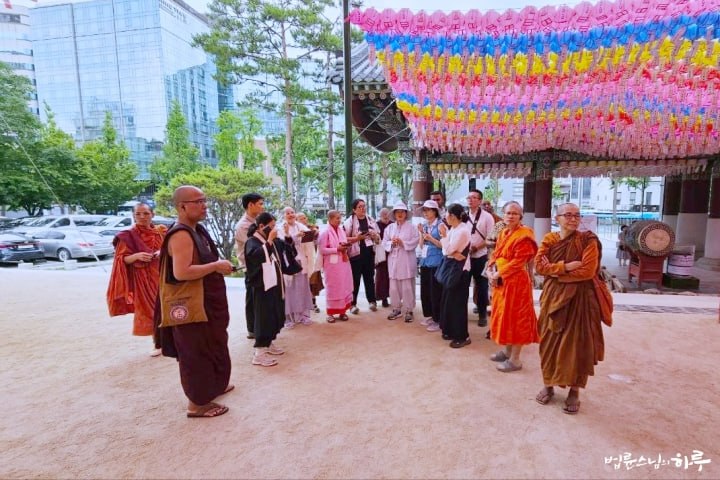
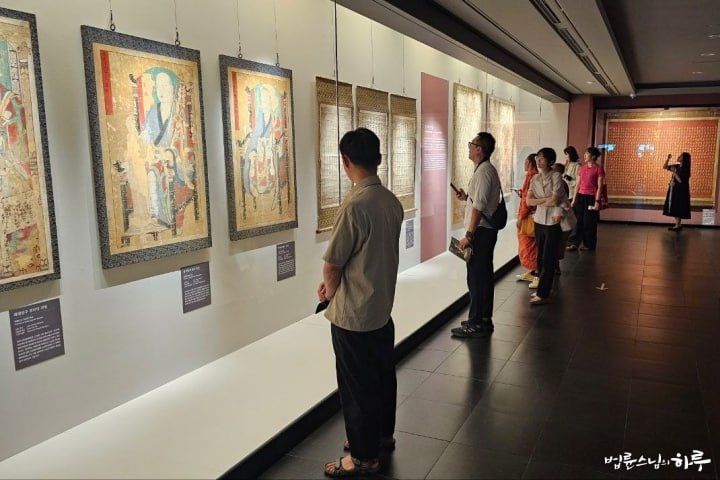
The participants toured Jogyesa Temple, the headquarters of the Jogye Order of Korean Buddhism, which represents Korean Buddhism, and had about 30 minutes of free time.
At the participants' request to see the Han River, the delegation boarded vehicles and headed to the Han River. The weather gradually grew overcast as rain clouds approached. When they arrived at the Han River, the rain was so heavy that they couldn't even get out of the vehicles and had to return to the Jungto Social and Cultural Center.
The participants had a Korean snack dinner at a restaurant near the center and returned to the Jungto Social and Cultural Center.
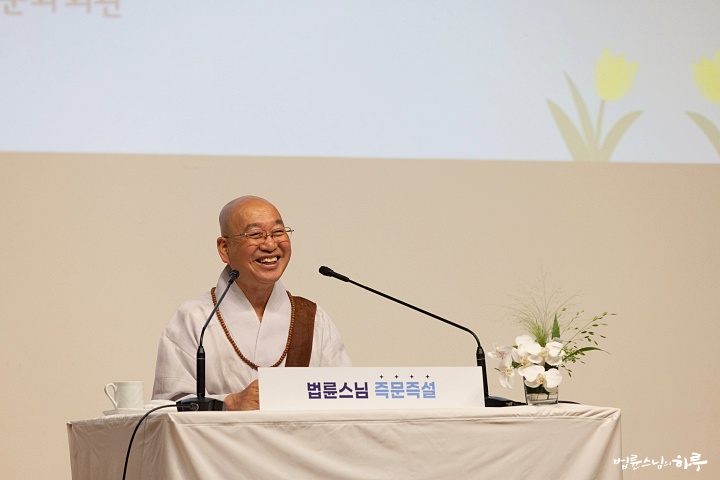
Sunim attended to administrative work before moving to the Jungto Social and Cultural Center shortly after 7 PM to deliver the Friday Dharma Q&A. An elderly female lay practitioner urgently wanted to meet Sunim, so they had a brief meeting before the Dharma Q&A began.
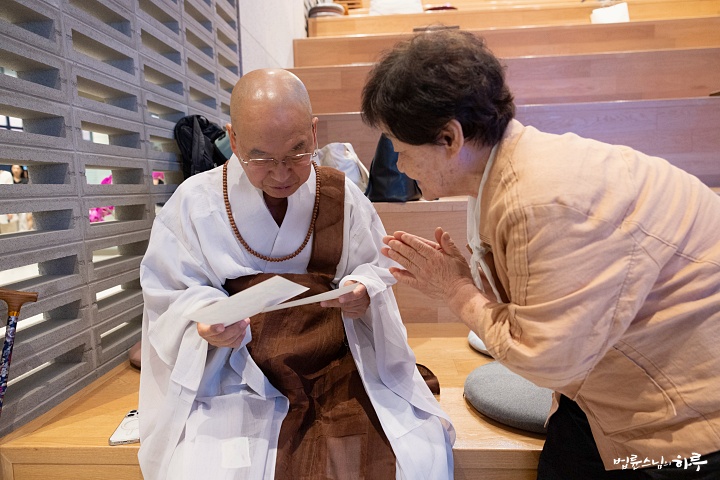
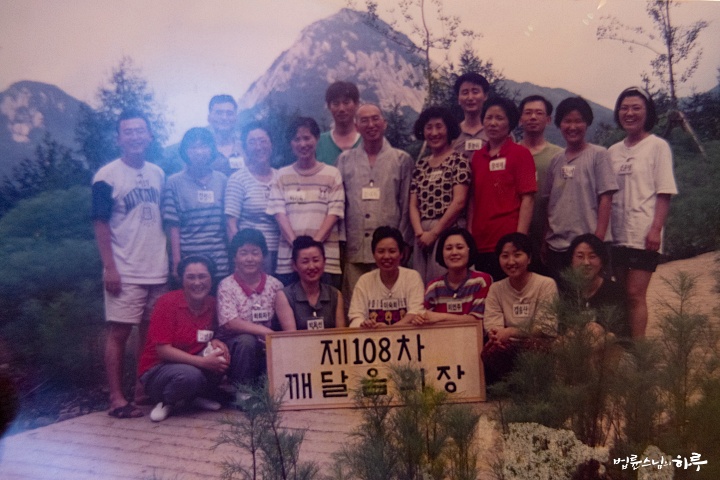
The elderly lay practitioner said she had participated in the 108th Awakening Retreat and brought photos to show Sunim. In the photos, one could see Sunim's face from his younger years. The elderly practitioner repeatedly expressed her gratitude, saying, "Thanks to Sunim, I was able to encounter the right Dharma." Sunim held her hands warmly, greeted her, and then moved to the basement auditorium for the Dharma Q&A.
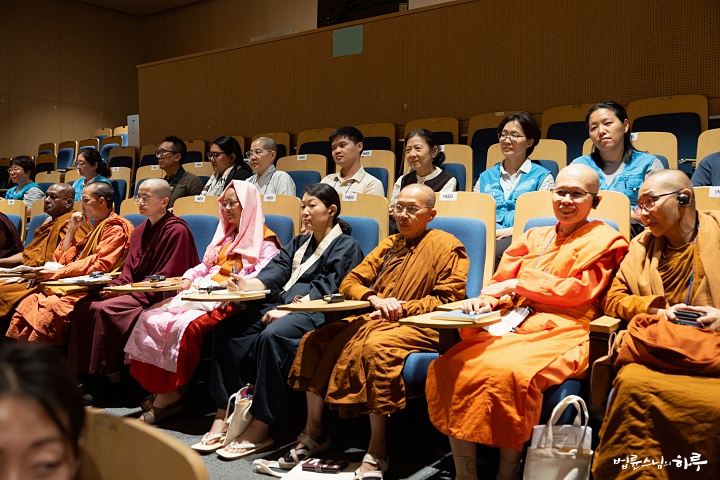
The INEB delegation also took seats at the back of the auditorium and wore headsets in advance for interpretation, preparing to listen to Sunim's Dharma Q&A.
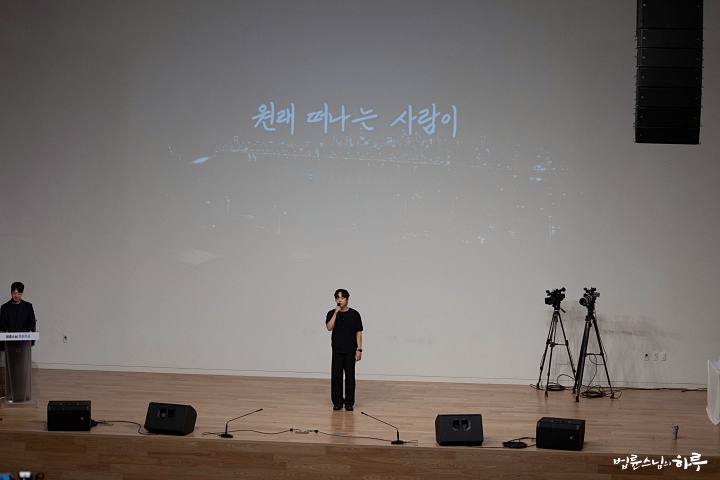
As a young volunteer's musical performance was underway, Sunim entered the auditorium. With rich vocal skills, the singer drew enthusiastic responses from the audience, performing two popular songs as the opening act.
Today's Dharma Q&A had 4,500 people connected online, and about 400 people joined in person at the auditorium. Perhaps due to the influence of SBS's program "Pomnyun Road - Sunim and Guests," which ended its final broadcast last Tuesday, most of today's audience were first-time visitors to the Jungto Social and Cultural Center.
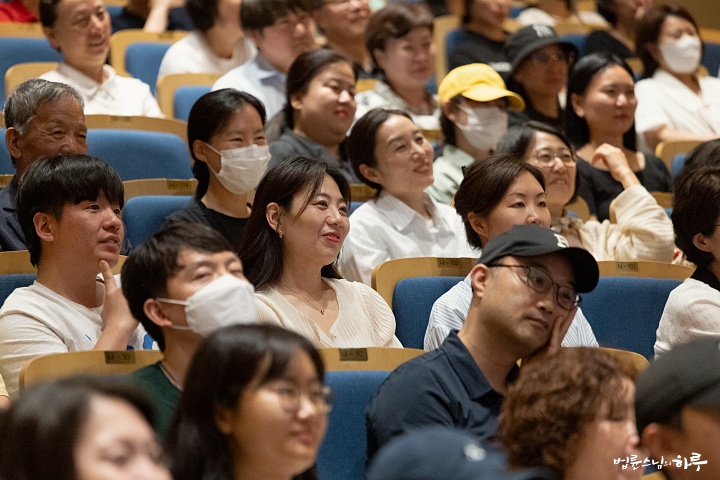
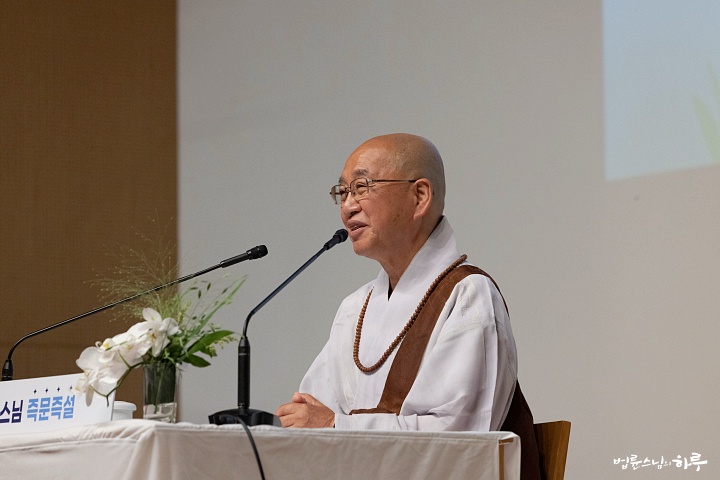
After the introduction video about Sunim ended, when Sunim stepped onto the stage, the audience welcomed him with great applause and cheers.
Today there were 6 pre-registered questioners and 1 questioner from the on-site audience.
▪ I want to ask for wisdom I don't possess: what should I value most in life so that even after I pass away someday, my children will remember me as a good father and a good husband?
▪ I'm preparing for marriage. I feel hurt when my boyfriend says we should split the wedding expenses and newlywed home costs 50-50. How can I let go of these hurt feelings?
▪ My child has fallen into a cult religion. I want to stop them even now, but my child says they're happy. Should I try to stop them?
▪ I lost all the money I saved over 10 years through stocks, and I've been resenting my mother who influenced that investment. How can I escape from this suffering?
▪ During my 6 years of marriage, I went through IVF treatments, two breast cancer surgeries with radiation therapy, childbirth, and child-rearing—all major hardships—but my husband has never once offered words of comfort, empathy, or concern. Instead, he gets angry or starts fights at every important moment. I struggle with my own hatred and anger, and most of all, I worry that this environment will hurt my child.
▪ My third-year middle school daughter is unable to attend school because she is struggling with others’ opinions of her. My daughter says she has no stress when she stays away from school, but I worry that allowing her to continue avoiding school may reinforce this pattern. Is it better to make her attend school, or should we prepare for the high school equivalency exam? Are there any mind practice methods that are easy for children to follow? Also, the puppy my daughter brought home is expected to grow much larger when it becomes an adult dog. I'm currently separated from my husband—should I go back home to raise the dog?
▪ My older child is in high school, but my husband has been transferred to China as an expatriate. My older child doesn't want to go to China, so my husband decided to go alone. Was this a good choice?
This post concludes with the conversation between Sunim and the questioner who lost his savings through stock investments.
I Lost All My Savings in Stock Investments. How Can I Escape This Suffering?
"When there are horse races or car races, people bet money on who will come in first or second, right? Is this betting a crime or an investment?""I have two questions. First, while working for over 10 years, I saved money to buy a house, but I recently lost all of my savings through stock investments. Since then, I can't sleep at night and suffer terribly every day thinking about it. Sunim, in your videos you said, 'If you're not suffering, you're happy,' but every moment is so painful and difficult for me. How should I deal with this suffering—that's my first question. The second is about resentment. The person who greatly influenced this investment was my mother, and since then I've been resenting her. But my mother has been very ill recently and has even been taken to the hospital. I'm also struggling because I resent my mother who is in such a state. My mother has spent her life resenting my father, who was harsh and irresponsible, and my older sister resents our parents because she couldn't pursue the career she wanted and because of her health problems. So I'm wondering how I can break this chain of resentment. I would appreciate your advice on these two matters."
"It could be either—it might not be a crime, or it might be a crime."
"That's right. If the law permits it, it becomes horse racing, entertainment, or a kind of investment. But if it's prohibited as gambling, it becomes a crime. It's the same in the United States. If gambling is illegal, it's a crime; if it's legalized, it becomes an entertainment industry. In the past, gambling could only be legally done in specific areas like Atlantic City in the East or Las Vegas in the West. They paid taxes and were managed and supervised by the government. Doing it elsewhere was illegal. Stocks originally operate on this same principle. Some people have skills and abilities but no money to start a business, while others have money but no business ideas or capabilities. In such cases, capital is gathered so that those with skills and abilities can run a business, and the profits are shared — that's how the capital market is supposed to work. If you have surplus funds and think, 'This person has good technology, so if I invest, the company can be well-run and generate big profits later,' that would be normal investment in a capitalist society.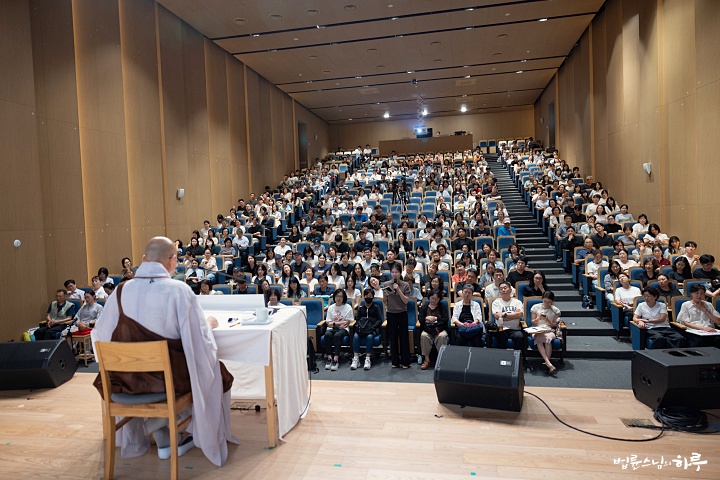
"As tuition."
"You have to pay."
"Is the tuition a bit large?""Yes."
"Still, comparatively speaking, it's better than dying in an accident, better than being seriously injured. It's better than losing your job. It's regrettable, but that money was money you could live without. If you keep dwelling on it, the past will affect your present life. And blaming your mother because she told you to try stocks is wrong. If a stock broker recommended investing in a company saying its prospects were good, and the price kept falling, should you blame the broker? No. You made the decision yourself. So this is your problem, and hating your mother won't solve it. Looking at it this way, the first and second problems are actually one. If you accept what happened and think of it as tuition, that's all. But because you can't do that, resentment arises. How your father lived, how your mother lived, what wounds your sister carries — these are their problems. The money you lost is also something that has already passed. Right here and now, you are alive, and you can move forward. Past events are experiences. If you've realized that speculation is dangerous, and if you've realized that you shouldn't live with resentment like your parents, those are very precious experiences. If you cling to the past, the past wounds your mind and becomes an obstacle in your future. It's like carrying debt. But if you let go of attachment to the past, that experience becomes an asset for your future. It's like how you can't stop the rain from falling from the sky, but you can decide whether or not to use an umbrella.""I will take your advice deeply to heart."
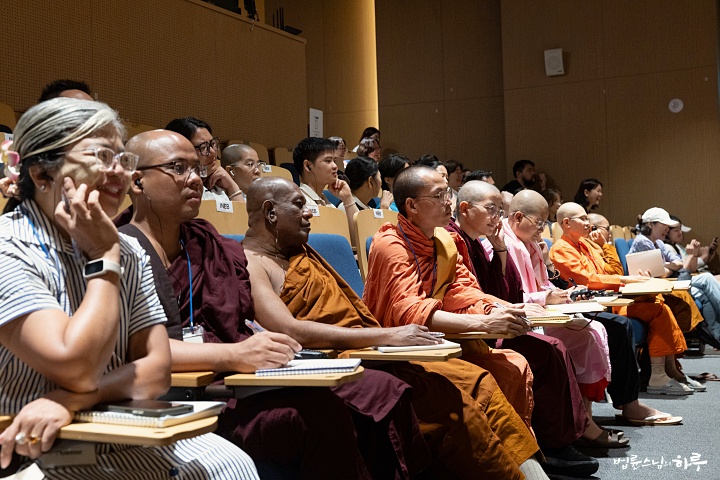
The audience listened to Sunim's Dharma talk with focused attention. Some nodded as they took Sunim's Dharma talk to heart, while others carefully wrote down the talk in their notebooks. The INEB delegation was also able to listen to Sunim's Dharma Q&A through simultaneous interpretation. While listening to the seven stories and Sunim's wise Dharma talks, time had passed beyond 9 PM.
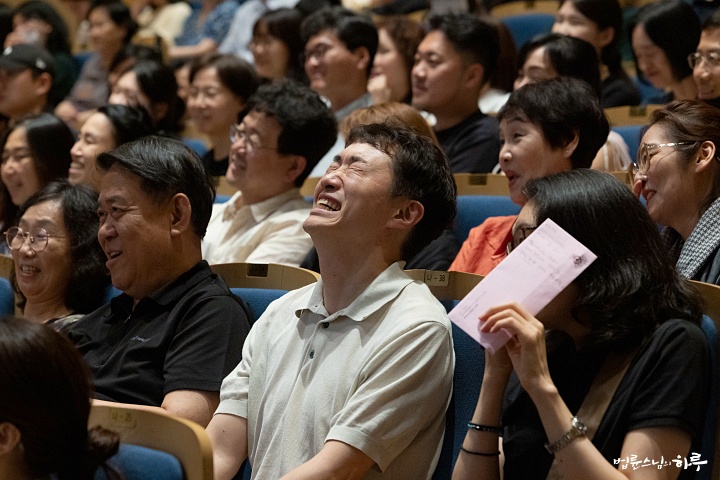
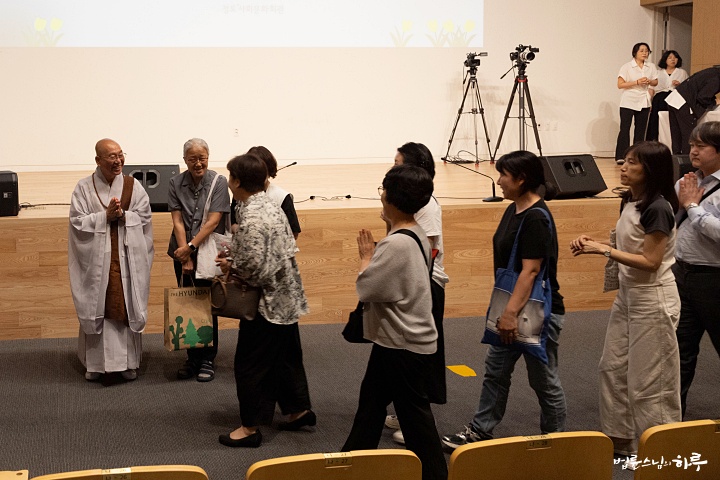
After concluding the talk, Sunim watched the audience leave, making eye contact and greeting each person one by one.
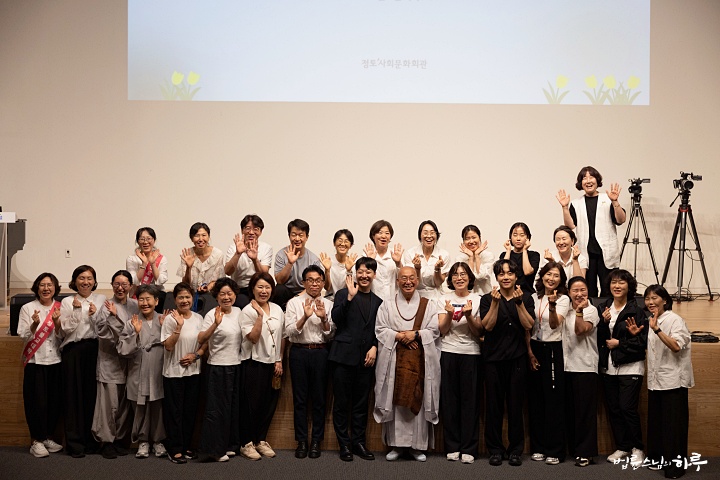
Sunim concluded the talk by taking photos with the volunteers who had worked hard throughout today's event.
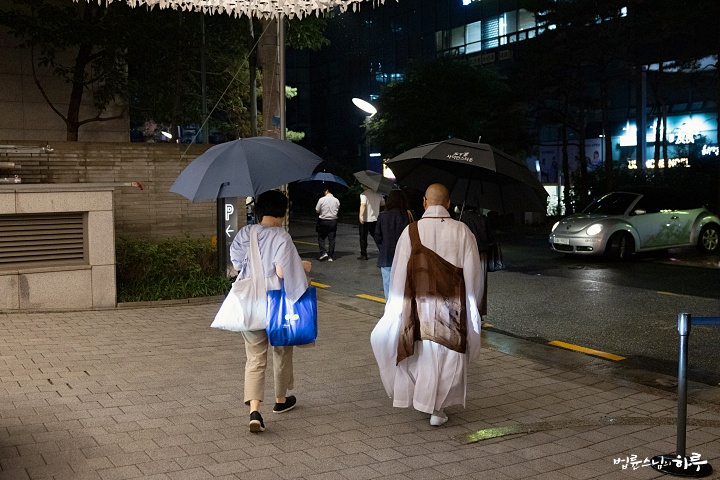
When Sunim went outside after the talk, it was raining. After arriving at the Seoul Jungto Center, Sunim attended to administrative work and concluded the day.
Tomorrow, on Day 8 of the INEB program, the closing program will be held at the Jungto Social and Cultural Center, and the delegation will move to the Dubuk Jungto Retreat Center in the late afternoon.