When Helping Others, We Must Help Them Become Self-Reliant.
Mar 13, 2026 - Day 5 in Sri Lanka, Evaluation Meeting with JTS Volunteers
Hello. Today is the last day of our visit to Sri Lanka. After completing meetings with JTS volunteers, we’re heading back home, wrapping up our five-day relief mission.
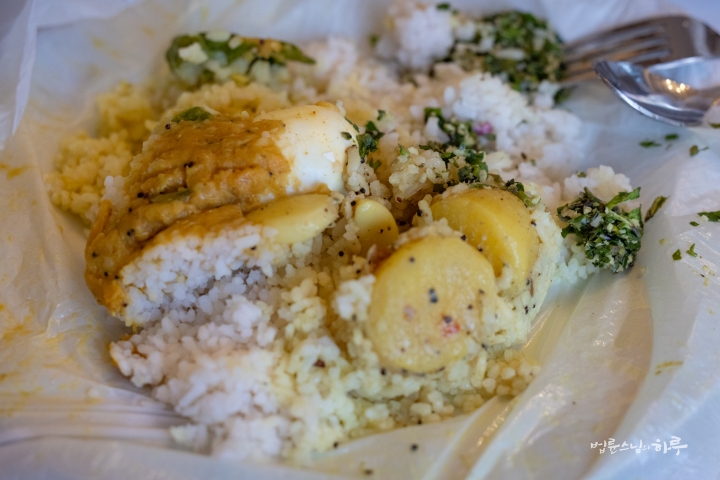
After completing his morning practice, Sunim had breakfast with Sri Lanka JTS volunteers at 6:10 AM to start the day. A volunteer living near the accommodation had prepared homemade lunch boxes early in the morning.
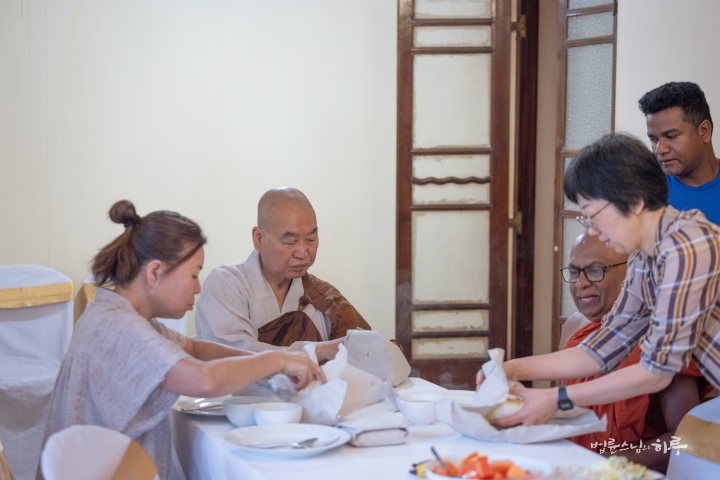
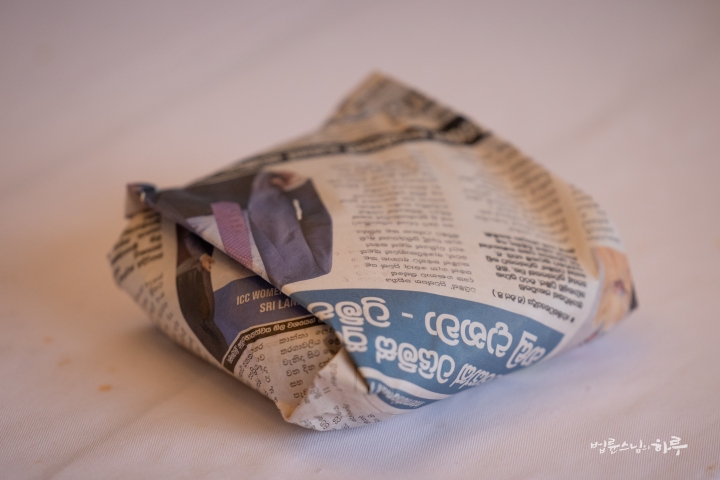
On this last morning in Sri Lanka, everyone began the day energetically by sharing a meal prepared with care.
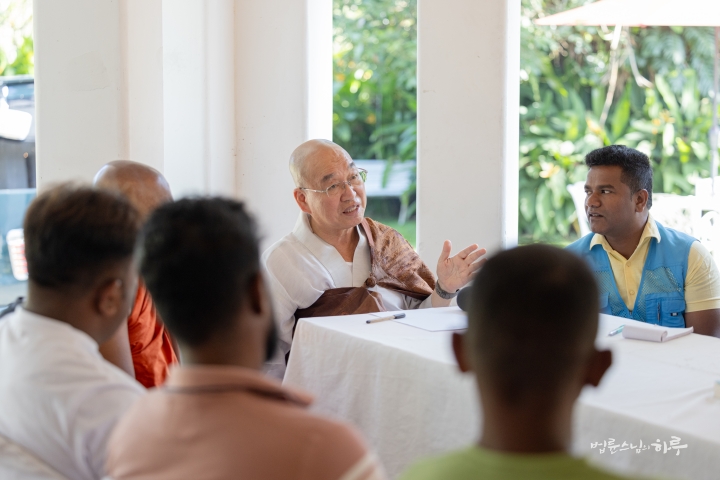
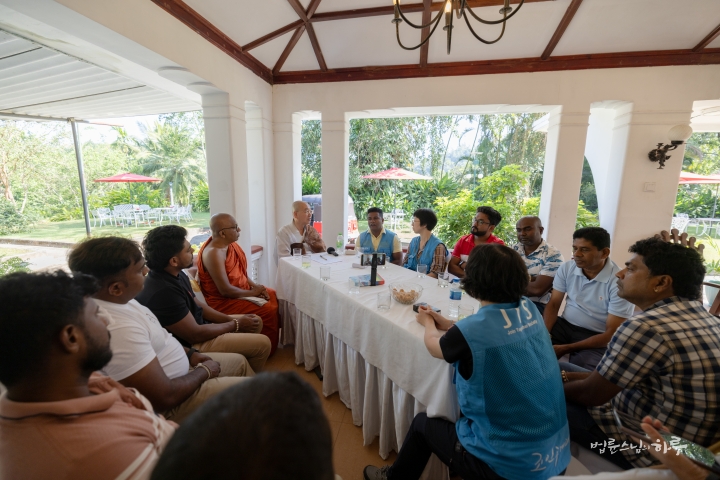
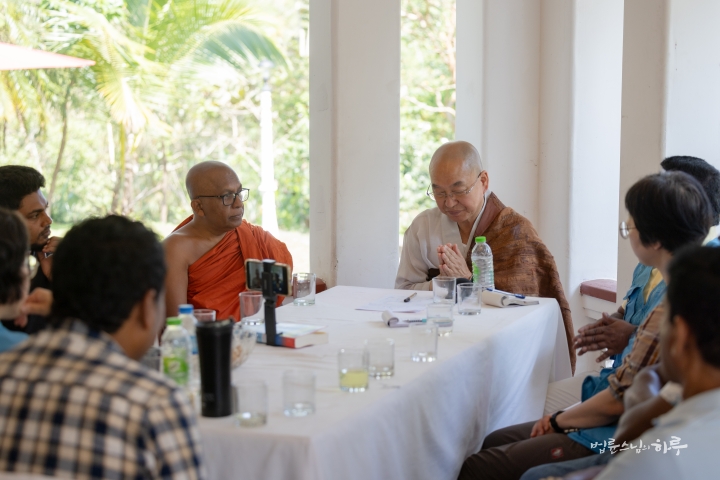
After finishing the meal, they immediately organized the space, and from 7 AM, Sunim held a meeting with Sri Lanka JTS members who had actively participated in this relief work.
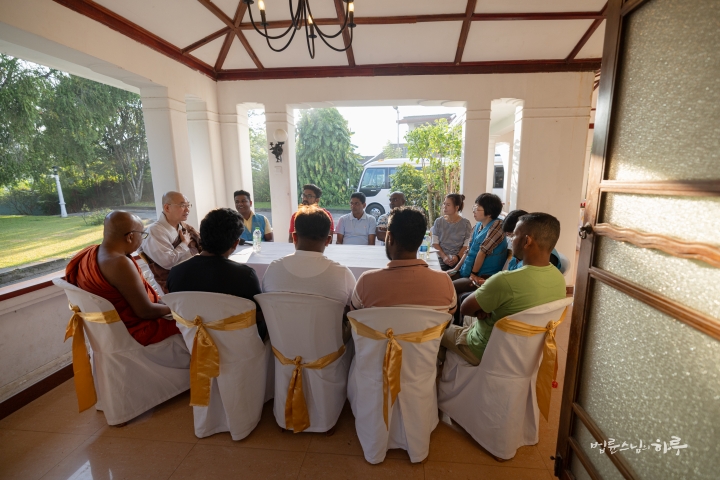
The meeting began with everyone reciting the Three Refuges (삼귀의) together in the Theravada Buddhist tradition, led by Venerable Dhammananda.
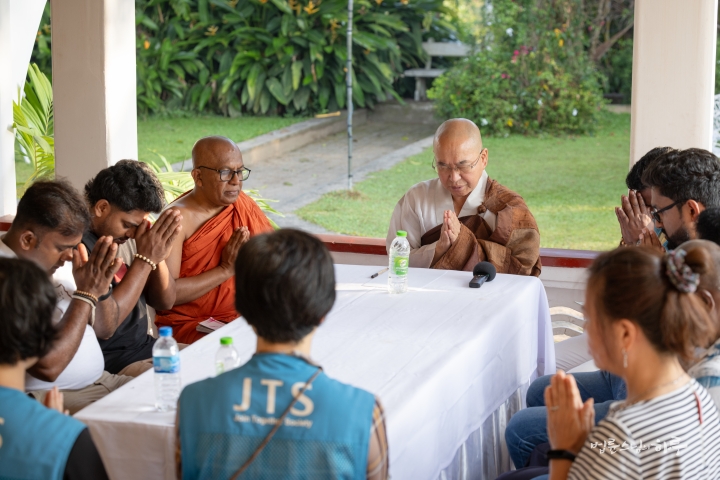
Buddhaṃ saraṇaṃ gacchāmi,
Dhammaṃ saraṇaṃ gacchāmi,
Saṅghaṃ saraṇaṃ gacchāmi
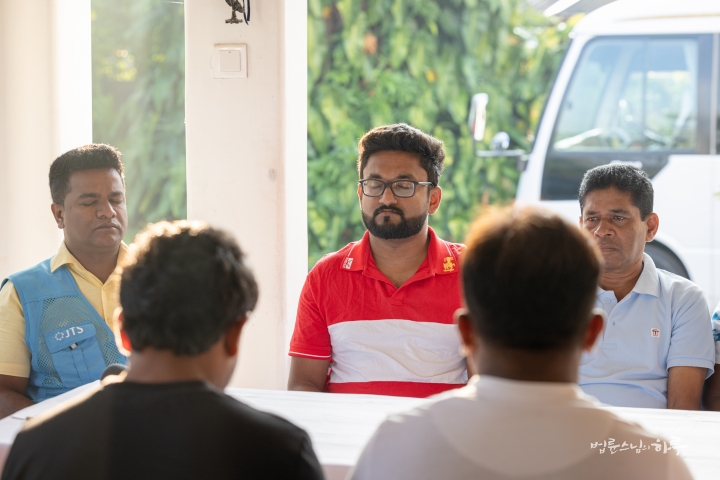
After a brief meditation, Sunim introduced three topics he wanted to discuss today.
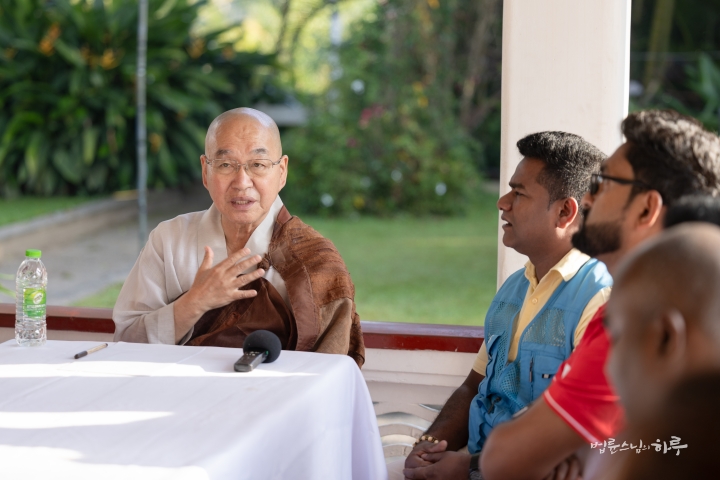
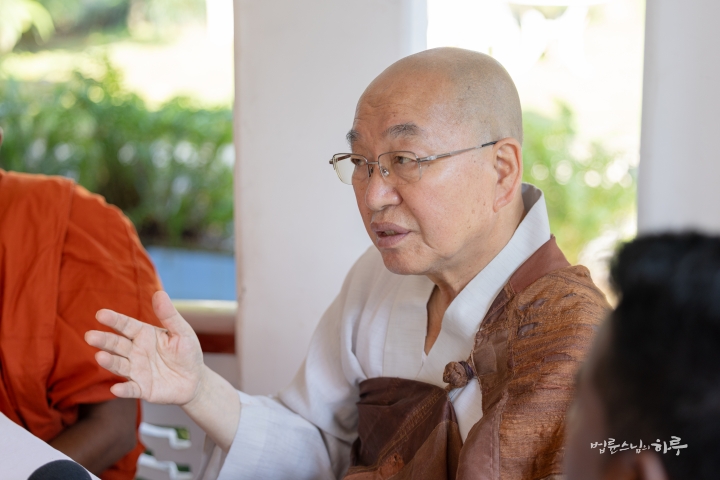
First, Sunim spoke about what perspective we should have when living life from a Buddhist viewpoint. Since all the volunteers share Buddhism as their faith, Sunim explained in detail what the Buddha’s core teachings are.
When Helping Others, We Must Help Them Become Self-Reliant
Children only need temporary help until they become adults. So from what perspective should we help children? We should help them become self-reliant, that is, able to live independently. Adults are people who live independently, while children are beings who need help. When helping children, we should help them so they can live independently later, not make them continuously dependent and unable to live alone. That would be helping incorrectly. We must provide help that contributes to self-reliance. If our help actually hinders self-reliance, then our helping has no value. When helping someone, ‘helping’ itself should not be the goal – what’s most important is whether that help contributes to their ability to live independently or not. Let me explain with an analogy. When you injure your leg and have difficulty walking, a cane is very helpful. You use the cane while your leg heals. But what should you do once your leg is healed? Should you continue using the cane out of gratitude, or should you discard it?”“We should discard the cane.”
What Kind of Help Should Be Given, and What Kind Should Be Stopped?
Even small insects and squirrels live well on their own, so why do humans, who are far superior to them, constantly plead “Please help me”? It is because of ignorance. Due to ignorant thinking, despite being far greater beings than insects or squirrels, humans cannot live independently and always seek help. This is why we are called ‘sentient beings (중생).’ However, when we overcome this ignorance and gain wisdom, we can not only live independently but also help others. This is why the Buddha’s teaching does not end with simply helping others. The Buddha’s teaching is about helping people become self-reliant and, furthermore, enabling them to help others. Therefore, when a Bodhisattva helps others, the key is not the ‘act of helping’ itself. Even if someone receives help initially, they must ultimately be able to live without assistance, and taking it a step further, that person should also become capable of helping others. This is how practitioners help others. This is the fundamental reason why JTS differs from typical charity organizations. The Buddha focused more on awakening people from ignorance to help them live independently rather than providing material assistance. The Buddha identified ignorance as the reason we cannot be self-reliant, which can be divided into three types: greed (탐), anger (진), and ignorance (치). Because of these three poisons, we use our energy to torment ourselves, which is why we cannot be self-reliant and always seek help from others. However, if we eliminate these three, we can live independently without needing to ask for help and can even help others. This is why we must eliminate the three poisons of greed, anger, and ignorance. Ultimately, the primary work of a Bodhisattva is to help awaken sentient beings from their ignorance, and the most important thing is to help sentient beings become self-reliant and live without suffering.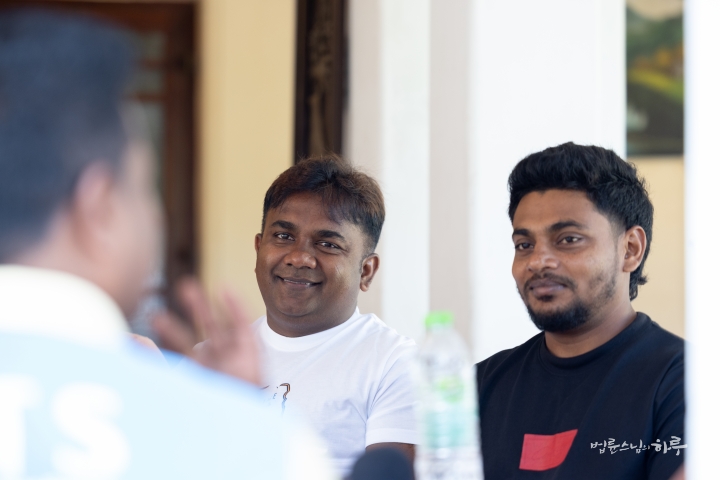
From Being Helped to Helping Others
If the Buddha’s teaching is about awakening those who cannot be self-reliant due to mental ignorance so they can stand on their own, then what JTS does is offer small assistance to those who cannot be self-reliant due to material hardship, enabling them to rise on their own. The direction is no different. Material support is on the same path as spreading the Dharma.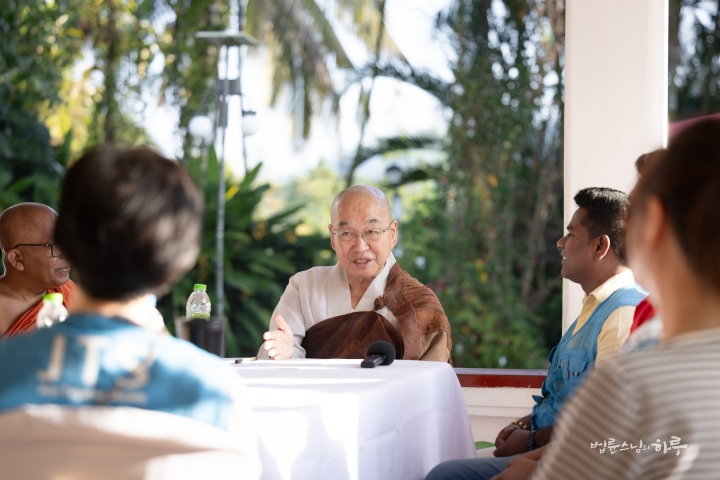
Let’s Make Our Village Better Ourselves
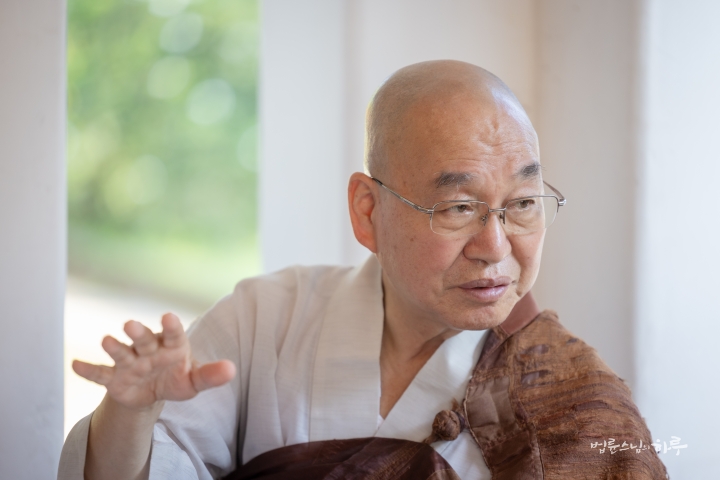
It’s true that Sri Lanka is experiencing some economic difficulties right now. However, from what I see, it’s not at a level where you need to receive help from others. Therefore, those who are more educated and better off should start a movement to help those in need. In other words, you need to have the perspective that ‘we will make our country better ourselves, and we will make our village better ourselves.’ Only when you have this mindset can you truly become a JTS member.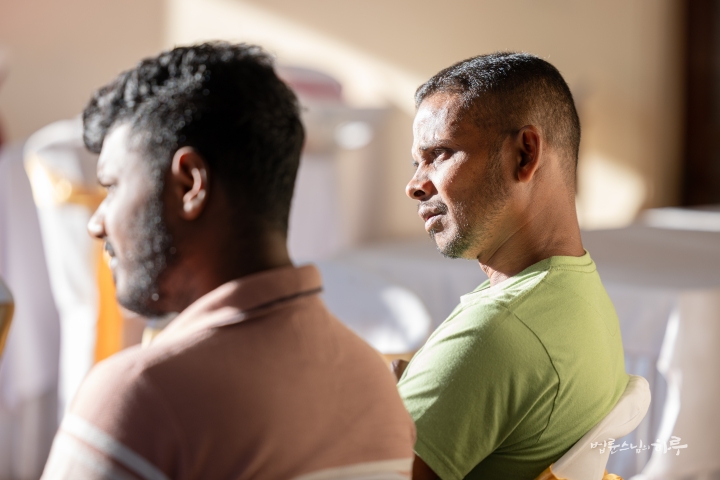
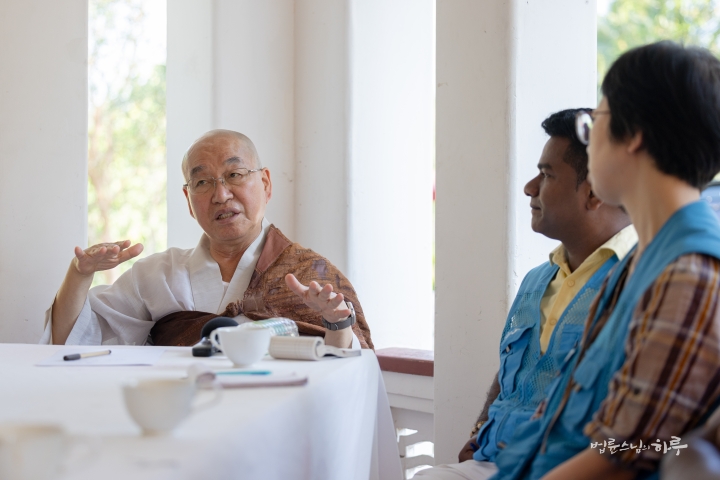
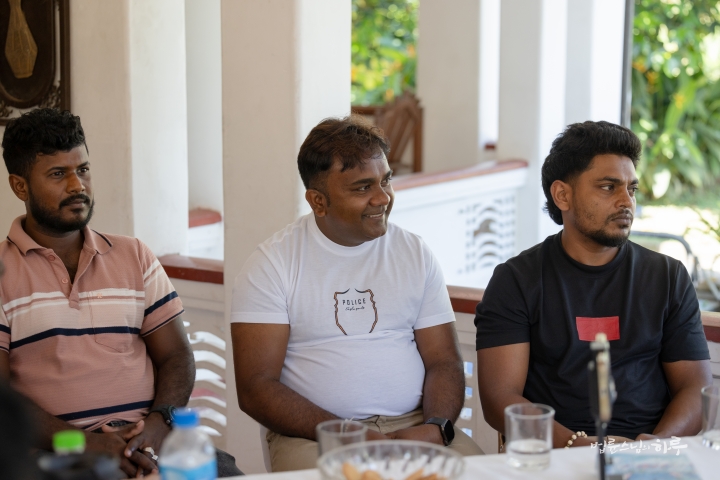
The Sri Lankan JTS volunteers focused intently on the story Sunim was sharing.
After a short break, they changed topics and resumed the meeting. Second, Sunim proposed several areas that needed improvement in this relief activity.
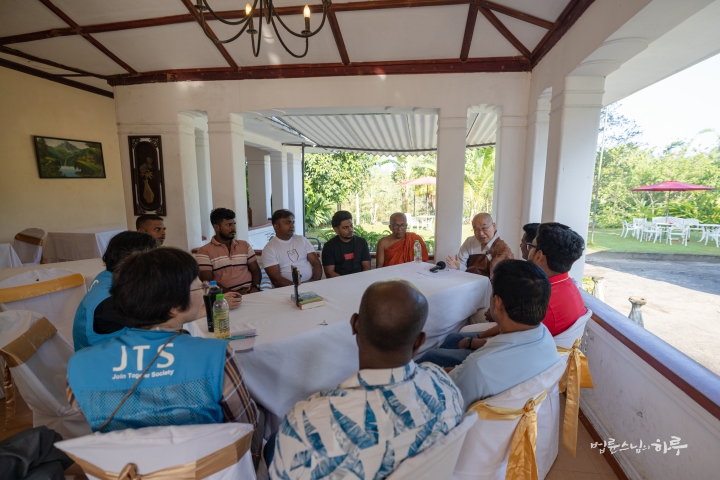
Sunim advised that rice distribution should be conducted at multiple locations rather than one large-scale site to avoid long waits and the burden of carrying heavy rice over long distances. He emphasized that school bags should be delivered directly to students in classrooms rather than to parents, and that bag sizes should be prepared according to age groups. He also stressed strictly maintaining the principle that coupons can only be collected by the person themselves at the designated time, and that vulnerable groups such as the disabled should be surveyed in advance for separate assistance. Regarding the difficulty of refusing requests from acquaintances, he offered practical advice to avoid personal awkwardness by cross-assigning responsibility areas. Finally, Sunim clarified the nature of emergency relief.
“Providing rice aid is for emergency situations. It’s already been three months since the flood. Now we should move toward supporting recovery. Even when providing separate support to the extremely poor who suffered severe damage, we need to clearly identify recipients through individual surveys. Distributing to all parents is not an appropriate method.”Finishing the feedback, Sunim said with a smile.
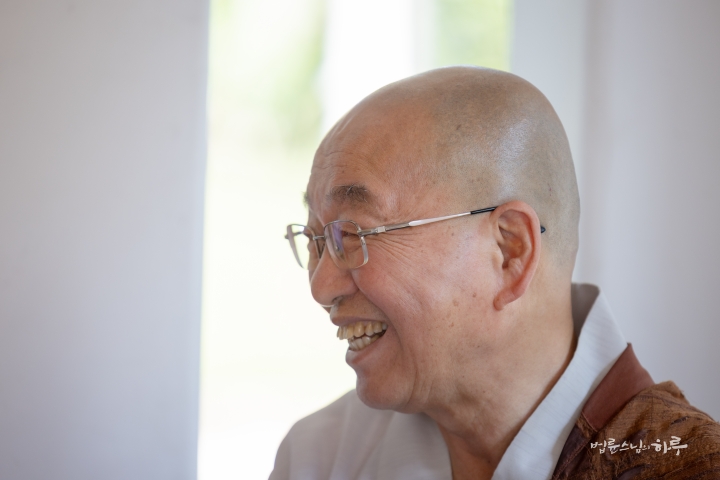
The Sri Lankan JTS volunteers also nodded with smiles.
Third, they discussed from what perspective and how to proceed with flood damage recovery projects in the future, and what direction Sri Lankan JTS should take.
Based on field surveys, Sunim identified Madugasgala village as the first priority. He proposed specific construction methods for the three requests from residents – bridge, irrigation channel, and road – focusing on methods that would reduce costs and allow village residents to do the construction themselves. For the three schools in the Jaffna area, he addressed each school’s needs including material support for electricity, toilets, and doors, installation of water purification filter facilities for the entire village, and fence maintenance using wire mesh. For the school damaged by landslides, he proposed building two temporary classrooms first, then constructing four proper classrooms through a construction company in the long term, with JTS covering 70% and parents, the education office, and local leaders sharing 30%. Sunim’s emphasized criteria were clear.
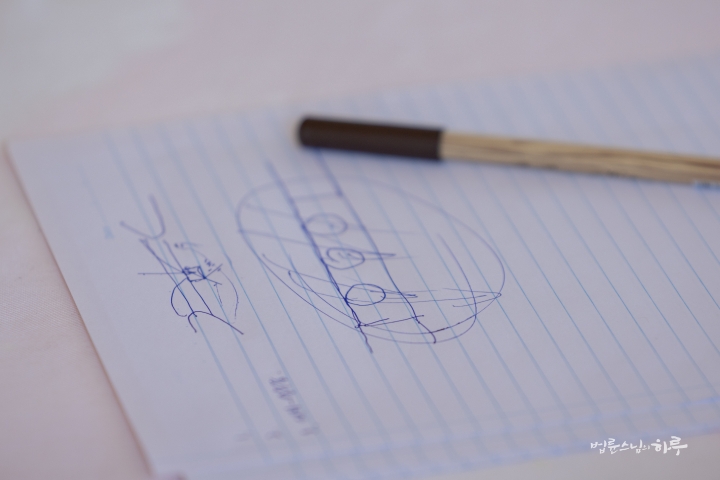
“It should cost little money, be easy work, and village people should be able to make it themselves. When construction gets big, villagers have to pay to bring in outside technicians.”The issue of fences to prevent animal intrusion at schools was also raised. Cement posts were expensive, and wooden posts would rot in 3-4 years. Sunim proposed a unique solution.
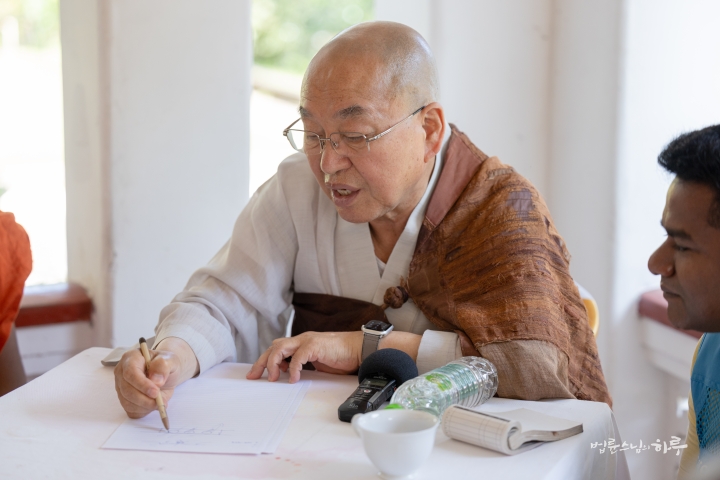
At the end of the meeting, Sunim pointed out the crucial difference between the relief supply distribution done so far and the recovery projects to be done in the future.
“Providing rice aid ends with a few days of preparation and distribution, but recovery projects require going to construction sites frequently over the next 3 or 6 months to supervise and check. It’s completely different level of work.”The Sri Lankan JTS volunteers nodded and responded.
“What we’ve done so far was simply giving, but this is something we have to manage. It’s completely different work.”
Sunim nodded and continued.
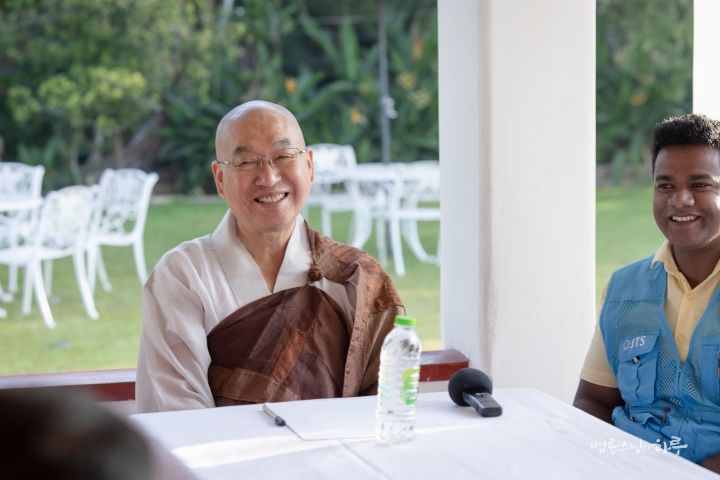
He also provided direction on future operating principles. He emphasized that undertaking projects far from one’s own area is difficult to sustain, and that operations should be centered around having one volunteer in each area. This was because it would be impossible to conduct 3-month construction projects by traveling to distant places every week. Sunim concluded the meeting saying.
“Let’s try this time to understand what problems exist, find ways to improve, and gradually expand.”The Sri Lankan JTS volunteers responded.
“Yes, we will check what to propose later and work to expand throughout Sri Lanka in the future.”
As they were about to end the meeting, one volunteer expressed gratitude to Sunim.
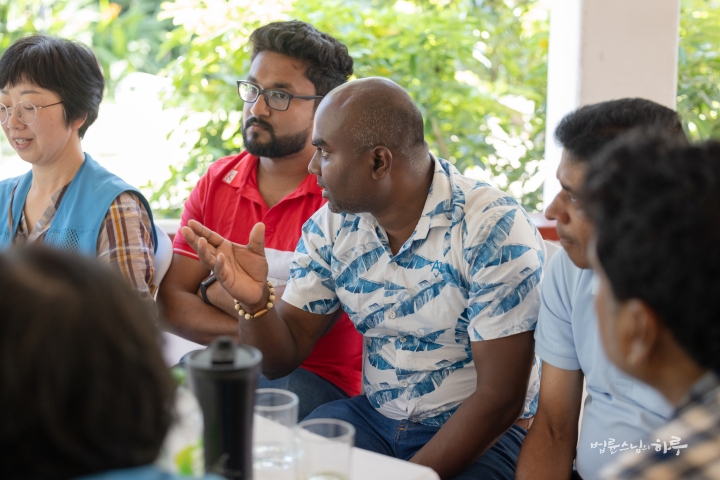
“Sunim, thank you for helping us Sri Lankan people so much over the past three years.”
“From now on, take Venerable Dhammananda as your teacher and do well independently.”“Yes, we will consult and cooperate well with Venerable Dhammananda and the Korean volunteers to do better in the future.”
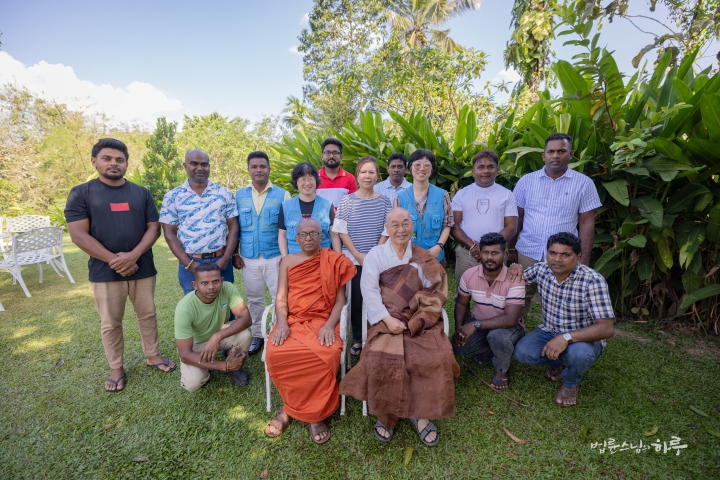
After finishing the meeting, they went out to the yard and took a commemorative photo together.
After encouraging everyone for their hard work, they boarded the bus.
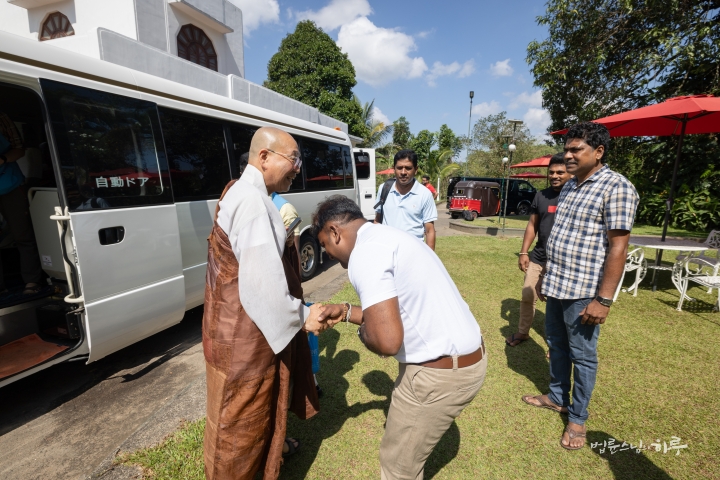
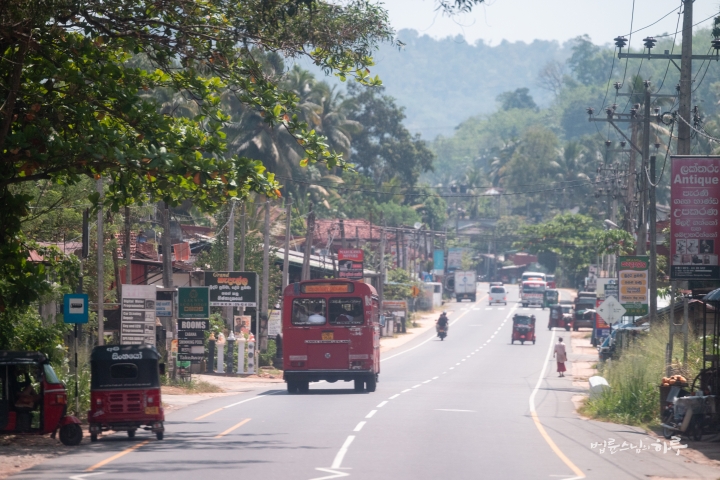
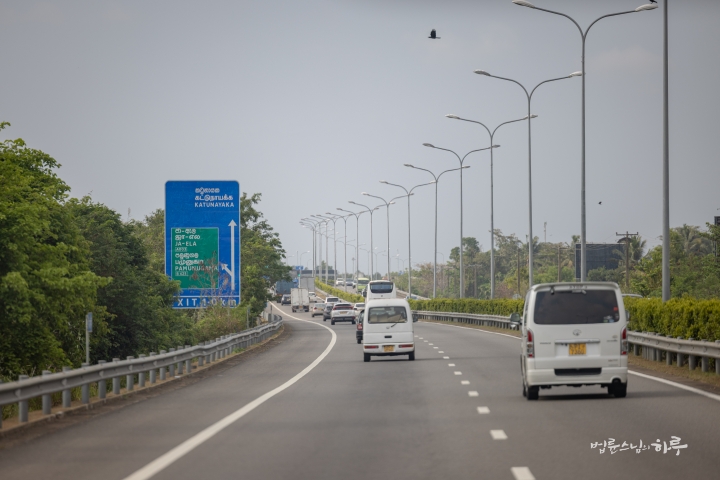
At 9:50 AM, they departed from the accommodation and headed to Colombo.
At 1:30 PM, they briefly stopped at Venerable Dhammananda’s temple to say farewell. Sunim expressed gratitude for the material and spiritual support provided during the five days of relief activities.
“Venerable Dhammananda, thank you for being with us this time.”“Thank you. I will work to develop Sri Lankan JTS well in the future.”
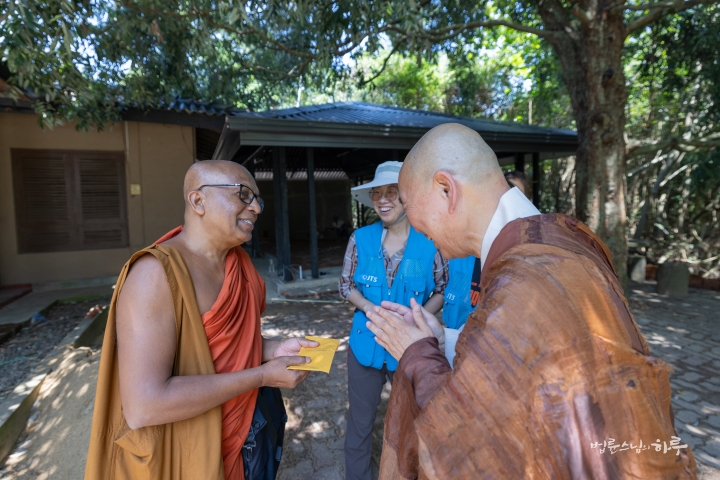
Venerable Dhammananda was constructing a new building. Sunim offered a donation for the construction project and then continued on the journey.
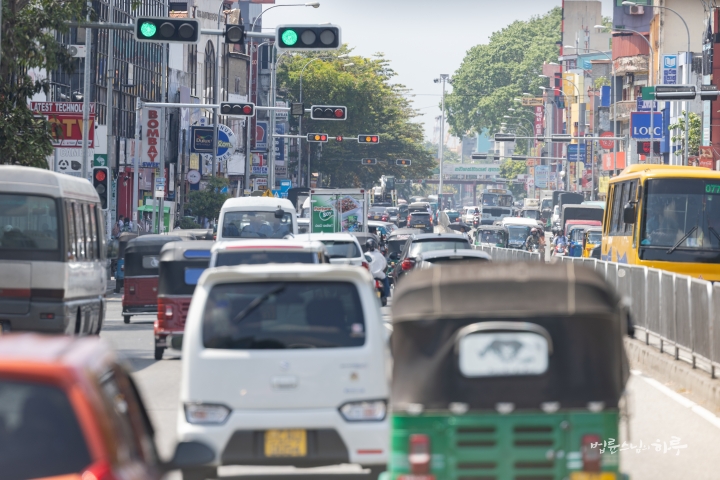
About 5 hours after leaving the accommodation, at 2:40 PM, they arrived at Sri Isipathanaarama Temple in Colombo. This is the temple operated by Venerable Assaji, who attended the ‘Inter-religious Solidarity and Peace (종교 간 연대와 평화)’ dialogue meeting hosted by The Peace Foundation last July. Since Venerable Pomnyun and Korean religious leaders are scheduled to visit Sri Lanka together in July this year, they stopped by to pay respects.
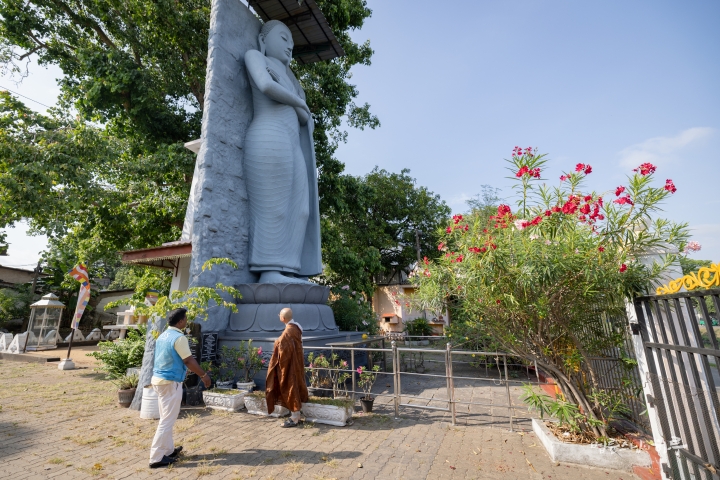
When Sunim got out of the car, Pastor Anura, who had visited Korea last year, was the first to run out and warmly welcome him.
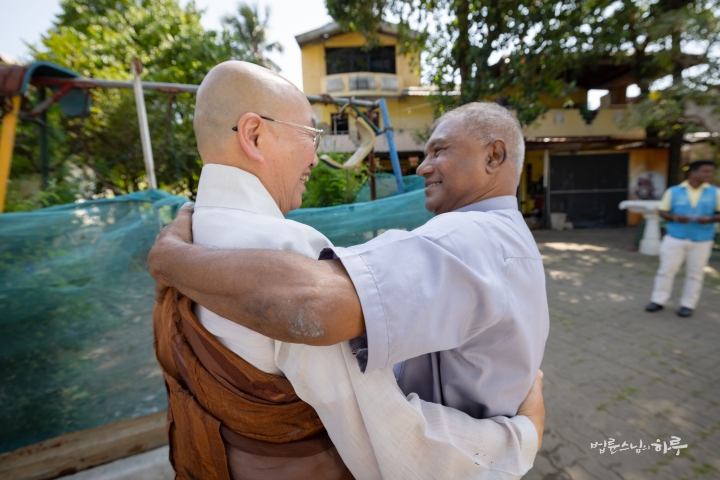
The two shared the joy of reunion with a hug, then entered the temple and exchanged greetings with Venerable Assaji.
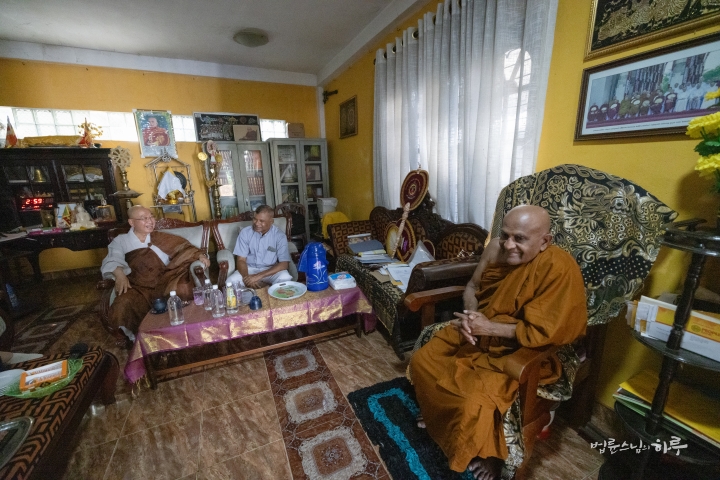
After the three exchanged pleasantries, they naturally began discussing JTS activities. First, Sunim explained that during this visit to Sri Lanka, relief supplies were distributed to flood-affected residents, and after directly surveying the sites, they decided to proceed with irrigation channel, bridge, and road recovery projects. They then discussed plans for Korean religious leaders’ visit to Sri Lanka scheduled for July this year. Sunim first explained the background of the visit.
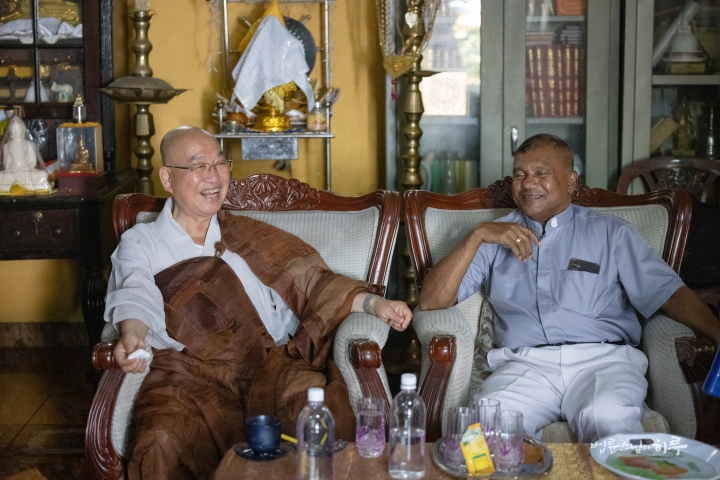
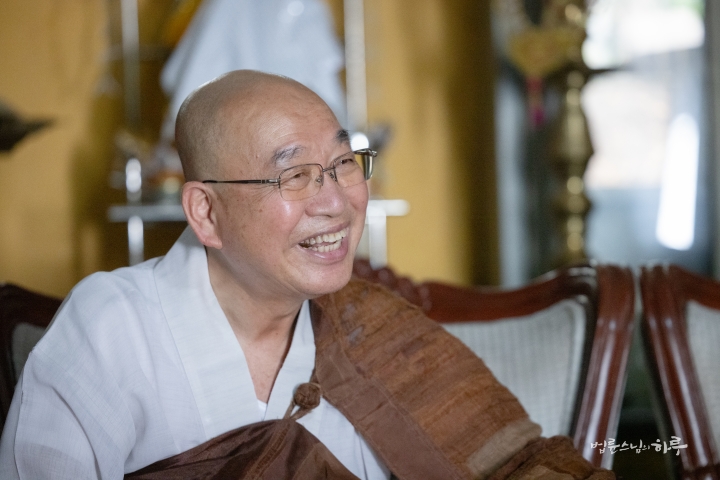
They then discussed the detailed itinerary. Sunim proposed combining a seminar to share stories of inter-religious peace activities, visits to various religious facilities, and tours of historical sites such as Kandy, Sigiriya, and Anuradhapura. However, they decided to avoid overly strenuous schedules as two participants were over 80 years old. The delegation would consist of 9 people total, including religious leaders from Catholic, Anglican, Protestant, Buddhist, Won Buddhist, and Cheondoist traditions plus staff members. It was arranged that the Korean side would cover vehicles and accommodation, while the Sri Lankan side would handle seminars and meals during travel. Venerable Assaji and Pastor Anura promised active cooperation once a draft itinerary was prepared.
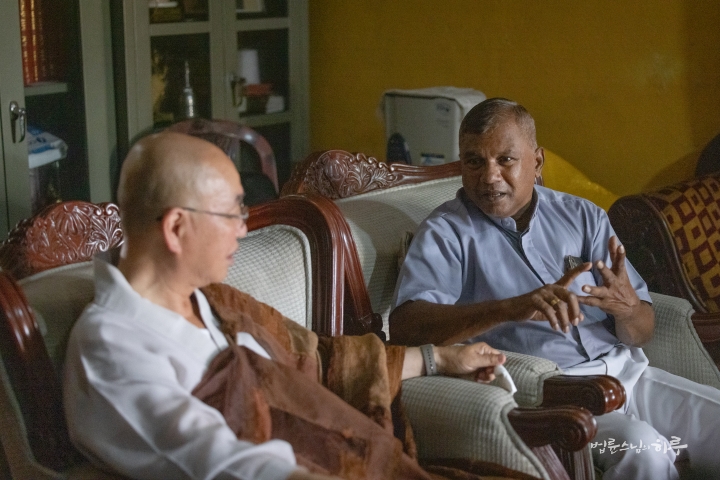
After finishing the conversation, Sunim rose from his seat and exchanged farewells with Venerable Assaji and Pastor Anura in turn. Promising to meet again in July, they left the temple at 4 PM and headed to the airport.
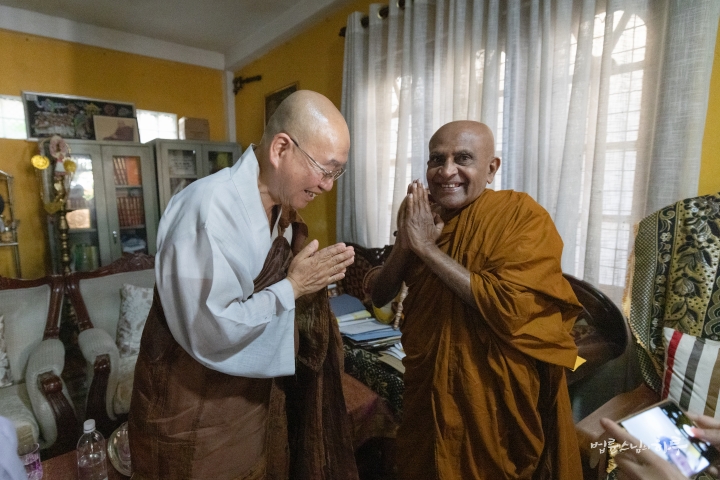
After an hour’s drive, they had a late lunch-dinner at a restaurant near the airport, then arrived at Colombo’s Bandaranaike Airport at 6 PM.
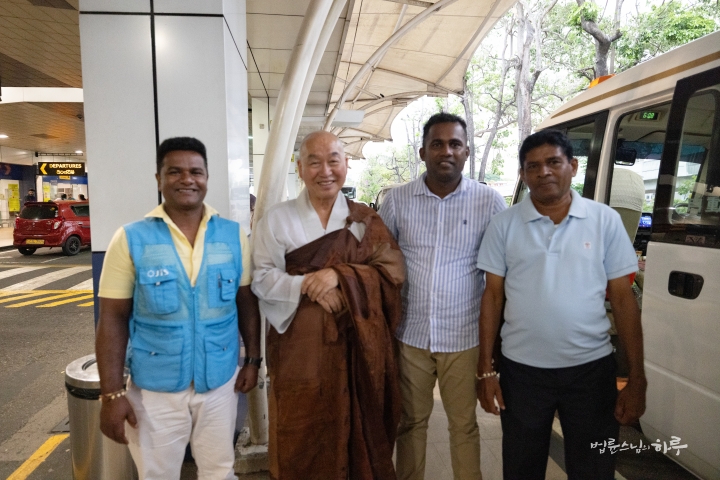
Namal, the Sri Lankan JTS Secretary General who served as interpreter during the relief activities, came to see them off at the airport. Sunim expressed gratitude to the driver who had driven well even to difficult-to-reach places during the tight 5-day schedule, took a commemorative photo together, and then proceeded with departure procedures.
After briefly attending to some work at the boarding gate, at 8:20 PM, they departed from Colombo’s Bandaranaike Airport and boarded the flight to Korea.
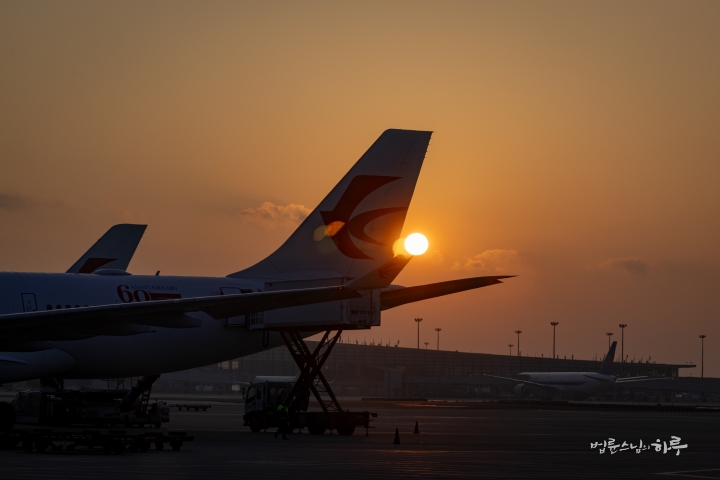
The plane is scheduled to arrive at Shanghai Pudong Airport, the transit point, tomorrow morning after a 6 hour and 45 minute flight. Perhaps the fatigue from the 5-day intensive schedule had accumulated, as Sunim fell into a deep sleep as soon as he sat down.
Arriving in Shanghai at 5:35 AM local time, after an 8-hour transit wait, and then another 2-hour flight in the afternoon, the Sri Lankan relief activity journey will come to an end at Incheon Airport.