Should I Dispose of Remaining Embryos After IVF Treatment to Find Peace of Mind?
March 12, 2026 - Sri Lanka Day 4, Relief Distribution to 1,000 Households in Gampola
Hello. Today was the day to directly witness the cyclone-ravaged Gampola area and distribute relief supplies to affected residents.
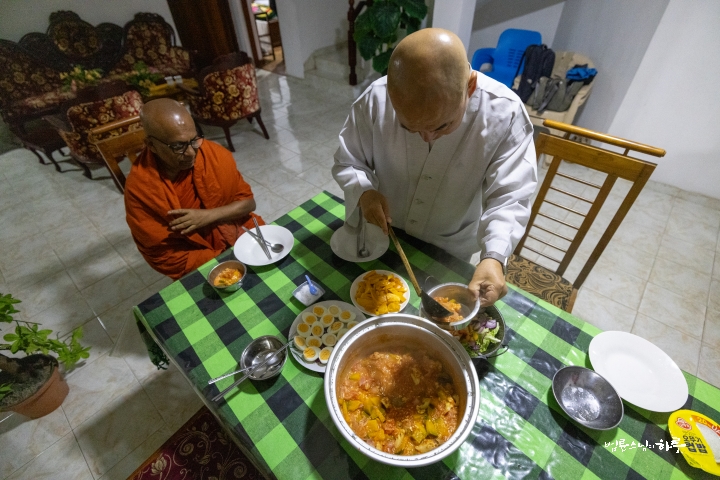
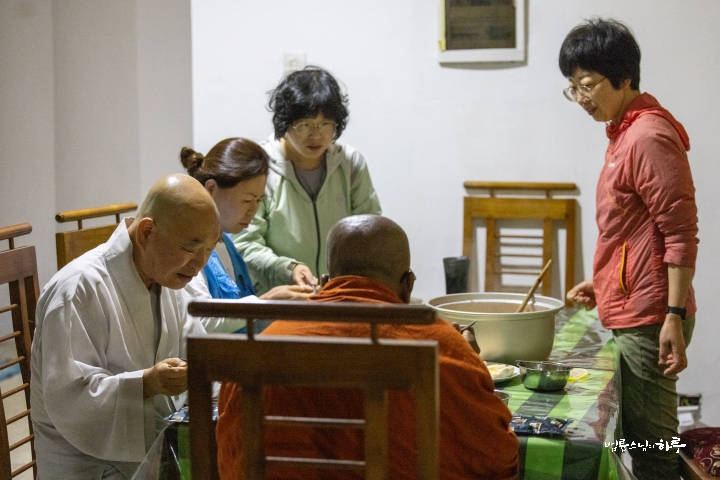
The accommodation was bustling from early morning. Since there was a simple kitchen at the lodging, JTS volunteers prepared a heartfelt breakfast with vegetables they had bought at the market the day before. After completing his morning practice, Sunim had breakfast with the volunteers at 6:10 AM.
After a hearty breakfast, Sunim went outside and began the day with a leisurely walk through the neighborhood.
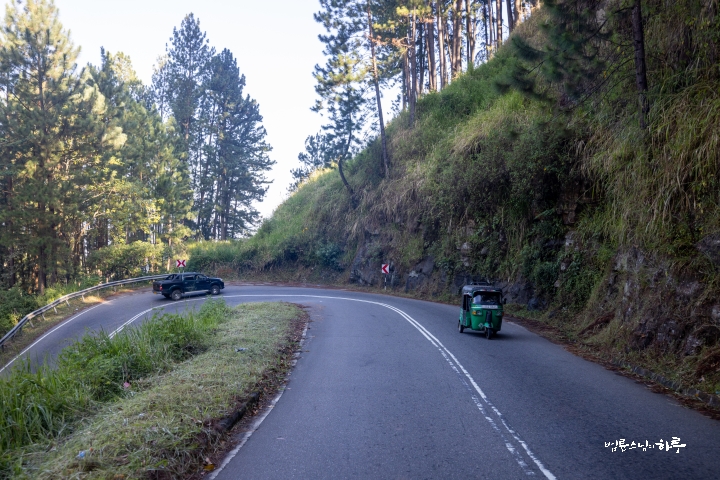
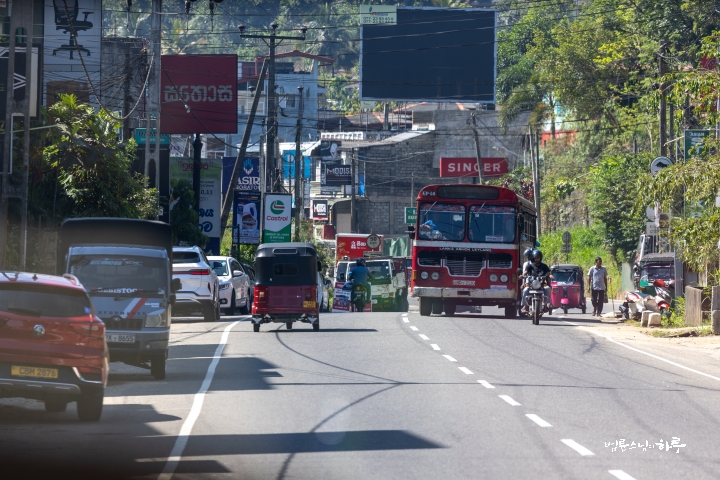
At 7:30 AM, they set out for the first destination of the day. The vehicle traveled along mountain roads in the Gampola area. Through the car windows, Sri Lanka’s morning scenery quietly flowed by.
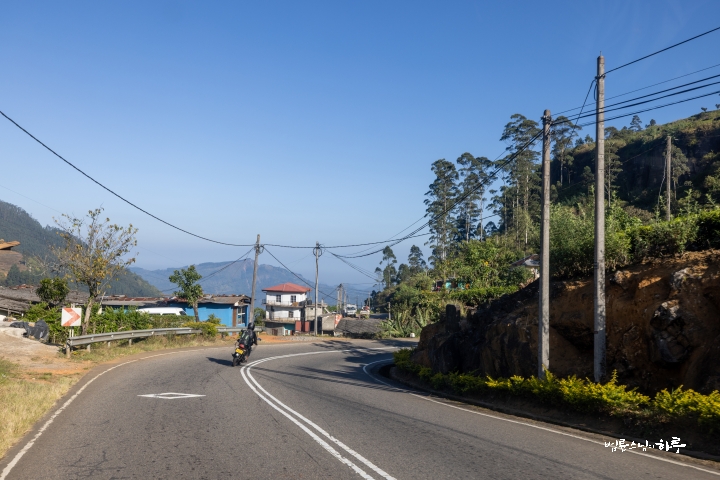
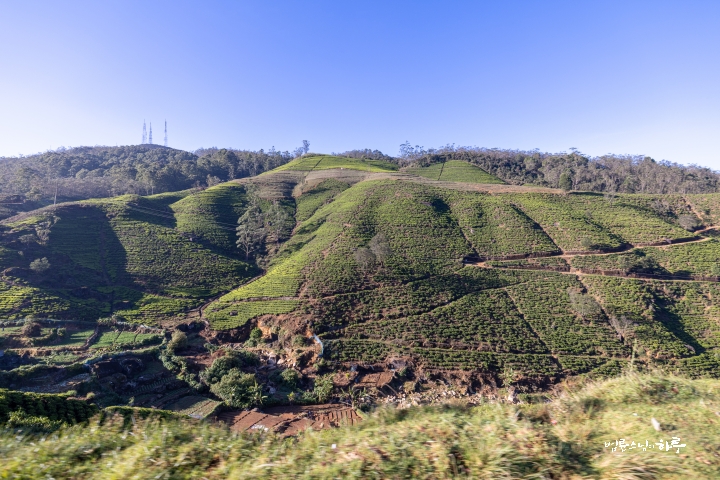
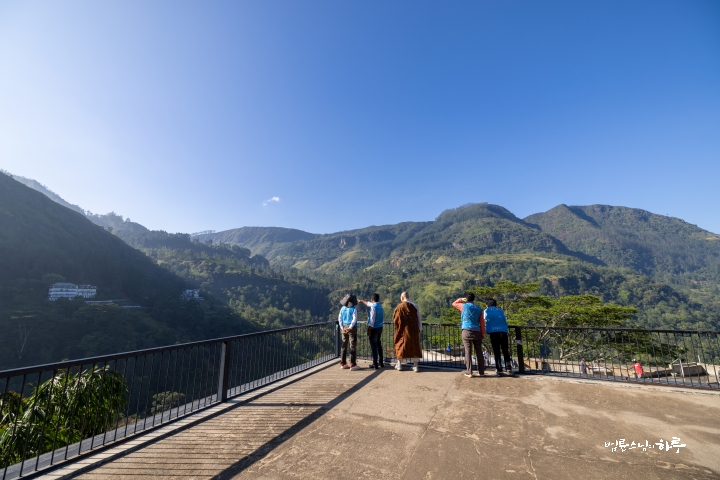
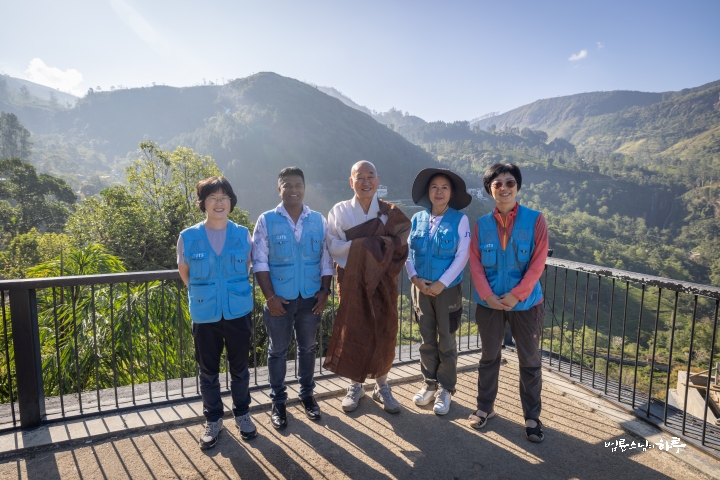
During the journey, they briefly stopped at a scenic spot to capture the view of distant mountains and villages below in a photograph.
Arriving in Gampola at 9:50 AM, they first visited the road that had collapsed due to the cyclone. Sunim got out and briefly surveyed the site, saying:
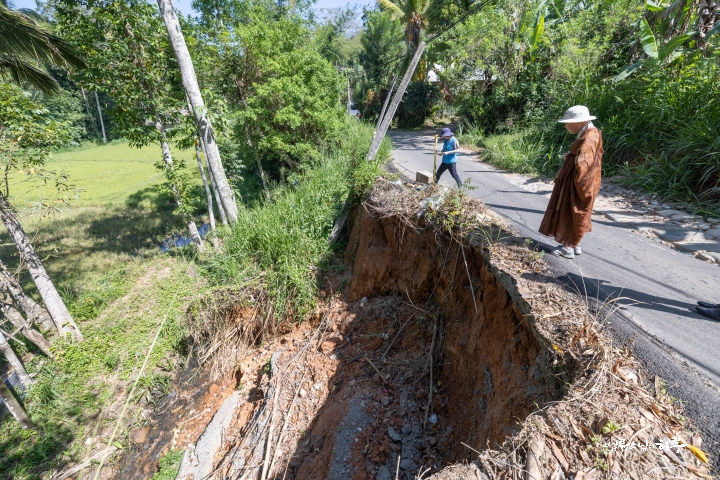
After briefly checking the site, they continued on their way.
At 10:00 AM, they visited Sri Sumedha College Gelioya in Gampola. This visit was arranged at the request of Namal, a JTS Sri Lanka volunteer.
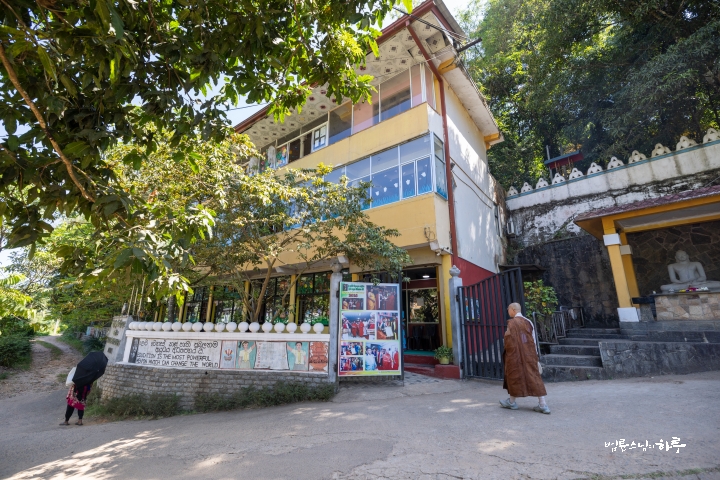
The temple and school were operated together, with a monk serving as both principal and abbot. He first gave a tour of the campus, then requested support for a computer room and educational equipment. After touring the school, Sunim said:
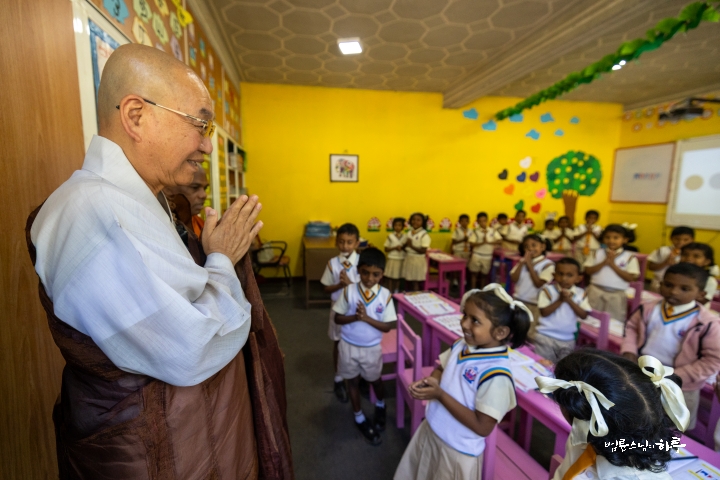
After looking around the school, Sunim said.
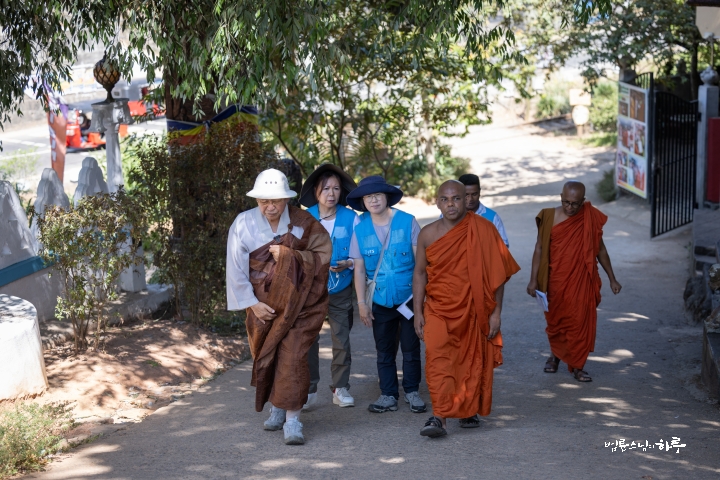
While the purpose of visiting Sri Lanka was clear, Sunim also respected and listened to the requests of people he met locally.
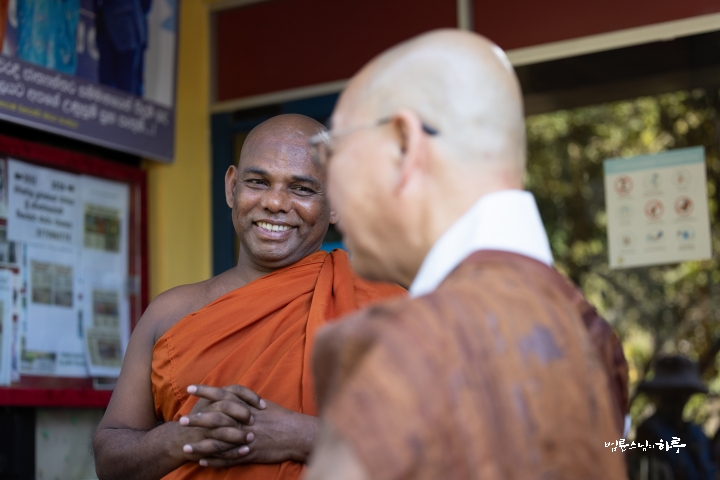
The abbot then served tea at the temple. Over tea, they discussed school operations.
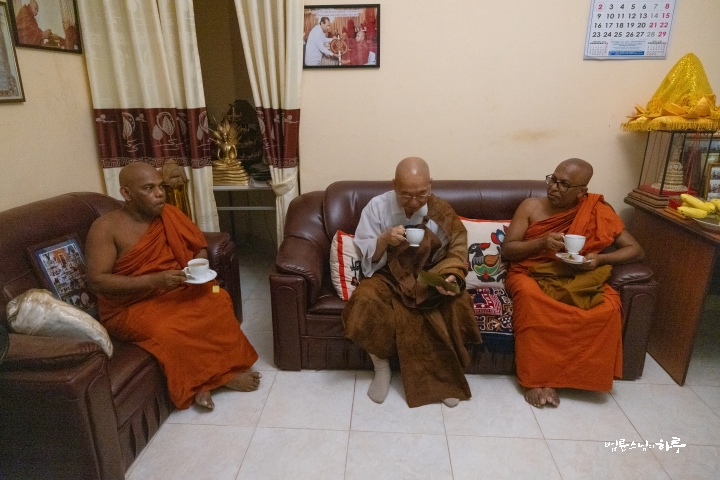
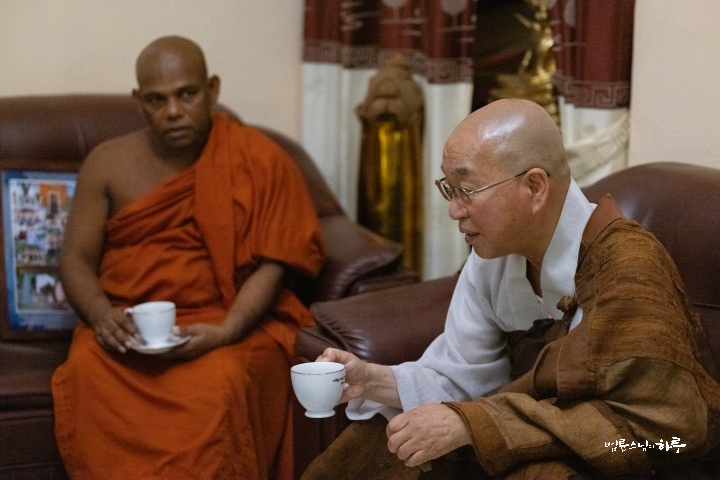
Without government support, they were covering teachers’ salaries by collecting modest tuition fees from students, operating from preschool through elementary levels. Though not large in scale, the school was neatly organized and had a reputation for being cleaner and providing better education than public schools. After presenting a donation to the abbot, they left the temple.
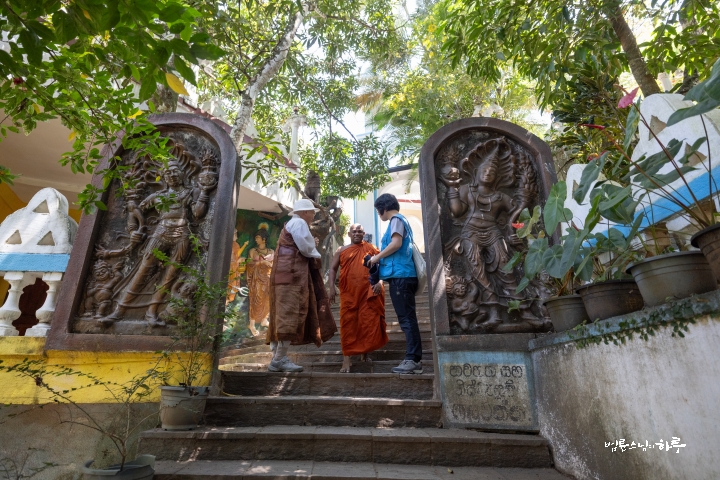
At 10:50 AM, Sunim and the JTS group headed to Uda Aludeniya Maha Vidyalaya.
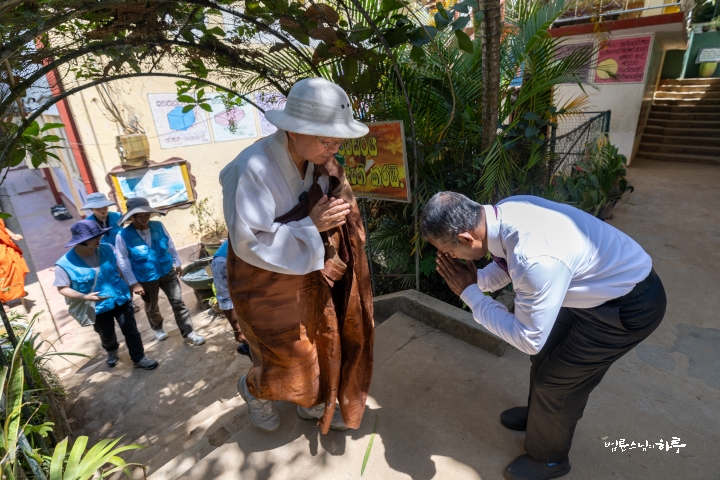
Here, the scars of the cyclone were more clearly visible.
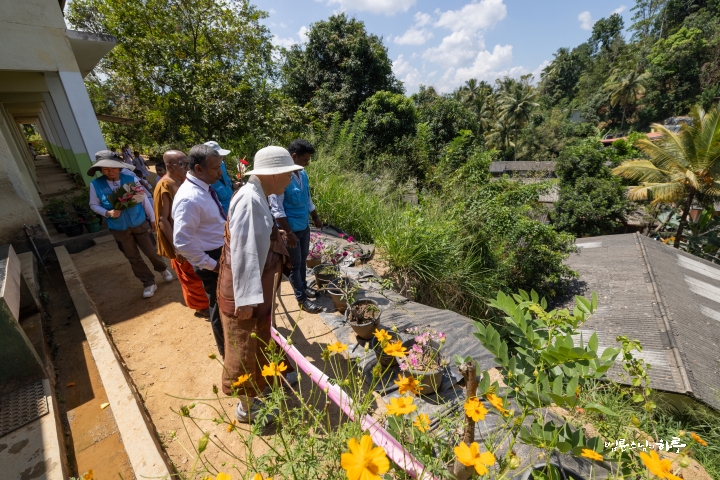
A landslide had occurred on the hill behind the school, and a retaining wall nearly 10 meters high had collapsed, threatening the school building.
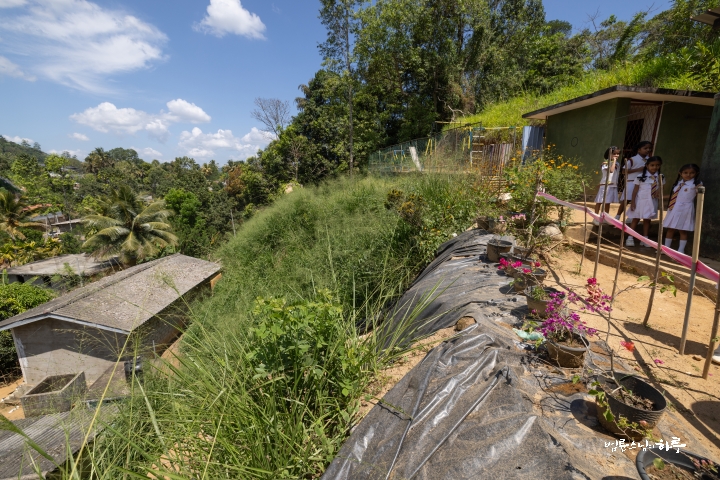
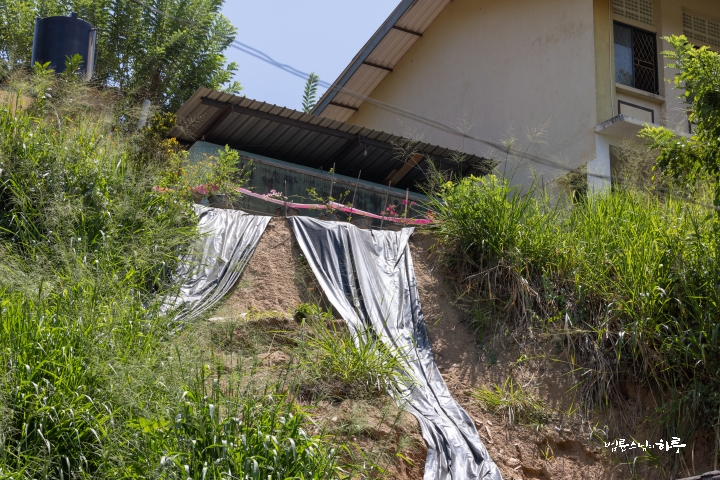
After surveying the site, Sunim immediately assessed the situation and said:
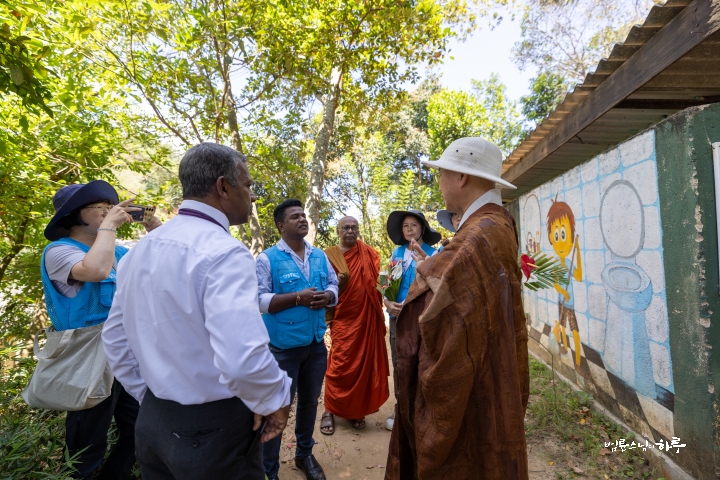
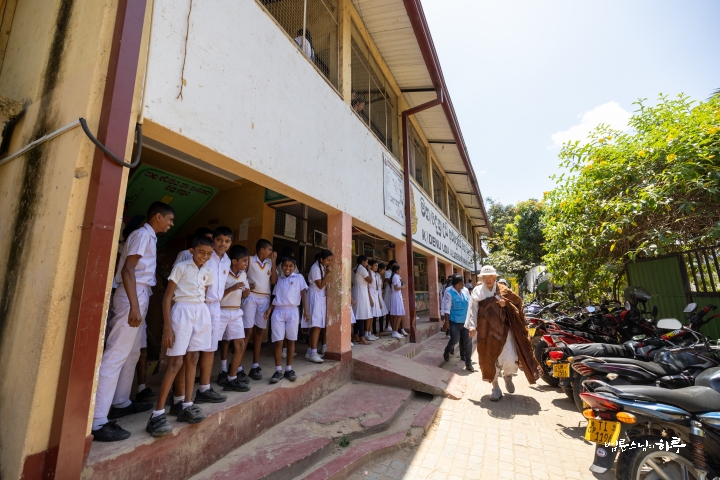
The collapsed retaining wall was beyond what parents could handle through volunteer labor. However, the retaining wall wasn’t the only problem. Upon entering the school, the classroom shortage became much more pressing. With 710 students studying from grades 1 through 13, there was a severe shortage of classrooms. Four classes were simultaneously conducting lessons in one auditorium space, and some classes were being held outdoors.
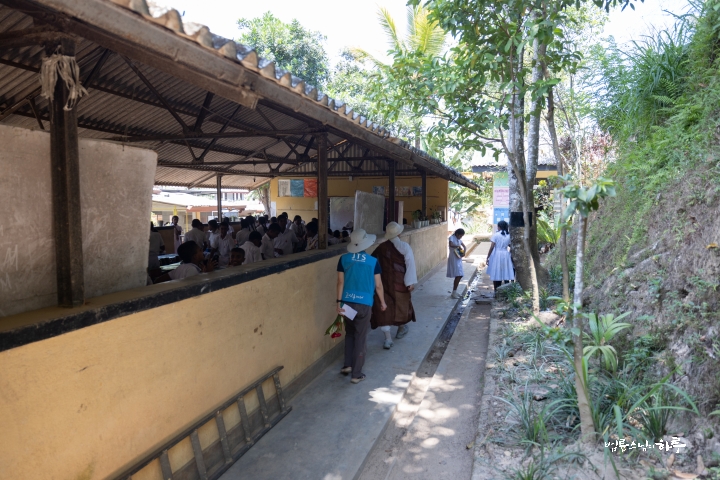
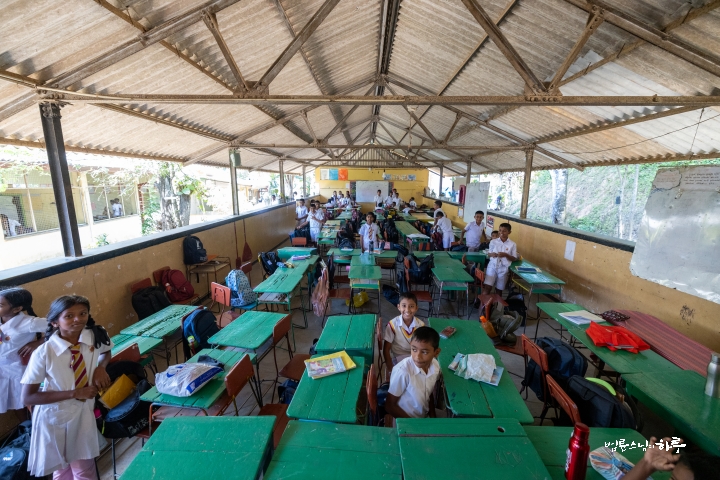
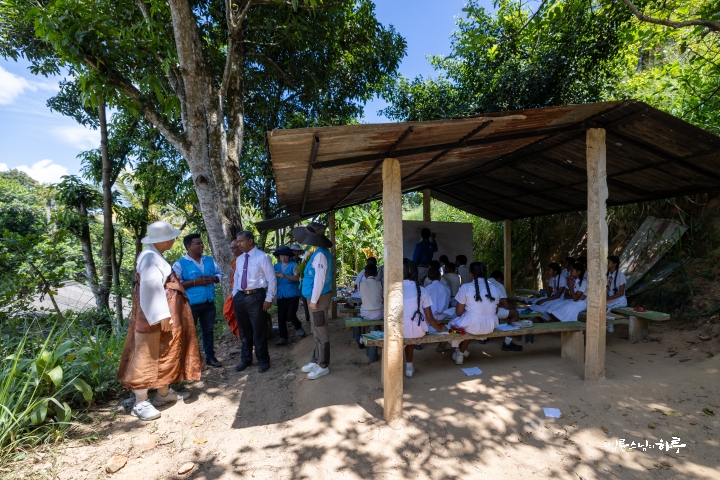
Seeing multiple class sounds overlapping in one space, Sunim paused and observed for a while. He suggested addressing the urgent issues first.
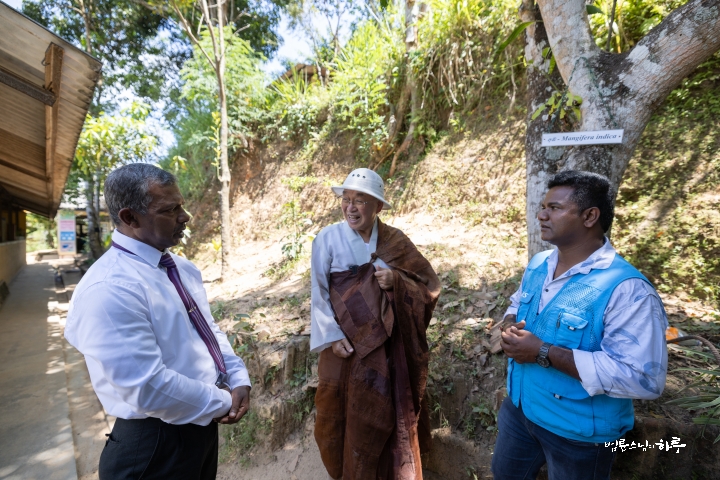
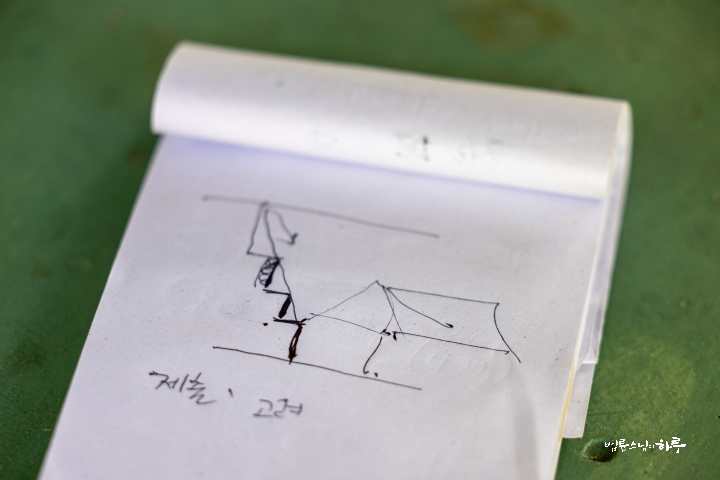
Sunim also re-examined the collapsed slope. If they cut the eroding slope into terraces and built retaining walls, this part could be managed to some extent through parent labor. However, it was important to first confirm whether the school and parents could actually take action. Sunim drew diagrams on paper while proposing methods to restore the collapsed slope.
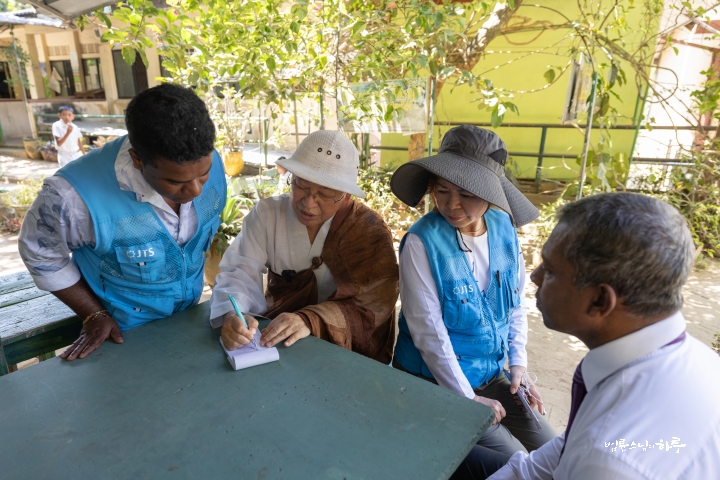
Expanding the main building was a different matter. After examining the school grounds, it was determined that building about four rooms on a second floor would be realistic if new classrooms were to be built. However, this construction couldn’t be done through parent volunteers alone. So Sunim clearly presented the conditions:
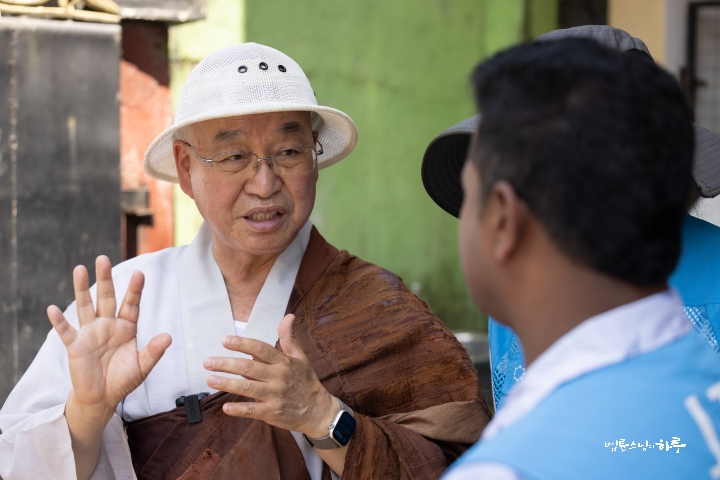
“Yes, we’ll do that.”
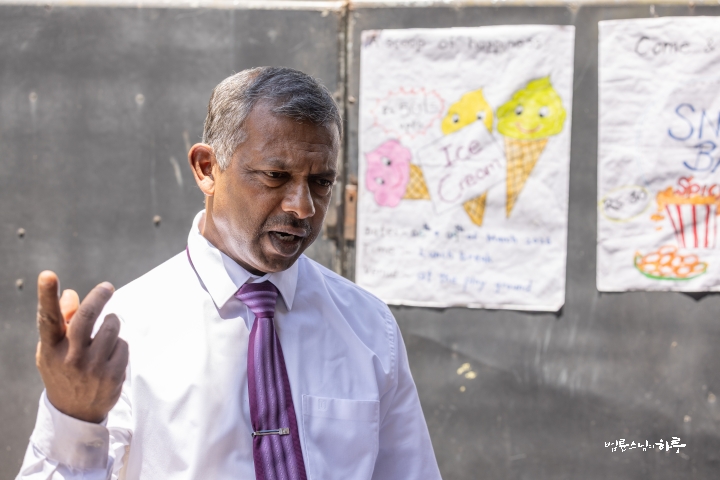
Throughout the site inspection, Sunim carefully examined what was urgent, who could do it, how much was possible through resident participation, and where government and professional technicians’ territory began.
At 11:30 AM, they switched to tuk-tuks and moved to another damaged site.
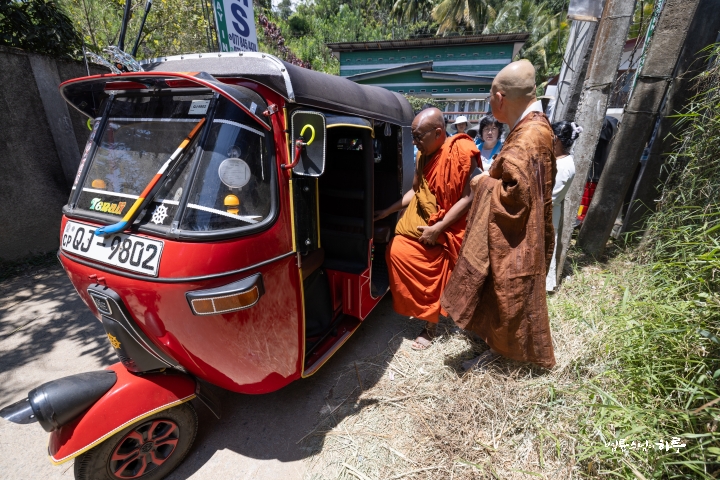
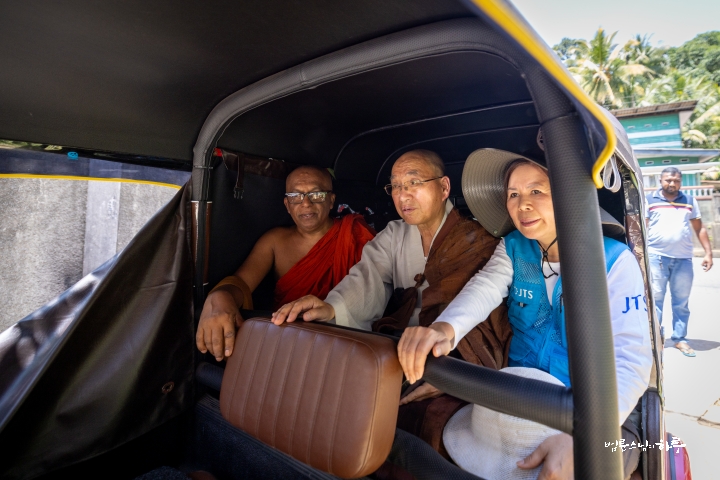
Deep inside a narrow alley, a collapsed wall had cut off the road.
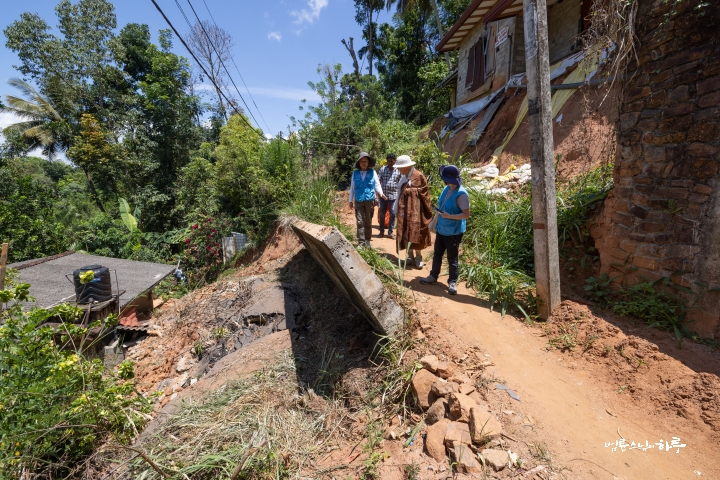
Soil and concrete chunks that had flowed down from behind houses were blocking the road, affecting 80 households that used this path. While people could barely pass through, tuk-tuks couldn’t, and even sick people had to take long detours.
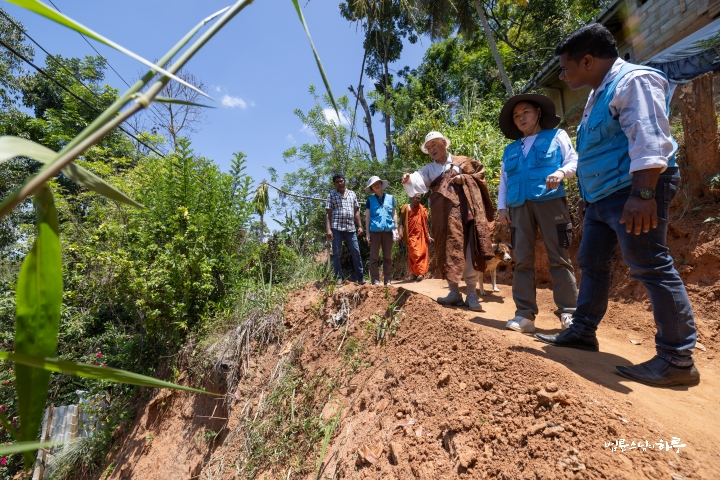
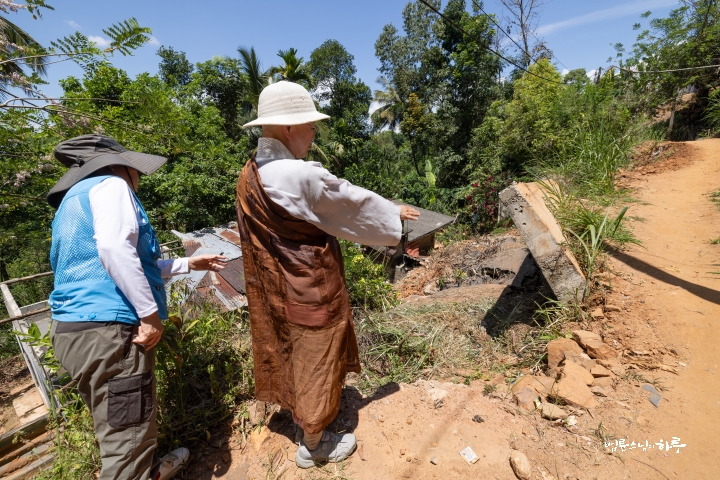
Since proper construction would be a major project, residents requested at least temporary access for tuk-tuks. After carefully examining the site, Sunim specifically outlined what residents could do:
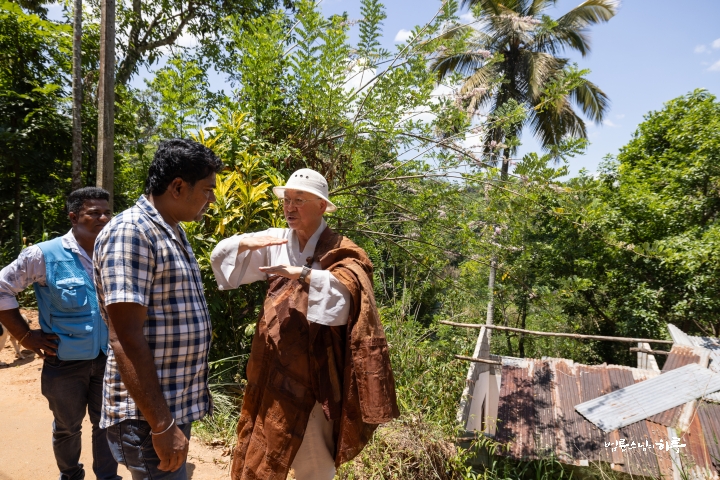
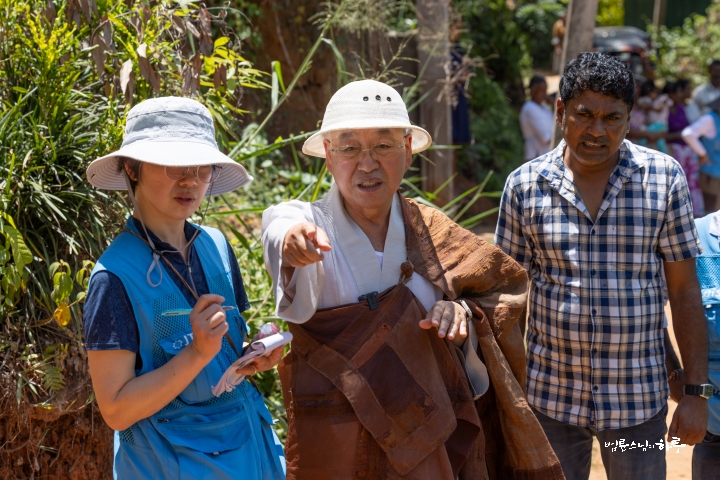
While proper road maintenance was the government’s responsibility, it would take time for government assistance to arrive. Supporting materials so residents could manage in the meantime—that was what JTS could do. Sunim once again clearly distinguished between what was possible and impossible at the site.
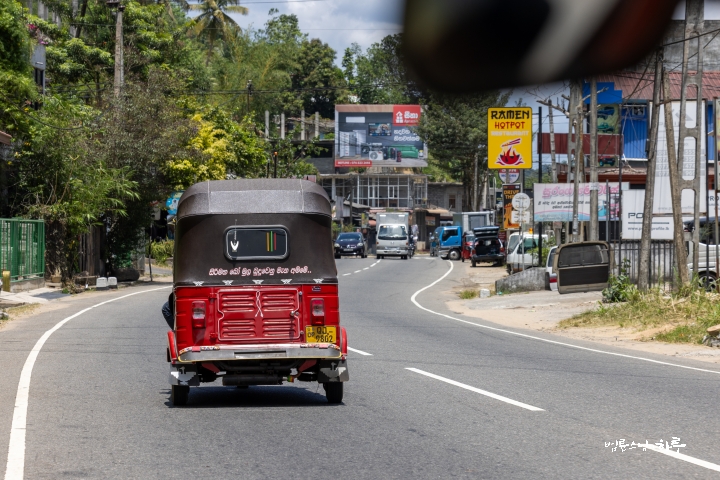
At noon, Sunim and the JTS group arrived at the temple, the relief distribution site, and had lunch. JTS Sri Lankan local volunteers had each prepared side dishes at home and set up a lunch table.
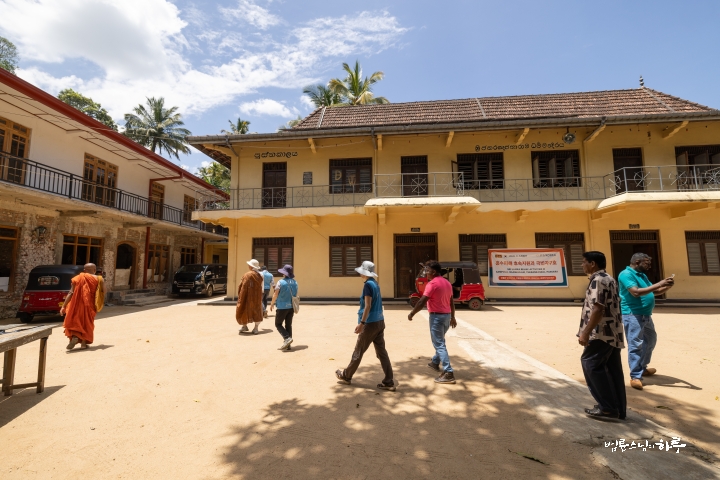
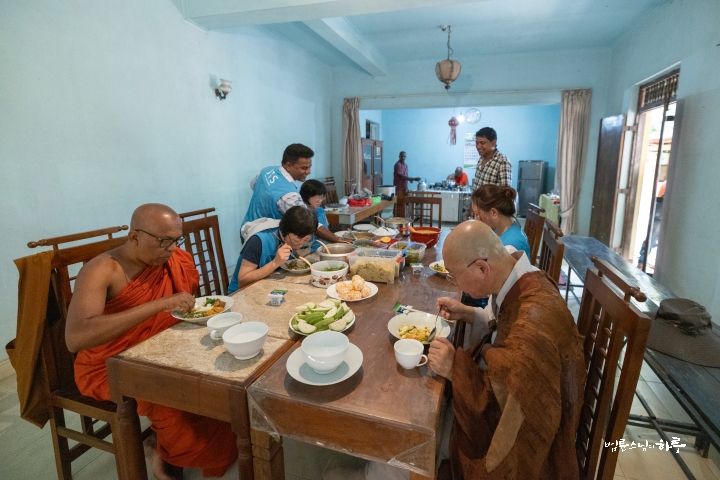
After catching their breath, they began full-scale distribution preparations from 12:30 PM. They organized supplies, checked traffic flow, and prepared to receive people.
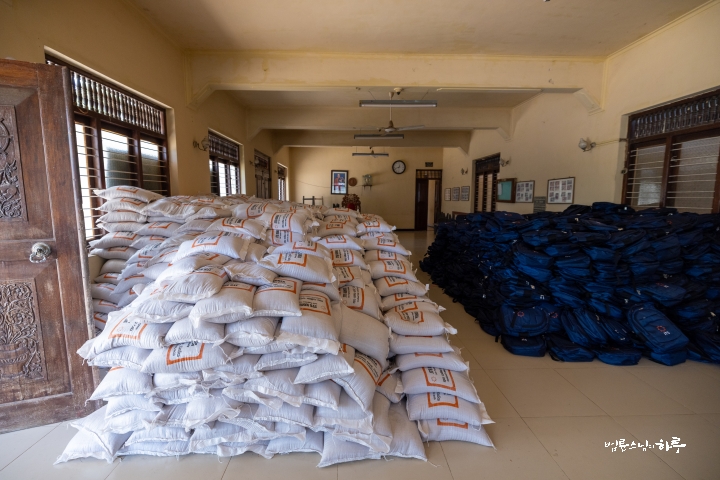
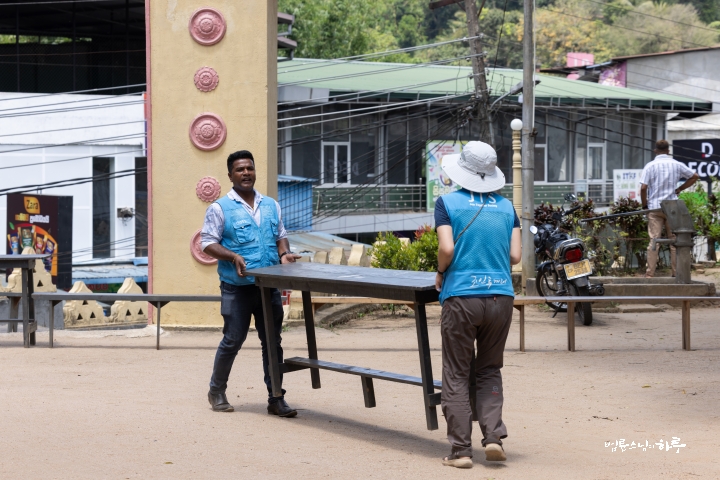
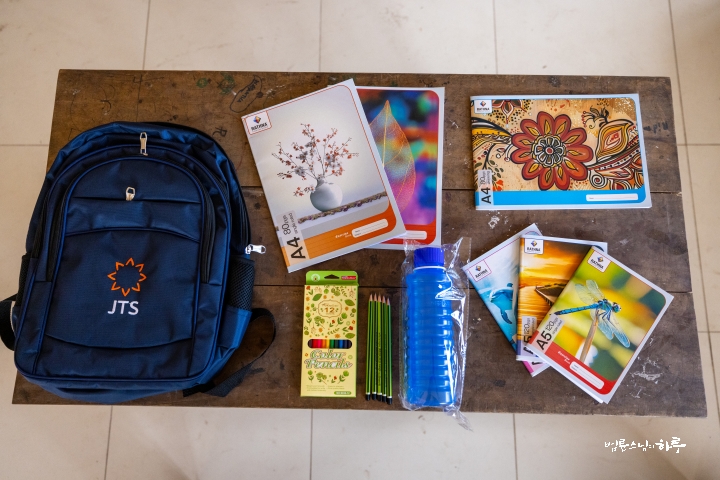
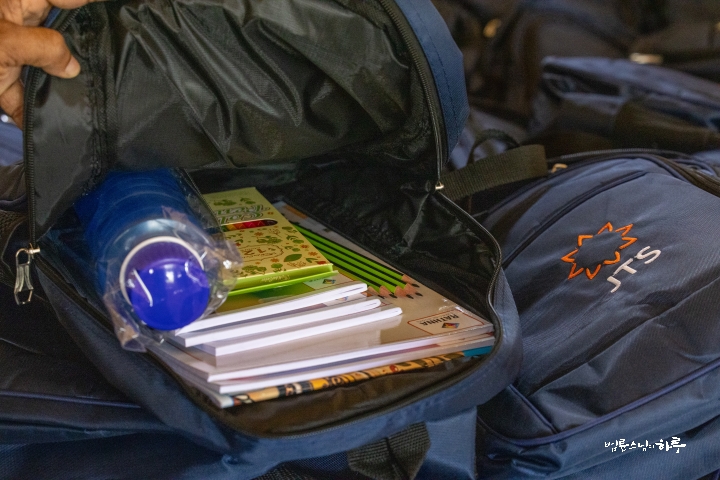
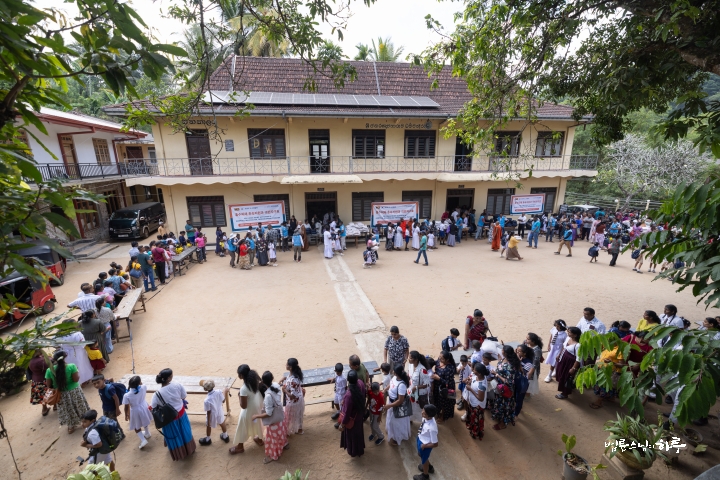
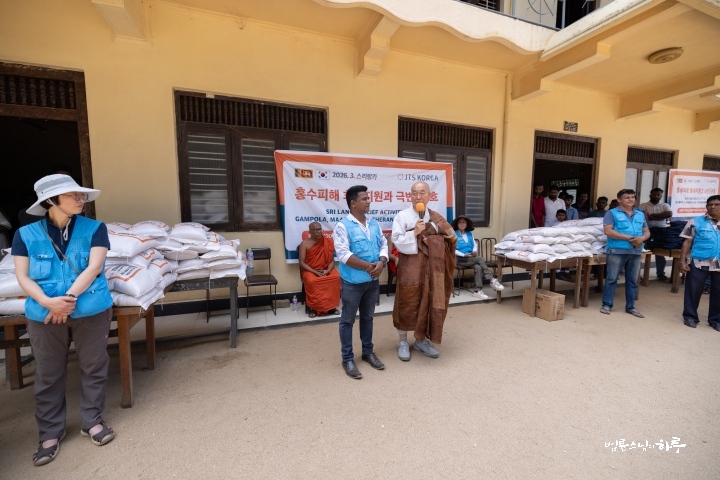
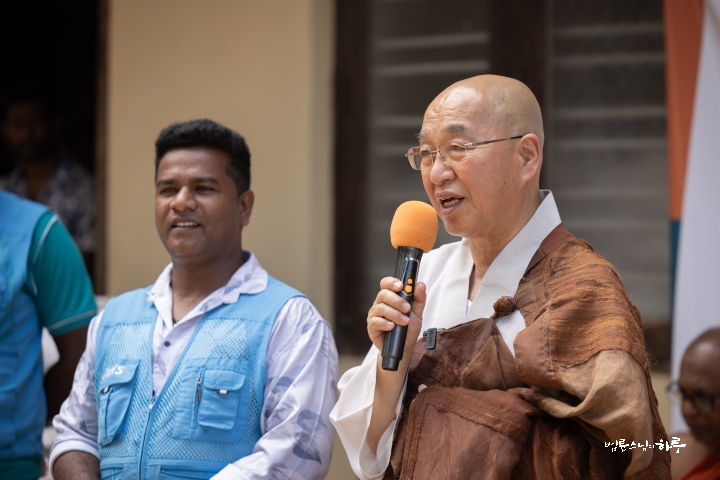
At 1:40 PM, they began distributing relief supplies to a total of 1,000 households, including students from the Gampola area. Before distribution, Sunim stood before the residents and personally delivered greetings:
I Have Come to Share Your Pain
“I am Pomnyun from Korea. You suffered great damage from Cyclone Ditwah recently, didn’t you? I was deeply saddened when I heard in Korea that Sri Lanka, Thailand, and Indonesia had experienced the heaviest rainfall in 100 years, causing extensive damage.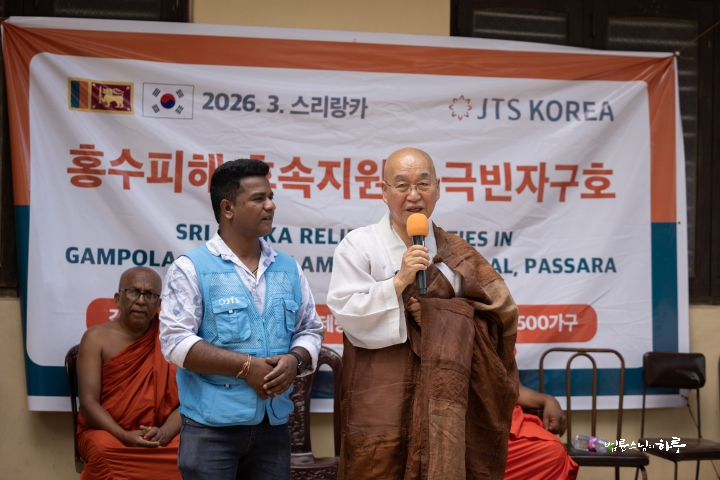
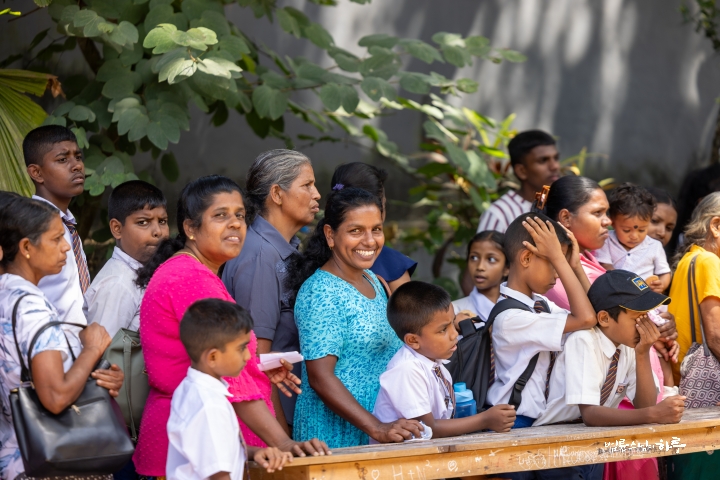
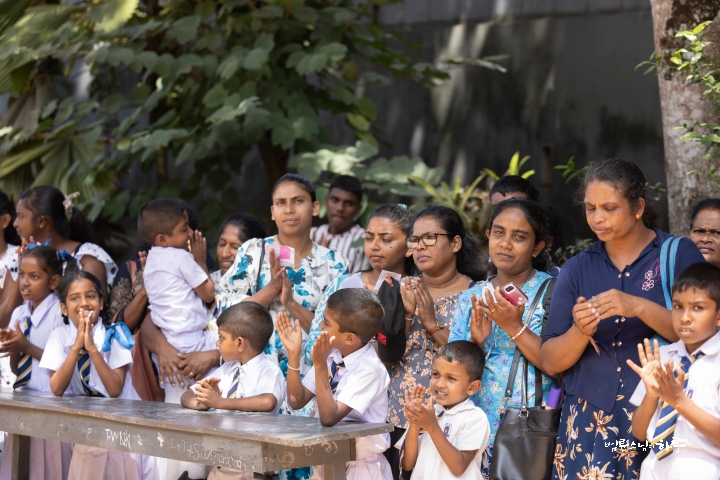
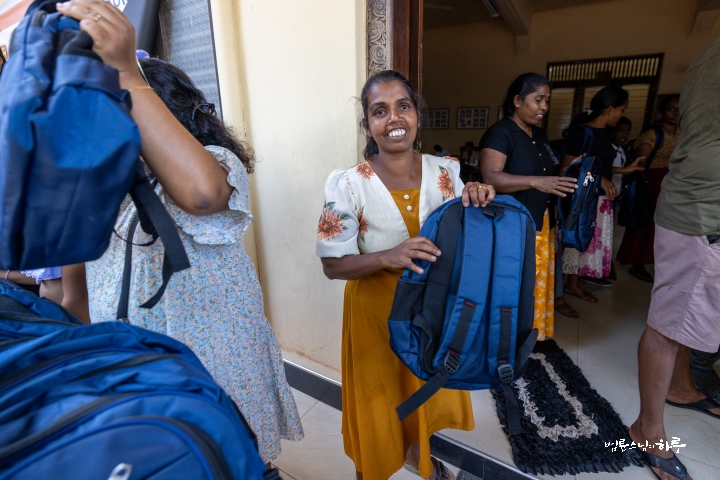
Following this, Venerable Dhammananda gave words of encouragement to the residents, and then the waiting residents came forward one by one. First, Sunim distributed school bags to the children. The children’s bags were filled with school supplies.
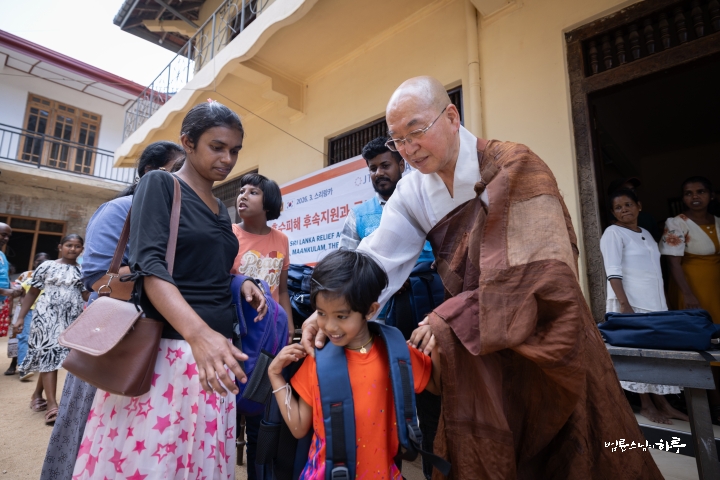
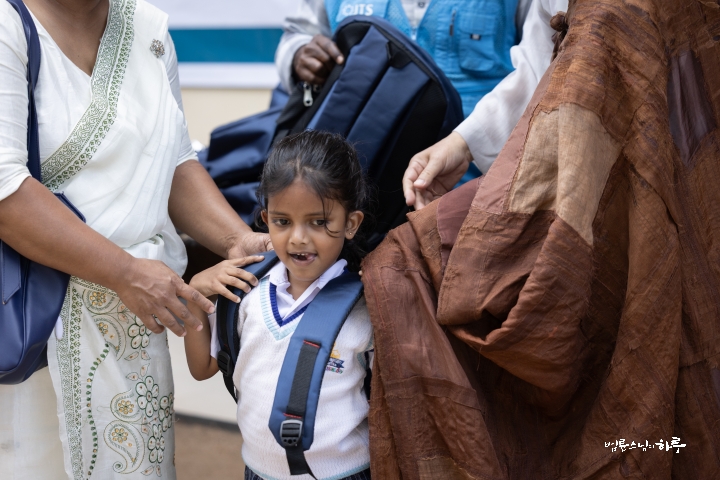
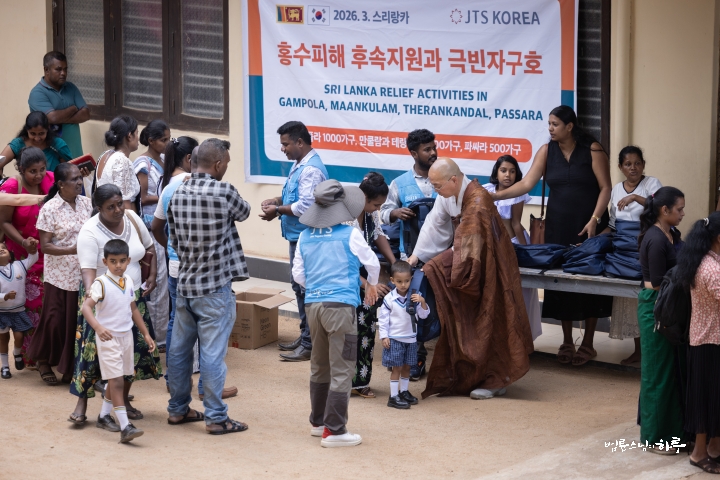
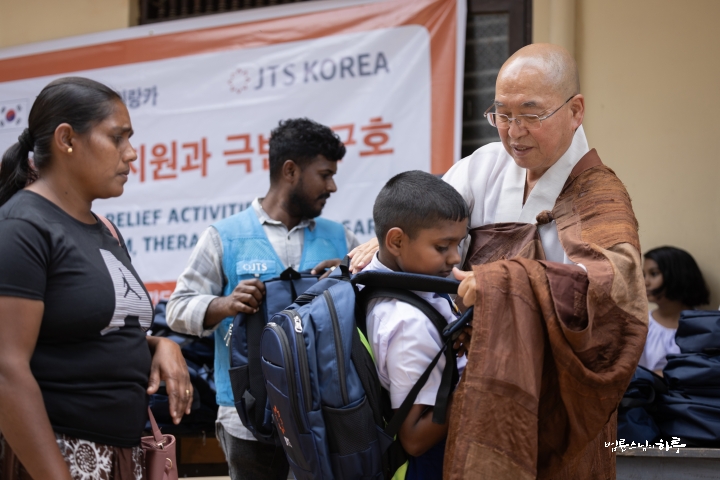
The children with their new school bags were excited, and smiles never left their faces.
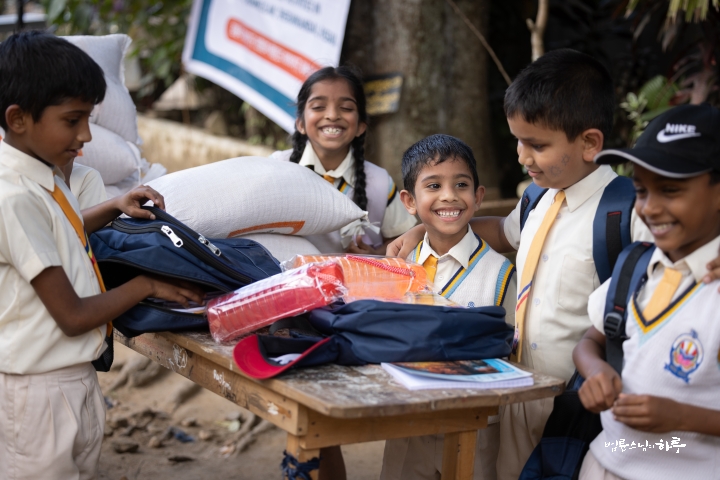
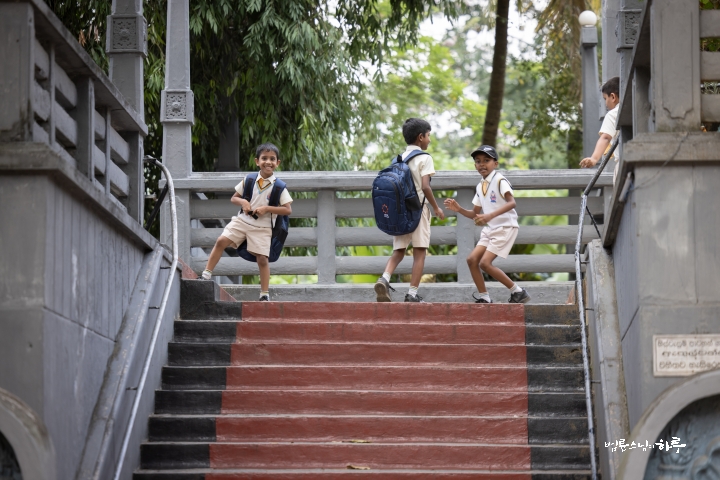
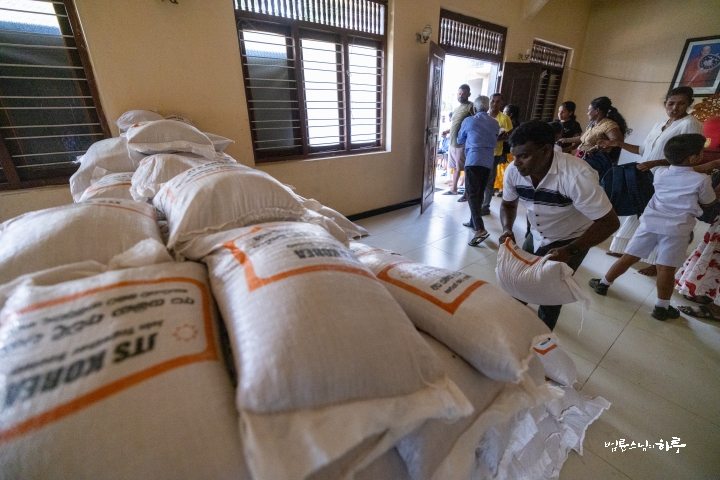
Next, JTS volunteers handed out rice to the adults. Each household received two 10kg bags of rice. The residents who received the rice smiled brightly despite the hot weather.
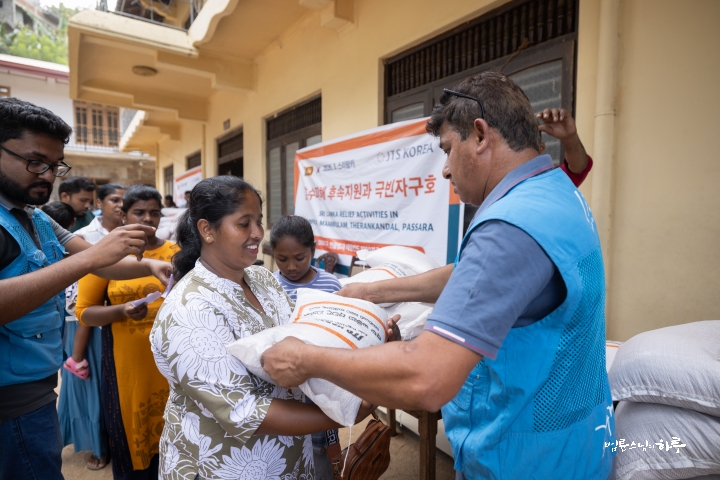
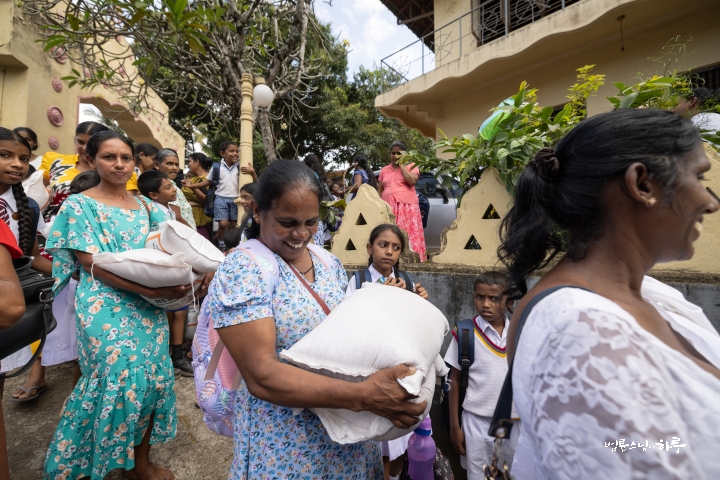
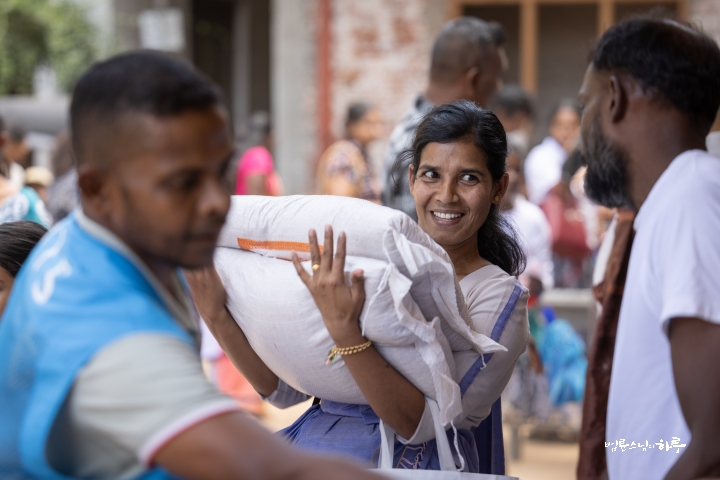
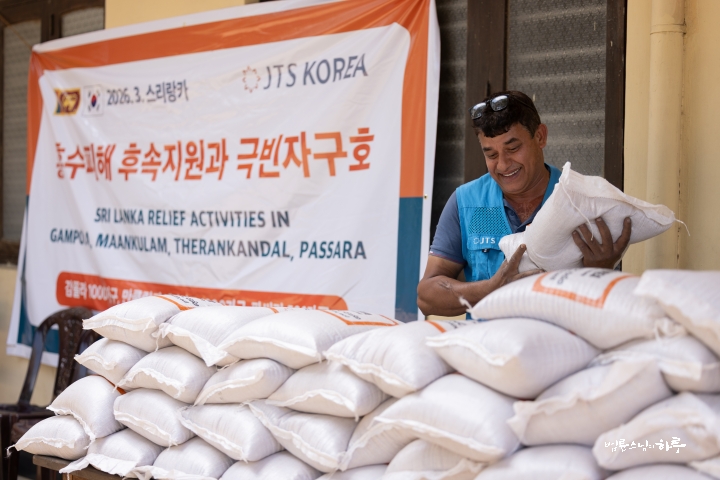
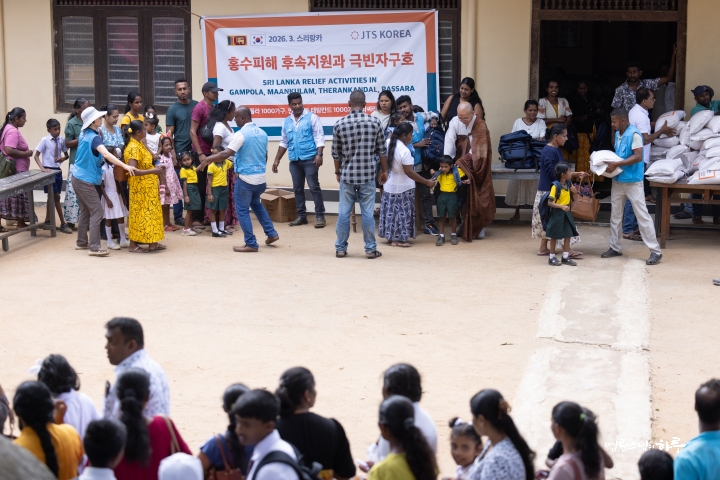
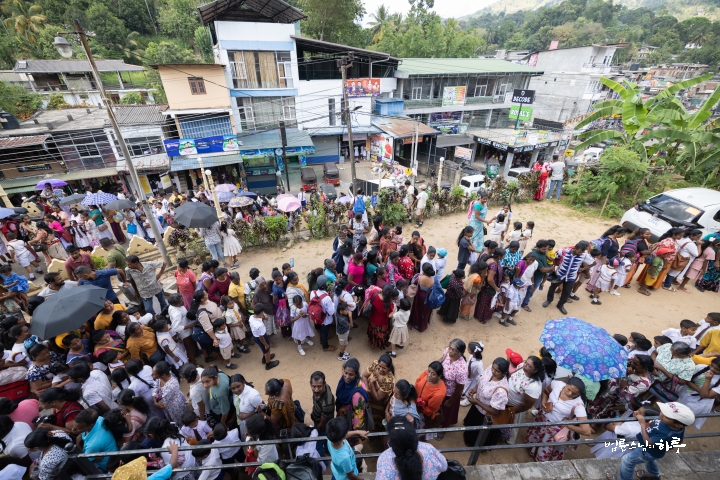
The residents lined up orderly to receive the relief supplies, and JTS volunteers busily moved around the site helping with distribution. Due to the shortage of hands, some of the people who came to receive supplies helped carry the goods.
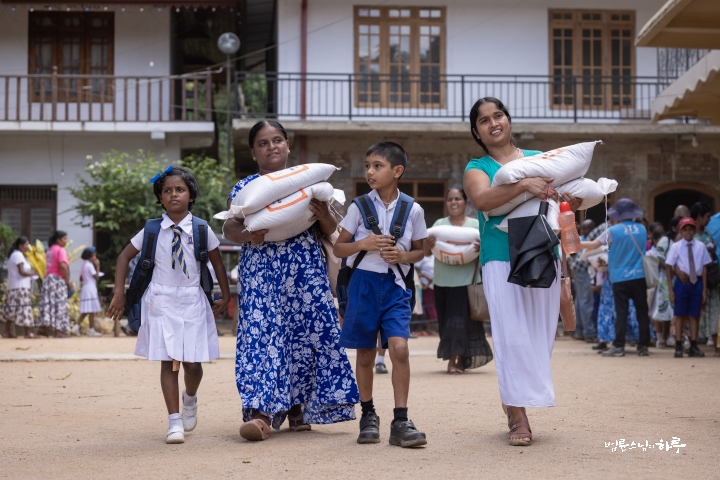
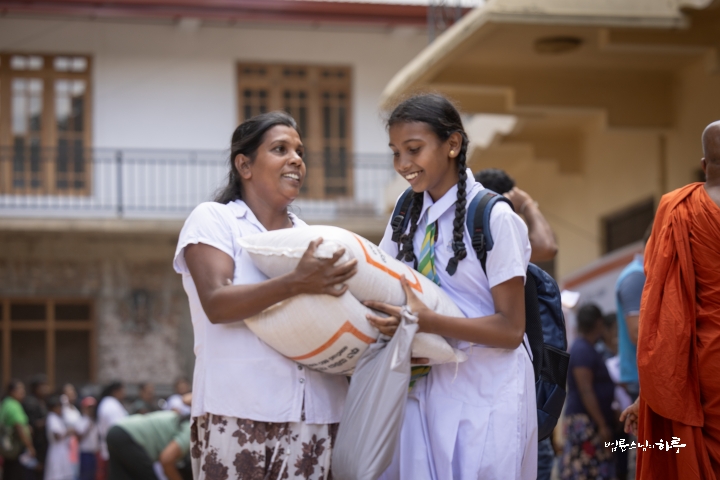
The residents who received the relief supplies left the temple in various ways. There was an elderly woman slowly walking with a bag on her head, a middle-aged woman carefully walking with loads in both hands. A young person with bags slung over their shoulders strode ahead with vigorous steps. Despite carrying heavy loads, the residents’ faces showed renewed vitality.
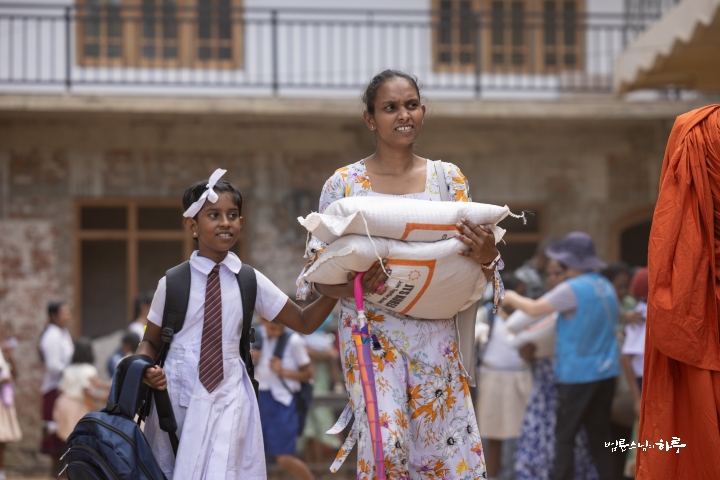
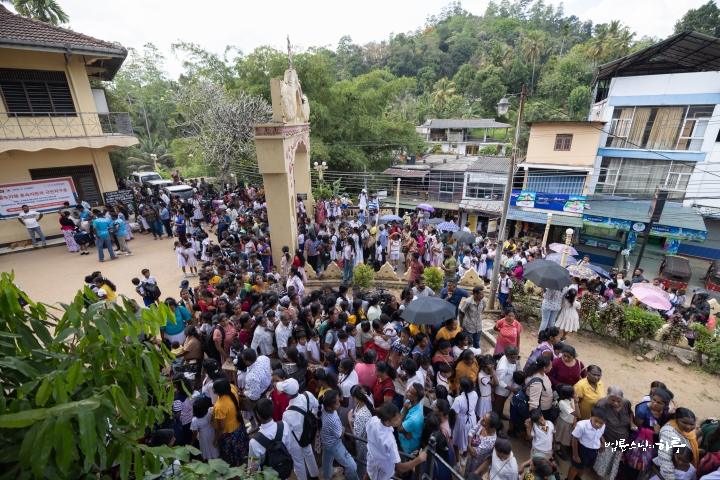
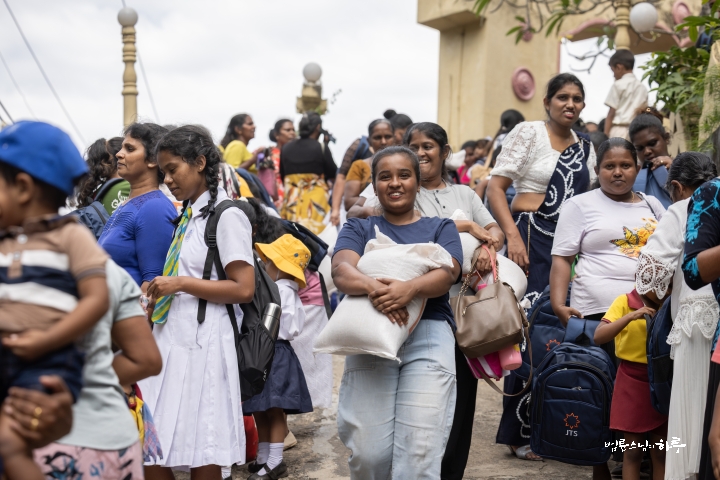
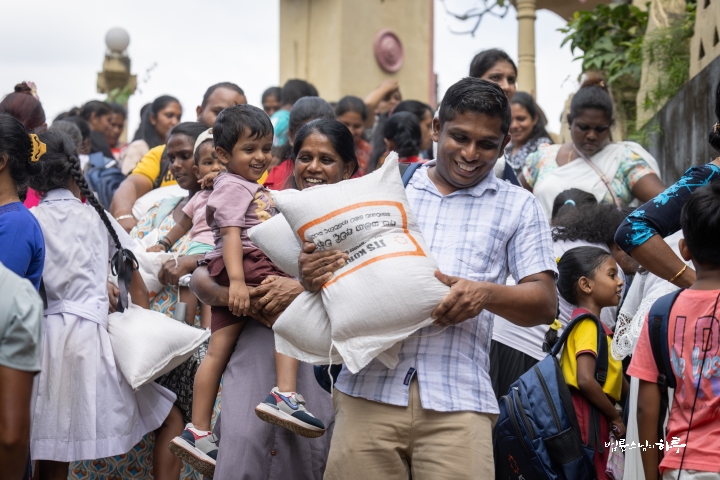
The distribution was completed in one hour. Sunim expressed his gratitude to the volunteers who had served for today’s distribution and took a commemorative photo together.
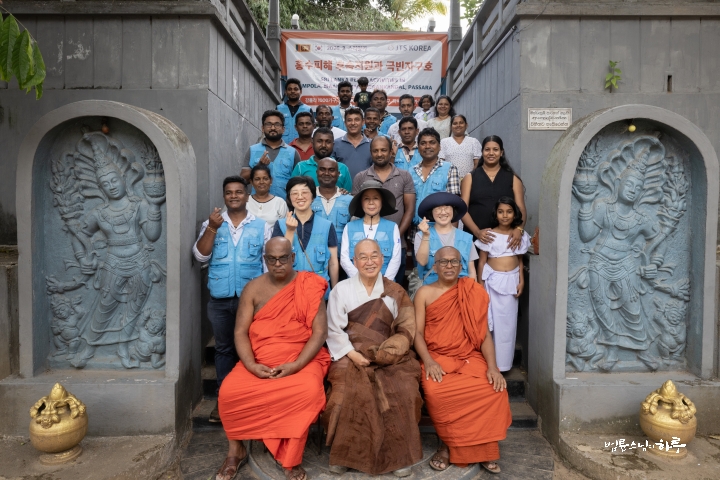
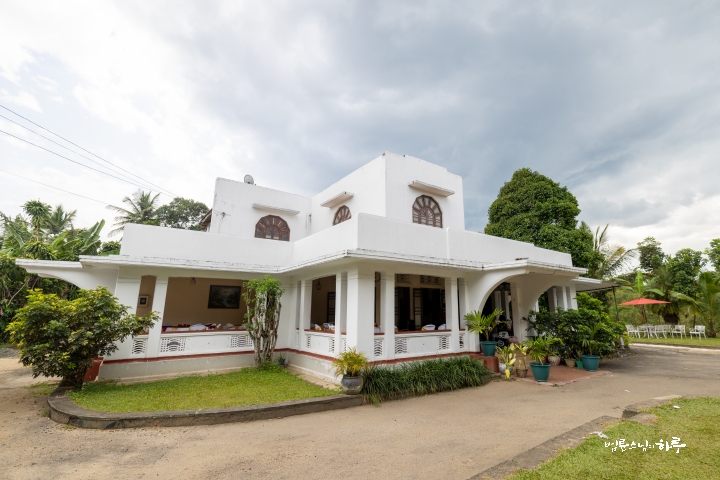
They got back in the car and headed to the accommodation. They arrived at the accommodation at 3:20 PM.
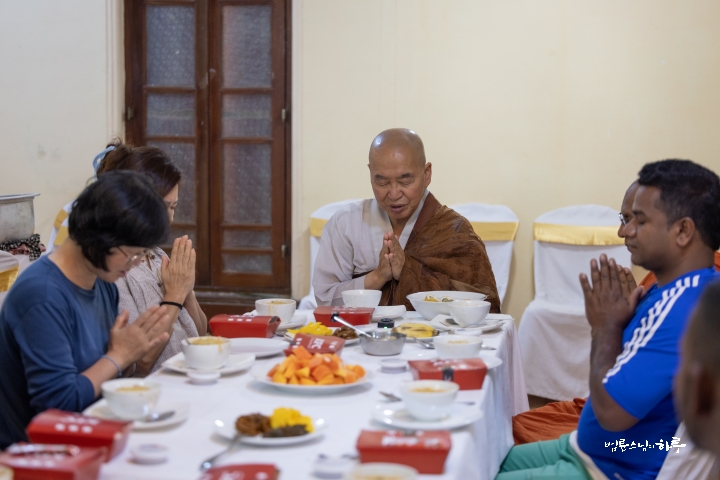
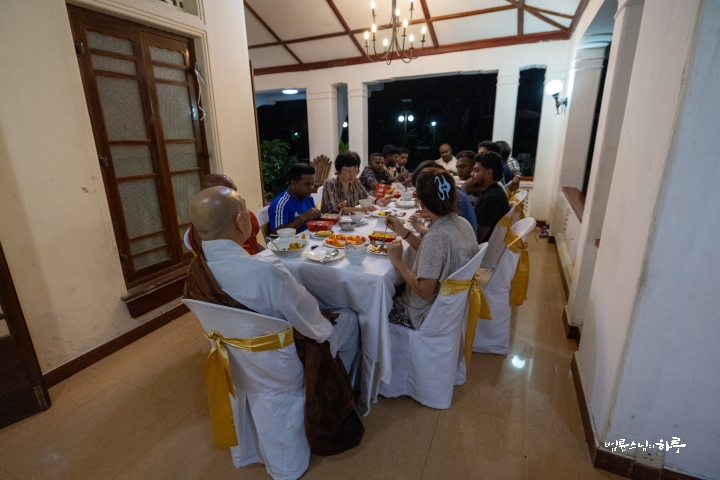
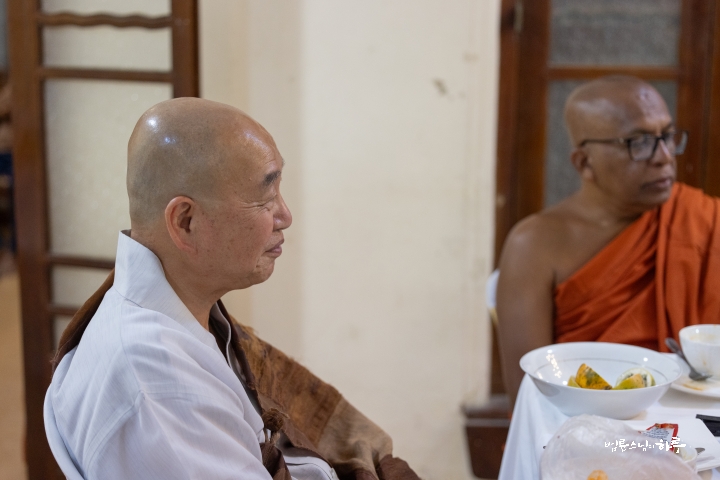
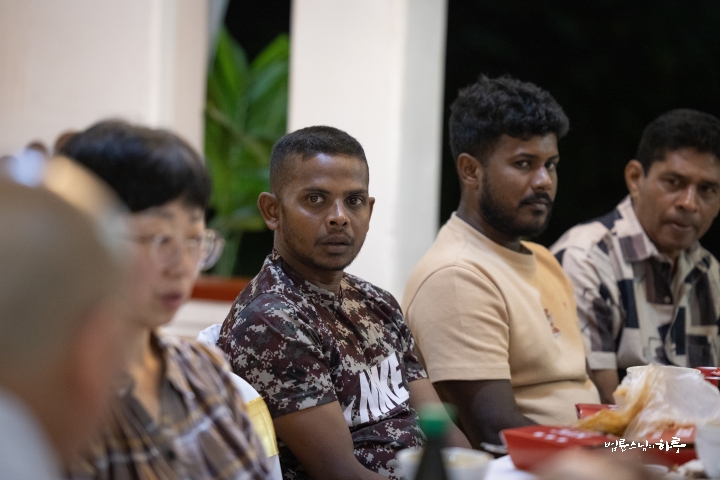
In the afternoon, after taking time to rest and reorganize, at 8 PM they gathered again with the JTS Sri Lanka volunteers for dinner. The Korean volunteers cooked ramen they had brought from Korea. When they asked the Sri Lankan volunteers to buy food they wanted to eat, they brought KFC lunch boxes. As they began the meal, Sunim first expressed his gratitude.
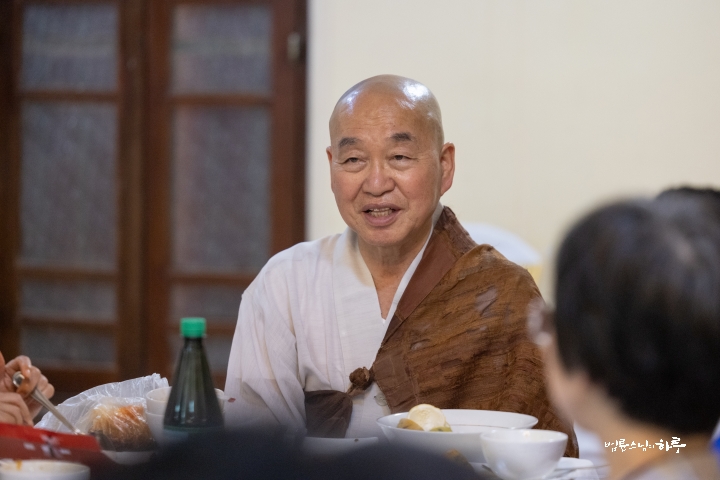
After finishing the meal, Sunim suggested resting early today and having an in-depth discussion tomorrow.
**
 **
**
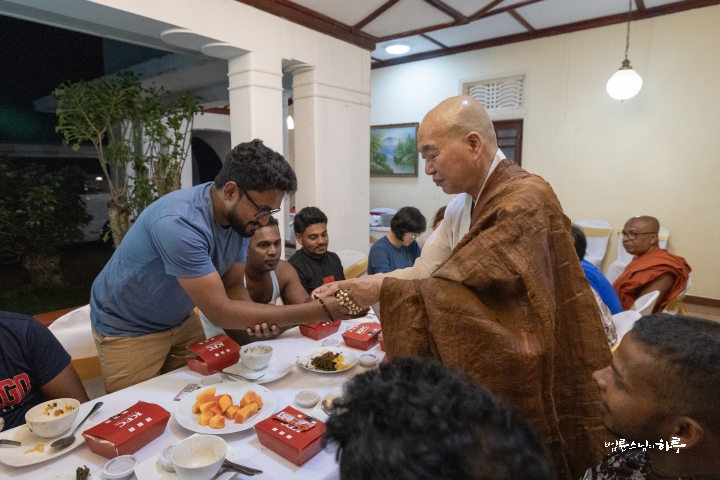
Sunim distributed prayer beads to the volunteers one by one and then returned to his accommodation, concluding the day’s activities.
**
 **
**
Tomorrow, after discussing future recovery principles and support directions with Sri Lankan JTS volunteers, Sunim will travel to Colombo to meet Venerable Assaji and Pastor Anura. In the evening, he will head to Colombo Airport to board a flight to Shanghai on his way back to Korea.
Since there was no Dharma talk today, this post concludes with a dialogue between Sunim and a questioner from the Weekly Dharma Assembly held at the Jungto Social and Cultural Center (정토사회문화회관) on the 25th of last month.
What Should I Do with Remaining Embryos After IVF to Feel at Peace?
“I came to the United States two years ago for work and am currently undergoing IVF treatment. I’ve been told that after the procedure, if there are remaining frozen embryos, I need to choose whether to discard them, donate them for research or education, or donate them to other infertile couples. In Korea, I understood that most remaining frozen embryos after treatment are discarded, but learning that there are other options in the United States feels unfamiliar, and having to make this choice myself feels difficult. Initially, I thought about donating rather than simply discarding them. However, thinking that the embryos have the potential to become babies makes me hesitant about using them for research. On the other hand, donating to another couple feels strange when I think about a child with my genes growing in someone else’s womb. My husband is dissatisfied with the medical structure where hospitals charge high fees for procedures while receiving embryos for free. So he said he would follow whatever decision I make about the remaining embryos. But I haven’t been able to make a decision for over a month. I’d like to ask what would be the appropriate way to view this issue from a Buddhist perspective, and what criteria I should use to make a choice that would lighten my heart.”
“From a Buddhist perspective, any choice is fine. The reason you’re having this dilemma is because you’re not standing from a Buddhist viewpoint. If you were viewing this from a Buddhist perspective, you wouldn’t be confused about what to choose. Because you’re looking at it through discriminating judgment, choosing one thing creates a problem with another, and choosing that creates a problem with this.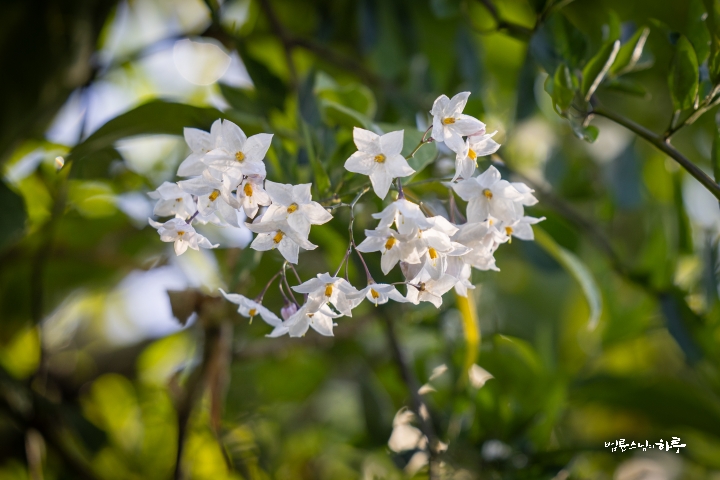
“Yes, it’s become clear to me. Rather than just discarding them, I’ll donate them. I think I was somewhat attached to the embryos.”
“If you have attachments, it might be better to discard them. You might carry the thought that a child born from your embryo is growing up in another family. Wherever you go, whenever you see someone who looks similar to you, you might wonder, ‘Could that person have been born from my embryo?’ If such psychological attachment remains, discarding them might actually be more comfortable.”**
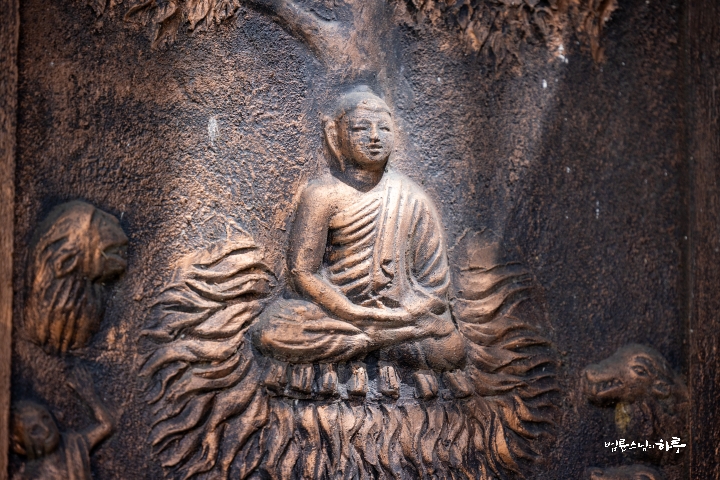 **
**
“Your analogy about feces really resonated with me. Because the hospital explained the grades of the embryos, I think I unconsciously started viewing them more like ‘people.’ But thinking about it again, even if transplanted, it’s not guaranteed to succeed, so it’s ultimately no different from natural dissolution. I think I was very attached. Since I feel I might become attached every time I see children on the street, I find it difficult to choose to donate to other infertile couples, so I’ll donate them for research. Thank you.”
“In nature, one egg is ovulated each month. That means twelve eggs are ovulated in a year. If you calculate for 20 or 30 years, quite a lot of eggs have naturally perished during that time. So why are you particularly worried about just these few?” (laughter)“Because they were created through a difficult fertilization process.”
“The worry arises because you’ve collected them.”“Yes, I understand. I feel lighter now.”