How Should I Approach Someone Who Keeps Attacking Me When We’re Forced to Work Together?
March 6, 2026. Visit to Oeosa Temple, Dubuk Farm, Friday Dharma Q&A
Hello. Morning has dawned at Dubuk Jungto Retreat Center (두북수련원).
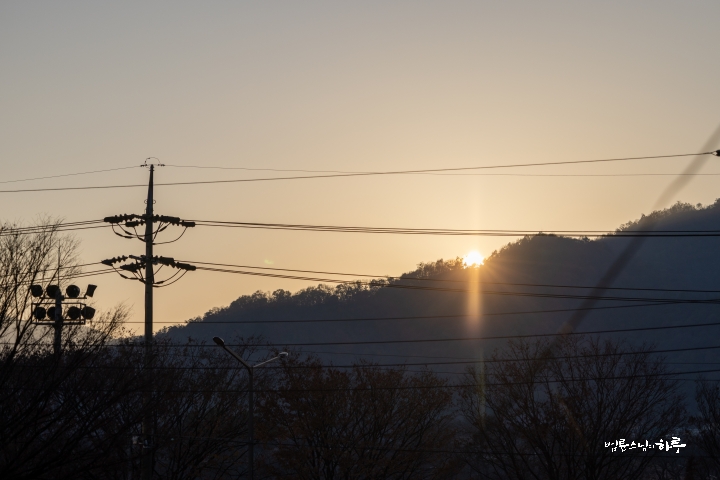
After completing morning practice and meditation, Sunim departed from Dubuk Jungto Retreat Center at 8:50 AM for a site visit.

Every spring and fall, elderly residents from villages near Dubuk Jungto Retreat Center are invited on outings. This year, Sunim set out for a walk to explore whether a trip to Oeosa (오어사) Temple and Bogyeongsa (보경사) Temple in Pohang(포항) might be suitable.
After a 50-minute drive, Sunim arrived at Oeosa Temple in Nam-gu (남구), Pohang at 9:40 AM. Oeosa is a thousand-year-old temple founded during the reign of King Jinpyeong of Silla (신라 진평왕). The temple, situated by a lake, offered exceptionally beautiful scenery. After confirming whether large buses could enter and carefully examining how to guide the elderly from the entrance to the main hall, Sunim exited through the temple gate.
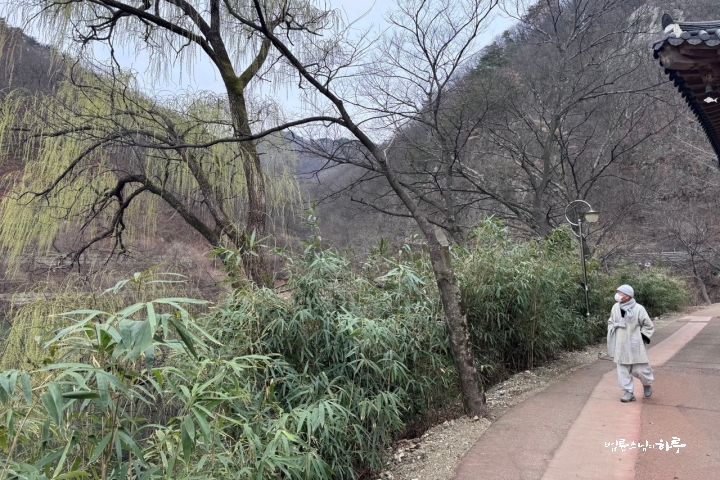
Around the temple, new leaves were sprouting in bright green on every branch of the weeping willows.
“The weeping willows (수양 버들) have bloomed. Spring has arrived.”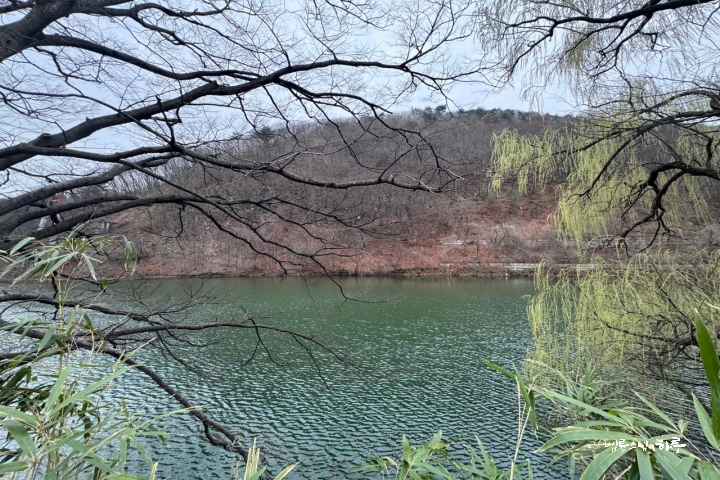
After completing the site visit, Sunim headed to the old Gyeongju (경주) Station. Having heard that Venerable Jongsu (종수 스님), a living witness to Korean temple forest research and a pioneer in Korean-Chinese Buddhist cultural exchange, was currently staying at Bulguksa (불국사) Temple, Sunim had arranged a meeting in advance. They exchanged warm greetings in front of Gyeongju Station and had tea while engaging in deep conversation about the current state of the Chinese Buddhist Association and the difficulties during the Northeast Asian History Tour.
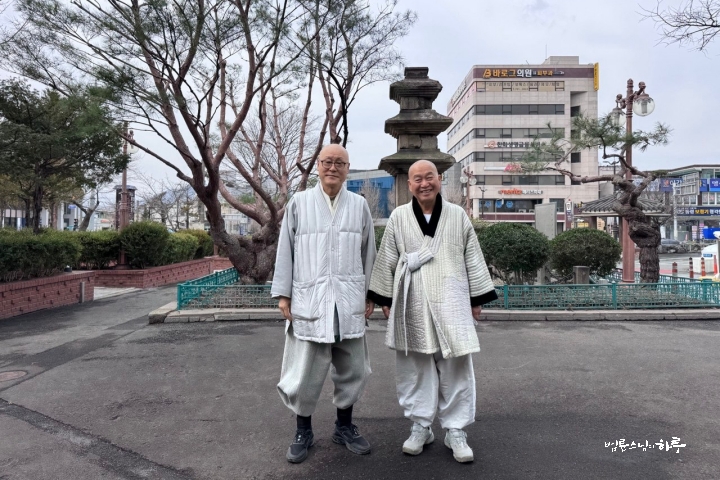
After bidding farewell to Venerable Jongsu, Sunim headed to Dubuk Jungto Retreat Center’s farm. In preparation for spring, farming team practitioners were spreading compost on the fields.
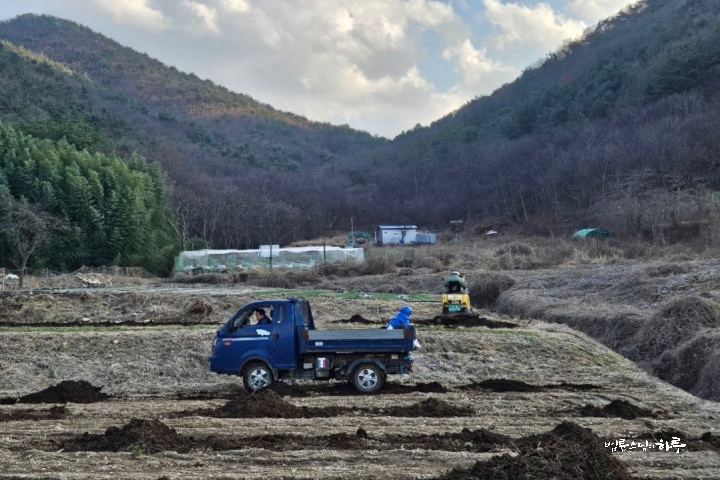
After receiving a report on this year’s farming plans from the farming team leader, Sunim toured various parts of the farm.
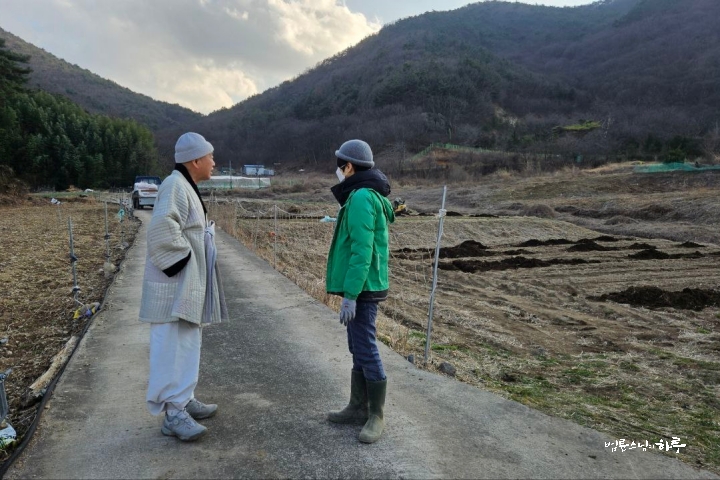
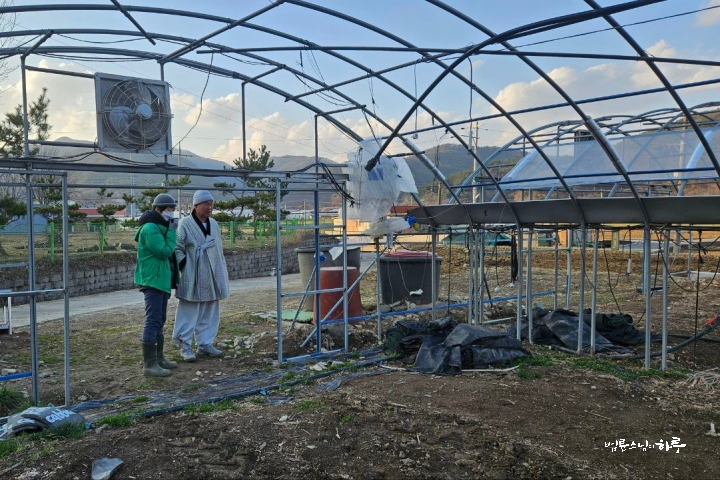
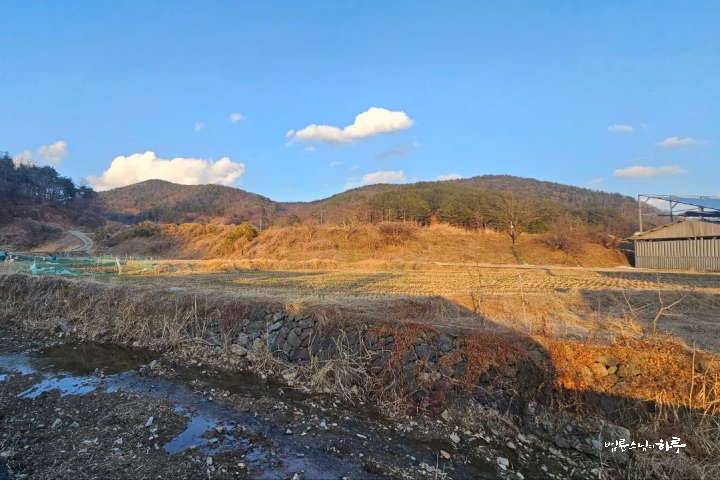
At 5:20 PM, Sunim got back in the car to survey the Yangji Village(양지 마을) area. Due to the valley’s characteristics, the northern side of the stream received more sunlight, making it appear suitable for establishing a memorial park. After exploring whether there might be appropriate sites, Sunim returned to Dubuk Jungto Retreat Center.
As the sun set, at 7:30 PM, Sunim took a seat in front of the camera in the broadcasting room and began the Friday Dharma Q&A live broadcast. With over 4,400 people connected simultaneously, after the introductory video ended, Sunim offered opening remarks.
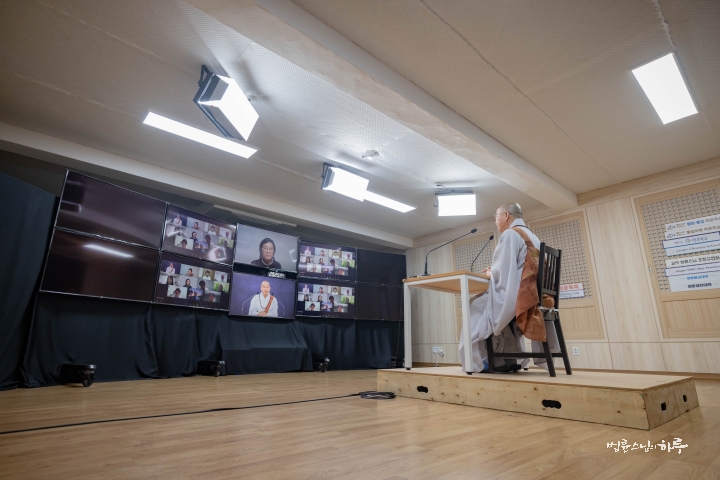
Sunim began by sharing the early spring scenery at Ulsan’s (울산) Dubuk Jungto Retreat Center, opening with the thought that if we view life broadly like nature’s cycles, our anguish and suffering can become much lighter.
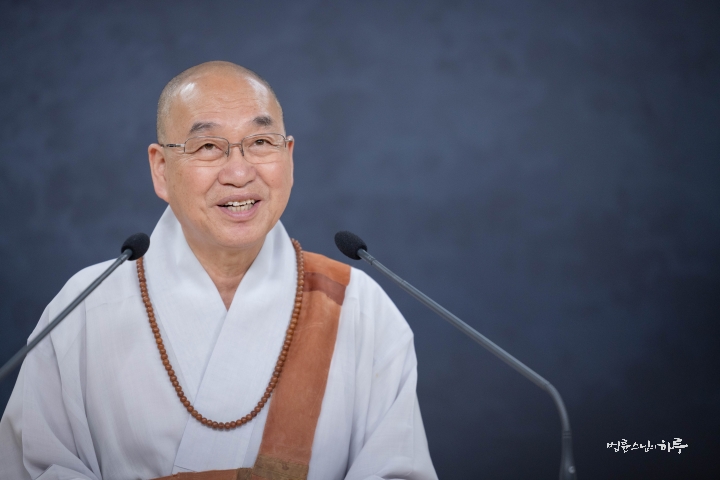
When You View Life Broadly, There Isn’t Much to Suffer About
The same is true for all life. We are born, grow, age, and die. We die of old age, die of illness, or die in accidents. Viewed broadly, these are merely phenomena of the world. Individual waves appear to rise and fall, but looking at the ocean as a whole, it’s just water rippling. Looking at it this broadly, I wonder how much in our lives is truly worth suffering and grieving over. As I age these days, various parts of me are breaking down. When I treat one area, another breaks down; when I fix that, yet another area fails. It’s like an old car that breaks down again just days after leaving the repair shop. Sometimes I think it might be time to follow the scrapping procedure. Of course, I fully understand the affection of those around me who say, ‘You must live longer and healthier.’ Still, I sometimes think it might be right to wrap things up at an appropriate time. When we view our lives broadly, there’s little to be anxious about or agonize over. Looking at the world today, people are dropping bombs, trampling on others, and killing to gain more and rise higher. In the process, they have no regard for those dying, inflicting pain on others solely because they believe they are right or because they have power. It makes me wonder if it’s worth living that way. If we could see a bit more broadly, we could reduce our own anguish and stop causing pain to others.”Following this, four people who had submitted questions in advance asked Sunim their questions. The dialogue continued for about an hour. One person shared concerns about how to approach someone who speaks aggressively toward them, especially now that they’ve been placed in the same group again.
How Should I Approach Someone Who Keeps Attacking Me When We’re Forced to Work Together?
“I graduated from university, worked for a while, then re-entered university because I wanted to study something different. I’m currently a senior. There’s someone who speaks and acts aggressively toward me even though I’ve done nothing wrong. I’ve been avoiding this person because I don’t want to encounter them, but due to school practicum adjustments, we’re now in the same class and even the same group. Group activities requiring close communication start next week, and I’m very worried. I try to think positively, recalling what I learned at the recent ‘Awakening Retreat,’ but it’s still very difficult. What mindset should I maintain?”
“Our minds develop preferences and aversions based on the habits we’ve formed throughout life—our ‘karma.’ This person triggers feelings of dislike based on your karma.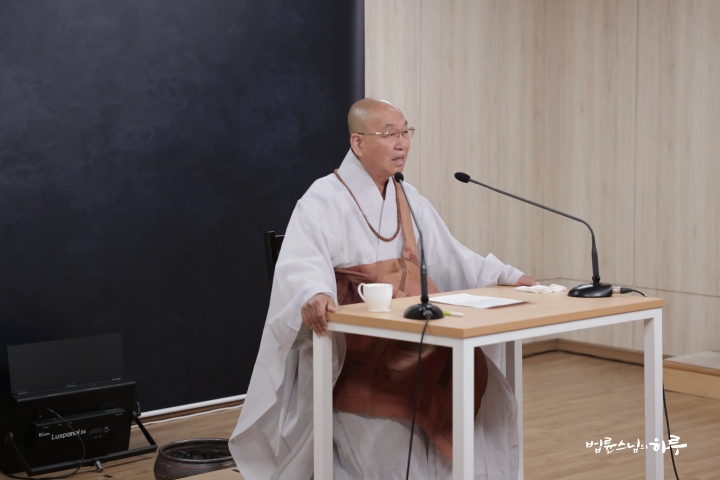
:
怨憎會苦). With people we like, suffering arises when parting; with people we dislike, suffering arises when meeting. Throughout life, whether with objects, people, or situations, we meet and part. We like some things and dislike others. Some things go as we wish, others don’t. Sometimes we meet those we don’t want to meet, and sometimes we part from those we want to be with. Meeting when we want to meet and parting when we want to part causes no problems. Suffering arises when we must part from those we want to meet or continue meeting those we want to leave. Looking at life’s connections through mathematical ‘cases,’ we can divide them into four types. Meeting when we want to meet and parting when we want to part—these two cause no problems. But the other two create suffering. If we can resolve these two, we can live without suffering. If we can willingly part even from those we like, and willingly meet even those we dislike, we become free from suffering and always remain free. No matter whom we meet, what we do, where we go, or what we eat, nothing obstructs us. You’ve now been given an opportunity to overcome one of the two challenges that cause suffering. If you can avoid it, that would be good—there’s no need to meet and resolve it. But if you keep getting entangled, try experiencing being with someone you dislike. If this becomes possible, you’ll gain a very valuable life experience. You’ll be able to remain free without suffering even when meeting disliked people at work, doing unwanted tasks, or eating disliked foods. Your current situation is a good opportunity to solve this challenge. If you overcome just this, you’ll gain an experience that prevents suffering in any situation, so please try to actively work through it. Since you’ve tried avoiding but couldn’t, rather than holding onto that and suffering, why not make it a life challenge? Set a goal: ‘If I solve just this problem well, I can gain greater freedom in my life.’ You’ve run away two or three times but keep getting mysteriously entangled, so make this a challenge to resolve in your life. Like in ancient warfare, when enemies keep following as you retreat, at some appropriate position you turn around and counterattack. Similarly, think ‘Let me solve this problem once and for all,’ and try working together, conversing, and eating with that person. Take the perspective of actively wanting to resolve whatever happens. If you change your mindset and find through experience that ‘they’re just like everyone else,’ later you’ll be less constrained by dislikes. I hope you’ll think of your situation as a practice opportunity for your own freedom and willingly accept it.”“Thank you. May I ask a bit more? You mentioned it’s a practice challenge. I did think, ‘Maybe life keeps connecting me with this person to teach me something.’ But even though I’ve been kind twice, that person continues to be aggressive. I’m worried that other methods won’t work with this person either. Being kind like before doesn’t seem to be the answer, but I’m too uncomfortable harboring feelings of dislike. I’m not sure how to approach this.”
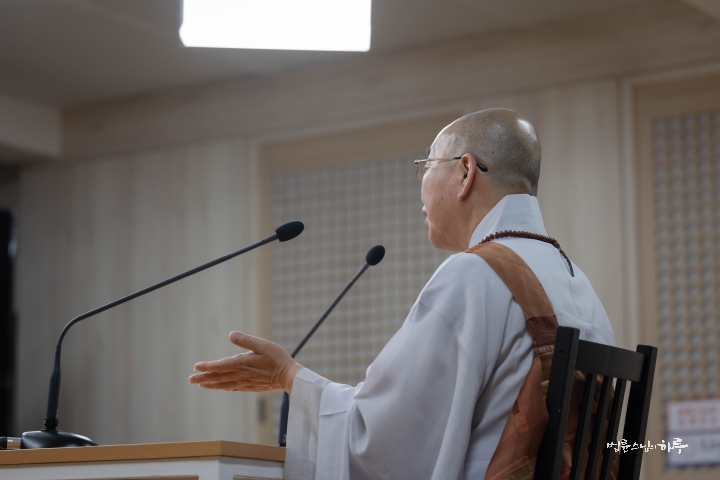
“Thank you. I understand well.”
Questions continued to follow.

After my boyfriend’s lies, my suspicion has grown and dating has become difficult. Should I continue this relationship?
My sibling’s words hurt me, and I’m struggling with how to communicate. How can I express my feelings without causing hurt?
I’m confused about the standards for practice in the world. How much should I accept and where should I draw boundaries?
After finishing the Dharma Q&A live broadcast, it was 9 PM.
Tomorrow, there will be an all-day joint meeting with all Jungto Society executives gathered in an online video conference room. In the morning, after giving an opening Dharma talk for the joint meeting, Sunim will travel to Tongdosa (통도사) Temple to meet with the senior monk Beopsan (법산 큰스님) for tea and conversation. In the afternoon, there will be a Dharma Q&A session for the joint meeting participants.