Should I Give Up Pleasure to Find True Happiness?
Feb 7, 2026. Lecture at Delhi University, India Pilgrimage Evaluation Meeting
Hello. Today, Sunim gave a lecture to local university students at Delhi University, held an evaluation meeting for the India pilgrimage, and then traveled to Sankasia.
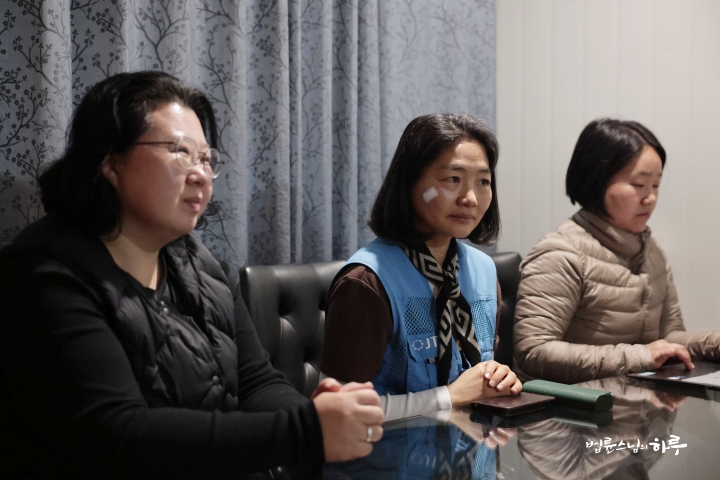
After completing his morning meditation and practice, Sunim began a meeting at 6 AM about the denture support project for Bhutanese residents. Two field workers active in Bhutan and two medical professionals from Jungto Society had conducted medical examinations for 172 people and visited 3 hospitals in 6 chiwogs (치옥) of Trongsa and Zhemgang districtsm(트롱사주와 젬강주) from January 23 to February 4. Today’s meeting was to review the results and establish future directions.
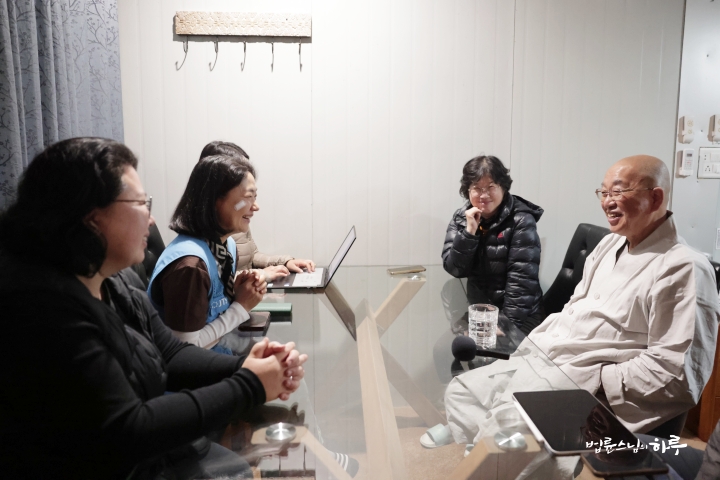
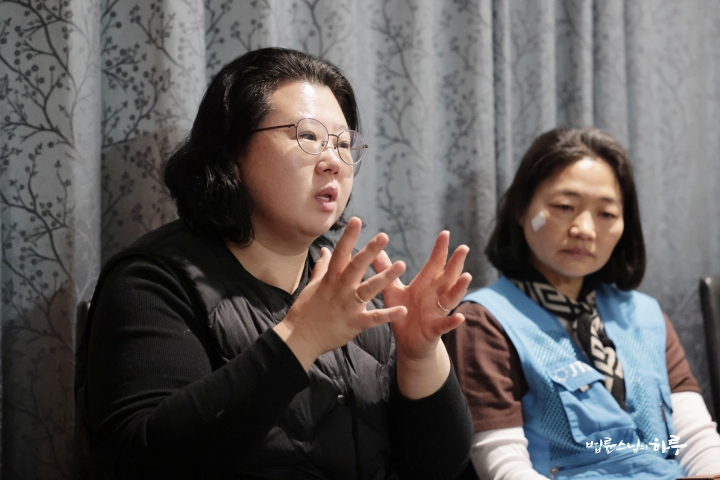
Dr. Choo Hee-sook (추 희숙) , a dentist, first reported the survey results. Even considering it was a rural area, the residents’ oral health conditions were extremely poor. Although people with bad teeth came for treatment, among the 172 people, none had all 28 teeth intact, and most had gum inflammation. Additionally, due to the shortage of medical personnel, dental hygienists were performing duties that should be done by dentists, and even the existing personnel were gradually leaving for Australia. The residents rarely brushed their teeth, and chewing tobacco was making their dental conditions even worse. However, the hospital in the capital Thimphu was of a high standard comparable to Korean hospitals, indicating that Bhutan’s overall medical standards were not low.
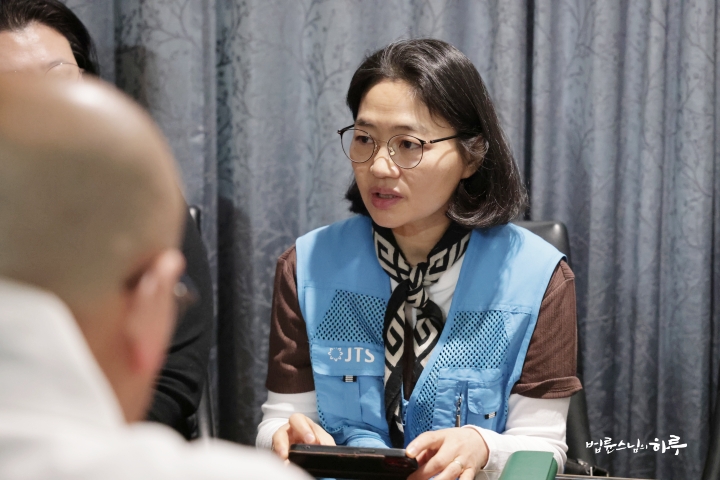
Dental technician Shim Jae-jung (심 재정) reported that the conditions for denture production were poor and that residents’ gums were deteriorating. The key concern was determining what level of support should be provided.
After listening to the survey report for about 30 minutes, Sunim spoke.
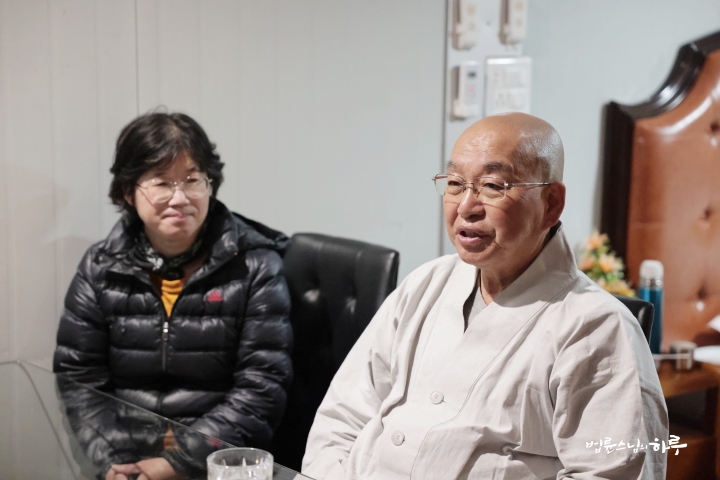
He pointed out the fundamental dilemma of this project. The Bhutanese central government was requesting that regional areas receive treatment at the same level as Thimphu. However, to achieve that level would require establishing a hospital. This was different from the initial concept of ‘helping a few people who are really in need.’
“For JTS to receive good evaluations, we need to put effort into each person and provide high-quality care. However, from the perspective of helping those who are truly in need, instead of helping one person, we could help 10 or 20 people. We need to choose whether to focus on receiving praise for doing well or on helping those in dire need.”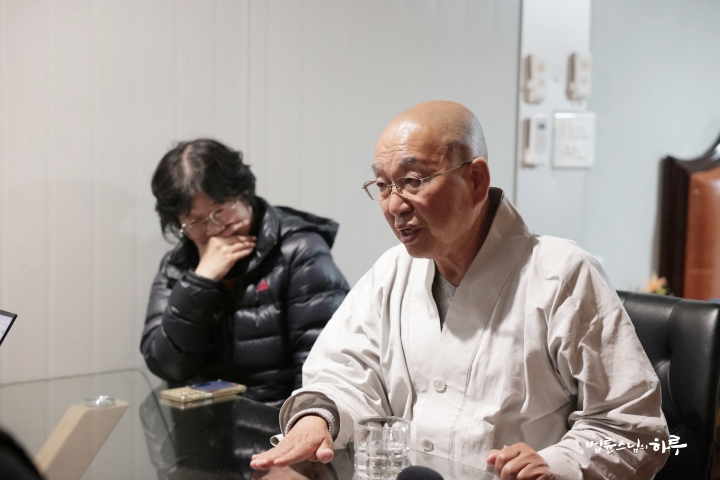
Sunim presented three options. First, not doing it at all. Second, proceeding in a way that fits JTS’s reality, providing benefits to many people even at a lower standard, considering it’s better than nothing. Third, conducting a pilot project targeting residents of just one village first and then making a judgment. The survey team suggested conducting a pilot project in Jangbi Chiwog, which had the most inadequate conditions. He agreed to first test it in Jangbi Chiwog (장비치옥) and then would decide on expansion and level adjustments based on the results.
“People who are truly in difficulty just endure and live on. If we lower our standards but set our direction to benefit many people, it will help the majority. However, if we say we’ll properly treat a small number of people, we’ll hear complaints asking why we’re only helping that village and not ours. Either way, we can’t avoid criticism. Is that okay with you?”“Yes, we want to try it.”
Sunim asked one person to investigate the list of dental equipment needed at the Trongsa District Hospital. He requested another person to plan the budget and personnel needed for the denture production process. After finishing the meeting at 8 AM, he hurriedly had breakfast. A lecture was scheduled at Delhi University at 10 AM. He left the accommodation at 8:30 AM and arrived at Delhi University around 9:45 AM.
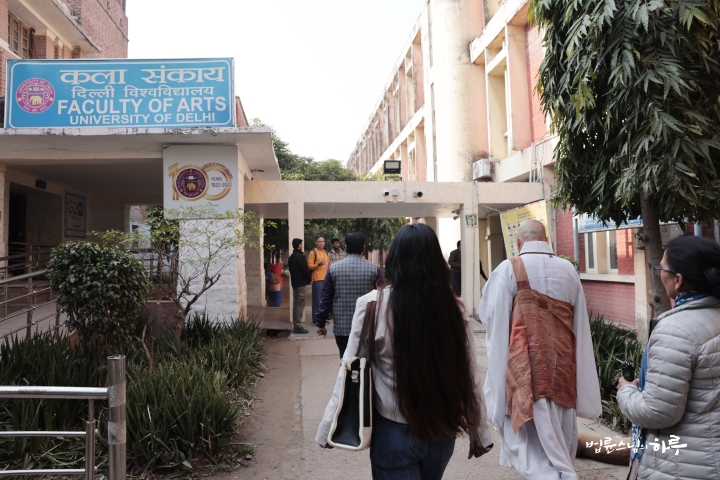
About 30 people, including faculty, students, and monks from Southeast Asia, were seated in the lecture hall. A Thai monk who had participated in the pilgrimage also came with a fellow monk.
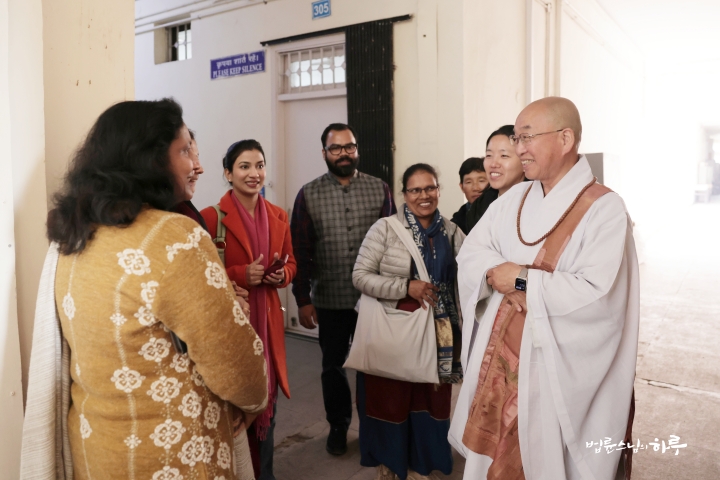
However, due to delays in lecture preparation, the start time was postponed to 10:30 AM. Sunim took a brief walk around the campus before returning to the lecture hall.
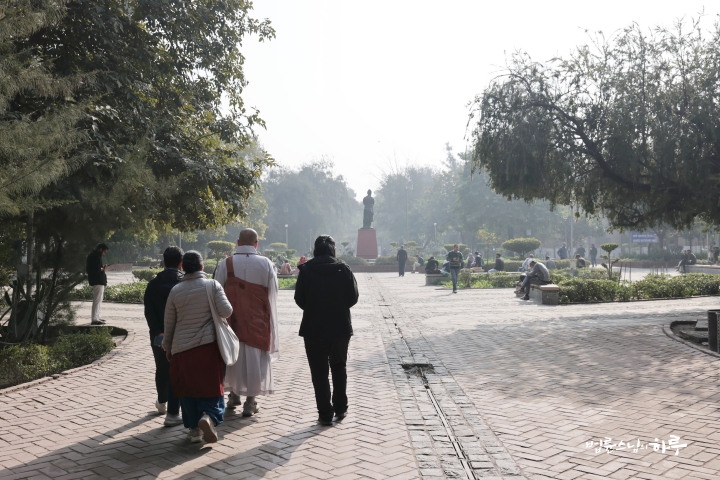
The lecture began at 10:30 AM. He started the conversation by discussing what kind of life we should live in the era of climate crisis and artificial intelligence.
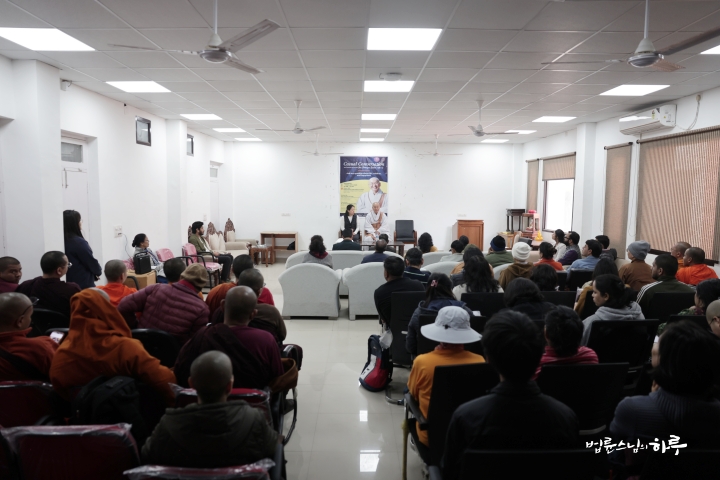
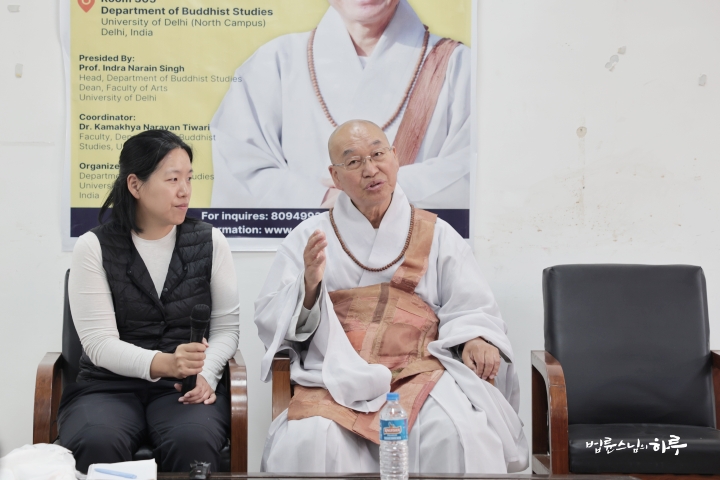
In the Era of Climate Crisis and AI, What Kind of Life Should We Choose?
The reason for discussing Buddhism, which originated 2,600 years ago, in this context is that the circumstances of that time are remarkably similar to our current era. At that time, the Indian subcontinent had been dominated for over a thousand years by what was called Brahman civilization or Aryan civilization—a traditional civilization. However, during the time when the Buddha appeared, this traditional system began to collapse. The existing Brahman thought could no longer explain the changing world. As a result, new thinkers emerged who sought to explain the transformed world. These emerging thinkers let go of existing lifestyles—family, home, status, and honor—and retreated into the forests to contemplate, striving to understand and explain this changing world they were living in. Though their philosophies differed, this movement was called ‘Samana’ in India. Gautama Siddhartha also joined this movement. However, after attaining enlightenment, he saw that both the Brahman path and the Samana path were biased to one side. So he proposed a new path that transcended both, which we call the ‘Middle Way (중도).’ Because he discovered this new path and showed people a way to escape from suffering, we need to examine what answers or hints we can gain from the experiences of that era for the problems we face today.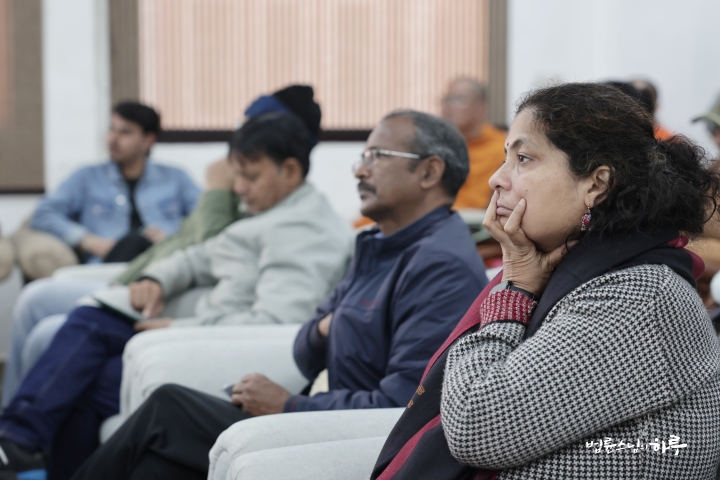
Following this, anyone could raise their hand and ask Sunim about their curiosities or personal concerns. During the 75-minute lecture, eight people engaged in dialogue with him.
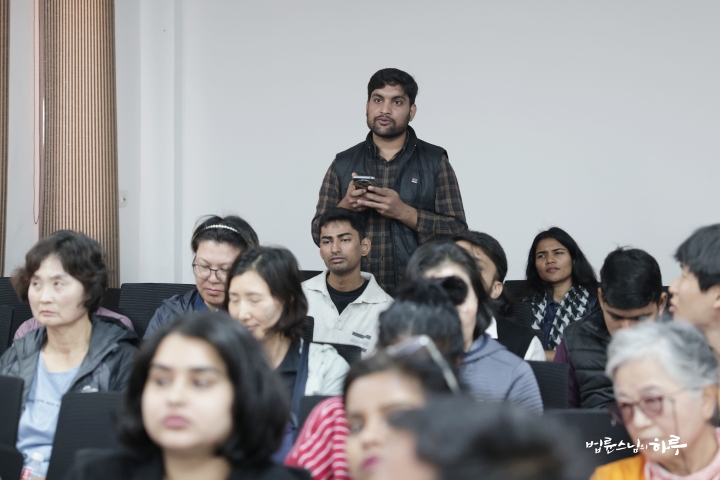
One person asked why Buddhism teaches us to let go of emotional attachment when attachment also provides us with stability and comfort. Sunim explained the structure of comfort that attachment provides and the bondage that comes with it, using the metaphor of a house.
Attachment Gives Us Stability, So Why Should We Let It Go?
“Buddhism teaches that in order to attain peace of mind, one should let go of attachment. However, attachment gives us a sense of stability—so why does Buddhism tell us to abandon it? I’m curious about the reason.”
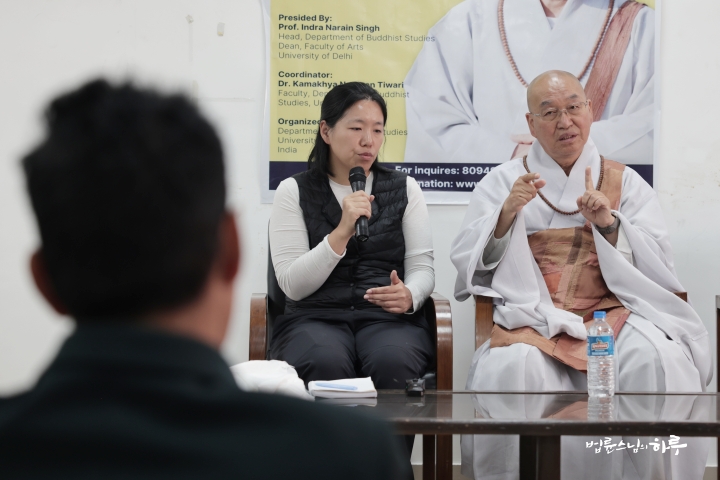
“I understand now. Thank you.”
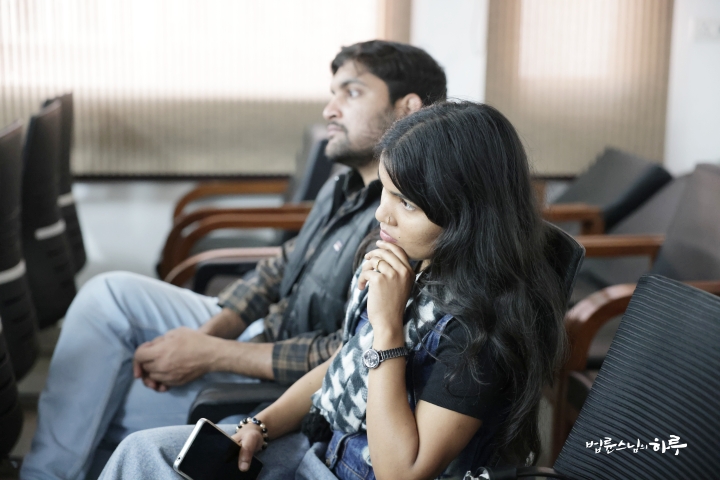
The next questioner sought Sunim’s advice on how to establish universal justice that does not ignore human suffering when standards of morality and justice differ across cultures, religions, and regions. Sunim explained from the perspective of the Dharma how peace is possible in a world where different cultures and moralities coexist.
When Moral Standards Differ by Country, Is Peace Possible?
“What is the truth that applies equally to everyone when different cultures and religions disagree? If morality changes depending on where a person is born, on what basis can we say that something is just and apply it equally to all people?”
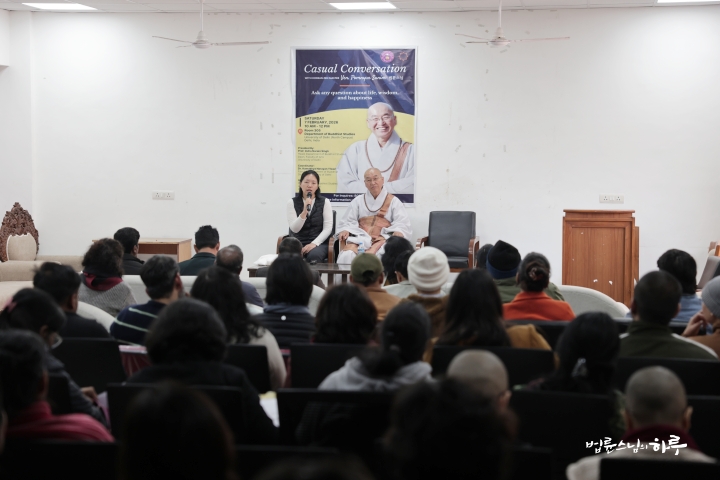
“Since morality differs by country, nationality, culture, and religion, how can we say, on a global level, ‘This is what peace is’?”
“When you go to a forest, there are large trees and small trees. There are trees of this kind and trees of that kind. They all come together to form a forest. When you go to a flower garden, there are various kinds of flowers. The flowers differ in size, color, and shape, but they come together to form one flower garden. Similarly, in this world, even though we have different races, ethnicities, religions, ideologies, and cultures, if we acknowledge and understand our differences, we can achieve harmony and bring peace, just as different flowers form a garden. This is the Dharma. It’s not about unifying everything into one. That’s why I hope you will study the Dharma more deeply beyond religion. The Dharma is not the property of Buddhists alone but the property of all humanity. Therefore, even if we are not a Buddhist, I hope we can research and utilize what we can learn from the Dharma for the peace and development of humanity.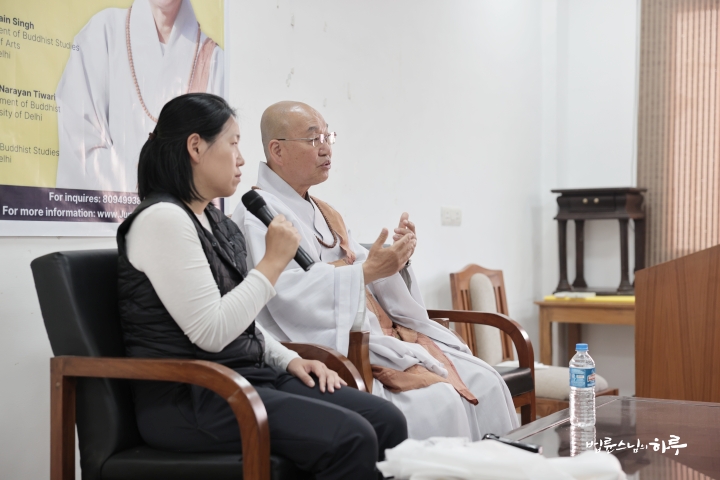
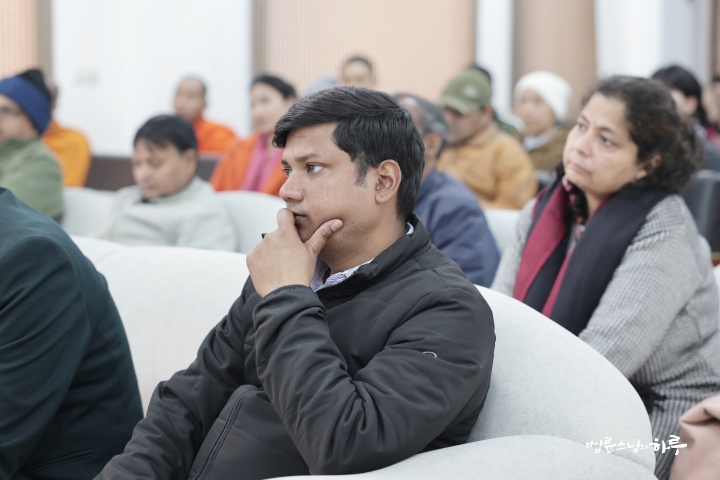
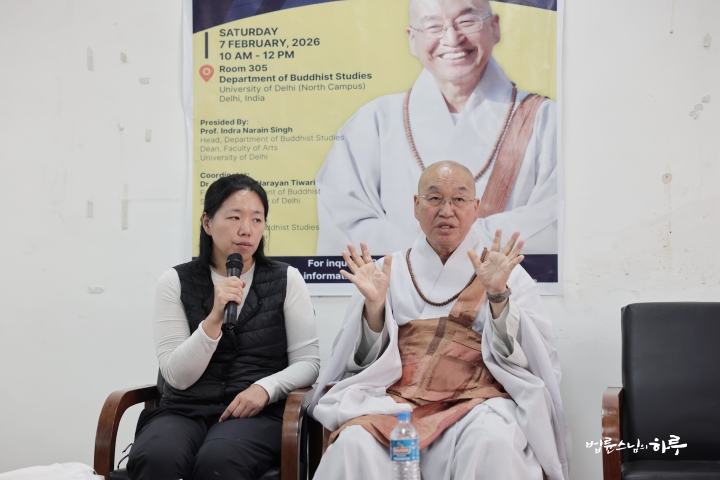
“Thank you. I understand well.”
Questions continued to follow.
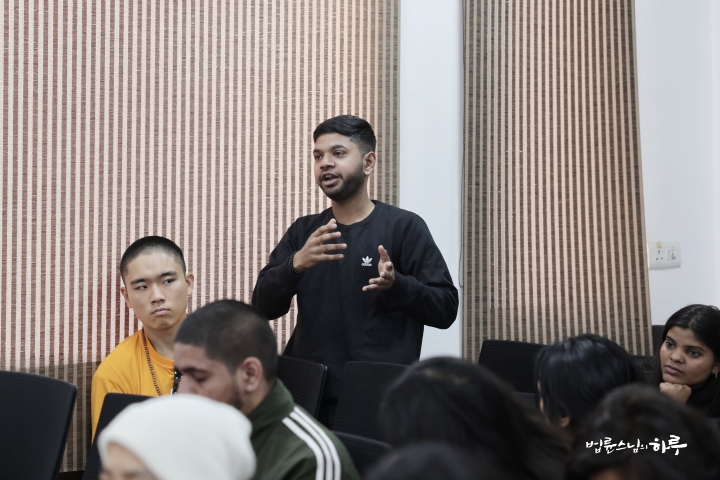
The world defines success as money and status, but these alone don’t fill our hearts with peace or happiness. What is your definition of true success?
With conflicts like the war between Russia and Ukraine continuing around the world, can humanity create a peaceful world where everyone is happy together?
In the climate crisis era, we must protect the environment while pursuing technological advancement and sustainable development. Is there a way to achieve all of these together?
In modern society, people increasingly pursue material things. Can meditation actually help change this materialistic way of life?
With the US trying to purchase Greenland and other major powers ignoring international agreements to reshape the world through power politics, how should we view this situation from the Buddhist perspective of impermanence (무상: 無常)?
The last questioner asked Sunim for advice on whether a meaningful life could be called a happy life. Sunim talked about why suffering inevitably follows when we make pleasure our happiness, and what sustainable happiness is.
Should I Give Up Pleasure to Find True Happiness?
“Which is more important, a life of enjoyment or a life of meaning? Can a meaningful life be called a happy life? What is sustainable happiness in Buddhism? Do we have to give up pleasure in order to attain true happiness?”
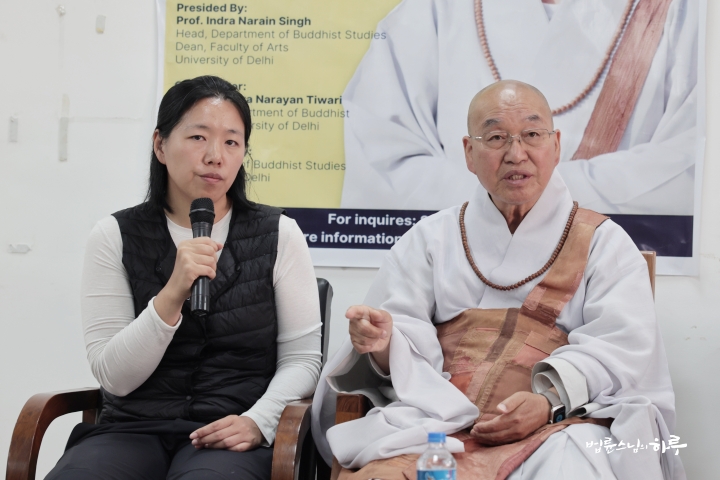
“Thank you.”
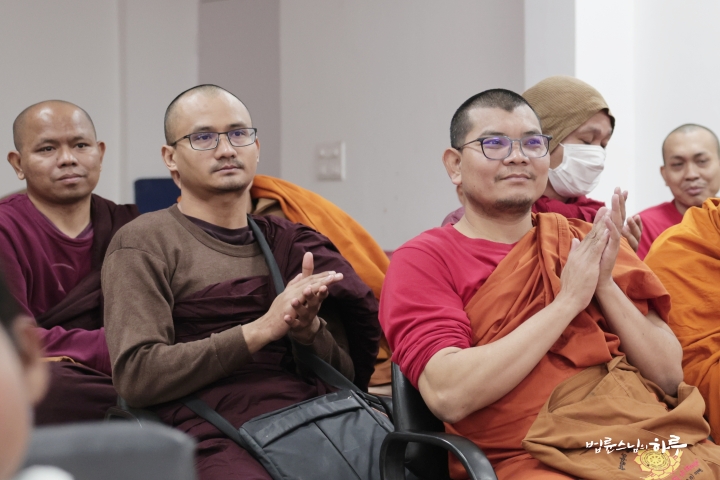
Many students wanted to ask more questions, but it was time to end the lecture. They agreed to meet again when Sunim visits India next time, and the lecture ended at 11:45 AM.
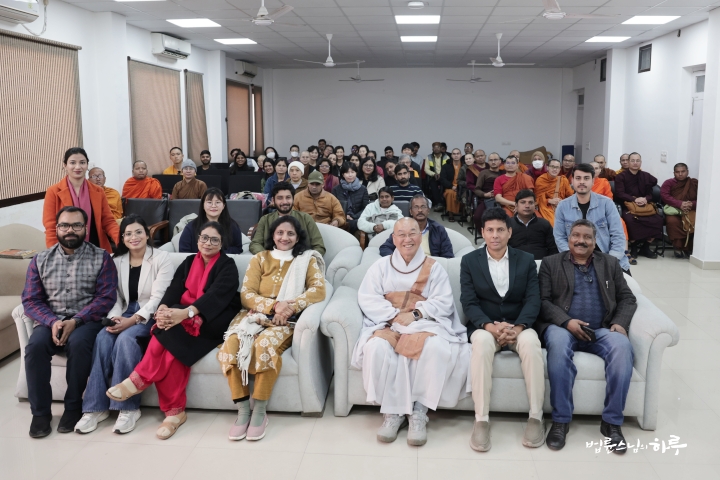
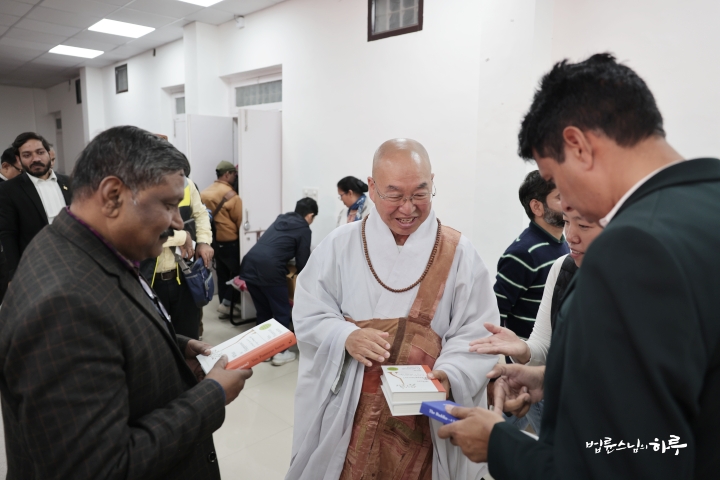
After taking a commemorative photo, Sunim presented the faculty with English editions of Revolution and Buddha and Happiness .
As Sunim left the lecture hall, the person who had invited him to today’s lecture greeted him. It was the person who had come all the way to Gaya last year to invite Sunim to the 30,000-person Dharma assembly of the Moriya clan.
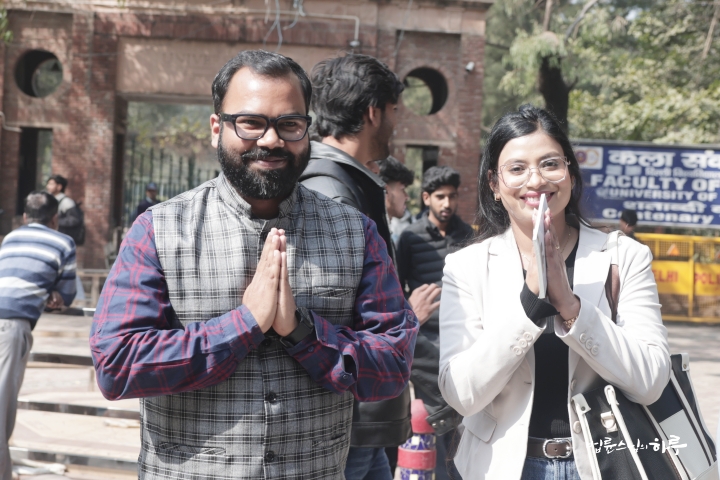
“Sunim, thank you for accepting our invitation to this lecture.”
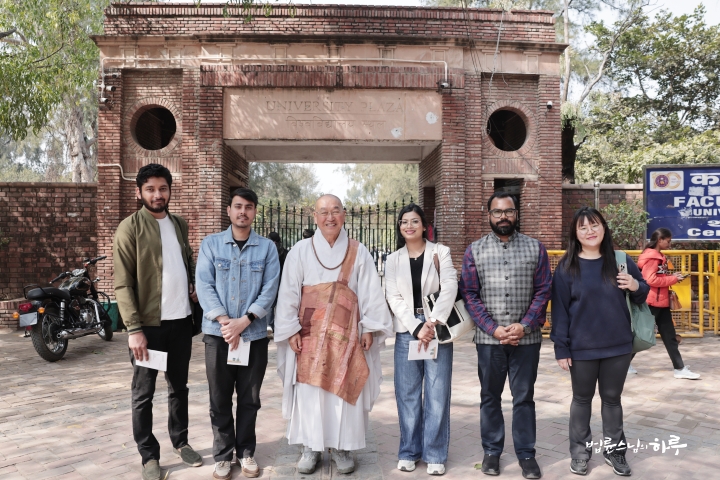
“Yes, let’s meet again when the opportunity arises.”Sunim took photos with those who had prepared the lecture and moved to his accommodation.
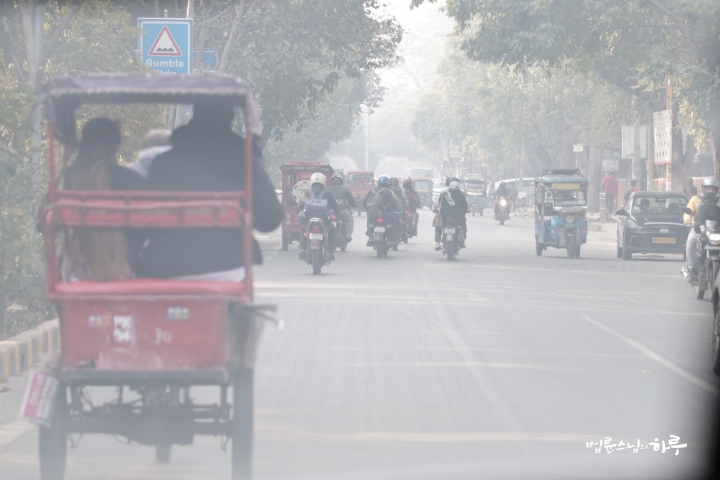
Although it should have been a one-hour journey, they spent two hours on the road due to heavy traffic.

When they arrived at the accommodation at 2 PM, the staff had been waiting for Sunim without eating. After having lunch together, they began the pilgrimage evaluation meeting. He first addressed the memorable points.
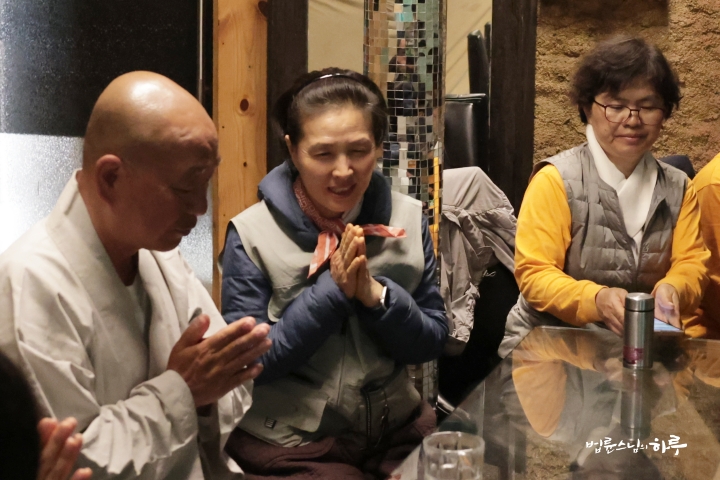
They also discussed the timing of the pilgrimage. This year, they scheduled it from late January to early February, which brought warm weather and fewer patients than usual. When they checked to schedule a similar period for next year, it overlapped with the Lunar New Year holiday. He suggested reconsidering the schedule and then carefully reviewed the accommodation situation at each sacred site.
As the meeting concluded, he made a request to the pilgrimage coordinator.
“When you return to Korea, please send thank-you letters to the Korean Embassy, the Nepalese Embassy, and the Indian Embassy. I heard that the ambassadors at the embassies were very helpful this time.”“Yes, I understand.”
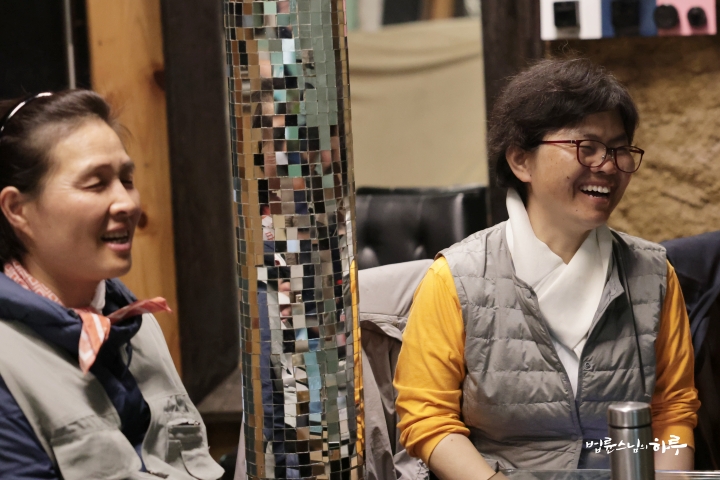
With the evaluation meeting complete, it truly felt like the pilgrimage had come to an end. The staff packed their belongings to return to Korea in the evening, while Sunim departed for Sankasia at 4 PM.
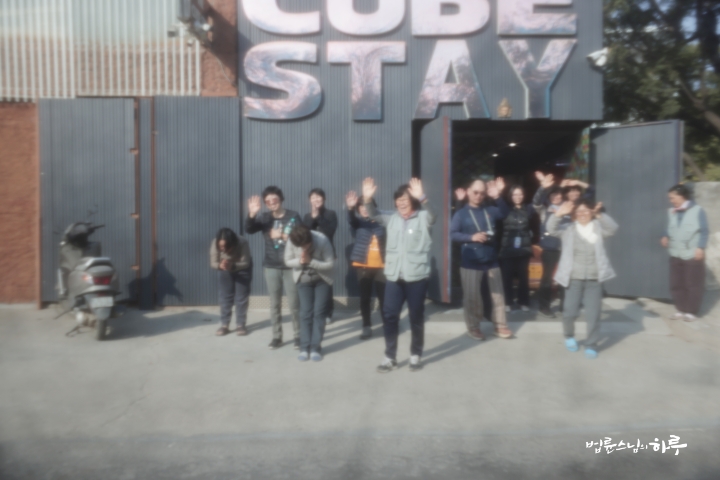
After traveling by car for about 5 hours and 30 minutes, he arrived at the Sankasia Dhamma Center at 9:35 PM.

Tomorrow, Sunim will conduct the India Jungto Society board meeting and a Dharma assembly for the Sakya clan in Sankasia.