How Can I Repent for Feeling Like I Failed in Raising My Child?
December 21, 2025 - Dharma Q&A with Jungto Dharma School and Jungto Buddhism Course Students, UN World Meditation Day Commemoration ...
Hello. Today, Sunim held an online Dharma Q&A session with students from Jungto Dharma School and Jungto Buddhism Course, followed by the UN World Meditation Day commemoration event and World Meditation Day meditation assembly.
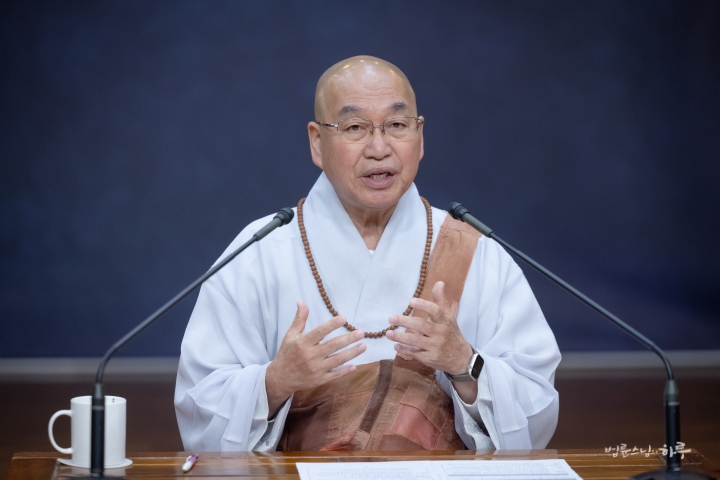
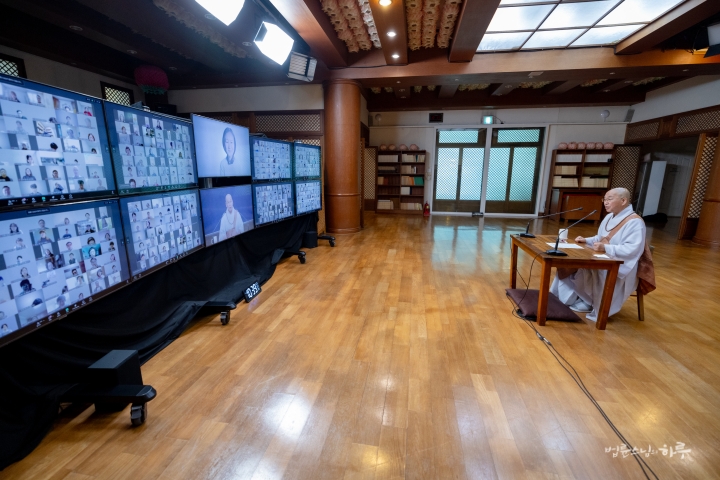
After completing his morning practice and meditation, Sunim began his day at 8 AM with an online Dharma Q&A session with Jungto Dharma School students from the broadcasting room at Seoul Jungto Center.
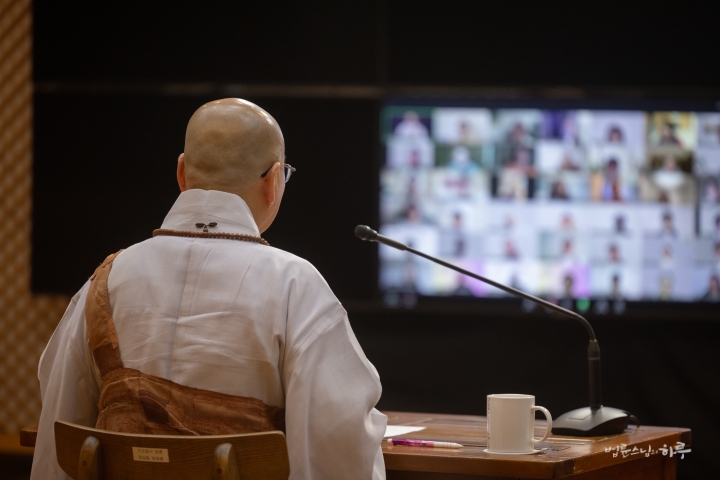
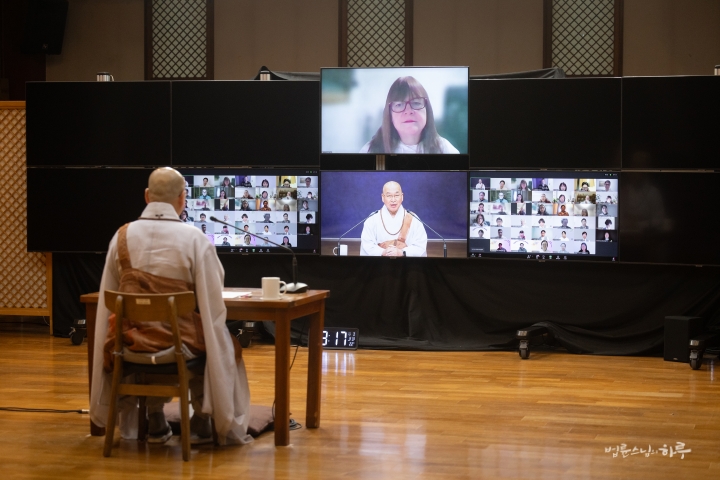
Twenty-two students taking Jungto Dharma School classes from seven countries – the United States, Canada, Philippines, Australia, France, Japan, and Korea – gathered together in the online space. Realizing that learning knows no borders, everyone warmly greeted each other.
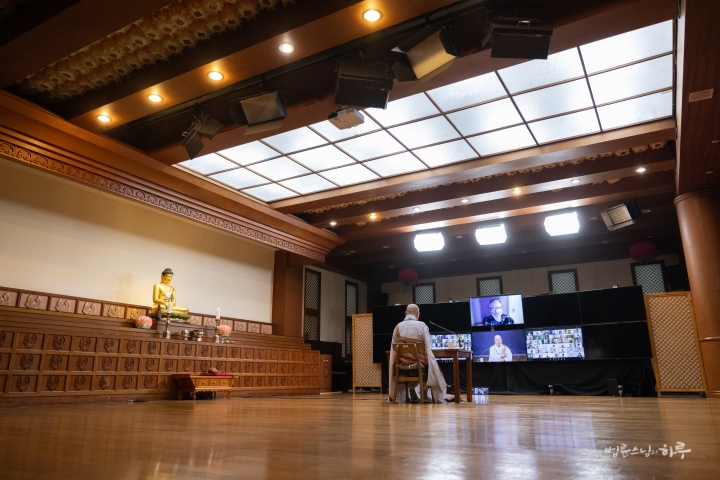
When Sunim entered the video conference room, two students representing their classmates shared their reflections on the classes they had taken. First, Shelley, representing the English class, shared her thoughts.
“It has been very helpful for me to learn about Buddhism. Understanding how the mind works has helped me with my own suffering, and it also allows me to help others prevent suffering as well. We are simply helping others in the world. I enjoy meeting other people around the world who want to learn the same things as I do, and I look forward to the next course. Thank you.”
Today, Japanese class students also participated, with both English and Japanese interpretation provided. This made it clear that Jungto Dharma School is expanding into an increasingly international gathering.
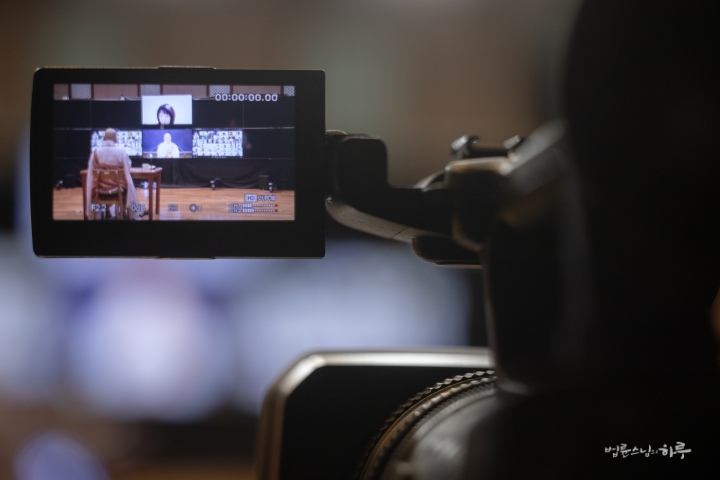
Representing the Japanese class, Sato Yuji shared his reflections.
“What particularly resonated with me from the Early Buddhism course was the fact that each person creates their own worldview and values through their life experiences, and these become the standards by which they view others. As a result, when we look at others, we unconsciously use ourselves as the standard to judge things, which leads to feelings of discomfort or rejection toward things that are different from us, creating misunderstandings and conflicts. After understanding all of this, I became able to say, ‘Ah, that person thinks about things from that perspective. But I think this way.’ I became able to judge things from a positive perspective that respects others. I want to continue living without forgetting what I learned at Jungto Dharma School.”
Through the students’ presentations, it was evident that Jungto Dharma School has become a place where people experience life transformation. The students then requested a Dharma talk from Sunim with three prostrations. Sunim emphasized that studying the Buddha’s life is essential for understanding the difficulties of practice and developing a Buddhist perspective on social and historical issues, then opened the floor for questions.
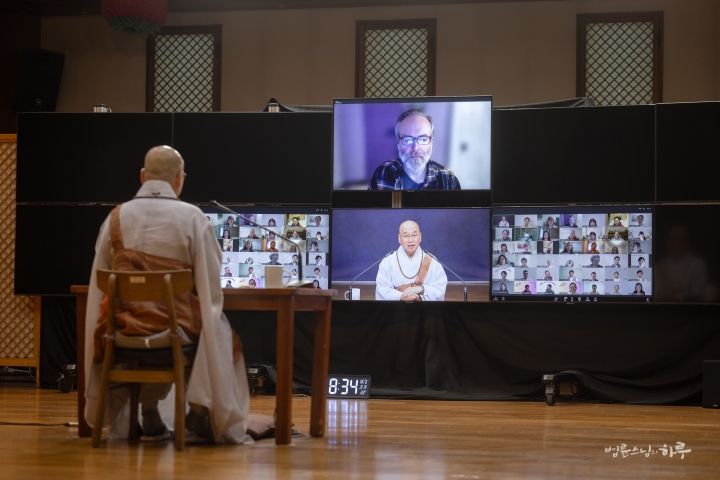
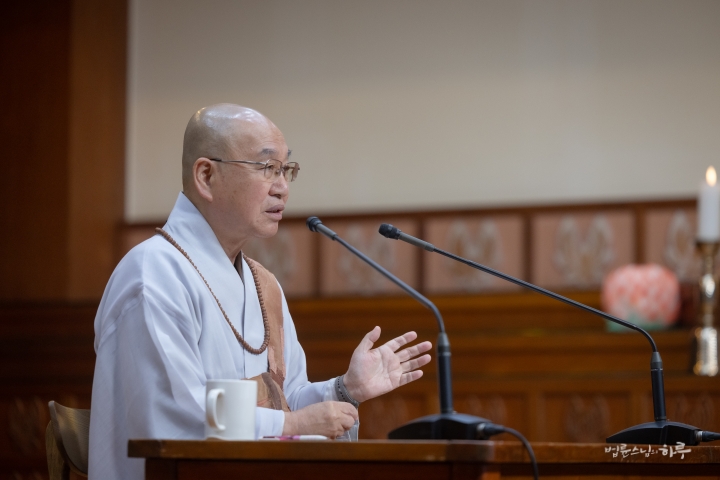
During the two-hour session, four people clicked the raise hand button to ask Sunim questions. One of them sought Sunim’s advice on how to maintain a responsible attitude toward the world without being overwhelmed by anger in an era flooded with negative news about war and environmental destruction.
How Can I Stay Engaged with the World Without Being Overwhelmed by Anger?
“In our time, it can often feel like there is so much information present, and much of what comes to us through our phones and computers takes the form of bad news, such as stories of war, political corruption, famine, and environmental destruction. I often feel that it is my responsibility to stay informed about what is happening to people around the world, but it often leaves me feeling helpless. This feeling can lead to frustration and then to anger, which is a destructive emotion. How can I stay engaged with the world in a way that is helpful and in line with the Five Precepts, while avoiding becoming attached to anger?”
“Thank you so much for that perspective on how our bodies are related to the world. This is very helpful to reflect on.”
Questions continued to flow.
I was impressed by the history and transformation of Mungyeong Jungto Retreat Center shown in the class video, and I’m curious about the situation after the 2021 pandemic. How has Mungyeong Jungto Retreat Center changed since the pandemic, and what does it look like now?
I’m curious about the relationship between repentance prostrations and prayer, and I’m confused about why it’s called a ‘prayer text’ rather than a ‘repentance text.’ What mindset should a practitioner have when praying, and how should one pray at a shrine?
I’m curious about how to understand the teaching that the present is both the result of the past and the cause of the future. Does this mean that everything I experience now is my own doing, and everything eventually comes back to me?
While answering various questions, the scheduled time had long passed. Sunim agreed to have another session to address remaining questions and ended the live broadcast as it approached 10 o’clock.
Students gathered in group video conference rooms to continue their mindful sharing sessions.
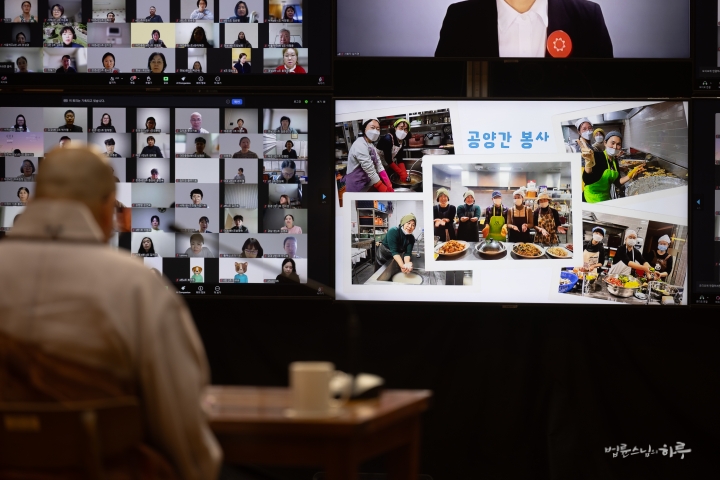
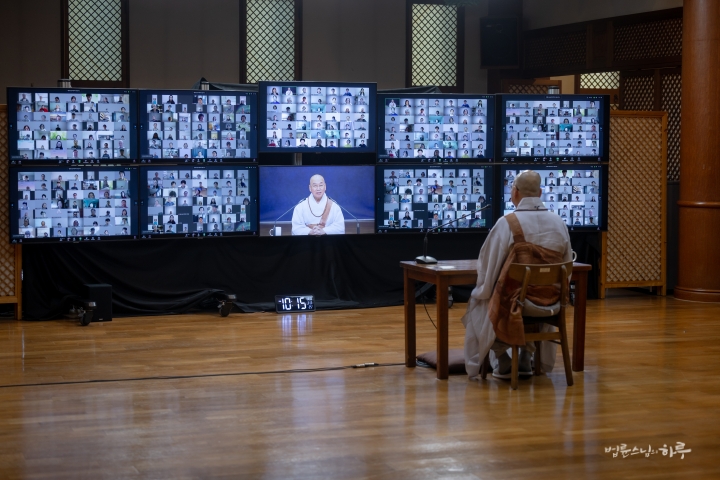
Without a moment’s rest, Sunim began an online Dharma Q&A session with Jungto Dharma School students at 10 o’clock. After about 2,000 students connected to the live broadcast, they recited the Three Refuges and Words for Practice, then watched a video of the students’ practice activities from last month.
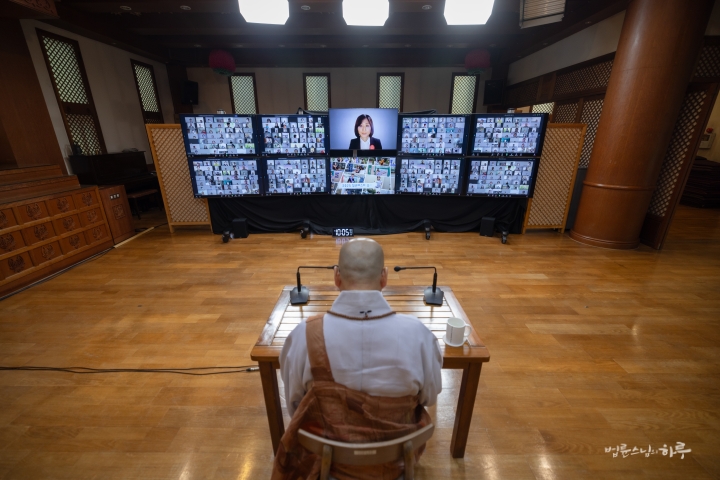
The video showed various environmental practices carried out by each class. After hearing students’ reflections, everyone requested a Dharma talk from Sunim with three prostrations.
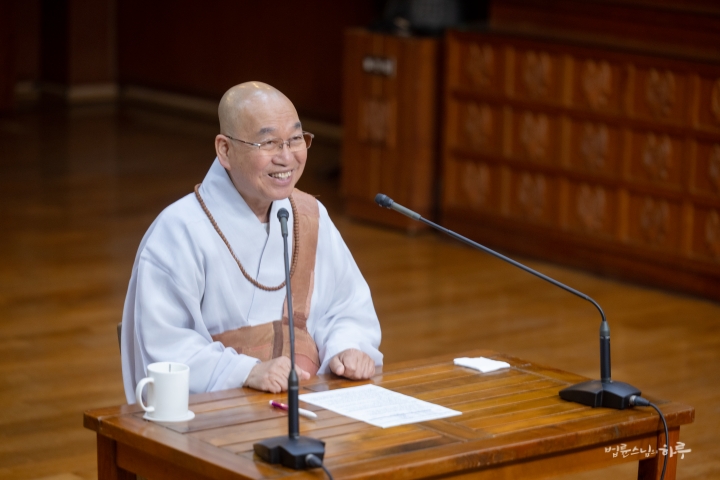
Sunim began with a warm greeting. He emphasized why it’s important to study the Buddha’s life, then shared news about his recent visit to Mindanao, Philippines, where he attended the opening ceremonies for an indigenous school and a special school for children with disabilities.
Every Child Deserves to Learn at the Right Time
I visited Mindanao in the Philippines last week. Mindanao has been in a state of conflict for a long time due to tensions between Islam and Christianity and the presence of an Islamic rebel group called the MILF (Moro Islamic Liberation Front). In these conflict zones, there are no schools because security cannot be maintained. Indigenous people live in the mountains where the NPA (New People’s Army), a communist rebel group, is active. This area is also a conflict zone, and since most people live scattered in small numbers, they have even fewer opportunities to receive school education. Given that even healthy children find it difficult to access educational opportunities under these conditions, children with disabilities have almost no chance for education. That’s why JTS is supporting the establishment of one special school for children with disabilities at the central elementary school in each municipality, so that children with disabilities can also have educational opportunities. ‘Children in remote areas should have access to education. Children with disabilities should have opportunities to learn. Children in conflict zones should have opportunities to learn. Every child born into this world has the right to have the opportunity to learn at the appropriate time.’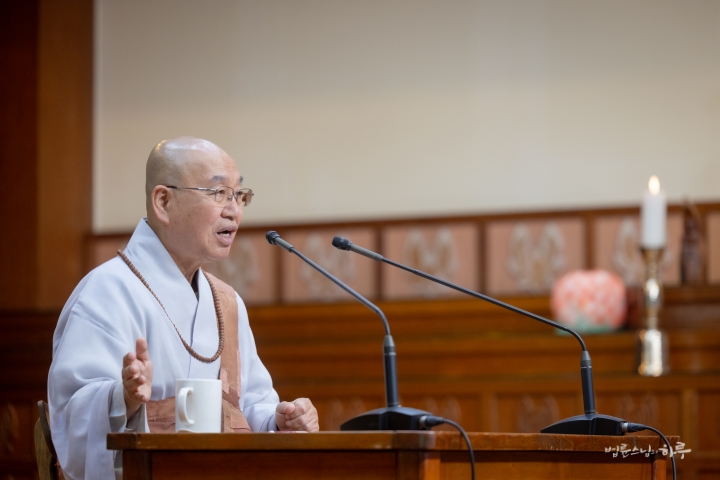
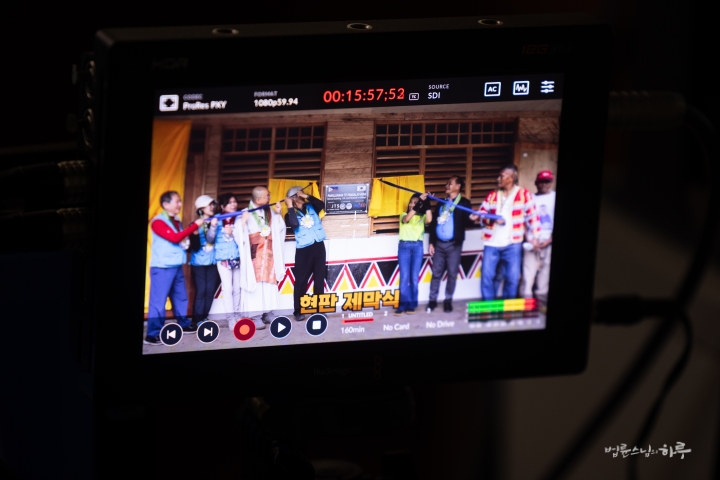
They then watched the video together.
▲ Watch Video
After the video ended, Sunim continued speaking.
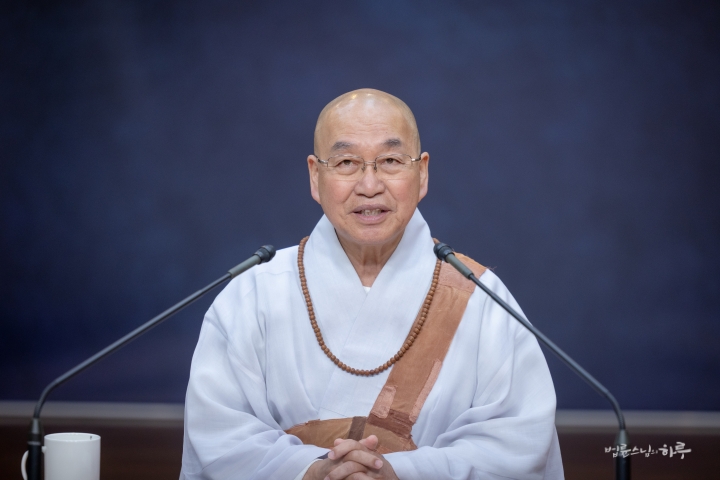
Next, Sunim took questions about any concerns. The students had enrolled in September, completed the ‘Fundamental Buddhism’ course, and were now in their second session of the ‘Human Buddha’ course. Those who had questions about the previous lessons pressed the hand-raising button and asked Sunim their questions.
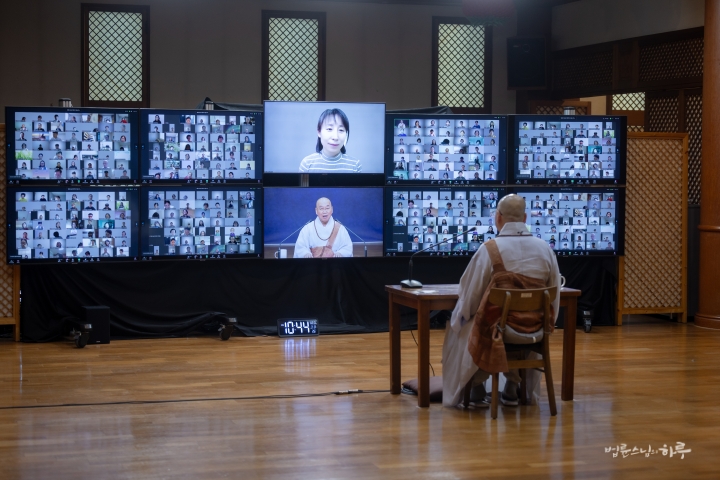
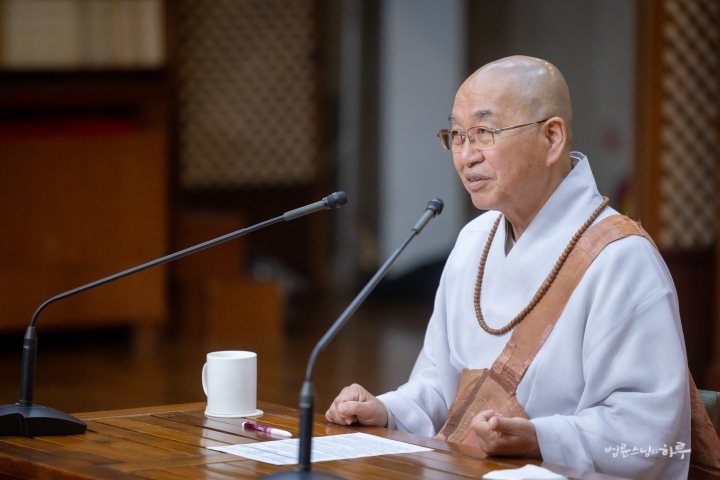
Seven people had conversations with Sunim over the course of two hours. One of them said that although she recognized her mistakes, the regret and sadness wouldn’t go away, and she was troubled about her relationship with her eldest son who had become independent. She asked Sunim for advice on how to look at her son with a peaceful mind.
I Feel Like I Raised My Child Wrong. How Can I Repent?
“In class, I learned that repentance means recognizing one’s mistakes and resolving not to repeat them. I understood that through this awareness, the suffering in our hearts disappears as part of the practice process. However, when I apply this principle to my daily life, I’ve realized my past mistakes but my heart still feels uncomfortable. I especially feel heavy-hearted when I look at my eldest son. He’s now 19 years old and had conflicts with his father over gaming issues when he was young. After graduating from high school, he argued with his father about coming home late and moved out to live with a friend, saying he wanted to be independent. As I’ve been studying the Dharma teachings, looking back, I think I was ignorant as a mother when raising my child. I lacked understanding of my child and only imposed adult values on him, which created this situation. My heart feels heavy with this thought. I seem to be feeling regret, but I’m wondering how I can transform this into repentance so I can look at my child with a peaceful mind.”
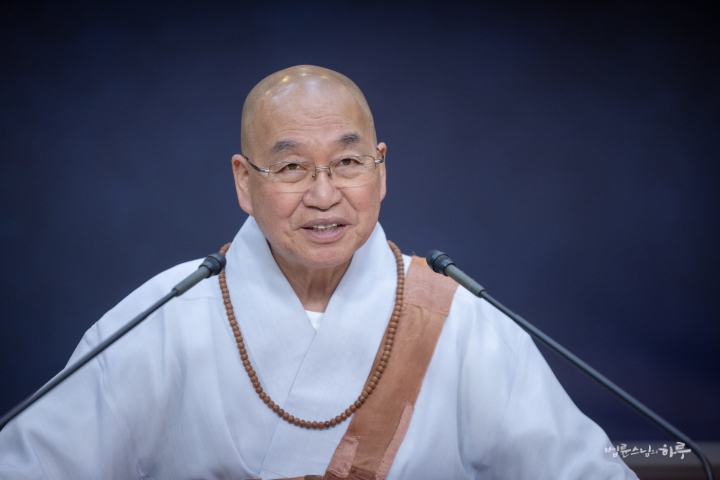
“When acquaintances ask what my son is doing now, I feel uncomfortable and heavy-hearted.”
“Is your son working part-time now?”“Yes, he’s working.”
“Thank you. I understand well.”
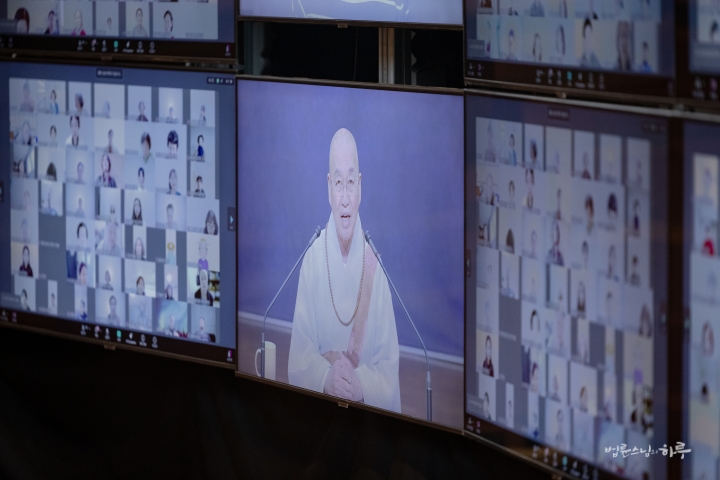
Questions continued to follow.
I’m curious about how 108 prostrations help with practice, and what alternative practices are available for those with disabilities. What changes and spiritual significance do 108 prostrations and prayer practice bring?
I feel uncomfortable knowing that behind someone’s benefit and convenience lies someone else’s pain and sacrifice. How should we view and live in this world?
I rely heavily on Venerable Pomnyun Sunim’s Dharma talks, and I’m afraid that someday Sunim won’t be able to give talks. So I’m thinking of having AI learn from Sunim’s talks to rely on. Would this be okay?
Thanks to practice, my mind has become peaceful, but as I tend to brush things off lightly in daily conversations, people around me feel I’m cold. How should I speak and act to maintain empathy and communicate well while practicing?
If I maintain awareness through meditation, will I come to understand the reality of the Buddha’s law of dependent origination? Or is moment-to-moment awareness itself the world of enlightenment?
The more I feel reluctant to do something, the more I try to just do it anyway. But sometimes this feeling seems like greed. How do I distinguish between aspiration and greed?

After answering the questions, it was almost noon. Due to severe shoulder and arm pain, Sunim couldn’t take more questions and promised to answer more questions next time when his health improved, concluding the Dharma Q&A.
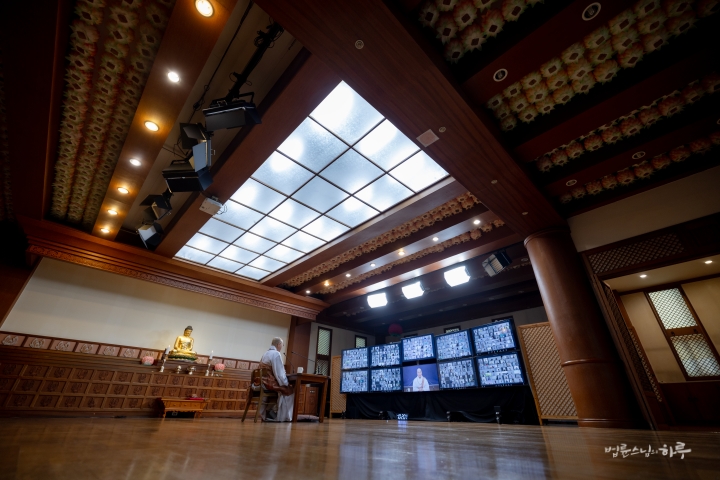
After lunch, at 1 PM, Sunim headed to Bongeunsa Temple to participate in the launch ceremony of the Korean Committee for the UN International Day of Meditation.

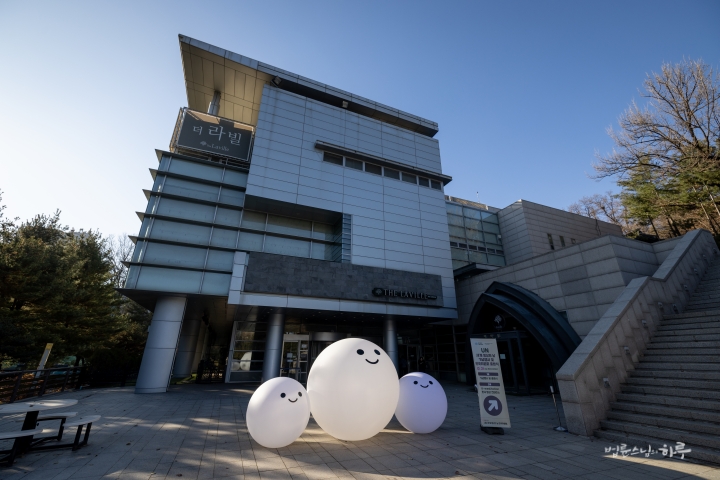
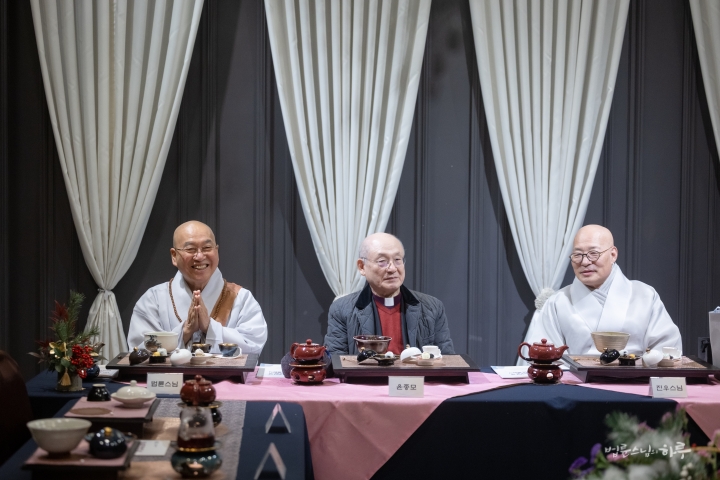
Arriving at Seoul Bongeun Hall at 1:40 PM where the event was held, Sunim had tea and conversation with the executives who serve as co-chairs of the Korean Committee for the UN International Day of Meditation.
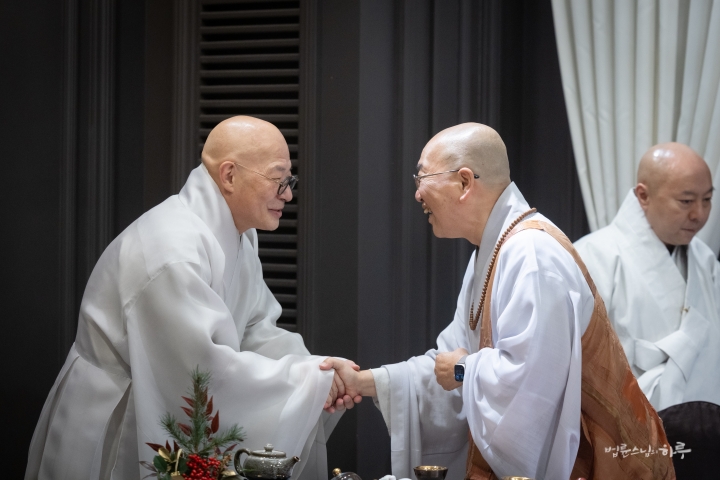
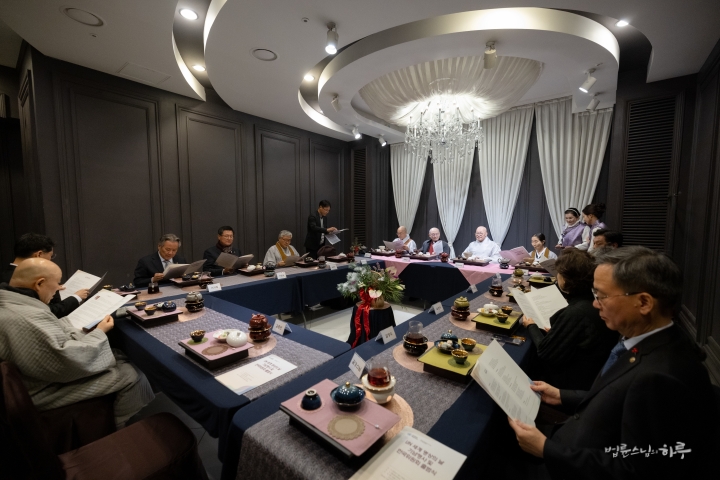
The co-chairs included Venerable Jinwoo, Director of the Jogye Order of Korean Buddhism; Lee Kyung-yeol, Won Buddhist priest; Bishop Yoon Jong-mo of the Anglican Church of Korea; Representative Cho Seung-rae of the National Assembly Mindfulness Forum; Lee Kang-wook, President of the Korean Society of Meditation Medicine; Yook Young-sook, President of the Korean Association of Meditational Healing; and Venerable Pomnyun Sunim, Guiding Dharma Teacher of Jungto Society.
At 2 PM, everyone moved to the event hall together to begin the UN International Day of Meditation commemoration ceremony and the launch of the Korean Committee.
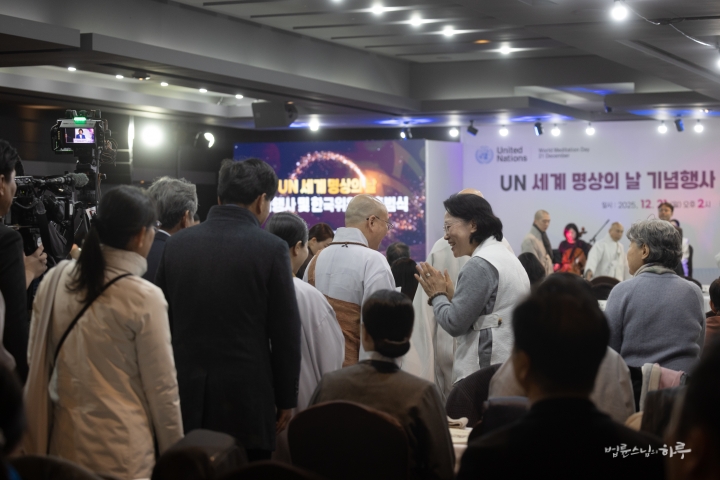
The Korean Committee officially launched through a progress report by Venerable Geumgang, Chair of the Jogye Order’s Seon Meditation Committee, establishment of bylaws, and election of chairpersons and executives. The executive committee and advisory board also included figures from meditation medicine, education, and civil society, as well as religious leaders and meditation field experts.
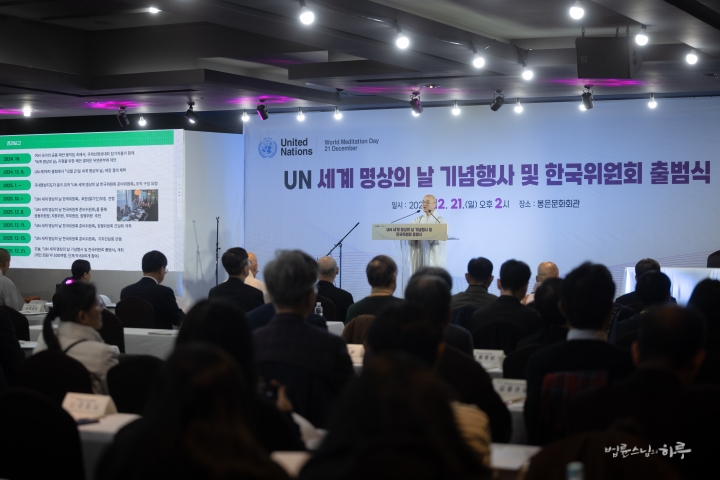
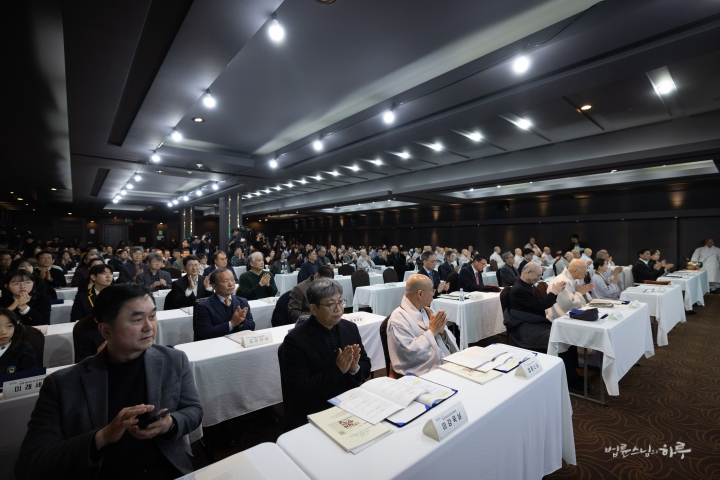
Starting with Venerable Jinwoo’s commemorative address, there were congratulatory messages from various sectors both domestic and international, followed by children and youth presenting ‘Proposals for Future Generations’ who seek peace of mind through meditation.
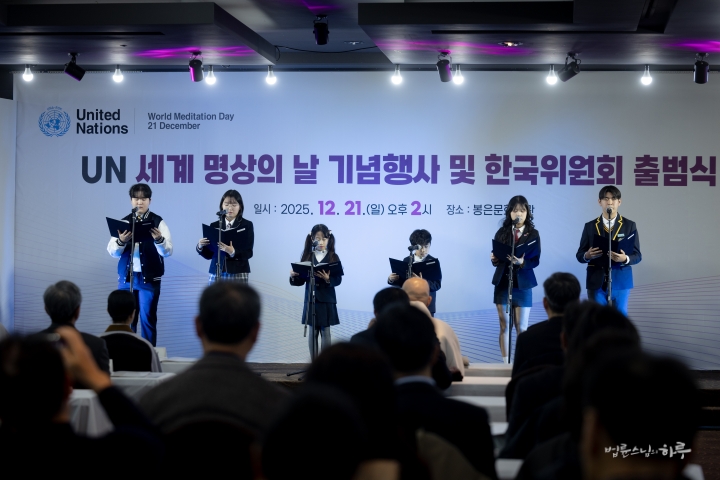
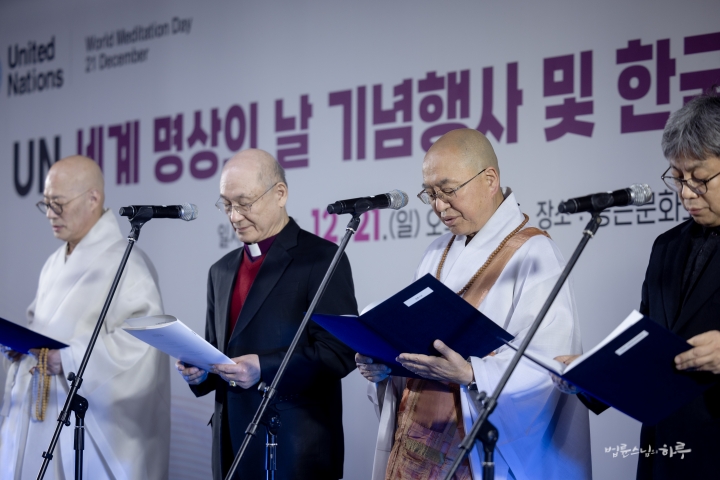
At the end of the launch ceremony, a ‘Peace of Mind Meditation’ was conducted with the co-chairs reading together. Starting with Yook Young-sook, President of the Korean Association of Meditational Healing, reading ‘Observation,’ Representative Cho Seung-rae read ‘Pause,’ Bishop Yoon Jong-mo read ‘Connection,’ Won Buddhist priest Lee Kyung-yeol read ‘Compassion,’ Venerable Pomnyun Sunim read ‘Insight and Forgiveness,’ and Lee Kang-wook, President of the Korean Society of Meditation Medicine, read ‘Relaxation’ in sequence. Finally, a collective chant resonated calling for becoming peace with one mind.
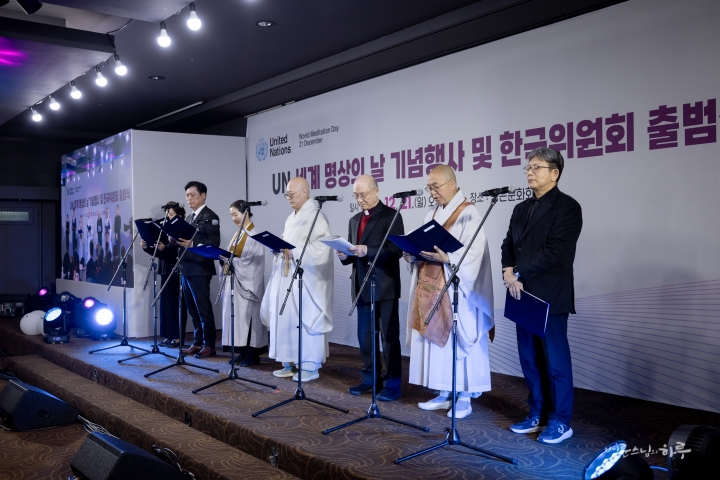
“When the mind brightens, the world brightens. Today, at this very moment, we become peace with one mind.”
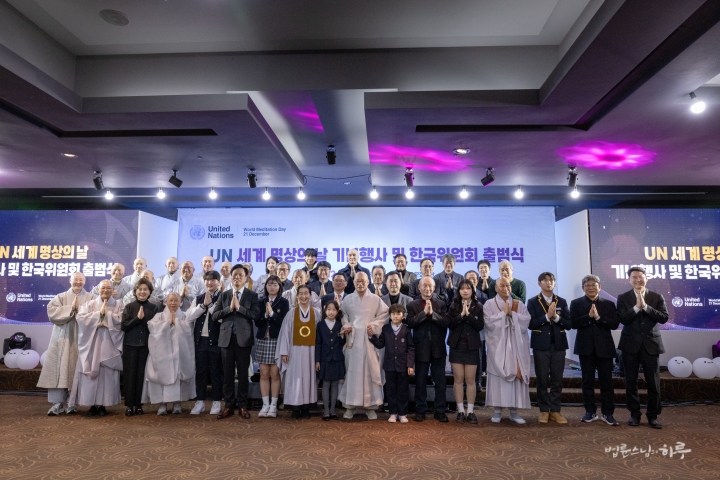
Following this, participants from various sectors stood in front of the stage for a commemorative photo, concluding the first part of the event.
In the second part, a K-meditation Korean Meditation Conference was held under the theme ‘Global Meditation Trends and Challenges for Korean Meditation.’ Lee Kang-wook, President of the Korean Society of Meditation Medicine, presented on scientific research achievements and prospects of meditation; Venerable Hyeju presented on global meditation education trends and Korea’s challenges; and Professor Sung Hae-young of Seoul National University presented on the direction Korean meditation should take within global meditation trends.
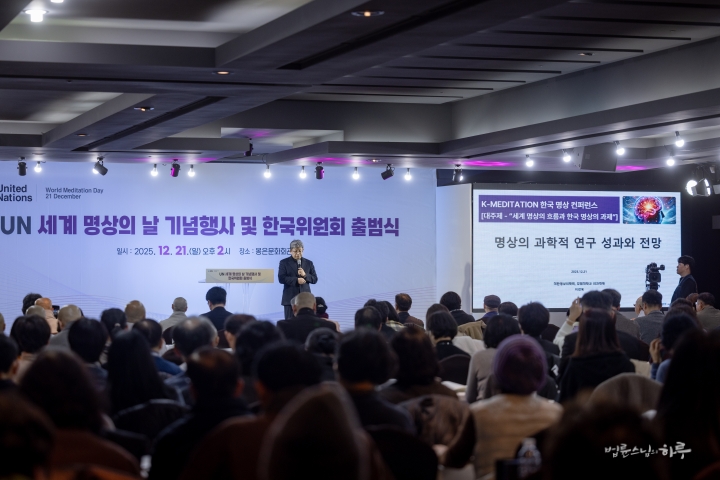
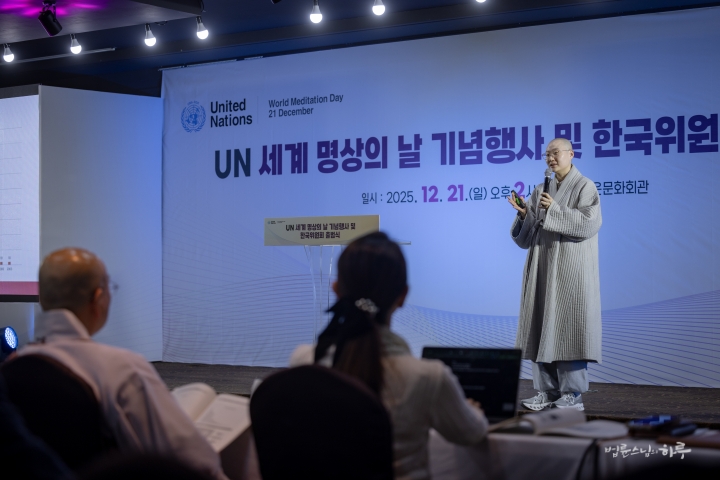
Sunim remained at the event venue until the end, attentively listening to the experts’ presentations.
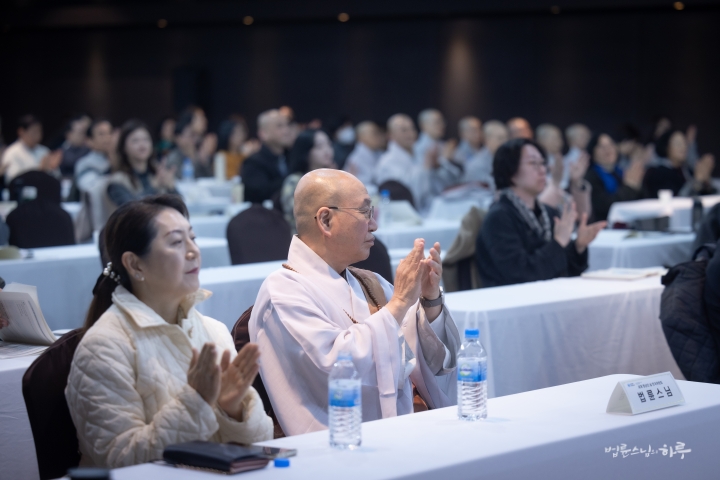
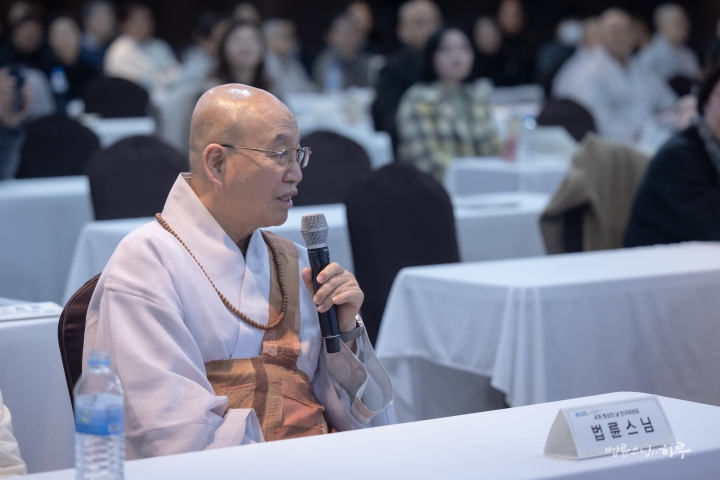
As the event concluded, the organizers requested closing remarks from Venerable Pomnyun Sunim. Sunim briefly shared his impressions after listening to the experts’ presentations today.
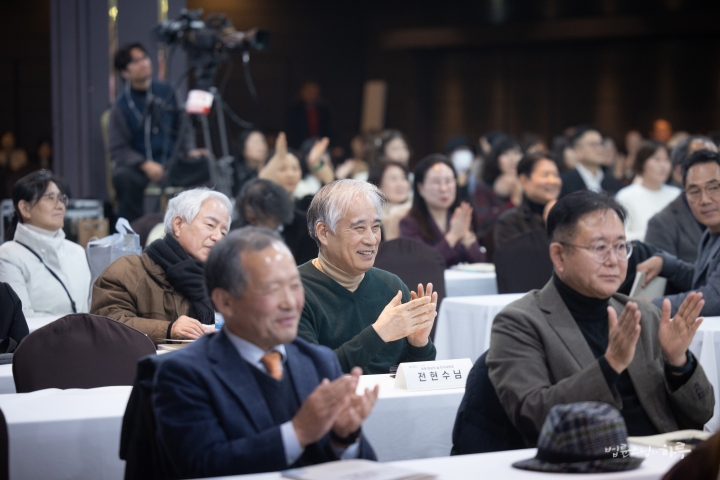
After the event, Sunim exchanged greetings with participants and left the venue at 6 PM.
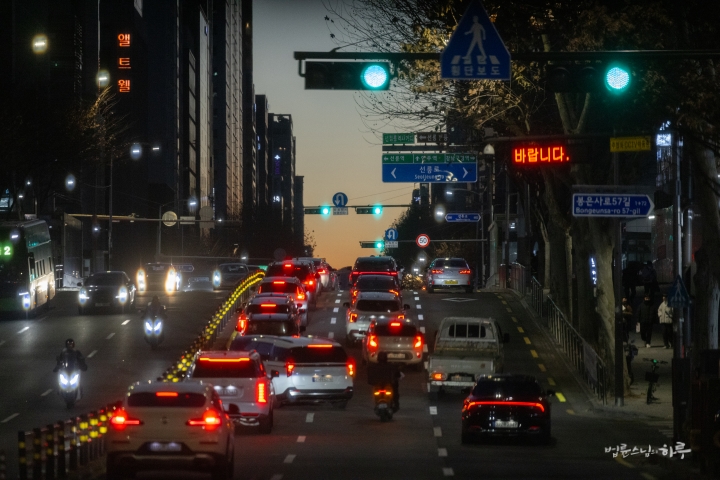
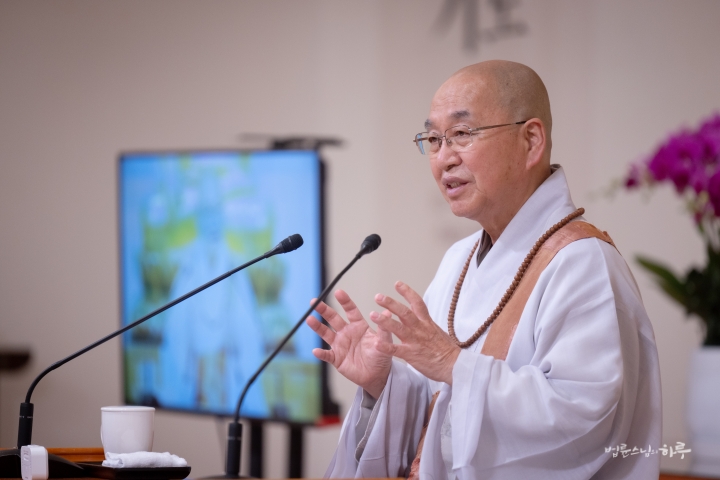
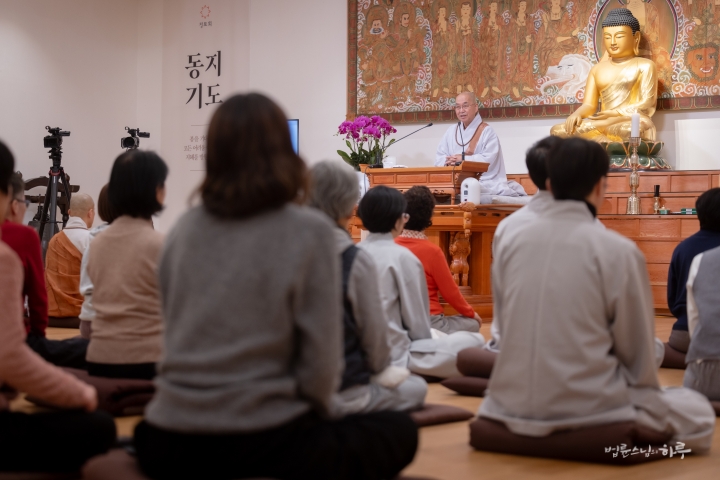
As the sun set, Sunim returned to the Jungto Social and Cultural Center, had dinner, and worked in his office. At 8:30 PM, he headed to the Dharma Hall on the third floor to conduct a meditation ceremony commemorating the International Day of Meditation.
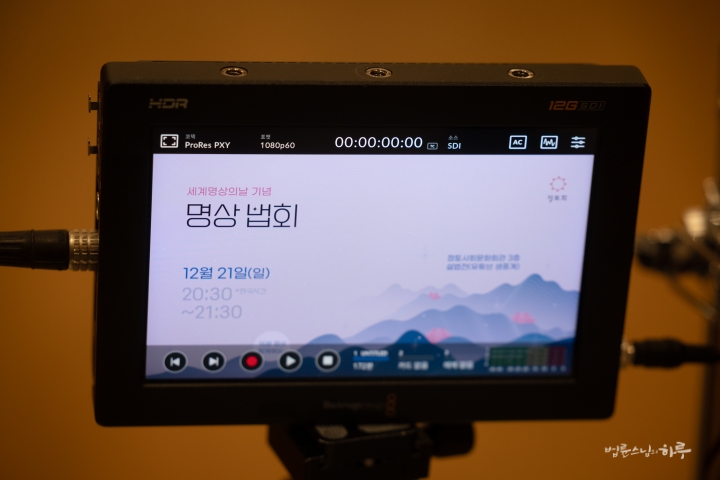
The UN World Meditation Day Committee (WMDC) decided to ring the meditation bell at noon Greenwich Mean Time, which is 9 PM Korean time, and conduct a 15-minute simultaneous global online meditation. Jungto Society also participated by holding a preliminary event starting at 8:30 PM.
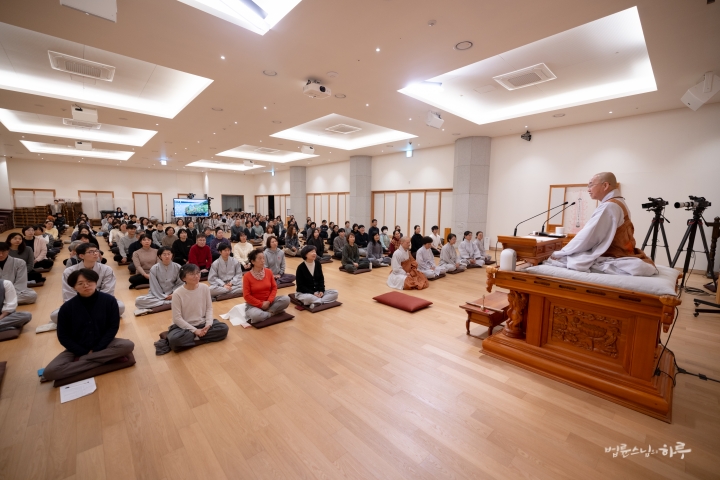
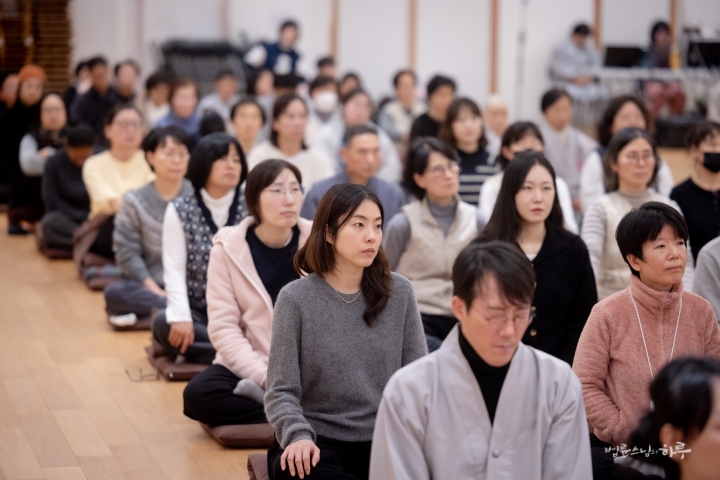
With about 4,000 Jungto Society members connected to the live broadcast, Sunim first explained the purpose of the 15-minute meditation event.
“Today is the International Day of Meditation established by the United Nations. As you all know, today’s scientific and technological civilization has advanced tremendously, with various technologies including artificial intelligence developing to an extent that was unimaginable in the past. Additionally, with mass production of goods, we can say that material civilization has also advanced greatly. But have modern people become proportionally happier? Taking Korea as an example, when I entered first grade in 1960, the per capita GDP was $98. While it didn’t even reach $100 then, South Korea’s current per capita GDP is about $37,000. In terms of material indicators, this represents about a 370-fold increase. However, our happiness index has not increased proportionally. Perhaps people today live with more sleeplessness and troubles than people in the past. Anxiety has grown, conflicts have increased, divorce rates after marriage have risen, and suicide rates have also increased. This shows that the development of material civilization alone cannot make humans truly happy.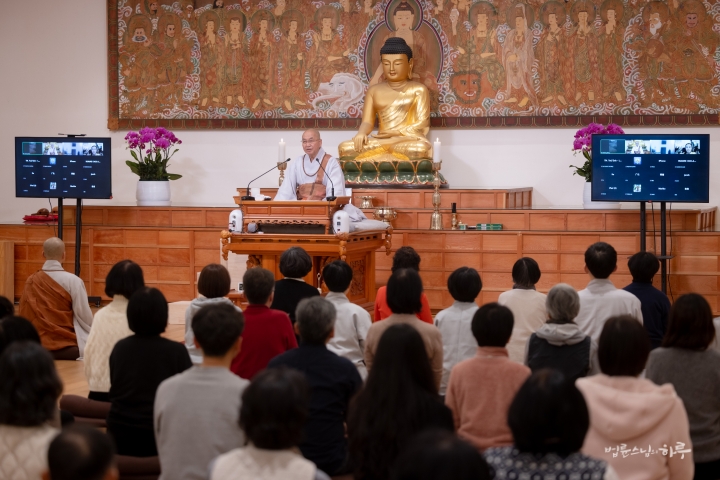
The Meaning of World Meditation Day in an Era That Needs to Pause
Now, we can only achieve human happiness by purifying what we commonly call mental processes, or what is religiously referred to as spirituality—the mind. Only then can conflicts be reduced. We have been racing relentlessly for the advancement of material civilization. Now is the time to pause and ask ourselves whether this is truly the path we should be taking, and to reflect on whether the thoughts, beliefs, and convictions we have always claimed to be right are indeed correct—in other words, we need introspection to examine ourselves. This is not just one country’s problem, but a problem for the entire world and all of humanity. That’s why, just as we practice ‘turning off lights for 5 minutes’ when engaging in environmental movements while thinking about the importance of energy conservation, we felt the need for people around the world to pause their actions and thoughts for a moment to reflect on themselves, which led to the establishment of World Meditation Day. The intention is for all of us to awaken through this day. We designated this day as the winter solstice. The winter solstice, when the day is shortest and the night is longest, can be interpreted differently as the time when suffering is deepest. At the same time, being the darkest also means that from the next day, the days gradually get longer and light increases. Since the goal of meditation is to move step by step from suffering toward the light of wisdom, we designated World Meditation Day as December 21st, the winter solstice. Of course, depending on the year, the winter solstice can fall on the 21st or 22nd.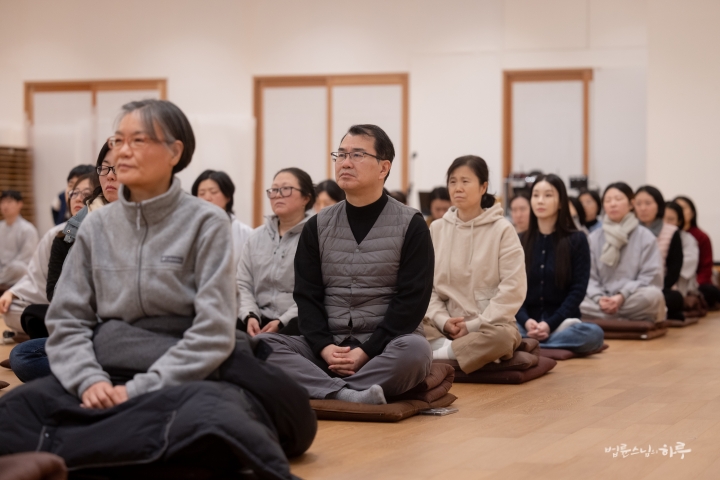
Next, they watched a video of former Bishop Park Kyung-jo of the Anglican Church of Korea explaining ‘The Meaning of Meditation from a Christian Perspective.’
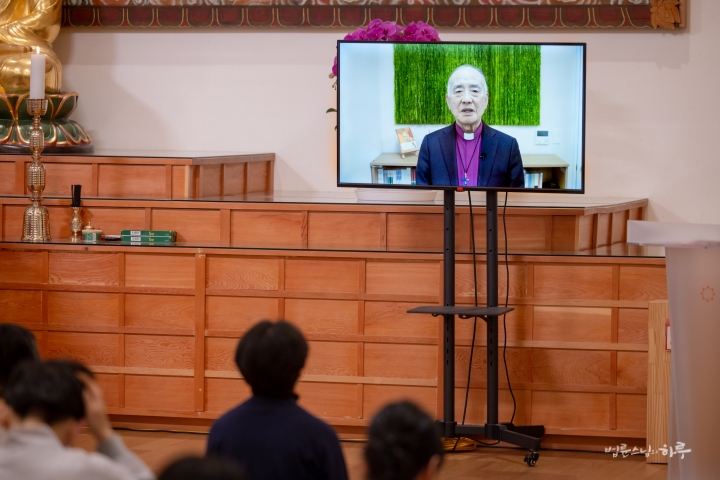
Rest in God’s Love: The Path of Meditation in Christianity
“Some people think meditation is limited to Buddhism, but that’s not the case. I would like to share the tradition of meditation that has long existed within Christianity. We call it by various names—silent prayer, contemplative prayer, prayer of the heart—but while the expressions differ, I believe they all ultimately point in the same direction.
Contemplative prayer is about dwelling in the love of God, who is the source of all existence. However, the human condition is never easy, as our thoughts are always complex and our emotions entangled. Nevertheless, Christians believe that beyond all this, there is God who is love, and we seek to enter into God’s embrace to find true rest within. We consider that moment the happiest moment, believing that in Him we can let go of attachment and greed and experience true peace, joy, and rest. The cross of Jesus is the sign that fully reveals God’s love. Jesus was one who completely emptied himself and became one with God’s love, and through that love, He said to us, ‘Come to me, and I will give you rest.’ Therefore, we believe that at the deepest foundation of our being lies God’s love, and with absolute trust in that love, we walk the path of contemplative prayer. This prayer, which has continued through long monastic traditions, is a prayer of dwelling in silence before God, letting go of everything and relying on the Lord. In that moment, we taste true peace, and within us springs forth new compassion and the power of love toward our neighbors.
Though our paths and expressions may differ slightly, I believe we are ultimately walking the same path toward true truth, life, and happiness. On this World Meditation Day, I hope that all of you will walk the journey of discovering true peace within yourselves.”
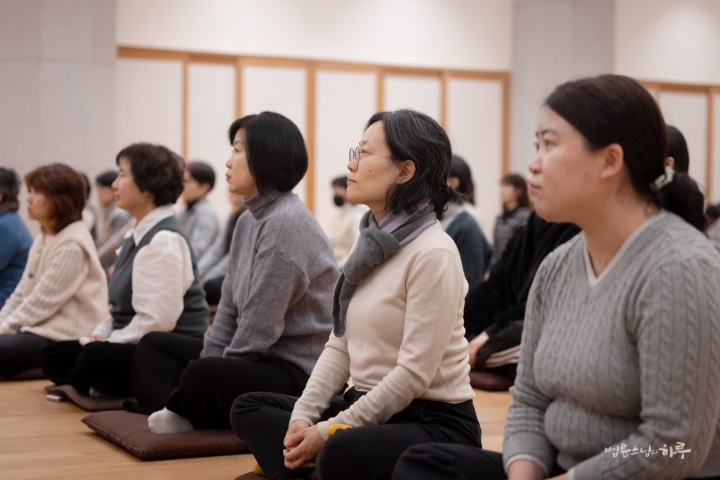
Following this, Sunim briefly guided those new to meditation on how to meditate.
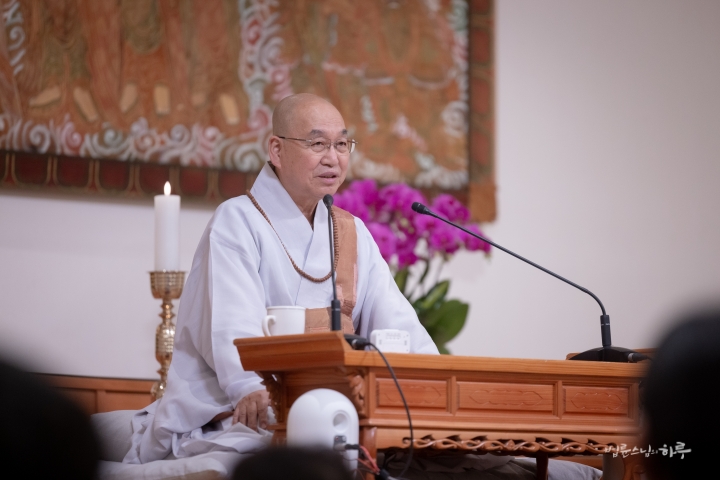
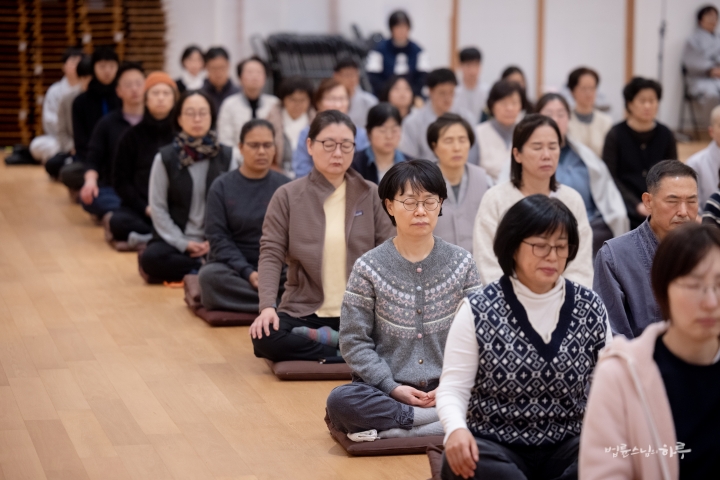
As the guidance concluded, it became exactly 9 PM. Members of the World Meditation Day Committee (WMDC) from various parts of the world, including Switzerland, India, and the United States, connected to the video conference room.
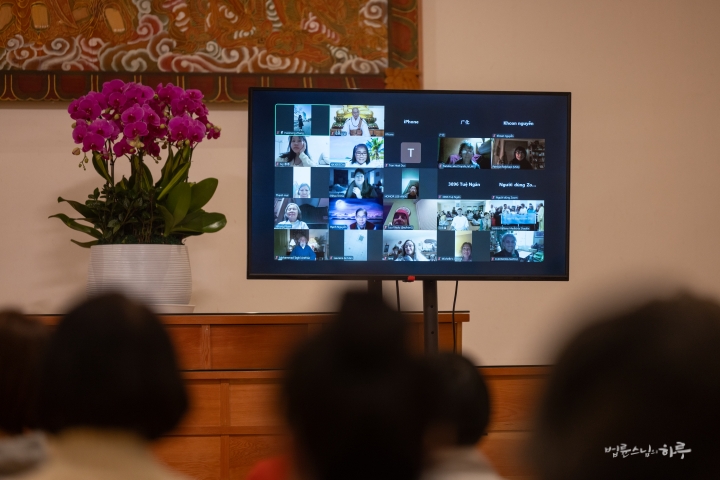
When the meditation bell rang, the lights went out and everyone entered into 15 minutes of meditation together.
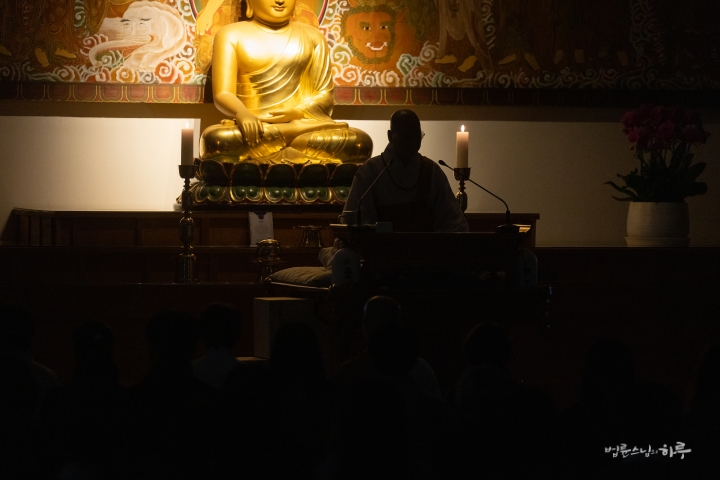
Everything came to a pause for a moment. The frantic pace of the world was set aside briefly.
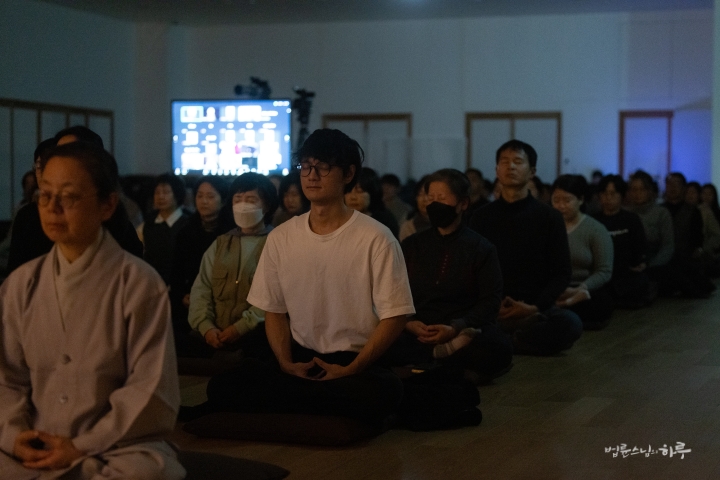
The meditation bell rang again, and the Dharma Hall brightened.
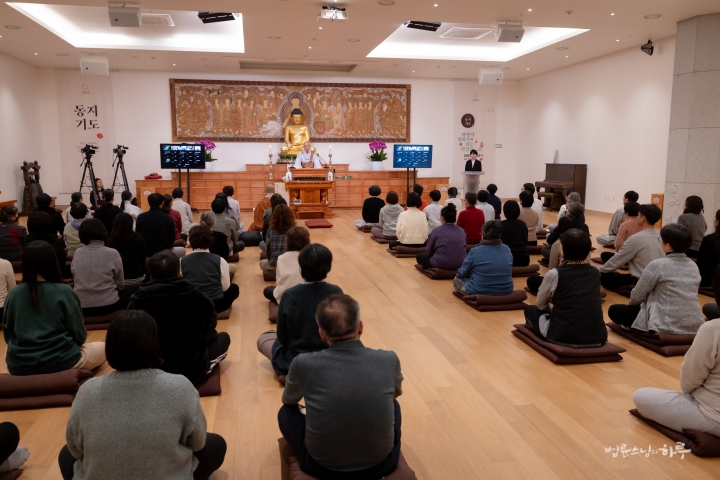
As the World Meditation Day commemoration event came to a close, Sunim offered concluding remarks.
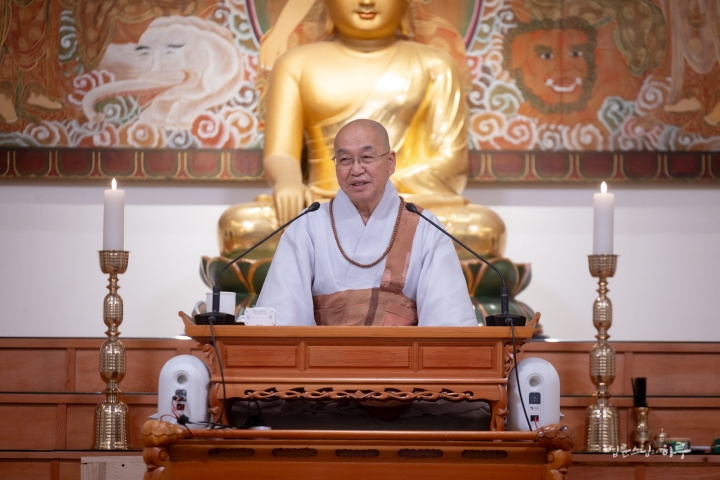
True Rest Begins When Thoughts Stop
In many cases, we create anxiety through our thoughts. When we think about the future rather than what is actually happening now, our minds become anxious. Those thoughts affect our minds as if they were happening right now. Also, when we recall past events, those memories resurface and cause suffering. So when we hate, resent, or suffer because of someone, it’s usually when we’re dwelling on past memories. When we feel anxious, worried, and restless, it’s because we’re deeply thinking about future events, making our psychology unstable. If we stop all thoughts about the past and future and focus only on our current state of mind or breathing in the here and now, there is nothing to be anxious about, nothing to suffer from, and nothing to hate.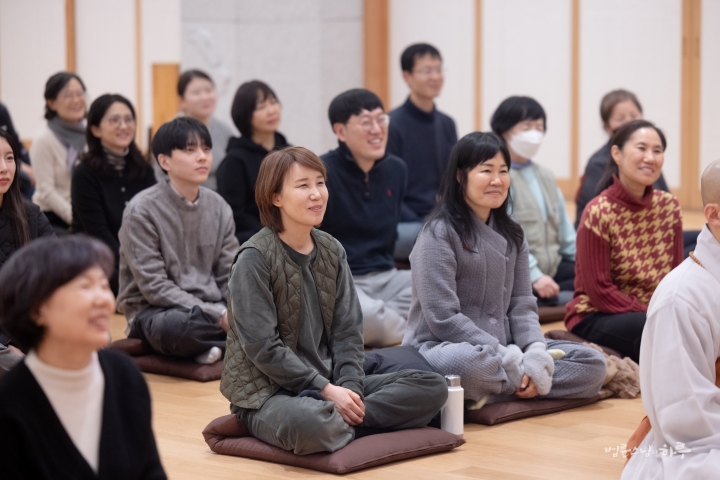
The World Meditation Day forum scheduled for next March will be hosted by Jungto Society in Korea. Looking forward to the next event, the World Meditation Day commemorative Dharma assembly concluded at 9:30 PM.
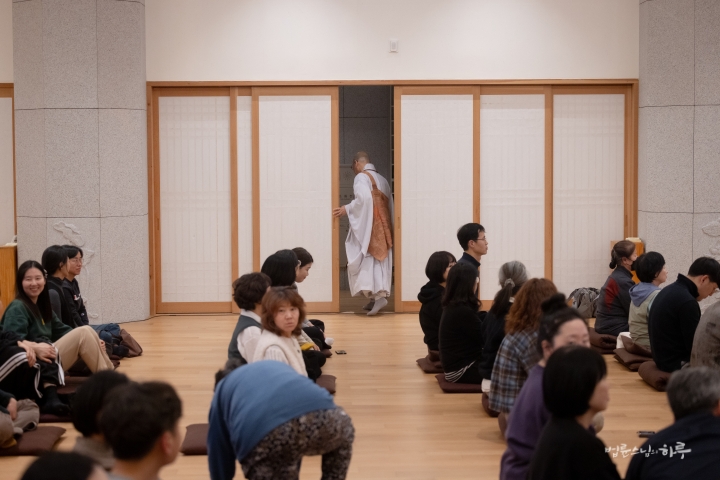
Tomorrow, a Winter Solstice Dharma Assembly will be held at the Dharma Hall on the 3rd floor of the Jungto Social and Cultural Center, where many members of the Sangha will gather to renew their commitment to practice.