Can We Justify Discrimination Based on Conditions Given at Birth?
Apr 28, 2025 - 71st Day of the 100-Day Dharma Talk, Heart Sutra Lecture 2, Buddhist Social Studies Course Lecture ...
Hello. This is the 71st day of Venerable Pomnyun Sunim’s 100-Day Dharma Talk. Today, there are lectures on sutras and the Buddhist Social Studies Course.

After completing his morning practice and meditation, Sunim headed to the Jungto Social and Cultural Center to give the sutra lecture.
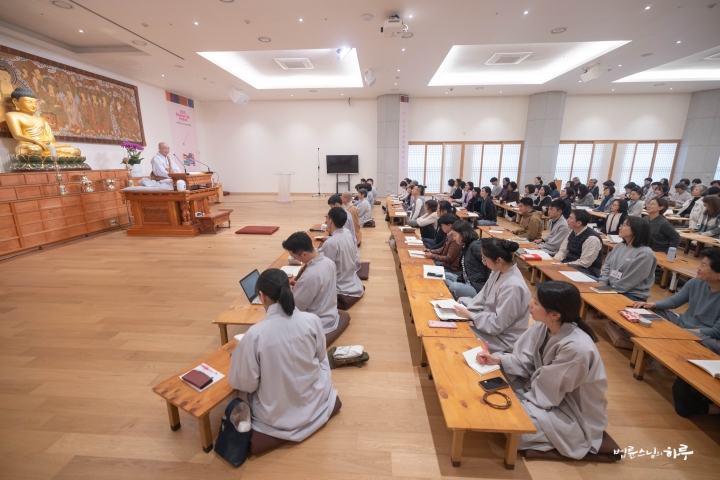
About 110 people were seated in the third-floor Dharma hall, while approximately 560 people connected online for the live broadcast. After the audience offered three traditional bows, Sunim ascended the Dharma seat to begin the talk.
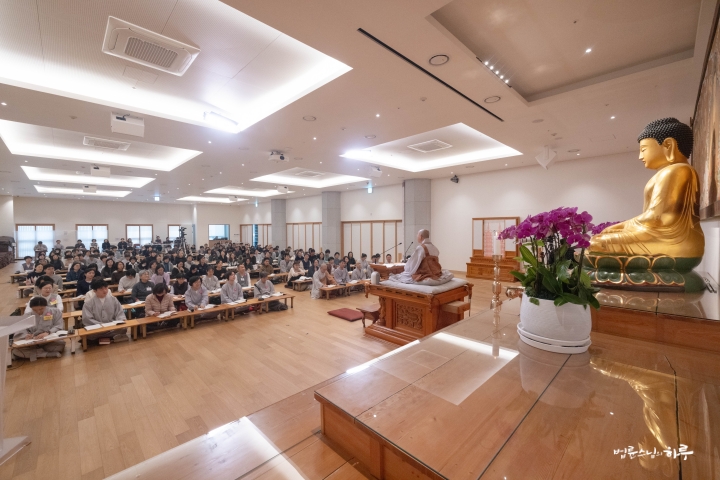
In the previous session, Sunim taught about the background of the Heart Sutra and the meaning contained in the title of the scripture. Today, in the second session, Sunim gave an in-depth explanation of the first verse of the Heart Sutra.
The First Verse Containing the Core Content of the Heart Sutra
觀自在菩薩 行深般若波羅蜜多時 照見 五蘊皆空 度一切苦厄 (When Avalokitesvara Bodhisattva was practicing the profound Prajnaparamita, he illuminated the five skandhas and saw they are all empty, thus transcending all suffering and distress.)
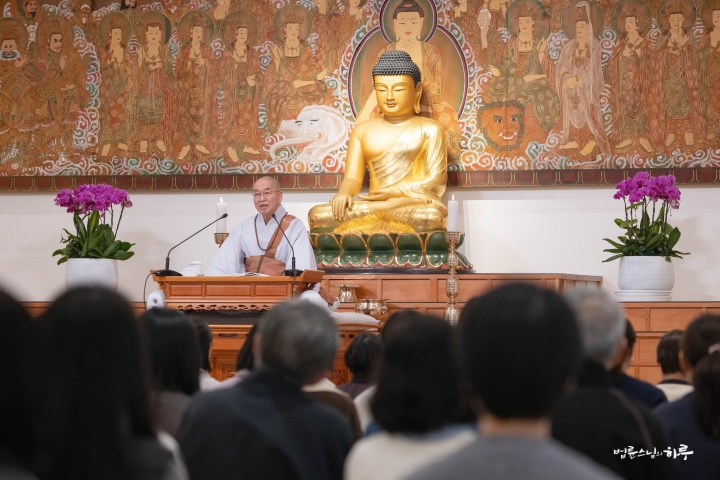
舍利子 色不異空 空不異色 色卽是空 空卽是色 受想行識 亦復如是 (Sariputra, form is not different from emptiness, emptiness is not different from form. Form is emptiness, emptiness is form. The same is true for sensation, perception, mental formations, and consciousness.)
Originally, each of the five skandhas should be explained in this way. However, after explaining that form is empty, the remaining four—sensation, perception, mental formations, and consciousness—are summarized with “the same is true” (亦復如是). Form is not different from emptiness, emptiness is not different from form. Form is emptiness, emptiness is form. (色不異空 空不異色 色卽是空 空卽是色) Using the same reasoning, the sutra shows that the remaining four skandhas are also empty. The core content of the Heart Sutra is contained in this first verse. The content that follows explains this verse and emphasizes its importance. It then continues with the story that all bodhisattvas and Buddhas have attained enlightenment through this path. Therefore, lectures on the Heart Sutra inevitably place more weight on the first line rather than covering the entire scripture (經文) evenly.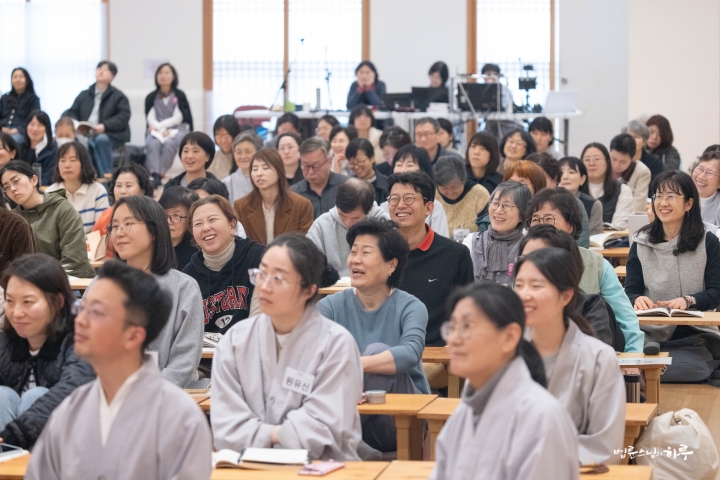
Human Mental Functions: Form, Feeling, Perception, Volition, and Consciousness
Let’s examine each of the Five Aggregates (五蘊). First, what is “Form” (色)? Form is commonly understood as matter or physical body, but this definition alone is insufficient to fully understand the Five Aggregates. Form refers to everything we perceive through our sensory organs. What we know through seeing, hearing, smelling, tasting, touching, and thinking—all of these belong to Form. In other words, Form encompasses all six sense objects: visible objects, sounds, smells, tastes, tangible objects, and mental objects (色聲香味觸法). Thus, Form means everything we know through our senses. Next is “Feeling” (受). Feeling refers to the pleasant, unpleasant, or neutral sensations that arise when we see, hear, smell, taste, touch, or think about something. The sensory act itself belongs to Form (R色), while the pleasant or unpleasant feeling that accompanies it is Feeling (受). These feelings arise when we see, hear, smell, and even when we think.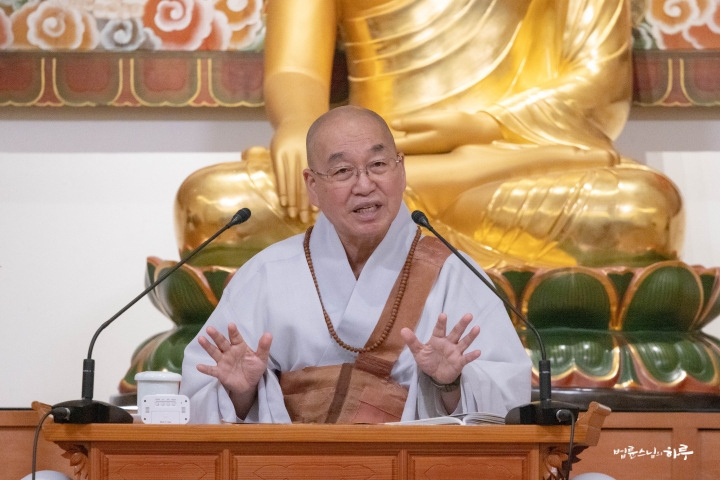
All Existence Is the Five Aggregates, and the Five Aggregates Are Empty
So what exactly are the five aggregates? They are what we call “I”—all the functions of seeing, hearing, feeling, thinking, and desiring. If we carefully observe the workings of our mind, we can see these five elements constantly in motion. Let me use a car as an example. A car moves, illuminates, and makes sounds. However, if we disassemble the car, we find no single part that moves by itself, makes sound by itself, or produces light by itself. It’s just a combination of 20,000 parts that together create these functions. Similarly, the “self” doesn’t exist as a separate entity—it’s merely a series of processes occurring. Because these processes happen, we feel as though there must be some solid entity, but when we look closely, there is no fixed substance inside. In Theravada Buddhism, they say “everything is the five aggregates.” This already includes the concept of non-self (無我). It means the five aggregates themselves have no inherent substance. However, as time passed, this understanding gradually shifted to mean “there is no self(我), but the five aggregates exist.” Eventually, people came to believe “the individual elements that make up the five aggregates have real substance.” For example, they thought water has no substance, but the oxygen and hydrogen that compose it do have substance. This trend appeared in science as well, with Dalton’s atomic theory suggesting “molecules have no substance, but atoms do.” As physics advanced, we discovered that atoms also change—nuclear transformations alter the properties of atoms. We found that atoms themselves are composed of even smaller subatomic particles.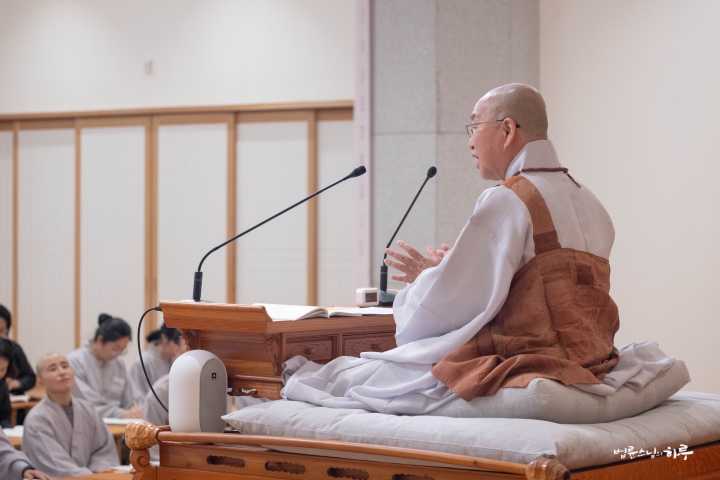
Today, we learned about the first verse of the Heart Sutra, which contains its core message. We agreed to cover the next verse in the following session and wrapped up the session.
Participants gathered in groups for mindful sharing, while Sunim went to the basement dining hall to have lunch with the Sangha members.
At 1 PM, a North Korean expert visited to discuss how to improve inter-Korean and North Korea-US relations to promote peace on the Korean Peninsula.
At 2 PM, Kang Dae-in, Honorary Director of the Dialogue Culture Academy, and Jung Sung-hun, Chairman of the Korea DMZ Peace and Life Garden, visited The Peace Foundation to meet with Sunim. Following up on their previous meeting, they exchanged various opinions on constitutional reform to eliminate the harmful effects of the imperial presidency system.

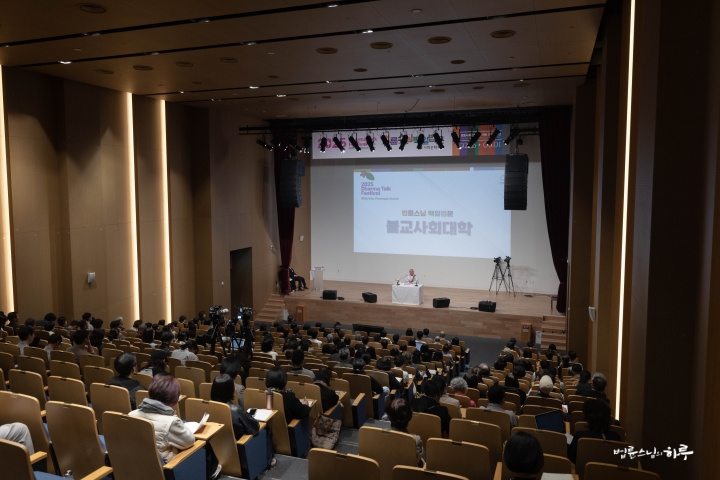
As the sun set, at 7:30 PM, Sunim gave the 15th lecture of the Buddhist Social Studies Course in the basement auditorium of the Jungto Social and Cultural Center. About 200 people attended in person, while approximately 1,900 connected online.
In the previous session, we learned about “Social Practice in Korean Buddhism” and how Korean Buddhism has participated in solving social problems throughout history. Sunim began by introducing today’s lecture topic.
Discrimination Must Be Eliminated, and Unfairness Must Be Corrected
We cannot choose our gender when we are born. We don’t get to say, ‘I want to be born a woman!’ But if someone receives different treatment simply because they are a woman, that is clear discrimination. Similarly, if someone is treated unfairly because they were born Black, as an ethnic minority, or into a lower class, these are all forms of discrimination. The same applies to religion. We might think we choose our religion ourselves, but globally, it’s common for people to inherit their parents’ faith. If discrimination occurs based on conditions that were not chosen or could not be chosen, such discrimination must be eliminated. On the other hand, there is the concept of ‘unfairness,’ which is different from ‘discrimination.’ For example, if someone is born into a poor family and cannot afford private education, putting them at a disadvantage in their studies, this is unfair rather than discriminatory. Or if someone with similar objective abilities faces disadvantages in employment because they lack overseas experience or graduated from a provincial university, this too is closer to unfairness. That’s why blind interviews are sometimes conducted nowadays to ensure fair hiring. By not disclosing information about one’s region of origin, school, or parents’ social status, fairness can be improved. Discrimination must be eliminated, and unfairness must be corrected. Legally, much discrimination has been eliminated. However, looking at reality, cultural and customary discrimination still exists in many parts of the world. A prime example is India, where discrimination against women and between castes persists. Although laws prohibit discrimination, cultural discrimination that has solidified over centuries takes longer to disappear. Among social discriminations, one of the most significant has been discrimination against people with disabilities. In the past, people with disabilities were disparaged as ‘cripples’ and frequently excluded from workplaces simply because ‘they didn’t look good.’ However, in recent years, awareness and treatment of people with disabilities have gradually improved, as evidenced by the use of more respectful terms.”Sunim continued to explain socially controversial topics such as discrimination against minorities, euthanasia, death with dignity, and abortion. First, he explained the Buddhist perspective on discrimination against homosexuality.
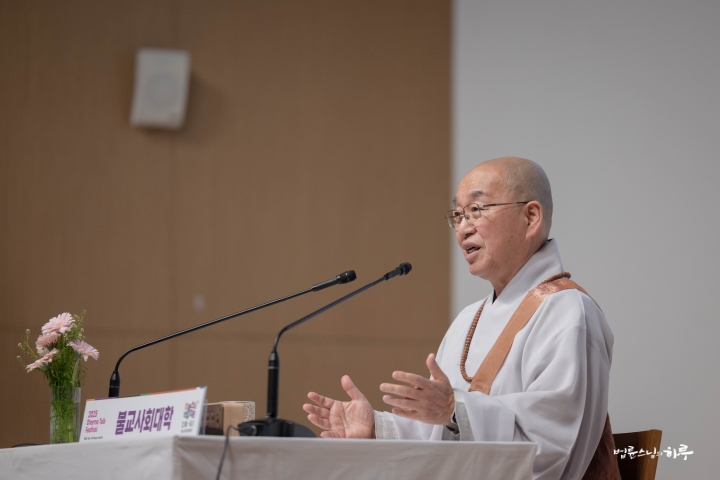
Can We Justify Discrimination Based on Conditions Given at Birth?
“Currently, the issue of ‘sexual minorities’ has emerged as a social issue in our society. There is much debate about whether being a sexual minority is innate or acquired and pathological. Many countries around the world have conflicts over sexual minority issues, and in our society, it has even become a political issue. Some conservative Christians absolutely oppose homosexuality, claiming it goes against the order created by God. Catholicism also maintains a conservative stance on sexual minorities. When the late Pope Francis was alive, a positive atmosphere was formed through much discussion, but it did not reach the point of officially recognizing homosexuality. In Catholicism, changing regulations requires more than two-thirds approval, but it only reached slightly over half. Still, there has been a growing atmosphere of tolerance toward homosexuality. Pope Francis left these words: ‘If a gay person seeks the Lord and has goodwill, who am I to judge?’ This means that we cannot say someone with faith in God cannot believe in God just because they are homosexual. Therefore, we should not discriminate against homosexuals. In early Jewish tradition, it was believed that only Jews could be saved. However, after Jesus appeared, the teaching that Gentiles could also be saved spread widely. This became the catalyst for Christianity to expand into a world religion. At one time in Europe, Black people were not even considered human and were viewed as beings who could not receive salvation. That’s why they could be enslaved. The novel “Robinson Crusoe” reflects the perception that African natives cannot receive salvation. Now, it is accepted that Black people can equally receive salvation, but prejudice against homosexuals still exists. So how does Buddhism view sexual minorities? Buddhist values are based on nature. Buddhism’s value system holds that we should not discriminate against what is naturally given. Therefore, if homosexuality is not an artificial choice but something naturally given from birth, we should not discriminate against someone for being homosexual. Additionally, individuals should not be discriminated against based on their gender identity.Why Discrimination Should Be Eliminated but Demands Require Social Consensus
However, issues like gender reassignment surgery are somewhat different. Changing one’s body to match one’s gender identity is different from simply eliminating discrimination. From a Buddhist perspective, we need to consider whether all desires should be fulfilled as one wishes. For example, plastic surgery after a facial injury from an accident is understandable, but cosmetic surgeries to make eyes bigger and rounder, raise the nose, or enlarge the breasts can be seen as attachment to the body. From that perspective, modifying the body according to gender identity cannot be viewed positively. This should be distinguished from the issue of discrimination.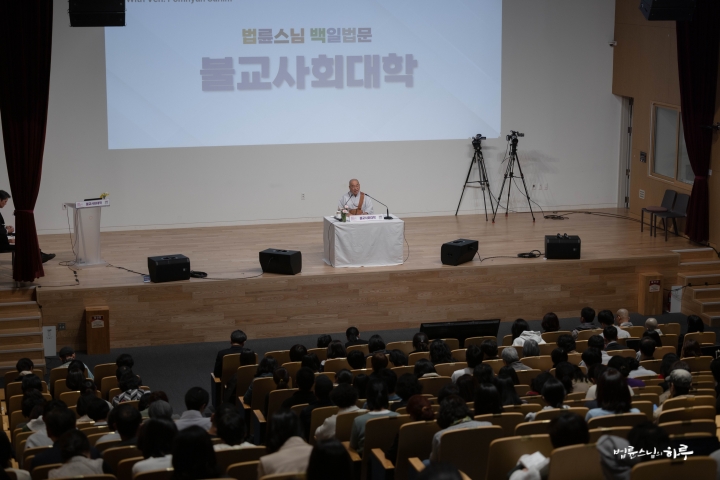
Sunim then continued with an explanation of euthanasia and death with dignity.
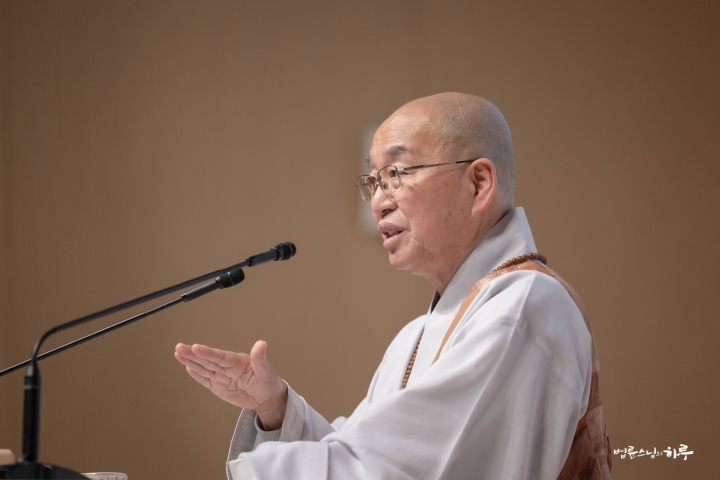
Buddhist Perspective on Euthanasia and Death with Dignity: Between Respect for Life and Self-Determination
However, there may be cases where someone over a hundred years old no longer feels the need to live. They have no desire to live and feel they have lived a full life. But they don’t die, so they have to continue living. In fact, there was a case where a famous Australian scholar over 100 years old requested, ‘I want to end my life now. Please let me die peacefully.’ However, this was not legally permitted in Australia, so he eventually went to Switzerland for euthanasia. There are also cases where people choose euthanasia at their own request due to extreme pain. In such cases, when a third party, such as a doctor, helps someone die without pain, it is called active euthanasia. On the other hand, when a doctor merely prescribes medication, and the patient uses a syringe or similar means to end their life themselves, it is called passive euthanasia. These forms of euthanasia are increasingly being permitted worldwide. Euthanasia is ultimately about ‘self-determination over one’s own body.’ In Buddhist values, harming the life of others is not permitted. However, sacrificing one’s own life for whatever reason is sometimes accepted in Buddhist scriptures. In fact, the choice to give up one’s life in pursuit of enlightenment is even glorified. Even during the Buddha’s time, there were cases recorded in the scriptures where individuals ended their lives due to extreme pain from physical illness. There is no record of the Buddha judging these cases as right or wrong. Rather, when such incidents occurred, the Buddha would come to the scene to comfort those around and participate in the funeral. Thus, Buddhist scriptures do not explicitly prohibit ending one’s own life under any circumstances. In that sense, euthanasia may be permissible to some extent. However, there are various side effects. For example, a husband might commit murder under the name of euthanasia because he finds it difficult to care for his wife. This actually happens in reality. There are cases where a husband who has been caring for his bedridden wife for over ten years becomes exhausted, or vice versa, or a child caring for a parent commits murder or joint suicide. First, caregiving is extremely difficult. Second, medical expenses are excessively high. For these reasons, euthanasia risks becoming legalized murder. Another problem is psychological pressure. Some people request euthanasia claiming it’s their own choice, but in reality, they may be making the decision under pressure or influence from family members. In such cases, even if it appears to be a voluntary decision on the surface, it may actually be involuntary, requiring very careful judgment. Therefore, I believe that issues like euthanasia or death with dignity require the establishment of a review committee. It’s difficult for a doctor to decide alone, and it’s also a burden for the family to decide. Therefore, a committee should be formed with medical professionals, religious figures, sociologists, and other socially insightful individuals to review patient requests. The committee would receive the patient’s request and comprehensively review their current health status, the circumstances making it difficult to live, and family conditions. If they determine that euthanasia can be allowed, it can be implemented, including measures such as removing oxygen respirators. This way, no specific individual bears sole responsibility; instead, it is managed institutionally according to the judgment of a public social institution. I believe such a system needs to be introduced in our society quickly.”Finally, Sunim explained how to view abortion.
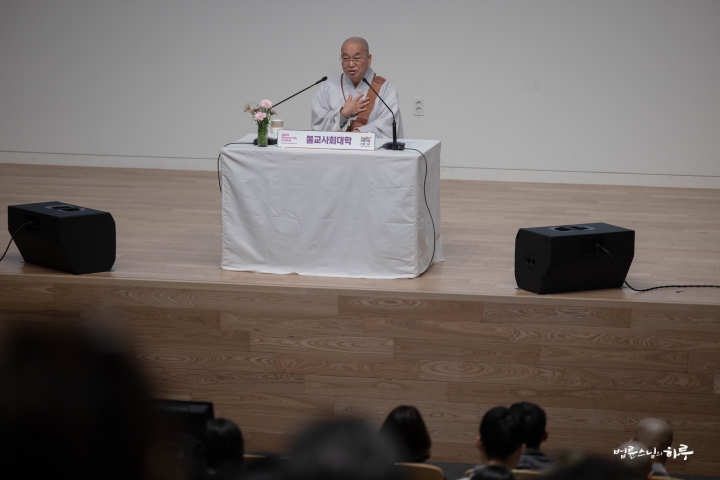
Buddhist Perspective on Abortion and Social Solutions
There are various reasons for abortion: pregnancy during cohabitation, pregnancy due to sexual assault, or lack of economic conditions to raise a child. However, regardless of the reason for the pregnancy, the child bears no fault. Whether the parents are married or not, whether it’s artificial insemination or a forced situation, the child is simply born as a result of biological fertilization. There is no moral issue with that in itself. However, in reality, children are often stigmatized for being ‘fatherless’ or ‘the child of an unwed mother.’ Such discrimination must be eliminated. Whatever conditions the parents were in, that is the parents’ issue, not the child’s. From that perspective, we need to create a system that eliminates such social discrimination and shares the burden of raising children across society. Especially today, with the serious problem of low birth rates, social consensus on this issue is essential. For example, if a biologically mature adolescent over 16 years old has a child, we should encourage childbirth over abortion while institutionally supporting that adolescent to continue a normal life. If the adolescent decides not to raise the child directly, we also need a system that can legally sever the relationship between the mother and child. This allows the mother to continue her normal life, and the child can grow up in a stable environment through adoption. If we recognize the responsibility of raising children as a social responsibility rather than an individual one, we can move beyond the legal debate of ‘whether to allow or prohibit abortion’ toward a more fundamental solution. “Regarding the issue of abortion, some religions, including Catholicism, take a strict prohibitive stance. Buddhism also has a precept of non-killing, so it is desirable to respect life and continue the karmic connection if possible. However, from the perspective of a woman’s right to make decisions about her own body, the mother’s wishes are important. Therefore, I believe both sides have valid points. When religious arguments are overly emphasized, questions may arise about whether those arguments are scientific and objective. I think we need social mechanisms that encourage childbirth when possible, but also avoid giving unnecessary guilt to women in situations where childbirth is difficult.”Today’s session explored how to view socially controversial issues from a Buddhist perspective. Sunim wrapped up the session by sharing that the next session will cover “Why We Should Help Others,” focusing on Buddhist welfare practices, the socialization of compassion, principles of relief work, and volunteering.
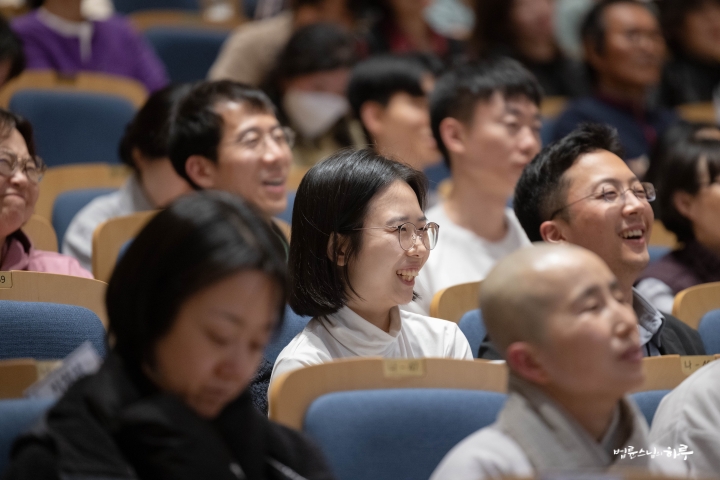
Participants engaged in mindful sharing in groups, while Sunim returned to the Jungto Center to conclude his daily schedule.
Tomorrow will be the 72nd day of the 100-Day Dharma Talk. In the morning, Sunim will teach the 9th lesson of the daytime Jungto Buddhism Course, and in the evening, he will teach the 9th lesson of the evening Jungto Buddhism Course.”