When my husband faces any issue, he promptly attacks my flaws
Feb 26, 2025 - Day 10 of the 100-Day Dharma Talk, Weekly Dharma Assembly
Hello everyone. Venerable Pomnyun Sunim’s 100-Day Dharma Talk has already reached its 10th day. Today is the Weekly Dharma Assembly, where Jungto Society members gather to reflect on their lives as practitioners.

After completing his morning practice and meditation, Sunim participated online in the regular board meeting of Good Friends USA and Washington DC Jungto Center at 7:30 AM. Following this, at 8:40 AM, he joined the regular board meeting of Jungto Society Canada online. During these meetings, he reviewed the 2024 business reports and financial statements, deliberated on the 2025 business plans and budgets, and encouraged the volunteers who had worked hard throughout the past year before concluding the meetings.

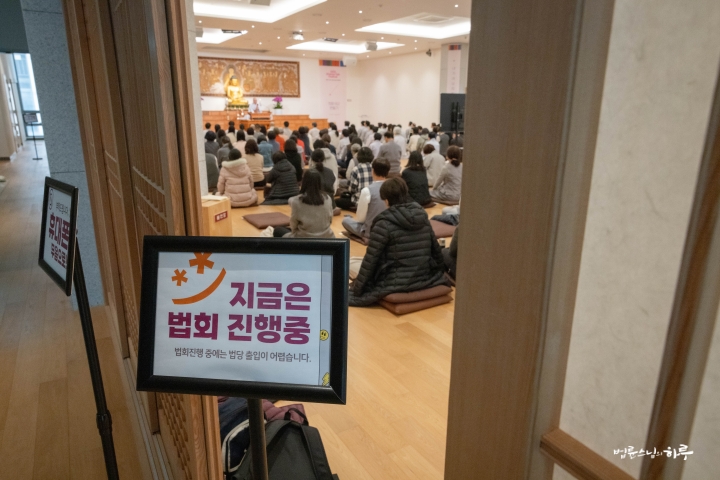
At 10 AM, Sunim headed to the Jungto Social and Cultural Center for the Weekly Dharma Assembly. Many volunteers had been preparing since early morning to welcome the participants.
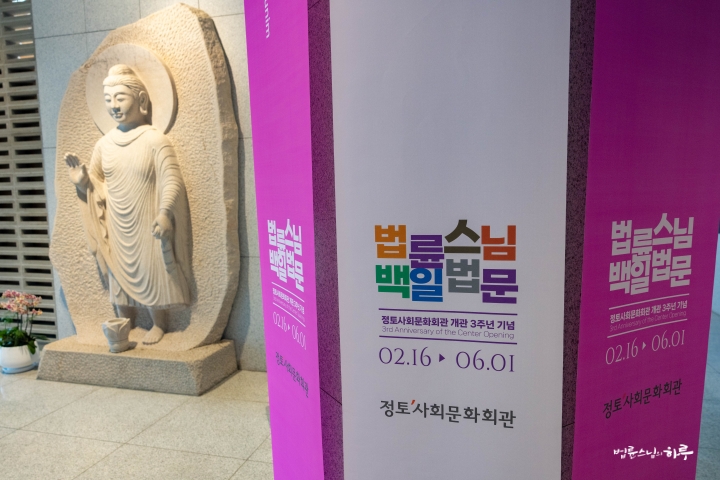
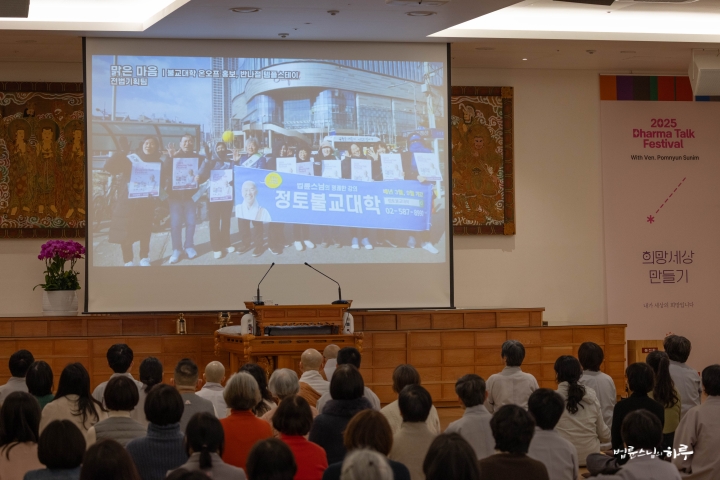
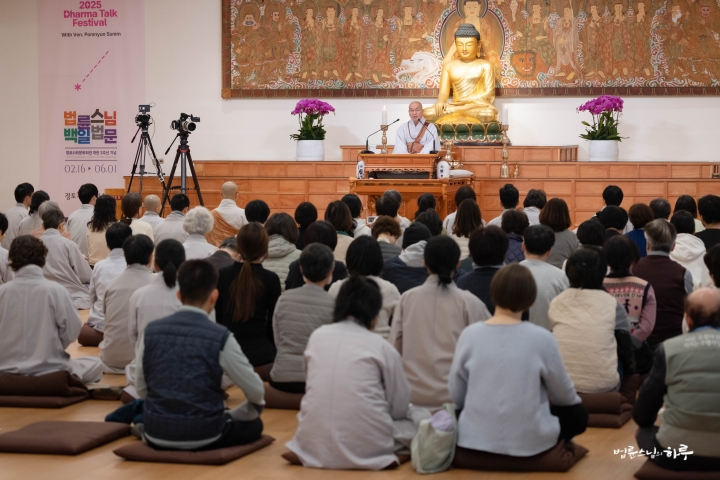
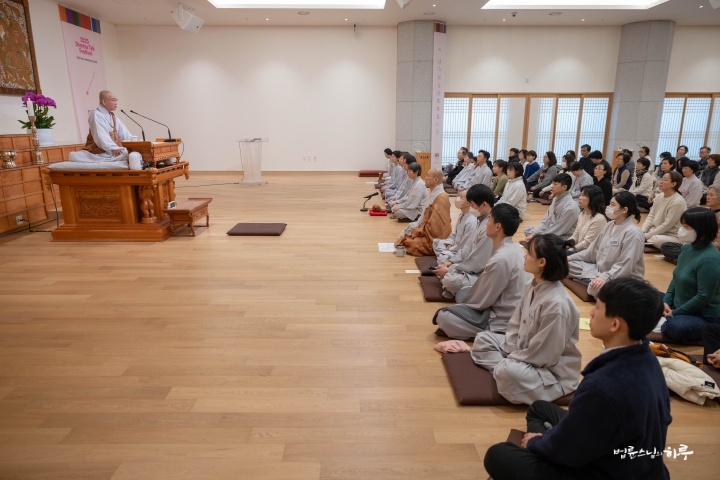
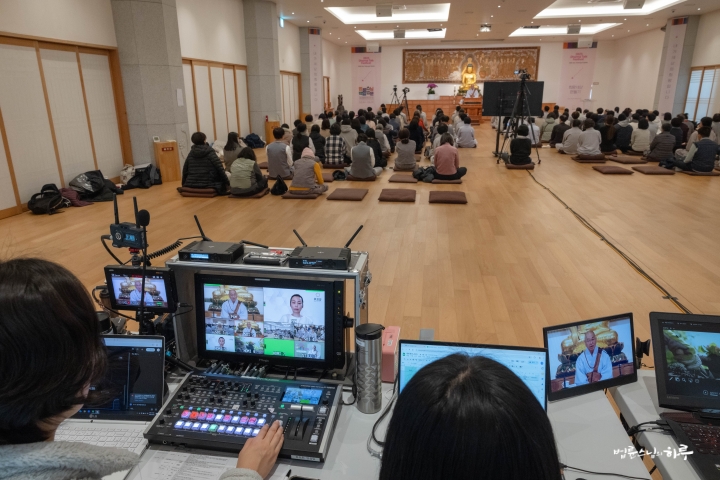
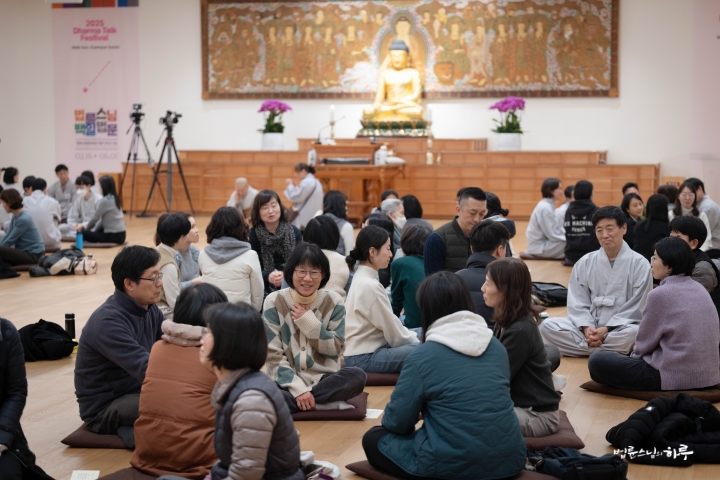
At 10:15 AM, with about 150 people in attendance, the Weekly Dharma Assembly began with the recitation of the Three Refuges and the Heart Sutra. Jungto Society members from across the country also participated online. The assembly members requested Sunim’s Dharma talk with three full bows.
Sunim began his Dharma talk by addressing the current crisis facing South Korea and discussing what perspective citizens, as the sovereign power, should adopt.
First, We Must Stop the War
“The Russia-Ukraine war has been going on for three years now. As both sides continue to exchange attacks, significant damage is occurring. From a broader perspective, the war between Ukraine and Russia must stop immediately. Currently, neither side has a clear advantage. They are pushing and being pushed back across short distances, resulting in many deaths. Both sides are bombing each other, destroying numerous properties. This stalemate has persisted for over a year. Regardless of who is right or wrong, we must first stop the war to prevent further damage. If we continue to maintain the current situation by assigning blame for who started the war or who invaded first, the damage will snowball. I’m not saying we shouldn’t determine who is at fault. I’m saying that stopping the war should come first. After stopping the war, then we can discuss who was right or wrong. When people are consumed by anger, they often fail to see the damage being caused. When individuals become angry, rather than avoiding danger, they walk straight into it. When someone is holding a knife, an angry person might take off their clothes, expose their stomach, and say, ‘Stab me, stab me!’ This is how humans behave when angry. Being angry means not being in your right mind. That’s why the Buddha said, ‘When blinded by greed, one doesn’t recognize their own loss; when blinded by anger, one doesn’t see the impending disaster.’ By letting go of greed and anger and maintaining equanimity, we can minimize harm.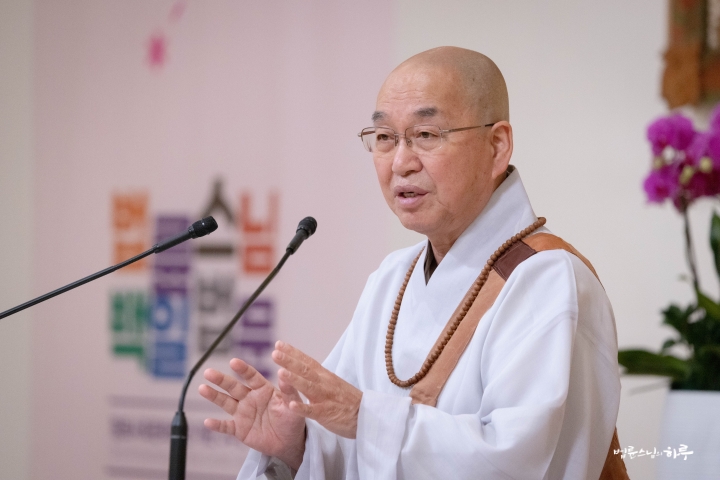
What Kind of Dialogue Yields the Greatest Benefit?
Dialogue and negotiation generally occur in three types of relationships. First, there’s dialogue between hostile parties who may want to kill each other. Emotionally, they cannot talk to each other. They find each other’s presence unbearable, but they engage in dialogue because not doing so would continue to cause losses. However, we often think, ‘How can I talk to such a bad person!’ and consequently incur unnecessary losses. Second, there’s dialogue between people who aren’t hostile but aren’t close either. In this case, the conversation begins by exploring potential mutual benefits, asking, ‘Could there be something more beneficial for both of us?’ Third, there’s dialogue between close friends. This type of dialogue has two varieties: one where people unite to pursue greater benefits, and another where they accept losses because of their close relationship.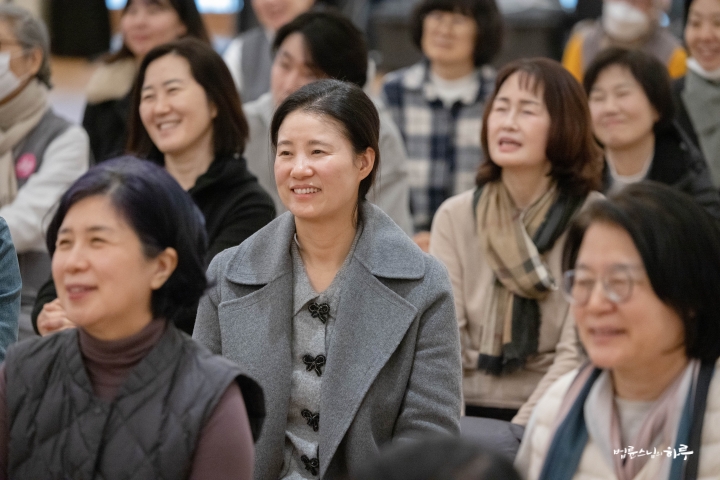
The National Crisis Facing South Korea Today
The political conflicts in our society today—between political parties and among their supporters—are causing tremendous losses when viewed from the perspective of national and public interest. President Trump is now restructuring the world order and demanding new relationships. He states that previous alliances are no longer necessary. He threatens to sever relationships that don’t benefit America. His perspective is, ‘America has been foolishly taken advantage of by its allies, but that won’t happen anymore. I will pursue America’s interests.’ In this situation, South Korea must respond wisely. Rather than just asserting our own position, we need to understand why the other side is acting this way and minimize our losses. If we just leave things as they are, we’ll suffer significant losses. We need to prevent these losses. However, our political leaders seem uninterested in these crucial matters and are instead focused on domestic power struggles. Yet, during such times of change, opportunities may arise to resolve long-standing issues. Currently, President Trump is trying to stop the Ukraine-Russia war, even if it requires somewhat forceful methods. While Ukraine and Western Europe are protesting that the U.S. is siding with Russia, the war cannot be stopped without accommodating some of Russia’s demands, as they are a party to the conflict. If each side insists on their own benefits as conditions for a ceasefire, negotiations could drag on for years. That’s why the war must be stopped first. The parties involved may feel upset if their previous demands seem ignored. However, for the United States, which has borne enormous war costs, prolonging the war only causes more losses. So to minimize losses, the priority is to stop the war first. The remaining issues can be resolved through negotiation—this is President Trump’s position. Of course, I understand that this is difficult for the directly involved parties to accept. Nevertheless, I believe that stopping the war is paramount, regardless of the reasons.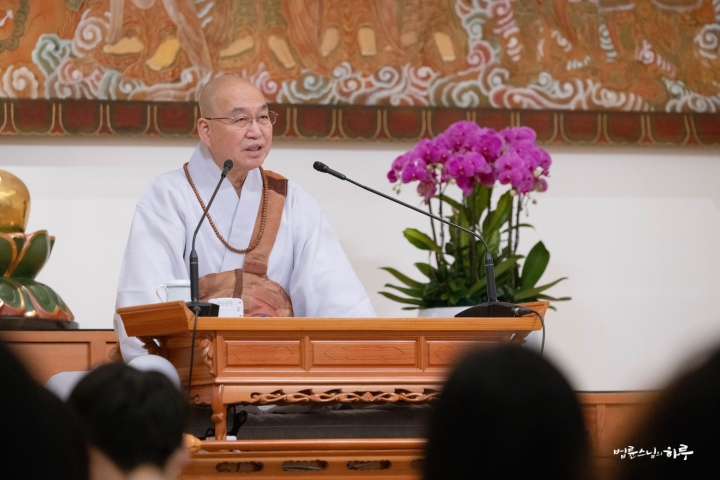
The September 19 Joint Statement: 20 Years Later
There was a time when agreement among the countries surrounding the Korean Peninsula came closest—the day of the “September 19 Joint Statement.” In 2005, during the fourth round of six-party talks, the participating countries reached an agreement on dismantling North Korea’s nuclear program. This agreement didn’t just address North Korea’s nuclear issue but comprehensively covered peace negotiations to end the war on the Korean Peninsula, nuclear negotiations for denuclearization, and economic support and cooperation for North Korea’s economic growth. An agreement was actually reached. However, the very next day, the U.S. Treasury Department claimed that North Korea had printed counterfeit currency, triggering the BDA (Banco Delta Asia) incident, which rendered the September 19 agreement worthless. After the agreement collapsed, North Korea shifted toward becoming a nuclear state. It was difficult to end the war even when North Korea didn’t possess nuclear weapons; now that North Korea has become a nuclear state, resolving inter-Korean issues has become even more challenging. To overcome the risk of war on the Korean Peninsula, we must declare an end to the war between North and South Korea. Additionally, diplomatic relations need to be normalized between North Korea and the United States, and between North Korea and Japan. North Korea needs to freeze its nuclear program initially and move toward dismantling it in the long term, while the international community should prepare economic support measures for North Korea. All these elements need to happen comprehensively, but the current U.S.-China hegemonic competition is making the situation even more difficult.A Proper Perspective on the Current Situation
These are the difficulties our society faces today. Despite these challenges, we have joined the ranks of advanced countries through our Five-Year Economic Development Plans that accelerated economic growth. We also achieved a democratic society by fighting against dictatorial regimes. Accomplishing both economic growth and political democratization simultaneously, despite security concerns, is a significant achievement for Korean society. Additionally, K-culture, known as the Korean Wave, is gaining recognition worldwide. Thus, we have a mix of positive and negative aspects. Our remaining task is to determine how to build upon our achievements while overcoming our vulnerabilities.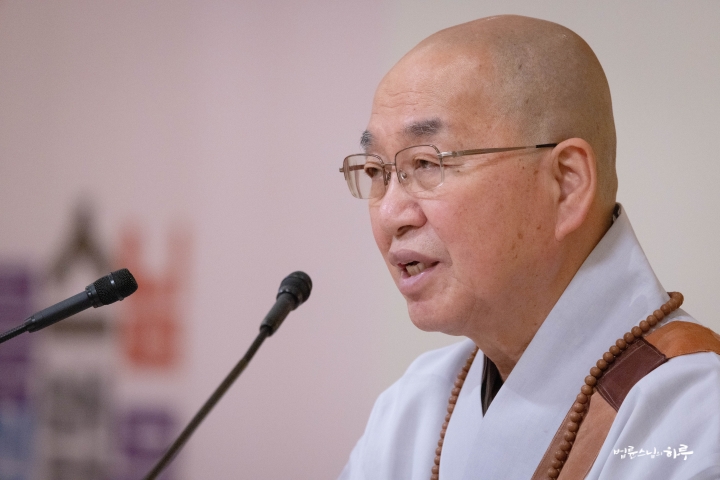
Next, Sunim took questions from those who had registered in advance. Two people pressed the raise-hand button online and asked Sunim questions:
“The statements ‘I am most precious’ and ‘I am like a blade of grass’ seem contradictory to me, and I think I harm the world. Why am I a precious being?”
“My pet dog died after being hit by a car during a walk due to my mistake when I was in middle/high school. Even after 30 years, I’m still suffering. How can I overcome this trauma?”
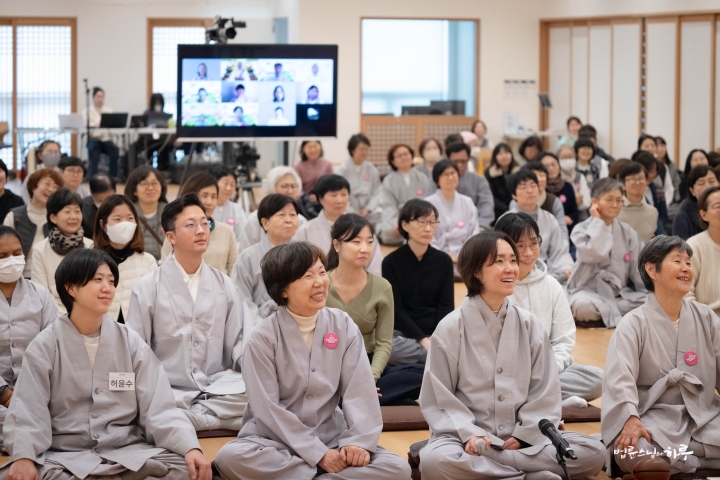
After finishing the conversation, it was almost noon. The live broadcast concluded with a promise to meet again at next week’s Weekly Dharma Assembly.
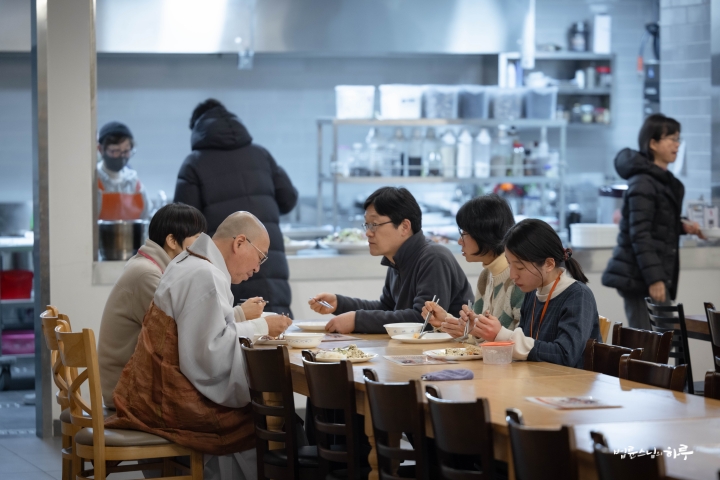
The participants gathered in their respective groups for sharing sessions, while Sunim headed to the dining hall on the first basement floor. After having lunch with the members, he met with a public figure who sought his advice on current social issues.

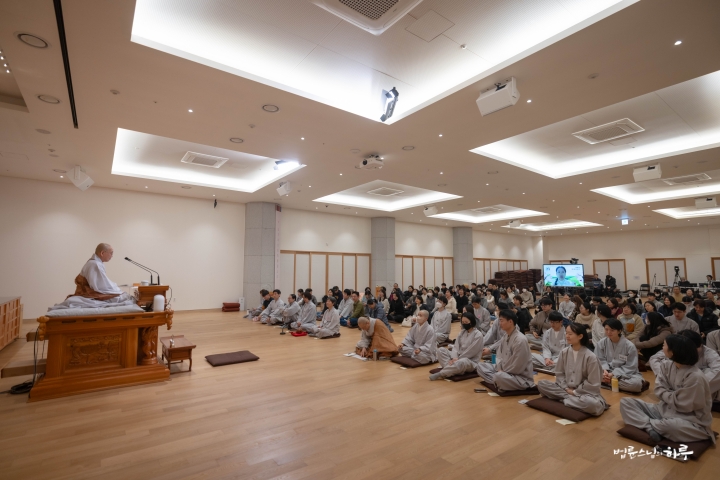
As the sun set, at 7:30 PM, Sunim began the evening Weekly Dharma Assembly for evening session members. About 130 people gathered in the Dharma Hall on the third floor, while Jungto Society members from across the country joined online. Everyone requested Sunim’s teaching with three bows.
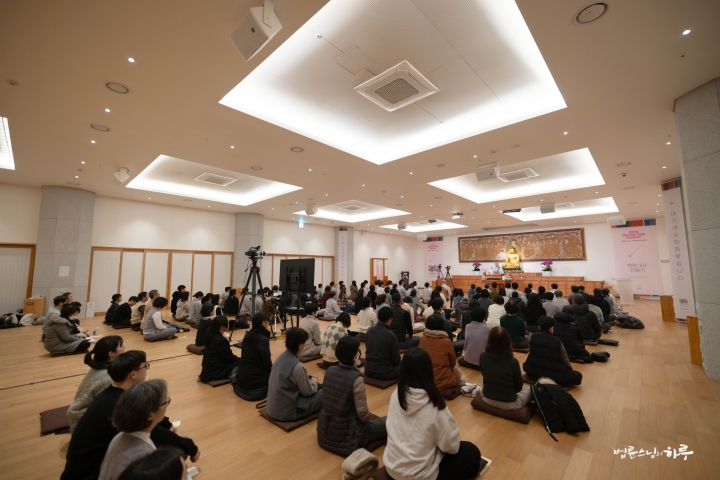
Similar to the morning assembly, Sunim discussed how to view the current situation, mentioning the rapidly changing international order, the direction of the Russia-Ukraine war, and the crisis facing South Korea. After this introduction, he began the Dharma Q&A session.
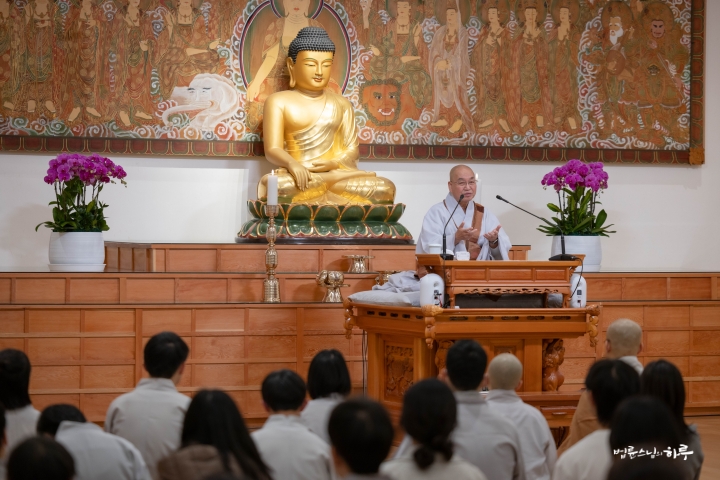
Two people pressed the “raise hand” button to speak with Sunim. One of them asked for advice on how to deal with a husband who frequently points out her weaknesses.
When my husband faces any issue, he promptly attacks my flaws
“My husband has a habit of saying certain things whenever he doesn’t like my words or actions. He’ll say, ‘Is that what Venerable Pomnyun Sunim taught you? What have you actually learned? Are you really practicing mindfulness?’ I usually respond, ‘Thanks to what I’ve learned from Venerable Pomnyun Sunim, I’m at least this good. It’s because of my mindfulness practice that I don’t nag you and can live like this.’ Every time my husband speaks this way, I feel like he’s caught me at a weakness. How should I handle this situation?”
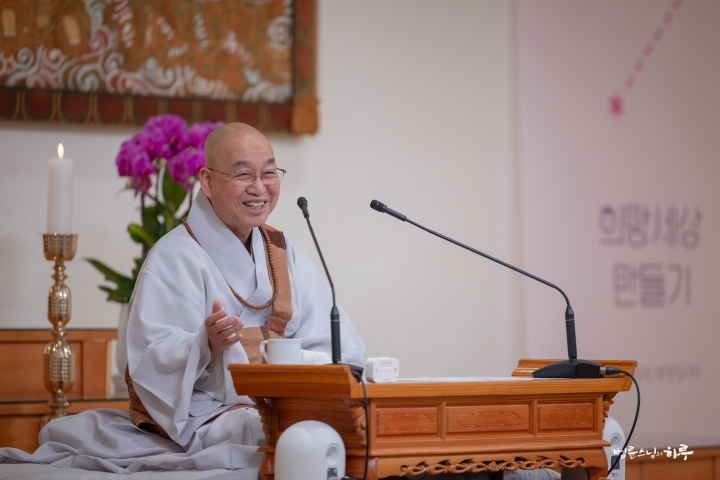
“He’s expressing his displeasure toward me.”
“When people feel upset, they often curse, throw things, or resort to violence. Your husband, however, expresses his emotions by mentioning my name or saying ‘Why are you acting this way as a practitioner?’ This is actually a relatively polite way of expressing himself. What he’s really saying is, ‘Please do better. I’m not happy with you.’ The core message is that he’s not pleased with your words and actions. How you respond isn’t that important. He’s simply expressing his feelings that ‘I don’t like what you’re doing,’ so you can just say, ‘I’m sorry.’ You don’t even need to promise to do better.”“Previously, if I was at level 0 with my husband, now I’m at level 50. I think I’m doing pretty well. Whenever he criticizes me, I wonder, ‘Are you demanding 100 from me?'”
“Yes, he is demanding 100 from you. But think about it: which shows more respect for you—if he demanded only 50 from you, or if he demands 100?”“If he demands 100.”
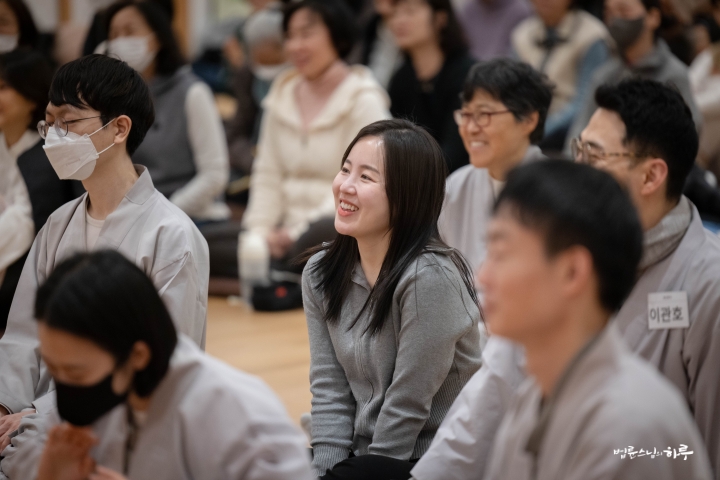
“It’s good.”
“So just respond with ‘I’m sorry I couldn’t meet your expectations.’ You’re already doing well. How can you do even better? It’s not that you’re incompetent, nor will doing better solve the problem. It’s simply that you’re not meeting his expectations. So just say, ‘I’m sorry I couldn’t meet your expectations.’ There’s nothing wrong with him; it’s just that you don’t match his standards. He thought that since you go to the temple and practice, you would smile and let it go when he says something harsh, but you’re reacting the same as before. He doesn’t consider his own provocations but criticizes you: ‘Why are you getting angry when you’re a practitioner?’ Just let such comments pass. Responding to each one shows your defiance. He’s simply saying ‘I don’t like what you’re doing,’ but if you counter with ‘Why am I the only problem? Aren’t you a problem too?’ who would appreciate that? In such situations, saying ‘I’m sorry. Thank you for having expectations of me’ resolves the issue quickly. If you say, ‘Thank you for thinking highly of me. You’re overestimating me,’ you’ll eventually smile too. Then your husband might respond, ‘Well, at least you’re not unpleasant when you speak well,’ and smile slightly. This way, neither of you will feel bad. You married each other because you liked each other, right?”“Yes, our relationship is still good.”
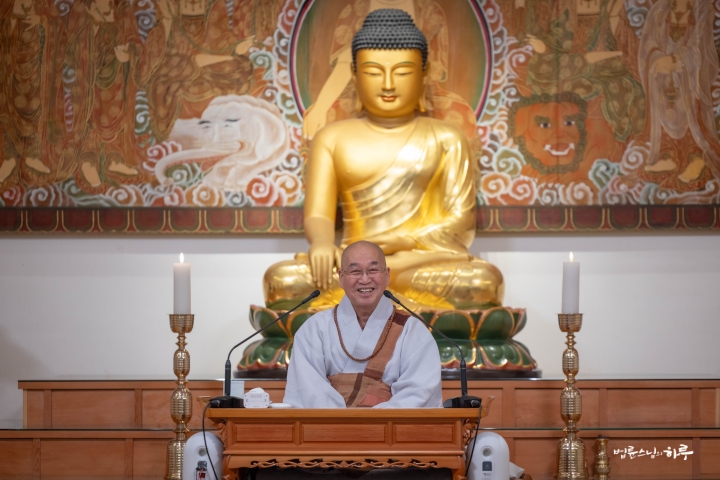
“He often reacts that way when we argue about his family issues. I think he becomes more sensitive when he feels inferior to me or when we discuss his family matters, as you mentioned.”
“Yes, that’s right. When a wife is too intelligent or too moral, it can be good in one way but can also make the husband feel psychologically intimidated. He has to be careful when speaking to you. He feels psychologically diminished, as if you don’t see him as an equal. Because you not only practice diligently but also seem more moral than him, he finds you formidable. In such situations, he picks arguments to gain psychological superiority. If you just bow and say ‘I’m sorry,’ there won’t be any problem.”“I understand.”
“Did you come here to brag about your good marriage? Why are you boasting to a monk who lives alone? Did you think I might be envious? I’m not envious of such things.” (Laughter)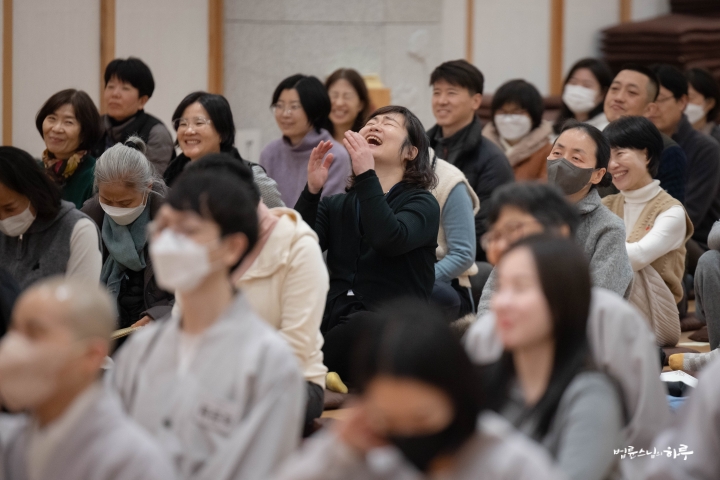
The questions continued:
How should we view far-right YouTubers who operate illegally? I find myself continuing to watch YouTube videos with biased content. How can I avoid being exposed to biased thinking?
As Sunim answered the questions, it was well past 9 PM. The live broadcast concluded with a promise to meet again at next week’s Weekly Dharma Assembly.
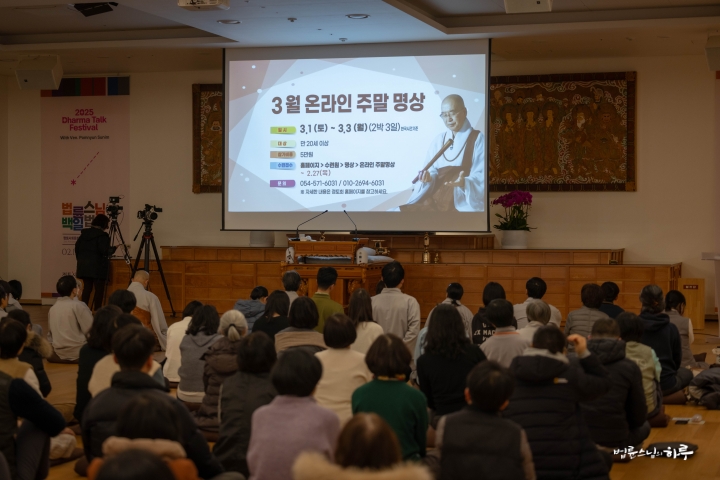
The participants sat in circles by group for sharing sessions, while Sunim left the Dharma Hall and headed to the Jungto Center.
Tomorrow will be the 11th day of the 100-Day Dharma Talk. In the morning, Sunim will participate in the JTS USA board meeting online, followed by an Open Dharma Talk on “1000-Day Practice Methods.” In the afternoon, he will meet with officials from the National Heritage Administration, record an interview for BTN’s 30th anniversary, and in the evening, he will hold an Open Dharma Talk on the “Soshimgyeong(小心經).”