True Renunciation is Freeing Oneself from One’s Karma
Jan 20, 2025 - India Pilgrimage Day 10, Kapilavastu
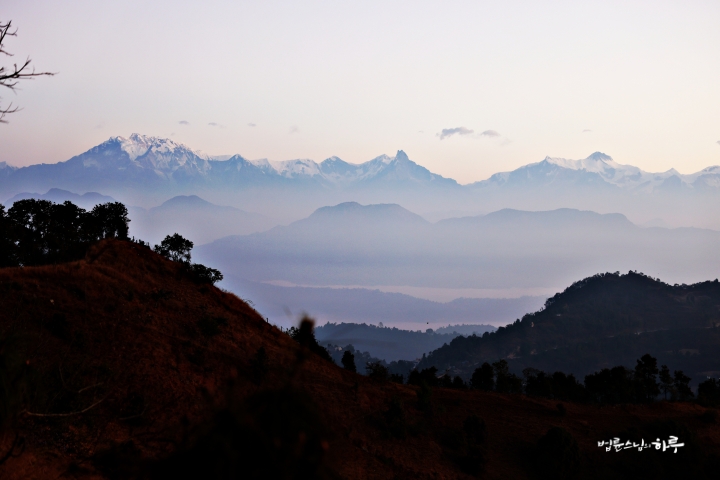
Tansen is a highland area where you can see snow-capped mountains, located at an altitude of 2,000 meters. The pilgrimage group departed at 3 AM to see the sunrise in Tansen. Most fell asleep as soon as the bus started moving. At 5 AM, everyone woke up to the sound of the moktak (wooden instrument) and offered prayers.
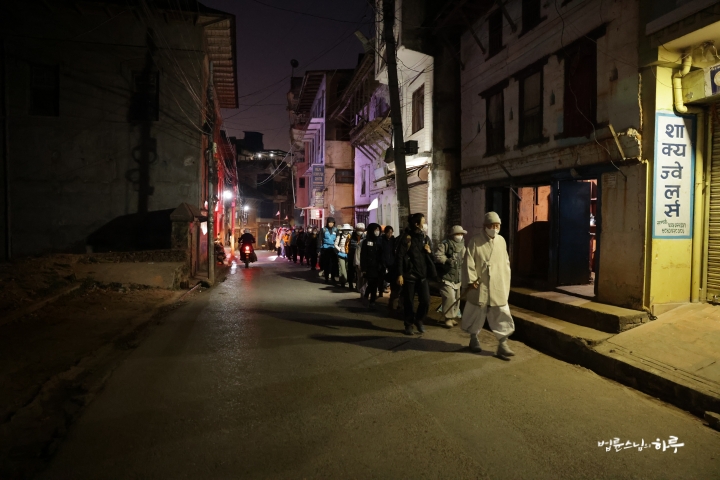
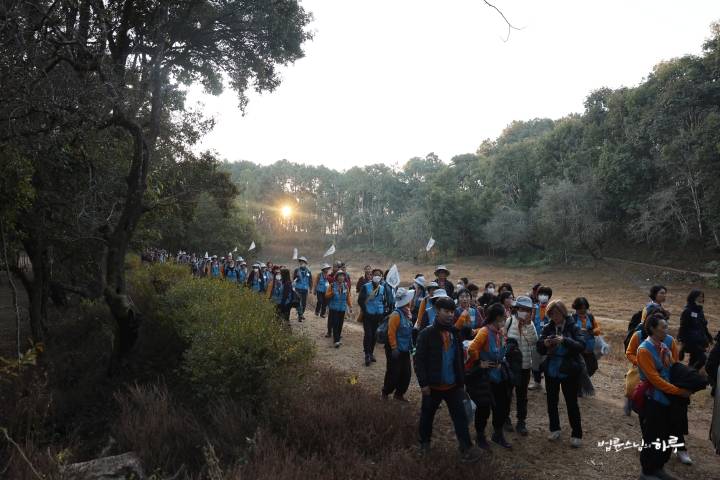
We arrived in Tansen just after 6 AM. Although it was still dark all around, the streets were bright thanks to the residents who opened their shops early. Sunim and the pilgrimage group lined up on one side of the road, avoiding traffic, and headed towards the mountain.
On the way to the mountain, a red glow filled the eastern sky.
“The sunrise was supposed to be at 7 AM, but it looks like the sun is about to rise now. Let’s hurry up. We should watch the sunrise from the top of the mountain.”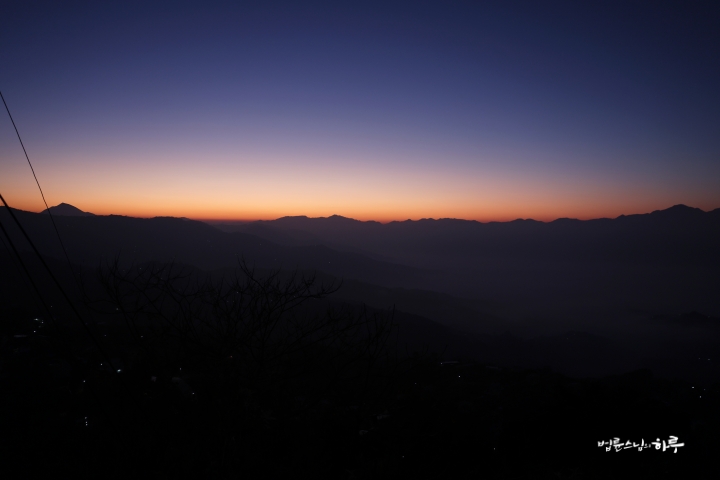
Although climbing the steep mountain path was not easy, Sunim continued to move forward, catching his breath, to show the pilgrimage group the snow-capped mountains and the sunrise.
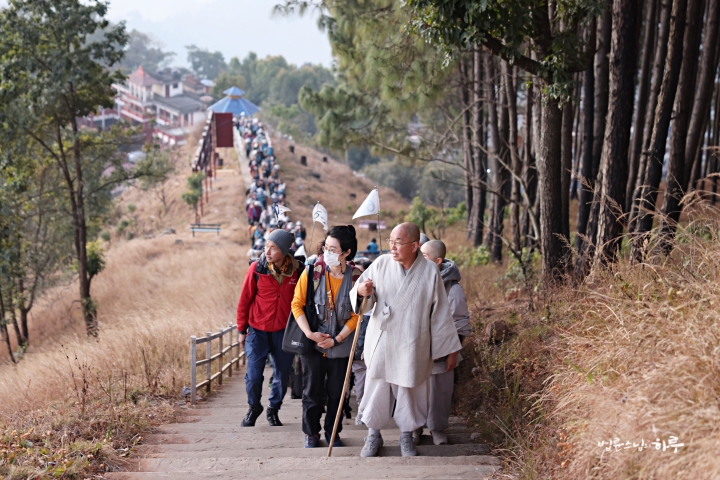
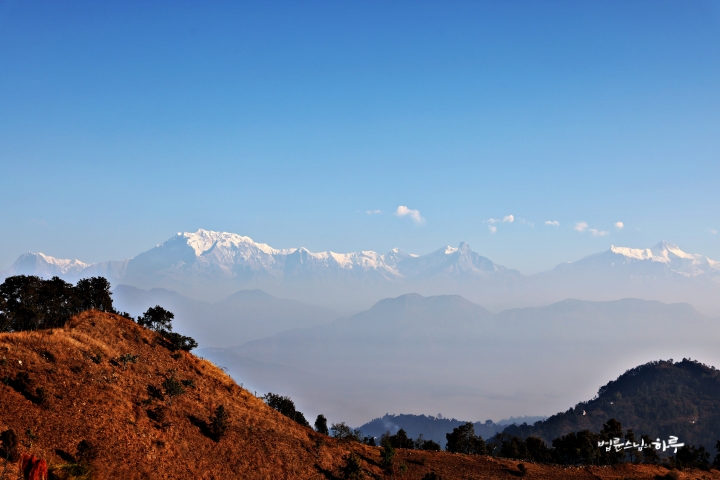
Before long, we had climbed high enough to see only the surrounding mountain peaks. Thanks to the clear weather without a single cloud, the Himalayan range and Annapurna were clearly visible.
“Those mountains you see over there are the Himalayan range and Annapurna.”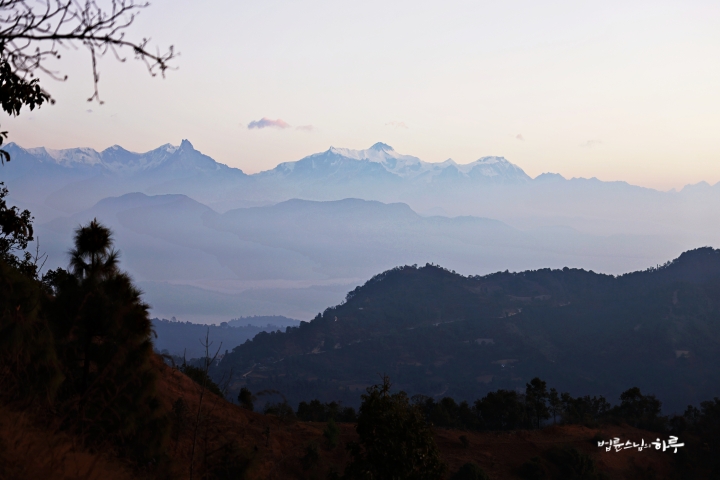
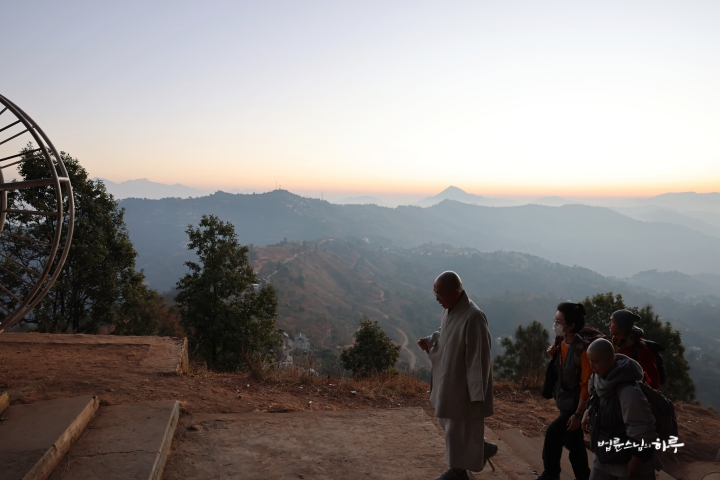
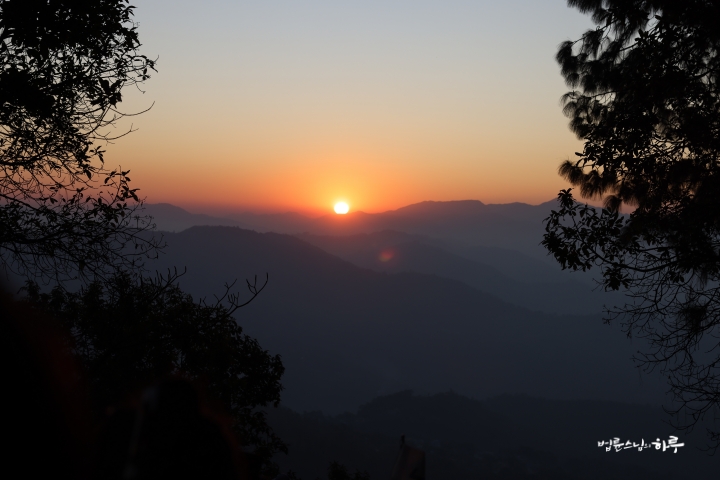
Sunim found a spot where the sunrise could be seen well and settled down. Soon, the red sun began to rise over the mountains.
“Oh, look over there. The sun is starting to rise.”As soon as Sunim finished speaking, exclamations and cheers erupted from the pilgrims.
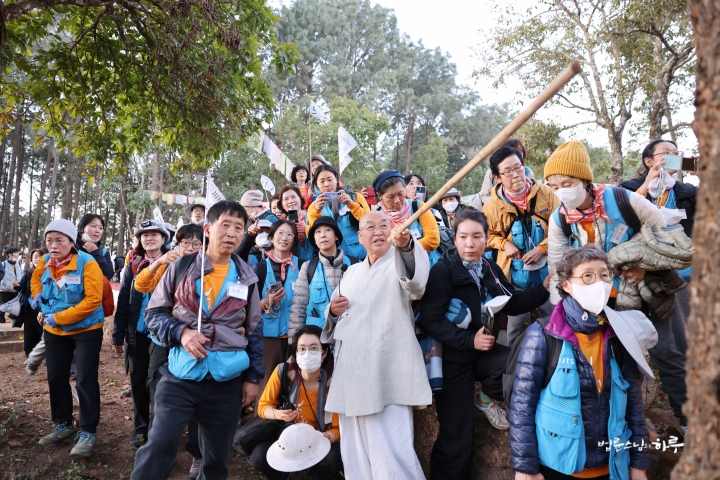
After enjoying the sunrise, Sunim and the pilgrimage group moved to a wide open area and had breakfast with packed meals.
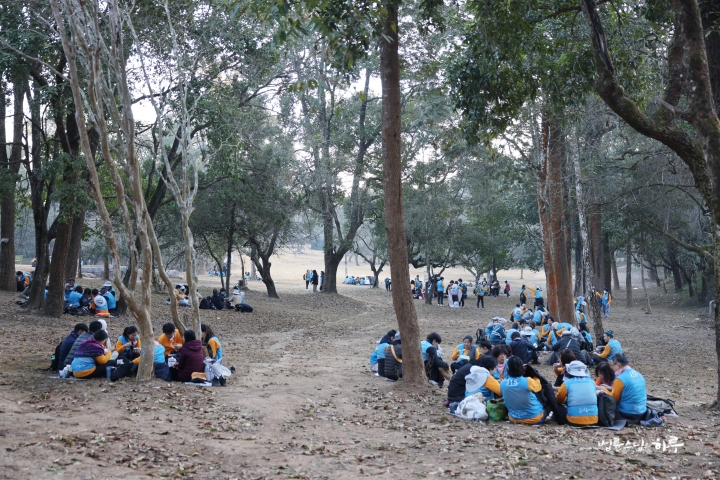
After finishing the meal, the pilgrimage group gathered around and started a talent show. Sunim said with a smile:
“I’ll give you more time to do the dancing and singing that you couldn’t do at the palace ruins the other day. Also, those who performed with flashlights in the dark place can perform again on this bright stage today.”The pilgrims showcased exciting songs and dances, either solo or in groups. Soon it was 8:20 AM.
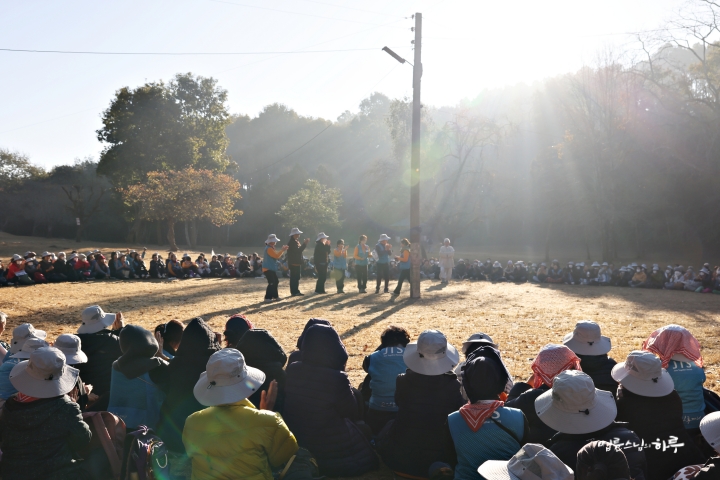
Sunim concluded the entertainment, saying:
“We’d like to continue the talent show, but the villagers asked us to move the bus by 9 AM. Let’s go down slowly to avoid any injuries.”On the way down, we could see the clear view of the snow-capped mountains once again, different from the dawn view.
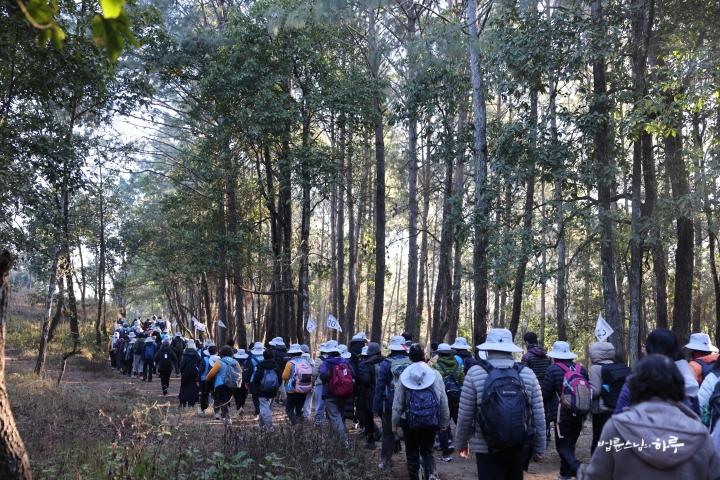
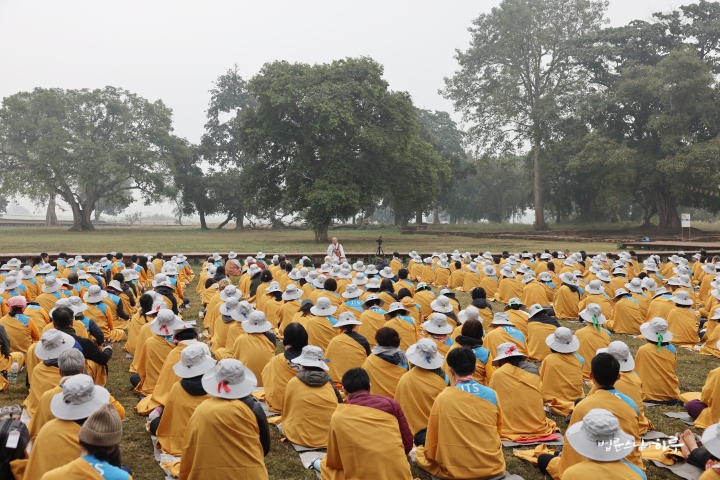
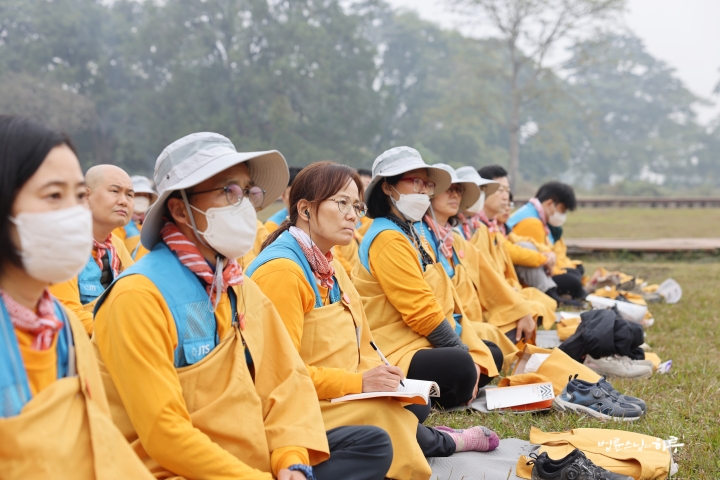
It was past 9 AM when we came down from the mountain. We boarded the bus and departed for Kapilavastu, where the Buddha grew up. After a 3-hour and 30-minute drive, we arrived at Kapilavastu at 12:40 PM. The pilgrimage group sat down on one side of Kapilavastu and meditated briefly. Then, Sunim shared the history of Kapilavastu and stories related to the Buddha.
What Led Buddha to Decide to Renounce the World
Since Buddha was born in Lumbini and came directly to this Kapilavastu, the place where the sage Asita read the prince’s fortune is also here within Kapilavastu. Buddha studied under two teachers here until he was 12 years old, and he was said to be a promising young man who excelled in his studies, was good at sports, and had a fine appearance. So his father’s dream was for his son to become a great king. Since the Shakya clan had a small country, they were always harassed by the surrounding powerful nations, so it was the parents’ dream and the country’s hope for the son to become king and build an empire. This is why Buddha was always referred to as a “Chakravartin” (universal monarch). The prince wanted to pursue the path of enlightenment, but he struggled greatly between this and his parents’ urging to follow the path of becoming a “Chakravartin”. However, if one has no lingering attachments, one will not have regrets even with parental persuasion. So contrary to the scriptural records, we can assume that the prince also had dreams of becoming king and trying to rule the world well. So he accepts governance rights over a certain region from his father and tries various policies while ruling, attempting to make the world peaceful. But realizing that this cannot achieve the world he dreamed of, he ultimately does not bend his resolve to renounce the world.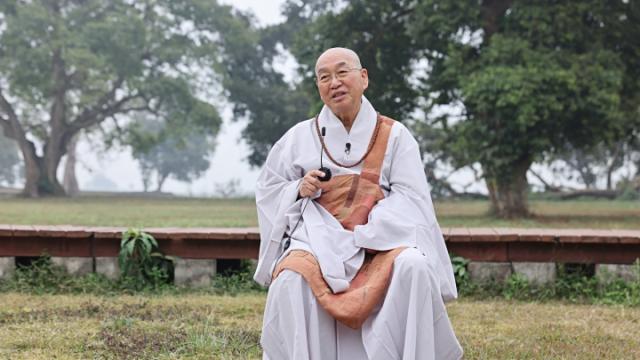
Is There No Way for Everyone to Be Happy Together?
After the plowing ceremony, the cheerful Gautama suddenly became very quiet and was always lost in thought. He asked his parents and teachers, “Why must one die for another to live?” No one could answer that question. When you’re young, you think teachers and parents know everything, don’t you? But even learned teachers could not help with the prince’s questions about the reality he experienced. They even said things like, “Don’t think about useless things” or “If you don’t want to die, you have to work hard.” The study we learn in the world today is study to win in competition, study to earn more money than others, study to pass exams by failing others. Winning is considered success. The concept of success is winning in comparison to others. Whether you win with your face, height, strength, or anything, being comparatively superior is success, and that is considered happiness. But the question the prince raised was “Is there no way for everyone to be happy together?” He wondered, “Why must one die for another to live?”, “Why must one be unhappy for another to be happy?” Later, after Buddha attained enlightenment, in a famous teaching to King Pasenadi, he said “You should not build your own happiness on the unhappiness of others.” This is deeply related to the awareness he had as a youth. However, there was no one in the palace who could answer the prince’s questions. No one had ever thought about such things. So he inevitably spent more and more time in solitary contemplation.Realizing My Pursuit of Happiness Was Based on Others’ Suffering
The decisive moment that led the prince to give up his attachment to the secular world and set his mind on renunciation was the Four Sights. The scriptures record the scene of the prince going out the east gate and seeing an old person. It vividly describes the sight of an elderly person struggling to move, wobbling unsteadily, with aching knees and back, coughing up phlegm, and being ignored by family members because of old age. Seeing this, the prince thought, “Will I also become like that?” This point is very important. Starting from feeling “That’s pitiful,” his thoughts shifted to “Will I also become like that?” The feeling of pity for others changed to not separating self and others, thinking “I will also become like that.” In other words, the suffering of the elderly person became his own problem. The prince felt as if he was engulfed in flames, gradually aging as time passed. So he thought he could not leisurely enjoy himself.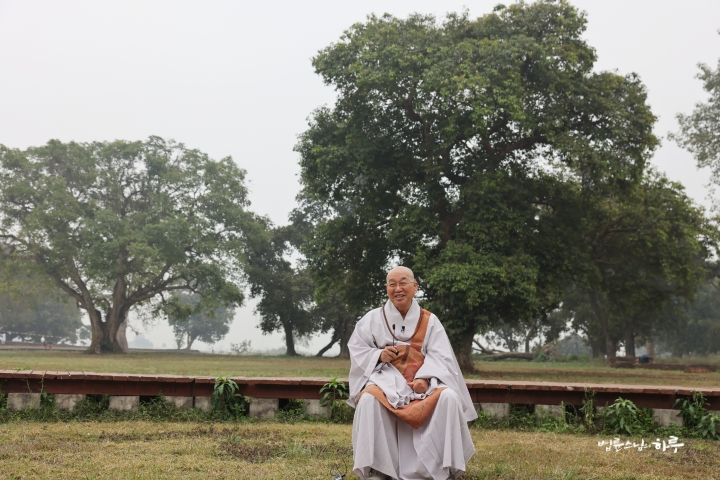
I Will Not Return Until I Attain Enlightenment, Even If I Die
Finally, Gautama leaped over the east gate and renounced the world. Simply put, he fled in the middle of the night. To be precise, he secretly opened the city gate at night and left, which the scriptures express as “leaping over the city wall to renounce” (yuseong chulga). It’s expressed as if he rode a horse and leaped over the city wall. Buddha did not renounce because he couldn’t become king, but he was given the throne yet abandoned it and renounced. That was not just leaving the secular world, but transcending it. We can see it was expressed as “leaping over the city wall to renounce” to symbolize transcending the secular world. It is said that Buddha made this vow when renouncing: “Even if I fall from a high place and die, even if I eat poison and die, I will not return until I attain enlightenment. My renunciation is not because I was deceived by anyone, nor to be reborn in heaven alone, but to save all sentient beings from suffering.” Because he renounced with this mindset, Buddha’s renunciation was completely different from renouncing due to failed romance, business failure, failing an exam, or feeling the impermanence of life. Buddha renounced with a great vow that “If I attain enlightenment through renunciation, I will return and share the new path with everyone. Buddha thought he would attain enlightenment right after renouncing, but how was it after trying for a few days? It was different from what he thought. He was cold, hungry, bitten by insects, and distracted by animal cries. Until then, he had lived in the palace without knowing cold, hunger or insects, just thinking “What is truth?”, but when he was alone in the forest, he was bothered by issues completely unrelated to enlightenment. He probably thought about food, longed for a warm bed, and wondered “Did I renounce for nothing?” Just like how you might think “Did I come here for nothing?” on this pilgrimage. (Laughter) But the scriptures don’t record all these aspects as Buddha’s agonizing, but rather as temptations by Mara. Once, Buddha resolved to go out to the streets to beg for alms and brought back some food. But when he tried to eat the food he got, he just couldn’t eat it. Buddha forced himself to eat it but then vomited. Buddha felt so pathetic about himself. Thinking “I can’t practice alone like this,” he decides to go find a teacher. This is how the journey of going south to find a teacher begins. It’s okay for you to think “I came here for nothing.” Just don’t go back. Once you get through the difficult times, it gradually gets better. It was hard at first, but now the pilgrimage is manageable, right?”“Yes!”
What Kind of Life Did Buddha Actually Live?
Rather than viewing the Buddha abstractly, we need to study his life more concretely within the context of reality. This allows us to speculate, ‘What perspective would the Buddha have on today’s world problems?’ This is because life is historical, specific, and social. However, faith lacks these elements. Philosophical research also cannot reveal such aspects. That’s why I often recommend pilgrimages and encourage studying the life of the Buddha. I, too, once loved Buddhism so much, but at one point, I became so disillusioned with its reality that I considered giving it all up. Then, feeling that my ten years of study were too valuable to waste, I revisited the life of the Buddha. By focusing on questions like ‘Who was the real Buddha?’ and ‘Is what I know truly Buddhism?’, I was able to find new inspiration.After the explanation of the sacred site, the pilgrimage group recited sutras and meditated briefly. Following the meditation, everyone sang the “Song of Buddha’s Renunciation” together.
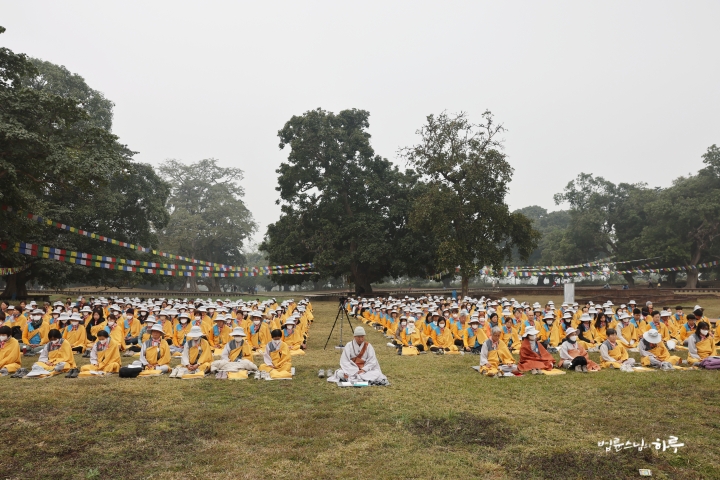
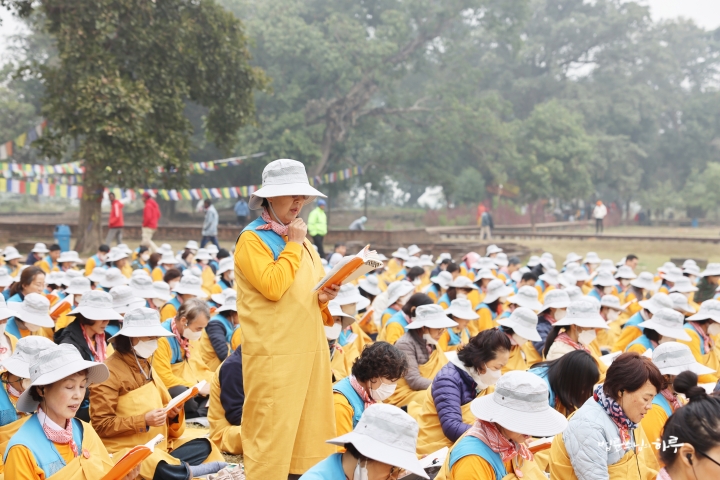
After the song ended, Sunim provided some concluding remarks.
“I believe that becoming a monastic is the best path for all of you. It’s something I would recommend above all else. However, if you’re hesitating about whether to become a monastic or not, you’re not yet qualified. Becoming a monastic is something you do immediately upon realizing it’s your path. If you have a realization here today, you should follow me and become a monastic right away. If you say you need to go home first and prepare, you’re not yet at the level to become a monastic. However, more important than hesitating about becoming a monastic is to imagine that you’ve already become one. Let’s assume from this moment on that we’re begging for food, wearing simple robes, and sleeping under trees. If we imagine this scenario, isn’t what you’re eating now better than begging? Your clothes and sleeping arrangements are much better too. Even if your family doesn’t always listen to you, being with them is better than being alone under a tree or in the forest. If you set your mind on becoming a monastic like this, you’ll find that you have no complaints about your current life, even without actually doing it. This should come first.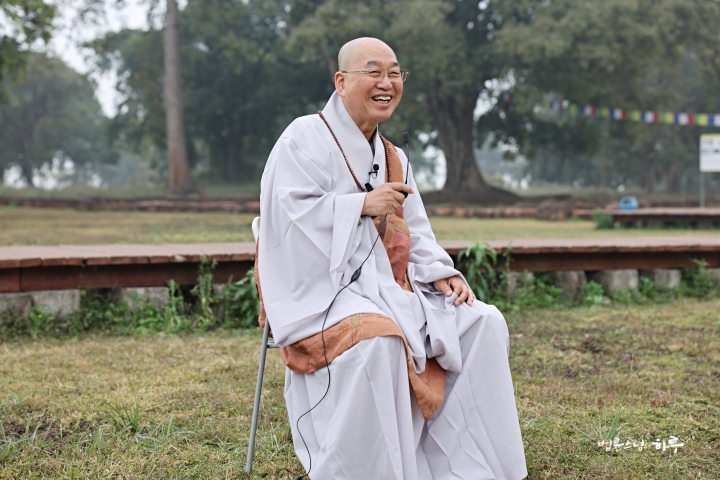
True Renunciation Is Freedom from One’s Karma
Don’t think of renunciation as something difficult. If you use the Buddha as your standard, you’ll find no dissatisfaction in life. Why not try that first? If you can achieve that, there’s no need to become a monastic. However, many of you become monastics because of your dissatisfaction, which leads to more problems after taking your vows. Becoming a monastic due to dissatisfaction means you’re still stuck in the mindset of “Isn’t there a better path than this?” This attitude will continue to cause problems. You need to be able to renounce even a royal palace to be free from worldly attachments. Only then can you let go of complaints and fully focus on monastic life. Even monks and nuns who seem to have made a great resolution often complain about the food in meditation halls or Buddhist academies. The first sources of discontent for monastics are food, clothing, and lodging. I’ve heard that even in famous meditation centers in Korea, complaints about accommodations are the most common. These days, no one will go to a meditation hall unless they’re given a private room. They call ahead to check if single rooms are available before deciding to enter. And when the retreat ends, they ask, “How much is the closing ceremony allowance?” I’m not saying this to criticize monastics, but to show how things are in the world. So, shaving your head and wearing robes doesn’t automatically make you noble. Becoming a monastic doesn’t immediately erase your karma. Your temperament and desires don’t just disappear. If becoming a monastic were as simple as getting a haircut, everyone who visits a barbershop would become one. Then why would we need the Buddha? We’d only need barbers. Therefore, you must first become free from complaints about food, clothing, and lodging. Isn’t it good to lose weight when you don’t eat? It’s good to feel full when you do eat. If the food is delicious, it’s good because you gain weight; if it’s not tasty, it’s good because you don’t. It’s good if you’re late, and it’s good if you arrive early. You need to practice not being troubled in any situation. Only then can you find joy in whatever you do. Complaints arise because of your karma. They come from clinging to your preferences, tastes, and temperament. When complaints arise, you should quickly recognize, “Ah, I’m attached again.” It’s okay if your lips pout for a moment and then return to normal. But they shouldn’t remain pouted. You shouldn’t be greedy, even for good things. If you feel the desire to become a monastic, before taking vows, you should first free yourself from complaints about food, clothing, and lodging. Once you’re free from these, working together becomes much easier. When we work, we always prepare for eating, dressing, and sleeping. Of course, those responsible for the community’s livelihood should always take good care of these things. It’s wrong to say, “You’re a monastic practitioner, so eat and sleep anywhere.” However, we ourselves should maintain an attitude free from complaints about food, clothing, and lodging. In monastic communities, people don’t fight over discussions about the Way or because of sectarian differences. Most conflicts and departures are due to lifestyle issues and personal incompatibilities. These problems aren’t solved by shaving your head or wearing robes. They all stem from failing to overcome your own karma. True renunciation is becoming free from your own karma.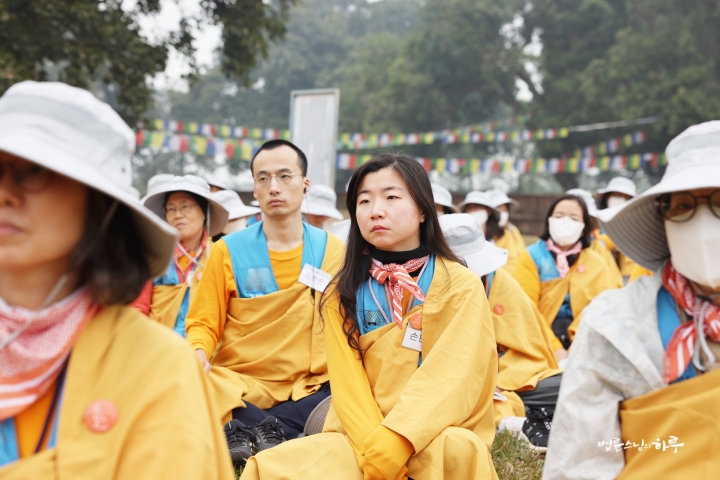
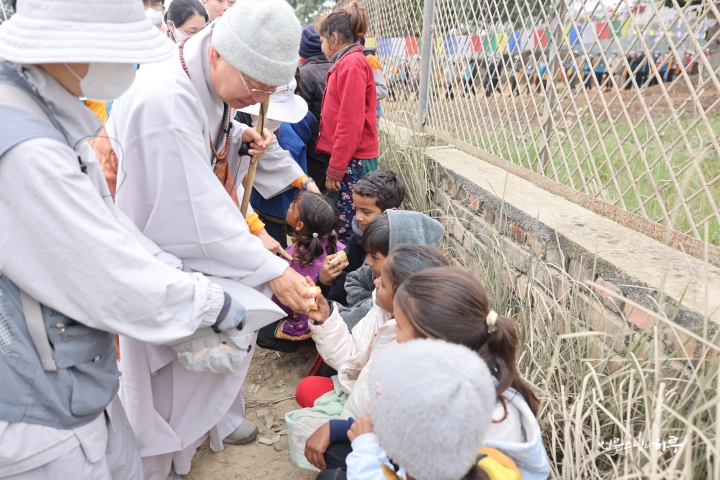
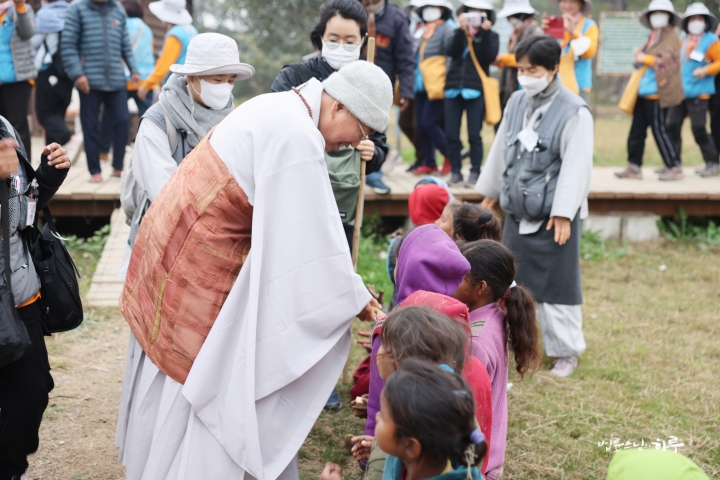
After Sunim finished speaking, he went out through the east gate. Outside, village children were lined up in a long queue. Sunim distributed snacks to the children.
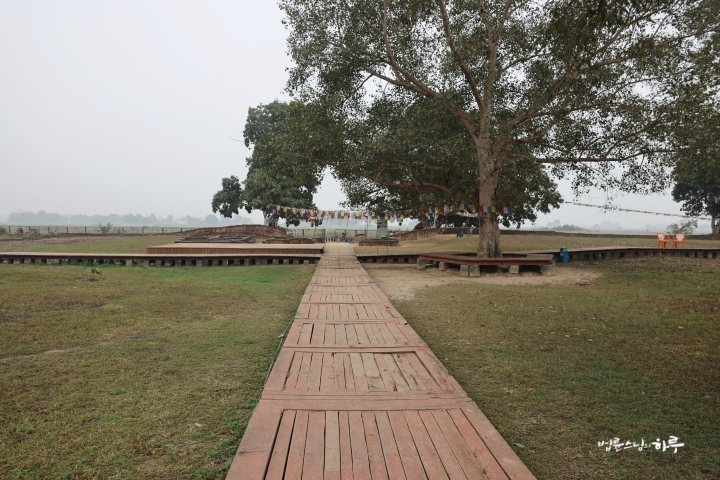
After passing through the east gate, Sunim headed towards the parking lot along a path between the fields. The route had changed from last year, and he almost got lost, but thanks to a young girl who had just received snacks and led the way, he safely arrived at the parking lot.
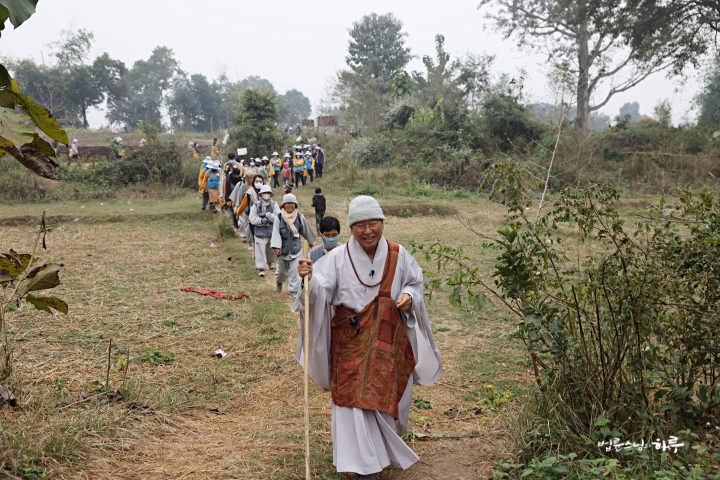
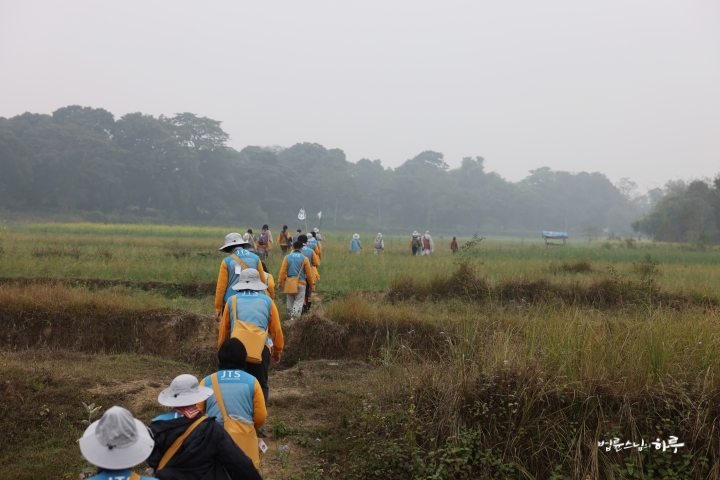
At 4 PM, after a 10-minute bus ride, Sunim arrived at Kudan. The pilgrimage group lined up at the entrance of Kudan, entered in an orderly manner, circumambulated the stupa, and then sat down.
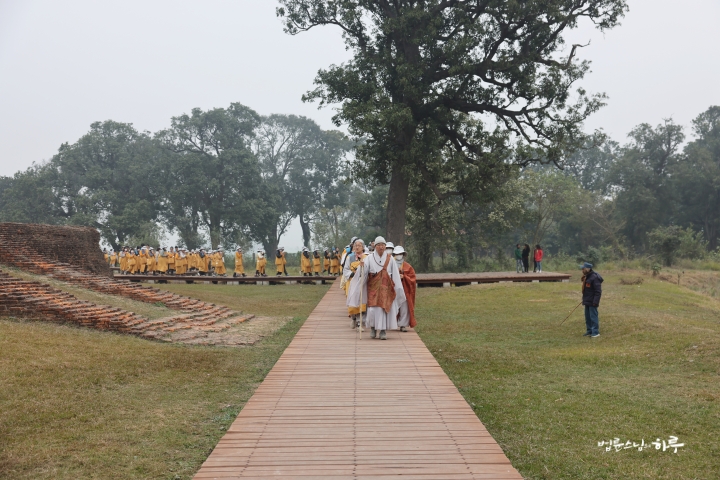
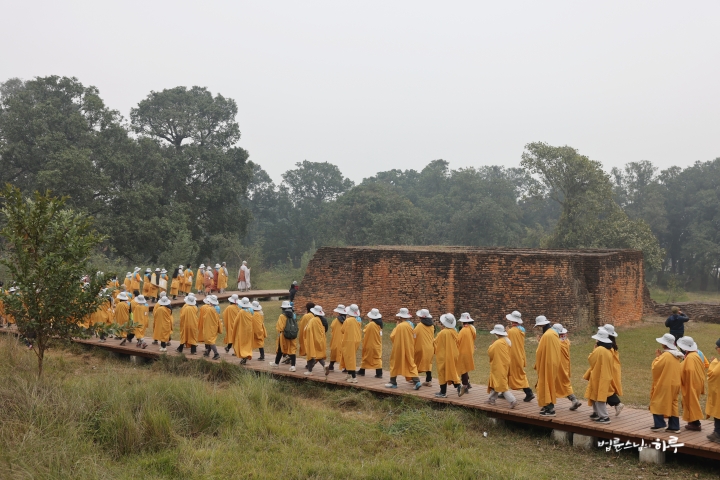
Sunim began his explanation.
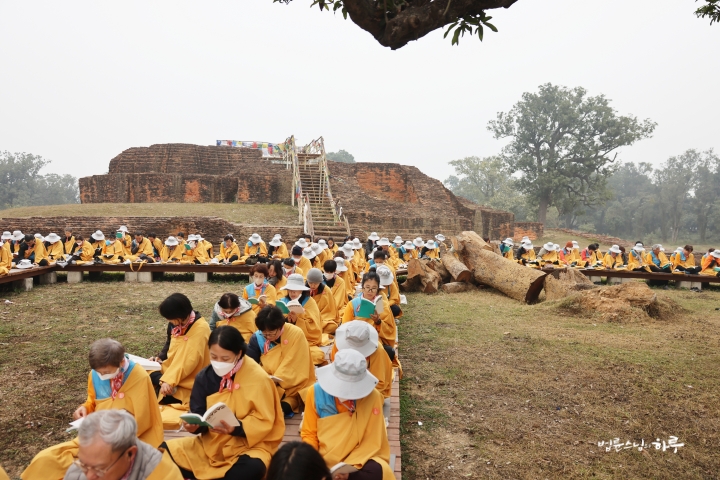
Sunim then provided a detailed explanation of the Buddha’s life and the historical background of Kudan.
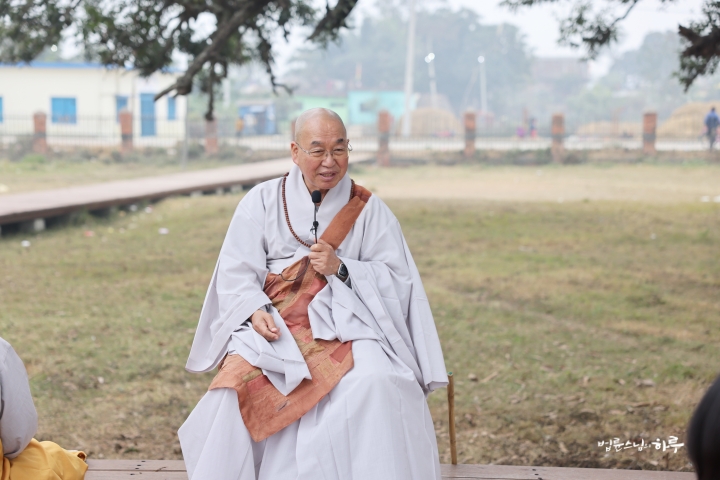
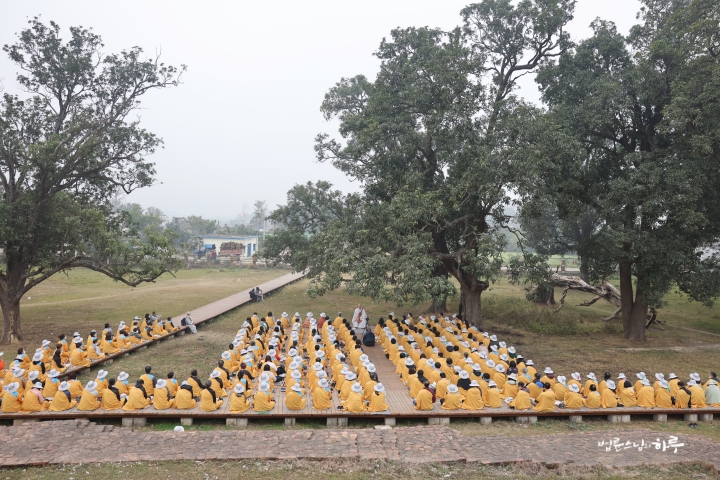
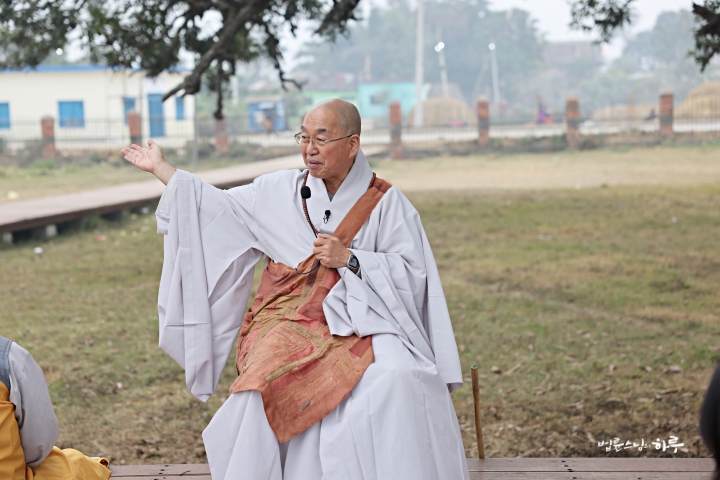
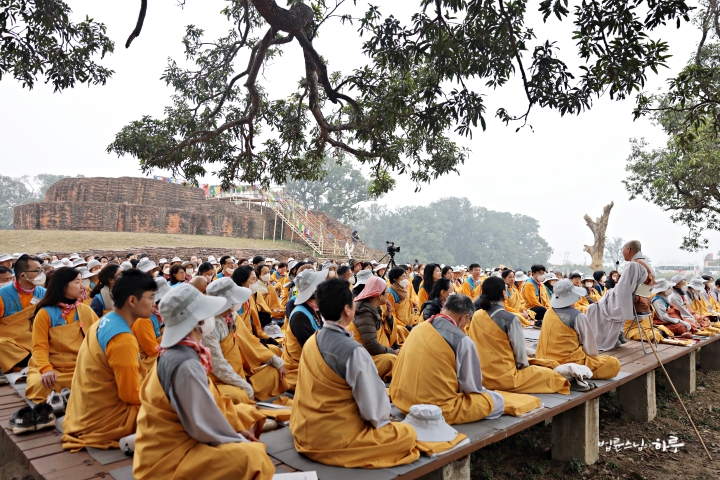
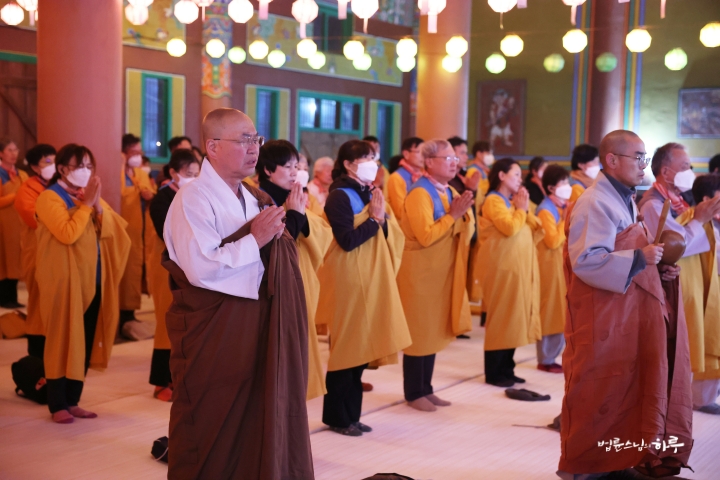
After Sunim’s explanation, the pilgrimage group recited sutras and performed a Buddhist ceremony.
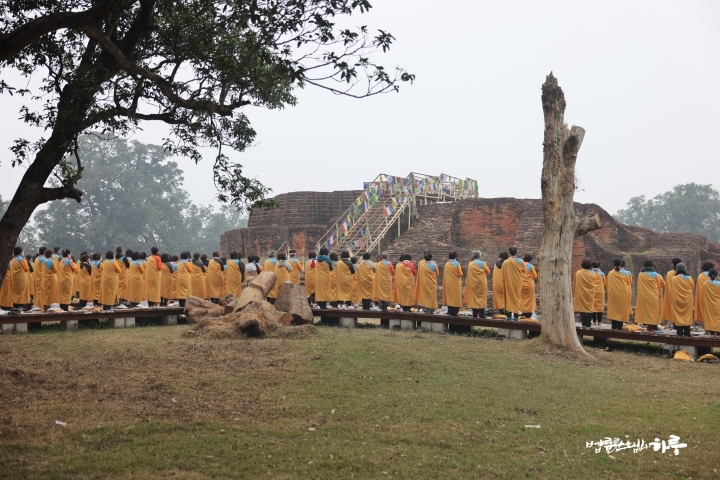
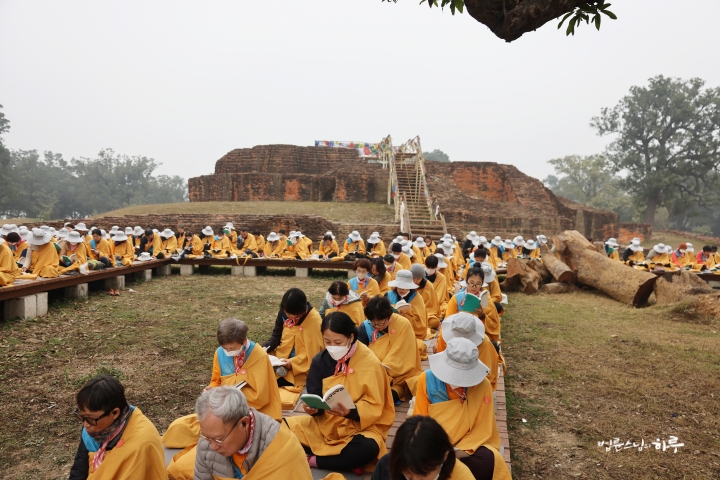
After finishing the homage, children had gathered outside. Sunim distributed snacks to the children and then boarded the bus to go to Daeseong-Seokgasa Monastery.
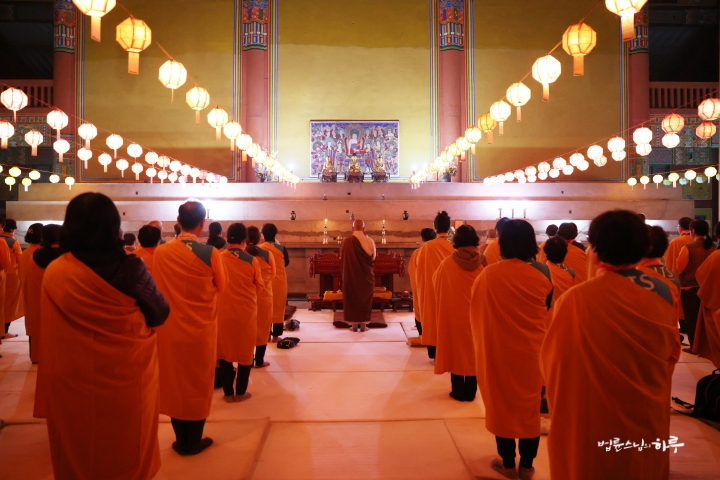
Upon arriving at the lodging, it was already 6 PM. After having dinner and performing evening prayers in the Dharma hall, the day’s schedule came to an end.
This concludes the pilgrimage schedule in Nepal. Tomorrow, the group will cross the border back into India and continue the pilgrimage by moving to Shravasti.