How and What Did the Buddha Realize?
Jan 14, 2025 - India Pilgrimage Day 4, Bodh Gaya
Hello. It’s the fourth day of our India pilgrimage. Today, we visited Bodh Gaya, where the Buddha attained enlightenment. In the afternoon, we returned to Sujata Academy to have a conversation with international branch members and held a meeting with the Dharma teachers leading the pilgrimage.
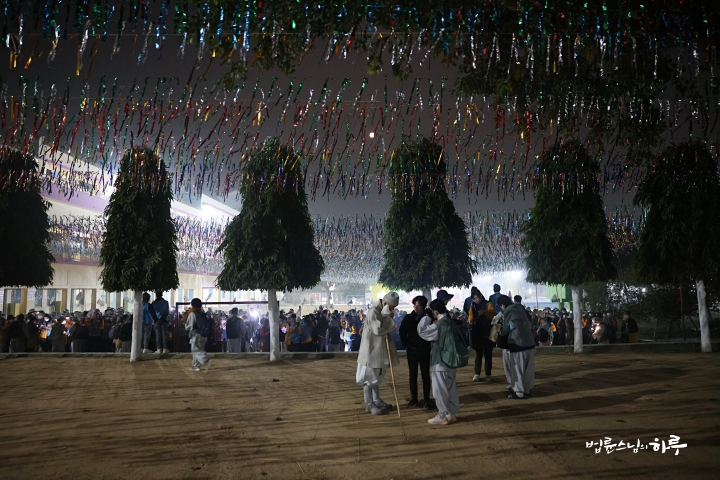
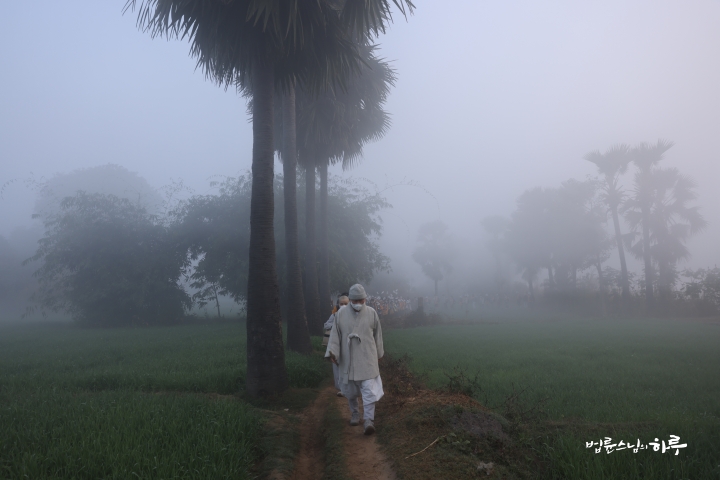
At 5:30 AM, still dark, the pilgrimage group departed for Bodh Gaya after finishing the dawn prayer. After leaving the school and entering the village road, darkness still lingered. The group walked quietly, illuminating their path with mobile phone lights.
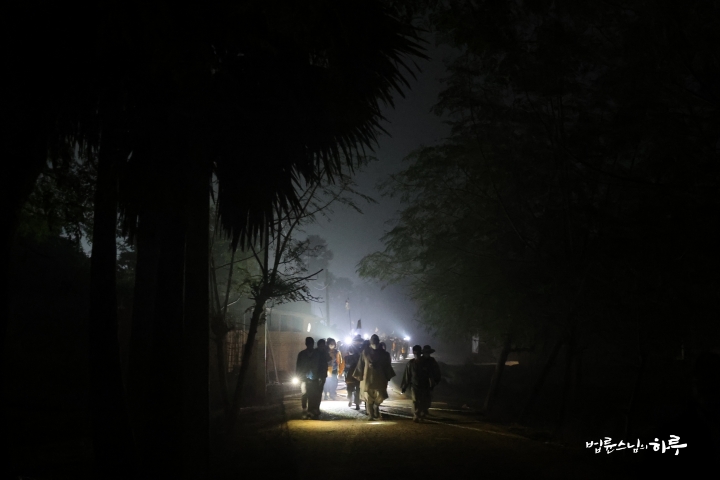
Despite the early hour, villagers had already begun their day. They were sweeping their front yards and drawing water from hand pumps while children chattered. Though the children’s figures were dim in the darkness, their bright voices calling out “Namaste!” (Hello!) could be heard.
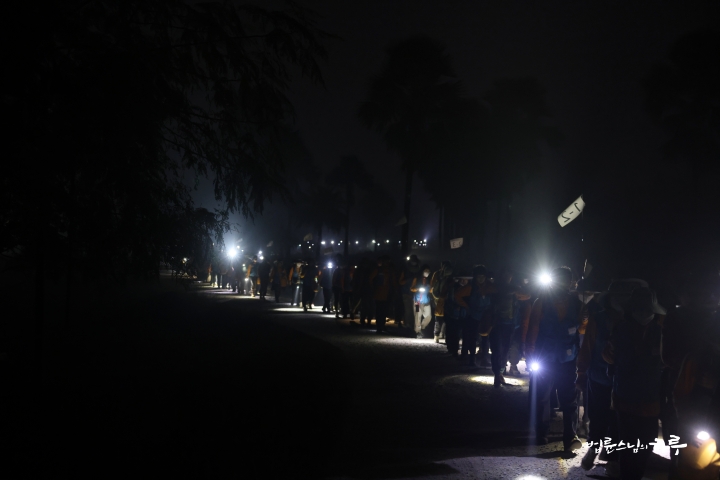
The pilgrimage group walked quietly to avoid disturbing the villagers, but a procession of 400 people was hard to miss. Fortunately, most of the children were students from Sujata Academy, so they didn’t find the group unfamiliar and came out to the road to greet them warmly. About an hour after leaving Sujata Academy, dawn broke and the surroundings brightened.
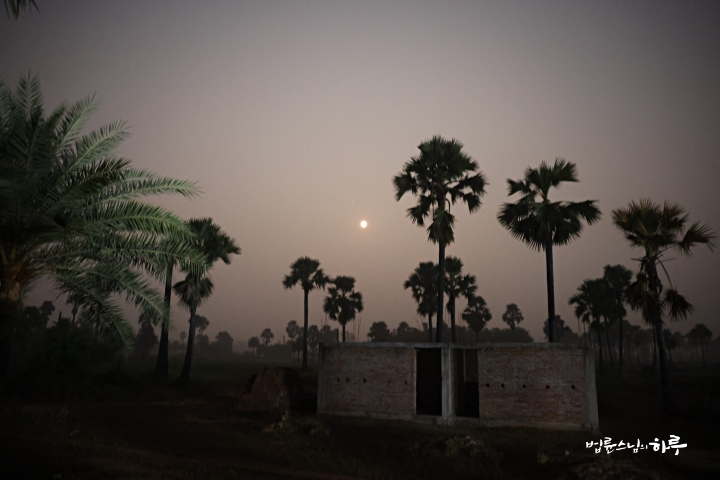
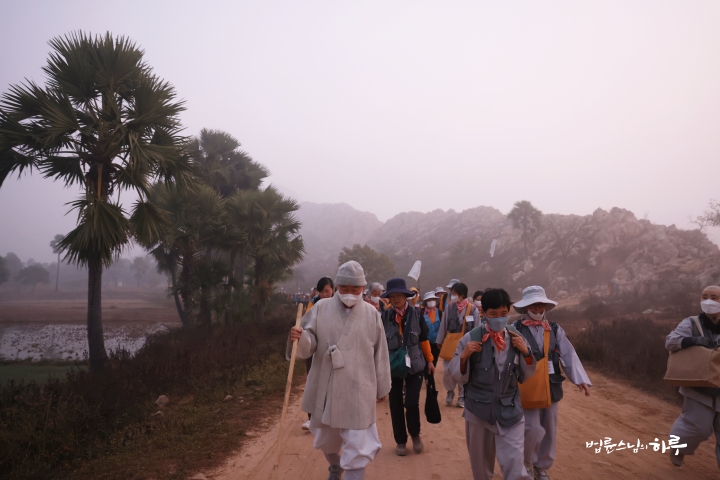
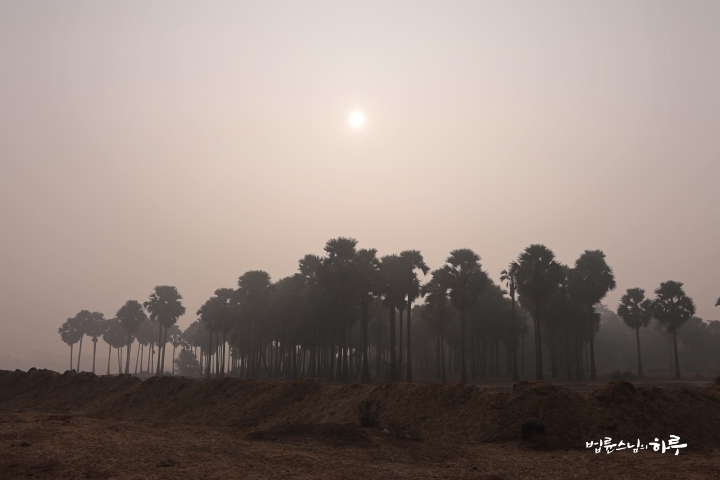
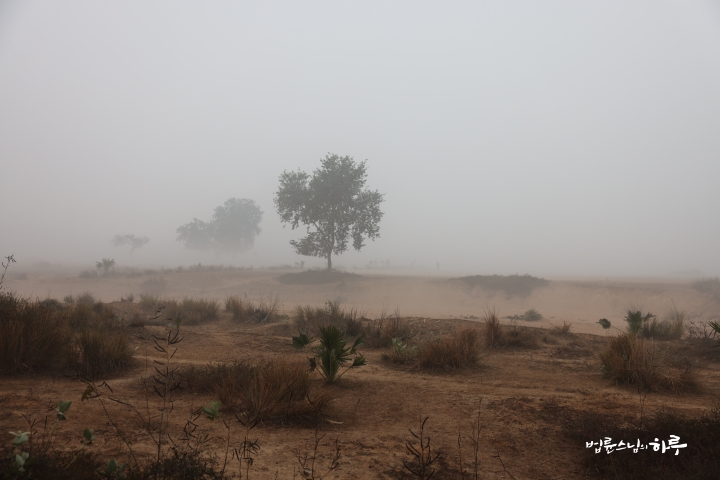
Soon after, a foggy sandbank appeared. It was the bank of the Niranjana River.
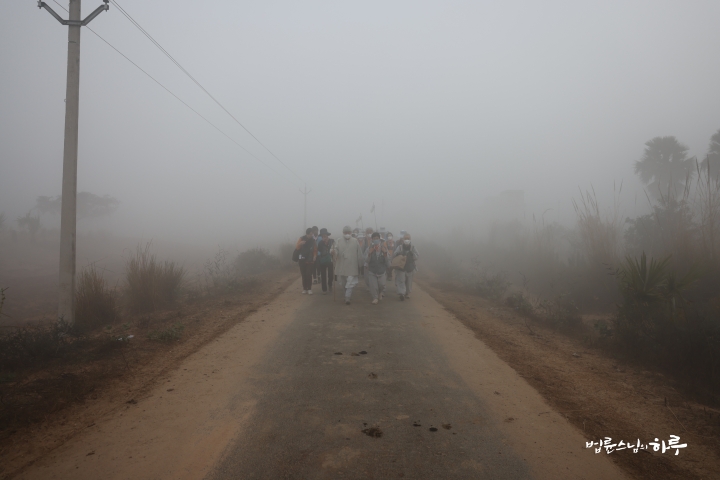
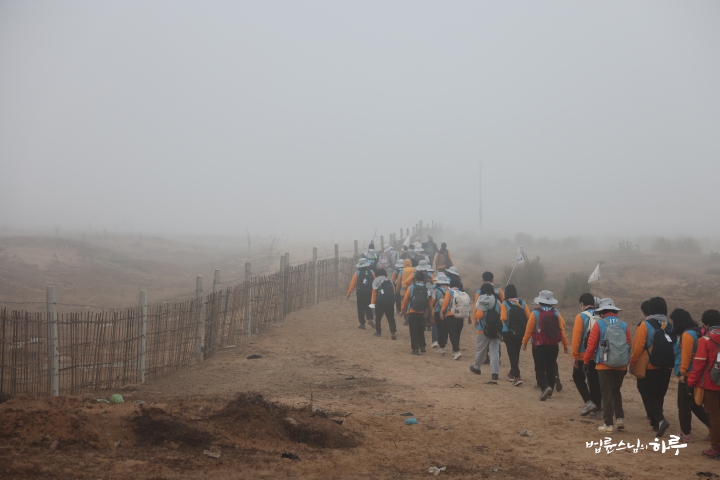
On days when the river is dry, it’s possible to cross wearing shoes, but today the river was flowing, so everyone took off their shoes to cross the water. Fortunately, the water wasn’t too cold.
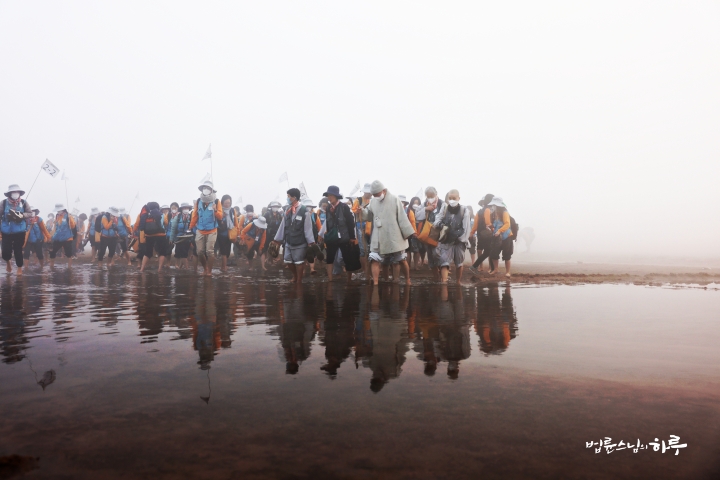
After crossing the river and passing the sandbank, we arrived at the place where the Buddha had collapsed. The pilgrimage group recited sutras, imagining the situation at that time. Walking a bit further, the JTS Meditation Center appeared. The flowering trees on the walls seemed to welcome the pilgrimage group.
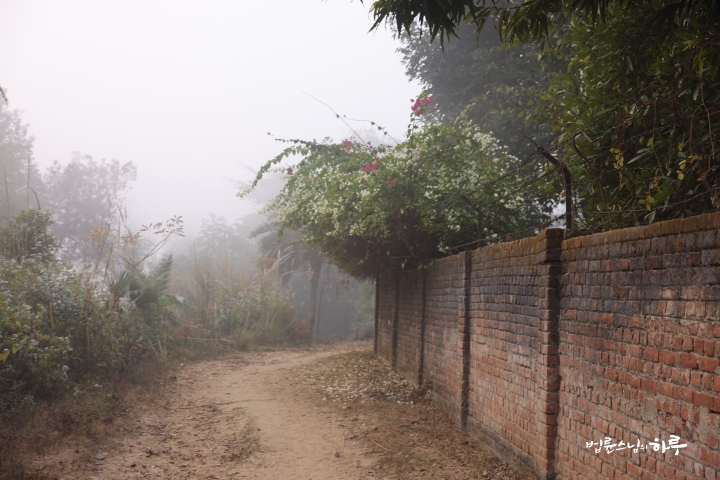
At 7:30 AM, we entered the meditation center and had breakfast with packed meals, sitting in groups in the spacious open area.
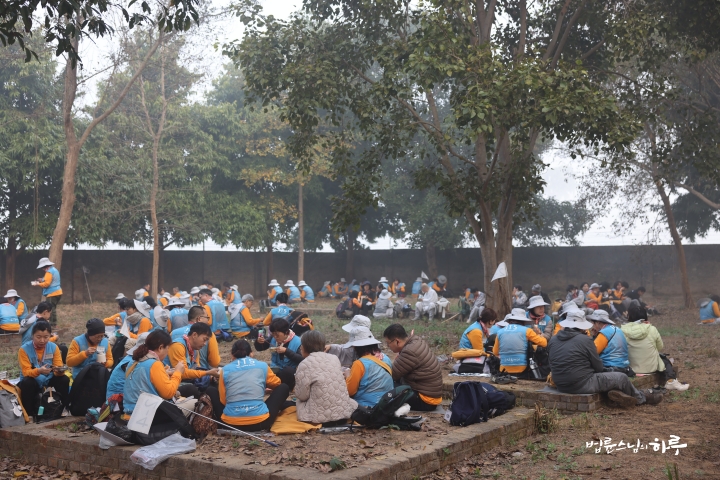
After the meal, Sunim explained about the meditation center.
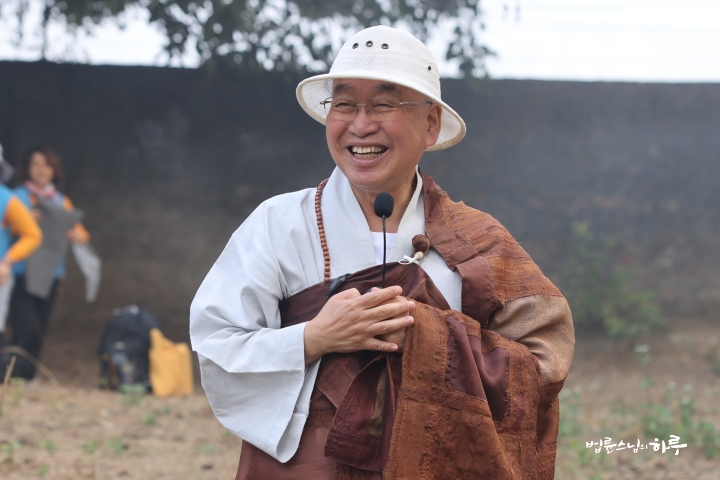
He then talked about the background of establishing Sujata Academy.
“The place where Sujata Academy is located is the center of where the Buddha practiced asceticism for six years. People ask how we were able to build a school there, but the site where the school was built was originally considered the most useless land by the villagers. It was the most worthless land for farming. However, it became the most meaningful place as it’s where the Buddha realized the futility of asceticism and discovered the Middle Way.”Sunim told the story of how the Buddha collapsed due to weakness while bathing in the Niranjana River after six years of ascetic practice, and also pointed out the place where Sujata offered milk porridge.
“Behind this place is where the Buddha ate the milk porridge. Later, people built a temple here and called it ‘Sujata Temple’, but now it has been changed to a Hindu temple. Now, let’s move to the site of Sujata’s offering.”As we left the meditation center, many people, both adults and children, from the surrounding neighborhood had come out and were lined up. Sunim distributed handfuls of candy he had prepared to the people.
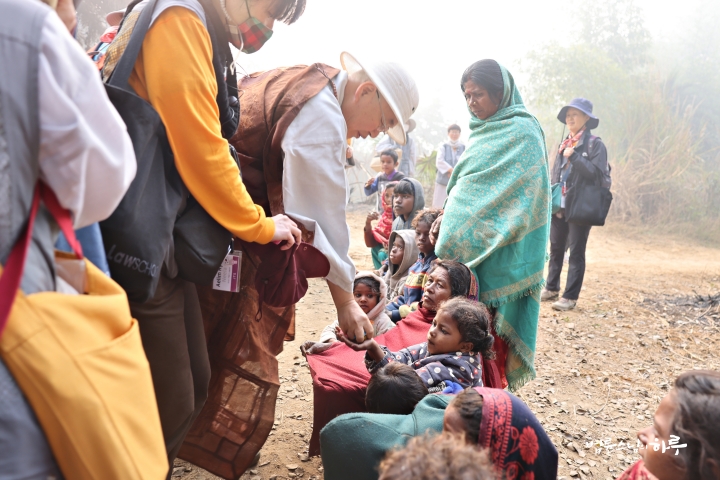
After distributing the candy, we arrived at the site of Sujata’s offering, and Sunim provided an explanation.
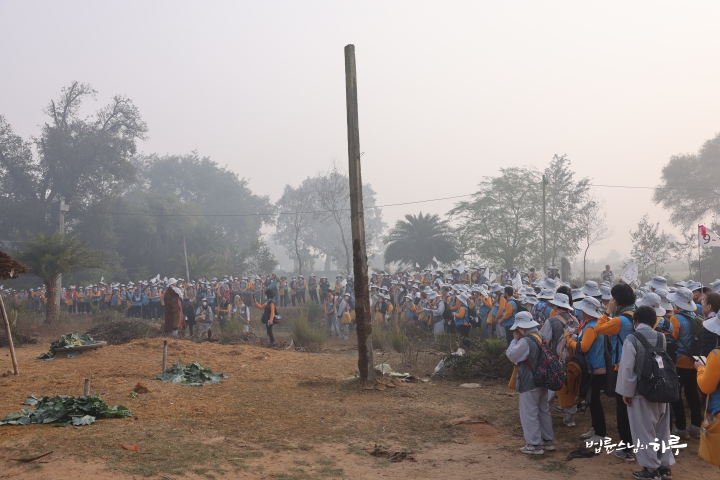
Looking at the stupa built at the site of Sujata’s offering, we made three bows, recited sutras, and then chanted the Heart Sutra.
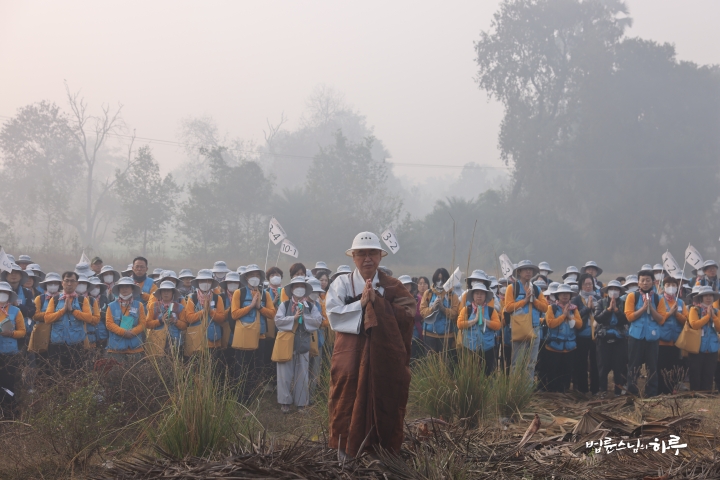
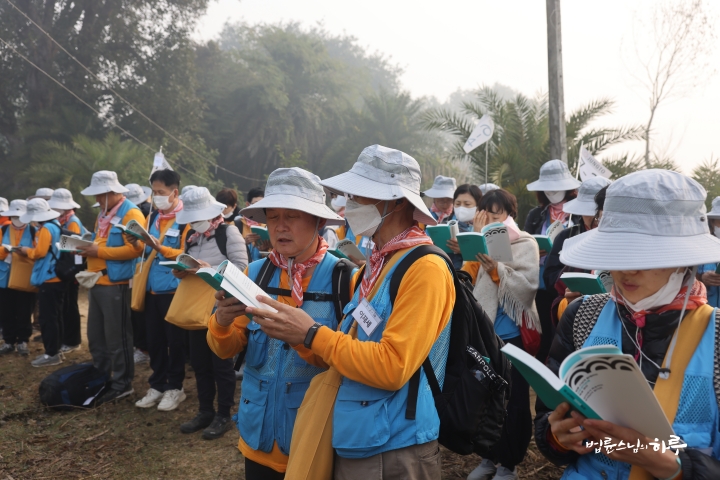
Afterwards, the pilgrimage group visited the site where the Buddha converted Uruvela-Kassapa and the snake cave where he kept the fire-breathing dragon, then walked along the rice paddy ridges to Sujata Stupa.
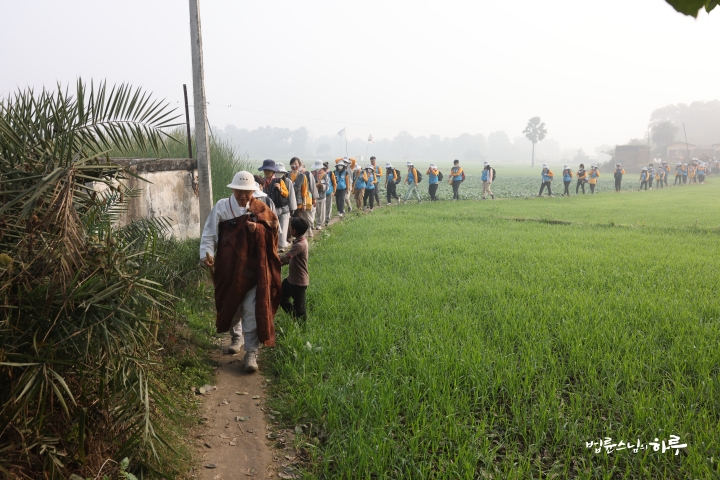
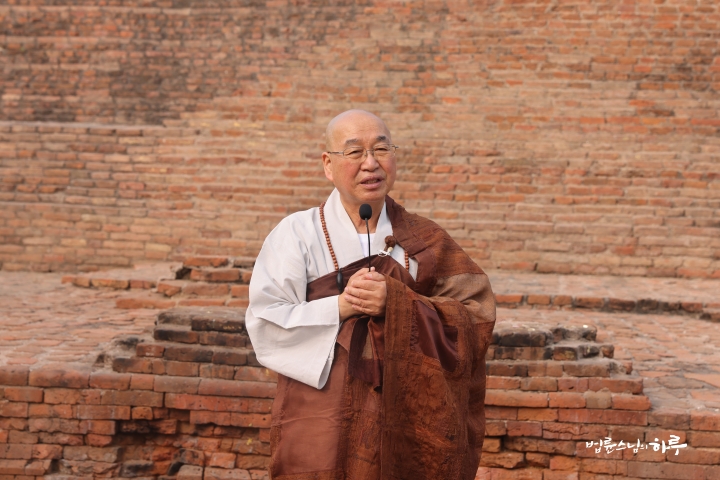
Upon arriving at Sujata Stupa, Sunim explained about Sujata’s merit.
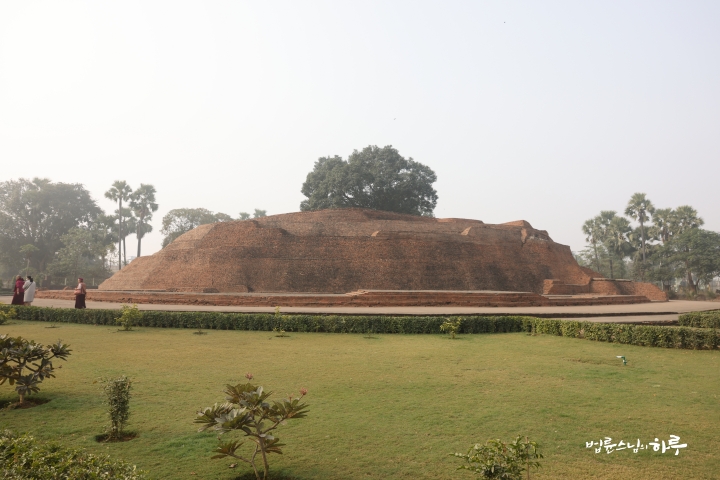
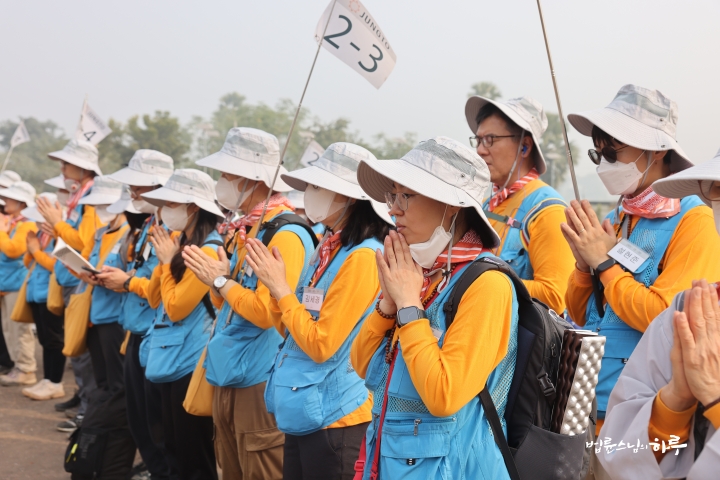
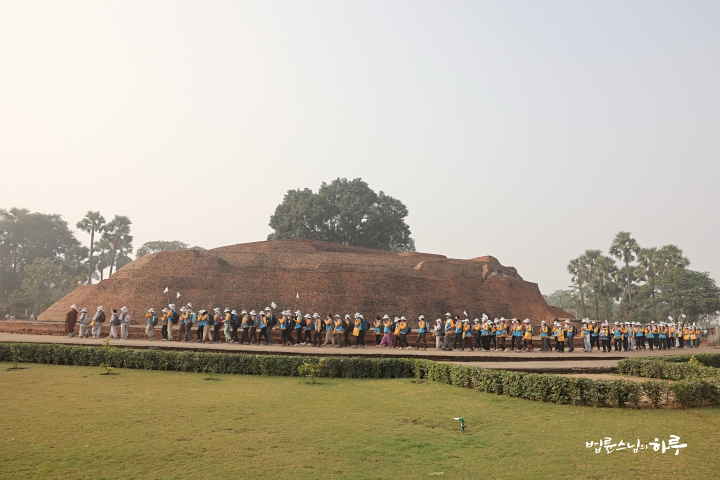
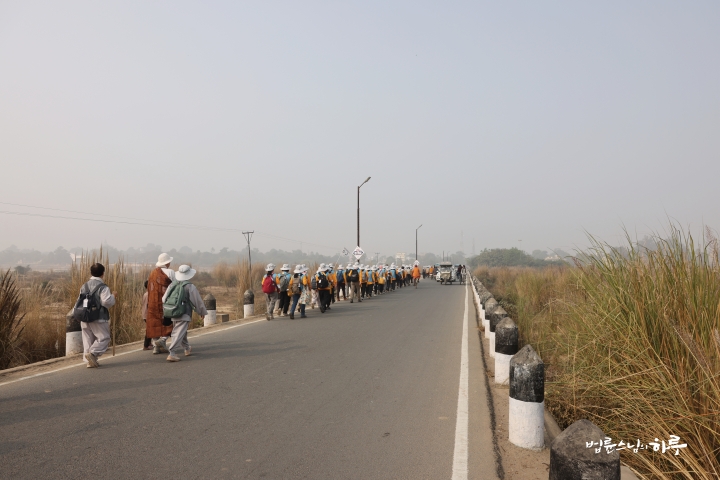
The pilgrimage group bowed three times towards the stupa, chanted Buddha’s name, and circumambulated it once. They then crossed the large bridge over the Nairanjana River and arrived at the Mahabodhi Temple in Bodh Gaya at 10 AM.
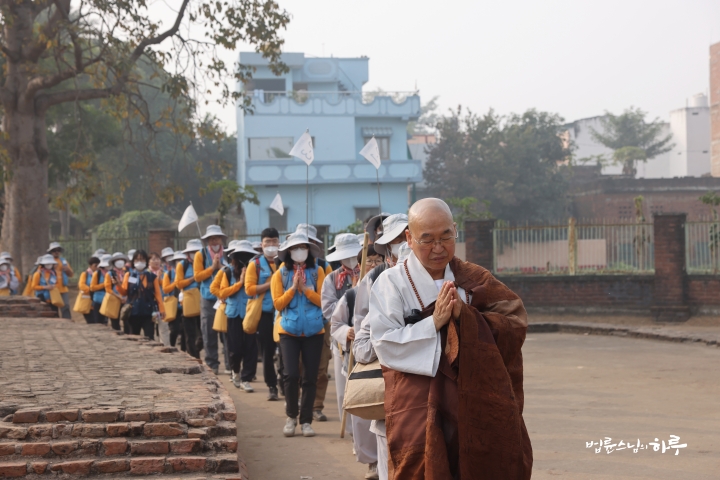
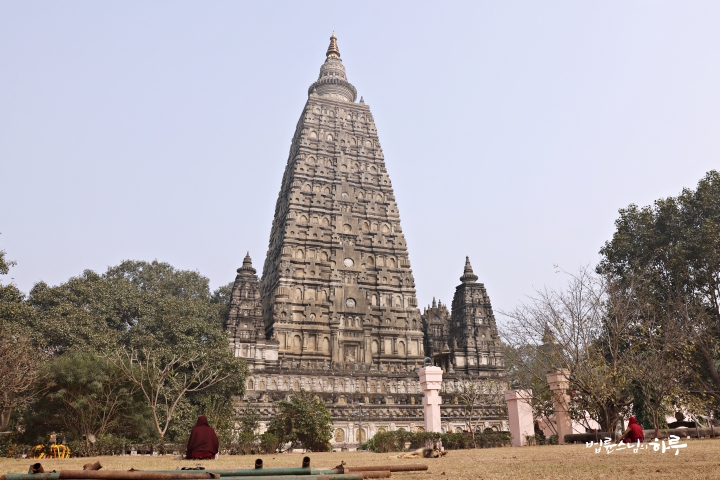
The staff members who arrived earlier had already prepared a space under the large Bodhi tree in front of the main stupa for the group to pay homage. Once all pilgrims had gathered and donned their kayasas, they began circumambulating the stupa.
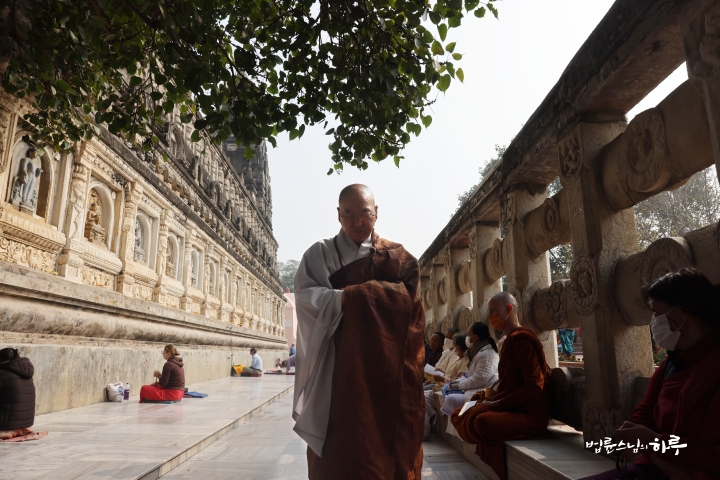
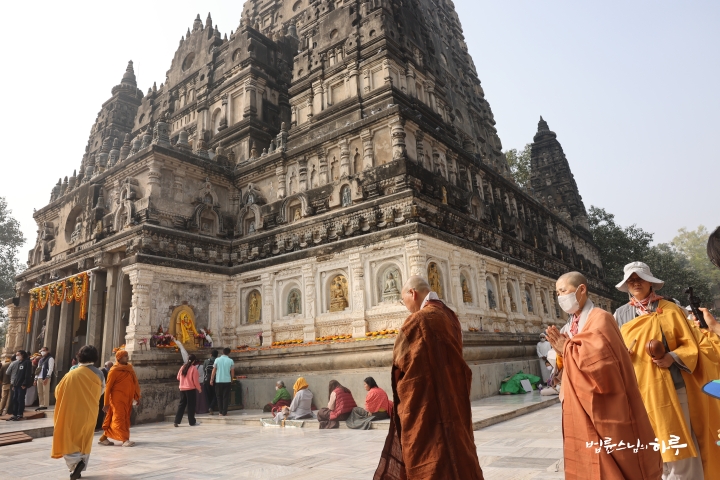
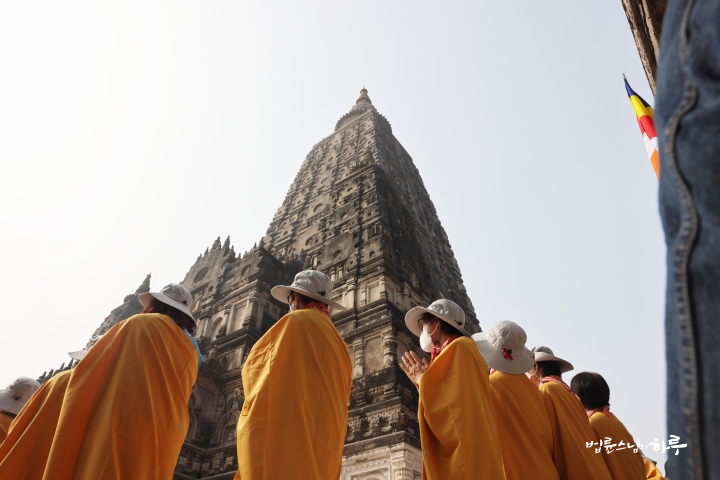
After completing the circumambulation, they returned to their seats, bowed three times towards the main stupa, and engaged in a brief meditation.
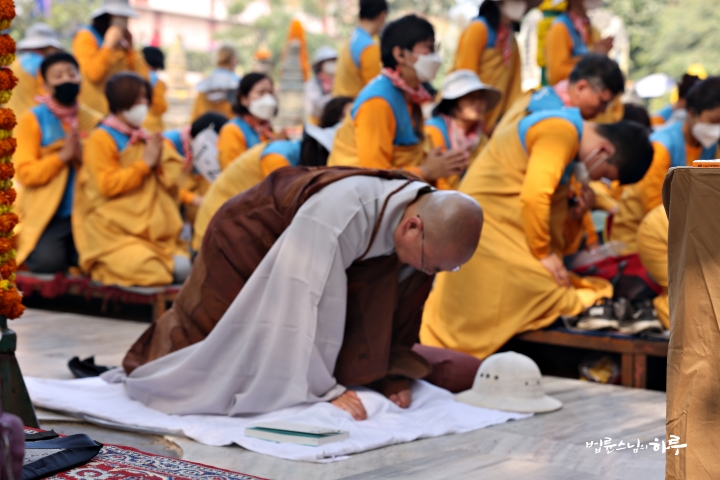
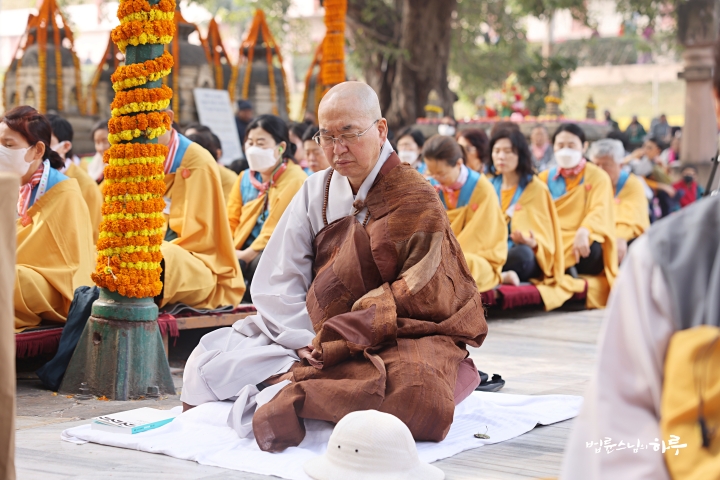
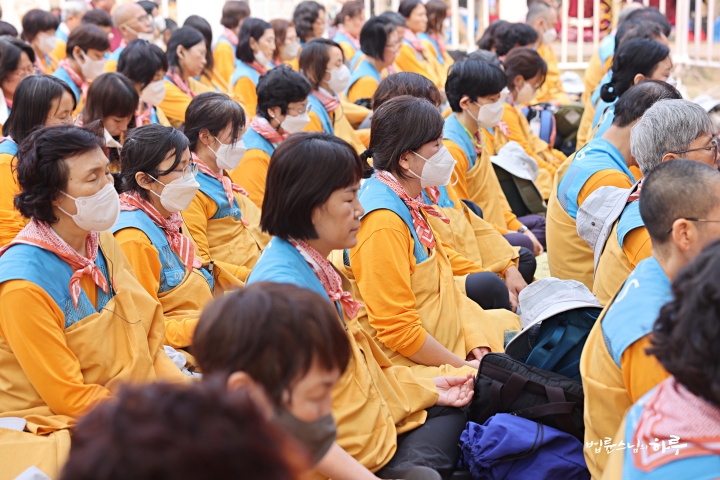
After the meditation, when the group requested a Dharma talk from Sunim, he began his discourse on the events that took place here in Bodh Gaya.
“Welcome to Bodh Gaya, where the Buddha attained enlightenment. This morning, we departed from Pragbodhi Hill where the Buddha practiced asceticism for six years. We passed by the place where he collapsed while bathing and where he regained his health after receiving an offering from Sujata. We then crossed the Nairanjana River. Now, we have arrived at the Bodhi tree where the Buddha entered his final period of intense practice.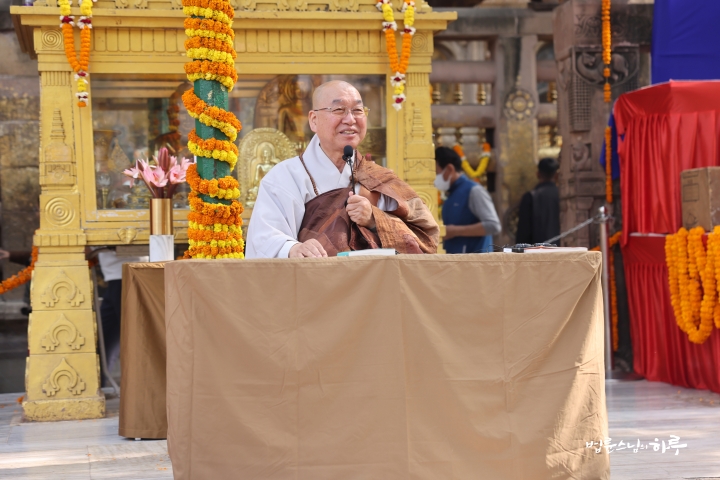
How and What Did the Buddha Realize?
The most important teachings of Buddhism are the law of dependent origination and the Middle Way. The Buddha discovered the Middle Way at Pragbodhi Hill and realized the law of dependent origination here in Bodh Gaya where we are now sitting. Terms like Buddha, liberation, nirvana, and samsara were originally used in India. The difference lies in the interpretation of these terms in Indian tradition versus Buddhism. However, the Middle Way and the law of dependent origination are unique to Buddhism and cannot be found in traditional Indian thought. This uniqueness of Buddhism originated here in the Bodh Gaya area. Here, the Buddha discovered that neither the traditional pursuit of happiness through hedonism nor the newly emerging asceticism proposed by new thinkers was the true path to liberation. The only path to liberation was the Middle Way, which does not lean towards either extreme. Following desires and suppressing desires are both merely reactions to desire. The third path that the Buddha discovered is not between these two paths, but a new path that abandons both. It involves merely being aware of desire without following or rejecting it. Not reacting to desire is the true way to become free from desire. Before discovering the new path of the Middle Way, the Buddha practiced asceticism. The most important principle of asceticism was not to care for the body. To achieve this, firstly, he ate only coarse food. Secondly, he did not seek comfortable bedding. This is similar to how animals in nature do not prepare a comfortable place to sit. Thirdly, he did not wash his face or body. However, after realizing the Middle Way, the Buddha recognized that deliberate asceticism was unnecessary. So, the first thing he did was go to the river to bathe. Seeing this, the five ascetics who had been practicing with him judged that he had abandoned his practice and fallen into indulgence. The Buddha simply bathed in the flowing river water, without heating it or adding bath salts. Even animals go to the river to bathe when it’s hot. This shows that the principle of asceticism they had adhered to was more extreme than what is natural. Furthermore, when they saw the Buddha accept the milk rice porridge offered by Sujata, the five ascetics concluded that he had completely fallen from the path and they left for the Deer Park near Varanasi. The Buddha didn’t even have a chance to explain the Middle Way to them.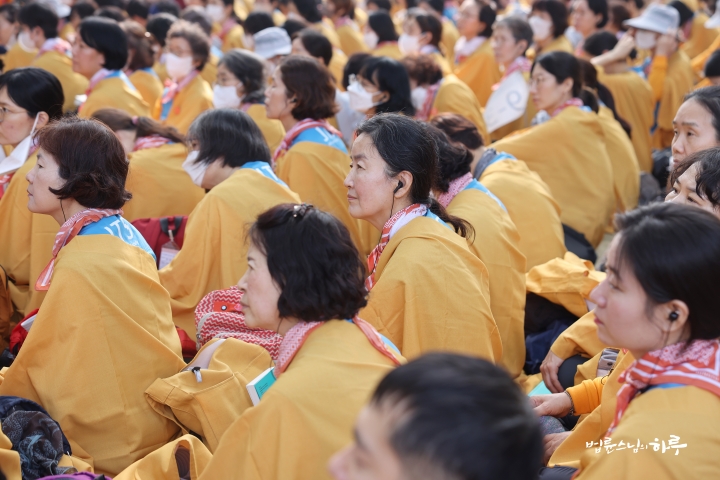
This Is the End of Suffering!
In this way, the Buddha resolved all the questions he had since childhood. All his own afflictions disappeared. So he declared, “This is the end of suffering!” And he savored the silence and joy of enlightenment for 49 days in that place.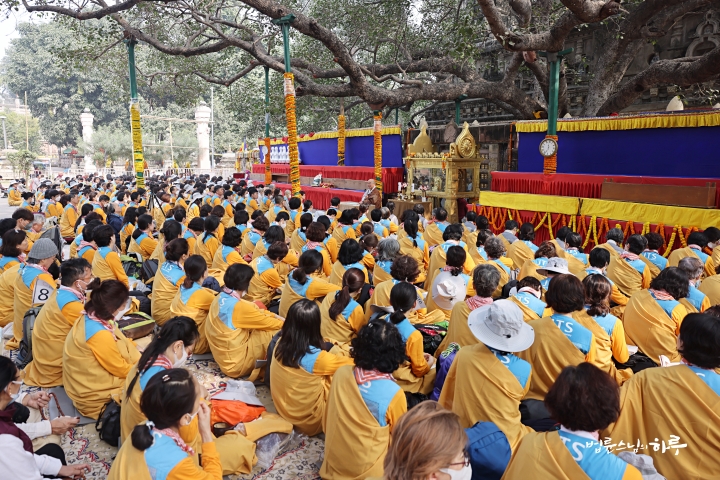
After the Dharma talk, we recited the sutra together.
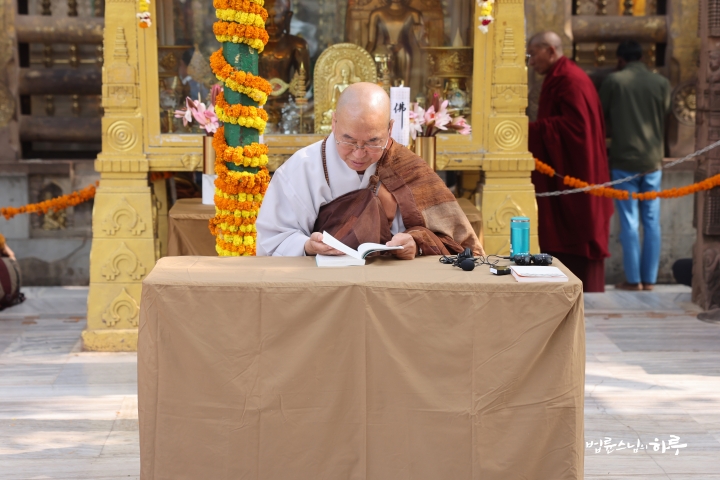
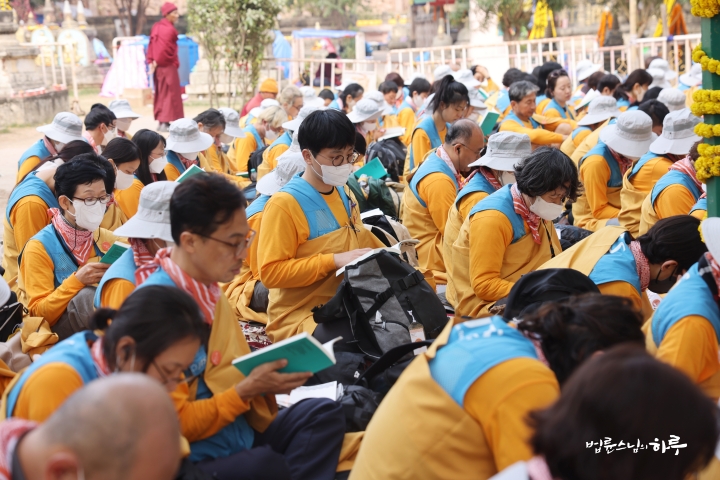
After the recitation, Sunim added an explanation.
“Although the sutra was a bit long, it was good because it was detailed, wasn’t it? While the sutras contain mythical expressions derived from Indian culture, they also contain very factual content. The Buddha’s Dharma was taught about 2,600 years ago, but if it were taught right here and now, there would be no logical contradictions at all, and it’s truly an admirable teaching that we can marvel at. We should rejoice that we have encountered such a good teaching.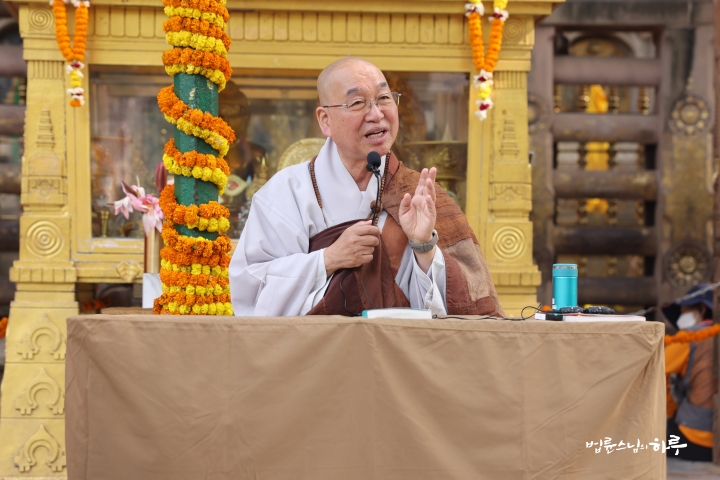
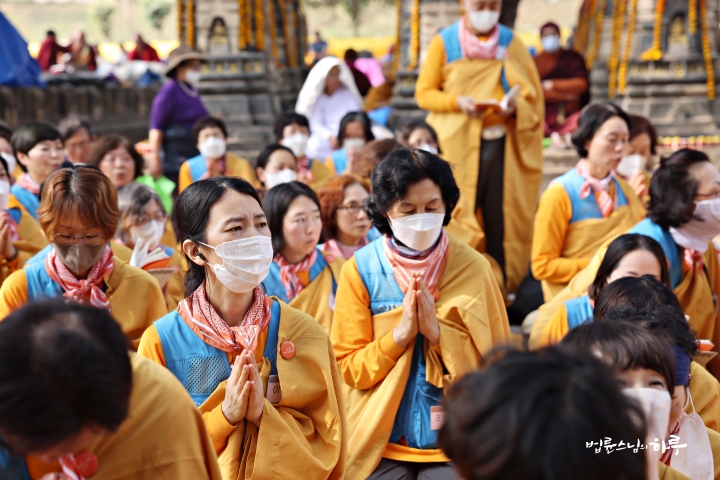
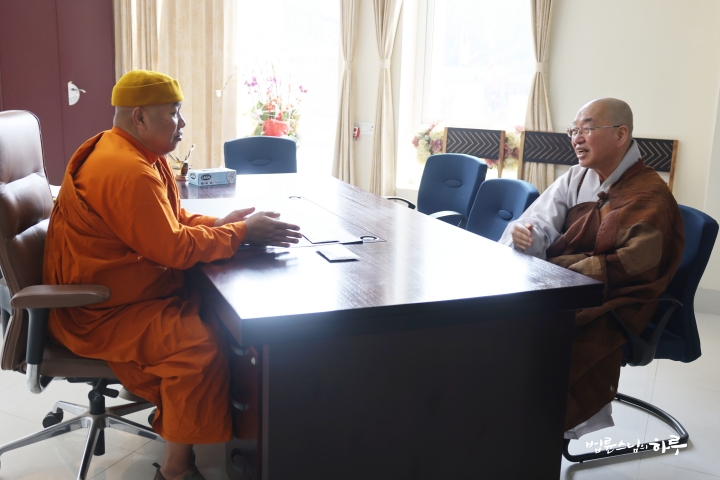
After concluding his explanation, Sunim gave the pilgrimage group two hours of free time to explore the holy site thoroughly. While the group slowly paid their respects at the sacred place, Sunim met with the chief monk of the Mahabodhi Temple. He expressed gratitude for accommodating the group’s event at the temple and presented a donation.
Sunim returned to Sujata Academy after 3 PM, rested briefly, and then at 4:30 PM, he had a conversation with members of international and overseas branches residing abroad.
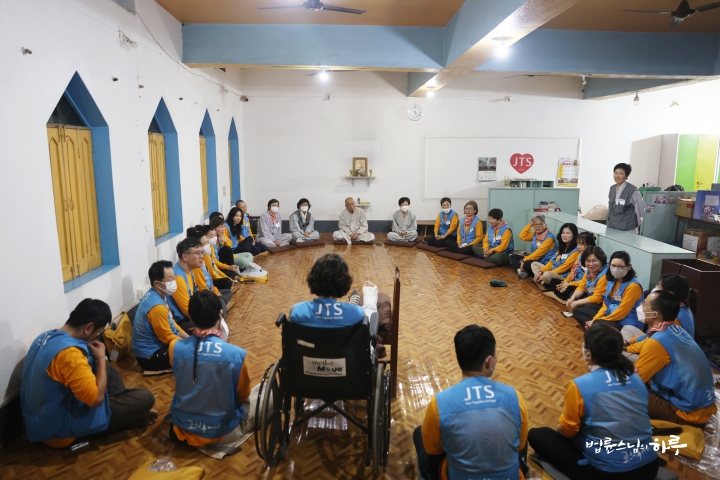
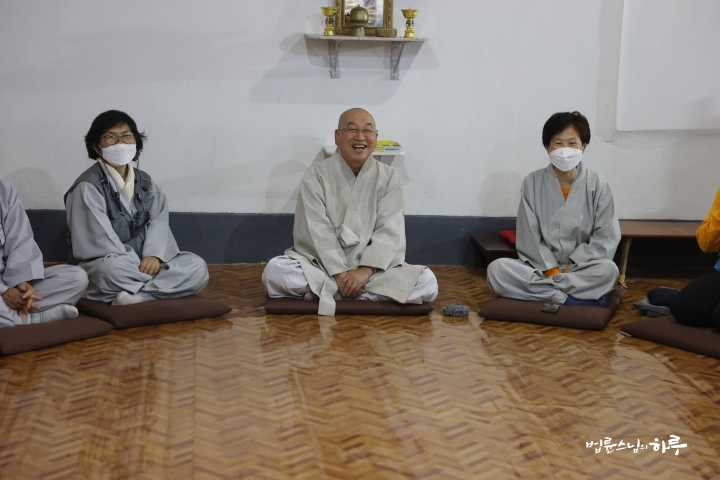
Sunim asked the members about their impressions and any inconveniences they had experienced during the pilgrimage so far. The members freely shared their thoughts and opinions.

Immediately after finishing the conversation with the members, from 6 PM, he held a meeting with the Dharma teachers leading the pilgrimage. They discussed situations that the Dharma teachers should be mindful of during the pilgrimage and aspects of the progress so far that needed to be reviewed.
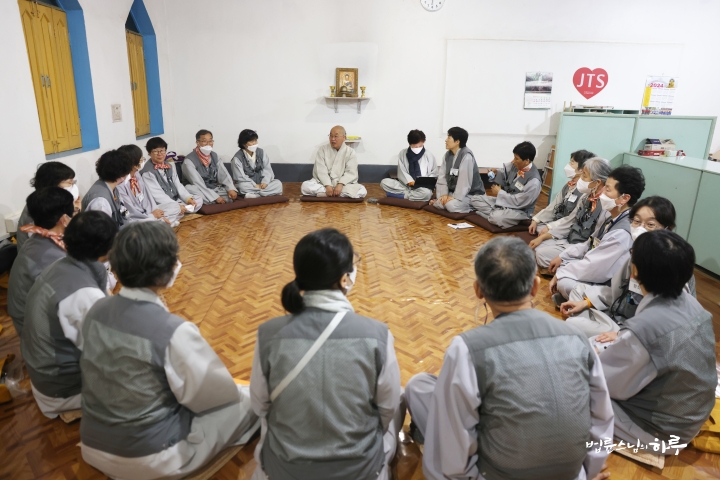
As the meeting concluded, Sunim made a suggestion to the person in charge of the evening program.
“Tonight’s program is about introducing JTS projects and having a Q&A session, right? In that case, it would be better if I don’t attend. When I’m there, people tend to direct all their questions to me. It would be better for the Dharma teachers who have worked in India to answer the audience’s questions.”“Yes, I understand.”
After reviewing the next day’s schedule, Sunim proofread manuscripts in his accommodation and concluded the day.
Tomorrow, he plans to broadcast the morning Dharma assembly and then attend the 31st anniversary celebration of Sujata Academy’s founding.