What Drives Sunim’s Continuous Engagement?
Dec 01, 2024 - Third Day of INEB International Conference, Venerable Pomnyun Sunim's Keynote Speech
Hello. Today is the third day of the INEB (International Network of Engaged Buddhists) International Conference in Chennai, India. After concluding the conference with Sunim’s keynote speech, he moved to Bangladesh to deliver 6.36 million bars of soap to the Rohingya refugee camp.
After completing his morning practice and meditation, Sunim had breakfast at his accommodation at 7:40 AM and headed to the St. Thomas International Pilgrimage Centre in Chennai, the venue for the INEB International Conference, to deliver the keynote speech at the public symposium.
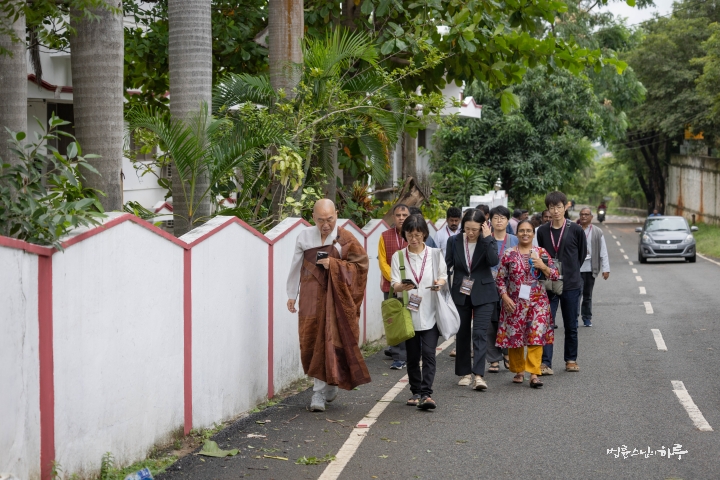
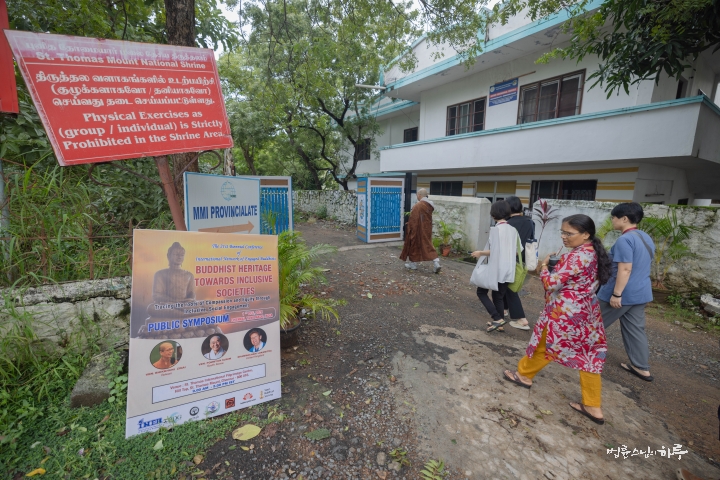
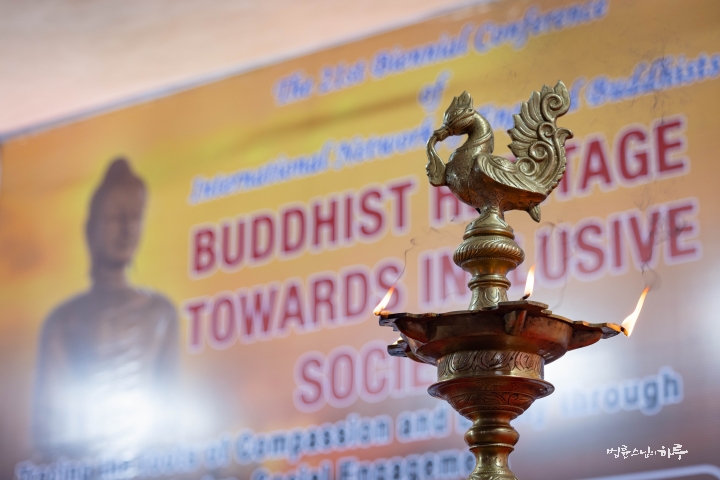
The public symposium began shortly after 9 AM. The opening ceremony was held amid the sound of flute music.
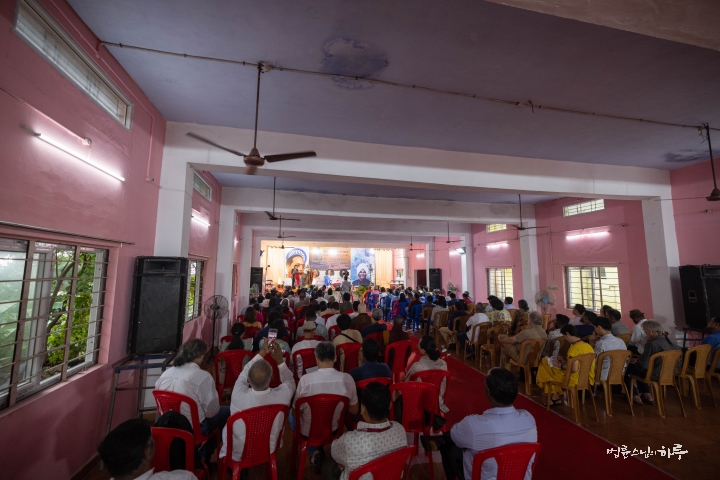
Venerable Pomnyun Sunim, an advisor to INEB, Harsha, the chairman of INEB, and Gautam, a board member of INEB India, came to the front of the stage and lit candles.
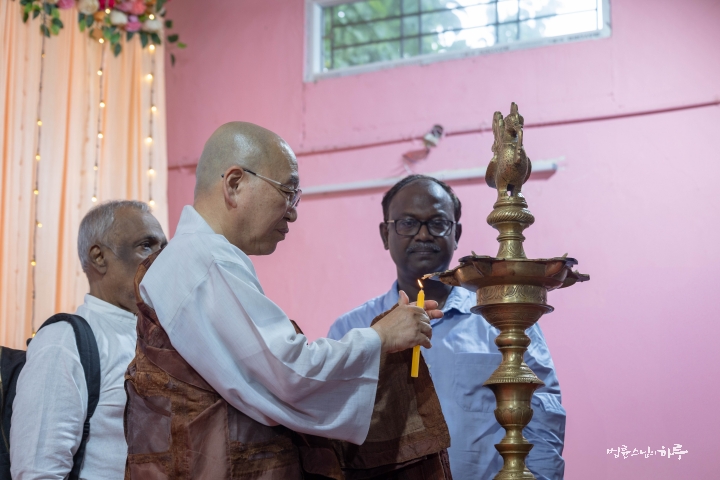
Next, Gautam, a board member of INEB India, gave a welcome speech. Given that the conference theme focuses on Buddhist heritage and inclusivity, Gautam’s ideas significantly influenced the event planning.
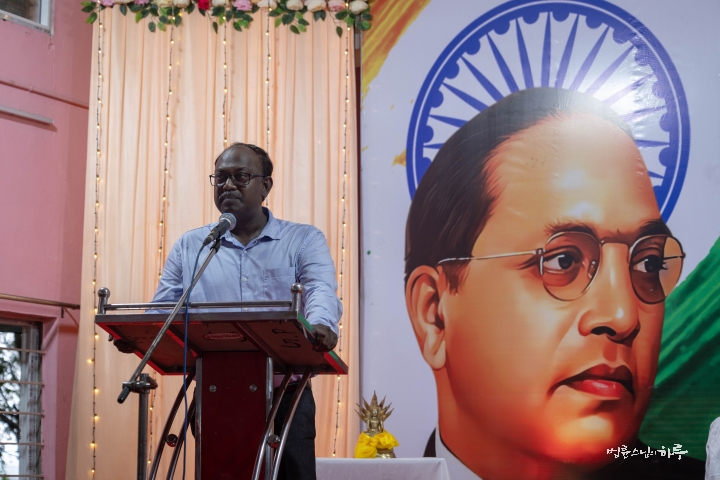
“The theme of this conference is Buddhist heritage and inclusivity. Buddhism shows the path to enlightenment and awakening through values that include all people. South India has continuously strived for the revival of Buddhism and inclusive values. This event has become a forum for comprehensive discussions encompassing archaeology, community, and climate issues.
I also express my deep gratitude to Venerable Pomnyun Sunim. His presence gives me great strength. ‘Abhaya-dana’ (fearlessness) in Buddhism is one of the greatest merits, and I sincerely thank you for giving us the courage to move forward.”
Next, Chairman Harsha gave a greeting on behalf of INEB.
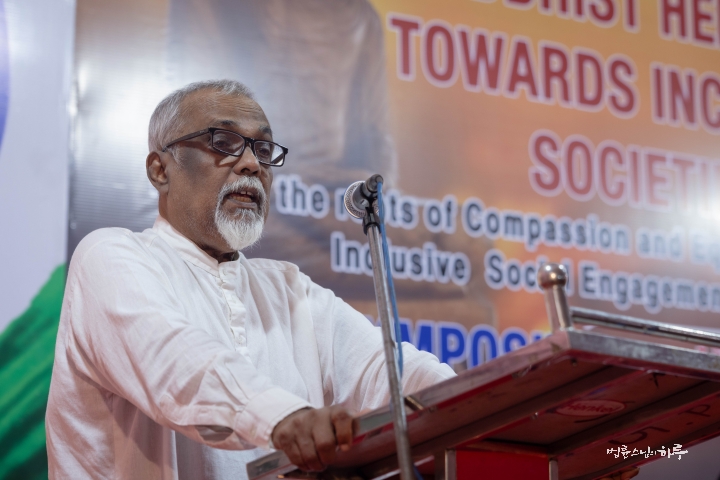
“Sri Lanka has been deeply connected with India religiously and culturally for over 2,500 years. An inclusive society respects differences in race, gender, class, and tradition, and maximizes the talents and potential of all members of society. I am dedicated to creating an inclusive society through peace and reconciliation. I felt hope seeing many young people actively participating in this conference.”
Then, on behalf of the INEB executive board, Chairman Harsha presented a Buddha statue to Gautam, representing the event organizers.
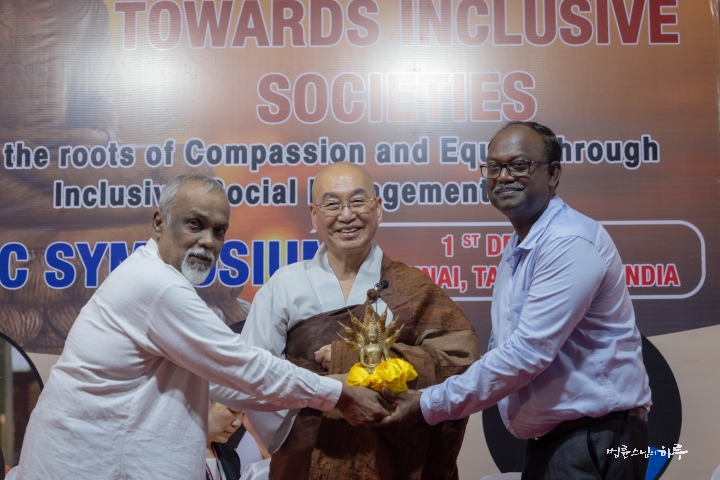
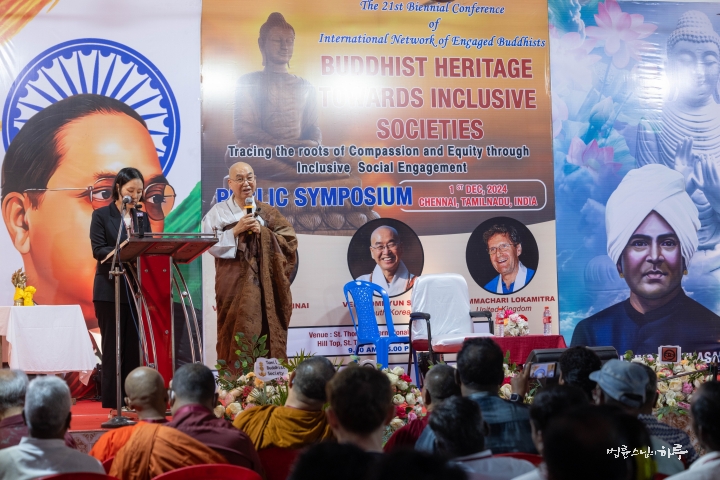
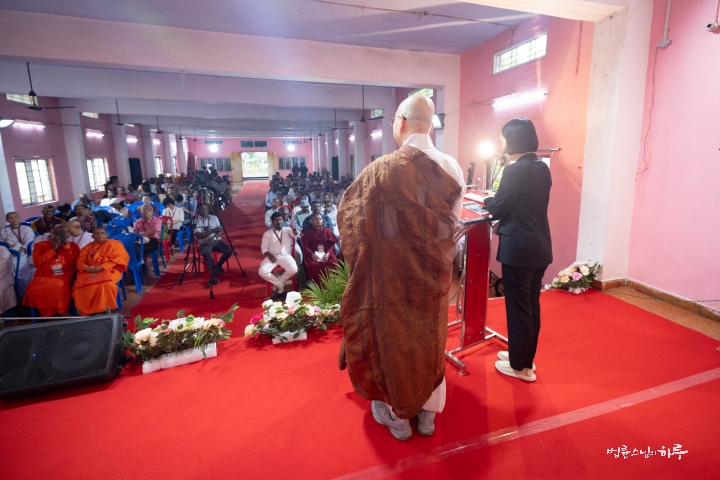
After the gift presentation, Sunim gave the keynote speech on the theme of the public symposium. The topic was “Tracing the Roots of Compassion and Equity through Inclusive Social Engagement”.
Originally, Venerable Zinai from Taiwan and Dr. Sulak Sivaraksa from Thailand were scheduled to attend, but they couldn’t due to flight cancellations caused by a cyclone. As a result, Sunim gave an hour-long keynote speech. First, Sunim greeted the participants.
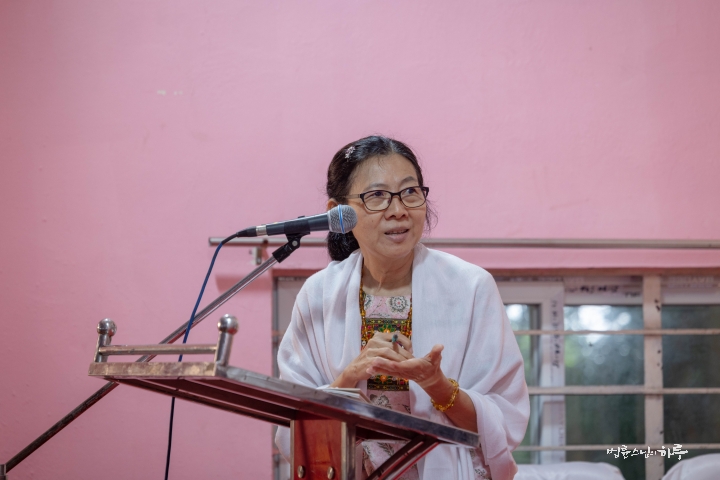
Then, Sunim began the main part of his speech. The lecture was conducted in a Q&A format, with Anchalee, an INEB executive committee member, asking questions and Sunim answering. First, Anchalee asked Sunim a question.
Why Is Engaged Buddhism Important in Modern Society?
“Venerable Pomnyun Sunim founded Jungto Society to apply Buddhist teachings to solve the sufferings of modern people. The members of Jungto Society are dedicated individuals who vow to free themselves from suffering and make the benefit and welfare of all humans the core of their activities. Jungto Society operates various programs using Buddhist teachings as a guide to address issues such as poverty, inequality, climate change, war and conflict, and personal and collective suffering. Jungto Society has more than 10,000 members active worldwide, and Venerable Pomnyun Sunim’s YouTube channel has over 2 million subscribers. His teachings have had a profound impact on modern society, and he was awarded the Niwano Peace Prize in 2020. I would like to ask Sunim: Is engaged Buddhism really important? How can we practice engaged Buddhism?”
“When we study Buddhism, there are three approaches. First, there is a religious approach where we say we believe in Buddhism. When we believe in the Buddha, the Buddha at that time is a very absolute and abstract being like a god. When we say we believe in the Buddha, there is no meaning of Buddha as a historical and social being. Second, there is a philosophical approach where we study Buddha Dharma. At this time, we mainly study Buddhist philosophy.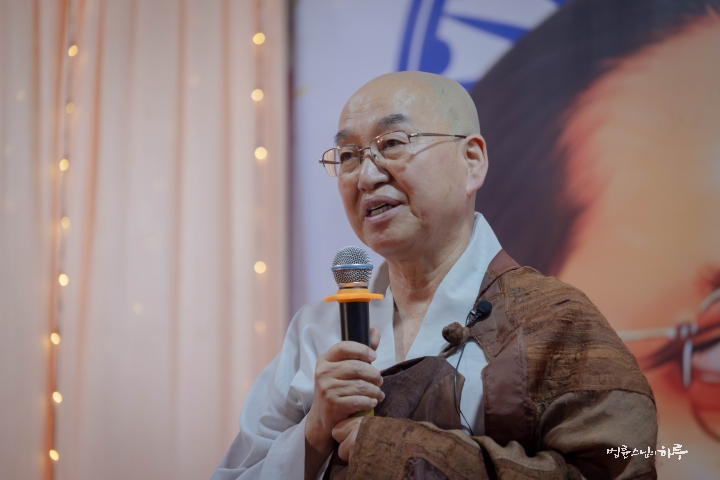
How to Restore the Social and Historic Nature of Buddhism
Let me give you an example. India was colonized by Britain. Many people fought to gain independence from British rule. So what kind of society does India become after gaining independence from Britain? From the perspective of the ruling class, it’s an independent society. However, from the perspective of the ruled class, even in the new India that has gained independence from Britain, there still exists an upper caste that rules over them, and they are still governed by them. From the perspective of the Dalit class, what difference does it make whether independence has been achieved or not? There is no difference at all. For them, true independence means not only independence from Britain but also liberation from the caste system. This was the reality of Indian society at that time facing such issues. While Mahatma Gandhi was great, this is precisely the difference in the awareness of issues between Mahatma Gandhi and Ambedkar.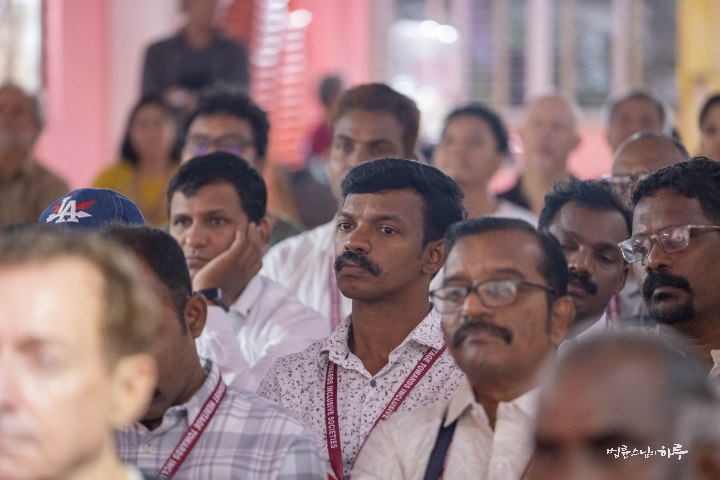
Why Buddhism Ceased to Engage in Social Practice
I believe the main reason why social practice does not emerge from Buddhists today is that they have not studied how Buddha lived for 45 years. Buddhists are only engaged in religious acts of believing in Buddha or academic research on Buddha’s teachings, which is why practical Buddhism does not emerge. I teach Jungto Society members that the most important thing is to understand how Buddha, as a human being, responded to various social issues during his 45 years of life. Let me give you an example. Buddha’s father was from the Shakya clan, and his mother was from the Koliya clan. The Rohini River flowed between the two countries. One year, during a severe drought, the two clans fought over the water from the Rohini River. What started as a conflict between residents escalated to the point where armies were about to go to war. This was an issue involving his own relatives that even a practitioner could not ignore, so Buddha went to the scene of the conflict. He asked them: “Which is more important, water or blood?” They replied, “How can you compare insignificant water to precious blood? Of course, blood is more valuable.” Buddha then said: “Then why are you about to shed precious blood like water for that insignificant water?” This is how Buddha concretely resolved conflicts. In the Korean Peninsula where I live, the same ethnic group is now on the brink of war between North and South. As disciples following Buddha’s teachings, our task must be to find ways to peacefully resolve the conflict between North and South Korea.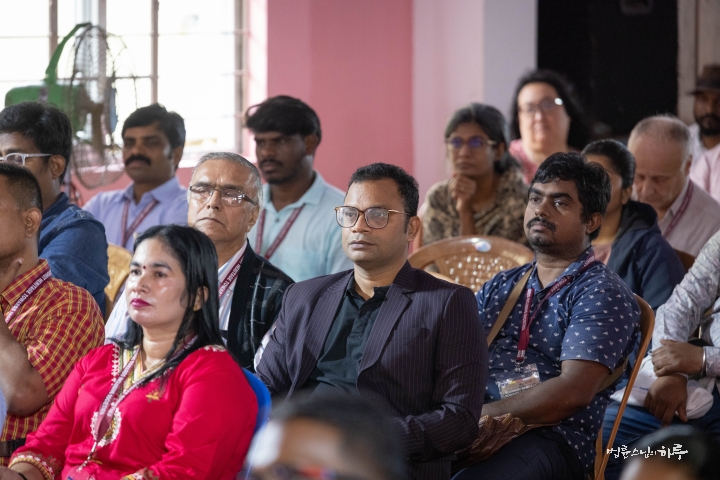
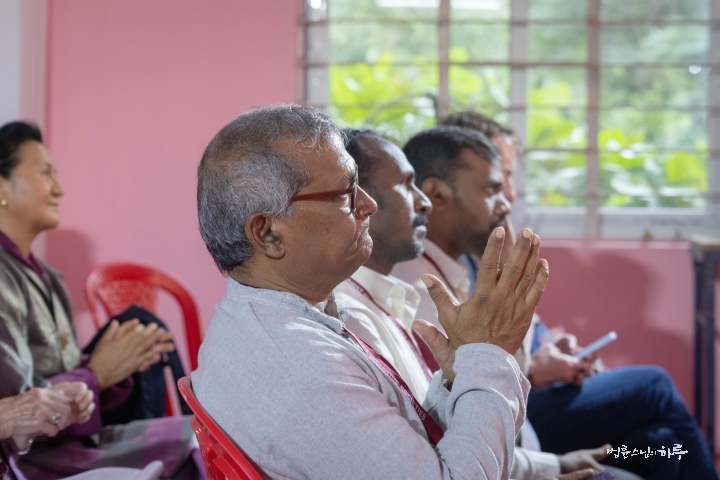
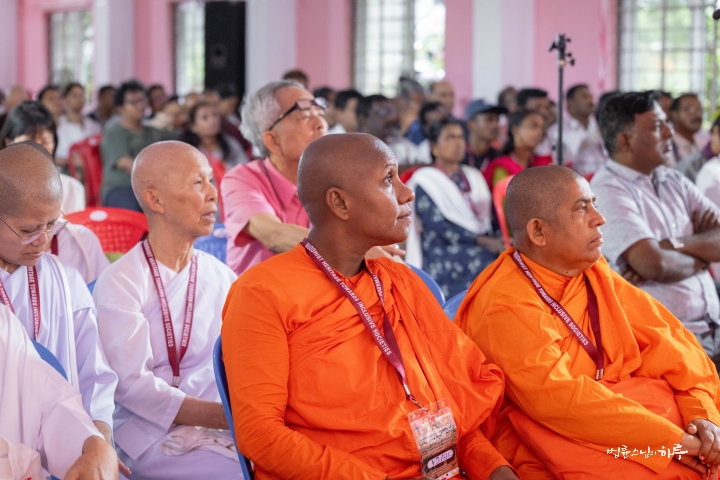
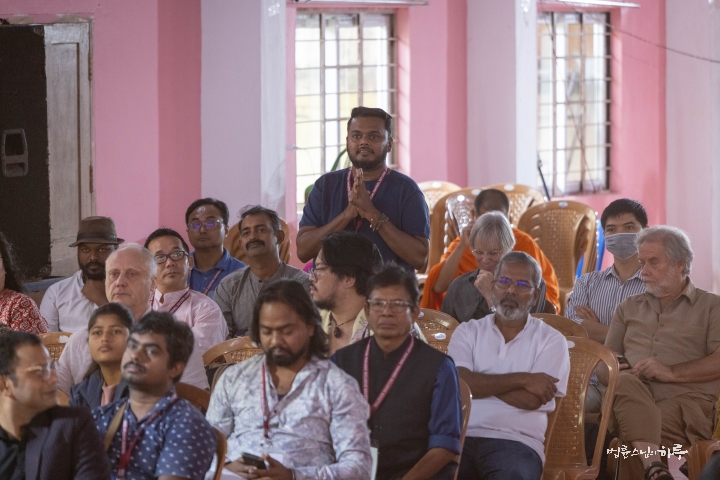
As Sunim finished his answer, the audiences gave a big round of applause
Then, Anchalee asked the second question.
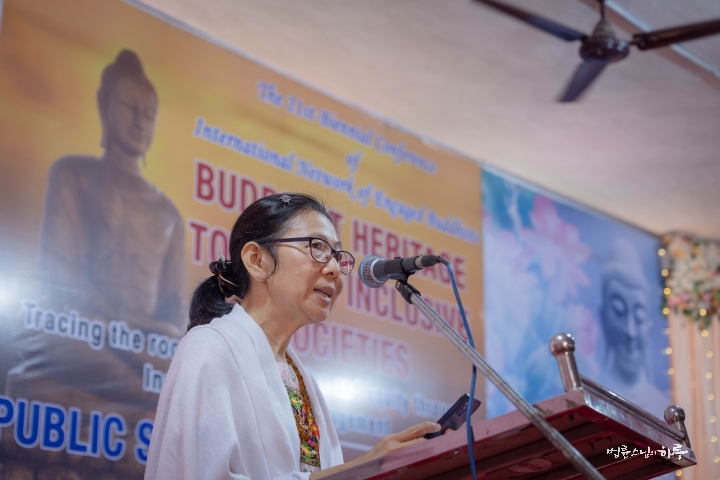
What Drives Sunim’s Continuous Engagement?
“Sunim, you have been continuously dedicating yourself to others for many years. As much as your efforts have been respected, they must have also been criticized many times. In this situation, what drives Sunim’s continuous engagement? How do you maintain hope even when it feels like the world is getting darker?”
“I grew up in the countryside. So, I farmed when I was young. Also, because we didn’t have a car, I walked long distances. When I was young, food was very scarce. When my parents bought me shoes for holidays, I would walk barefoot to school to save them, only putting them on at the school entrance. Thanks to these experiences, I don’t feel any difficulties when I travel around the world.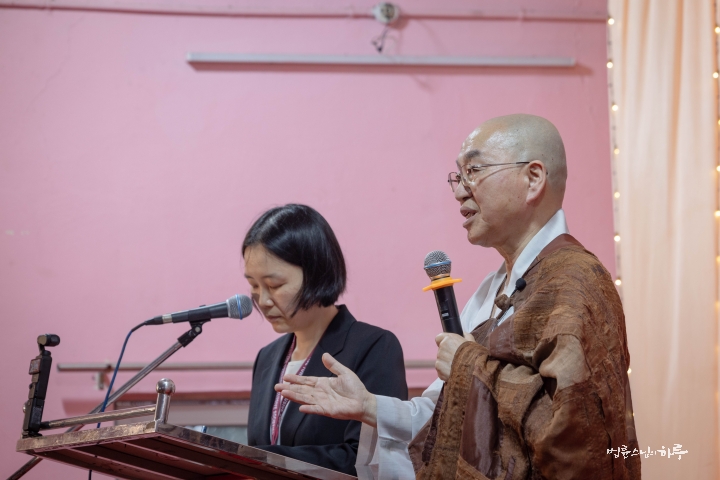
How Should We View Those Who Criticize the Outcry of Marginalized People?
“When suffering and marginalized communities speak up about their issues, for example, when transgender individuals or oppressed women raise their voices, people often criticize them, saying ‘Aren’t they just seeking attention?’ or ‘They’re making the existing order uncomfortable.’ How should we view such criticism? How can we understand those who criticize and engage in compassionate dialogue with them?”
“When they criticize like that, you can simply respond, ‘Yes, that’s right.’ If the existing order is flawed, shouldn’t we improve it? To improve the existing order, we need to resist it. What’s wrong with that? Don’t minorities need to shout for people to recognize their existence? They’re raising their voices to be acknowledged. When you injure your leg, you feel pain, right? You need to feel that pain to realize your leg is injured so you can treat it.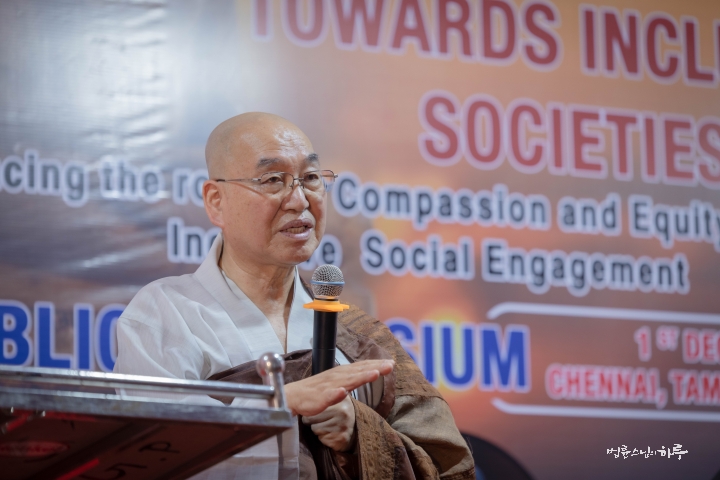
The questions continued. The last questioner sought advice on what role grassroots citizens can play in preventing war and maintaining peace, given that these issues are largely controlled by the powerful in major nations.
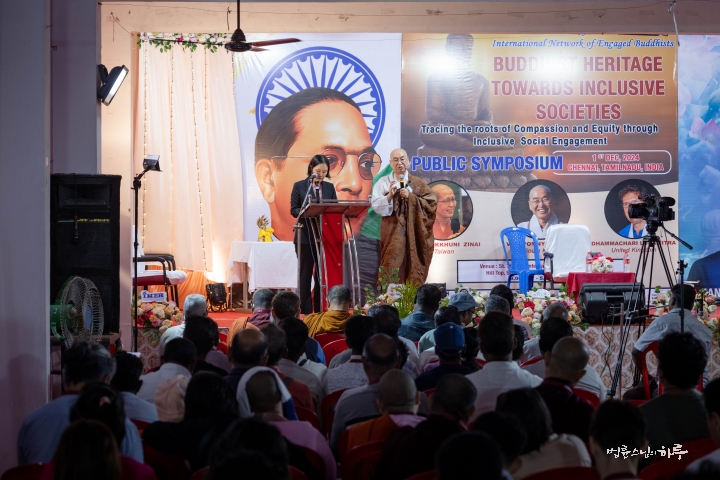
What Can We Do to Prevent War and Keep the Peace?
“Numerous grassroots peace activists worldwide are working passionately. However, peace and war are primarily decided by the powerful in major nations. What role can grassroots NGOs or peace activists play, and what actual contributions can they make? Should we be content with simply raising our voices? Or is there more we can do?”
“Peace issues arise from relationships between nations, making it very difficult for civilians to play a role. That’s why the activities I’m conducting through the Peace Foundation I established focus on three main areas.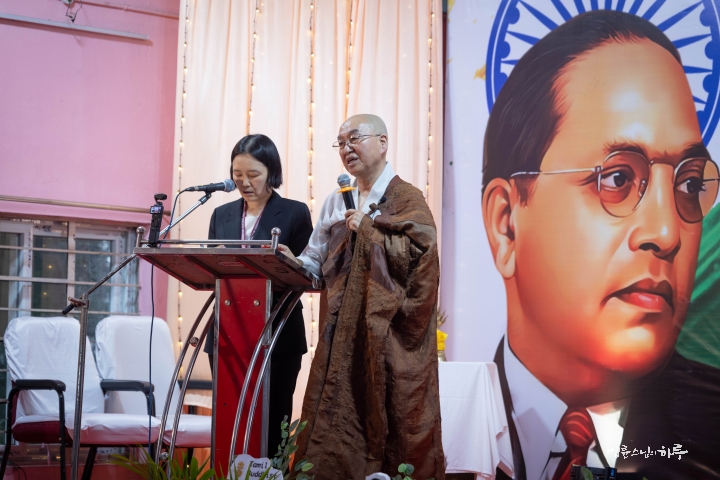
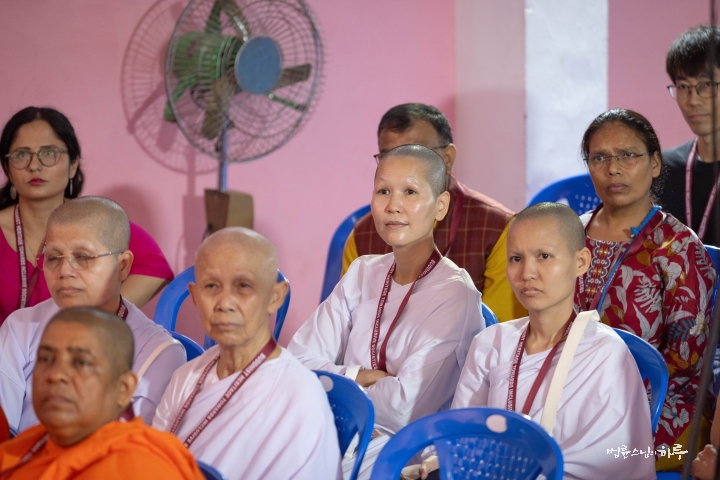
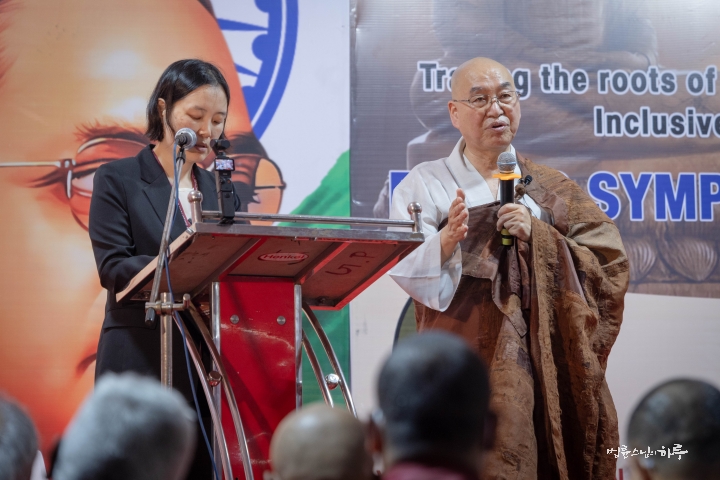
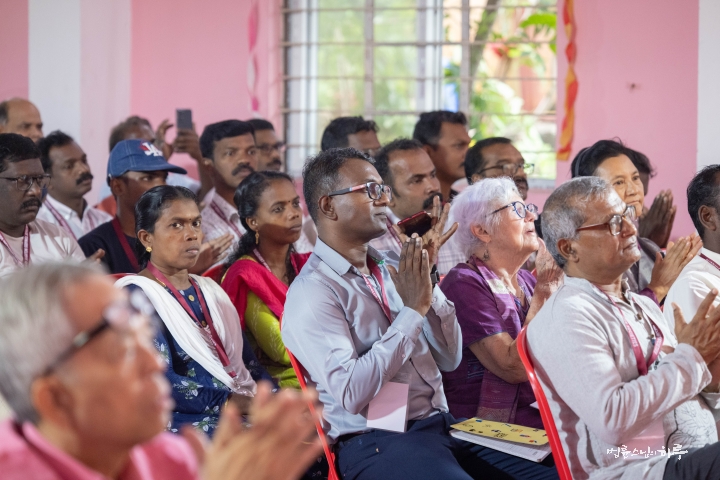
Everyone applauded Sunim’s wise response.
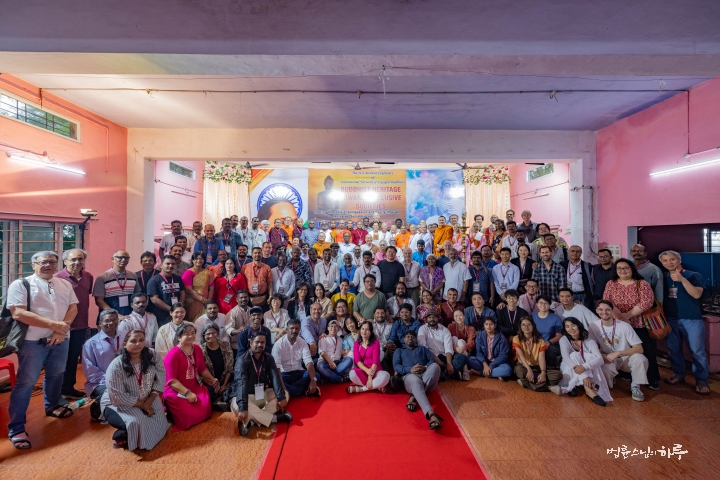
After the public symposium, all participants gathered for a group photo.
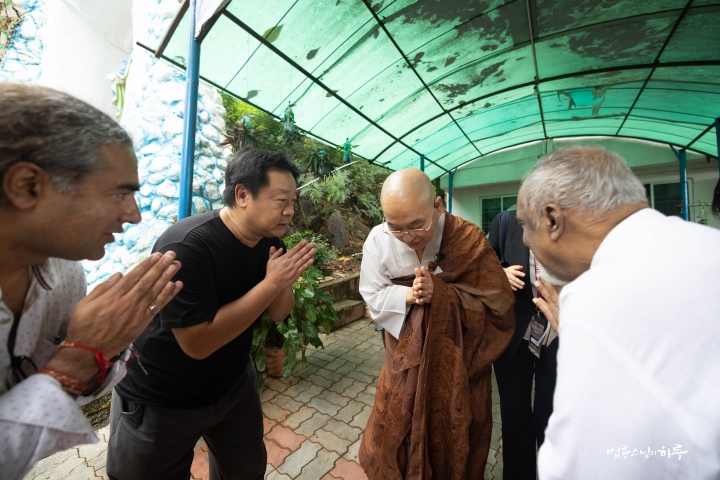
Sunim exchanged farewells with the participants. Gautam and Harsha requested to meet with Sunim and Indian political leaders in January next year. Sunim agreed to consider it positively and left the venue.
At 11 o’clock, Sunim departed for Chennai Airport. After a 20-minute drive, Sunim arrived at the airport, checked in our luggage, and completed departure procedures.
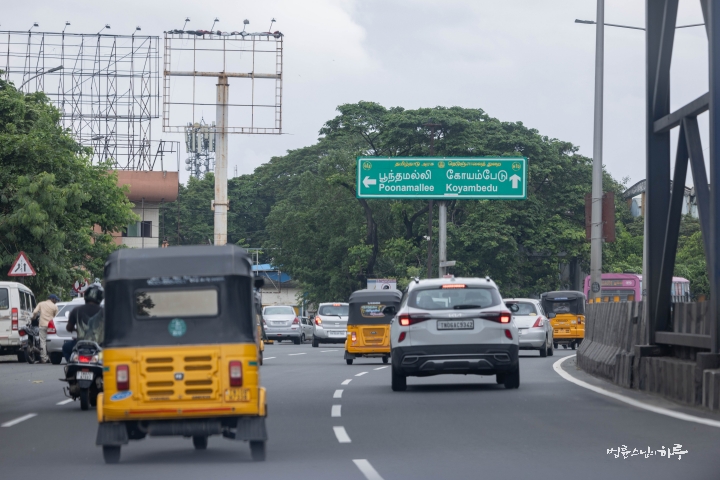
After completing departure procedures, Sunim had lunch at the airport and departed from Chennai Airport at 2:50 PM. Sunim was worried that the cyclone might delay our departure significantly, but fortunately, it was only delayed by an hour, and Sunim took off safely.
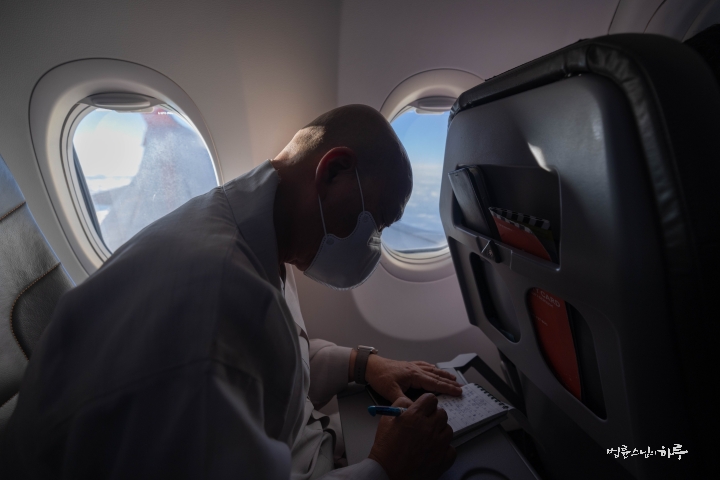
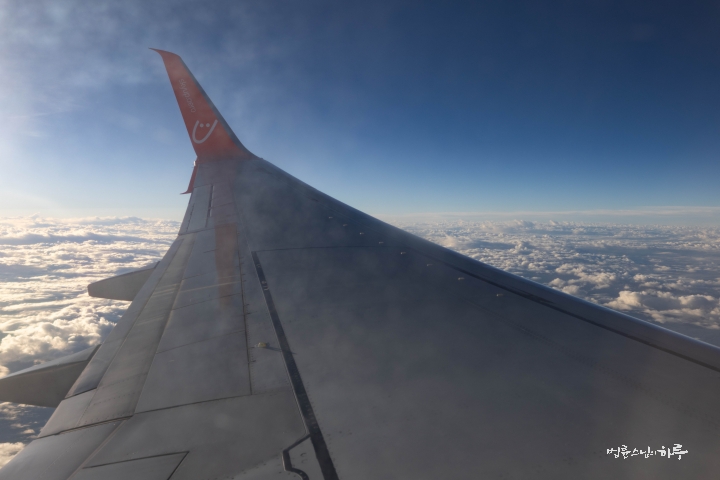
The plane traveled for 2 hours and 40 minutes and arrived at Dhaka Airport in Bangladesh at 6 PM local time.
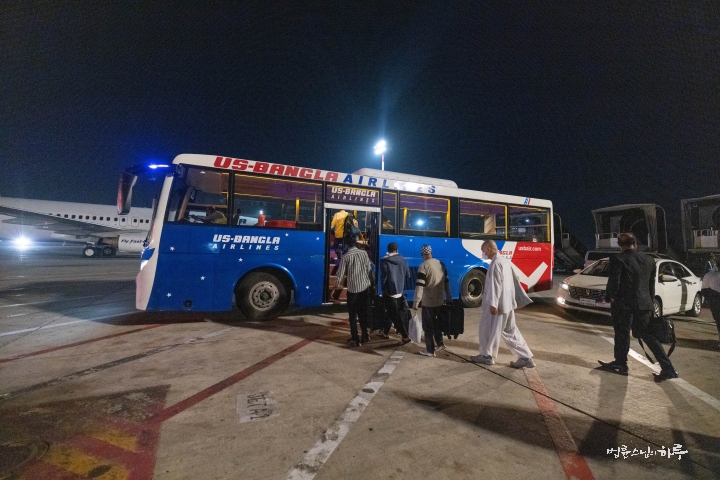
After completing immigration procedures and collecting our luggage, we exited the airport where Mr. Yu Young-hoon from the UNHCR Dhaka office, Ms. Kim Saeryo, UNHCR Representative in Korea, and Ms. Yu Hye-jung, Head of Private Partnership Team, warmly welcomed Sunim.
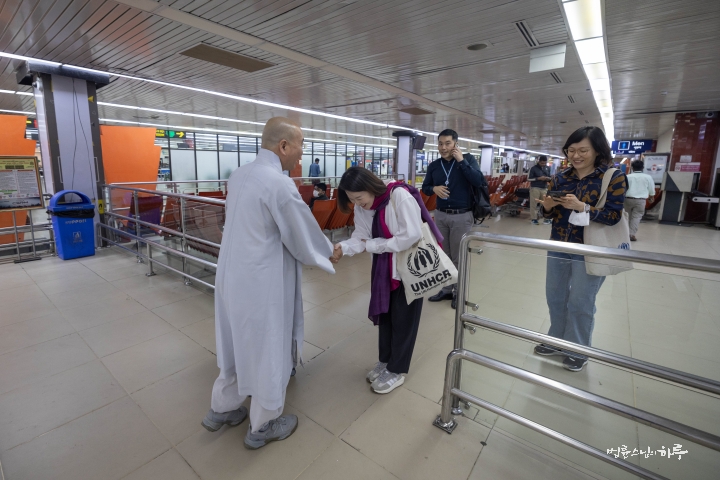
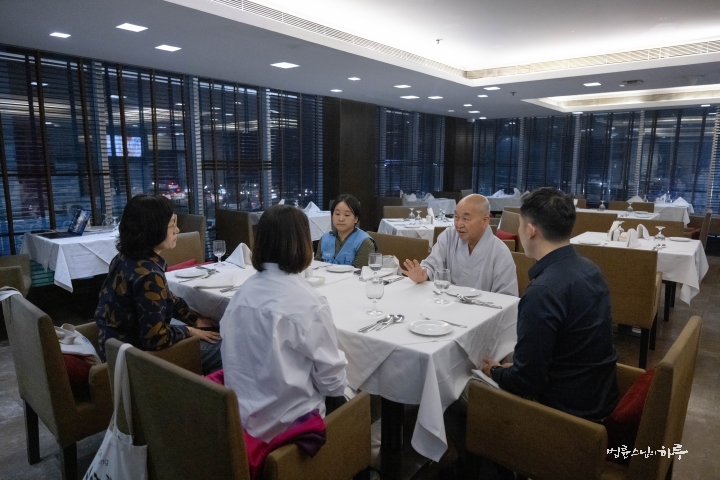
Sunim immediately moved to a restaurant and had dinner with UNHCR staff while engaging in conversation. There was much discussion about global cooperation for solving refugee issues, refugee policies in Korea, and ways JTS and UNHCR could collaborate.
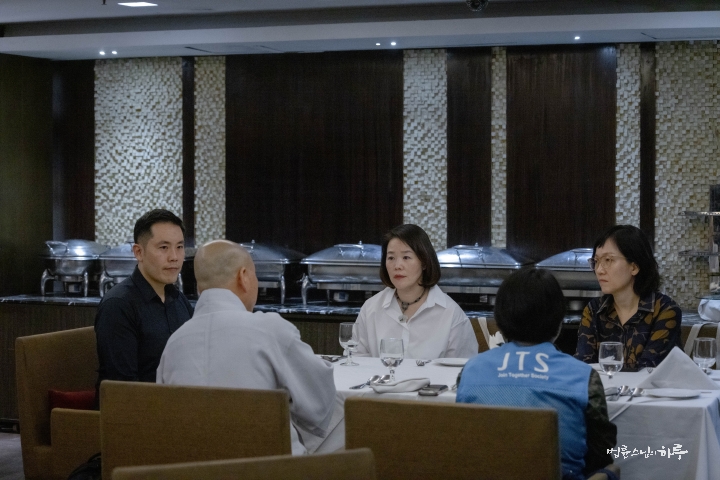
The UNHCR staff highly appreciated JTS’s frugal and efficient approach to relief work. Sunim explained JTS’s support principles.
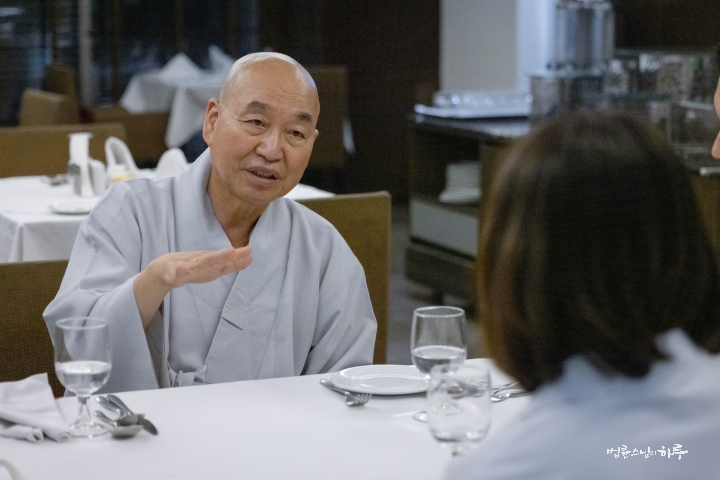
JTS’s Principles for Relief Activities
“When JTS purchases items in bulk, we put in a lot of effort to buy them at prices much lower than market rates. For example, when we supported gas stoves for the Rohingya refugee camp, we negotiated to purchase the first 100,000 units from a factory in China at less than half the market price. For the second 100,000 units, we were required to use products made in Bangladesh, so we searched the Dhaka area and negotiated to purchase them at a low price. Even when buying soap this time, JTS representative Park Gena made great efforts to purchase good products at affordable prices. Next week, we’re also completing 10 schools in Mindanao, Philippines. We signed an MOU (Memorandum of Understanding) with four parties: the local government, education office, residents, and JTS. The residents provide labor, the local government provides technicians, the education office is responsible for dispatching teachers and operating the school, and JTS provides all necessary materials and school supplies. If we calculate the ratio based on financial burden, it’s about 70:30 between JTS and local organizations. Labor costs are quite low locally. We always ensure local residents participate in this way, rather than JTS providing unilateral support. In Bhutan, we’re also doing village development. Recently, we connected a 7km water pipe from a mountain spring to a village. If the villagers agree to provide all the labor, JTS provides the necessary materials. This requires prior meetings with residents to discuss and agree on this approach. During these meetings, I ask the residents: ‘If you want immediate improvement, you need to do the construction yourselves. If you want the government to do it, you can wait 5 or 10 years. What do you want to do?’ When asked like this, most people respond that they will take care of their own village’s work. Of course, the school we built in Syria was too large for residents to build. In that case, a local organization called White Helmets had heavy equipment, so they took charge of demolishing collapsed buildings and constructing new ones. This allowed us to save a lot on construction costs.”The UNHCR staff showed great interest in the sustainable development Sunim is doing. Sunim explained in detail the methods, support principles, and evaluation criteria for sustainable development that JTS is implementing in Bhutan.
The Rohingya Refugee Issue Is a Challenge for All of Us
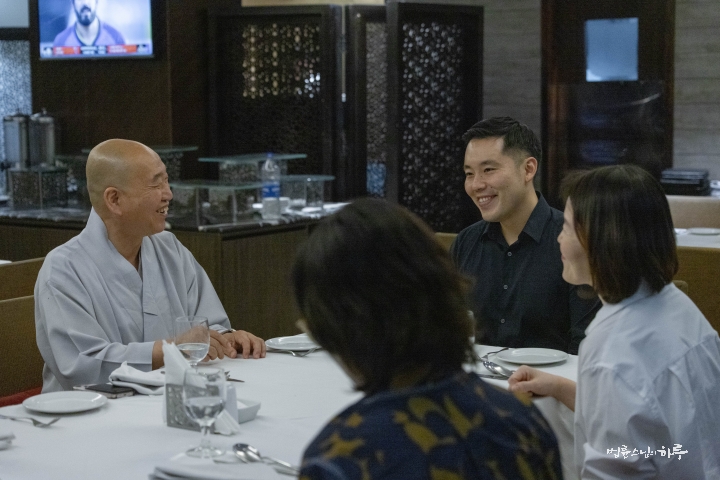
They then discussed the famine caused by the civil war in Myanmar, ways to solve the Rohingya refugee problem, and the issue of children’s education in Rohingya refugee camps. The UNHCR Representative in Korea suggested that it would be beneficial if Sunim participated in the Global Refugee Forum, where governments and private organizations come together to address the Rohingya refugee issue, and shared important messages.
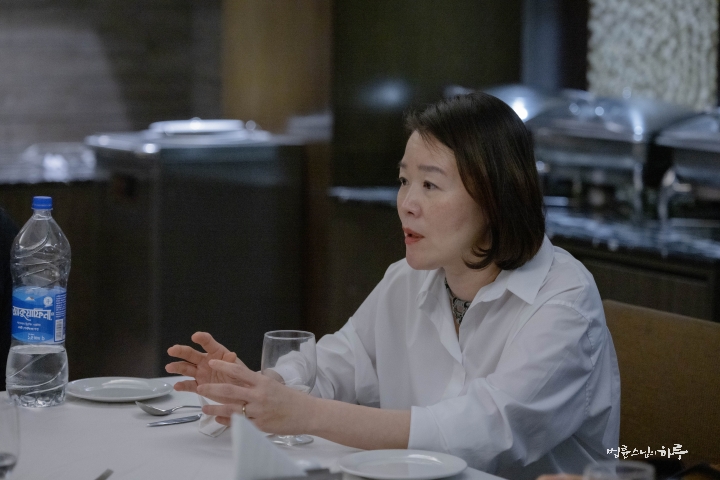
“At UNHCR, we hold a Global Refugee Forum once every four years for countries and various stakeholders to share responsibilities for refugees. If Venerable Pomnyun Sunim could voice his opinions at such a forum, it could have a significant impact on resolving the Rohingya refugee issue.”
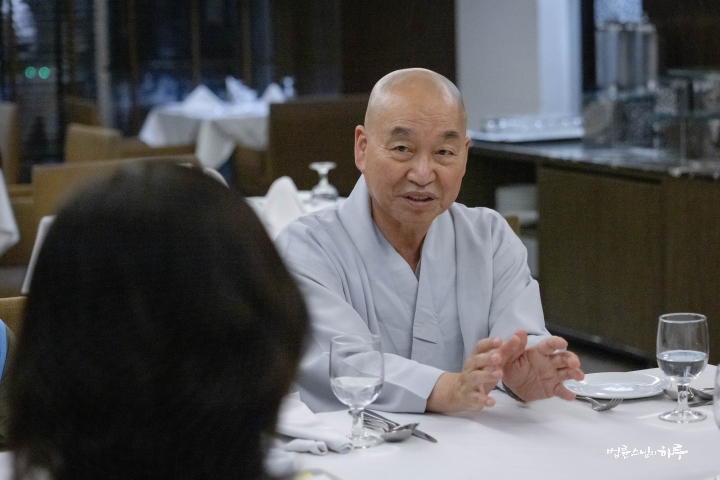
Sunim shared his thoughts on how to solve the Rohingya refugee problem.
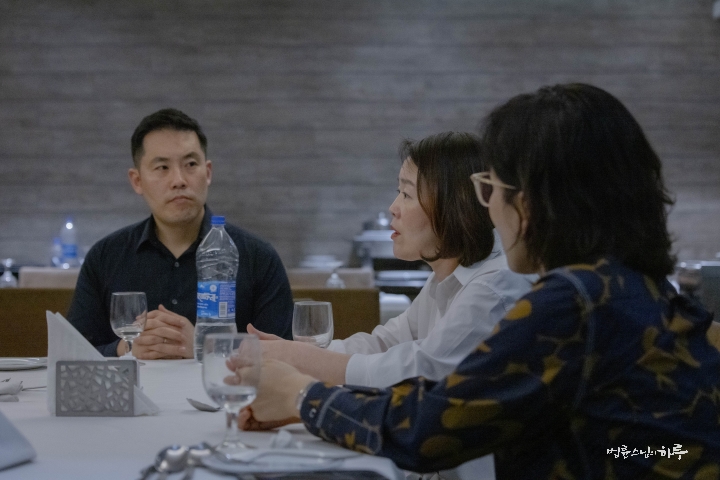
“You’re right, Sunim. As Bangladesh’s economy grows, the public’s antipathy towards refugees will decrease. However, the residents of Cox’s Bazar area are still very poor. That’s why there’s still strong resentment towards the Rohingya refugees.”
Sunim introduced various issues JTS is supporting, such as literacy eradication for Syrian refugees and flood relief in Pakistan, and exchanged opinions on various matters. At the end of the conversation, the UNHCR Representative in Korea asked Sunim to take an interest in improving Korean people’s awareness of refugees.
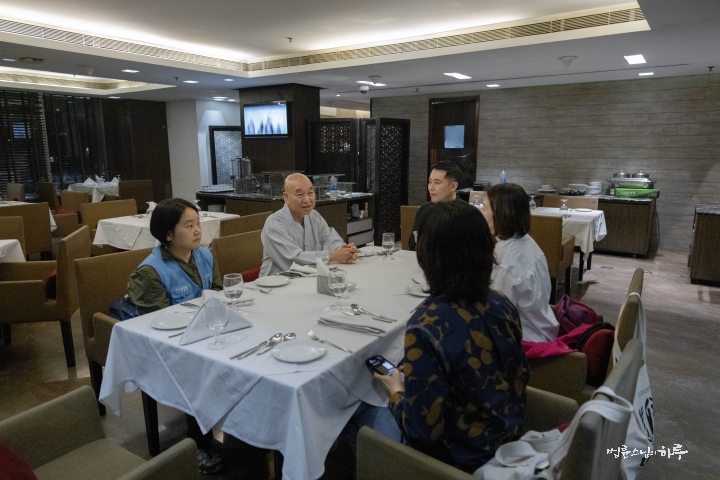
“Sunim, you have so much experience meeting and interacting with refugees. It would be great if you could share many stories about refugees with the Korean people. I believe that ripple effect will bring about significant changes later.”
“Yes, I will do that.”Two hours passed quickly in conversation. After 9 PM, Sunim concluded the discussion and moved to the accommodation.
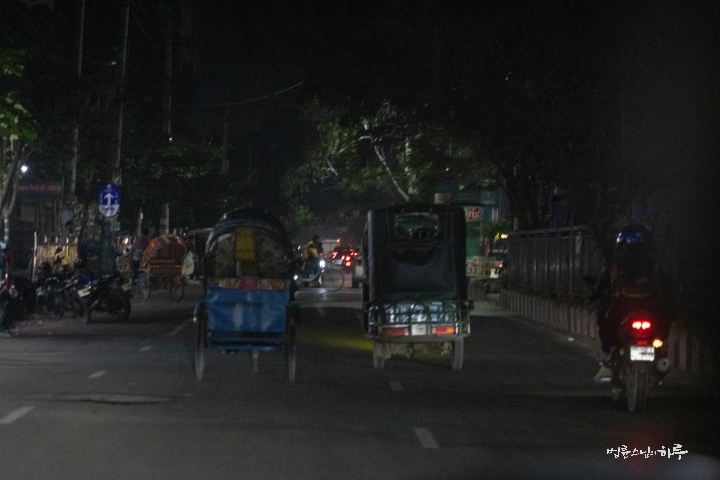
At 11 PM, JTS representative Park Gena and the secretary-general, who had departed from Korea to attend tomorrow’s soap delivery ceremony at the Rohingya refugee camp, arrived at the accommodation. After greeting each other, Sunim concluded the day’s schedule.
Tomorrow, we plan to depart from Dhaka Airport, arrive at Cox’s Bazar Airport, and then move to the Rohingya refugee camp for the ceremony to deliver 6.36 million bars of soap.