The More I Try to Understand Others’ Feelings, The Angrier I Get
Aug 11, 2024 - English Dharma Q&A, Jungto Sutra Course Graduation Ceremony, Balsim Practitioner Ordination Ceremony
The morning dawned at the Seoul Jungto Center. After completing his morning practice and meditation, Sunim began the day with a live English Dharma Q&A broadcast at 8 AM for international audiences. About 260 foreigners from around the world connected to the live stream as Sunim gave his opening remarks.
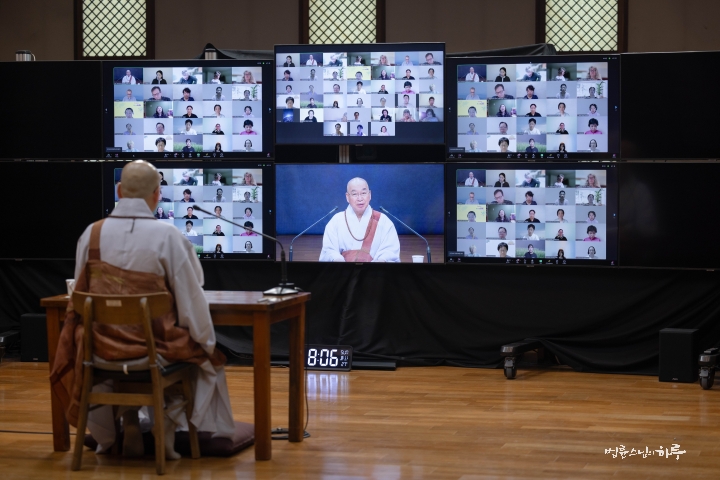
Sunim began the dialogue by sharing news about the flood damage along the Yalu River in North Korea and the Israeli bombing of Gaza.
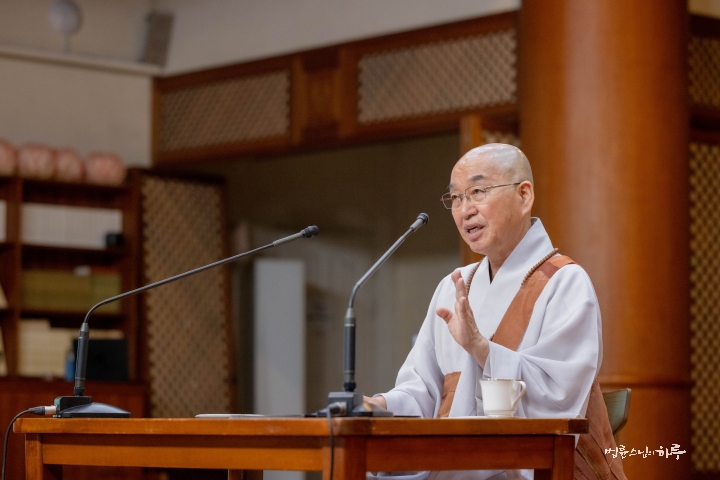
When humans become consumed by the belief that only they are right and become angry, they seem to commit inhumane acts without even realizing what they’ve done wrong. That’s why the emotion of revenge is extremely dangerous. It’s easy for revenge to become excessive. When hit once and angered, the desire for revenge makes one want to hit back ten or twenty times. The need to regulate this human desire for revenge was already addressed 3,800 years ago in the Code of Hammurabi of the ancient Babylonian kingdom with the phrase ‘an eye for an eye, a tooth for a tooth.’ It states that if someone takes out your eye, you should only take out their eye in return, not kill them, and if someone knocks out your tooth, you should only knock out their tooth, not kill them. However, we often misunderstand this as a call for thorough revenge. The intent of this law was to specify that revenge should be limited to the extent of the harm received, not exceed it. Currently, Israel has suffered great losses from Hamas attacks and kidnappings, but out of a desire for revenge, they are causing ten or twenty times more casualties. This can be seen as violating the rules that humanity created 3,800 years ago to prevent excessive revenge.”
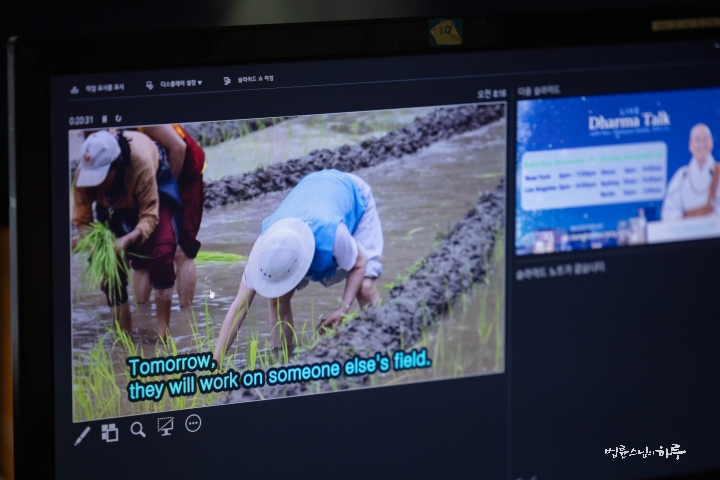
Next, Sunim shared stories from his visit to 10 Southeast Asian countries over the past month. He particularly introduced the purpose and progress of starting a sustainable development project in Bhutan, and showed a video of it.
After the video, the Dharma Q&A began. Anyone with questions could press the raise hand button and have a conversation with Sunim. Over the course of an hour and a half, three people spoke with Sunim. One of them sought Sunim’s advice on how to practice mindfulness of emotions, saying that sometimes the more they try to understand others’ feelings, the more anger and resentment arise.
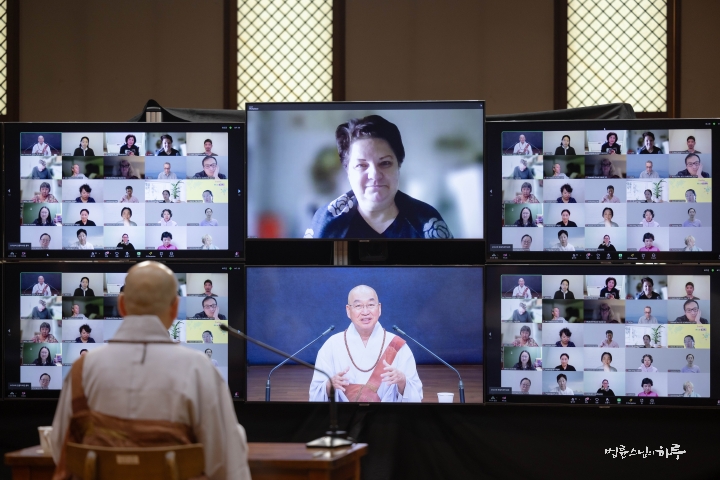
The More I Try to Understand Others’ Feelings, The Angrier I Get
“One thing that I haven’t fully grasped is the teaching that my hatred or anger towards someone will dissipate when I fully understand them. Conceptually, I understand that people are mostly a product of their environment, that they’re just living their lives the way they know how. I try to understand their feelings as well. But sometimes, that only makes me more annoyed, because I feel like I know what they’re thinking or feeling. As time goes by, I feel like I’ve been feeling less and less negative emotions, but I don’t think it has anything to do with understanding the other person. In my current state, in order to actually get my mind to let go of these negative feelings toward someone, I have to reach more fundamentally. I have to go into the realm of faith. I have to believe that this is the right way. I have to believe in something that I don’t know is real. Sometimes, not always, but sometimes in this process I find myself even reaching into things that I consider to be mystical. And I really hate having to believe in something. I remember when I took the Jungto Dhama School in 2019. You taught that Buddhism is mostly practice, but it’s still about 10% faith. Is that what you meant? Can an ordinary person like me fully accept the Buddha’s teachings without faith? Is there something that I’m doing wrong today?”
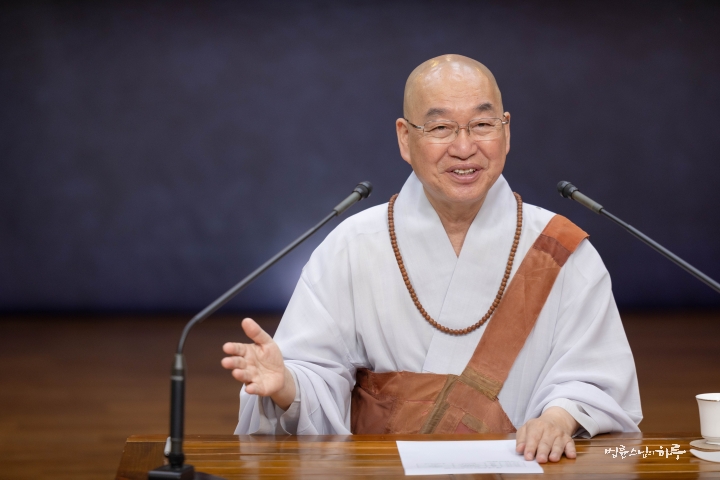
For example, if you set a destination on a navigation system and don’t follow it exactly, even if you have other plans to make stops along the way, the navigation will keep saying ‘Turn back’ at every turn. Similarly, we are trapped in the belief that our thoughts are right.
So when we see a phenomenon or hear something that doesn’t align with our thoughts, we unconsciously react negatively. To prevent these negative reactions from escalating, it’s crucial to first recognize the signs of anger or irritation, such as slightly rapid breathing or feeling hot. When you sense this, you can think, ‘Oh, my karma is reacting negatively!’ and even smile a bit. Noticing these subtle signs is called ‘being awake’ or ‘being aware.’ Maintaining this awareness allows you to control emotions before they manifest externally.
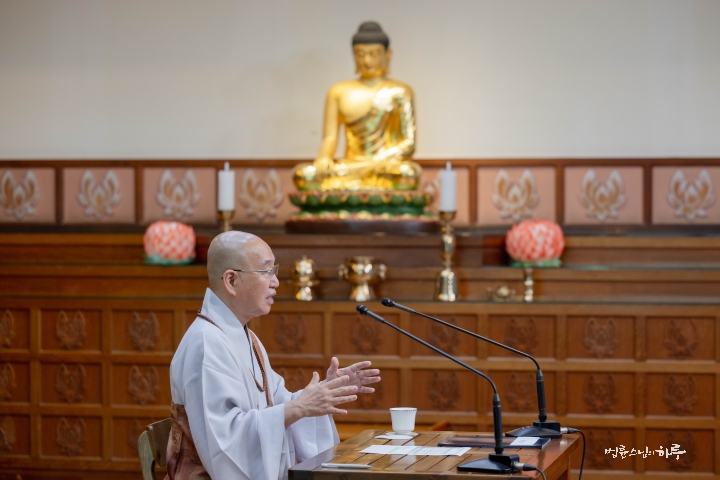
Of course, sometimes change can occur due to a significant shock. For example, if you get extremely angry at someone for their mistake, only to find out you were wrong, this experience stimulates your unconscious world, making you more careful next time without realizing it. Dramatic changes can also occur from major experiences like stubbornness leading to the death of many people or family members, or nearly dying yourself. Without such experiences, consistent practice of awareness is necessary.”
“Thank you, Sunim. As you said, my experience with Jungto over the past few years has helped me to be more mindful of my own emotions, and that’s why I’m getting less and less negative emotions in my daily life. However, there are times when I get these frustrations, irritations, and these negative emotions, and I notice them and I don’t really want to do anything about it. And I go back to my own reasoning and on a fundamental level, I have to believe that this is the right way to go. If I see the world as it really is, if I really get the ultimate enlightenment and see everything as it really is, then I will actually know that there is nothing to be angry about. And I feel like that is a leap of faith for me. Maybe it’s just taking time, maybe I’m just being greedy in my practice, but as I stand right now I’m questioning the role of faith in 2024 like my own experience that I had during meditation when I went on a retreat program at Jungto.
I guess I just have a lot of questions. I always doubt a lot of things in life and I find it kind of difficult to commit because I doubt it too. I doubt if this is the right way. I understand that it’s just going to take time for me and I probably just need to stick with it. That’s most of the answer I’m getting here.”
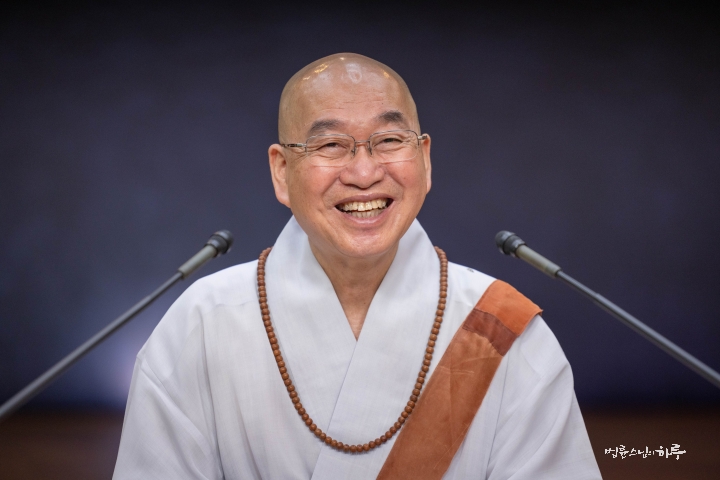
If you become aware but emotions are still expressed, it means your awareness came too late. If you became aware after getting irritated, you should recognize ‘I missed being aware again’ and aim to be aware next time, rather than regretting it. If anger continues to rise even after you’ve become aware of it suddenly rising, it can be considered that you became aware too late. This isn’t a mistake, just slightly late awareness. If you focus your attention a bit more and become aware when it arises very subtly, it’s meant to just disappear. When we see, hear, or experience something and become aware of a very subtle emotional reaction, it mostly disappears. However, when you’ve already emotionally transitioned, the force of anger rising is stronger than awareness, no matter how aware you are. At these times, you should maintain awareness rather than try to endure. You need to be aware, be aware, and be aware again. You need to keep being aware that ’emotions are rising!’ Of course, if you become aware too late and emotions are about to come out, enduring as a temporary measure may be necessary for a moment. If emotions have already come out without you realizing it, you should become aware even after they’ve been expressed. At that time, you should become aware ‘Ah, I missed it.’
There’s nothing to do well or poorly in awareness, nothing to regret. Just ‘I missed it’, ‘My awareness was late’, ‘I became aware’ – this way, you won’t get stressed even if you miss being aware, and you won’t become arrogant even if you are aware. That’s why we say ‘just be aware.’ Enduring, regretting, being disappointed in yourself – these all arise from desire.”“Thank you. I appreciate your teachings. And I think I picked the Crux of the message, which is that I just need to work a little bit more.”
As the conversation continued, it was past 9:30 AM. After hearing feedback from those who asked questions, the live broadcast concluded with plans for the next session.
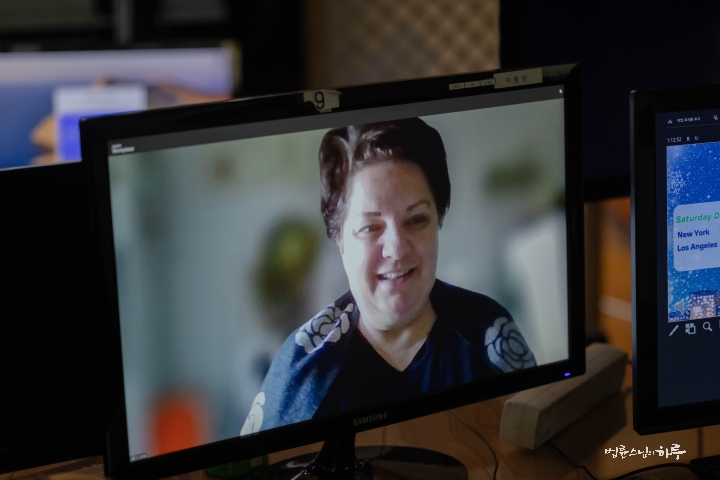
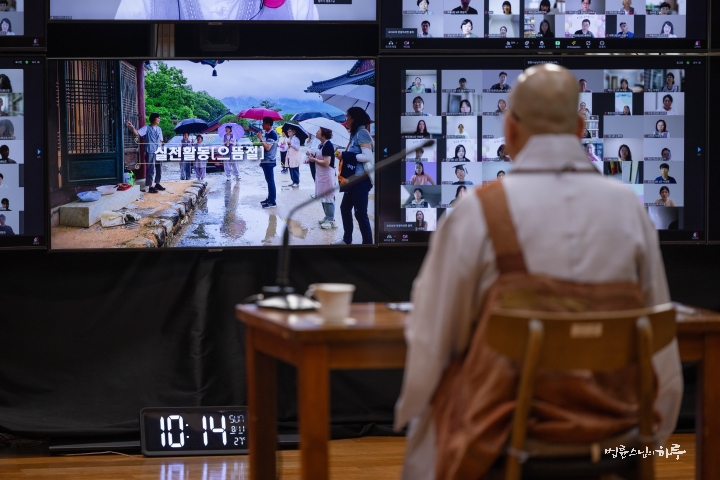
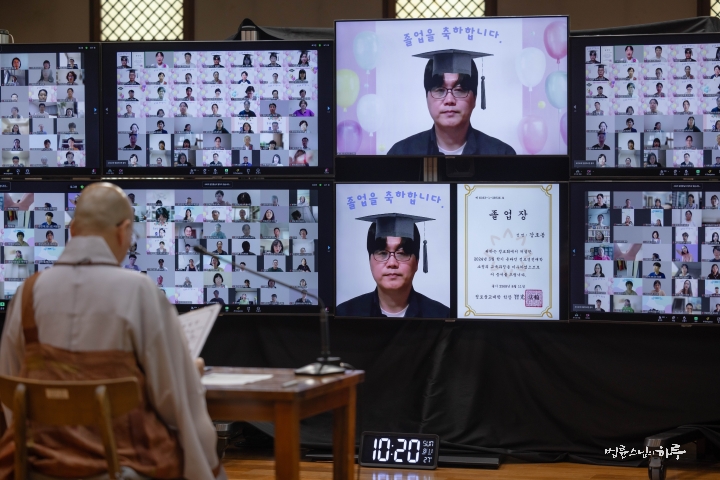
After a short break, the online graduation ceremony for the Jungto Sutra Course began at 10 AM. Today marks a meaningful day as students complete 5 months of study and move towards a new beginning. Most graduates watched the live broadcast together in their classrooms, while those receiving perfect attendance and diligence awards joined the video conference.
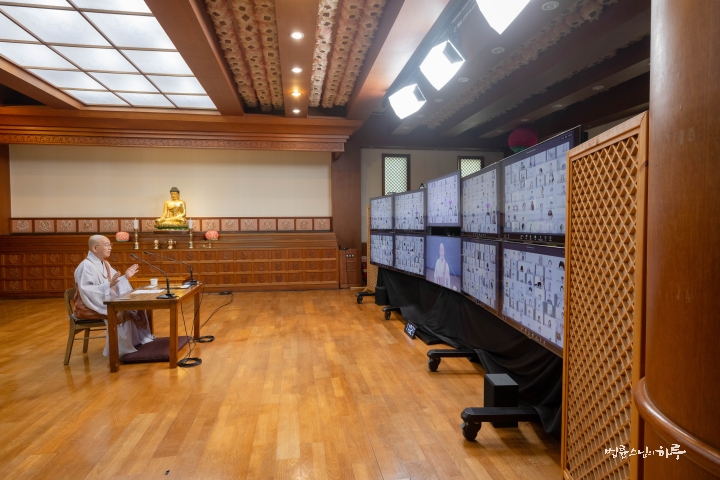
After hearing congratulatory remarks from the President of Jungto Society, they watched a congratulatory performance and a video showcasing the Sutra Course classes and practical activities over the past 5 months.
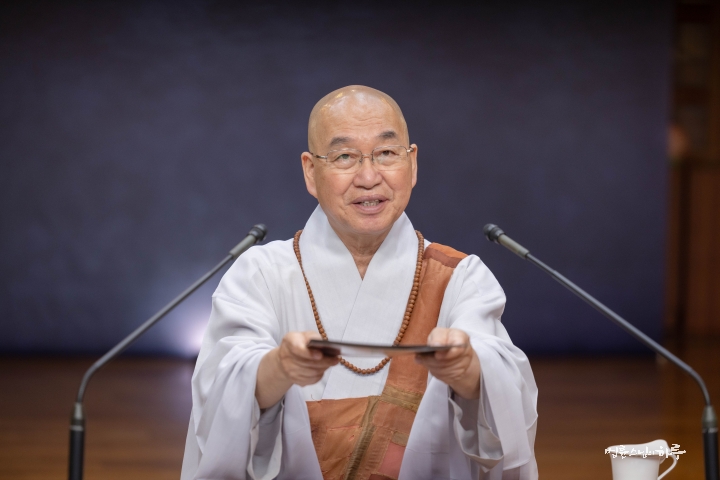
Next, Sunim, as the Dean of the Jungto Sutra Course, conferred diplomas to 1,032 graduates both domestically and internationally.
“I accept with gratitude.”
Applause erupted from the video conference room. Following this, 136 people received perfect attendance awards, and 132 received diligence awards.
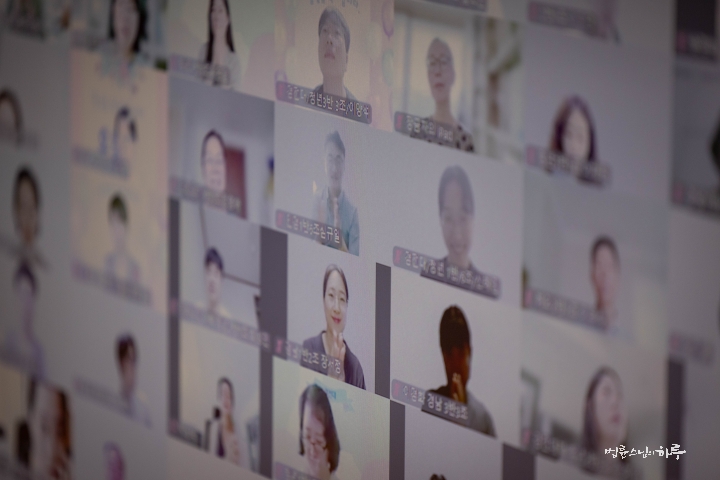
After the applause, two graduates presented their reflections.

Then, graduates participating on-site shared their thoughts impromptu. Anyone could press the raise hand button and share their graduation reflections.
“The biggest change while attending the Sutra Course is that happiness has come to my family. My relationship with my wife was like walking on thin ice, but through the Sutra Course classes, I discovered that I had many expectations of my wife. When I let go of my attachment to her, our relationship has become much more comfortable now.”
“After hearing Sunim often say ‘It’s no big deal’, ‘There’s nothing wrong’, ‘It’s okay’, I changed my perspective and truly everything became okay and no big deal. Through the Sutra Course, I was able to encounter the Buddha’s teachings. I’m truly grateful.”
“Now I don’t get angry while raising my children. I’m no longer frustrated when I look at my husband. I’m happy that I can be helpful to my family.”
“The Sutra Course study was fun every week. Practicing in daily life and sharing my thoughts as if writing a diary helped me reflect on my life. I was so grateful to be able to learn the Buddha’s teachings.”
“I realized there are two types of people in this world. One type is those who haven’t met Venerable Pomnyun Sunim, and the other type is those who have met Venerable Pomnyun Sunim and are walking hand in hand together in Jungto Society. I will continue to practice diligently.”
“I’m truly grateful. I think I might have been born as a Korean in this life to meet Venerable Pomnyun Sunim and learn and practice the Buddha’s teachings.”
“Through the Sutra Course teachings, I feel like I’ve been reborn once again. I’m truly grateful for the easy-to-understand teachings of the Buddha’s precious teachings that can’t be bought or exchanged with money.”
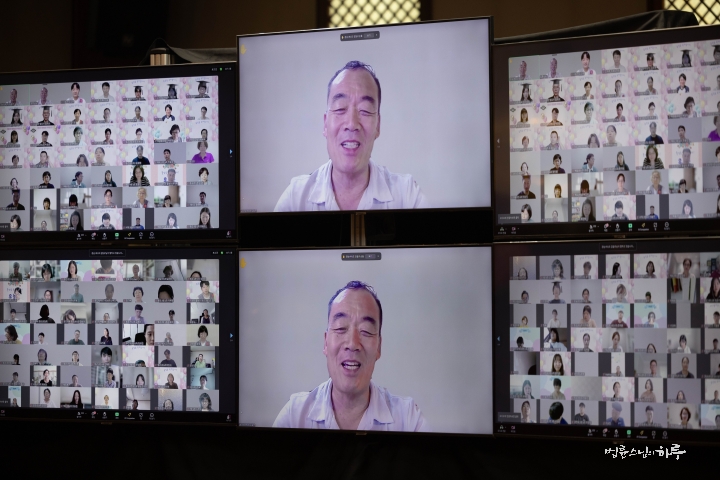
It was heartwarming to see Sunim’s words about the goal of the Jungto Sutra Course – progressing towards a life without suffering – manifesting in each person’s reflections.
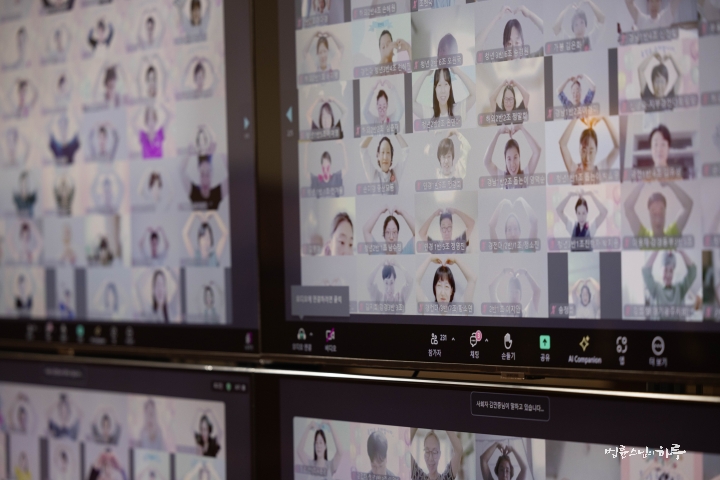
The graduates sang “The Grace of the Teacher” together, expressing their gratitude to Sunim for guiding them with the right teachings.
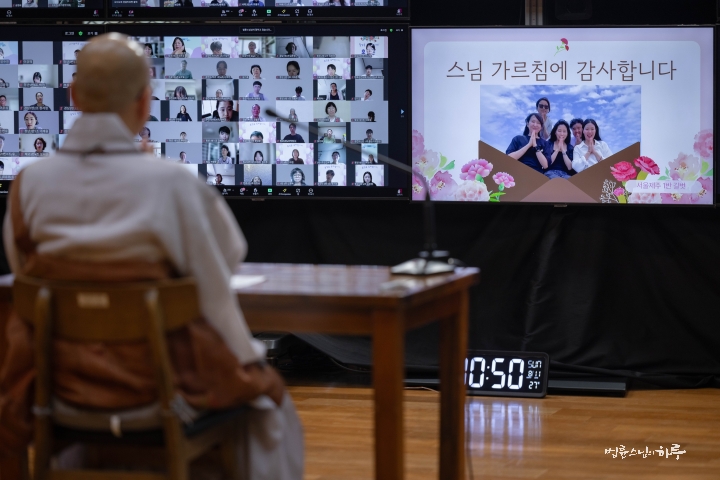
Then, as the graduates requested teachings with three bows, Sunim gave a graduation Dharma talk.
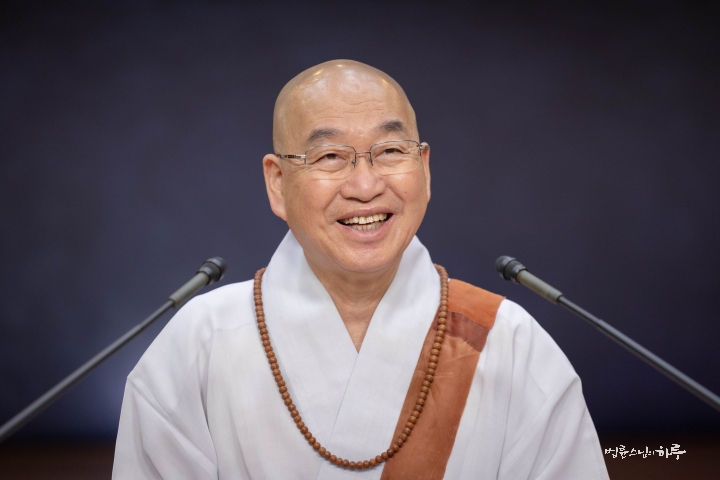
What does it mean to love yourself the most? It doesn’t mean lying down as you want, sleeping as you want, eating as you want. Becoming free from your habits, karma, and karmic tendencies is the way to love yourself the most. Becoming the master of your own life is the way to cherish yourself the most. The methods that help to consistently practice this kind of practice are Dharma assemblies, the 1000-Day Practice, the Enlightenment Retreat, the Sharing Retreat, and meditation retreats.”
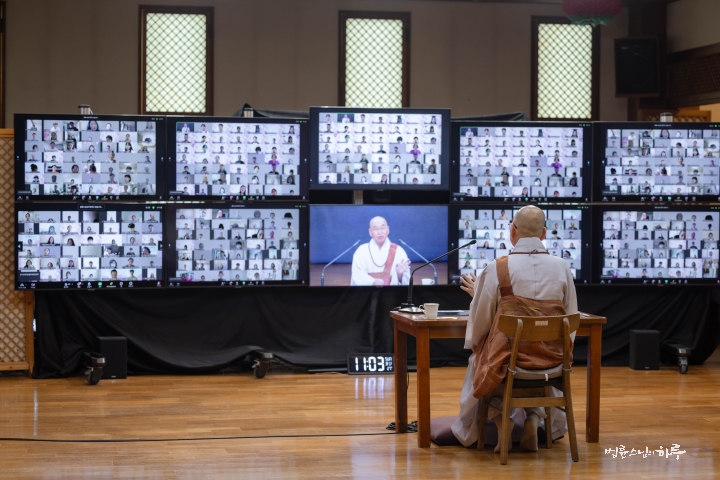
Next, Sunim provided detailed guidance on which programs offered by Jungto Society to participate in to continue living a life of practice, giving, and service even after graduating from the Sutra Course.

The graduation ceremony concluded with the Four Great Vows. The students entered the class site to continue sharing their thoughts by classroom, while Sunim left the broadcasting studio.
After lunch, Sunim headed to the Jungto Social and Cultural Center. At 2 PM, he conducted an ordination ceremony for those who completed the leading member education over the past year.
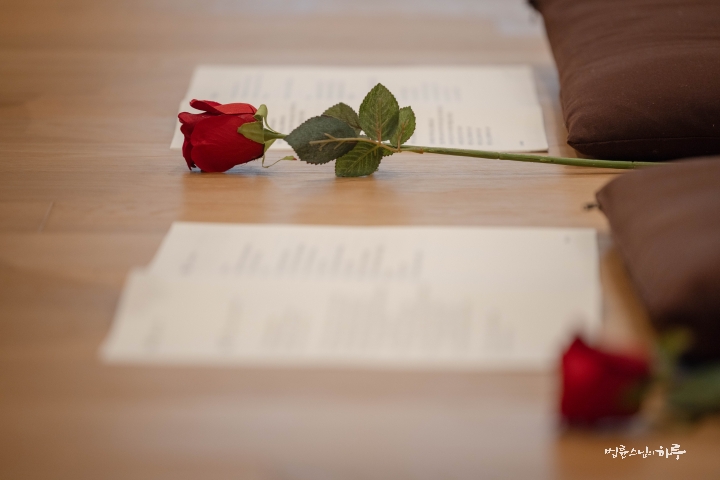
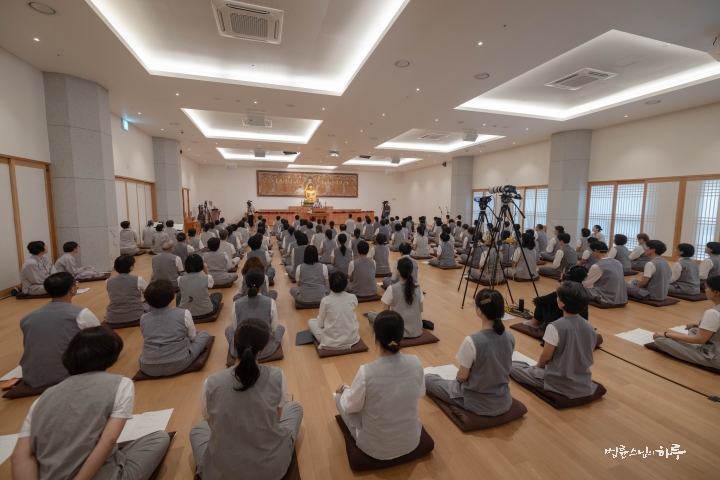
The ordination ceremony began with bell ringing, Buddhist chanting, and recitation of the Heart Sutra, attended by 131 people at the Dharma hall on the 3rd floor of the Jungto Social and Cultural Center, main temples nationwide, and online.
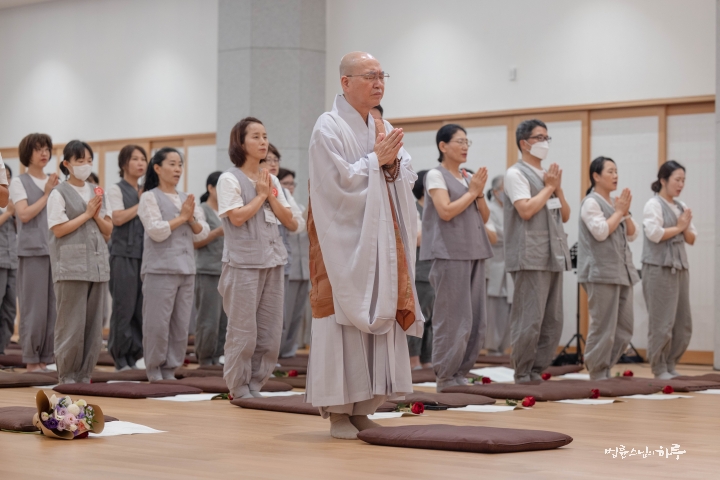
After watching welcome videos from each branch and a progress report video, Jung Hyun-sook presented her practice story as a representative of the ordinands.
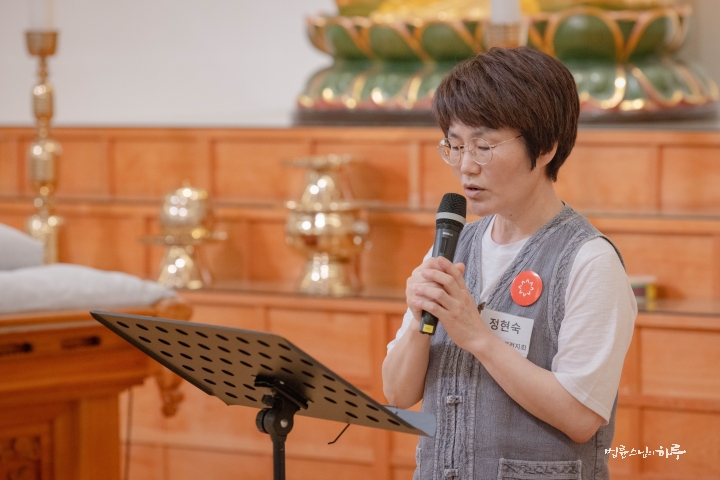
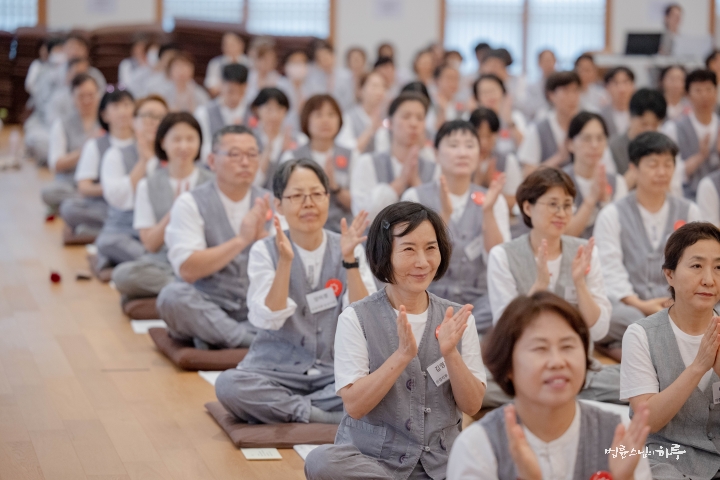
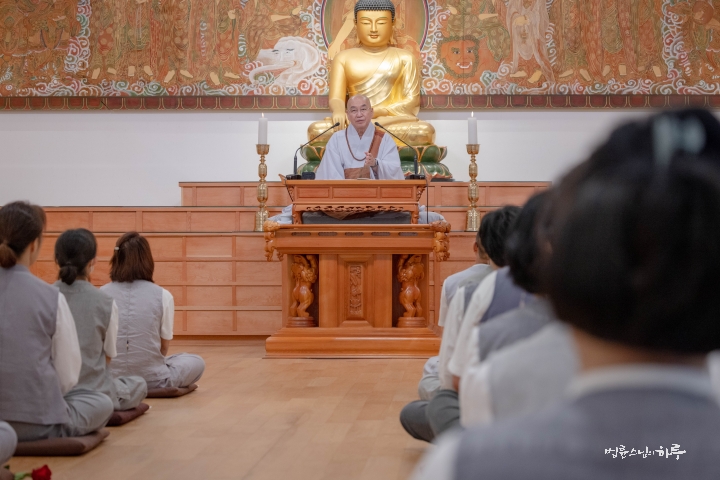
Following this, new Balsim Practitioners requested the Dharma with three bows. Sunim then explained the origins of the Three Refuges and Five Precepts ceremony, and what practical virtues one should uphold as a Balsim Practitioner.
Even during the Buddha’s time, there were many religions and countless philosophical systems in the world, just as there are today. The Buddha was born and raised in that society, believing in its religions and learning its philosophies. The existing society had all sorts of logic, theories, doctrines, precepts, ethics, and morals. Class discrimination and gender discrimination were also considered ethics and values in that society. There was confusion due to differing claims among people. When one person made a claim, another would deny it, and vice versa, leading to increasing disorder and chaos in the world.
The Goal of Buddhist Practice
However, after attaining enlightenment, the Buddha established a new system of thought, values, and ethics. The Buddha said that the most important thing in human life is for people to live without suffering. He also said that people should not live bound or oppressed by anything. Therefore, the goal of Buddhist practice is liberation from all bondage and nirvana, where all suffering has ceased. The goal of practice is not to go to heaven after death, nor to be reborn as a rich person in the next life, nor to attain a high position in this life. The goal of practice is to live a life free from suffering and in freedom, anytime, anywhere, and in any situation. The Buddha clearly defined the goal of practice. Then, he presented what must be done and what must not be done to live such a free life without suffering, thus establishing new values.”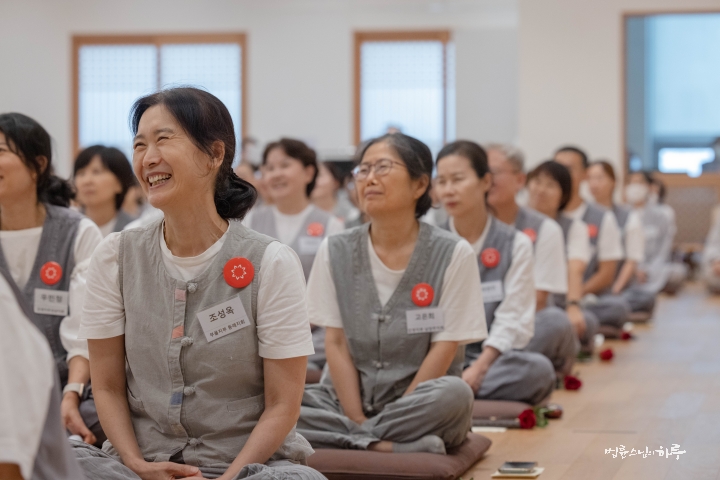
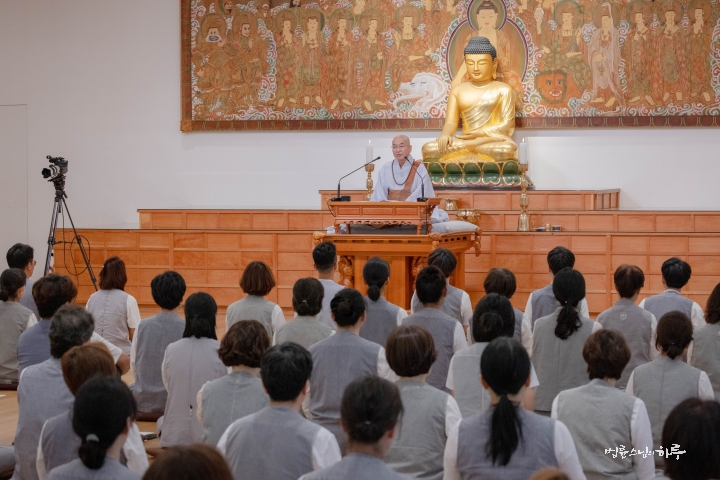
Sunim then explained in detail the meaning of the Five Precepts, the five values presented by the Buddha.
Establishing New Values Centered on Human Life and Actions
“The ethics and morals of that society often favored the interests of certain classes, positions, or the wealthy. There were also values such as obeying gods, performing rituals in specific ways, or being punished for not performing rituals. However, the Buddha set aside existing values and re-established values centered on human life and actions through the Five Precepts.First, do not hit or kill others.
Second, do not steal or take others’ possessions.
Third, do not sexually harass or assault others.
Fourth, do not insult or lie to others.
Fifth, do not drink alcohol to the point of intoxication.
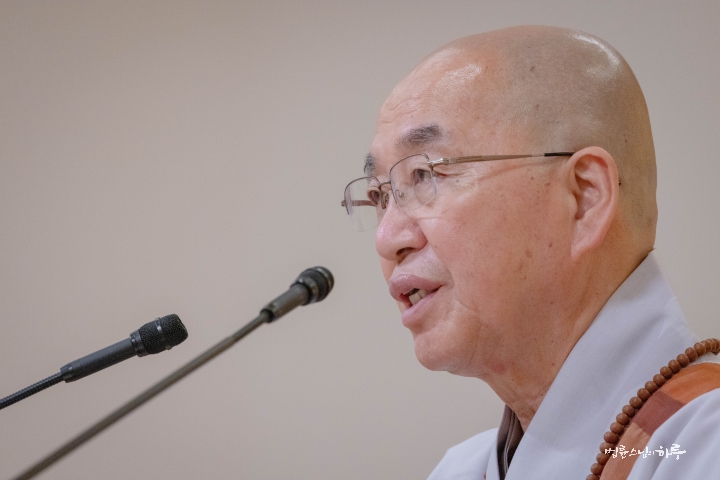
Of course, in the early days of the Buddha’s time, there were no separate precepts for monastic practitioners. This is because it’s highly unlikely that people who gave up their royal positions, entire fortunes, or families to become monks would hit or kill others. Would such people steal or take others’ possessions? Would they sexually harass or assault others? Would they lie or commit fraud? Would they drink alcohol and cause trouble? These people had made much greater resolutions than the Five Precepts, so such precepts were unnecessary. Therefore, we can say that these five precepts were created for lay practitioners.
Lay practitioners do not leave society and family to practice alone in the forest, but live in the world, managing families and businesses. Living in the world, they have to deal with business interests, get married, and manage servants. Living in such a world, it’s easy to follow customs. It’s easy to hit or kill people, commit fraud, take things from others, or commit sexual harassment or assault. This is because even in the Buddha’s time, there were bars and brothels. So, to be called a lay practitioner while living in the world, one must at least keep these five precepts. If one cannot keep these five, they are just ordinary people. However, even if one is a layperson, if they clearly know and keep these five principles, they fall into the category of practitioners.”
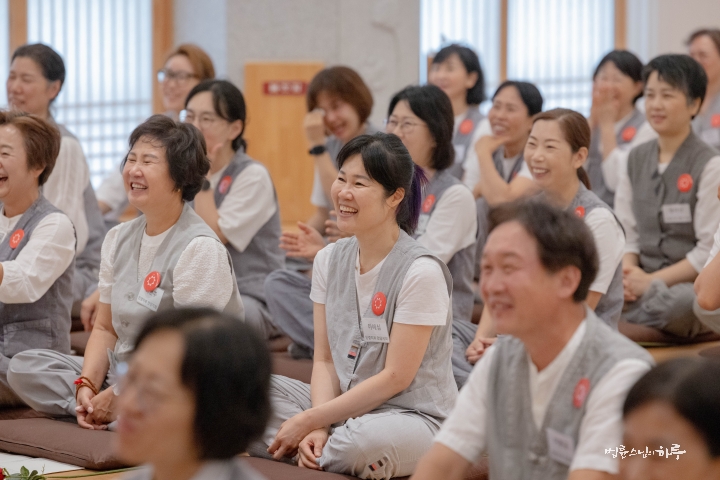
Following this, there was a confession, a declaration of faith, and a vow to receive the precepts.
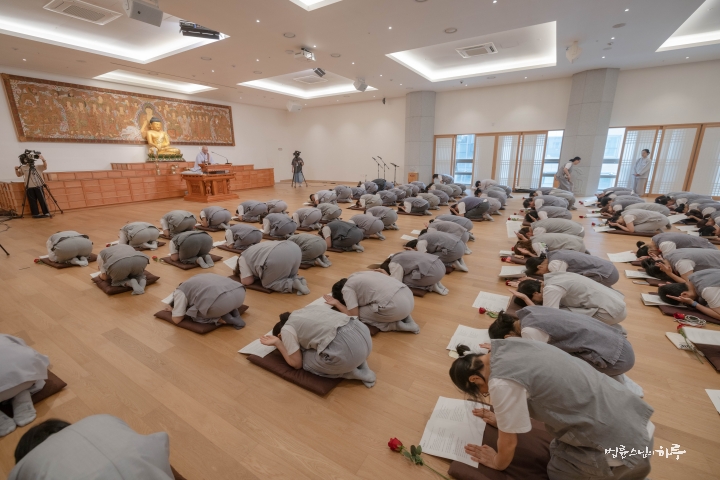
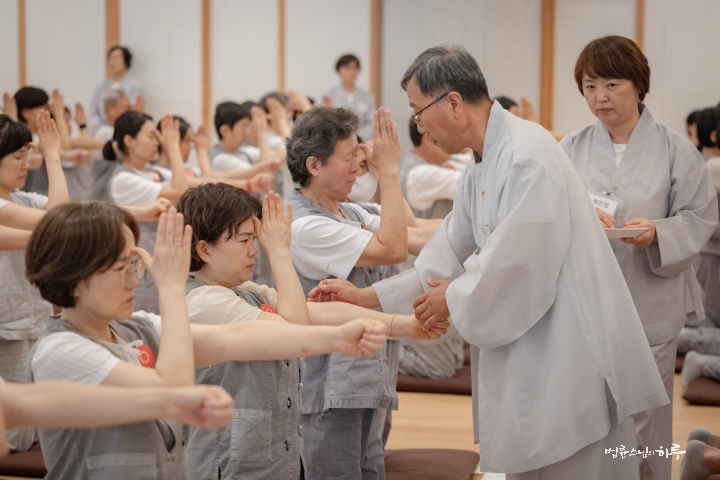
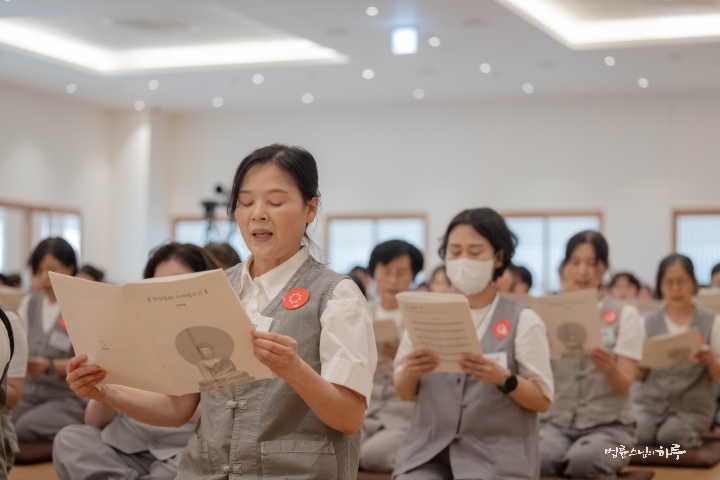
“We, the disciples receiving the precepts, repent with sincere hearts. From time immemorial until today, before knowing the Buddha’s teachings, we have committed countless misdeeds of body, such as killing, stealing, and sexual misconduct. Now, we will refine our body, speech, and mind, and repent with sincere hearts.”
Those who promised to keep the Five Precepts went to the altar to offer flowers.
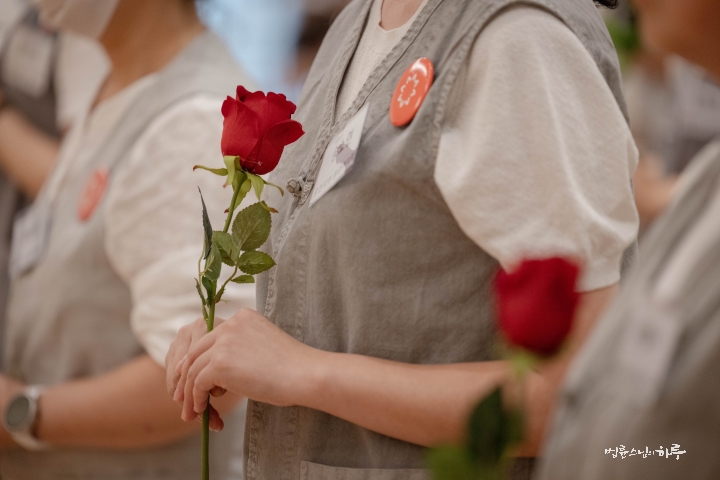
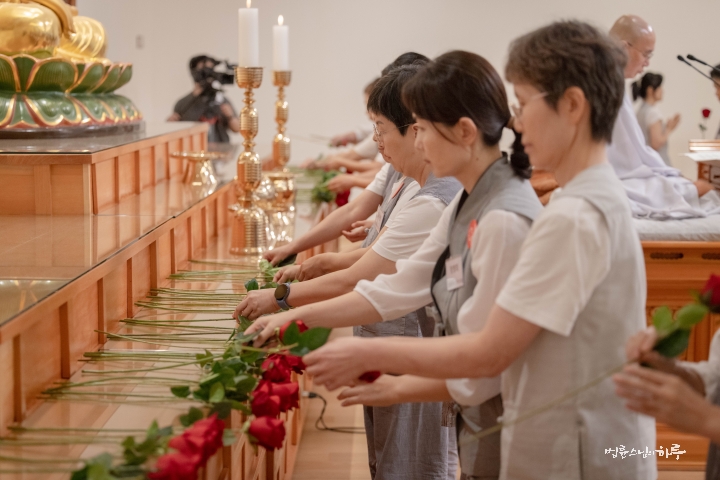
Sunim offered a heartfelt prayer for the Balsim Practitioners who were making a new start as lead volunteers.
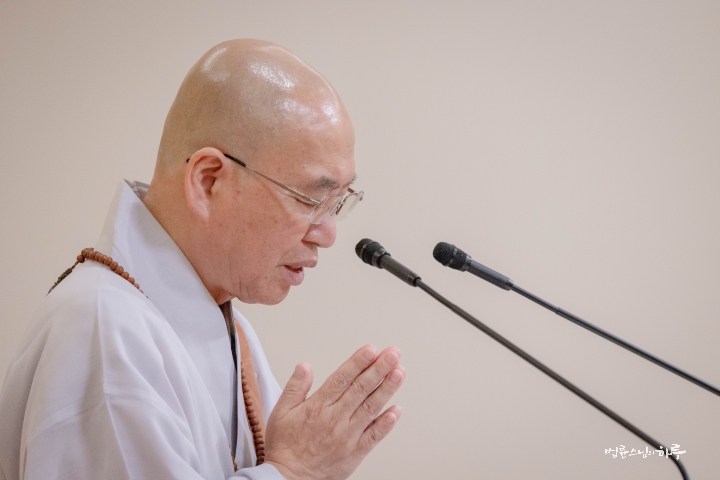
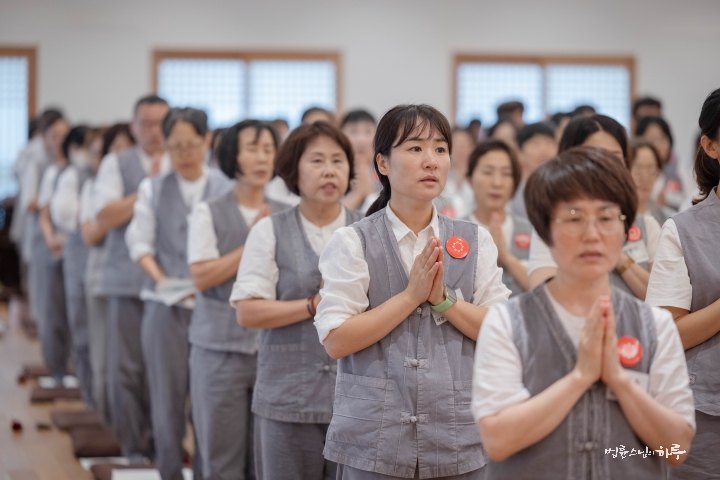
Next, after explaining the meaning of receiving a Dharma name, Sunim presented the precept certificates. He handed the certificate to one representative. Then, he also presented certificates online to those who participated remotely.
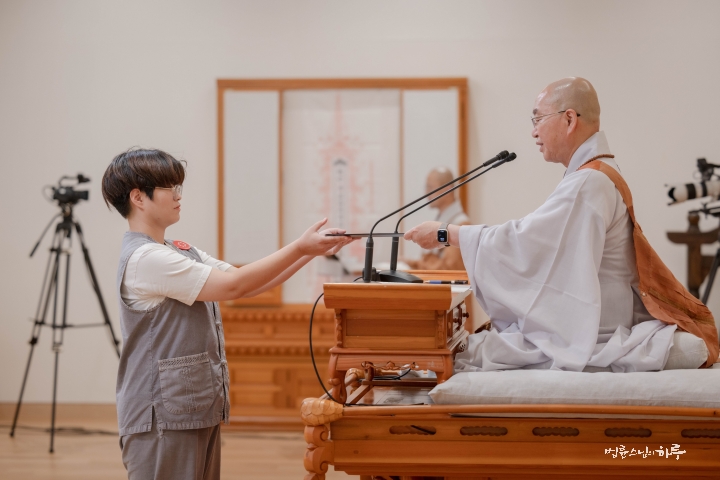
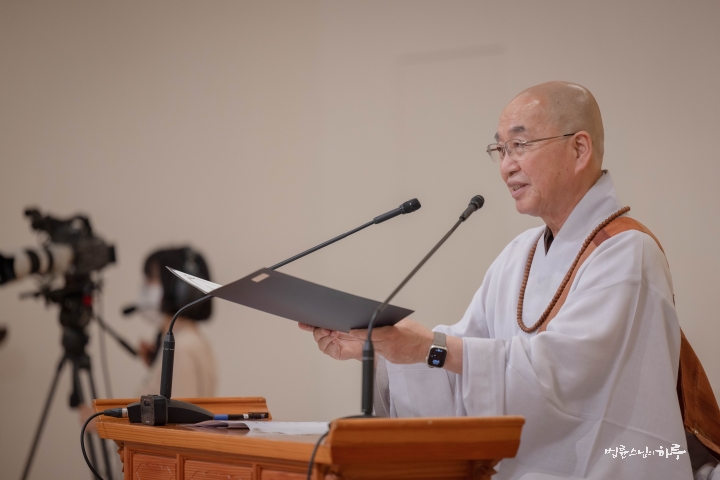
Finally, Sunim gave words of encouragement to those who received the precepts.
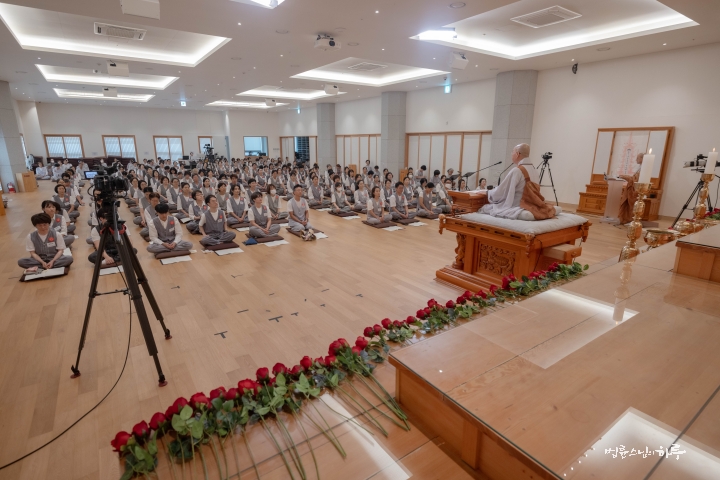
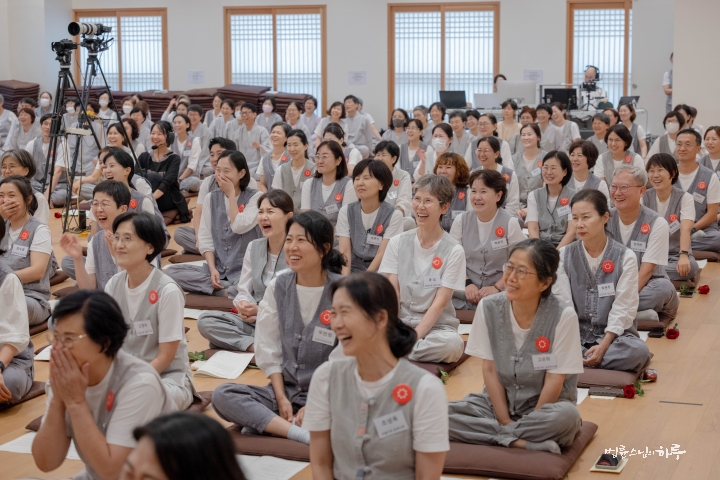
After concluding the precept ceremony with the Four Great Vows, everyone took a commemorative photo together.
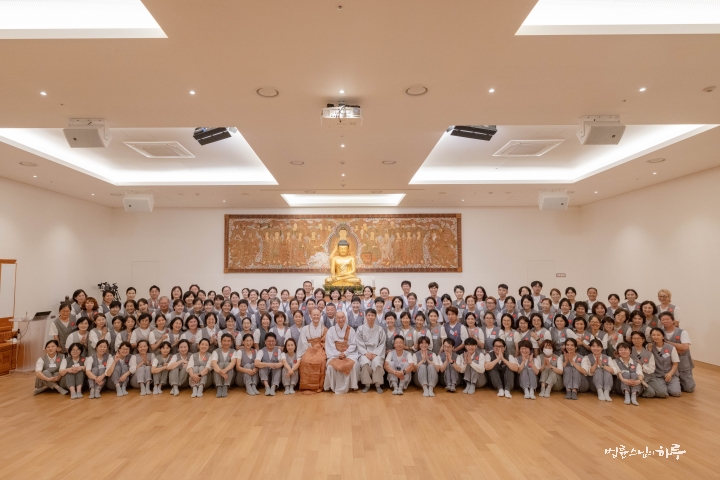
The Balsim Practitioners who received the precepts continued to share their impressions in the following second part of the program. Sunim immediately departed for Seoul and headed to the Dubuk Retreat Center.

Departing from the Seoul Jungto Center at 5 PM, Sunim arrived at the Dubuk Retreat Center at 9 PM after a four-hour drive, concluding the day’s schedule.
Tomorrow, after doing farm work early in the morning, Sunim is scheduled to hold live-streamed Dharma talks for lead members in the morning and evening.
A Day in the Life of Sunim is translated by AI, edited by volunteers