How Can I Deal with My High School Sophomore Daughter Who Demands Plastic Surgery and Commits Fraud?
July 17, 2024 - Bangkok, Thailand, Dharma Q&A for Korean Expatriates
Hello. Today, after conducting an online Weekly Dharma Assembly broadcast from Singapore, Sunim is heading to Bangkok to give a Dharma Q&A lecture for Korean expatriates.

Sunim began his day with morning practice and meditation, followed by breakfast at 7 AM in his accommodation. After finishing his meal, he started the Weekly Dharma Assembly broadcast at 9 AM Singapore time (10 AM Korean time) from his room. As all Jungto Society members entered the video conference room, Sunim greeted them.
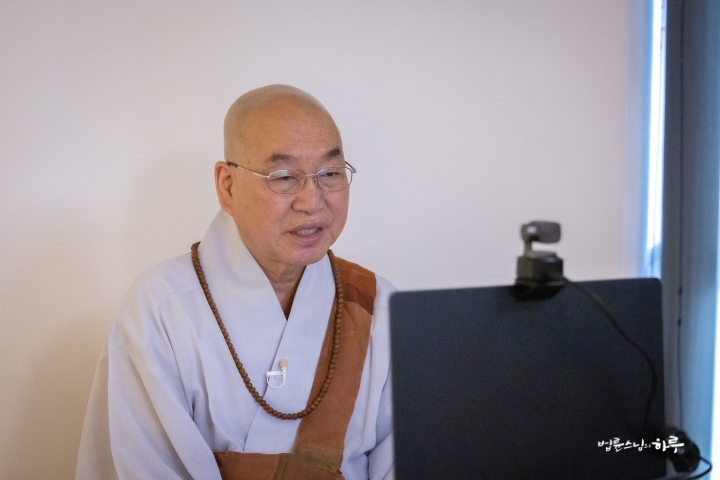
Then, we watched a video showing Sunim’s activities over the past week, including his visit to Bhutan and emergency flood relief efforts in Assam, India.
“This is how the donations you’ve made are being well-used in various parts of the world where help is needed. It’s becoming a source of hope for those in difficulty and a foundation for maintaining their survival. Please share in this joy. I’d like to take this opportunity to thank everyone who has made donations.”
Next, Sunim engaged in conversations with those who had submitted questions in advance. Four people raised their hands to ask questions. One of them sought Sunim’s advice on how to deal with a daughter who demands plastic surgery, commits fraud to make money, and is becoming increasingly distant from society.
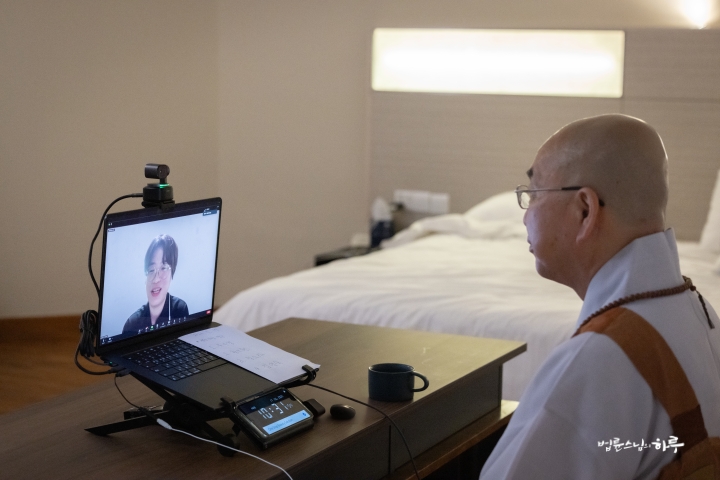
How Can I Deal with My High School Sophomore Daughter Who Demands Plastic Surgery and Commits Fraud?
“My daughter, who has been on leave from high school for two years, is crying and begging me for help, saying she can’t return to school next year unless she loses weight and gets plastic surgery. I told her I couldn’t help her do that because it doesn’t seem like the right path, but I said I would help her in other ways. Then she started begging for liposuction. I think she will continue to beg, so how should I maintain my stance and dissuade her? It seems that my daughter is becoming increasingly distant from society, only looking at her phone at home and spending time with the cat. Since I don’t give her an allowance, she commits fraud through phone chats. No matter how much I warn her that she could be punished under the Telecommunications Fraud Act, she doesn’t listen because it hasn’t happened yet. How can I stop this behavior? Can I go out and find my own work while leaving my daughter at home? When I return from going out, I try to understand my daughter’s feelings, but is it okay to continue like this?
“Do you have a job?”“I don’t have a job. But when I’m at home, seeing my daughter is so painful and I feel oppressed, so I go out to survive. I continue my family life by recharging my energy through reading books and doing other activities. Also, both of my parents are ill and need care, so I spend a lot of time on my own to recharge my energy to take care of them.”
‘How frustrated must my child be to behave like this? I will try to understand my child.’
While doing this, observe every move your child makes. Research your child’s behavior, words, and thought patterns by writing them down in a notebook. If you become a researcher in this way, seeing your child won’t be frustrating at all, but rather intriguing. When you understand, ‘Oh, this is why she behaves this way!’ it becomes interesting. First, you need to record in detail and understand how your child thinks, speaks, and acts. If you don’t understand well, seek advice from a doctor, asking, ‘My child is behaving this way, how should I understand it?’ This way, you can come to realize, ‘Oh, my child is behaving this way because of this problem!’ This approach will allow you to not feel troubled even if you leave your child as she is now, and you’ll be able to find ways to help her. It would be good to approach it from this perspective.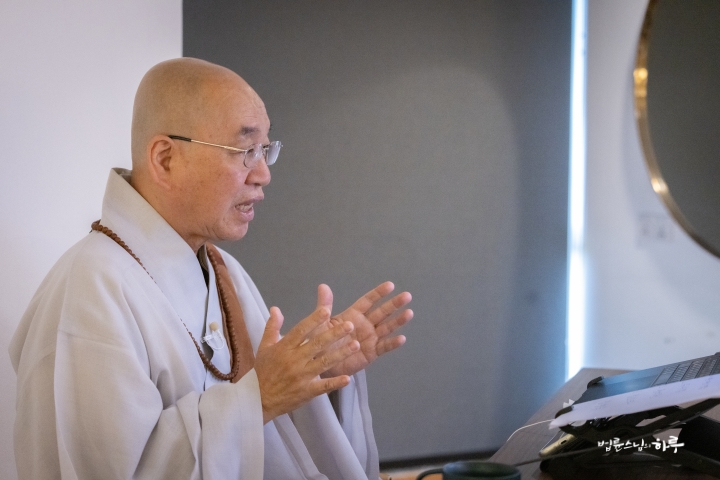
“I have assessed the situation. It seems the child has trauma. She has been struggling with friendships since the COVID pandemic. There’s likely also influence from the parents.”
What I’m saying is that if you observe the child from an observer’s perspective, you won’t feel distressed. If you understand why the child behaves that way, you won’t feel stressed, so you won’t need to go out to avoid it. If you feel stressed by interacting with someone, that’s your problem. It’s not the child’s problem, but the questioner’s problem of feeling stressed when looking at the child.”
“Should I just help the child as much as I can?”
“Don’t worry about helping. First, carefully observe the child’s actions, words, and thoughts. You need to practice self-discipline so that you don’t feel stressed even when you’re with the child. Don’t keep trying to do things for the child. Because you haven’t practiced self-discipline at all, you can’t be of much help even when you’re with the child, and you also find it difficult. For now, don’t think about what to do with the child, but first study to reach a state where you can look at the child without being affected. Only then can you live happily with such a child, and do something that might be of some help to the child.”“So even if the child says they’ll take pills and die, should I just stay calm?”
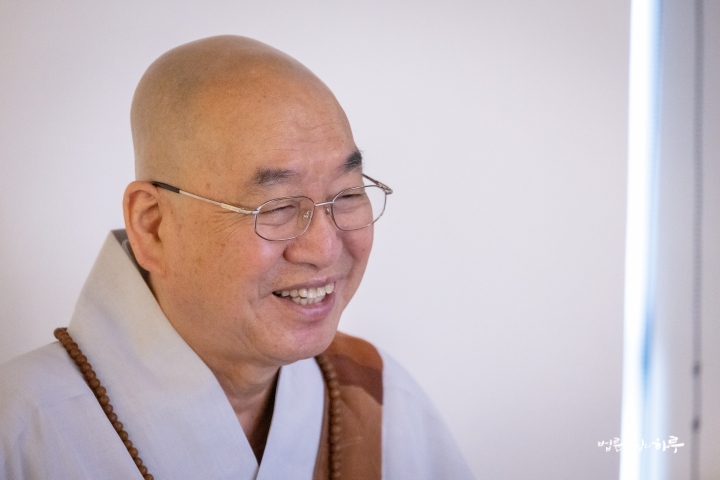
“Yes, that’s right.”
“So don’t worry too much about the child’s issues, but listen diligently to dharma talks and practice discipline. You need to first study to be at peace even if the sky falls and the earth collapses. Living like you can’t bear it because of the child, or having to go out because of stress, shows you’re not practicing discipline at all. That’s just the level of how ordinary people live in the world. If you live like that, you’ll be unhappy and unable to do anything helpful for the child.”“I understand well. Thank you.”
Questions continued to come in.
Can we do Jungto Society activities like a club meeting?
Can we change the culture of practicing at 5 AM to 6 AM?
Is it okay to bring the spirits of priests from the Catholic church I used to belong to for Baekjung prayers? I’m curious if it’s okay to do Baekjung prayers for people of different religions.
After answering all the questions, Sunim gave closing remarks.
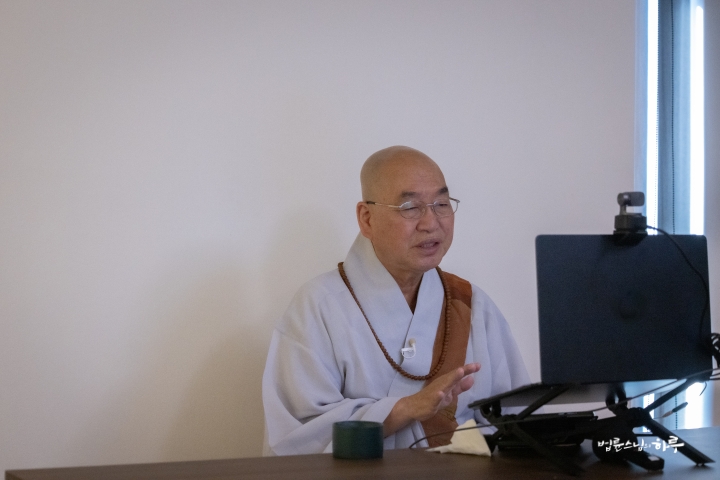
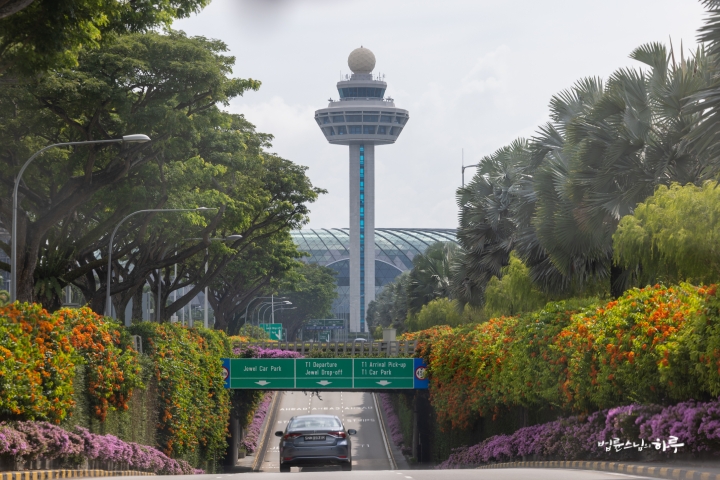
When the live broadcast ended, it was 10:30 AM. Sunim immediately left the accommodation and headed to Singapore Airport. After a 30-minute drive, he arrived at the airport.

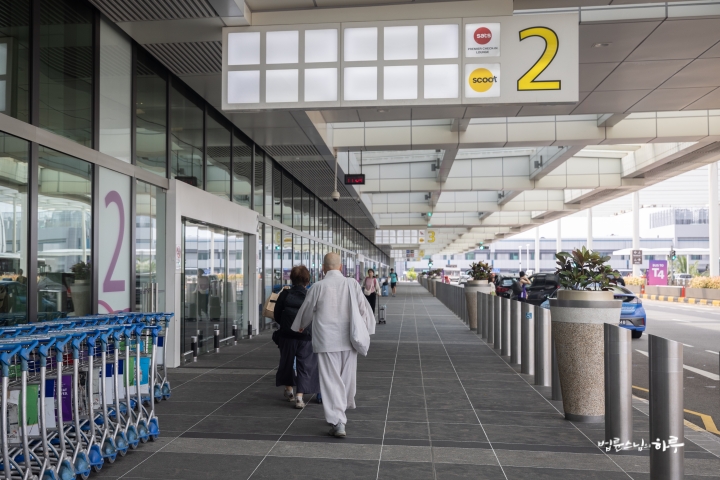
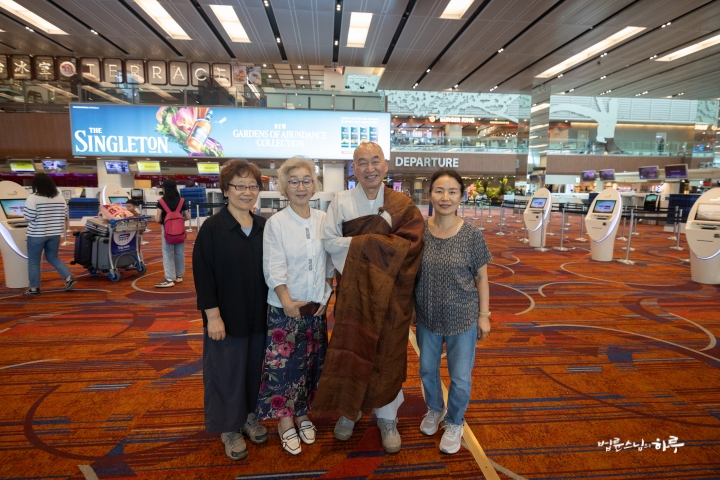
Yoo Hyun-sook and Choi Yang-hee, Jungto Society members who prepared for this Singapore lecture, came to see Sunim off. They greeted him, saying he had a good stay for two days, and took commemorative photos together.
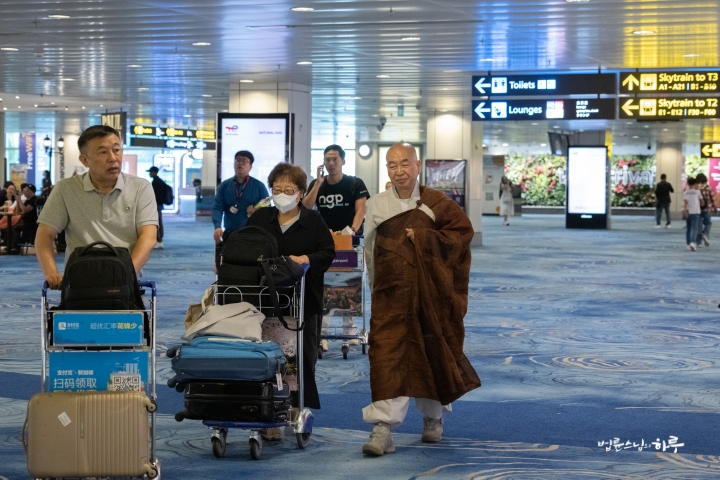
After completing the departure procedures, Sunim waited in front of the boarding gate. The departure time was delayed by 20 minutes, so he took off from Singapore Airport at 1:15 PM.
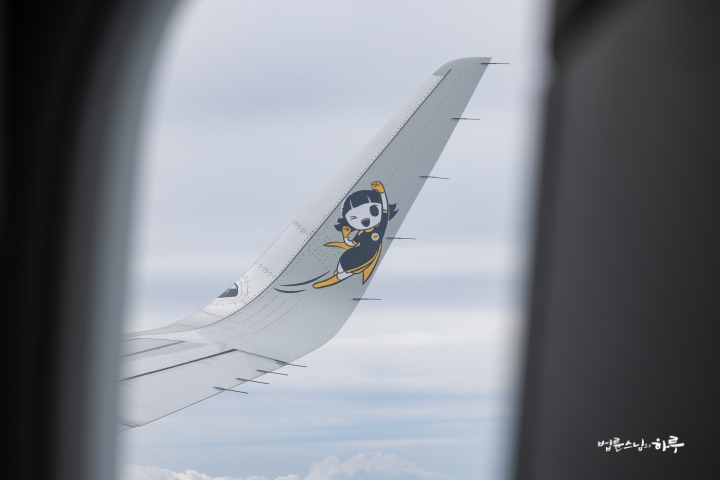
After flying for 2 hours and 45 minutes, Sunim landed at Bangkok Airport in Thailand at 3:00 PM local time. As he exited the airport, Hwang So-yeon and Jo Jung-eun, members of Jungto Society, warmly welcomed him.
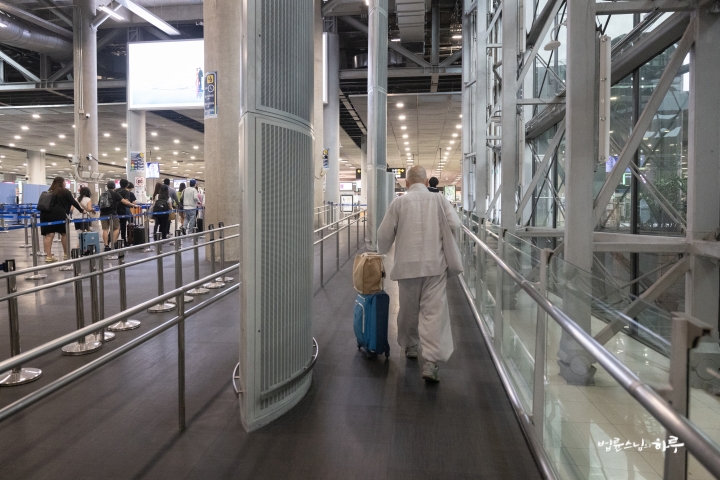
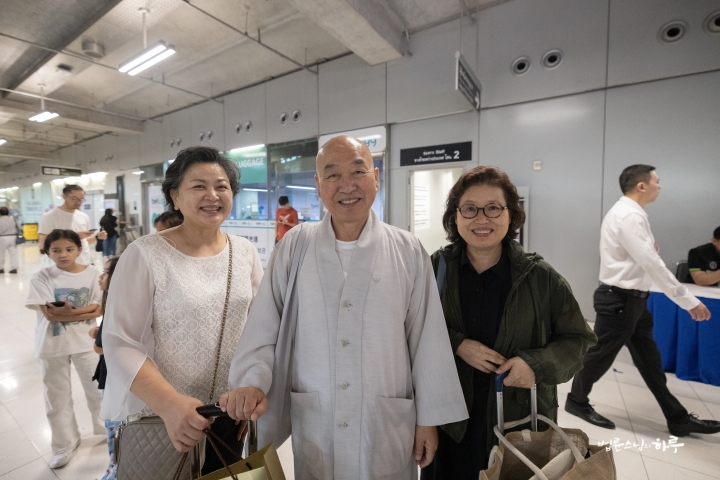
After exchanging warm greetings, they moved to the lecture venue.
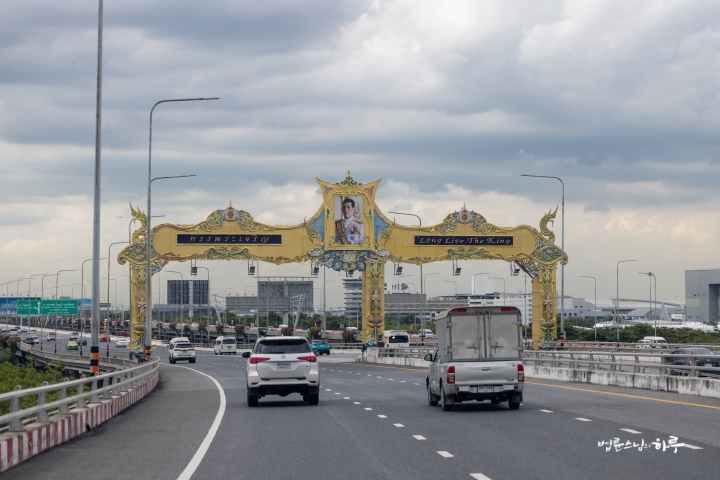
Today’s lecture is being held at the Jasmine City Hotel, located in the center of Bangkok. After an hour’s drive from the airport, they arrived at the lecture venue at 4:15 PM.


After dinner, Sunim took a short rest as he wasn’t feeling well. As the sun set, he headed to the lecture hall at 6:30 PM for a pre-lecture tea time.

The Consul General from the Korean Embassy in Bangkok and the Director of the United Nations Economic and Social Commission for Asia and the Pacific (UNESCAP) welcomed Sunim.
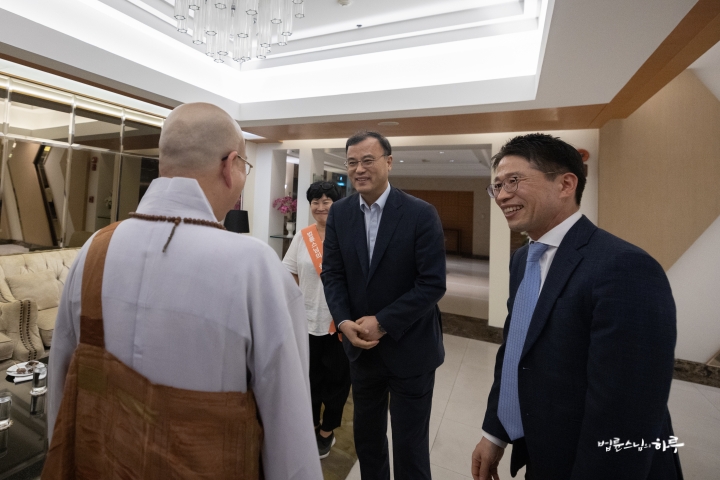
During the tea time, they discussed the situation of Korean expatriates living in Thailand. There were also many questions about Sunim’s recent activities.
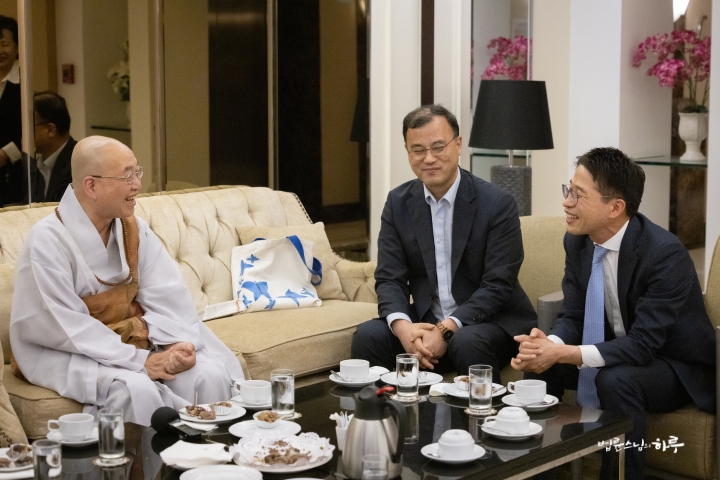
“When did you arrive in Bangkok?”
“I just arrived at 3 PM. This time, I’m visiting 10 Southeast Asian countries. Thailand is the ninth country. Tomorrow, when I go to Hanoi, the schedule will be completed.”“Are you moving to a different country every day?”
“This morning I had a dharma assembly in Singapore, and in the afternoon I came to Bangkok.”“I remember in 2014, you showed superhuman ability by moving to 100 cities around the world and giving a lecture once a day.”
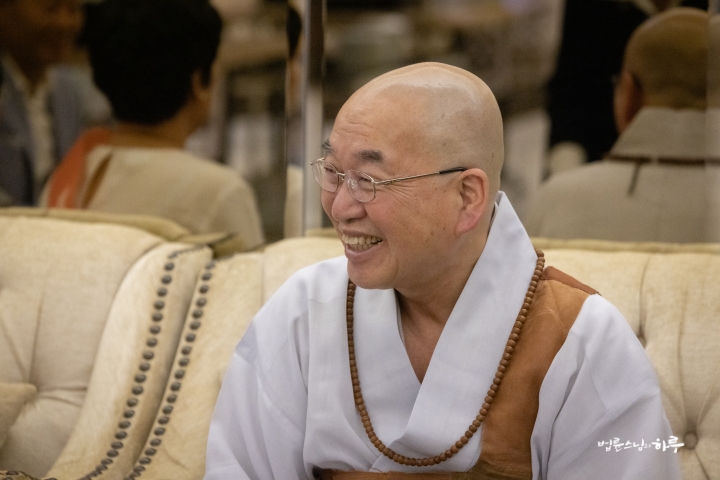
“I travel a lot on business trips too, but just getting on a plane itself is extremely tiring.”
“I like it when I ride cars or planes a lot. Because that’s when I can rest.” (Laughs)
“You’re really practicing in a way that ordinary people can’t even imagine. I’ve never seen a monk like you before. There’s no one like you in the world.”
After chatting, it was time to start the lecture. After taking commemorative photos, they moved to the lecture hall together.
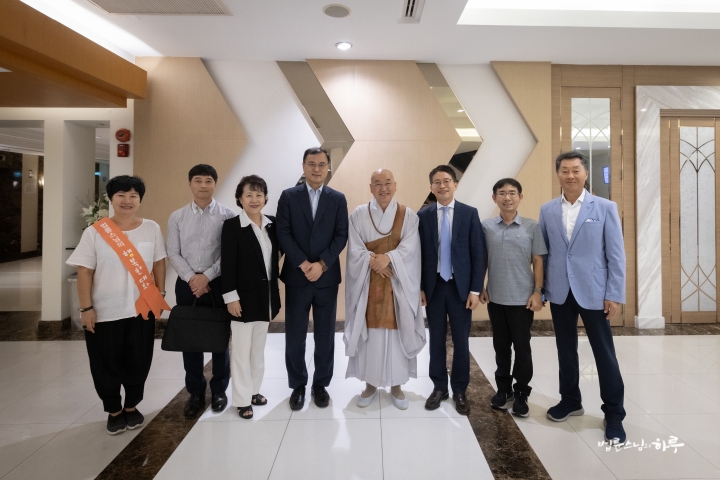
Volunteers were welcoming participants everywhere. Sunim expressed his gratitude to the volunteers.
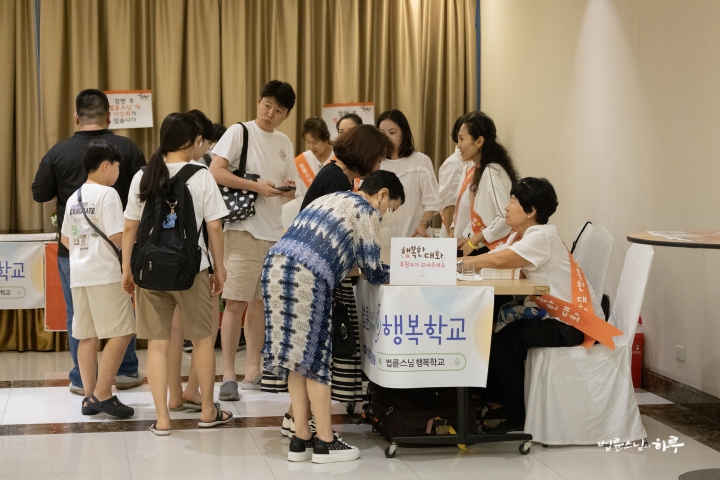
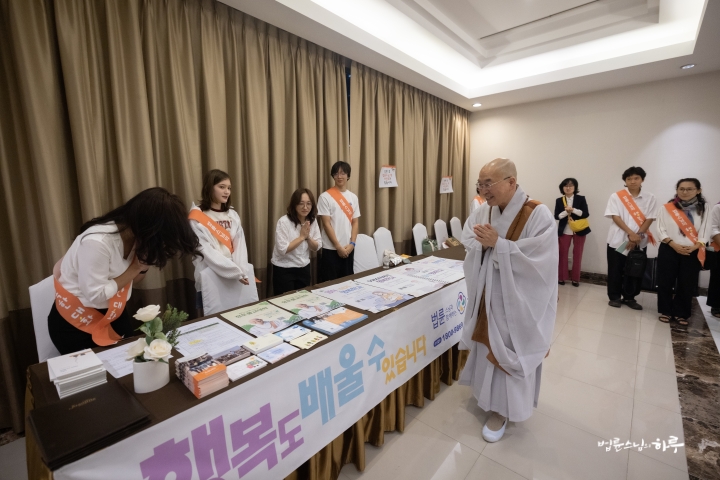
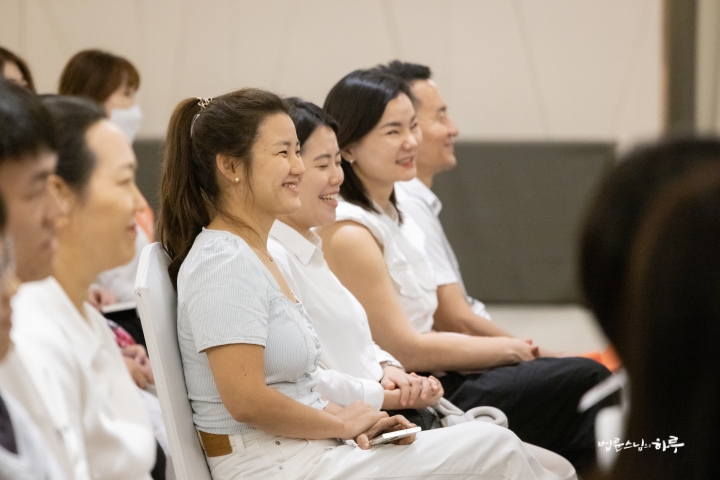
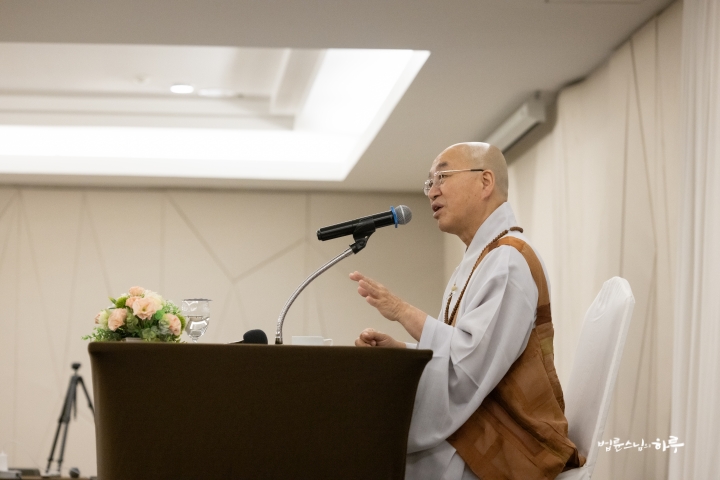
After watching a video of Sunim’s visit to Bhutan and relief activities for flood victims in Assam, India over the past week, Sunim took the stage at 7:00 PM sharp. There was a big round of applause and cheers.
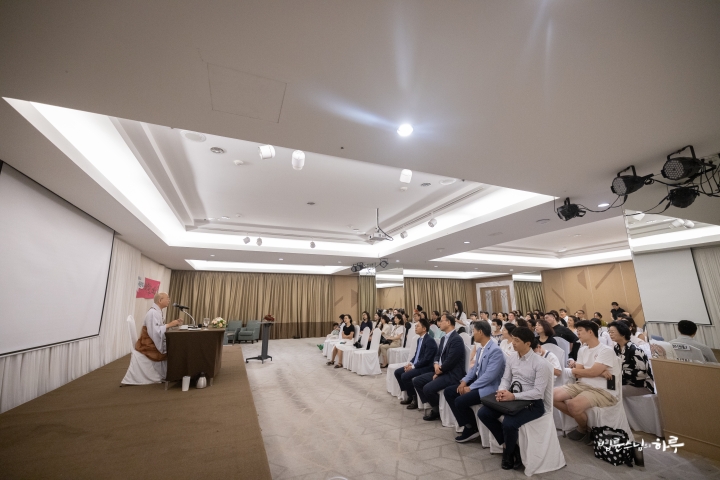
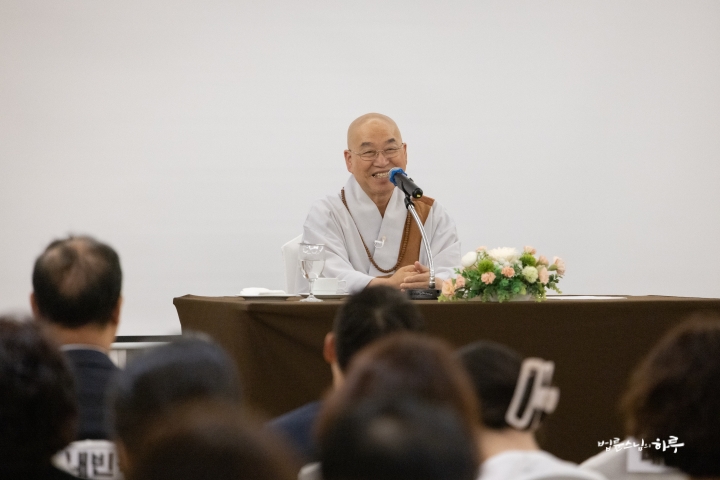
Sunim greeted everyone with a bright smile.
Finding Blind Spots Where Aid Doesn’t Reach
The Assam region in India is one of the rainiest places in the world, and recently there was a major flood where the Brahmaputra River overflowed, causing many displaced people. As I happened to be on a schedule to survey that area, I visited the site and provided humanitarian aid such as food and mosquito nets. The residents were especially grateful that Sunim came to comfort them, as no one else had come to visit despite the severe flood damage. Even humanitarian aid has become a kind of business these days, requiring media attention for fundraising. If the media doesn’t cover a story, humanitarian aid hardly reaches those in need, no matter how difficult their situation is. The most representative example was the great flood caused by the overflow of the Indus River in Pakistan in 2022. It was such a massive flood that affected over 30 million displaced people, but it received almost no media attention. Because the Ukraine war broke out and all the world’s attention was focused on Ukraine, the Pakistan flood was almost neglected.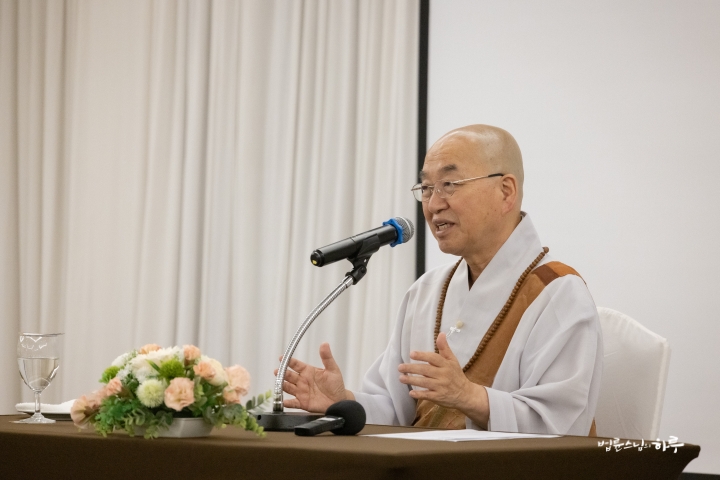
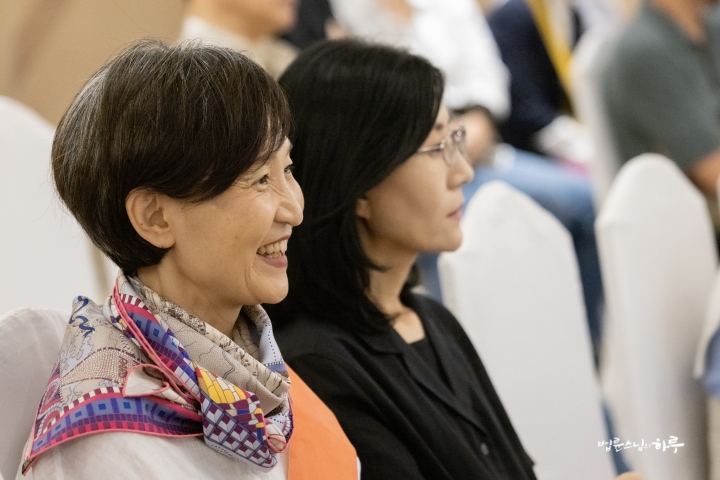
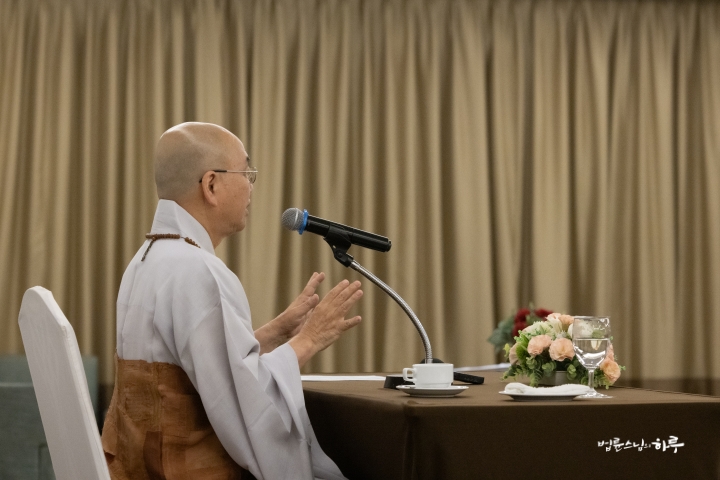
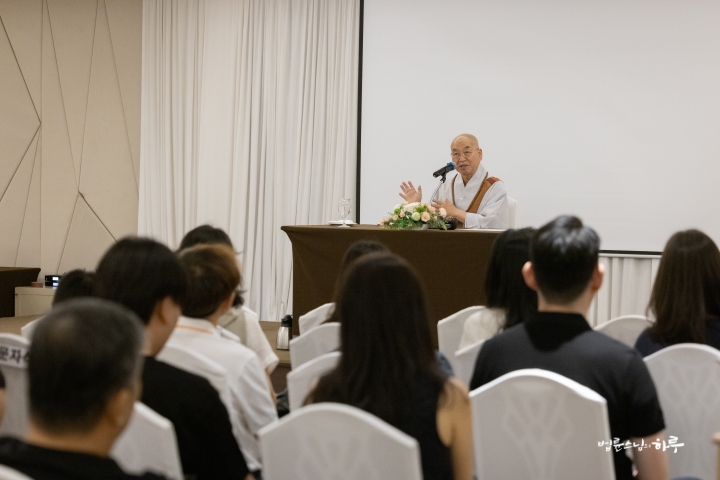
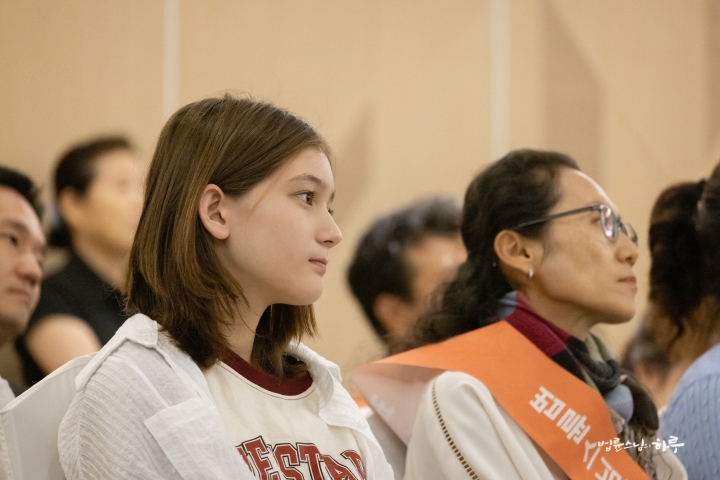
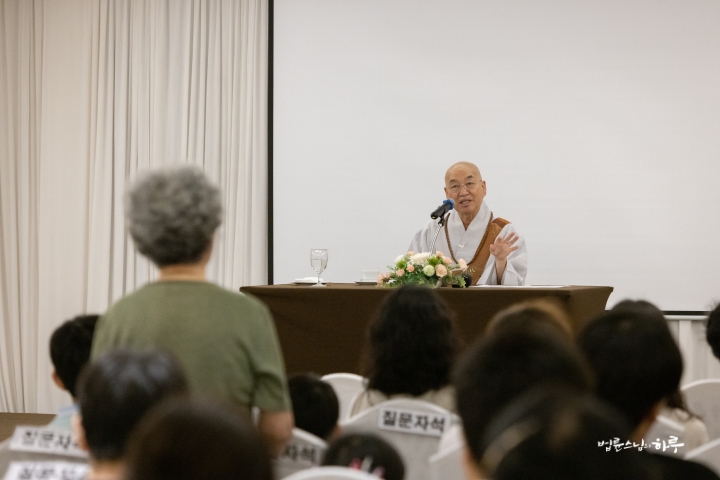
Then, Sunim had conversations with those who had requested questions in advance and took impromptu questions from the audience. Over two hours, seven people asked Sunim questions. The first person to raise their hand and ask a question was a student.
I’m Stressed Because I Often Argue with My Mom
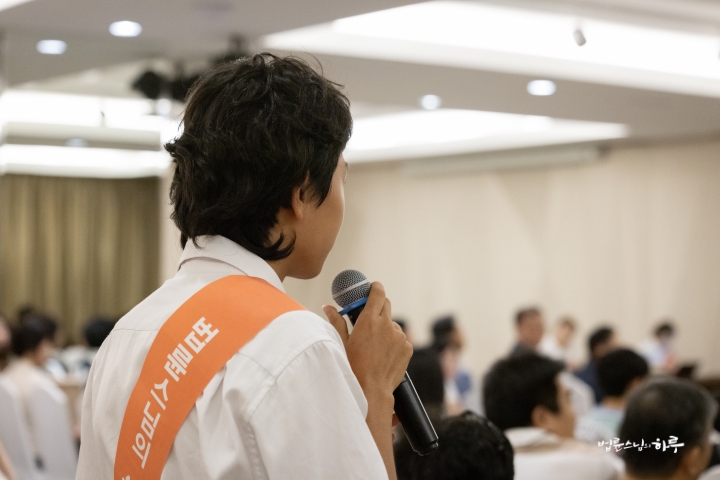
“I often argue with my mom. From my perspective, it seems like my mom is often emotional. We usually argue over trivial things, which causes stress for both my mom and me. I’m wondering how my mom and I can get along well without arguing.”
“It seems like we argue due to misunderstandings in our daily communication.”
“What kind of misunderstanding? Give me a specific example of something that happened in the past.”“I can’t remember anything specific right now, but there were a lot of instances.”
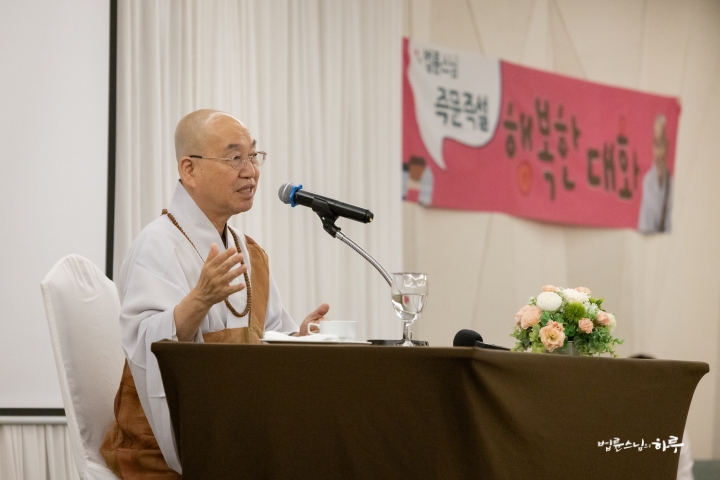
“It doesn’t seem like it was very important.”
“How about thinking ‘This issue won’t be important when I look back on it later’ every time an argument arises in the future? When you suddenly feel very angry, if you think that this issue won’t be very important tomorrow, wouldn’t that help you calm down a bit? You said you’ve experienced many conflicts with your mother. But now, looking back, you can’t specifically remember any of those conflicts. So, in the future, when you feel emotionally stirred by something, you can anticipate ‘This probably won’t be a big deal after a few days.’ This way, you’ll have fewer emotional confrontations with your mother.”“Yes, I understand well. Thank you.”
“My concerns have been resolved. Thank you.”
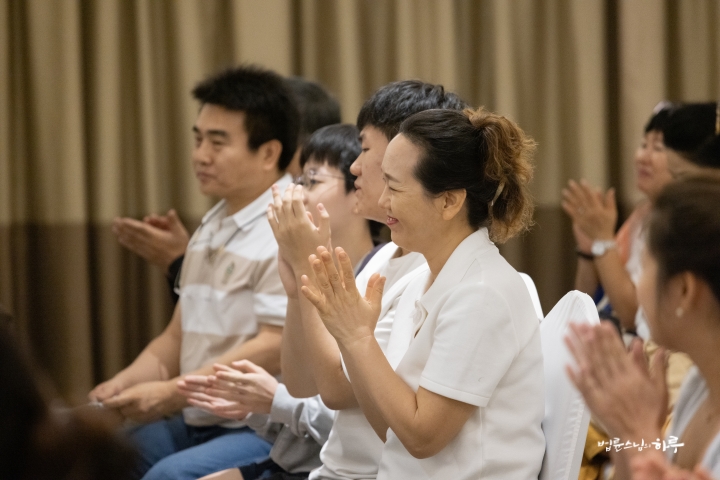
The questions continued.
My passion is gradually disappearing because I’m not getting the results I want. How can I maintain my passion?
My wife has stage 2 breast cancer and is undergoing chemotherapy. I haven’t yet met her after she shaved her head and I’m avoiding it. How should I treat my wife?
I’ve been living a busy life for 50 years, but now I’m getting tired of life. What drives you to continue your activities with such passion, Sunim?
My parents in Korea are living listlessly. When I ask how they’re doing, they say they’re fine, but I’m worried because I can’t understand their feelings.
Is it greedy to ask for something when praying? How should we pray? Do you ever feel stressed, Sunim?
By the time the conversation ended, it was 9 PM.
Sunim immediately began a book signing session on stage. He greeted each attendee, making eye contact with them.
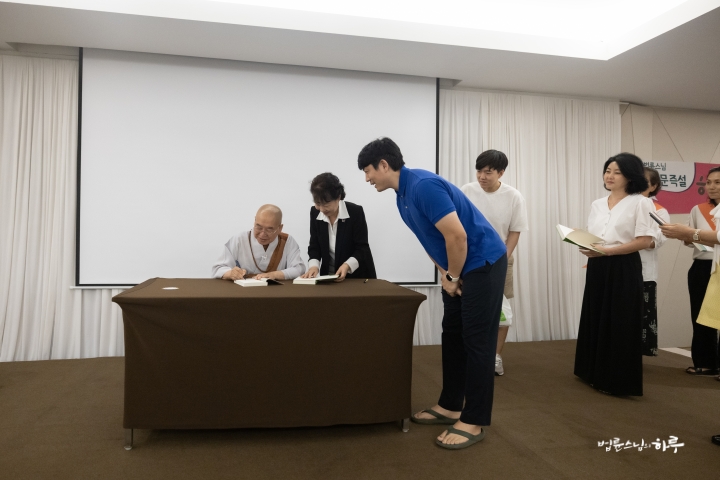
“I really enjoyed your lecture today. Thank you.”
“Thanks to you, Sunim, my life has become truly happy.”
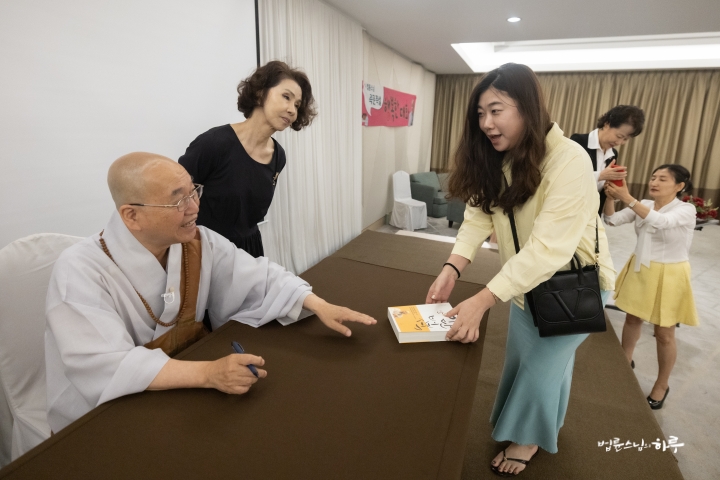
After the signing, Sunim took a commemorative photo with the volunteers who prepared the lecture.
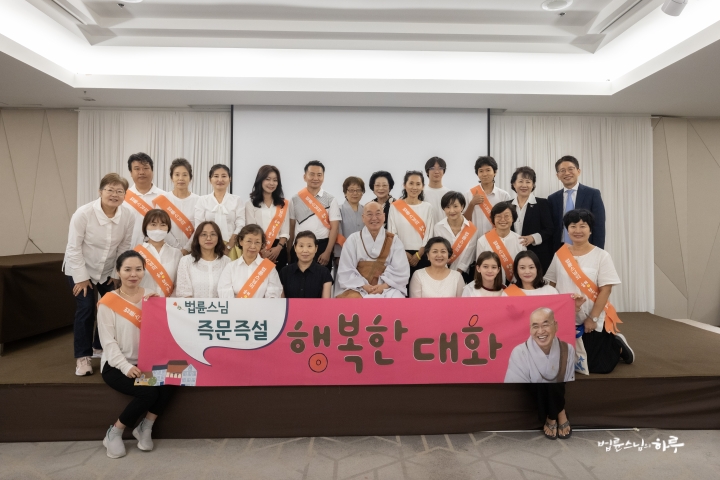
“Bangkok, fighting!”
After 9 PM, Sunim headed to his accommodation to rest, while the volunteers had a heart-to-heart session with Dharma teacher Myodeok.

Tomorrow, there will be an opening ceremony for the children’s dormitory of the Dhammanurak Foundation, which JTS has supported with renovation work for a year. In the evening, Sunim will depart from Bangkok airport for Hanoi, Vietnam.